Cartagena Social Club · Culture · Music · City Life

Stories from Cartagena

The city from the inside: history, neighborhoods, music, food and nights out.

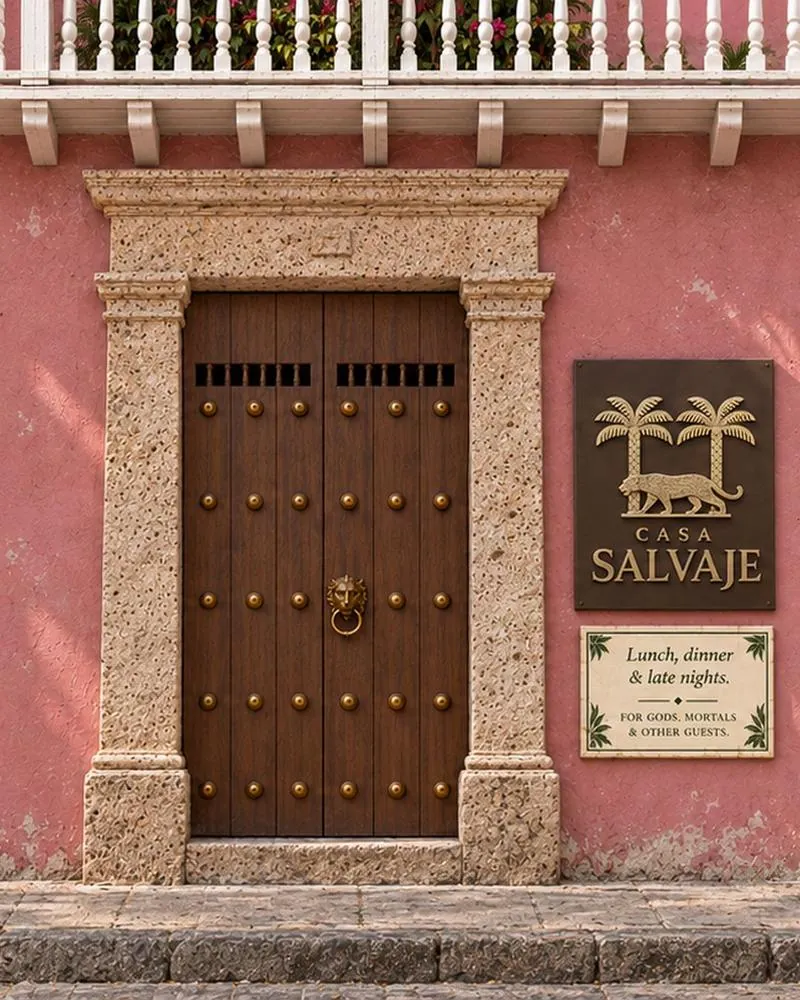
  1. Fachada rosada de Casa Salvaje con portón de madera claveteado, marco de piedra y la placa del jaguar entre dos palmas

    Night

    Casa Salvaje: one house, several worlds.

    On a corner of Calle Santa Teresa, a colonial house brings fire, banquet and club together under one roof.

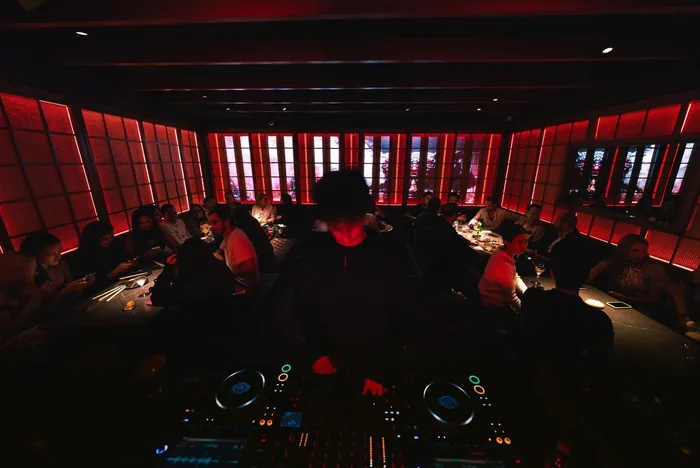
  2. Salón de ONO en Bogotá de noche, con paneles shoji iluminados en rojo alrededor de las mesas y la cabina del DJ en primer plano.

    Food & drink

    ONO, the hosomaki bar coming to Casa Salvaje.

    It was born in Bogotá among shoji panels, red light and a roll with a single star ingredient. Between November and December 2026 it opens its second house in Cartagena's Centro.

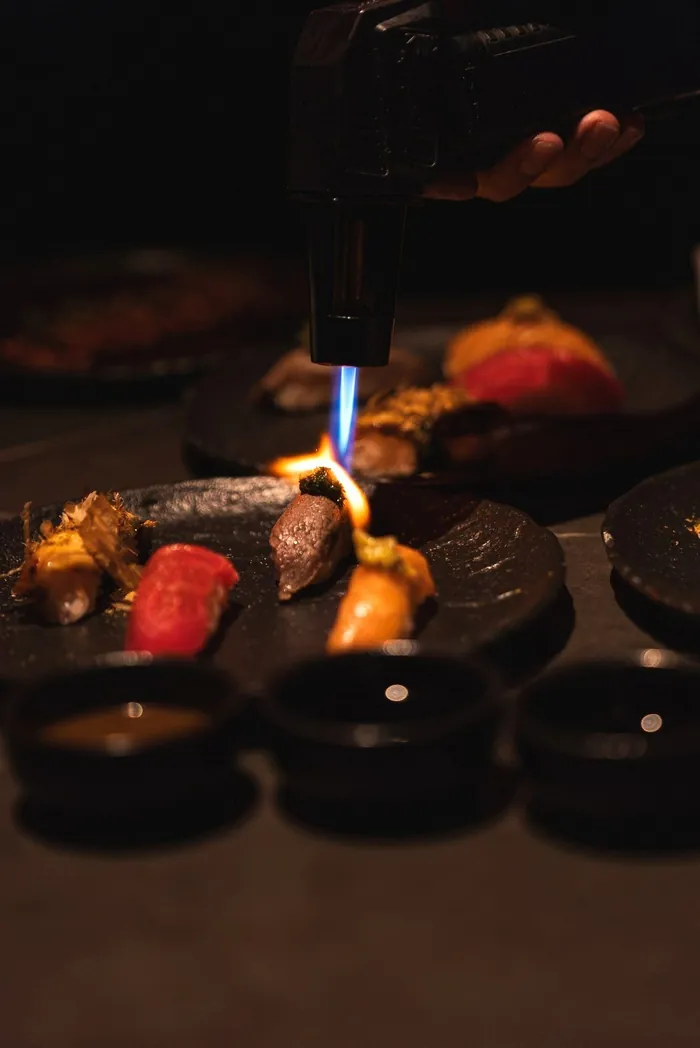
  3. Un soplete flambea nigiris sobre un plato oscuro en una mesa de ONO Bogotá, con la llama azul encendida

    Food & drink

    The 4 best places for sushi in Cartagena.

    A counter with a monthly omakase, a bar with just a few seats facing the bay, sushi with a Caribbean accent and a neighbourhood sushi bar in Manga and Bocagrande.

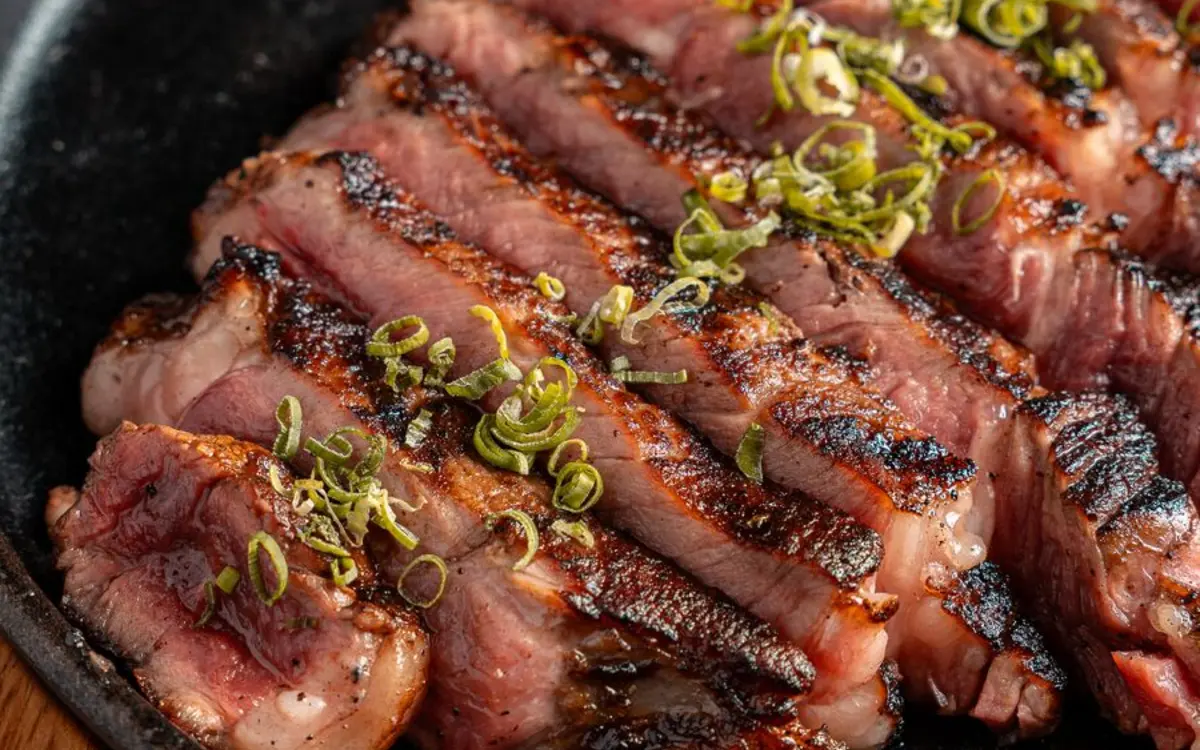
  4. Corte de carne de Kanibal sellado a la brasa, en tajadas con cebollín, servido en sartén de hierro

    Food & drink

    The 5 best places to eat meat in Cartagena.

    Embers, dry-aging rooms and Argentine grills: five tables in the Centro and Getsemaní where meat is the reason to go.

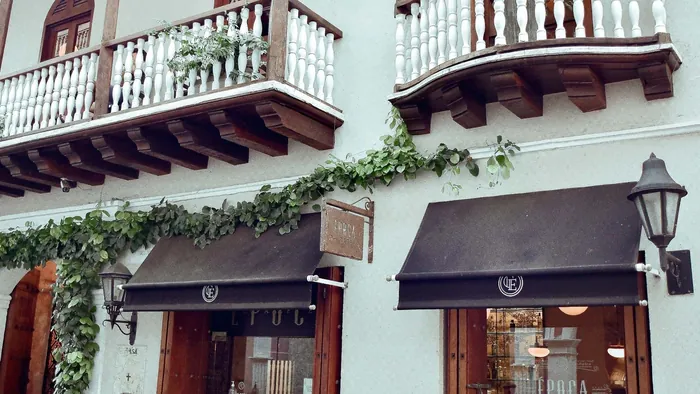
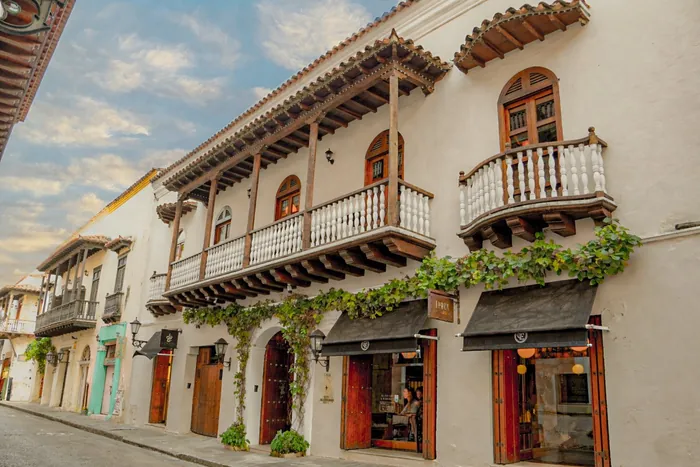
  5. Fachada de Época Café en la Calle del Arzobispado, con toldos oscuros, faroles y una enredadera bajo los balcones de madera.

    Food & drink

    Época, a café on Calle del Arzobispado.

    Single-origin coffee, breakfasts ordered at any hour and a bar a few steps from the Cathedral: this is how the morning begins on one of the oldest streets in the Centro.

  6. Fachada del Hotel Casa del Arzobispado: casa colonial blanca de dos plantas con balcones de madera, enredaderas y toldos oscuros en el primer piso.

    Hotels

    Casa del Arzobispado, a 17th-century house beside the Cathedral.

    Eleven rooms, a courtyard with a pool and the Cathedral tower rising above the rooftops: a close look at the hotel on Calle del Arzobispado.

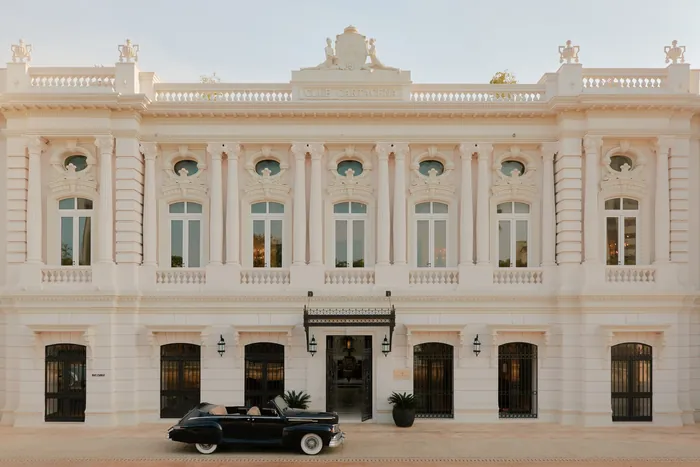
  7. Fachada blanca y simétrica del antiguo Club Cartagena, de estilo beaux arts, con ventanas ovaladas, balaustrada y un carro antiguo negro frente a la entrada.

    Hotels

    Four Seasons Cartagena: a convent, a club and a theater in Getsemaní.

    The former convent of San Francisco, Gastón Lelarge's Club Cartagena and the neighborhood's old theaters have become a hotel. This is what's inside and around it.

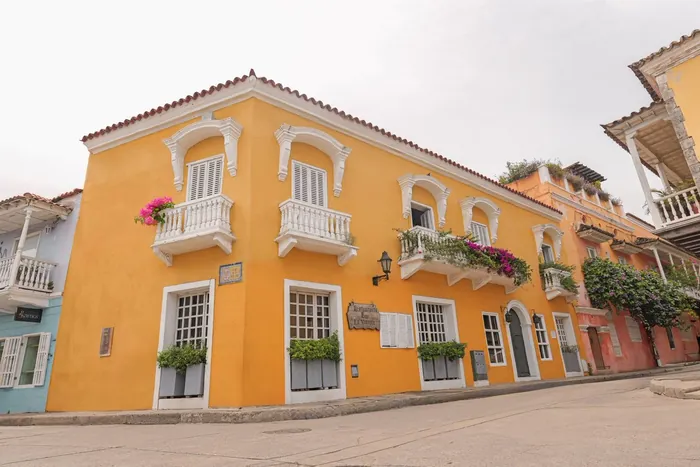
  8. Fachada amarilla de La Vitrola en la Calle de Baloco, con ventanas de reja blanca, jardineras grises, balcones blancos con buganvilias y un letrero de madera que dice Restaurante Bar La Vitrola.

    Food & drink

    La Vitrola, Cuban son on Calle de Baloco.

    Ceiling fans, black-and-white photos, white tablecloths and a band playing Cuban son every night: this is how the Centro dines at one of its classic restaurants.

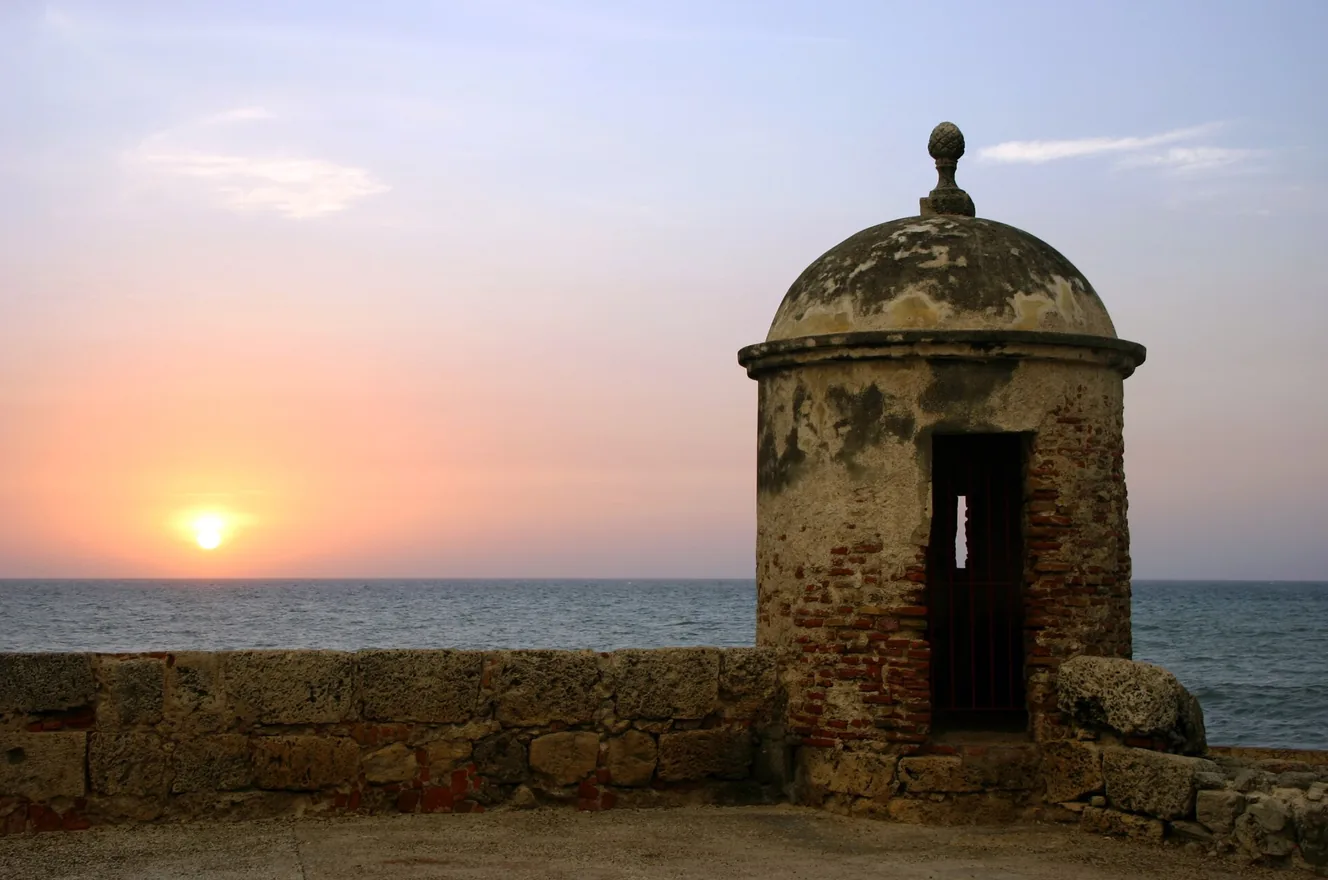
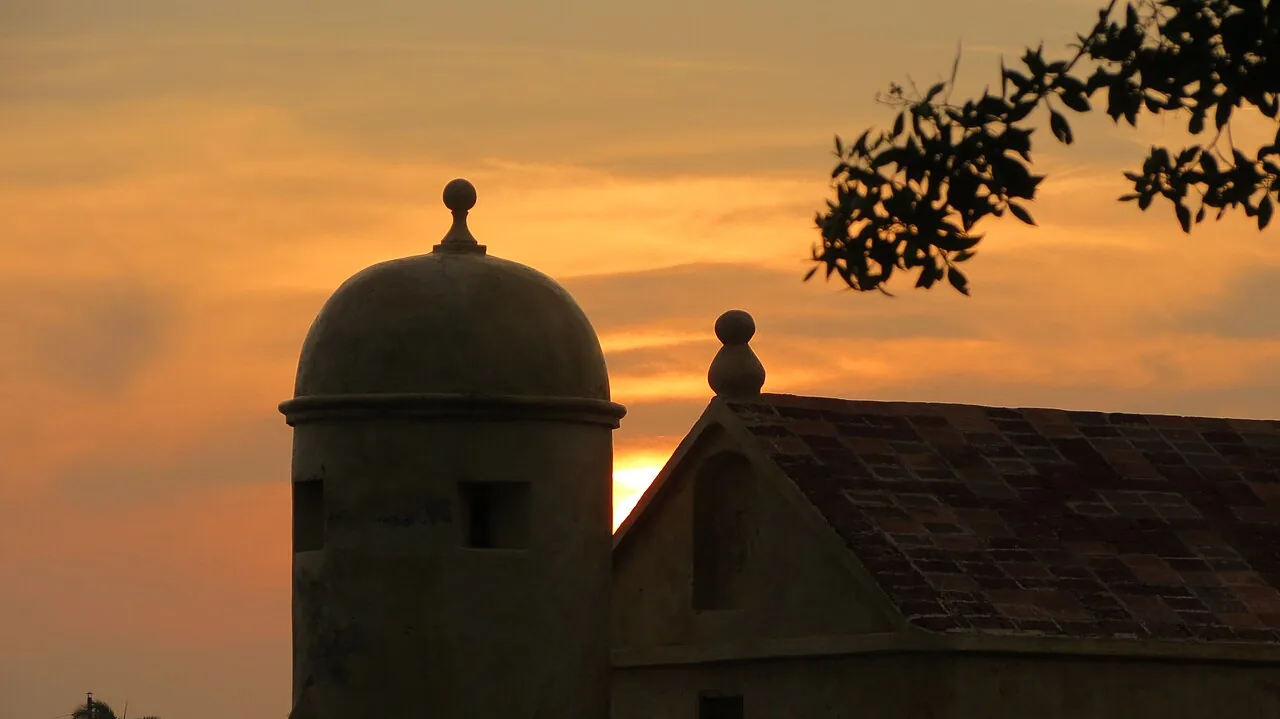
  9. Garita de piedra sobre la muralla de Cartagena recortada contra el sol que se pone sobre el mar, con el cielo en tonos naranja y lila.

    Night

    After the sun goes down.

    City walls, plazas, terraces and dining rooms: how Cartagena changes between sunset and the small hours.

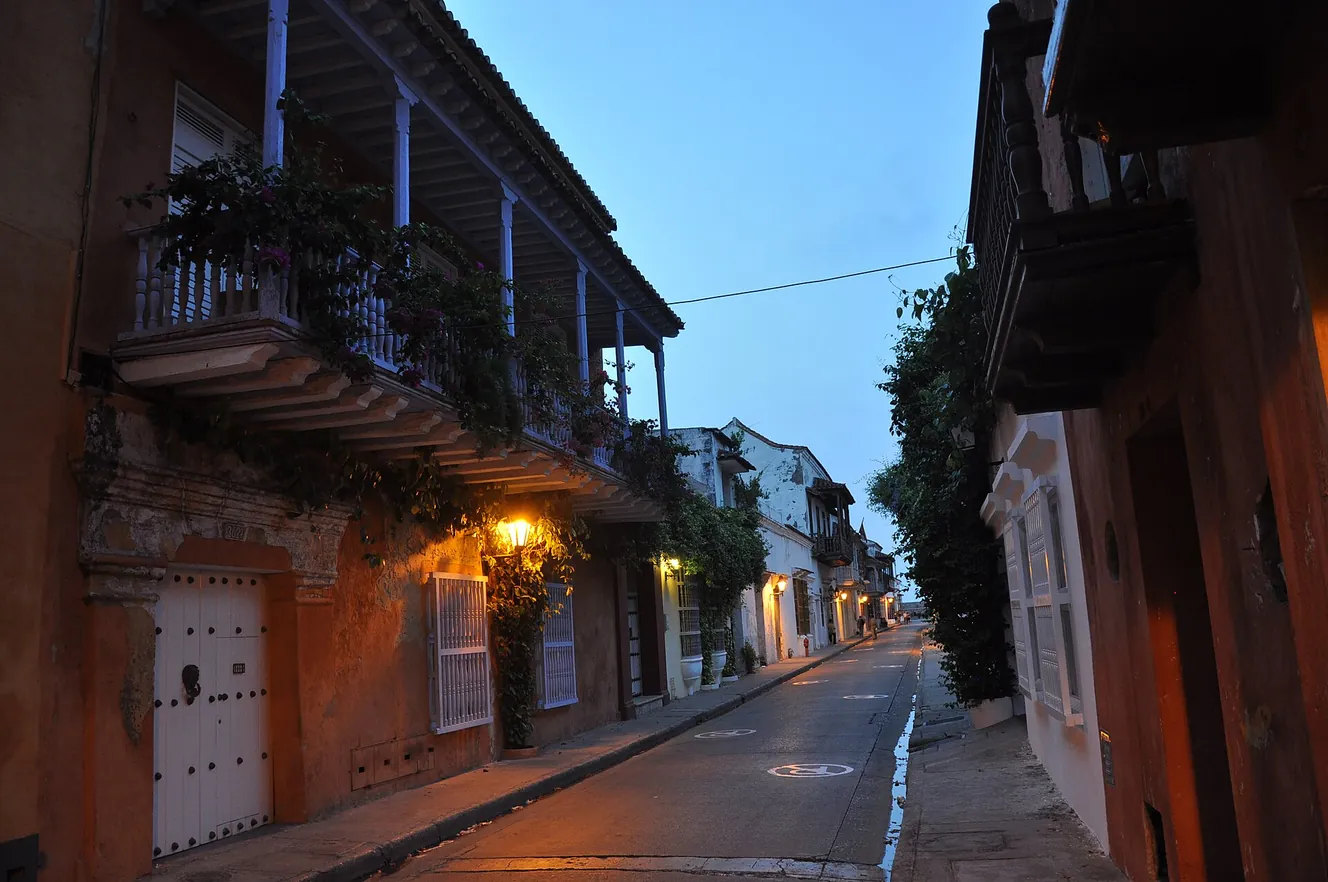
  10. Calle del Centro al anochecer, con cielo azul oscuro: casas de balcones de madera con plantas colgantes, una puerta blanca con clavos, ventanas de rejas blancas y un farol encendido; la calle está vacía.

    Heritage

    Shade counts too.

    Balconies, courtyards, entrance halls and lime: how Cartagena's colonial house learned to live with the sun, and what rules protect it today.

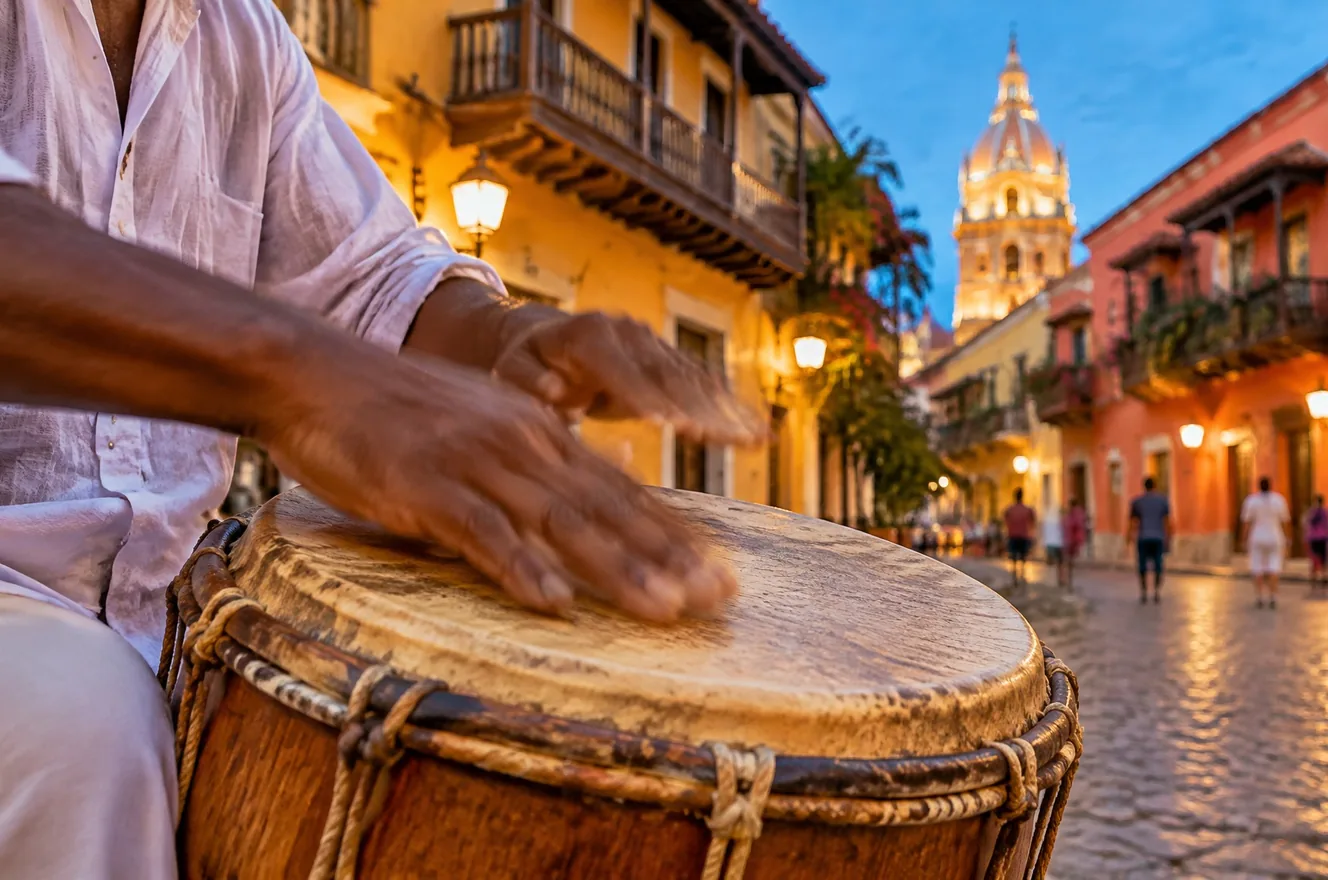
  11. Ilustración: manos de un músico golpean un tambor de madera en una calle empedrada del Centro de Cartagena al anochecer, con balcones y faroles encendidos al fondo.AI-generated illustration

    Music

    The city you hear.

    From the drum of Palenque to the neighborhood picó, by way of recorded cumbia, the salsa of el Joe and champeta: centuries of sound in Cartagena.

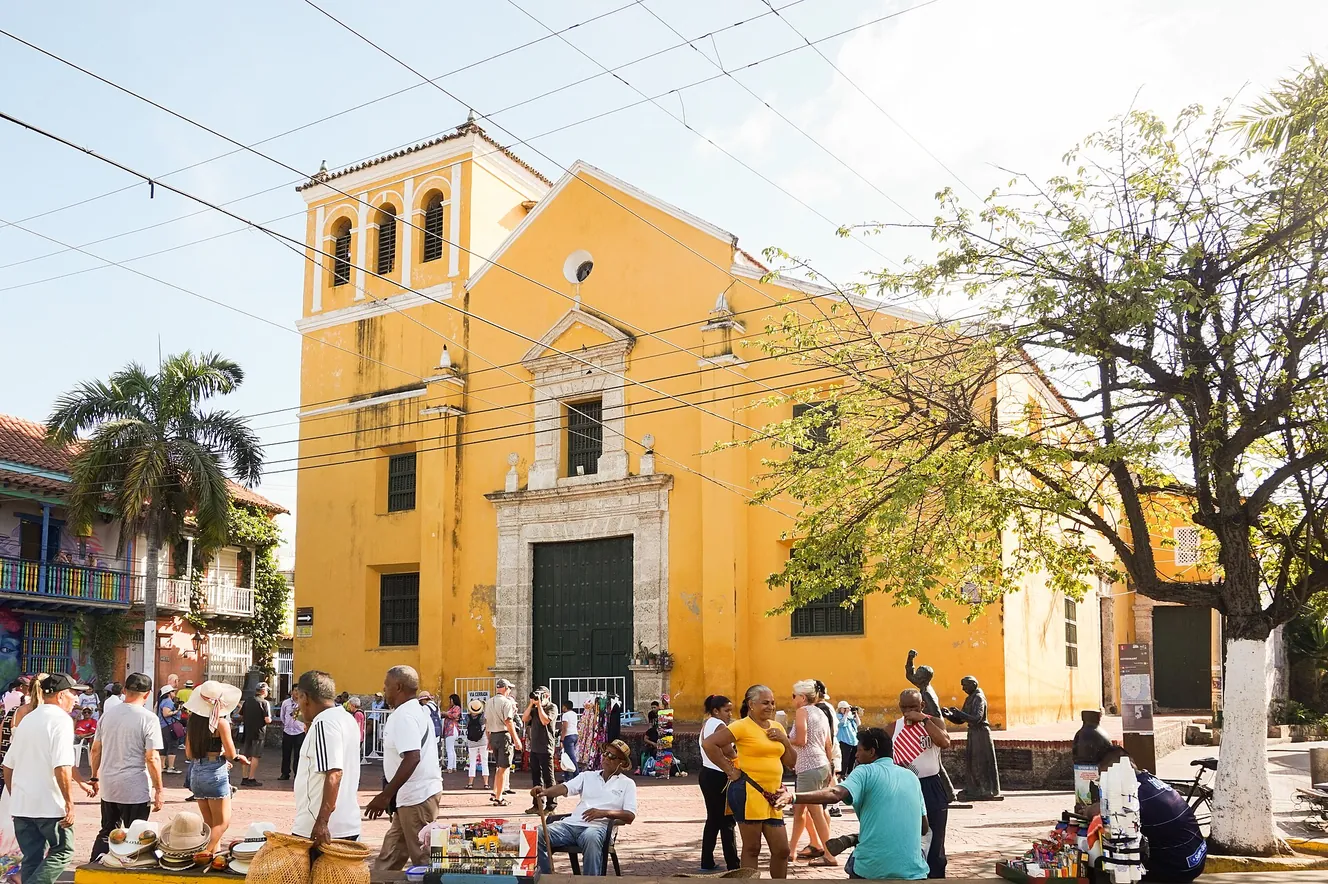
  12. Iglesia de fachada amarilla con campanario, frente a una plaza llena de gente, vendedores y árboles, con balcones de colores a la izquierda.

    Neighborhoods

    Getsemaní, the neighborhood that became a plaza.

    From the artisans' quarter that pushed for independence to the neighborhood of murals that is now fighting not to run out of residents.

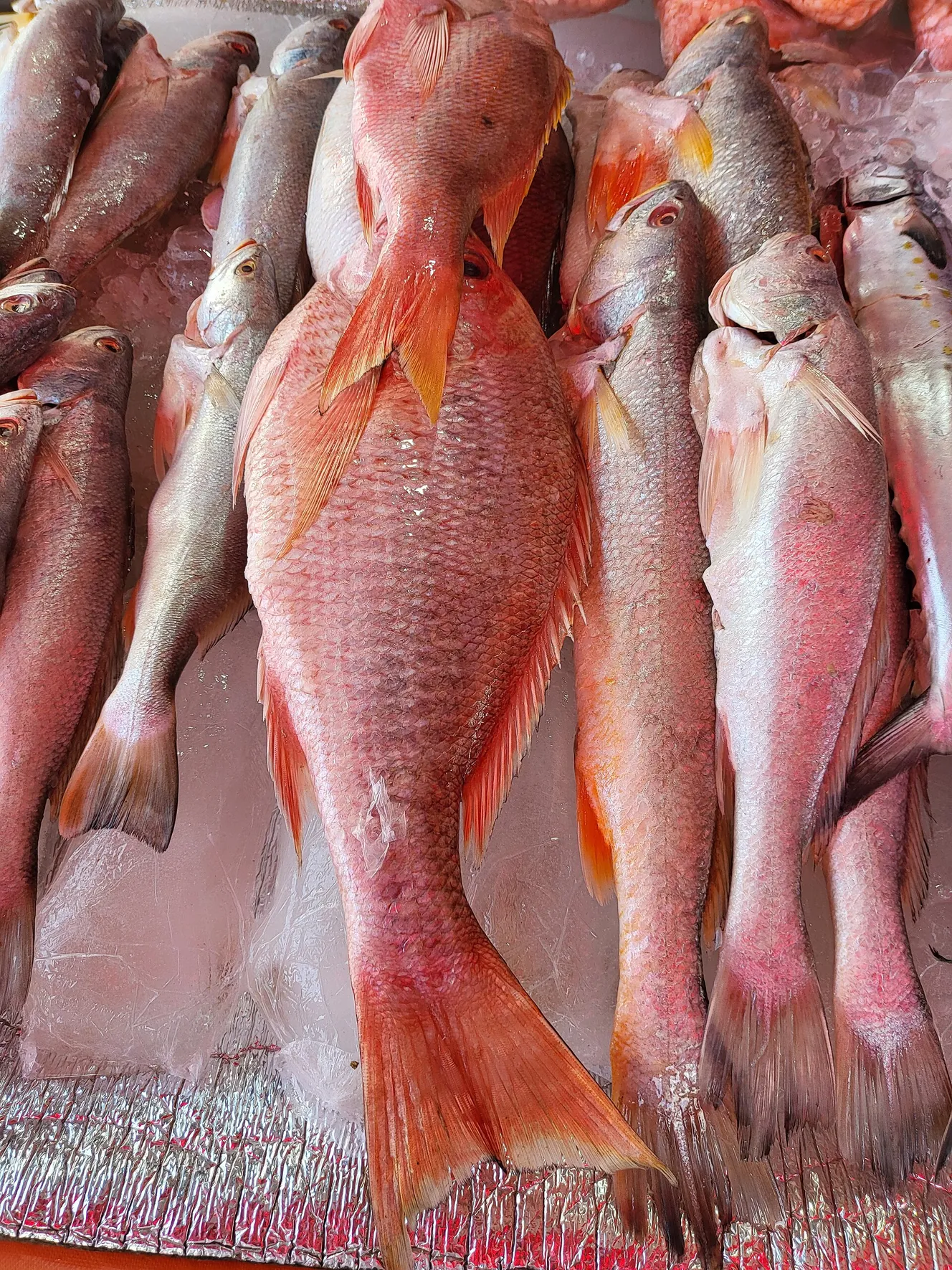
  13. Pargos rojos enteros y otros pescados de tonos rosados sobre hielo en un puesto de mercado.

    Food & drink

    Bazurto, where the food begins.

    Before many of the city's tables there is a market that rises early beside the lagoon. Its history, its cooking and its uncertain future.

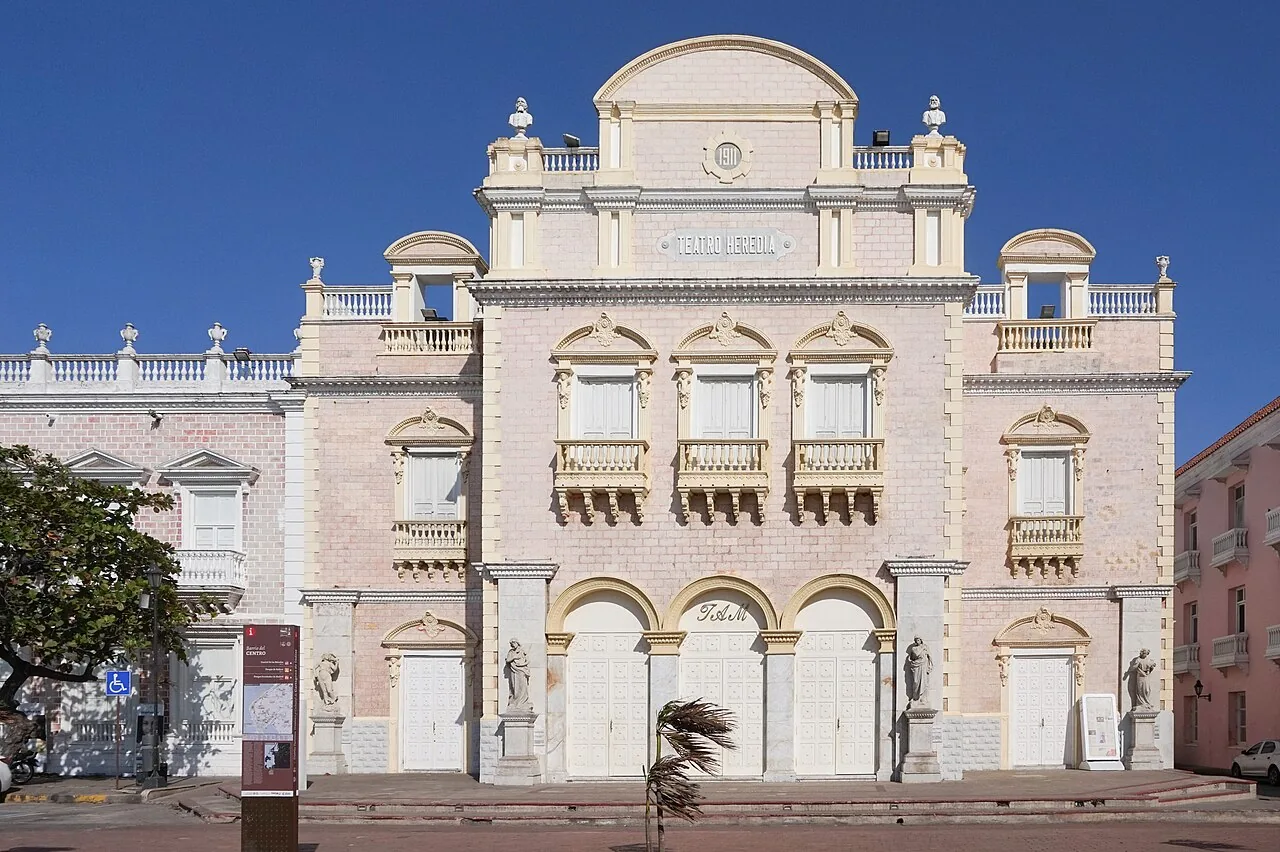
  14. Fachada del Teatro Adolfo Mejía (antiguo Teatro Heredia), con sus balcones y arcos blancos, bajo un cielo azul

    Season

    January: the city of festivals.

    Classical music, literature and, later on, film: the cultural calendar that gathers in Cartagena while the breeze blows.

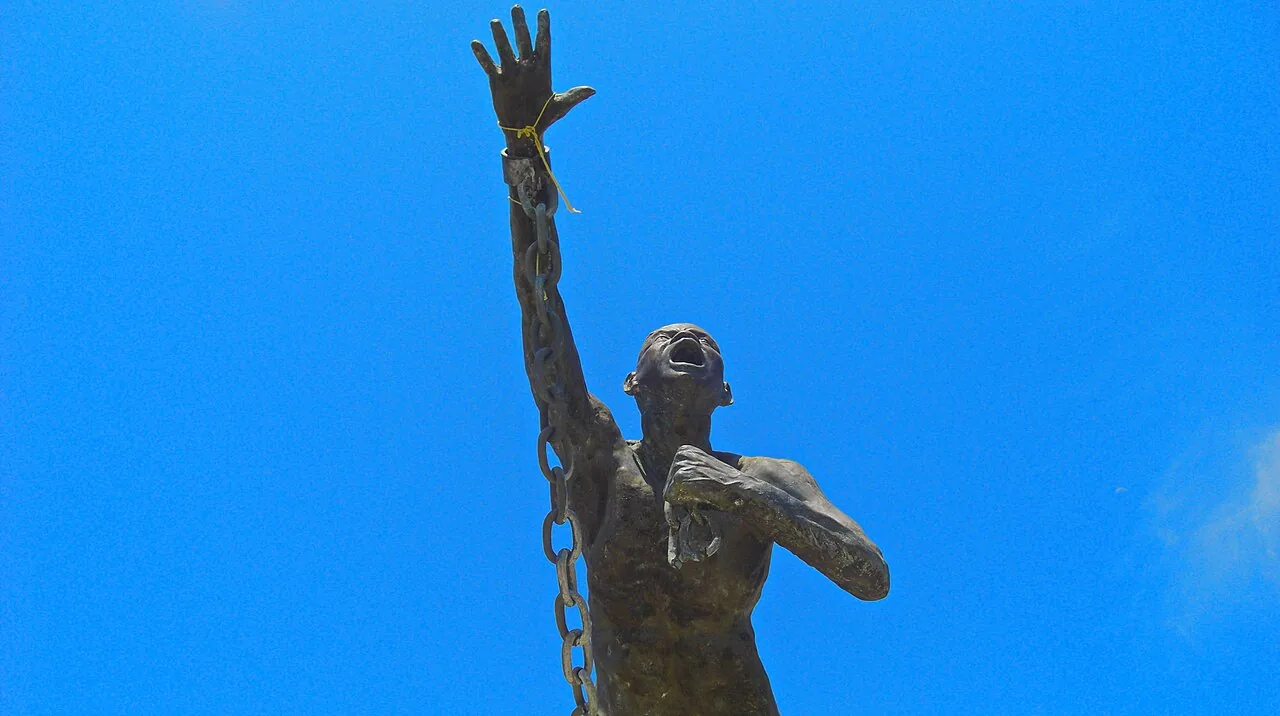
  15. Estatua de Benkos Biohó rompiendo sus cadenas con el brazo en alto, contra el cielo azul

    Beyond the city

    Palenque: an hour away and four centuries back.

    A village born of freedom, some 50 kilometers from the city wall, that has kept its language, its drums and its way of organizing itself.

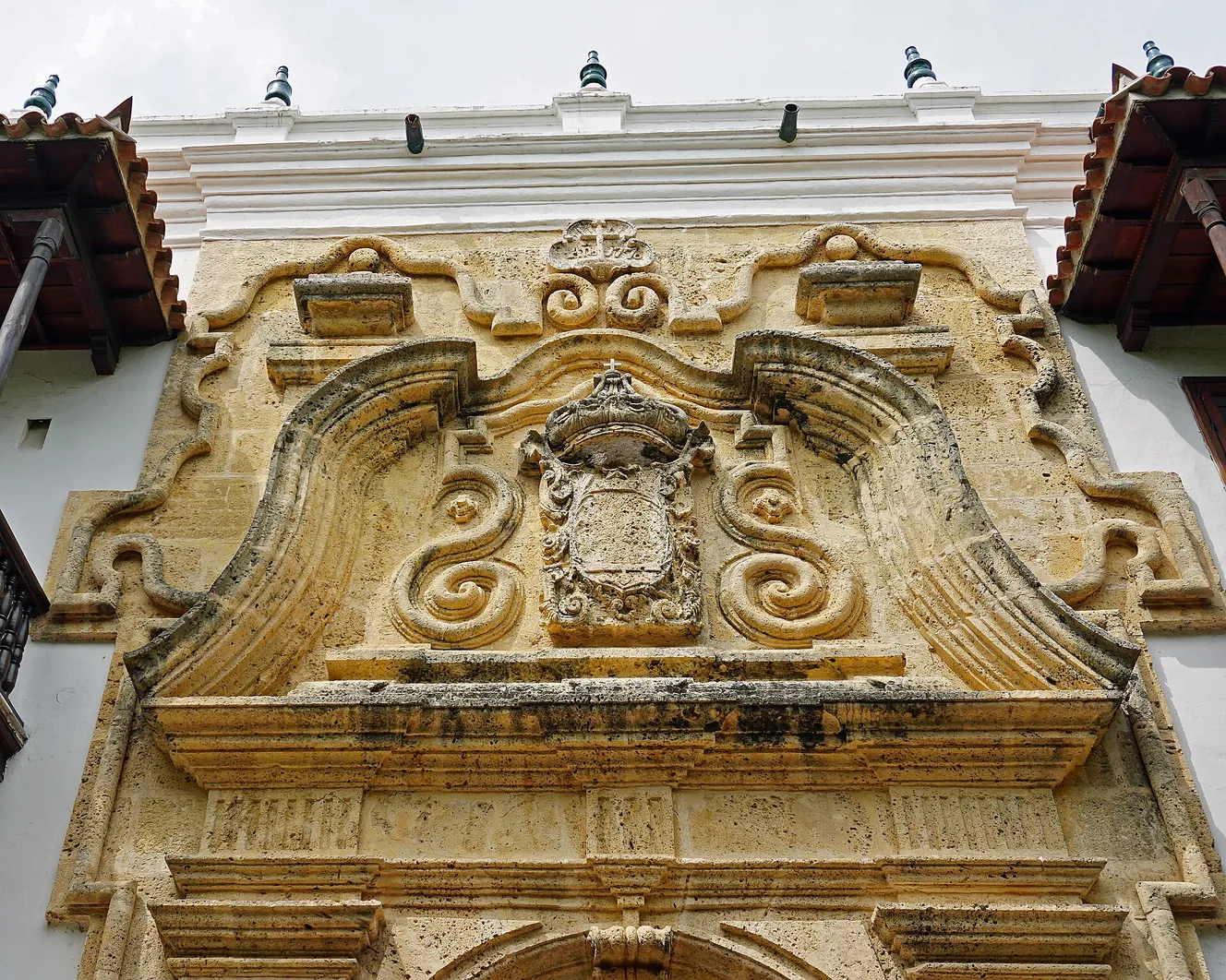
  16. Detalle de la parte alta de la portada de piedra coralina: volutas, molduras y un escudo labrado al centro, entre balcones de madera y la pared blanca.

    History

    The house of the Holy Office.

    The tribunal arrived in 1610, the palace was finished around 1770 and the museum opened in 1924: three layers of history facing Plaza de Bolívar.

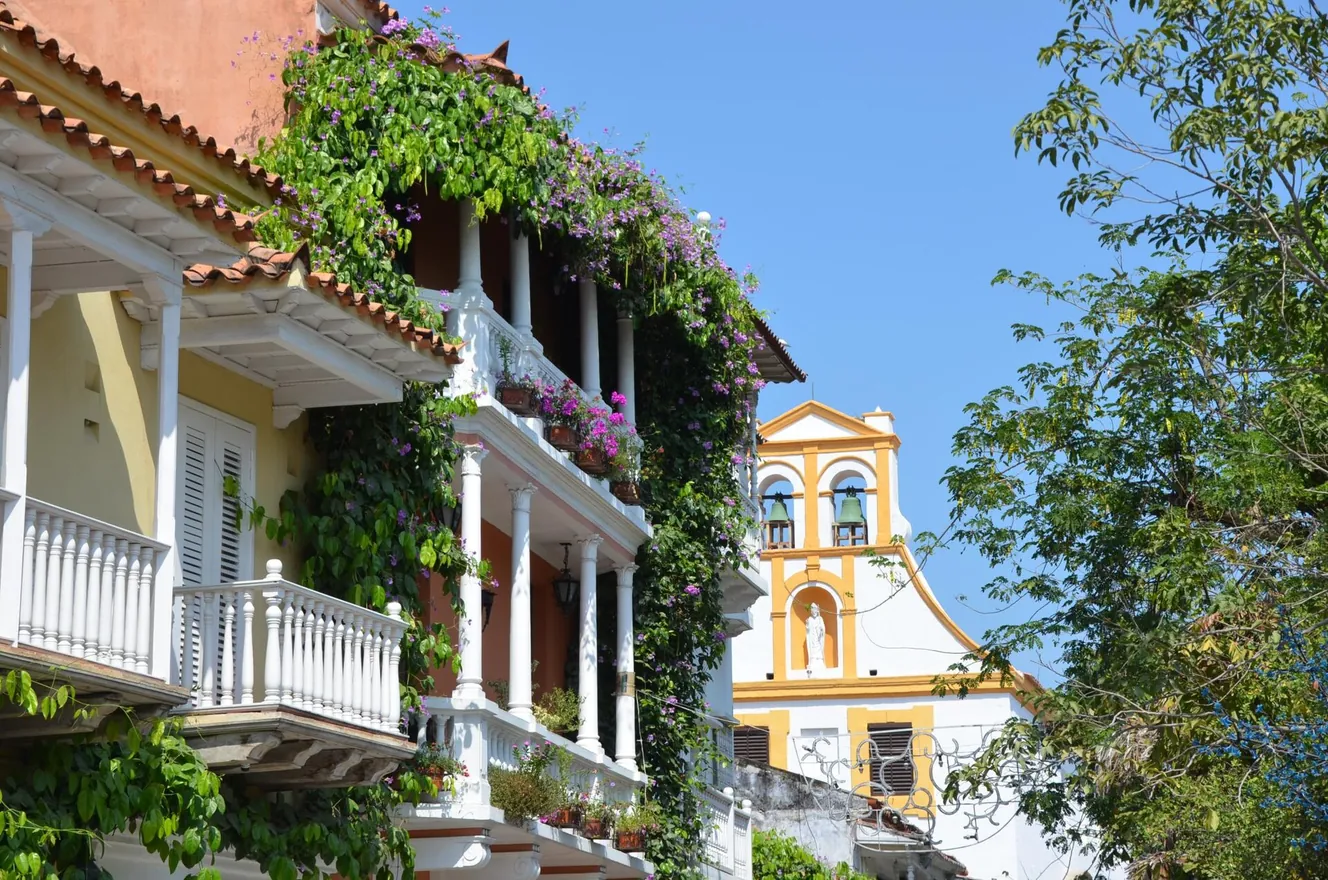
  17. Balcones de madera blanca cubiertos de buganvillas y enredaderas en una calle del Centro; al fondo, la espadaña amarilla y blanca de una iglesia.

    Culture

    García Márquez's Cartagena.

    A newsroom in 1948, a crypt opened in 1949, a house facing the city wall and a cloister where his ashes rest: a map of Gabo in the city.

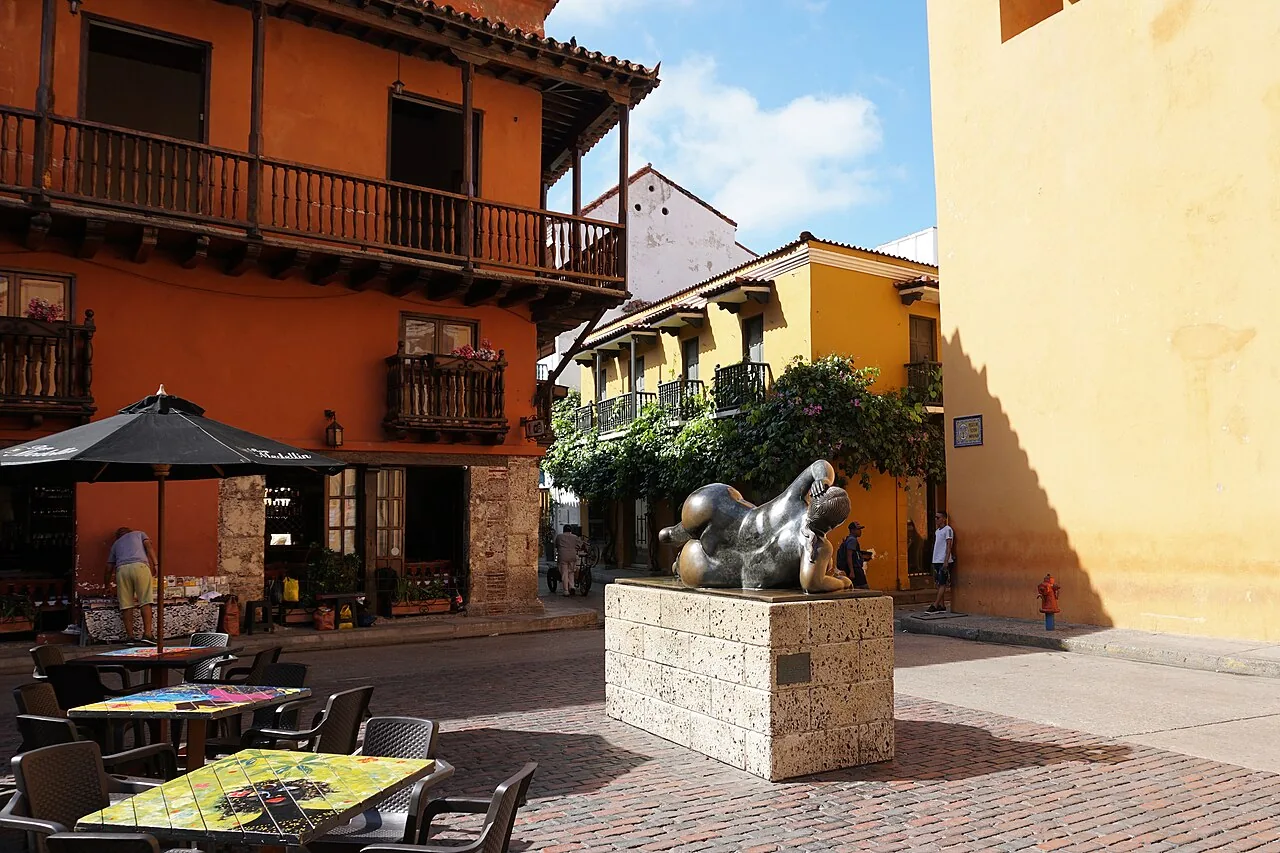
  18. La Gorda Gertrudis, escultura de bronce de Fernando Botero, en la Plaza de Santo Domingo

    Art

    Art in the street: la Gertrudis, the iron men and the walls of Getsemaní.

    A Botero bronze, a series of scrap-metal sculptures and hundreds of murals: the Cartagena museum that never closes and never charges admission.

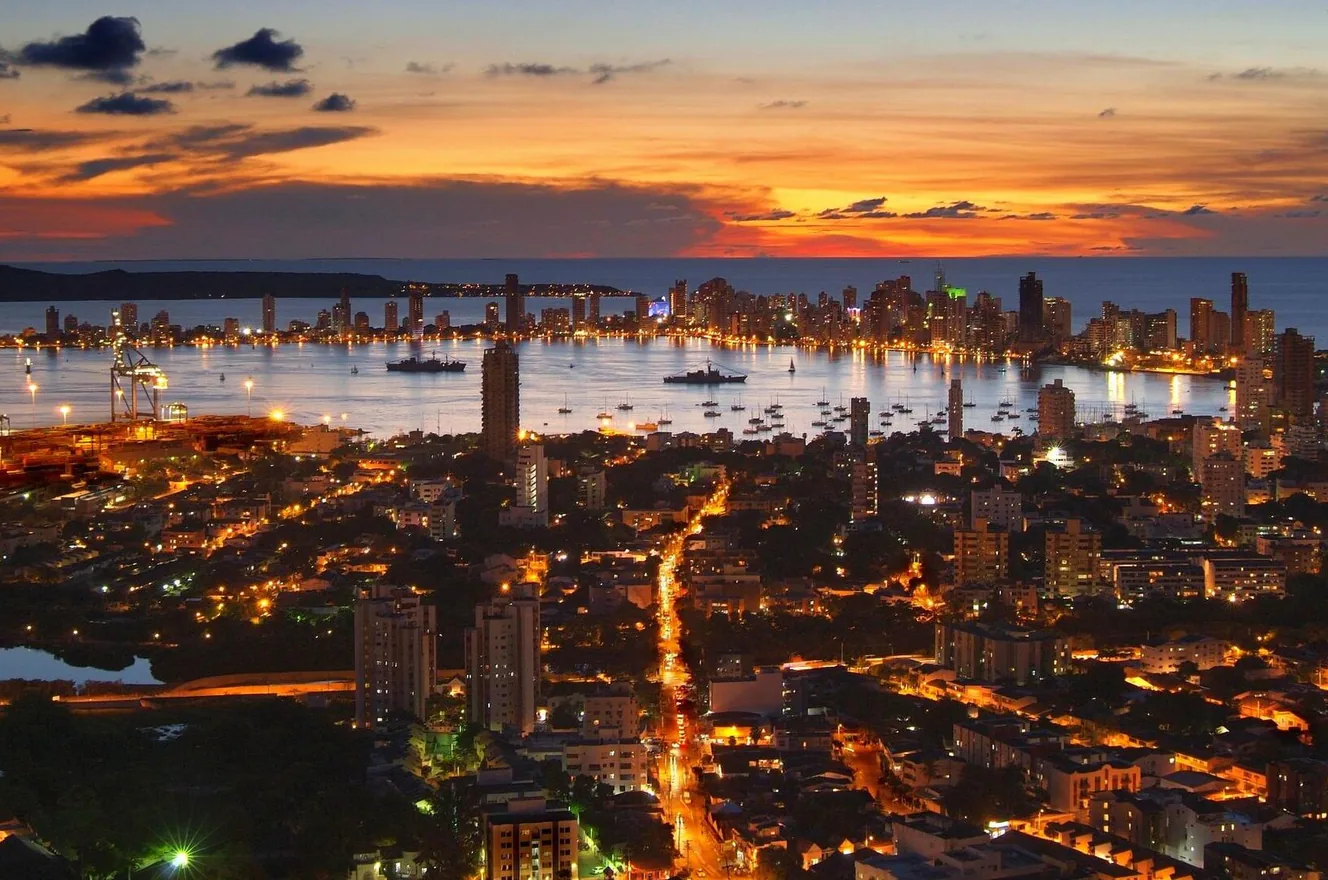
  19. Vista desde lo alto de Cartagena al anochecer: calles iluminadas, la bahía con barcos y los edificios de Bocagrande bajo un cielo naranja.

    Night

    Night in Cartagena: from dinner to the club.

    A full night in the Centro and Getsemaní, from sunset on the wall to the last song, with facts you can check and advice for getting around well.

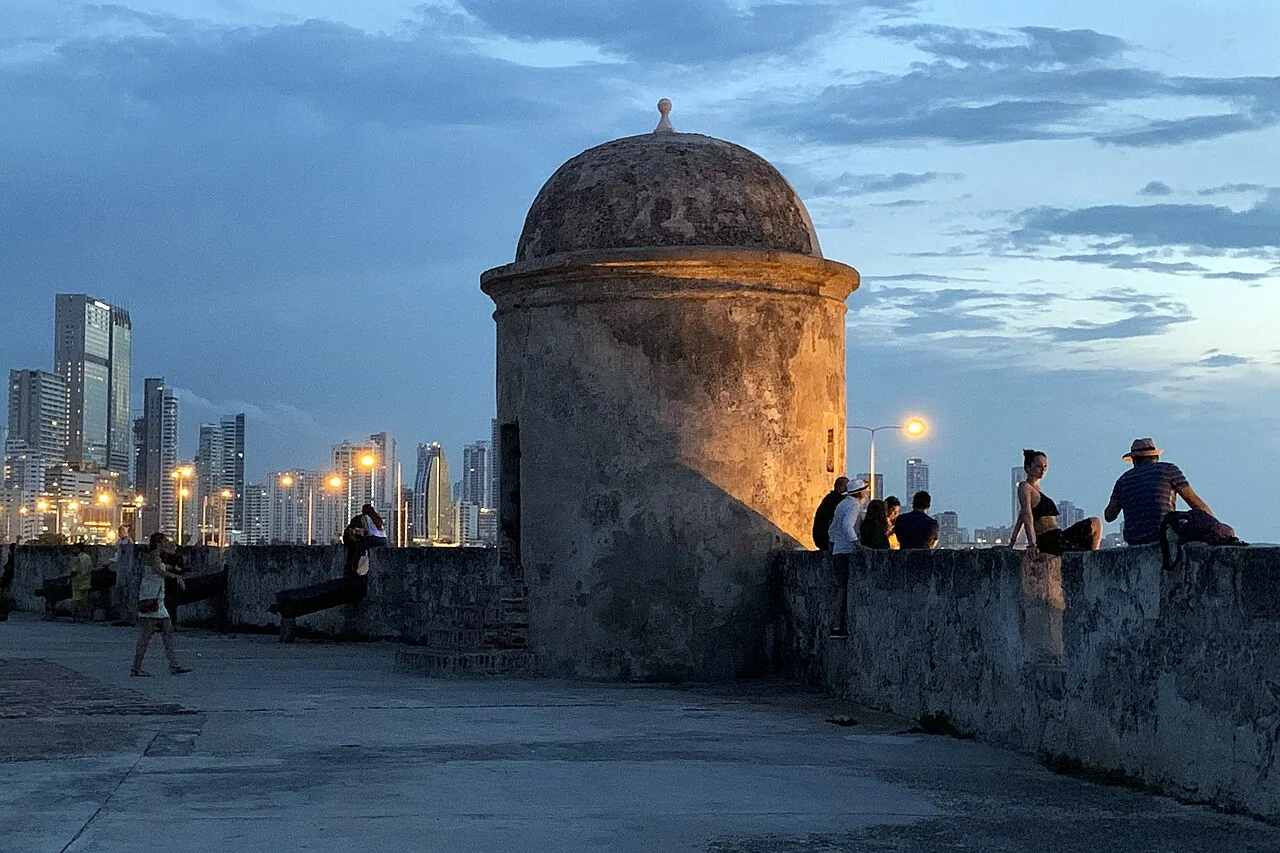
  20. Garita del baluarte de Santiago sobre la muralla de Cartagena al anochecer, con personas sentadas en el parapeto y los edificios de Bocagrande al fondo

    Heritage

    Eleven kilometers of wall.

    How a city walled itself in to defend itself, came close to tearing its walls down and ended up turning them into its finest promenade.

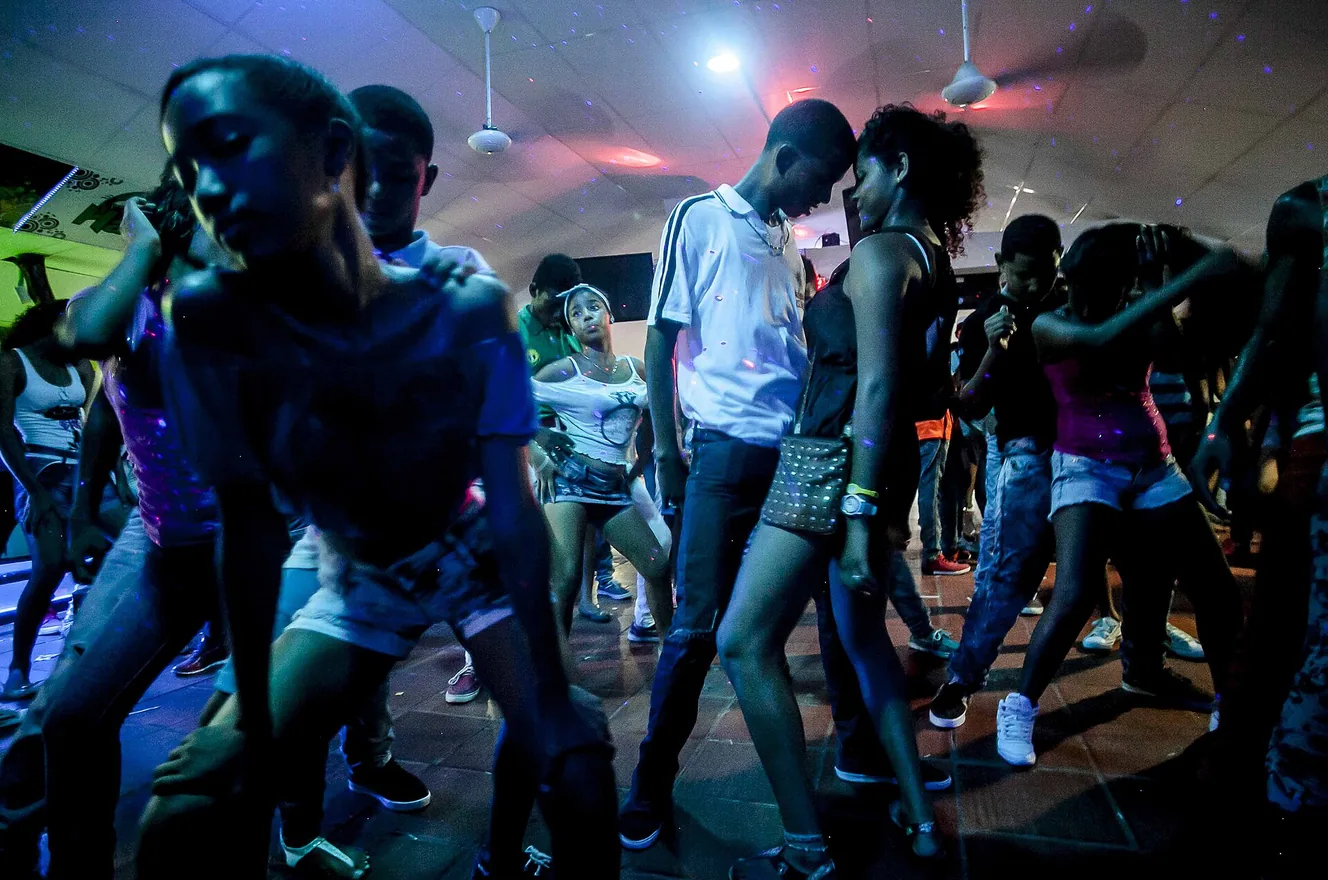
  21. Jóvenes afrocolombianos bailan champeta en una pista con luces de colores; las parejas se mueven pegadas en primer plano.

    Music

    Champeta and picós: the sound Cartagena made its own.

    From the African records that came in through the port to the heritage declaration of 2026: the history, artists and places of a music born in the neighborhoods.

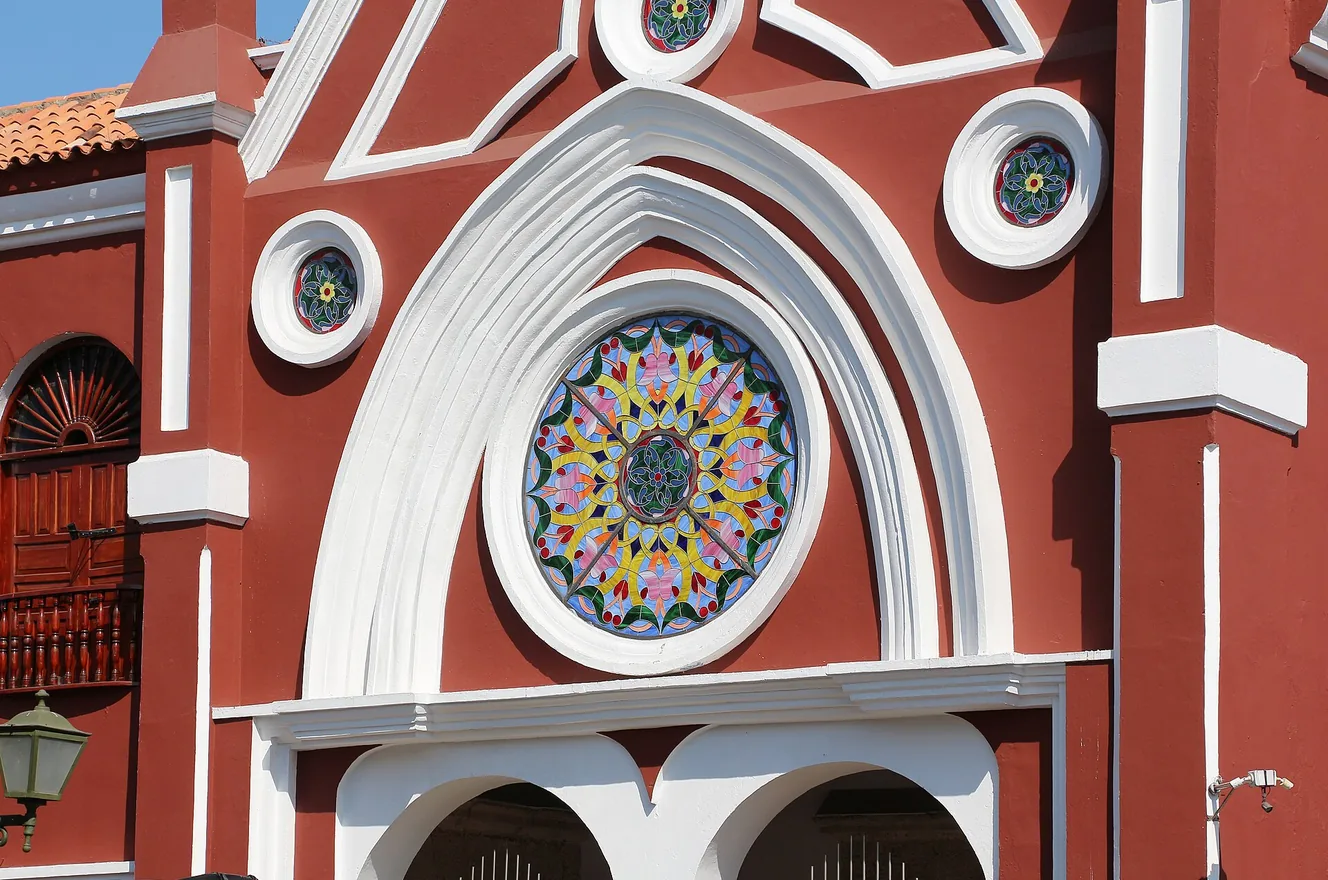
  22. Fachada roja y blanca de estilo neogótico con un gran rosetón de vidrio de colores, en la sede de Bellas Artes de Cartagena.

    Neighborhoods

    San Diego, the neighborhood of convents that became city.

    Between the former convent of Santa Clara, Las Bóvedas and the Bellas Artes cloister, the northern corner of the Centro holds four centuries of successive uses.

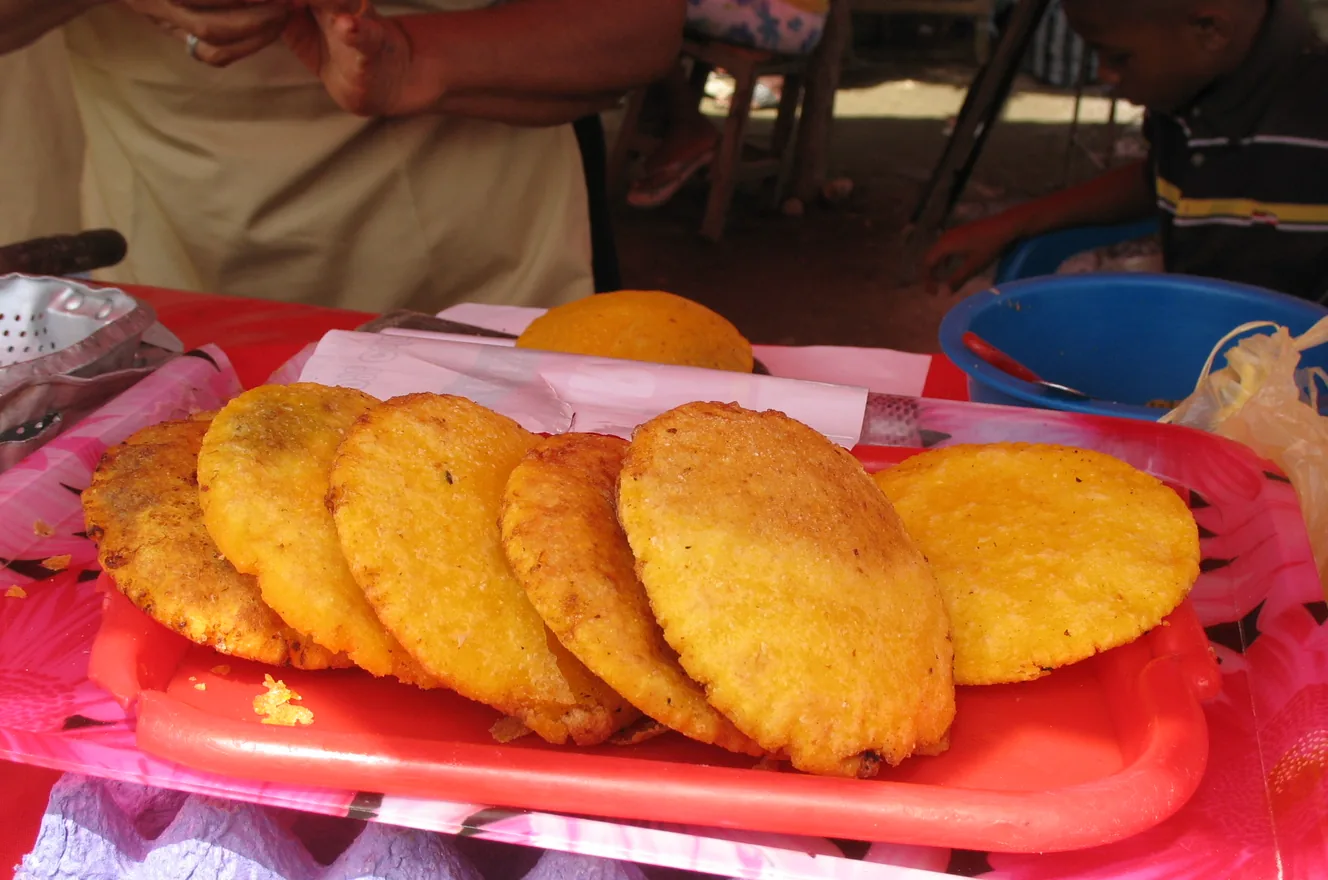
  23. Arepas de huevo doradas en una bandeja roja, en un puesto de fritos

    Food & drink

    The arepa de huevo and Cartagena's fritos.

    Corn or cassava dough, hot oil and a tradition the city celebrates every January with its own festival.

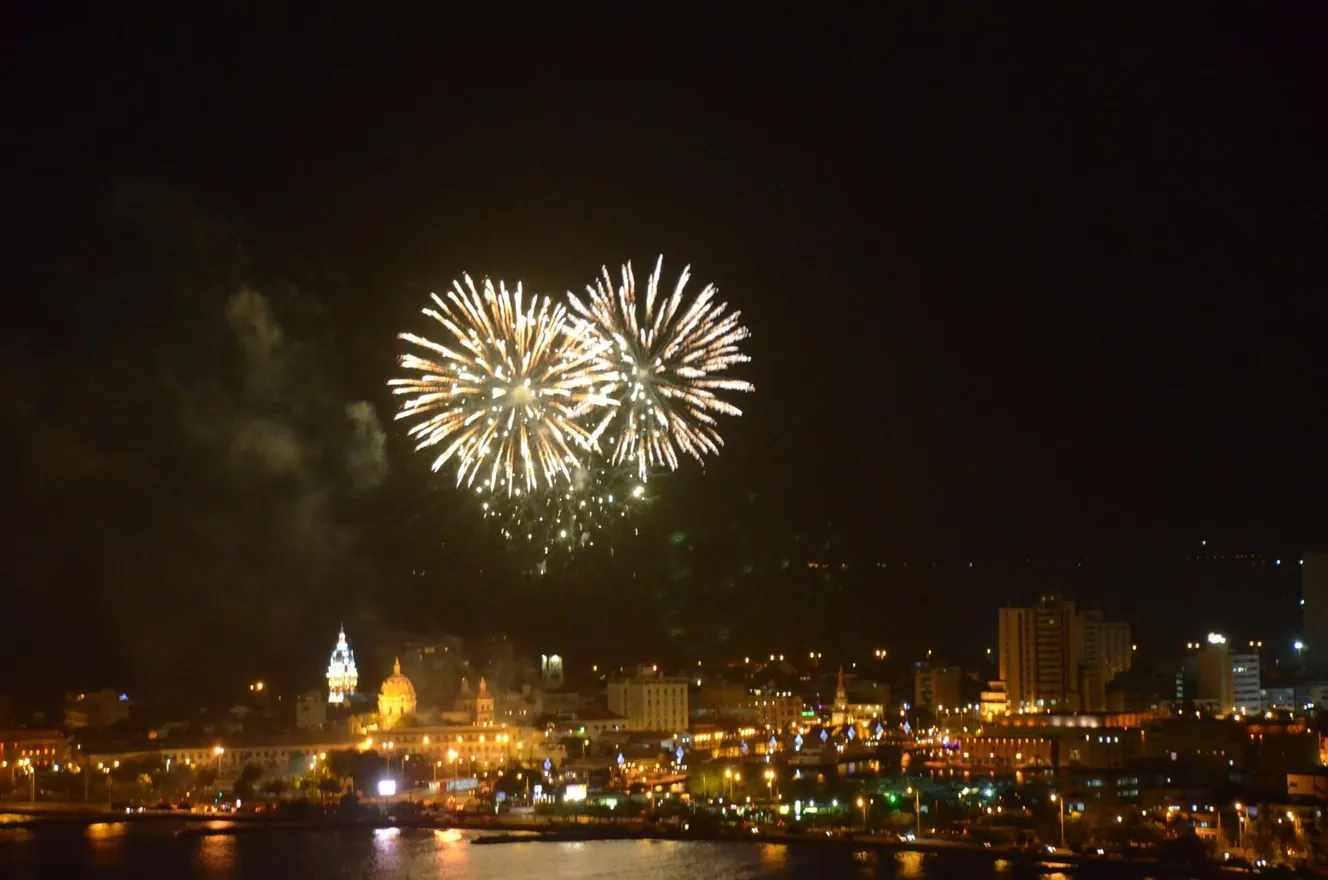
  24. Dos grandes estallidos de fuegos artificiales dorados en el cielo nocturno sobre la ciudad iluminada, con torres de iglesias y edificios al borde del agua.

    Season

    Fiestas de la Independencia: the city takes to the streets.

    The Bando, the cabildos, the popular pageant and the national beauty contest: how Cartagena celebrates November 11, now national heritage.

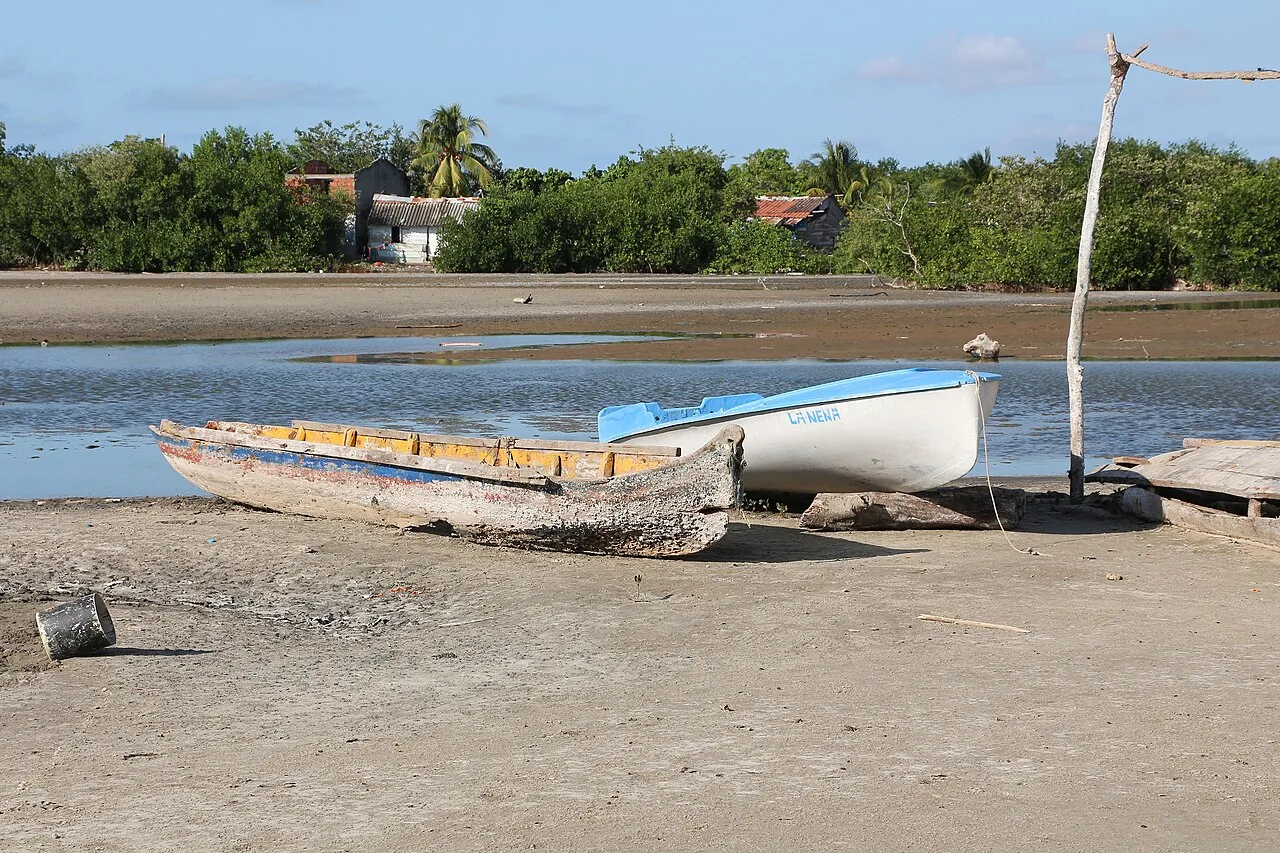
  25. Canoas y botes de pesca de madera varados en la arena de La Boquilla.

    Beyond the city

    La Boquilla, between the sea, the mangrove and the lagoon.

    North of the city, an Afro-descendant fishing community defends its territory and opens its mangrove channels to a form of tourism it organizes itself.

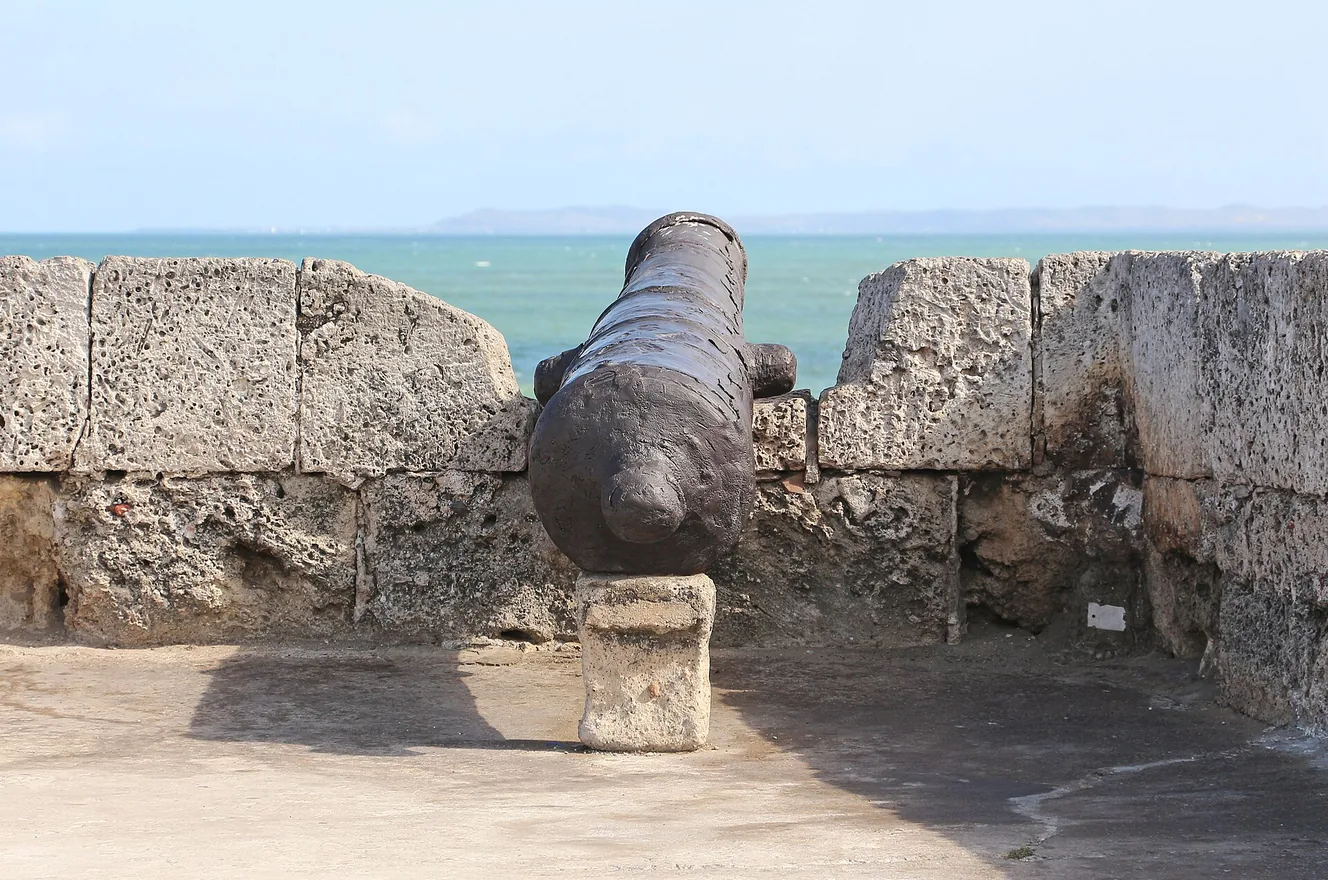
  26. Un cañón antiguo de hierro apoyado en un bloque de piedra coralina apunta al mar entre los merlones de la muralla de Cartagena.

    History

    Three sieges that made the city.

    Drake in 1586, Pointis in 1697 and Vernon in 1741: what happened in each attack and what it left in the stone and in Cartagena's memory.

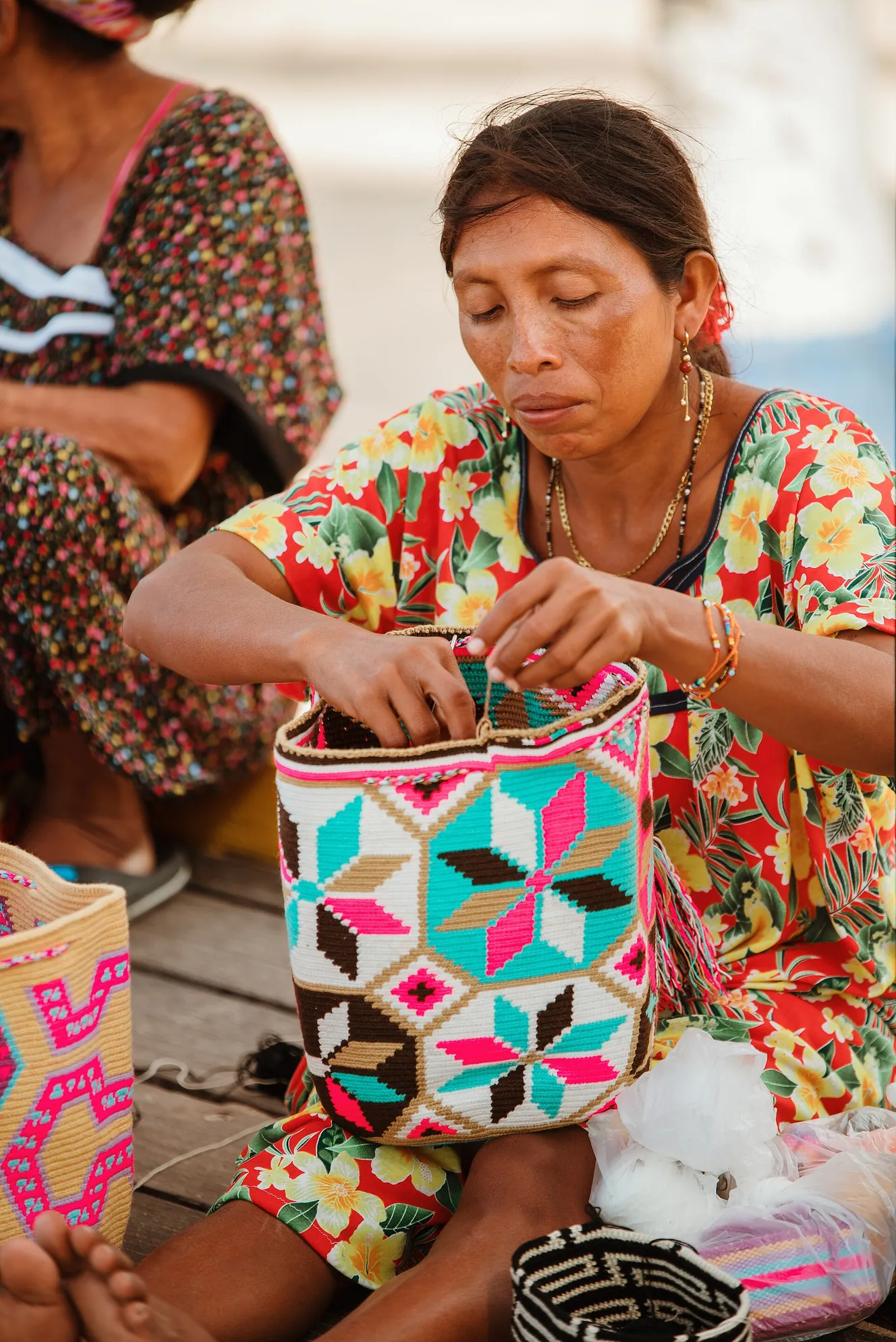
  27. Una mujer wayuu con vestido de flores rojas y aretes teje con aguja una mochila de rombos y estrellas en turquesa, rosa, negro y blanco, sentada en el suelo junto a otras mochilas.

    Culture

    Handicrafts: the hat, the mochila and the craft behind them.

    What you buy at Las Bóvedas comes from far away and takes days of work. A guide to understanding the sombrero vueltiao, Wayuu mochilas and the place where they are sold.

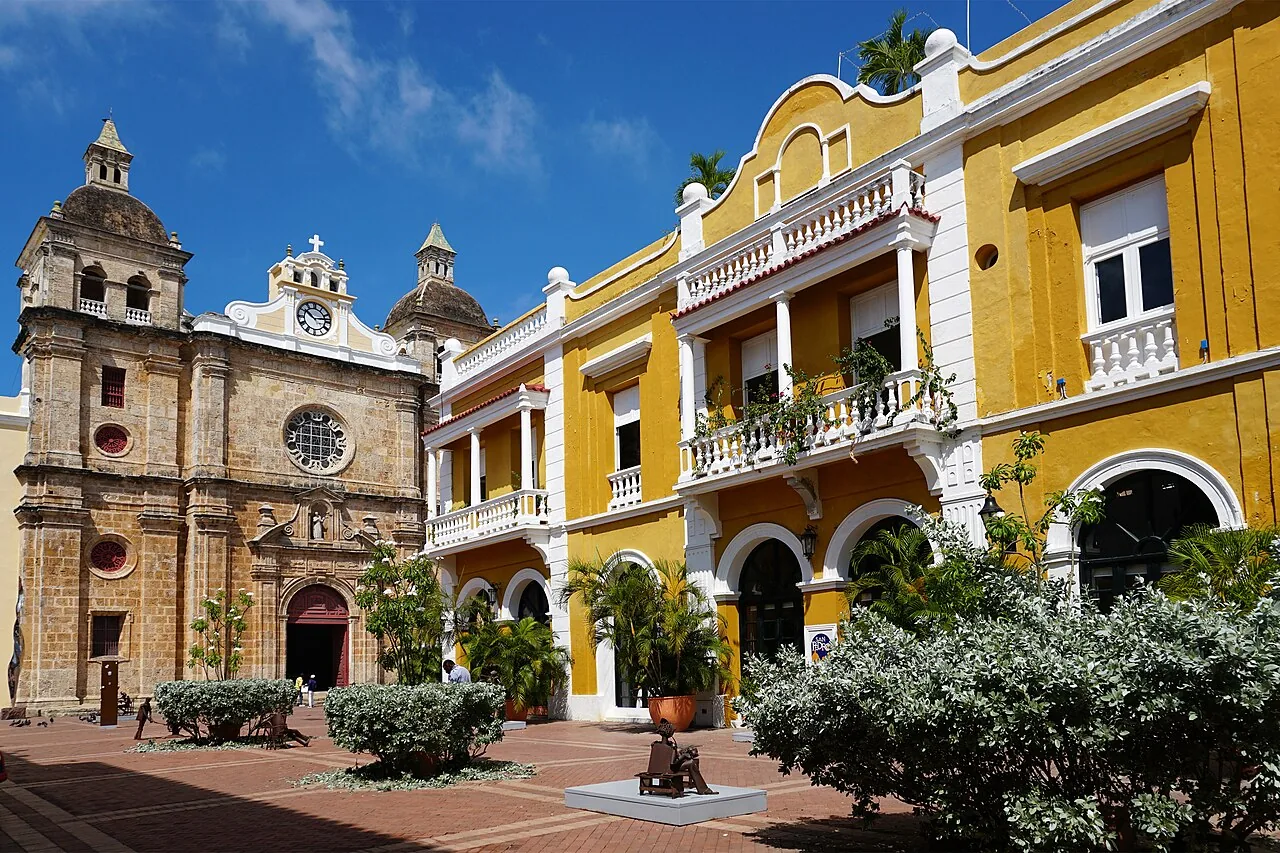
  28. Plaza de San Pedro Claver con la fachada de piedra de la iglesia al fondo, en el Centro Histórico de Cartagena

    Heritage

    San Pedro Claver, the saint of the port.

    A Catalan Jesuit, a college set against the city wall and a square of iron sculptures: the story behind one of the most visited corners of the Centro.

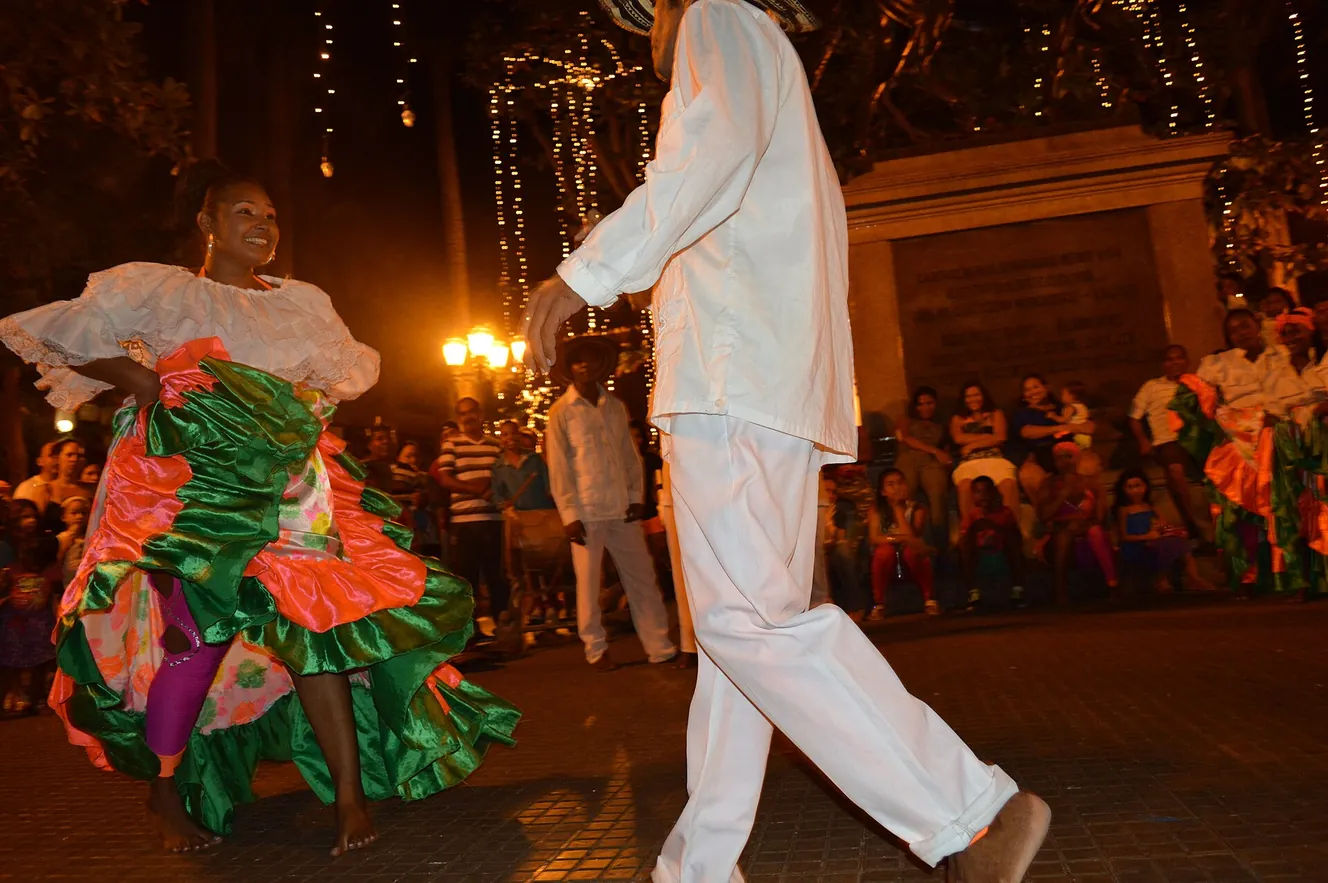
  29. De noche, una bailarina con falda ancha de volantes verdes y naranjas y blusa blanca baila frente a un hombre vestido de blanco, en una plaza adornada con luces, ante un público sentado junto al pedestal de una estatua.

    Music

    Salsa in Cartagena: el Joe, the bars and the fierce ear.

    From the Nariño neighborhood to the wall of photos at Donde Fidel: how salsa became part of the way the city listens.

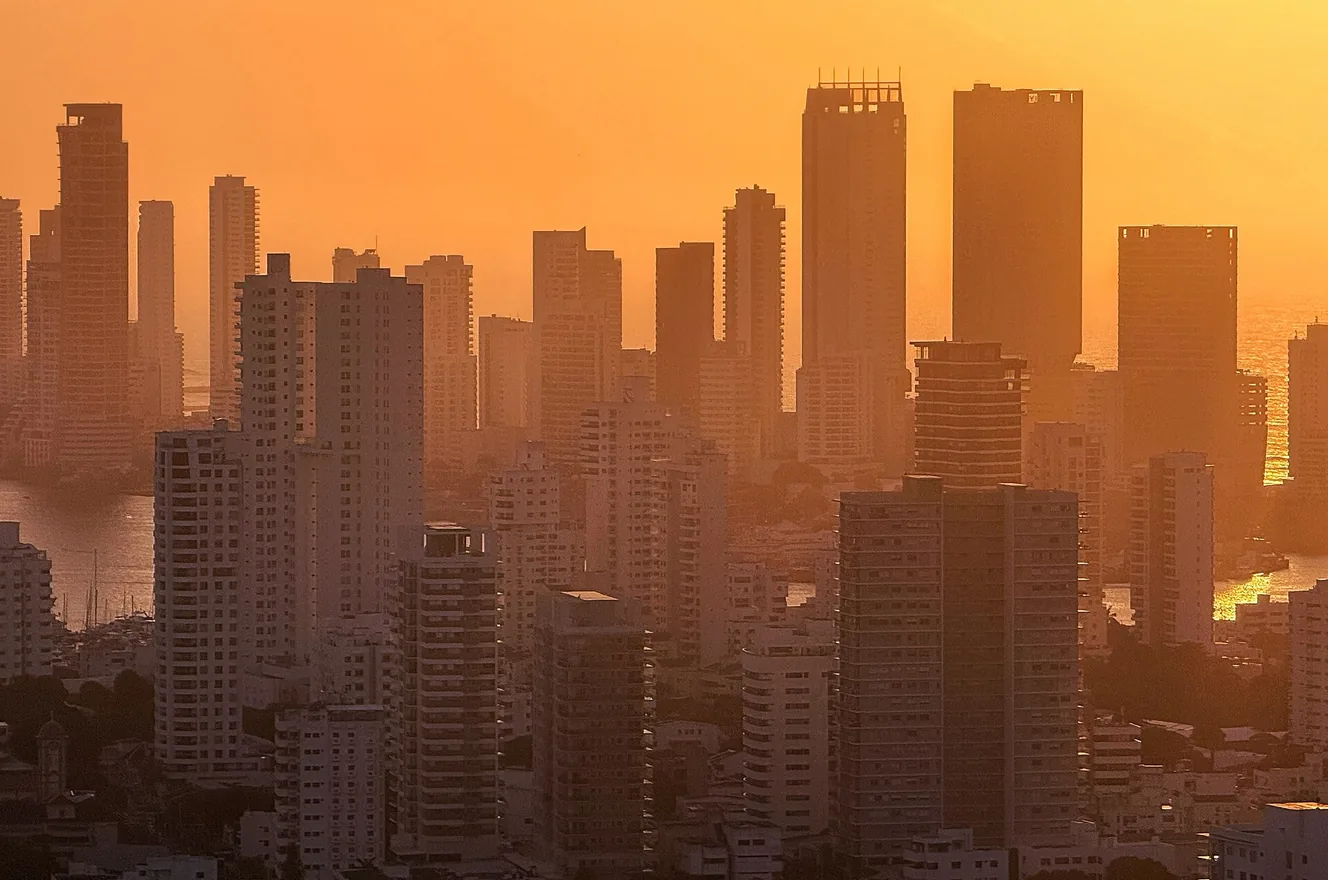
  30. Los rascacielos de Bocagrande en contraluz bajo una bruma dorada de atardecer, con destellos de la bahía entre los edificios.

    Neighborhoods

    Bocagrande and Castillogrande, the city the sea let grow.

    A colonial breakwater, a Canadian oil company and a 1945 hotel explain the peninsula of towers, beaches and El Laguito.

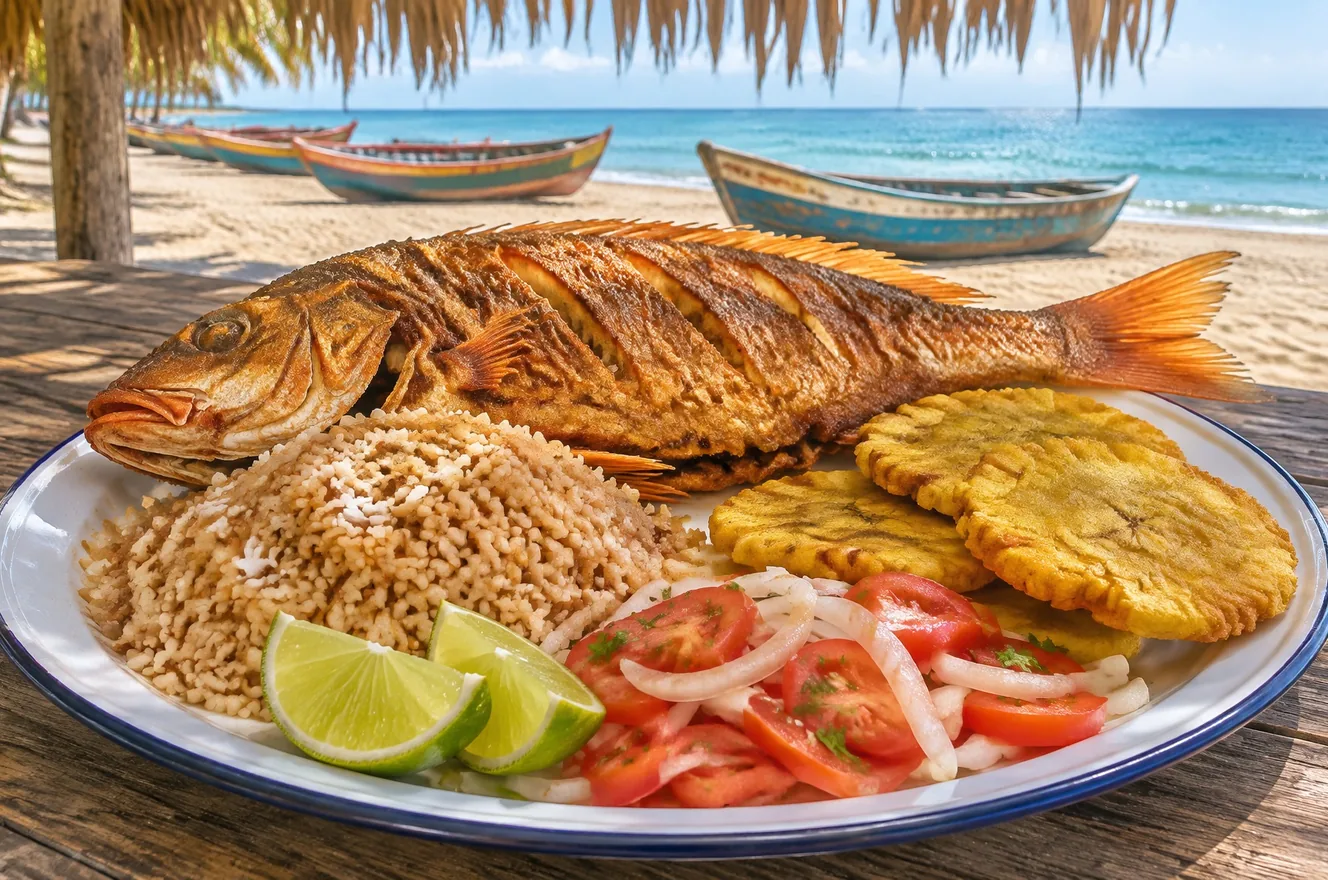
  31. Ilustración: plato con un pargo rojo frito entero, arroz con coco, patacones, limón y ensalada de tomate y cebolla, sobre una mesa de madera bajo un kiosco de palma frente a una playa con canoas.AI-generated illustration

    Food & drink

    Fried fish, coconut rice and patacón: the Caribbean lunch.

    In La Boquilla, the fishing village north of the city, the quintessential beach plate starts in a canoe and ends facing the sea.

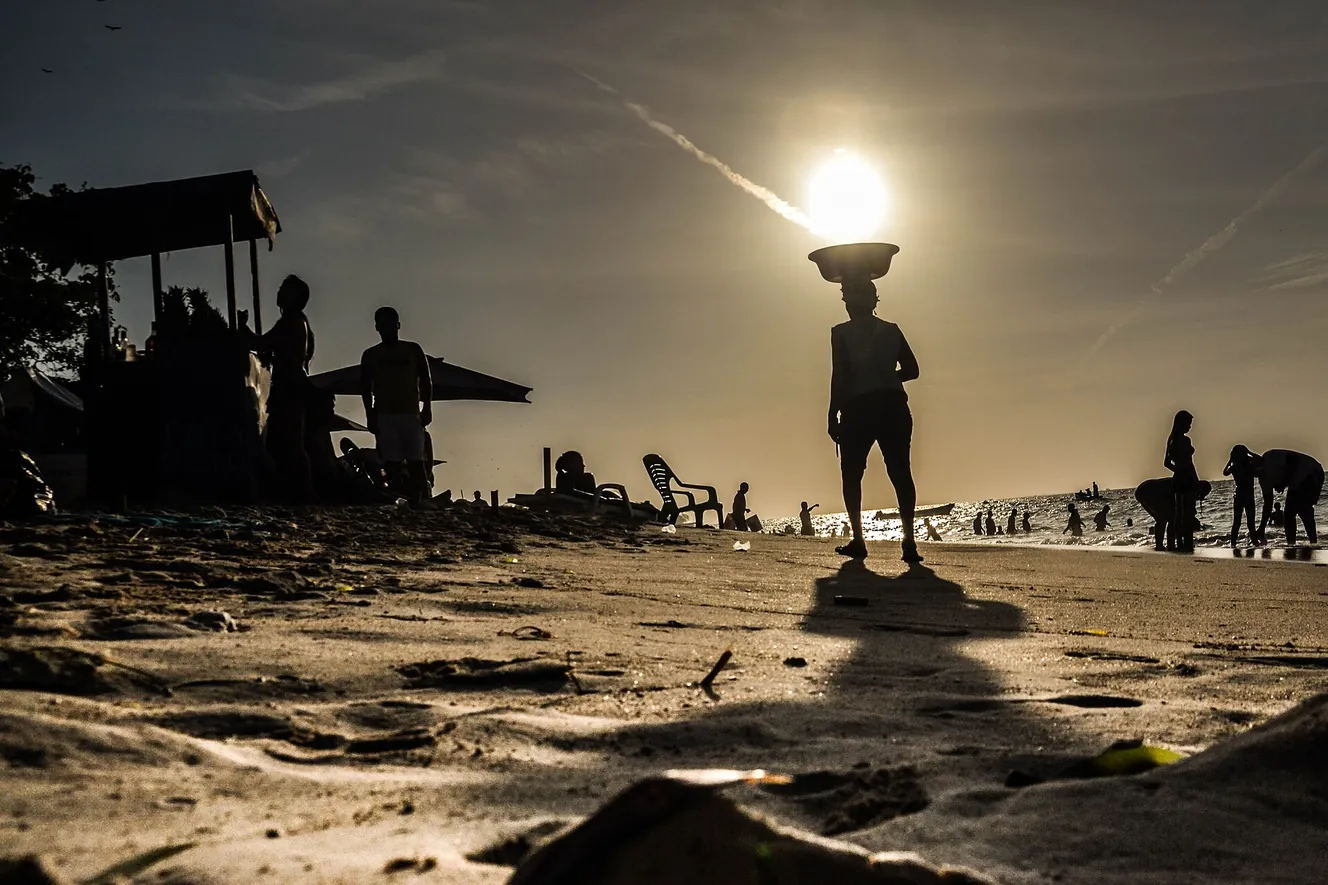
  32. A contraluz del sol bajo, la silueta de una mujer con una ponchera sobre la cabeza camina por la arena; a la izquierda, un kiosco y bañistas en la orilla.

    Beyond the city

    Islas del Rosario and Barú: the coral park off Cartagena.

    What the Parque Nacional Natural Corales del Rosario y de San Bernardo is, how to reach its islands and Playa Blanca, and what the environmental authority asks of visitors.

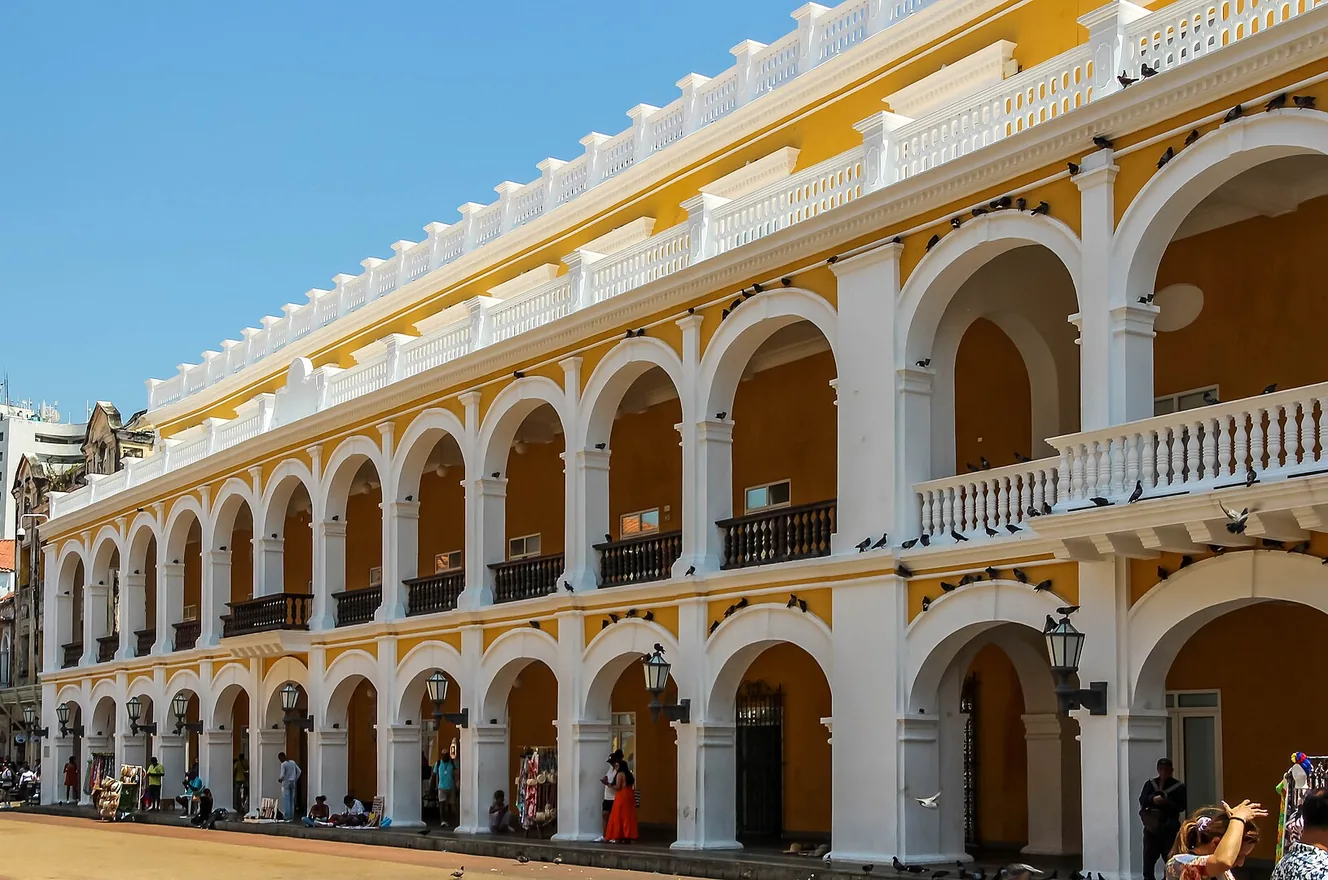
  33. Arcadas blancas y muros amarillos del Palacio de la Proclamación, en el Centro de Cartagena, en diagonal bajo un cielo azul intenso.

    History

    Monday, November 11, 1811.

    The morning the artisans of Getsemaní forced Cartagena's independence, who Pedro Romero was, and how the city celebrates its greatest date today.

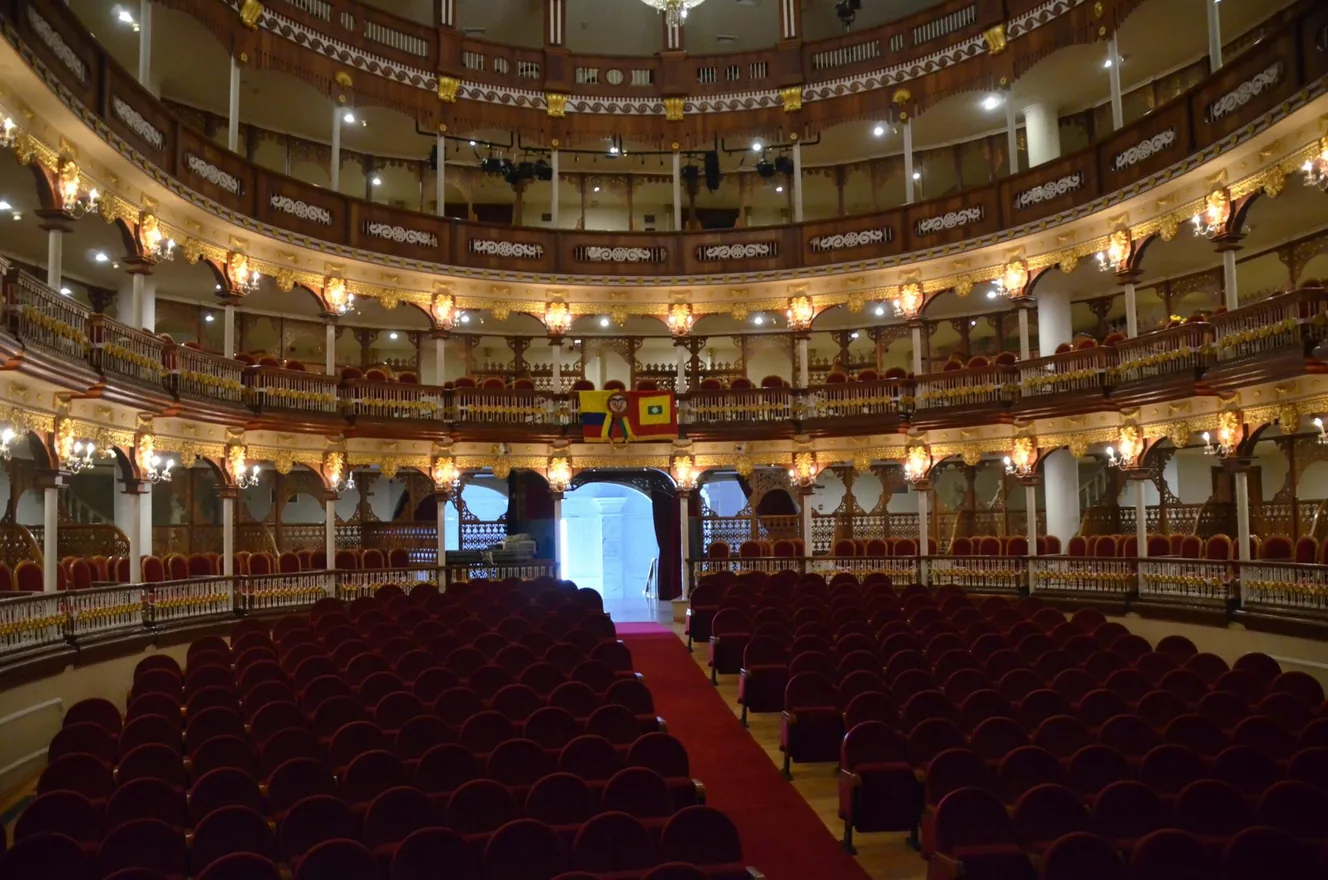
  34. Interior del Teatro Adolfo Mejía visto desde el patio de butacas: filas de sillas rojas, un pasillo con alfombra roja y tres niveles de palcos iluminados en herradura.

    Culture

    Film and letters: FICCI and the Hay Festival, up close.

    Latin America's oldest film festival and one of the country's best-attended literary gatherings share a city, its squares and a theater. Their history, their venues and their upcoming dates.

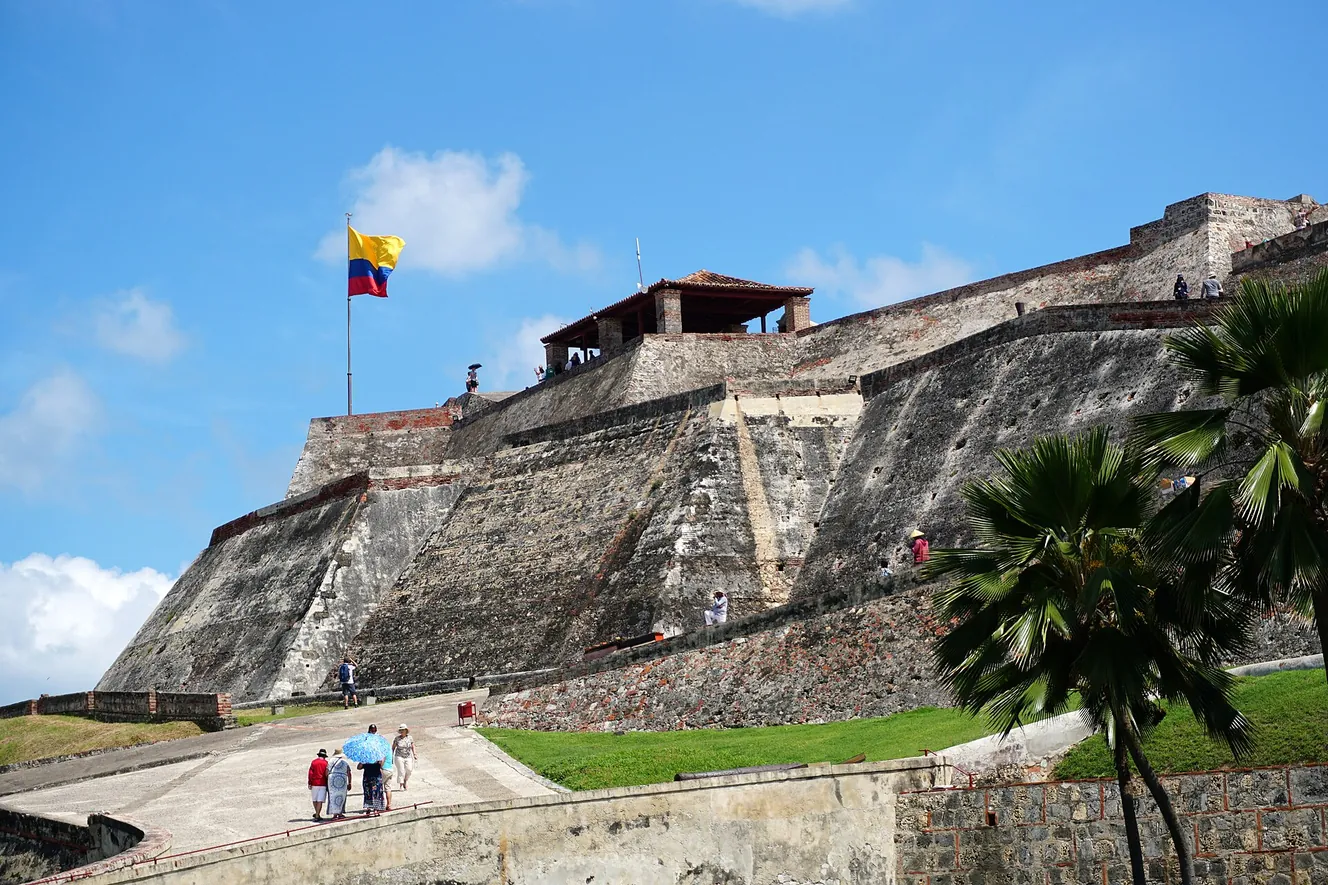
  35. Rampa de entrada al castillo de San Felipe con visitantes, uno bajo una sombrilla azul; arriba, los muros inclinados de piedra, un mirador de tejado rojo y una bandera de Colombia; a la derecha, palmeras.

    Heritage

    San Felipe, the fortified hill.

    How Cartagena's largest fortress was built, what lies in its tunnels and what is worth knowing before climbing up.

  36. Muros bajos de piedra del fuerte de San Sebastián del Pastelillo en Manga, Cartagena, junto al agua de la bahía.

    Neighborhoods

    Manga, the island of quintas, the Pastelillo and sailboats.

    Across the Puente Román, a residential neighborhood holds republican-era houses, a fort from 1741 and the bay where passing boats moor.

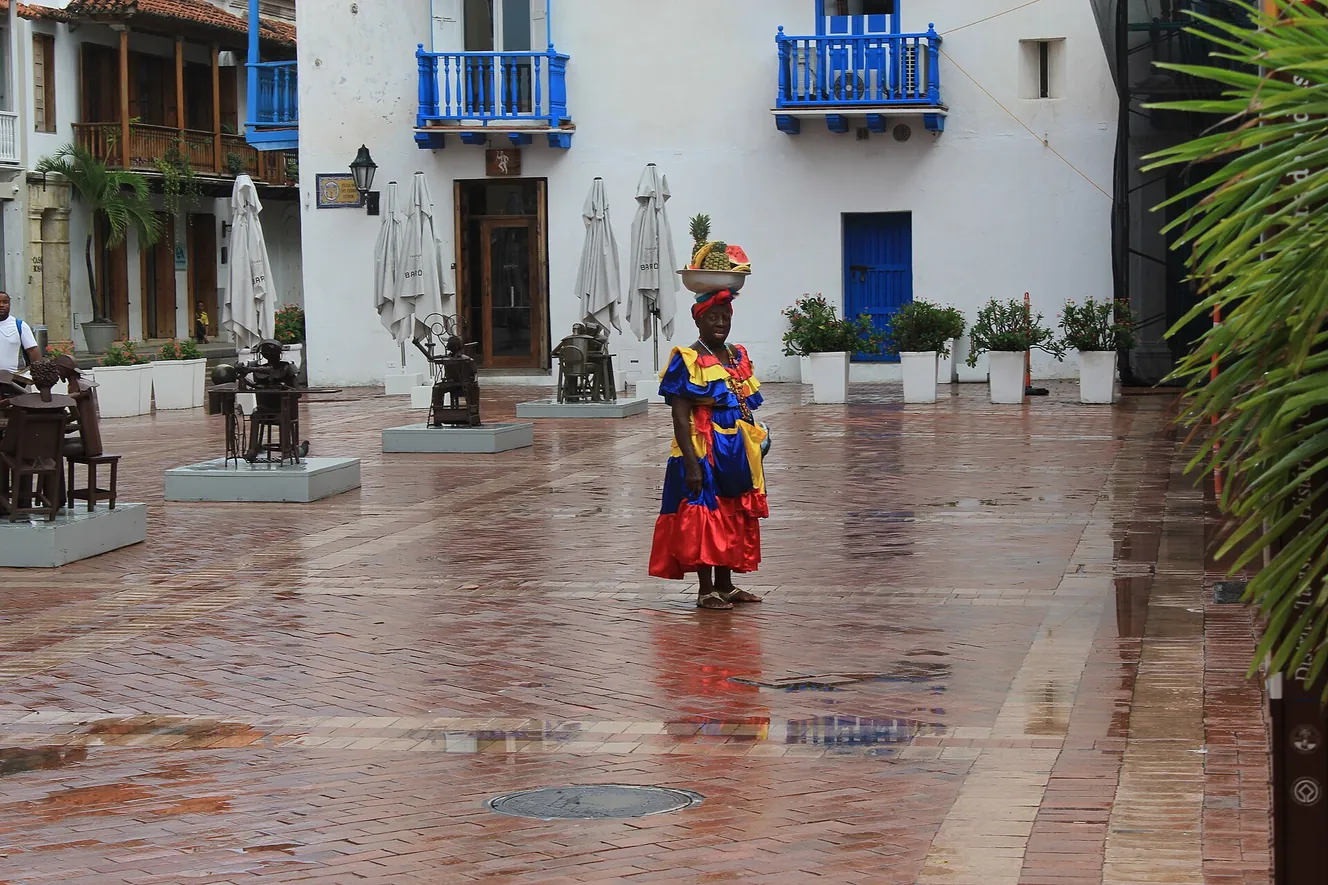
  37. Una plaza de ladrillo mojada por la lluvia, con fachadas blancas de balcones azules, sombrillas cerradas y esculturas de metal; en el centro, una palenquera de pie con una ponchera de fruta en la cabeza.

    Food & drink

    The palenqueras and their fruit: trade, history and image.

    They come from San Basilio de Palenque with a basin balanced on their heads and are Cartagena's most photographed figure; their trade is older and harder than the postcard.

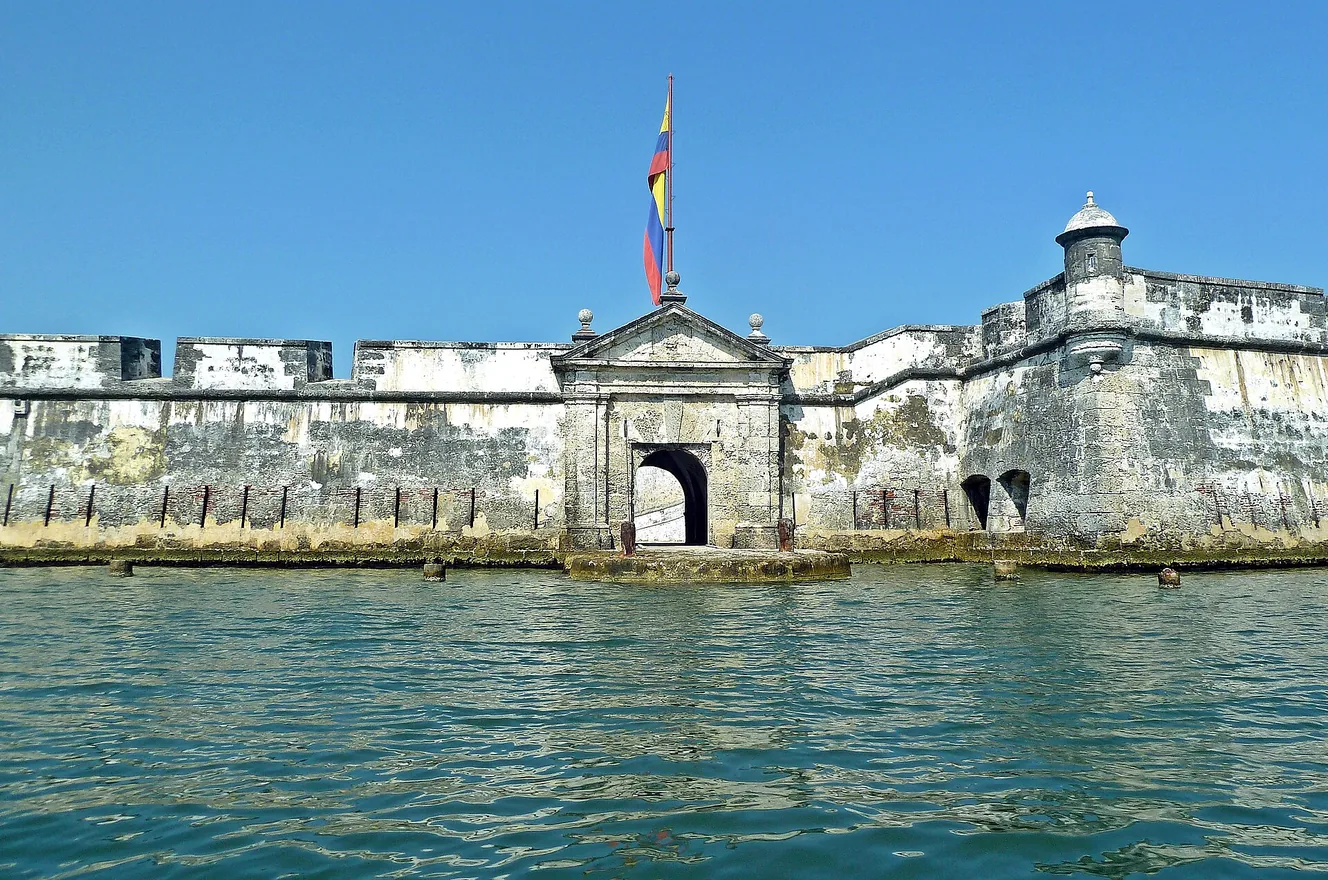
  38. La portada de piedra del fuerte de San Fernando de Bocachica vista desde el agua, con la bandera de Colombia y una garita bajo un cielo azul.

    Beyond the city

    Tierra Bomba and Bocachica, the island that guards the door to the bay.

    Twenty minutes by boat from the Centro, the San Fernando fort watches over the only entrance to Cartagena, and its neighbors are still waiting for drinking water.

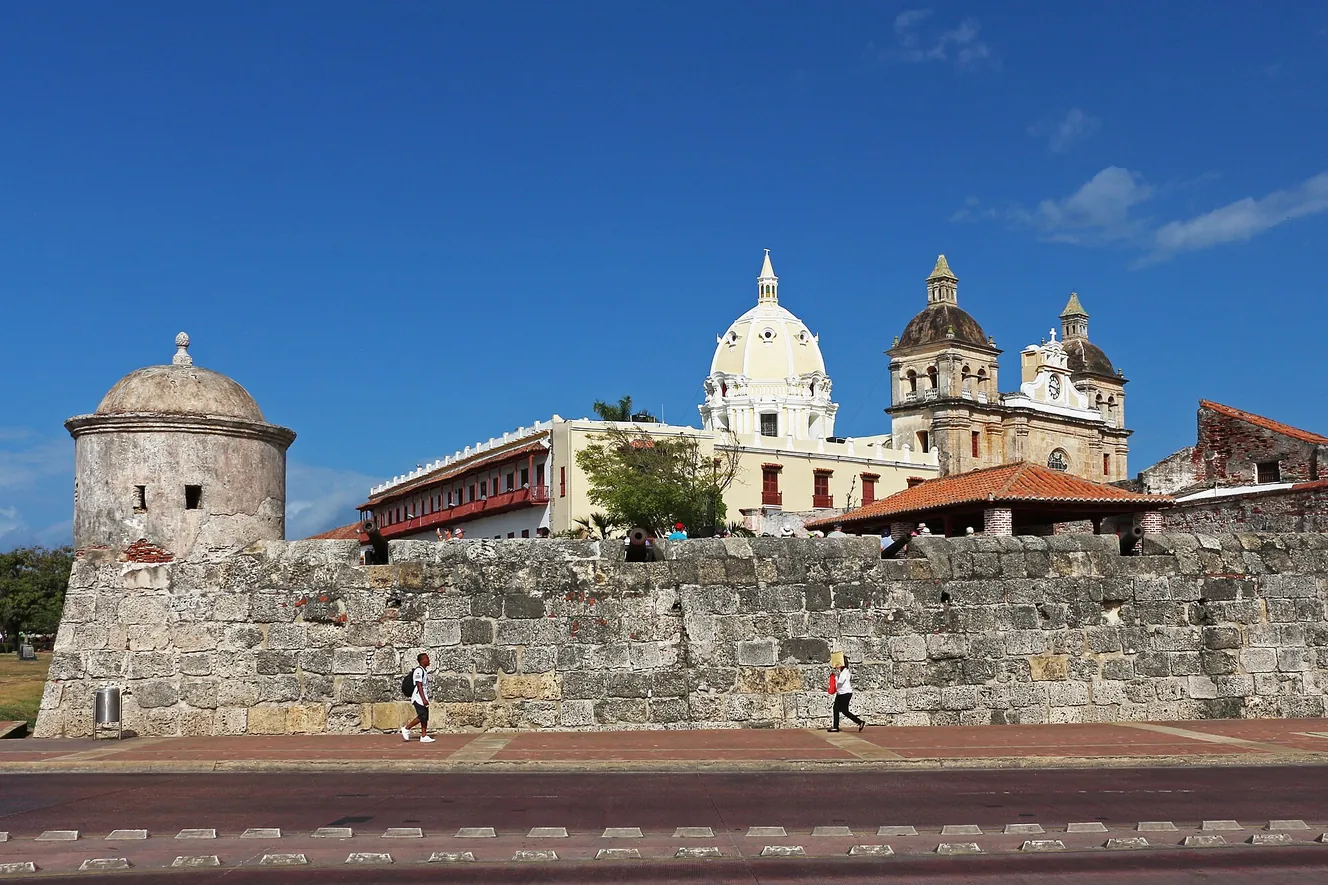
  39. Muralla baja de piedra con una garita redonda en el extremo; detrás asoman las cúpulas y torres de una iglesia y un edificio con balcones, bajo cielo azul.

    History

    The port of the enslaved.

    Cartagena was the main gateway for enslaved Africans into Spanish America. What historians say, who Benkos Biohó was and where that memory can be read today.

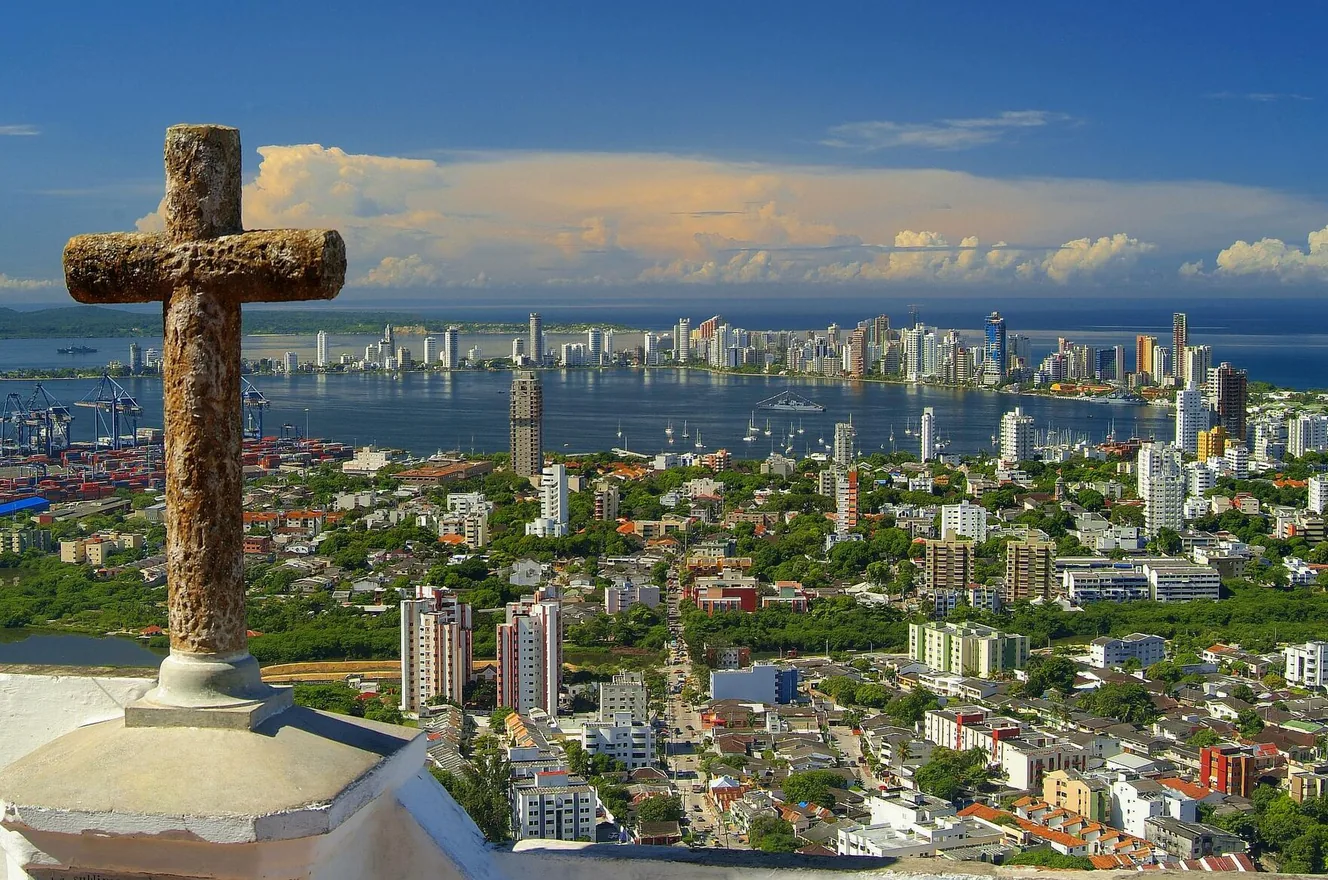
  40. Una cruz de piedra en el mirador del cerro de La Popa domina la vista de Cartagena: barrios, la bahía y los edificios de Bocagrande bajo nubes doradas.

    Heritage

    La Popa, the hill of the Candelaria.

    On Cartagena's only hill, a 17th-century Augustinian convent keeps the city's patron saint, who every February 2 receives one of the oldest festivals on the Colombian Caribbean coast.

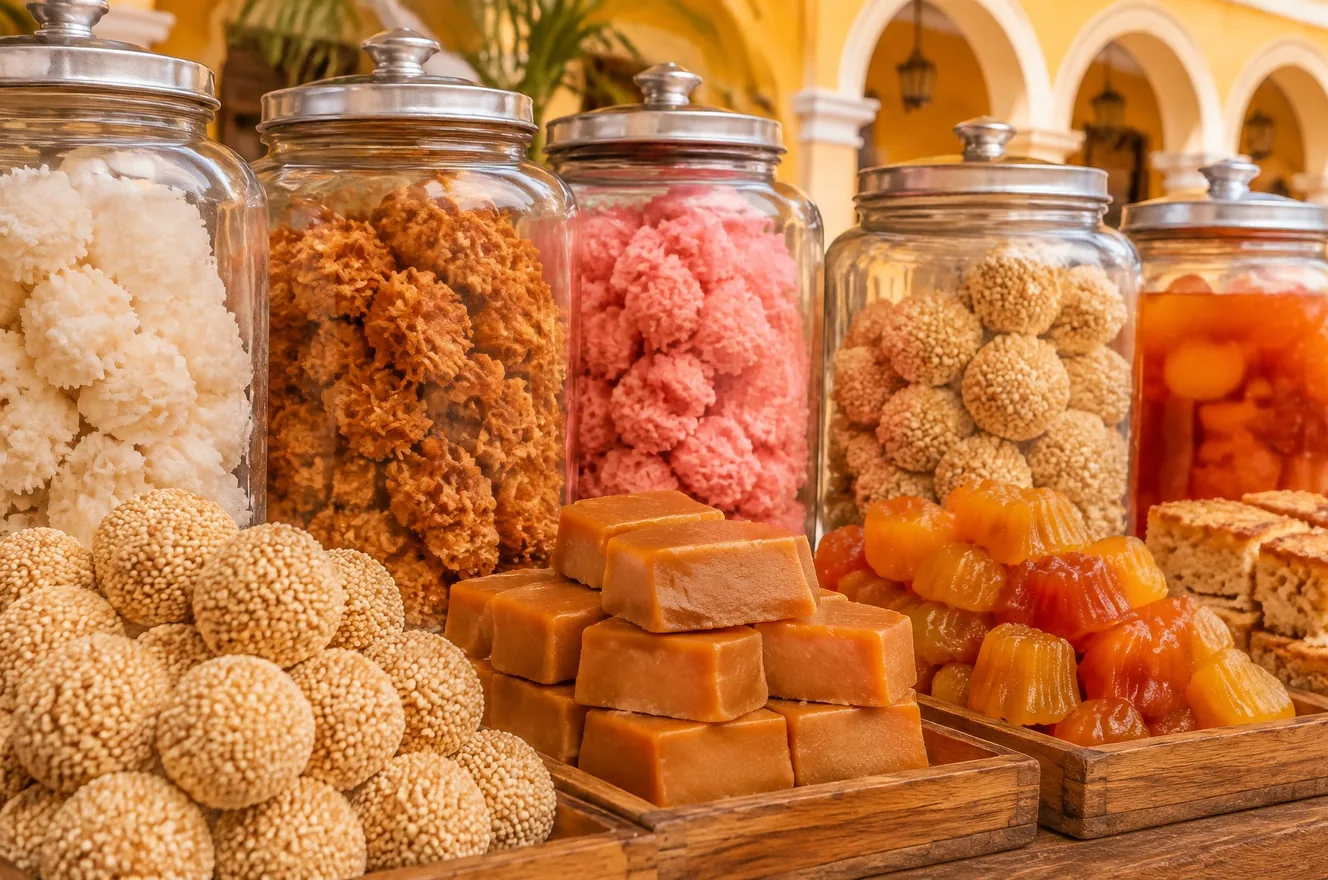
  41. Ilustración: frascos de vidrio con cocadas blancas, morenas y rosadas, alegrías, panelitas y dulces en almíbar sobre bandejas de madera, bajo unos arcos coloniales amarillos.AI-generated illustration

    Food & drink

    The Portal de los Dulces: cocadas, alegrías and panelitas.

    Under the arcades of the Plaza de los Coches, facing the Torre del Reloj, a good twenty-odd sweet makers have kept Cartagena's candy tradition alive for a century.

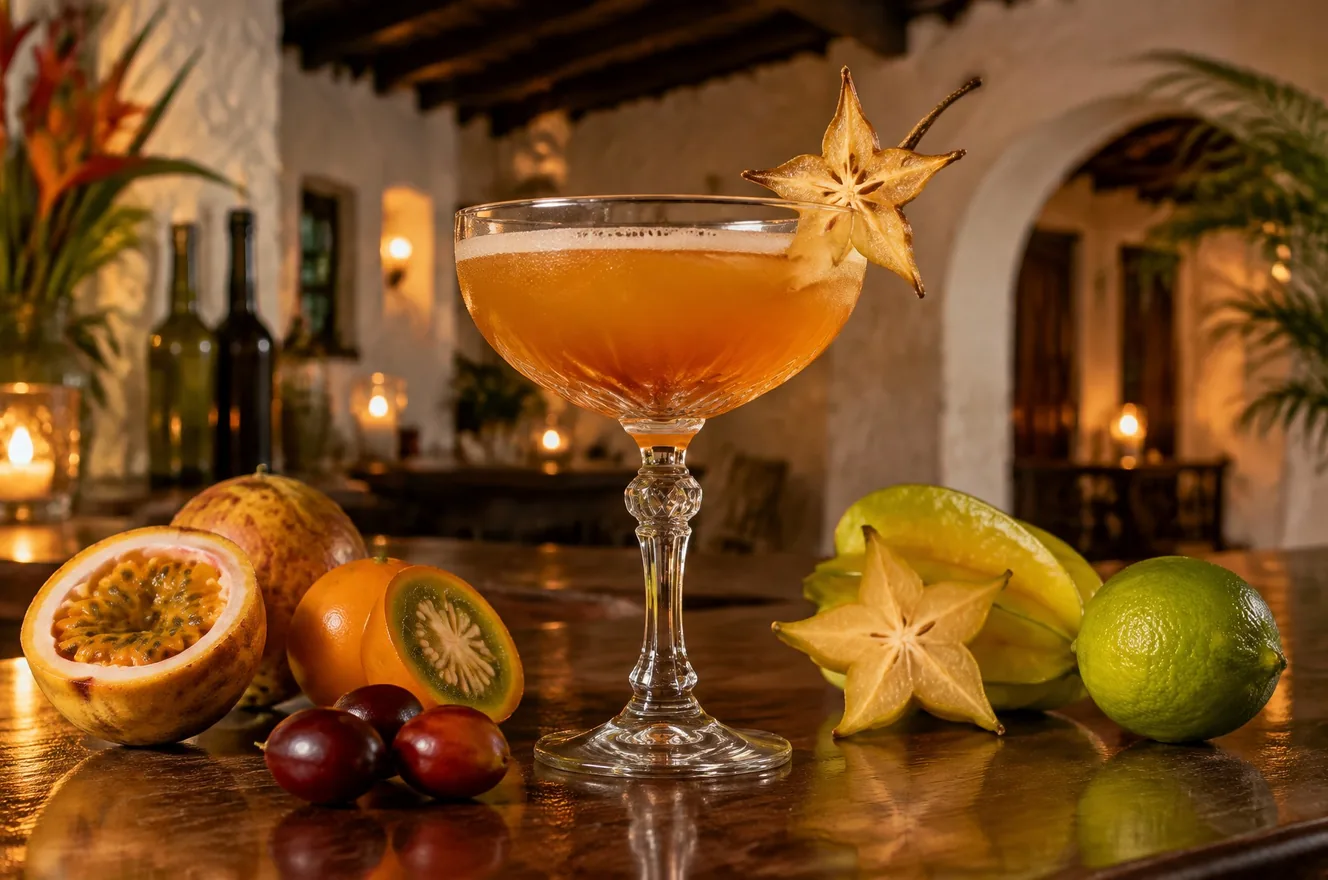
  42. Ilustración: un cóctel de ron color ámbar en copa con una carambola deshidratada, sobre una barra de madera en una casa colonial a la luz de las velas, entre maracuyá, lulo, corozo, carambolo y limón.AI-generated illustration

    Food & drink

    Cocktails in Cartagena: from the Centro to the list of the world's best bars.

    House rum, Caribbean fruit and a bar on Calle del Colegio that in 2026 placed third in The World's 50 Best Bars.

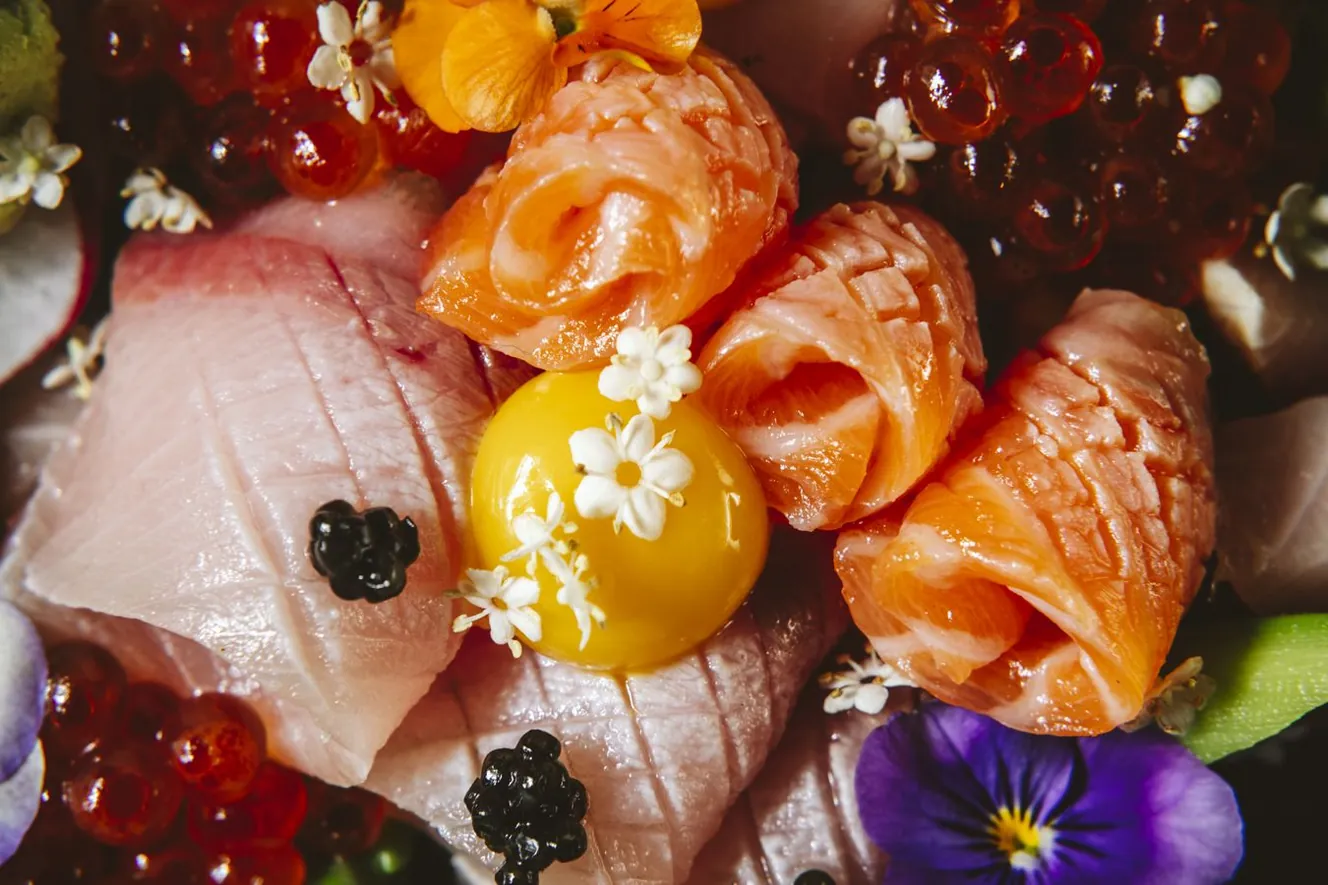
  43. Primer plano de láminas de pescado blanco y rosas de salmón con una esfera amarilla, huevas, caviar y flores comestibles.

    Food & drink

    The new Cartagena cuisine: chef-driven cooking and Caribbean produce.

    Fire, research and a local pantry: how a handful of kitchens in the Centro and Getsemaní changed the way Cartagena eats.

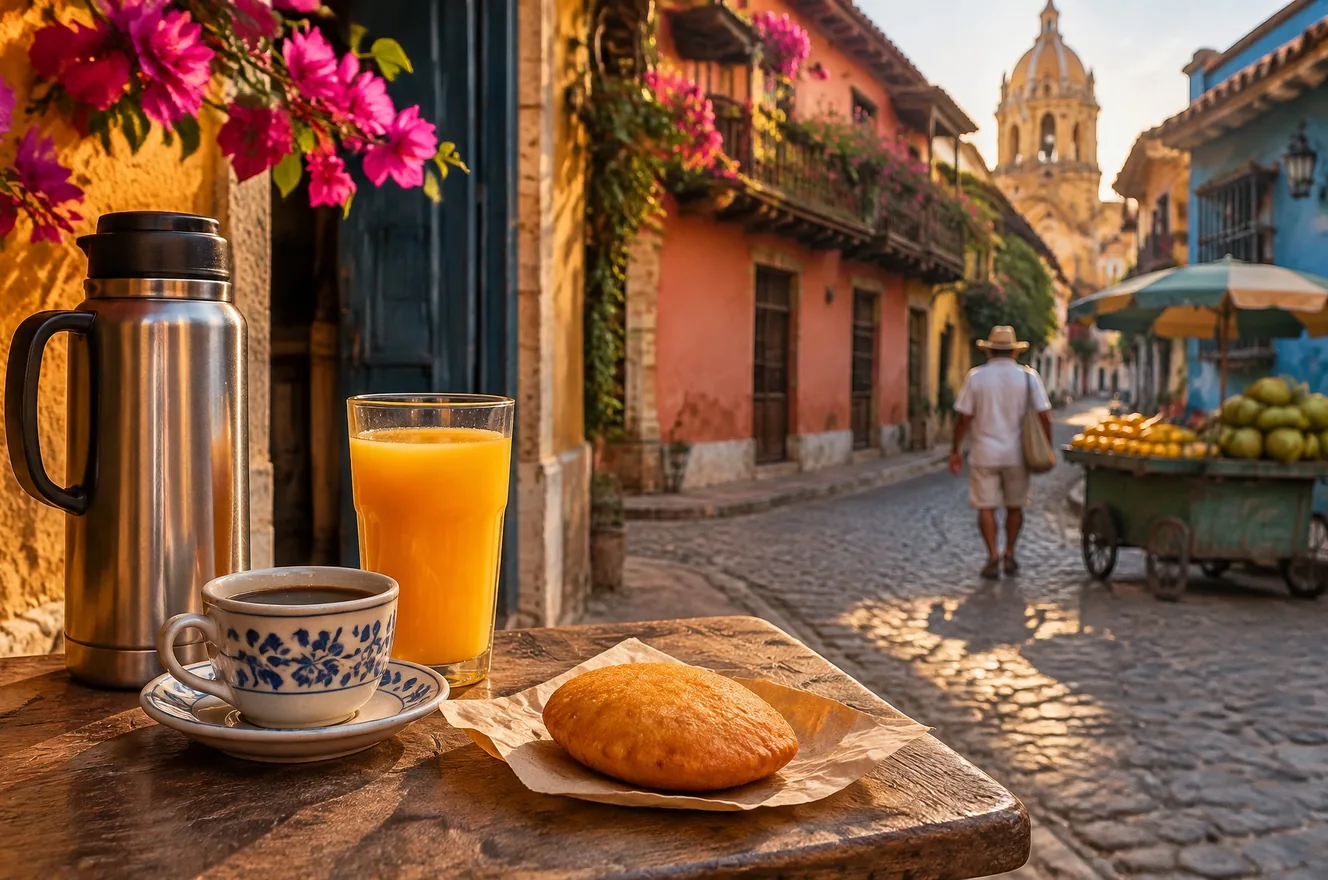
  44. Ilustración: una calle colonial del Centro de Cartagena al amanecer, con un termo, una taza de tinto, un vaso de jugo y una arepa de huevo sobre una mesita de madera, y un carrito de frutas al fondo.AI-generated illustration

    Food & drink

    Coffee, juices and mornings in the Centro.

    Before the sun bears down, Cartagena wakes up to tinto from a thermos, corozo juice, arepa de huevo and a new generation of specialty coffee shops.

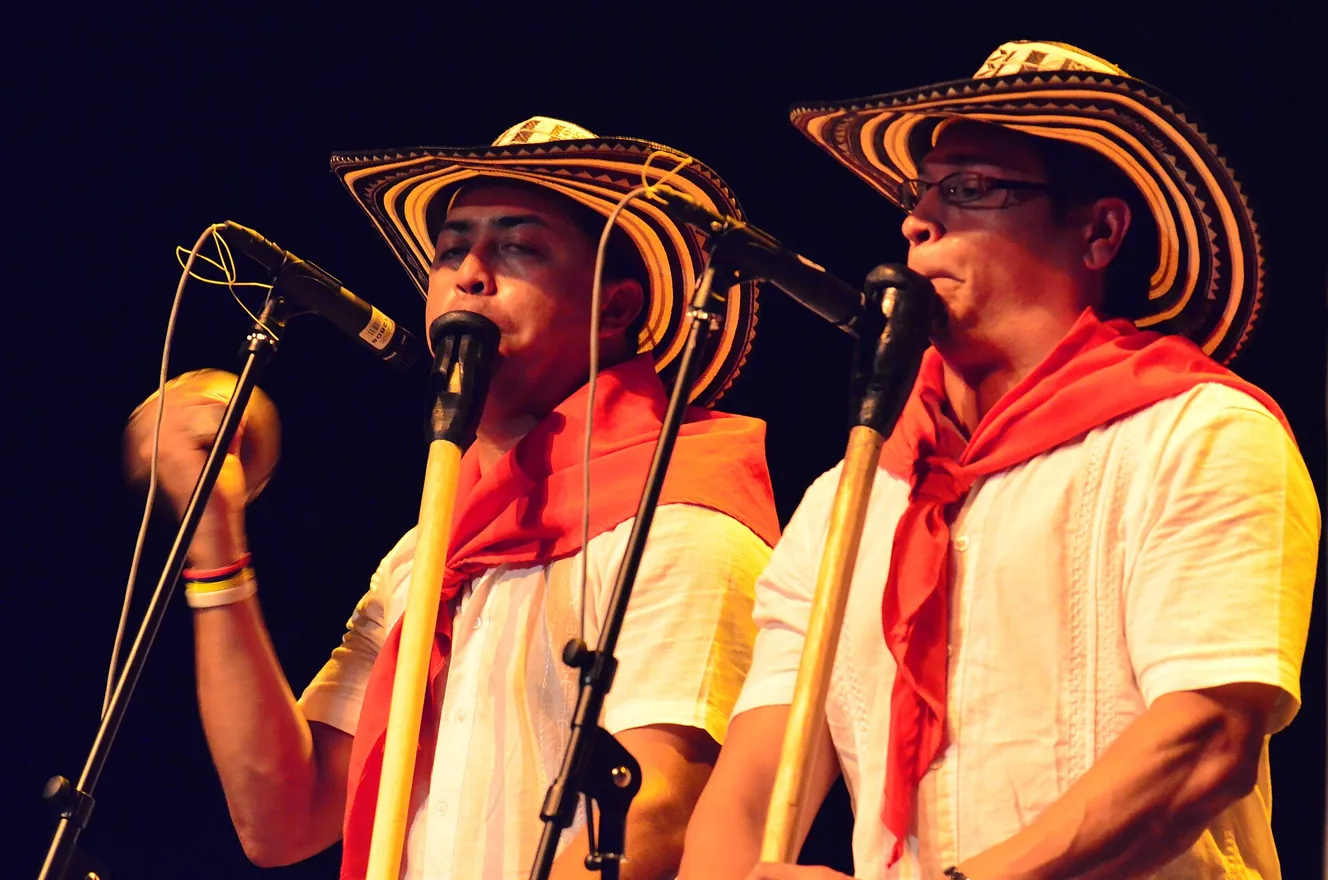
  45. Dos gaiteros con sombrero vueltiao, camisa blanca y pañoleta roja tocan gaitas largas frente a micrófonos; uno sacude una maraca, sobre fondo negro.

    Music

    Gaitas de San Jacinto: el cactus que canta en los Montes de María.

    Cardón, cera de abejas, carbón molido y una pluma de pato. Con eso se hace la gaita que los campesinos de San Jacinto llevaron de las parrandas a París, a Moscú y a un Grammy Latino.

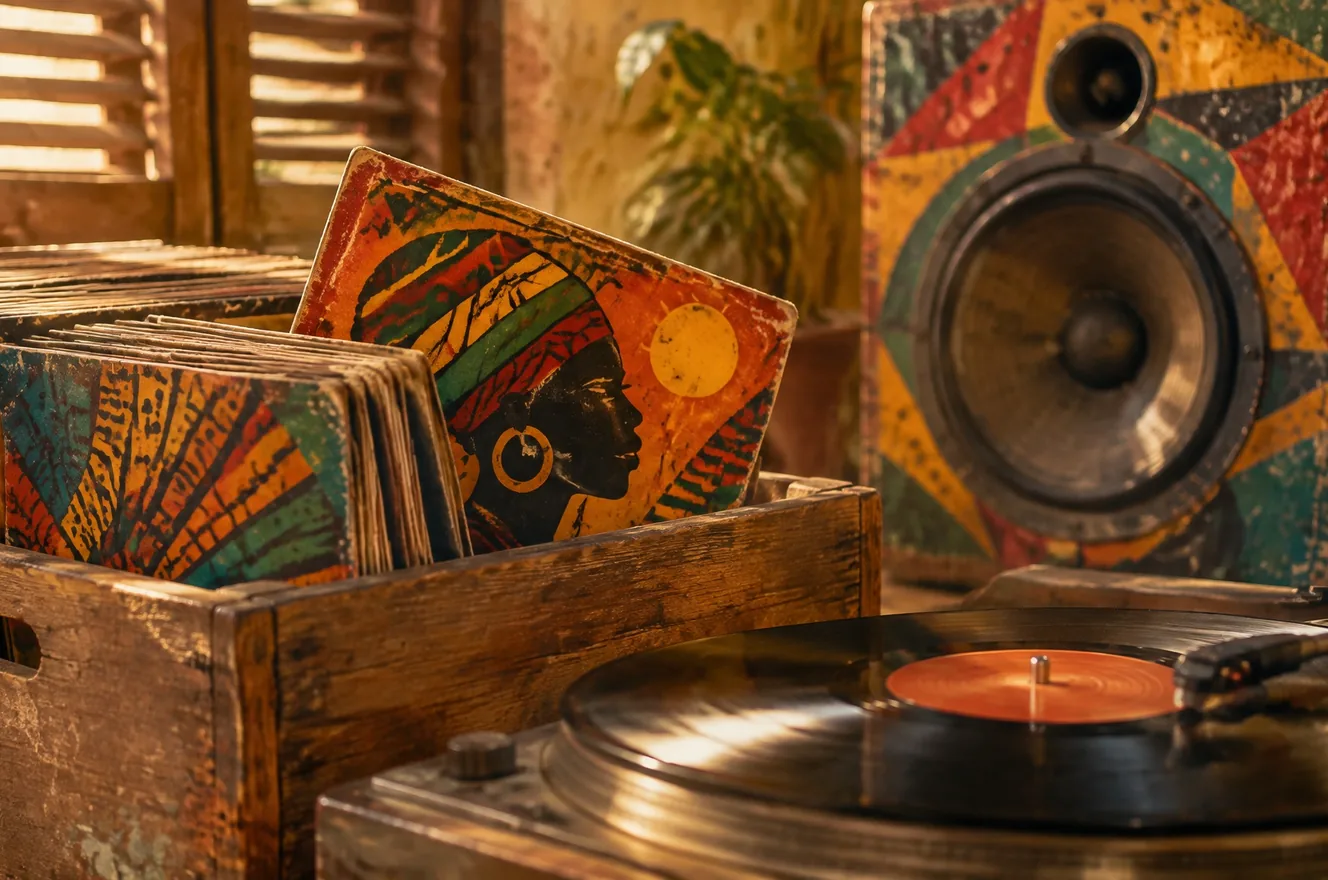
  46. Ilustración: un cajón de madera con viejos discos de vinilo de portadas coloridas de inspiración africana, un tocadiscos girando y un parlante pintado a mano, en un taller de picó.AI-generated illustration

    Music

    Los Pavitos, La Bollona y El Satanás: el viaje de los discos africanos.

    Pilotos, marineros y cazadores de discos trajeron a Cartagena y Barranquilla la música del Congo, Nigeria y Sudáfrica. Los picós les cambiaron el nombre, los guardaron como tesoros y de esa mezcla salió la champeta.

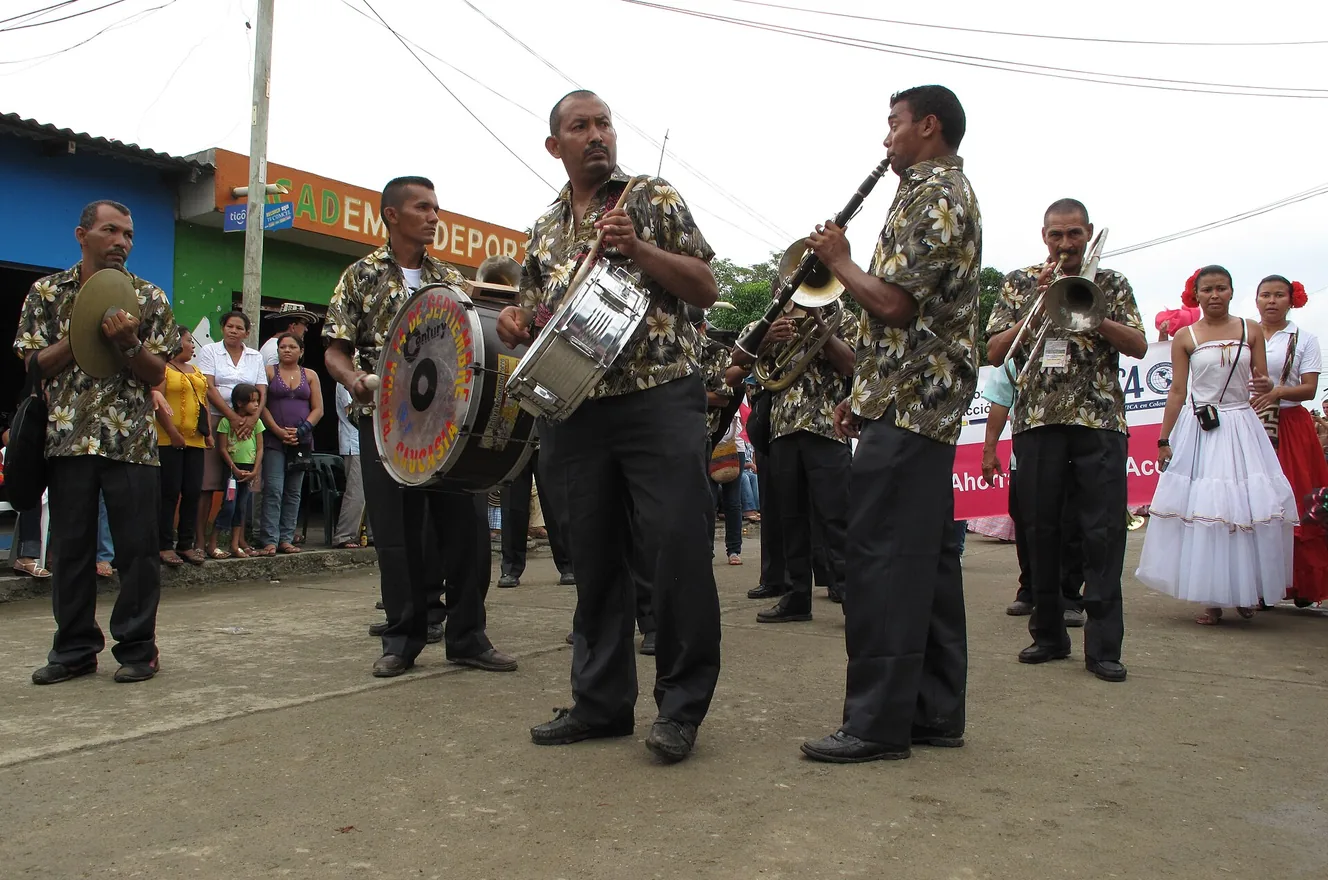
  47. Músicos de una banda de porro con camisas estampadas tocan redoblante, bombo, platillos, clarinete y trombón en una calle de San Pelayo; detrás, dos mujeres con vestidos de fiesta blancos y rojos y vecinos mirando.

    Music

    Porro de banda y corraleja: la fiesta grande de las sabanas.

    Un porro compuesto mirando a unos campesinos amarrar palcos con bejuco, una banda campeona en 1977 que ya cumplió 60 años y un pueblo que apaga los picós para oír sus trompetas: el porro de Sucre y Córdoba, en sus plazas.

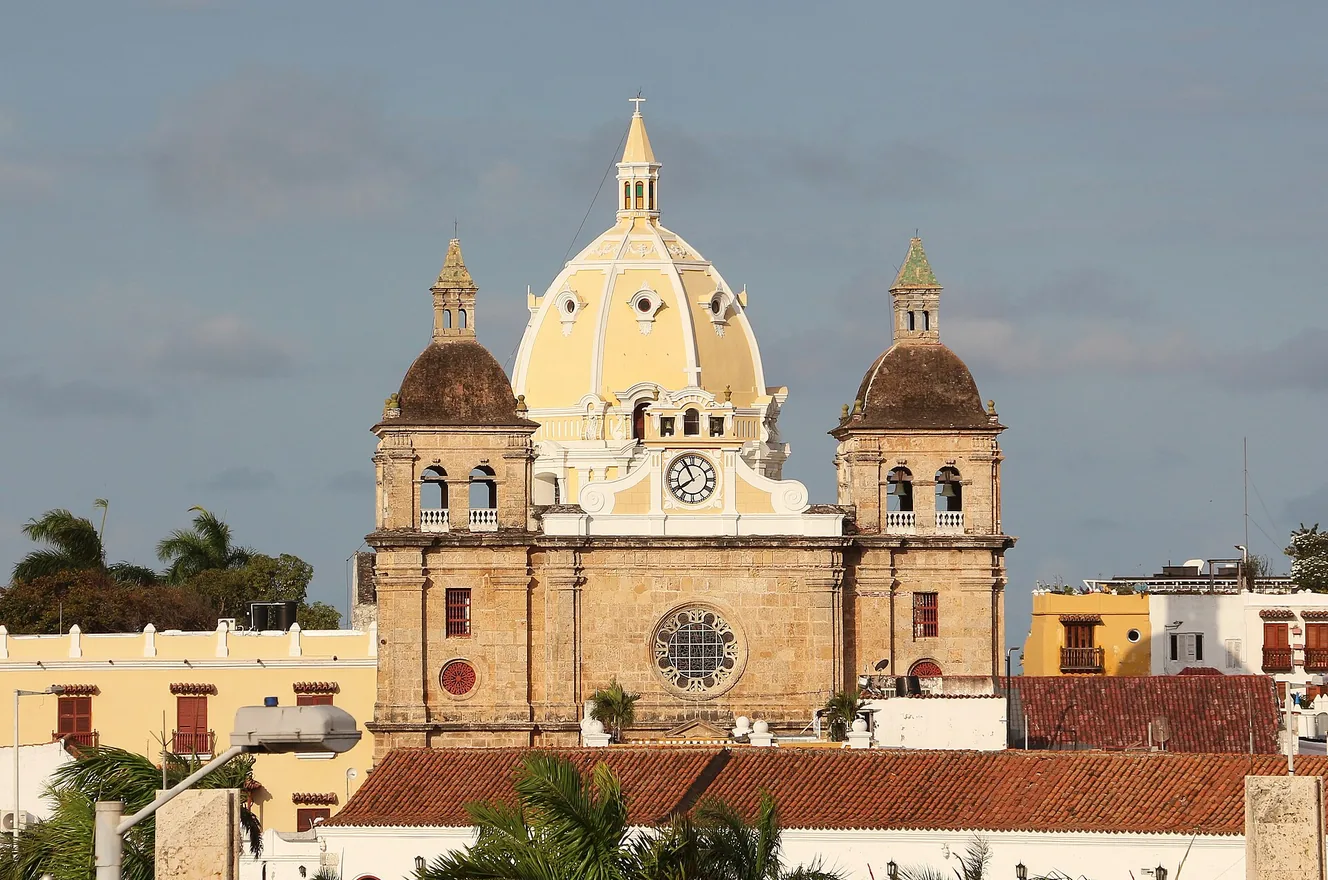
  48. Las cúpulas y torres de la iglesia de San Pedro Claver iluminadas por el sol de la tarde contra un cielo gris oscuro de tormenta, sobre los tejados del Centro de Cartagena.

    Music

    La ciudad que se volvió canción: Cartagena en boleros, porros y champetas.

    Un bolero de un músico de Sincé, el himno que escribió un ingeniero de Medellín, los trece años de Lucho Bermúdez en la ciudad y una champeta con nombre de barrio: las canciones que nombran a Cartagena y quiénes las hicieron.

What's happening in Cartagena, every week.

A short letter with the plans worth your time. No spam.

A welcome gift: show the “Thanks for subscribing” screen at the SLVJ bar and your first cocktail is on the house. Terms

Prefer WhatsApp? Ask for this weekend’s agenda ↗