
Stories / History
Three sieges that made the city.
Drake in 1586, Pointis in 1697 and Vernon in 1741: what happened in each attack and what it left in the stone and in Cartagena's memory.
Cartagena Social Club · 6 min read
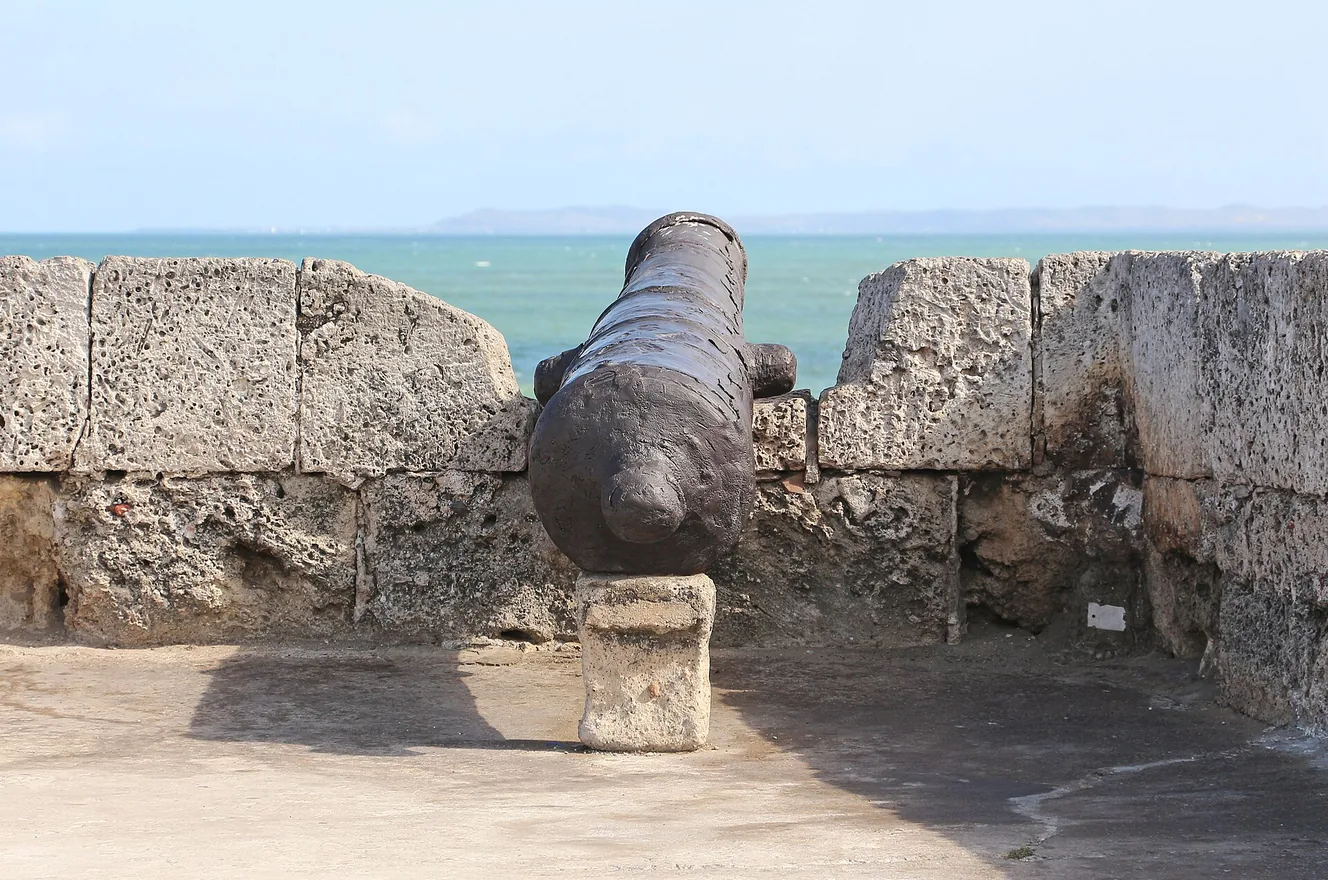
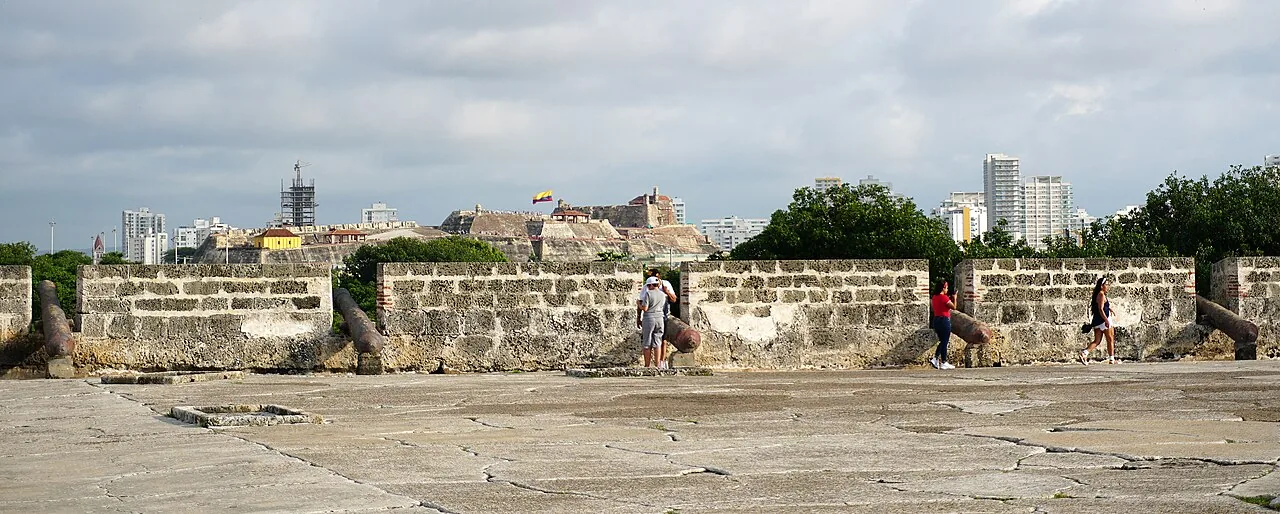
A cannon on the Santo Domingo bastion points at the sea the attackers came from. Photo: Bernard Gagnon / Wikimedia Commons (CC BY-SA 4.0)
Cartagena's wealth was also its problem. The galleons of the Carrera de Indias, the Spanish treasure fleet route, passed through its bay, as did trade with the interior of the New Kingdom of Granada and much of the trade in enslaved Africans. For two centuries that made it a constant target for privateers, pirates and enemy squadrons. The walls and forts visitors walk today are, to a large extent, the response to those blows.
Of all the attacks, three shape the city's story. One left it in the hands of an English privateer for two months. Another ended in plunder by a French squadron and its filibuster allies. The third, the largest, failed. They are worth telling separately, because each left a different mark.
1586: Drake and the ransom
In 1586, in the midst of the Anglo-Spanish War, Francis Drake arrived in the Caribbean at the head of an expedition sent by Elizabeth I to strike at the possessions of Philip II. He had just sacked Santo Domingo, and the governor of Cartagena, Pedro Fernández de Busto, was warned that the city would be next. He ordered valuables taken inland, non-combatants evacuated and the defense concentrated on the sandbar of La Caleta, with trenches and barrels filled with sand.
The English appeared off the city on February 9. That night they landed at the southern end of La Caleta and advanced along the beach while the fleet distracted the defenders. By February 11 the city had been taken. Drake settled into the house of a Spanish captain and began negotiating a ransom.
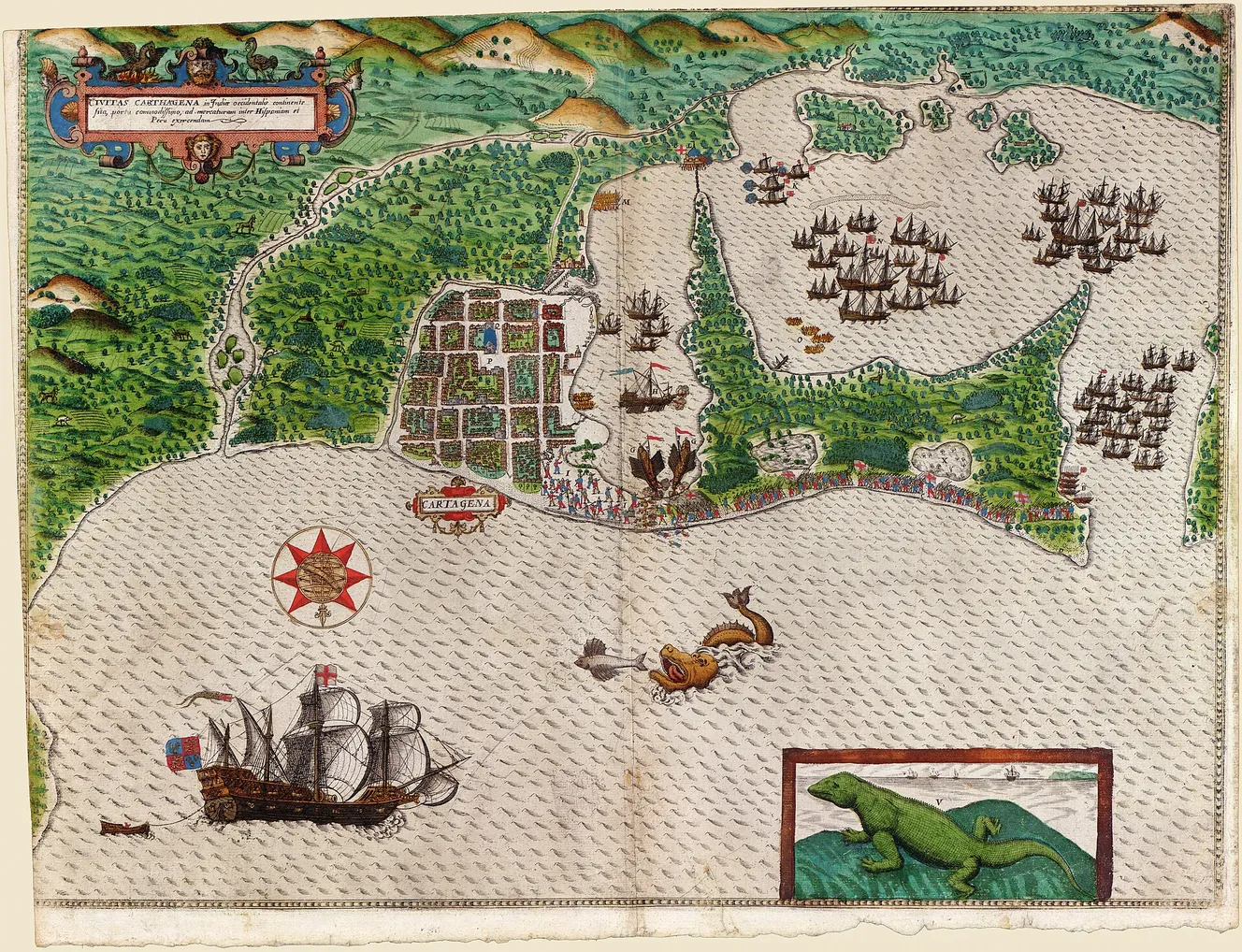
The negotiation was slow, and the privateer sped it up with fire: some two hundred houses and buildings were burned before the authorities agreed to pay. The ransom figure given by the sources is around 107,000 to 110,000, in ducats or pesos depending on the account, in addition to what was wrung from the prisoners one by one. Drake also took bells and artillery, and left Cartagena in April, with an epidemic of fever among his men.
The blow had lasting consequences. The Crown included Cartagena in the fortification plan it entrusted to the engineer Bautista Antonelli and the field marshal Juan de Tejeda, and Antonelli arrived in the city shortly after Drake's departure. His design for the walls would take years to become reality, but the city then began the long process of closing in on itself.
1697: Pointis, Ducasse and the plunder
A century later, in the war between France and the Grand Alliance, the Baron de Pointis proposed to Louis XIV that he take Cartagena. The retired naval officer Antonio Barro Ordovás reconstructed the expedition in the Spanish Navy's Revista General de Marina in 2024. The squadron left Brest on January 7, 1697 and in Saint-Domingue picked up some 800 filibusters under the command of Ducasse, the French governor of Petit-Goâve. In all, some 5,000 men.
The attack came in through Bocachica. On April 15 the squadron anchored beside the castle of San Luis, which had a meager garrison and cannons in poor condition; on the 16th, after a bombardment, its commander, Sancho Jimeno, surrendered the fort. The castle of Santa Cruz was abandoned without a fight, and the commander of San Felipe fled to the city. From the hill of San Lázaro, the French bombarded Getsemaní and the Media Luna gate until they opened a breach.
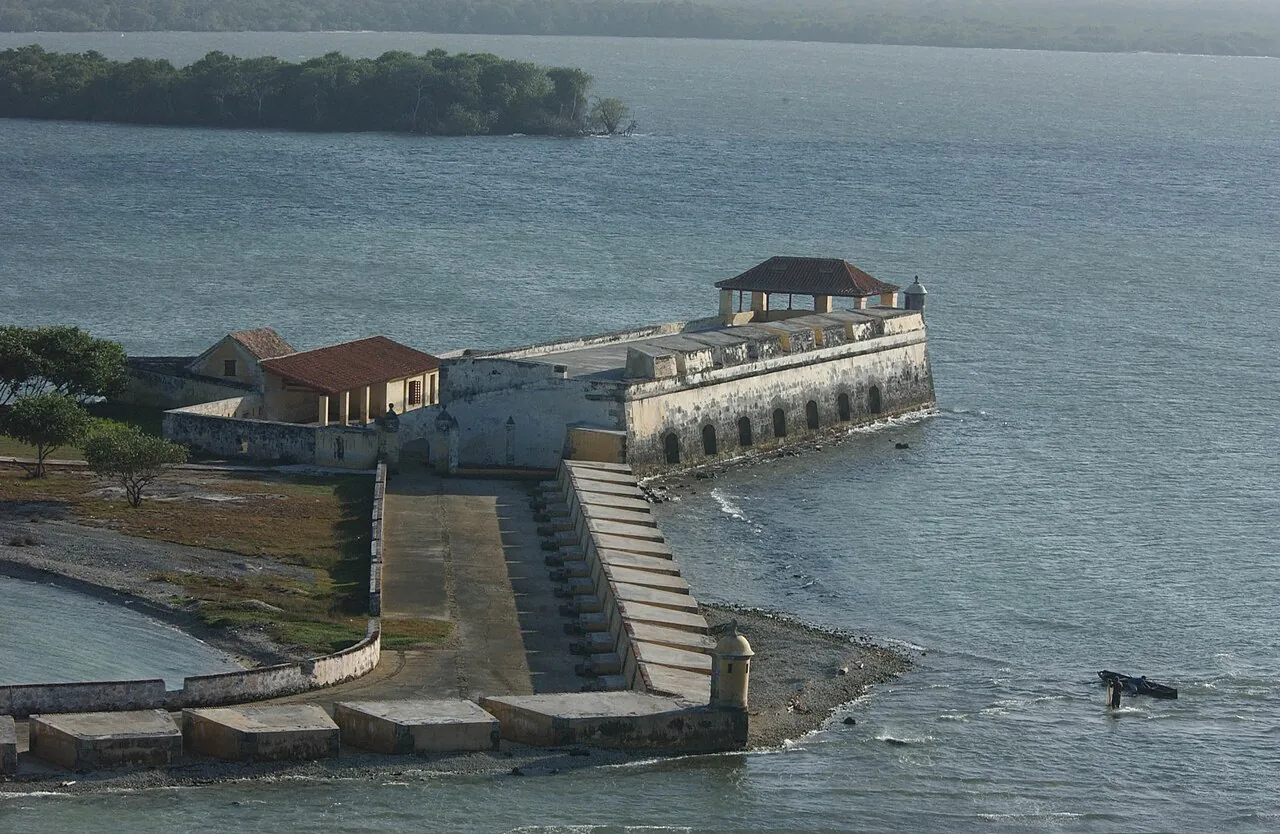
Governor Diego de los Ríos capitulated in early May, even though there were thousands of men in the city ready to fight and reinforcements were a few kilometers away, according to Barro Ordovás's account. Pointis entered on May 6 and forced the residents to hand over their gold and silver. The squadron also carried off dozens of cannons from the city and from Bocachica.
The worst came at the end. Pointis and the filibusters could not agree on how to divide the loot. As the squadron prepared to leave, the filibusters, who felt cheated, returned to the city and sacked it again until June 3, with torture and abuse. Cartagena was left in ruins and confidence in its defenses shattered. The French squadron, moreover, suffered an epidemic of dysentery that caused hundreds of casualties, and on its way home had to evade an Anglo-Dutch fleet in pursuit.
1741: Vernon against Blas de Lezo
The third great attack was the most ambitious. In 1739 war broke out between Spain and Great Britain, which the English called the War of Jenkins' Ear and the Spanish the War of the Asiento. Vice Admiral Edward Vernon took Portobelo that same year with a few ships, and in 1741 he returned to Cartagena with a combined sea and land expedition. The size of that fleet varies among historians, but all agree it was one of the largest assembled in the Americas up to that time; the president of the Academia de Historia de Cartagena, León Trujillo Vélez, spoke in El Universal of some 130 ships.
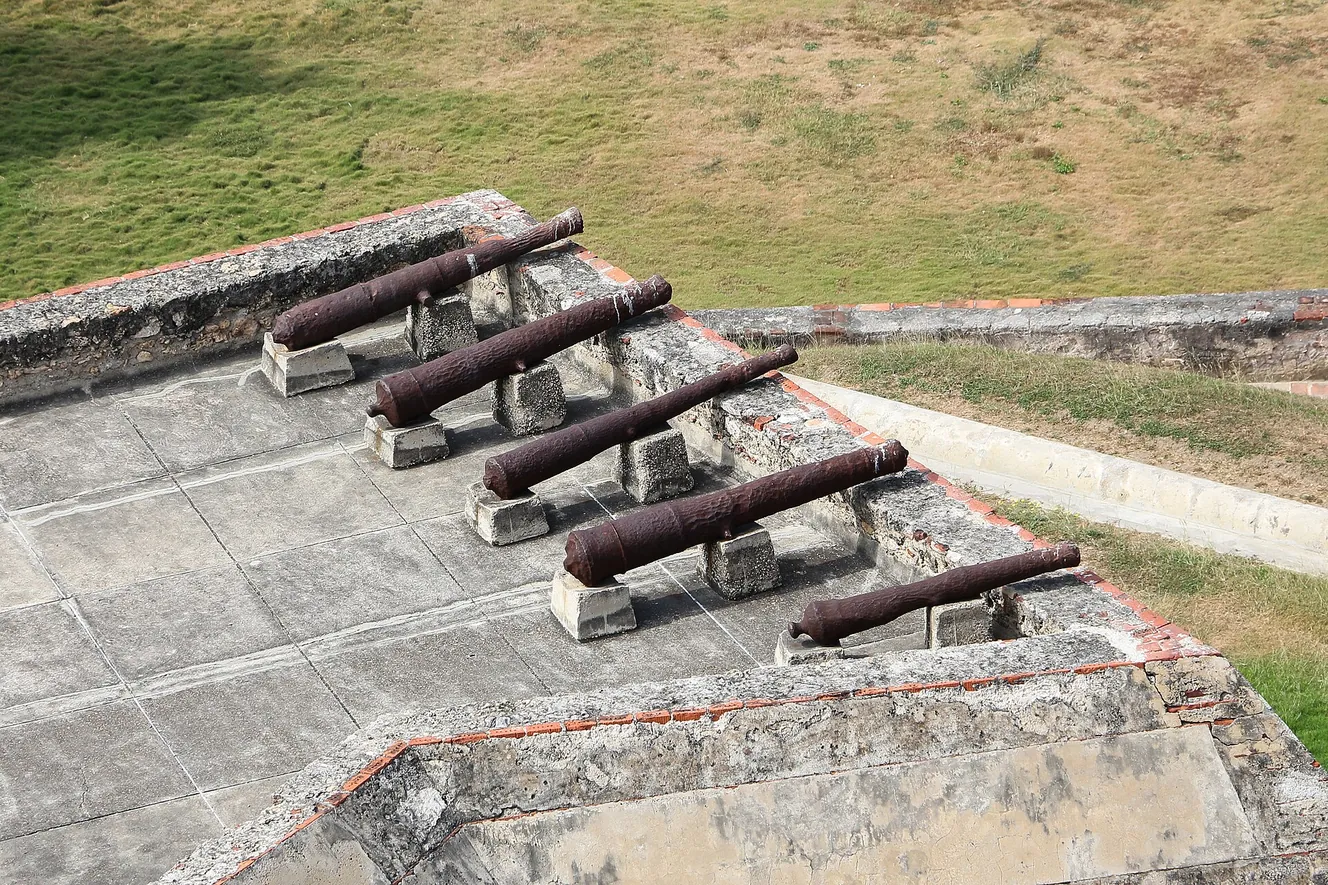
The defense was in the hands of the viceroy Sebastián de Eslava and the Navy lieutenant general Blas de Lezo, a Basque sailor from Gipuzkoa who had lost a leg, an eye and the use of an arm in earlier battles. The English forced the Bocachica entrance and advanced across the bay to the foot of the hill of San Lázaro. In April they launched a night assault on the castle of San Felipe. It failed, and disease finished decimating the British troops.
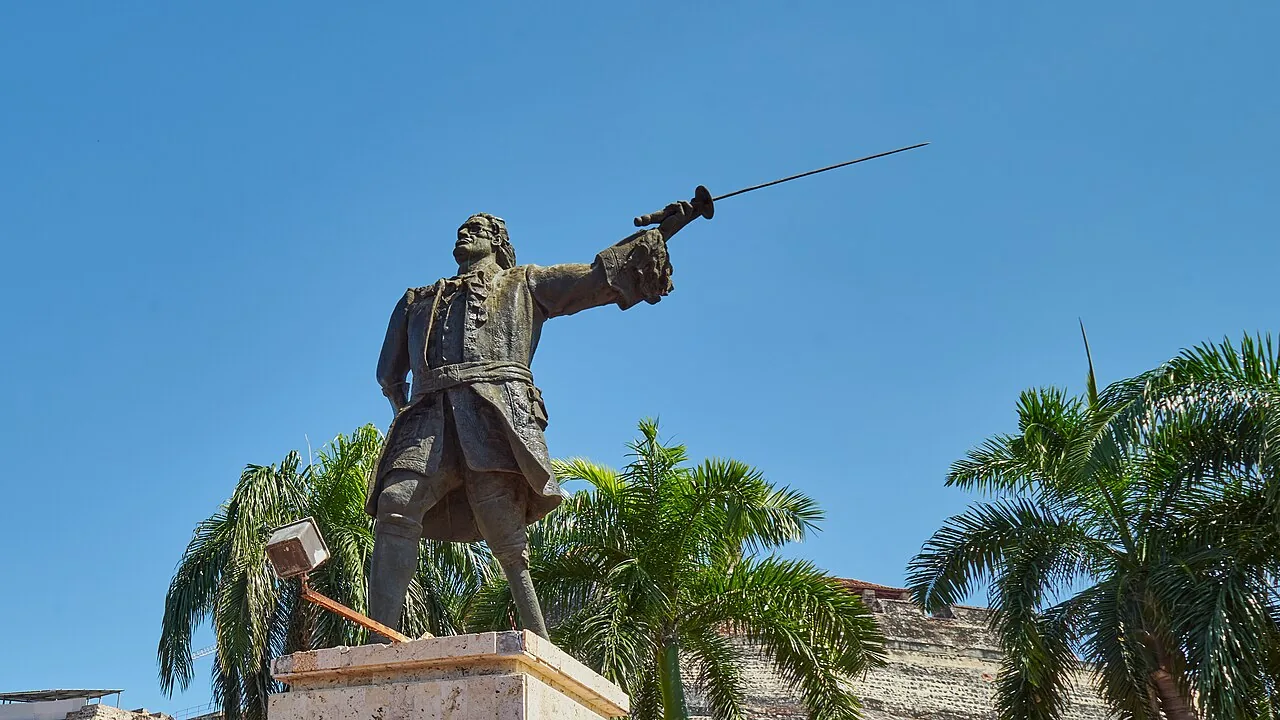
Around May 20, 1741 the fleet withdrew. Figures for British dead, most of them from yellow fever and other diseases, vary widely among historians, but they run into the thousands. Blas de Lezo died ill at his house in Getsemaní in September 1741, some three and a half months after the English withdrawal and at odds with the viceroy. The exact location of his grave is still unknown: a column published in El Universal reviews historians' hypotheses, which point to the chapel of the Vera Cruz or the surroundings of the convent of San Francisco.
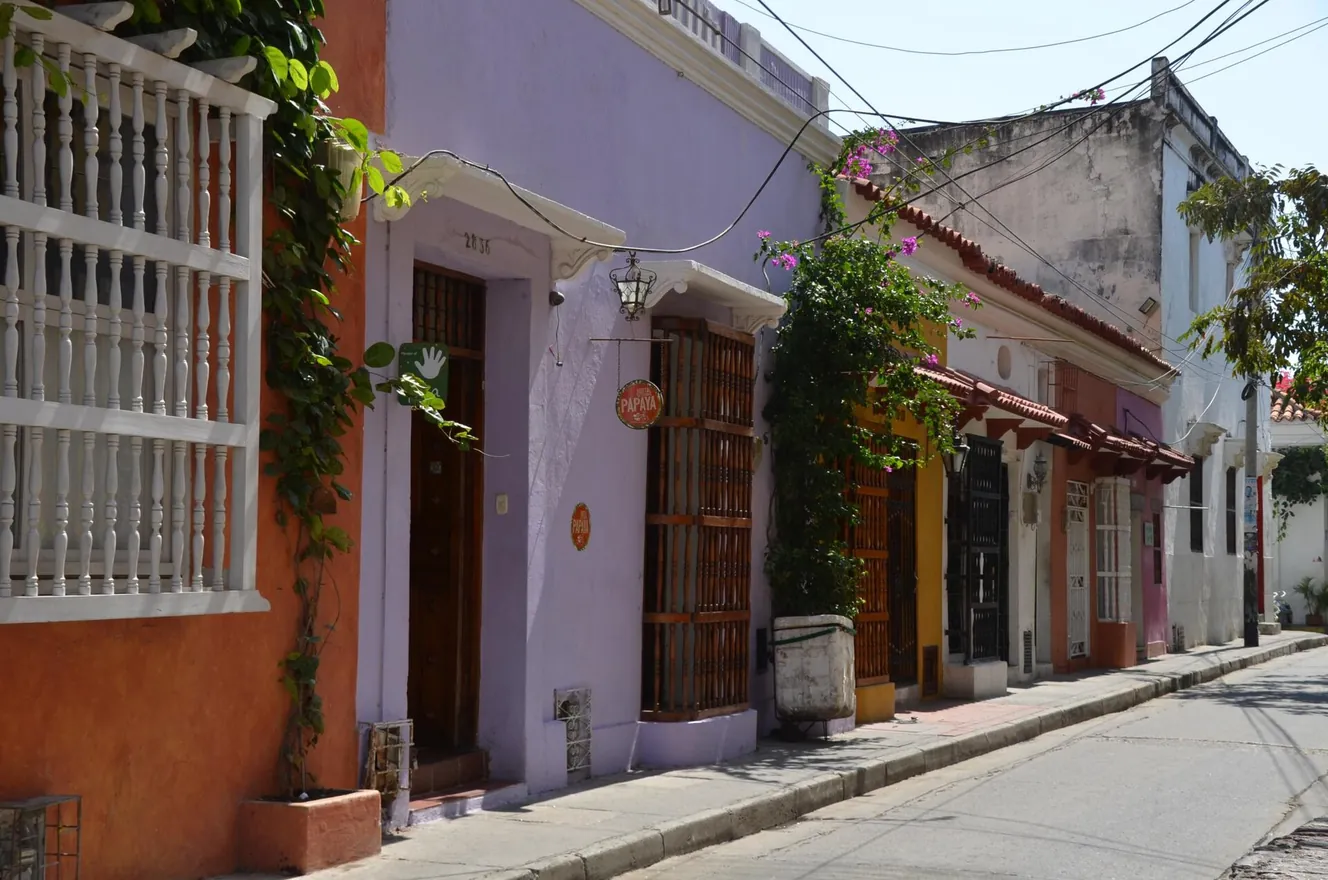
In London, news of the victory had been announced prematurely. Royal Museums Greenwich holds one of the medals struck at the time, with the figure of Vernon and the legend “Took Carthagena 1741.” The museum's catalogue entry puts it bluntly: the Spanish commander Blas de Lezo successfully defended the city.
What remains in the city
All three episodes are written into the landscape. After Drake came Antonelli and the first walls. After Pointis, the repair of the castle of San Felipe by Juan de Herrera y Sotomayor. After Vernon, Antonio de Arévalo's great works on the castle and the closing of Bocachica with the forts that can be seen today from the boats heading to the islands.
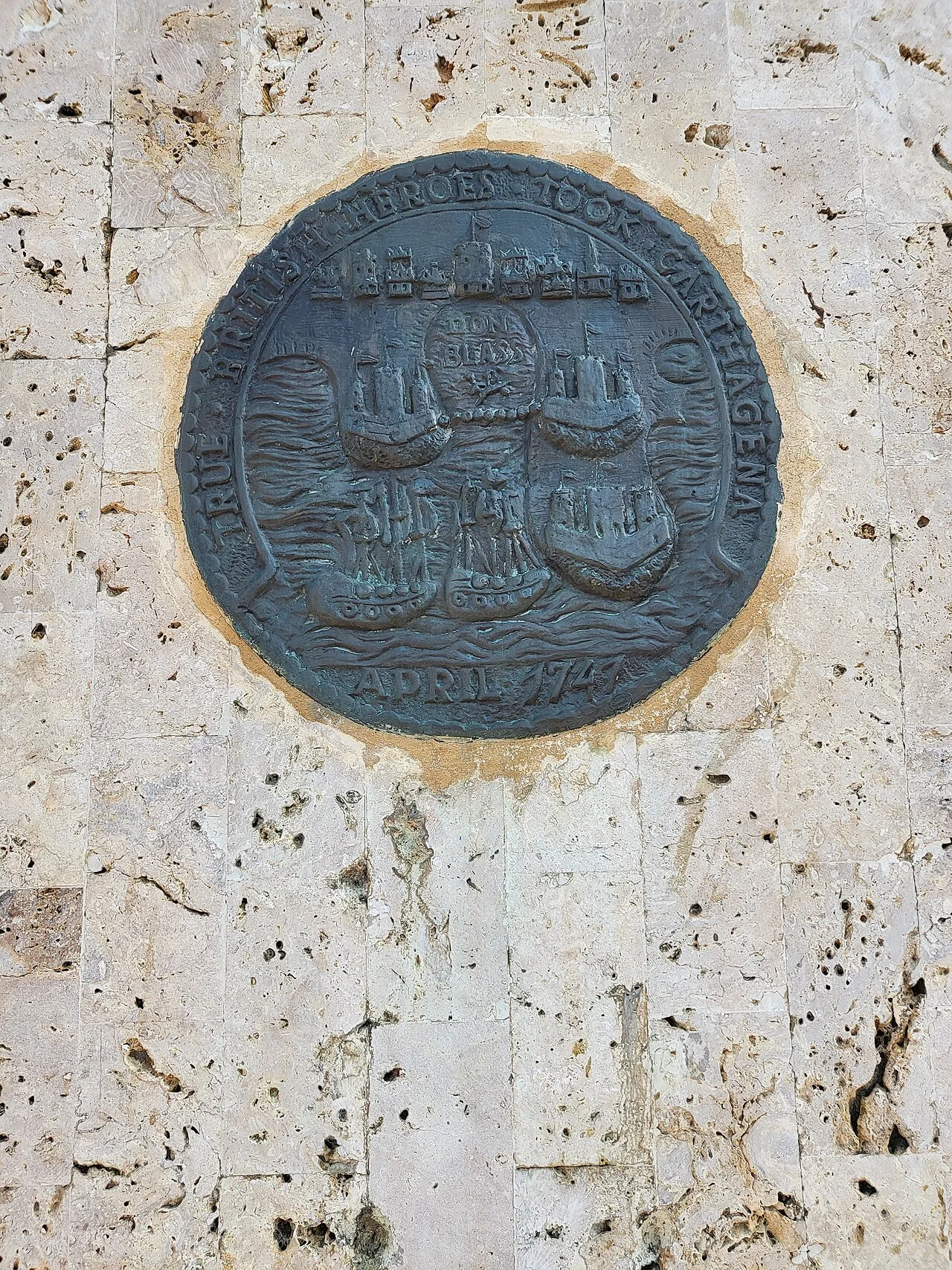
They are also written into memory, and not without controversy. In 2014, a plaque commemorating the English who died in 1741, installed in front of the castle during a visit by Prince Charles, drew criticism from the Academia de Historia de Cartagena, which questioned paying tribute to the defeated. In front of the same castle, the statue of Blas de Lezo looks toward the site of the assault.
Retracing these episodes doesn't take much: an afternoon at San Felipe, a walk along the wall between Santo Domingo and Santa Catalina and, if there is time, the boat crossing through the Bocachica channel, where Pointis and Vernon came in. With these three dates in mind, the stone tells a different story. And to end the day inside the walls those attacks helped raise, Casa Salvaje is steps from the Baluarte de Santo Domingo.
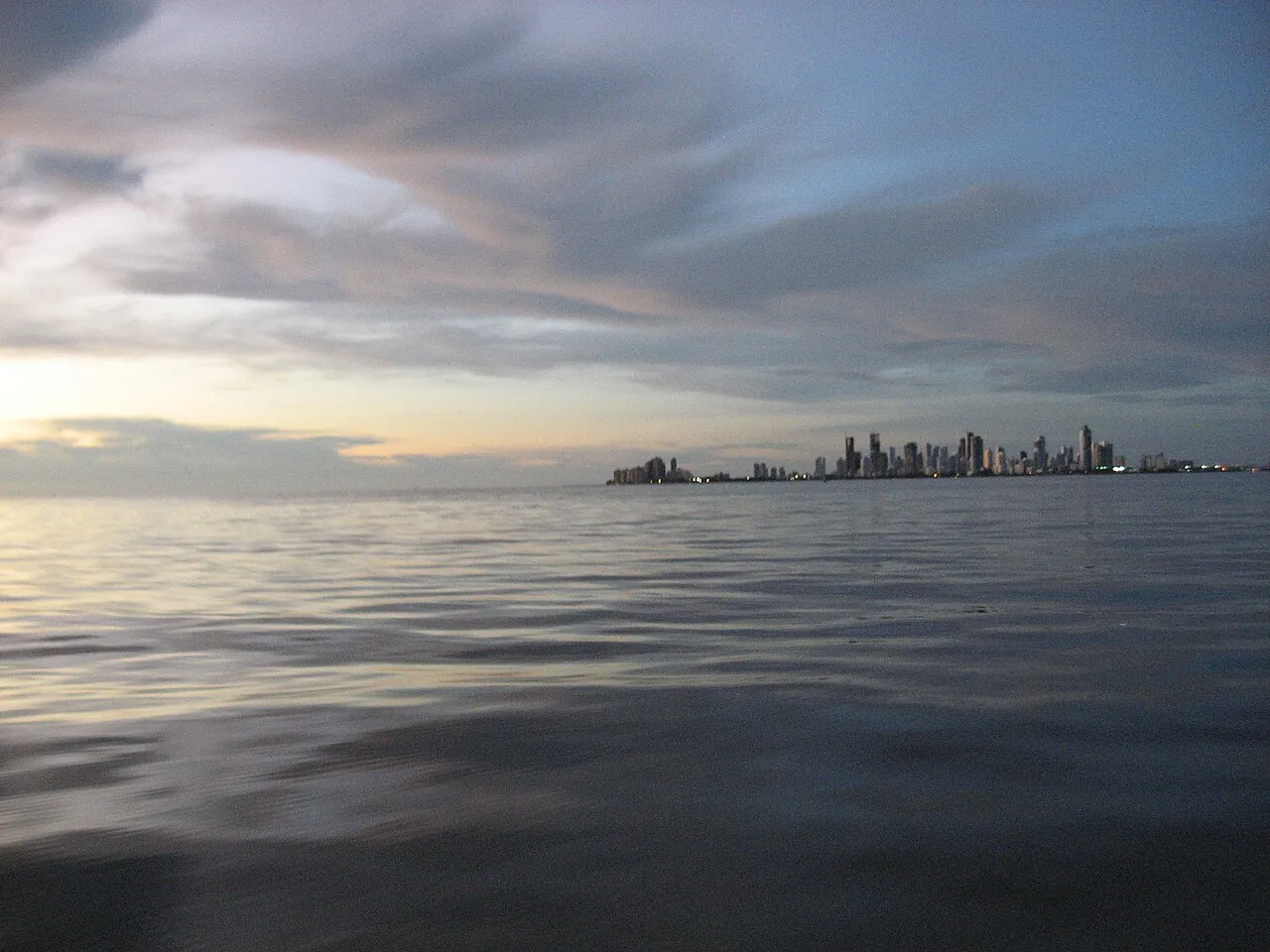
With these three dates in mind, the stone tells a different story.
Sources
- Revista General de Marina (Armada española, 2024): Antonio Barro Ordovás, «El desembarco y ataque de Pointis a Cartagena de Indias, 1697» ↗
- Fortificaciones Cartagena de Indias · Partes del Castillo ↗
- Fortificaciones Cartagena de Indias · San Felipe after Vernon (1741-1769) ↗
- Royal Museums Greenwich · Medal commemorating Vernon's attack on Cartagena, 1741 ↗
- El Universal (2014) · El hecho histórico que inspiró la polémica placa a los ingleses ↗
- El Universal · Blas de Lezo y su tumba (columna) ↗
- PORTUS Online · El porqué de las murallas de Cartagena ↗
- EcuRed · Sir Francis Drake (rescate de Cartagena) ↗
- EBSCO Research Starters · Francis Drake's Expedition to the West Indies ↗
- Wikipedia · Battle of Cartagena de Indias (1586) ↗
- Wikipedia · Sitio de Cartagena de Indias (1741) ↗
- Casa Salvaje (sitio oficial) ↗
Keep reading.
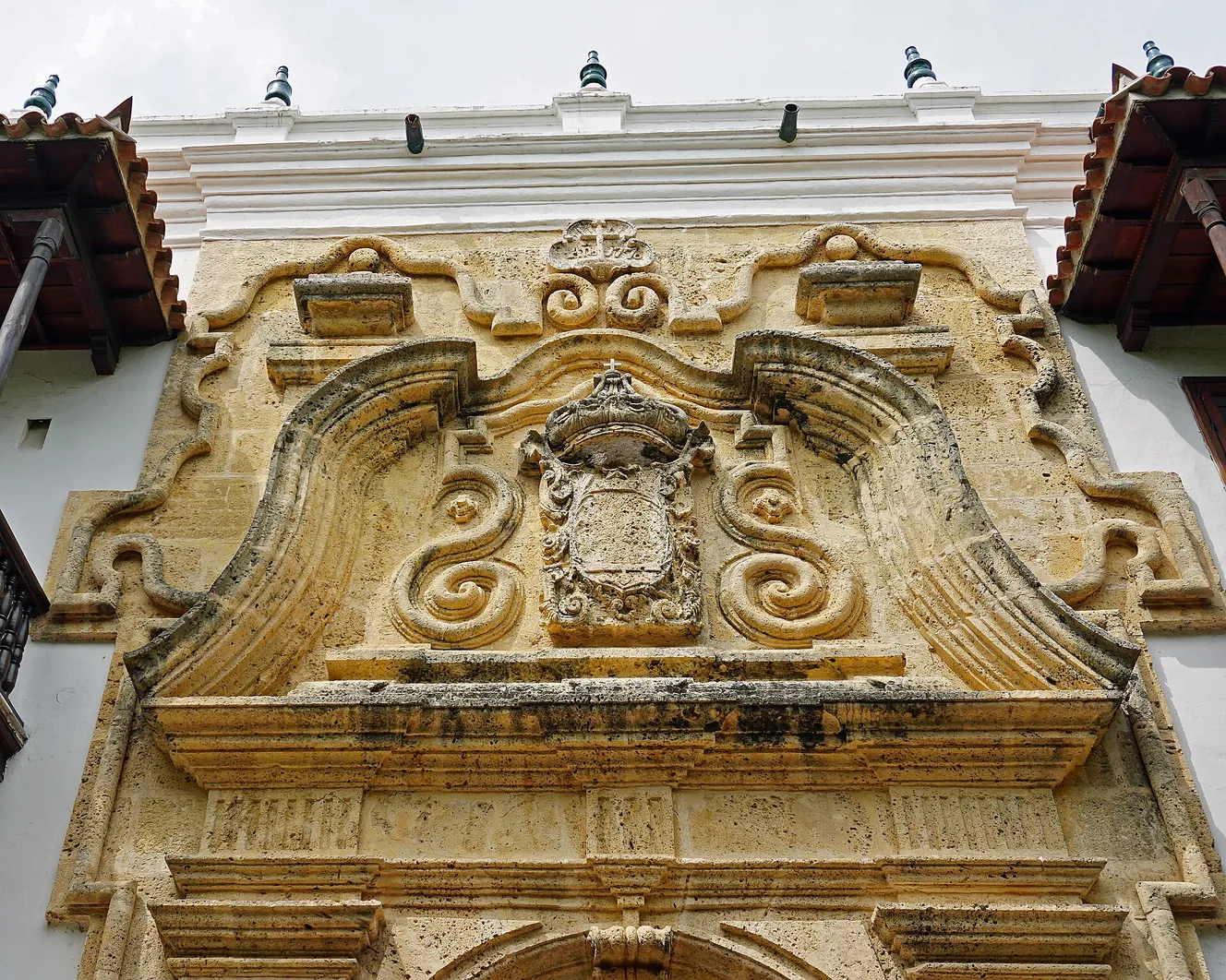
History
The house of the Holy Office.
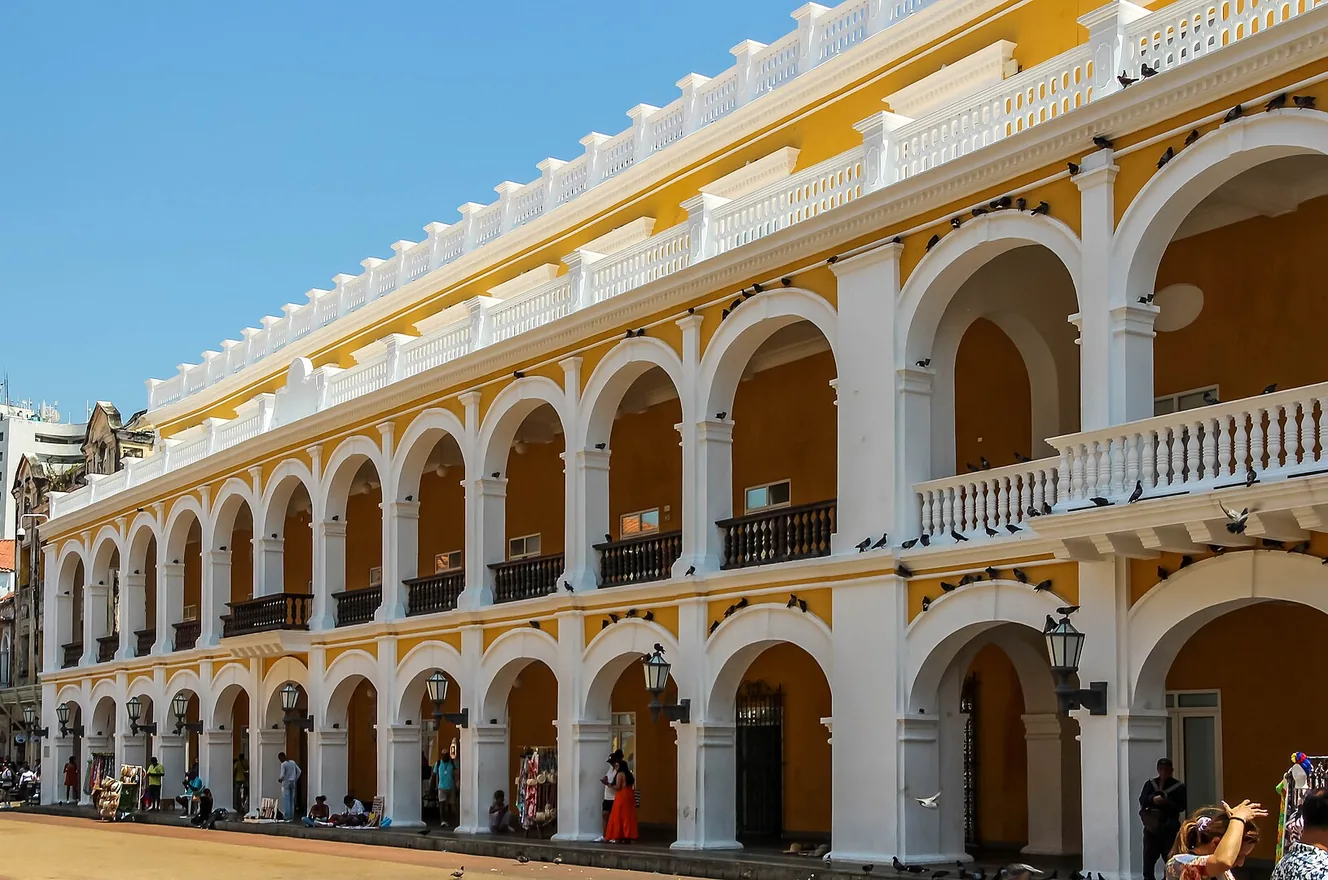
History
Monday, November 11, 1811.
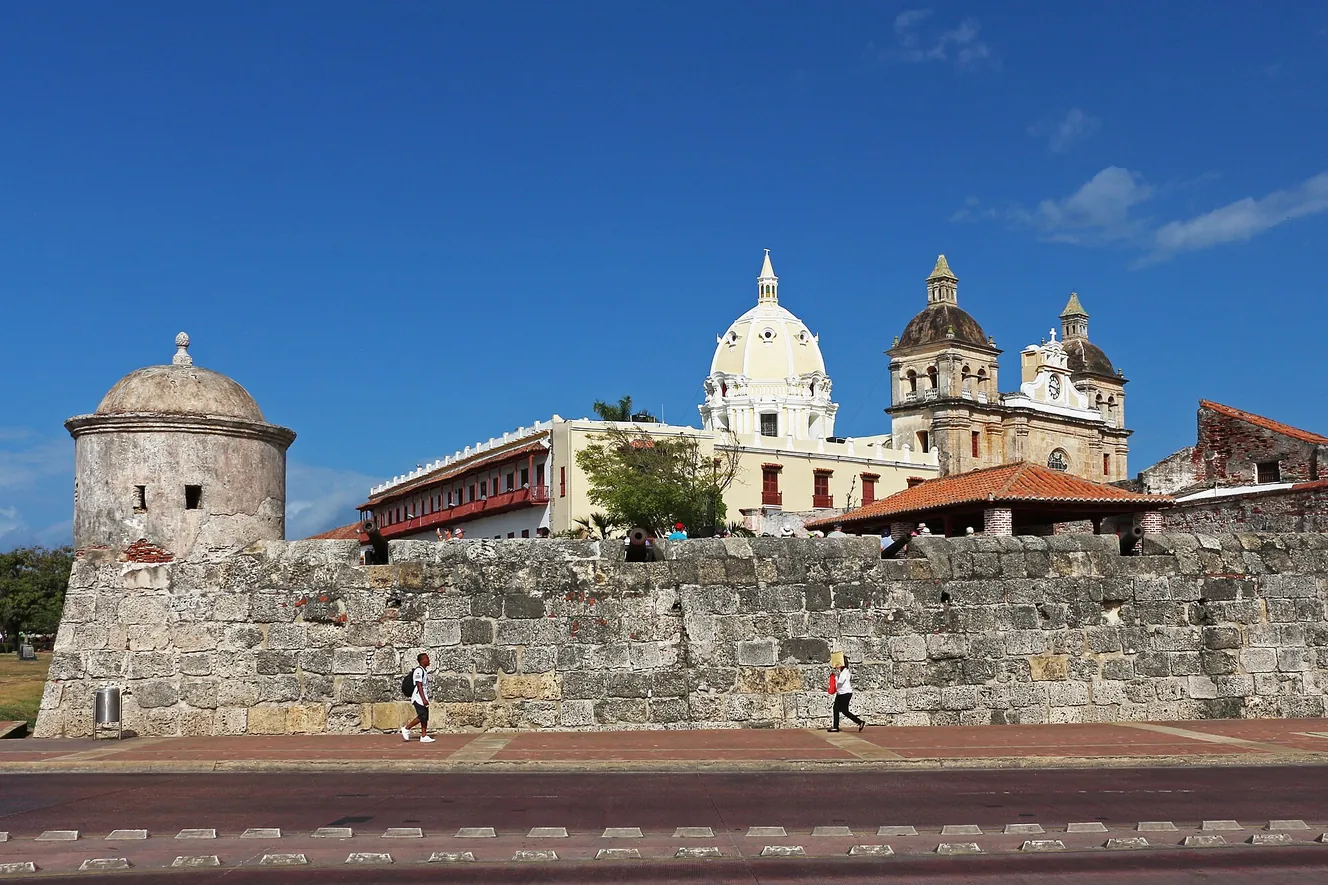
History
The port of the enslaved.