
Stories / Food & drink
La Vitrola, Cuban son on Calle de Baloco.
Ceiling fans, black-and-white photos, white tablecloths and a band playing Cuban son every night: this is how the Centro dines at one of its classic restaurants.
Cartagena Social Club · 6 min read
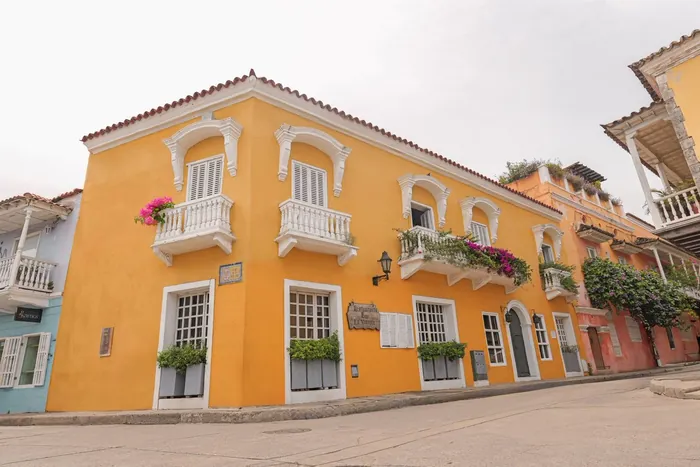
La Vitrola's façade on Calle de Baloco: yellow wall, white window bars, balconies with bougainvillea and the wooden “Restaurante Bar La Vitrola” sign beside the window. Image: La Vitrola (sitio oficial)
At eight in the evening, Calle de Baloco changes its sound. Through the shutters of a house in the Centro comes the sound of Cuban son. Inside, among ceiling fans and old photographs, the white-clothed tables are already full. This is La Vitrola, one of the classic restaurants of the walled city, and what you hear is the house band.
The name already announces the intention. Vitrola is what much of Latin America calls the gramophone, the horn-speaker machine that brought recorded music into the parlors of the early 20th century. In this house the music is not background: it is part of dinner, as much as the fish or the mojito.
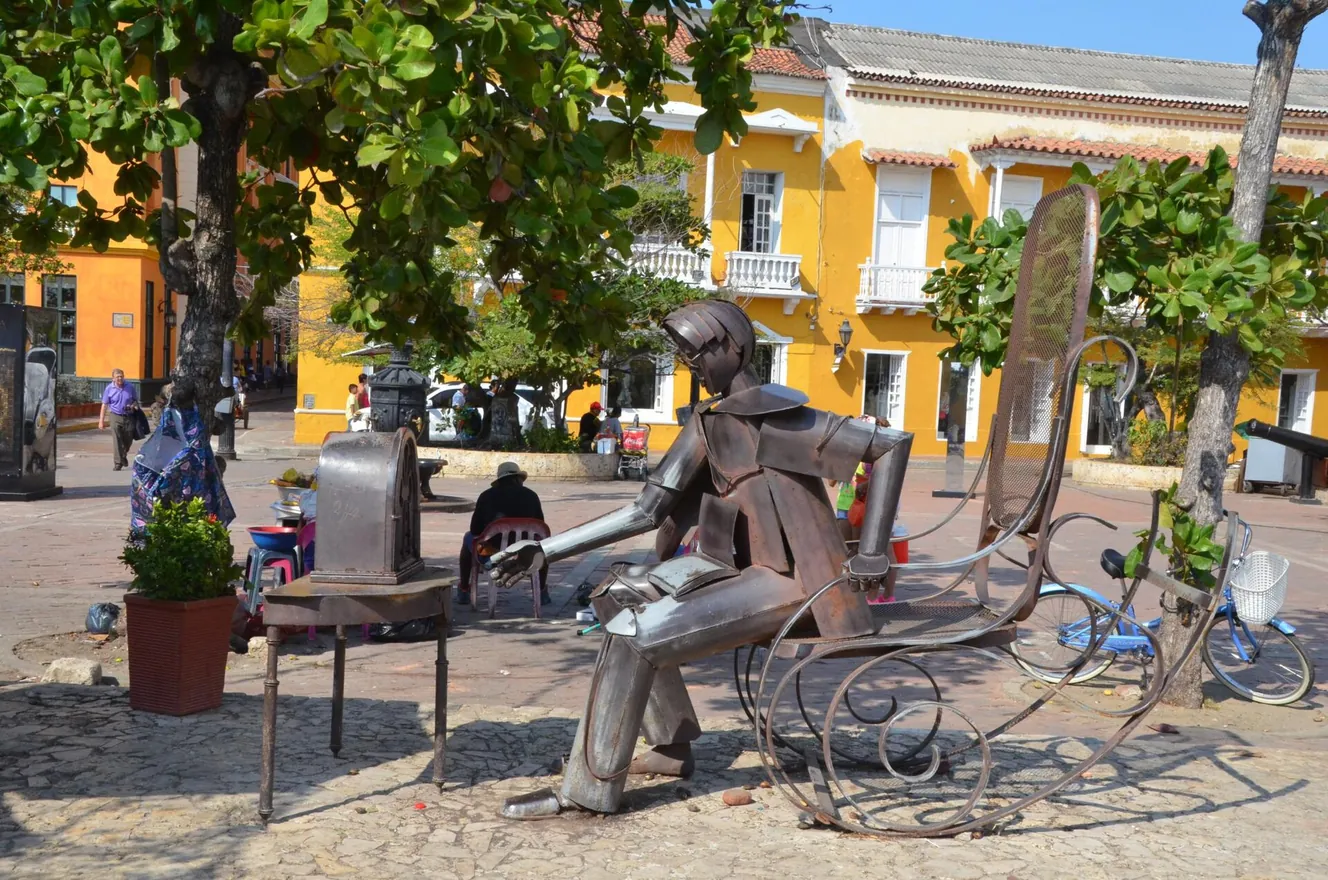
On its official site the restaurant presents itself as “one of the most iconic restaurants of the corralito de piedra” — the little stone corral, a local nickname for the walled city — and says that “gastronomy and the Caribbean soul” have lived there for thirty years. The travel guide Indagare gives the date: it opened in 1994. Its official address is Carrera 2 #33-66, in El Centro, on Calle de Baloco; for years the international press cited it as Calle de Baloco No. 2-01. It is on the same street as Casa Salvaje, which is a little over a hundred meters away, on the corner with Calle Santa Teresa.
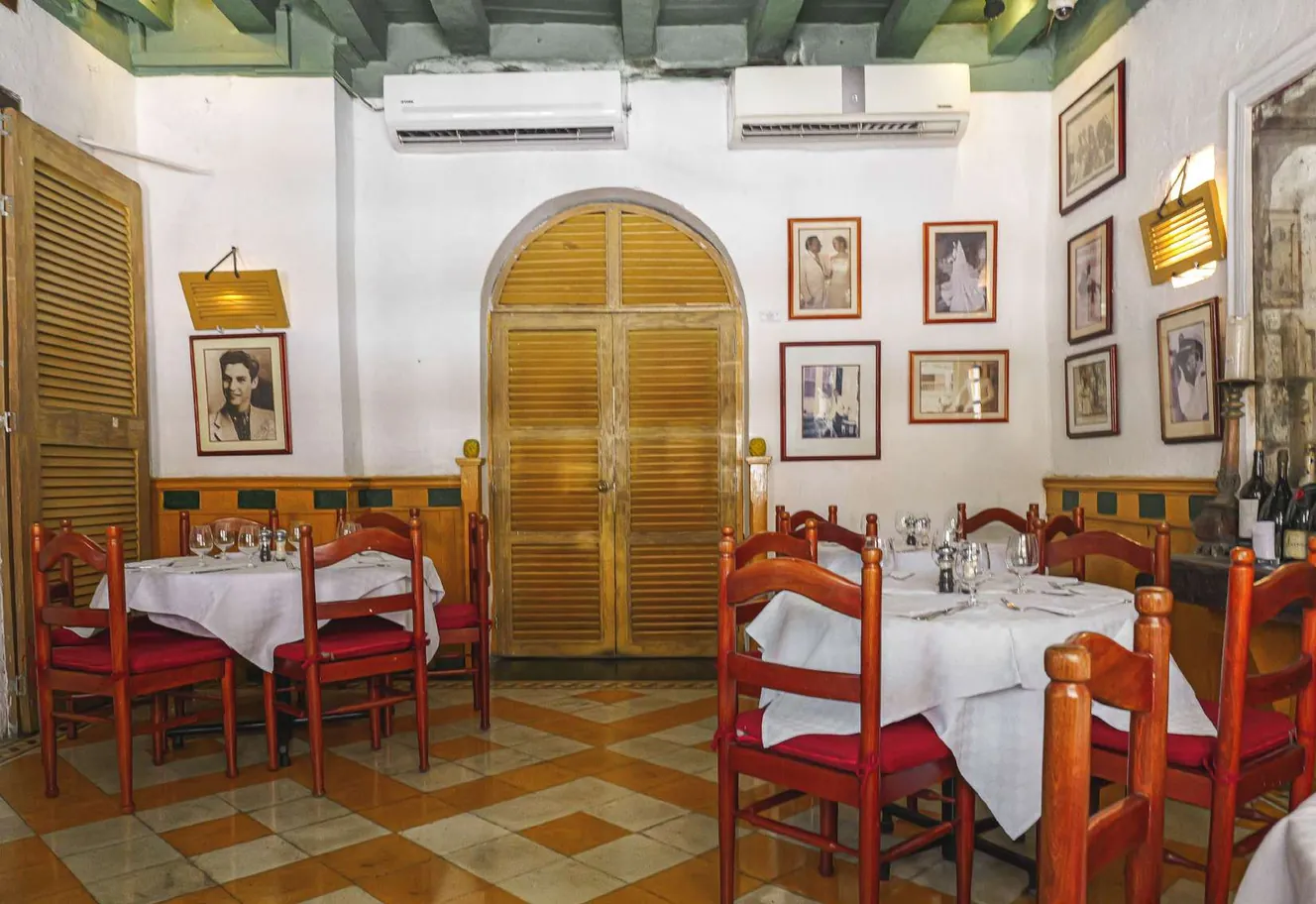
A Havana salon in the Centro
In October 2008, The New York Times published a food guide to Cartagena by Danielle Pergament, with a headline that summed up the city's moment: for food lovers, Cartagena was now on the map. In it she called La Vitrola “the culinary king of Cartagena” and described it as part jazz club, part salon and part buzzed-about restaurant. She compared it to old Havana: humming ceiling fans, swaying palm fronds and slatted shutters that let the light in in stripes. And she closed with a warning: good luck getting a table.
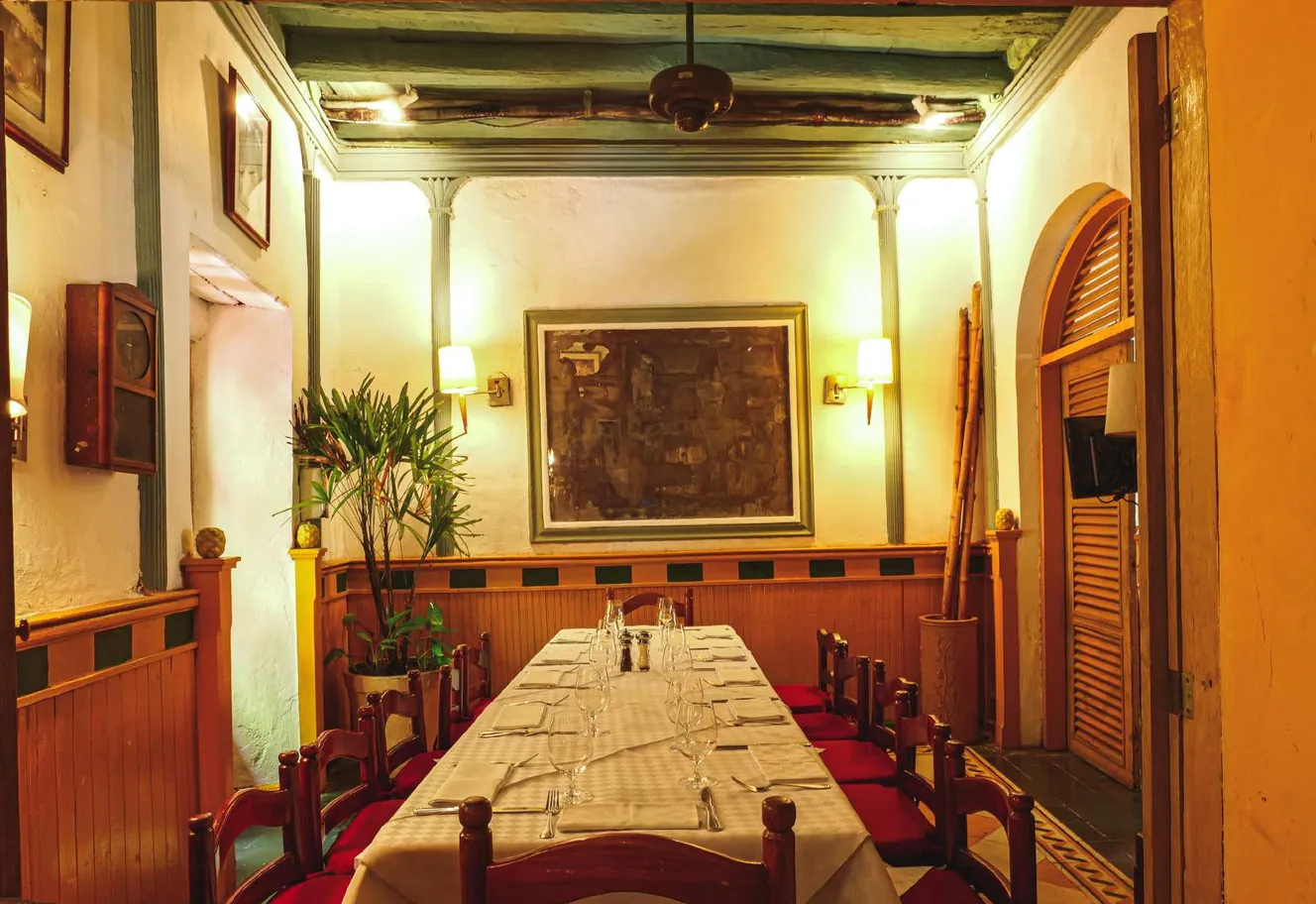
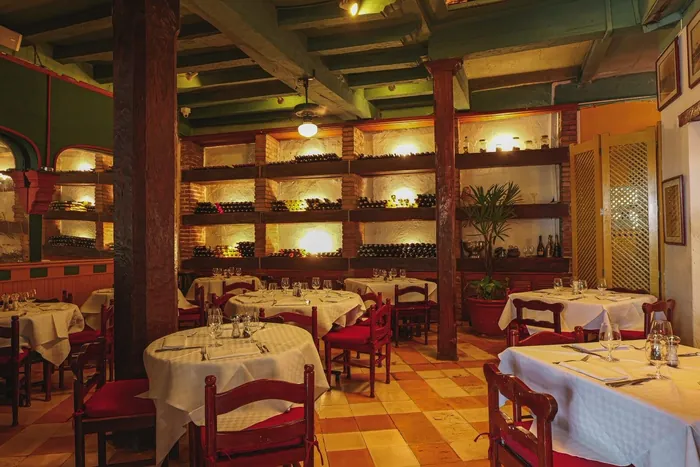
Almost twenty years later, the room still fits that description. The photos the restaurant publishes show whitewashed arches, dark beams, wooden shutters painted yellow, wooden chairs with red cushions and walls covered with black-and-white portraits. Indagare compares it to Harry's Bar in Venice or Mortimer's in New York, places that worked as informal clubs for their city's social life. It is no accident that the menu includes a Carpaccio Harry's Bar.
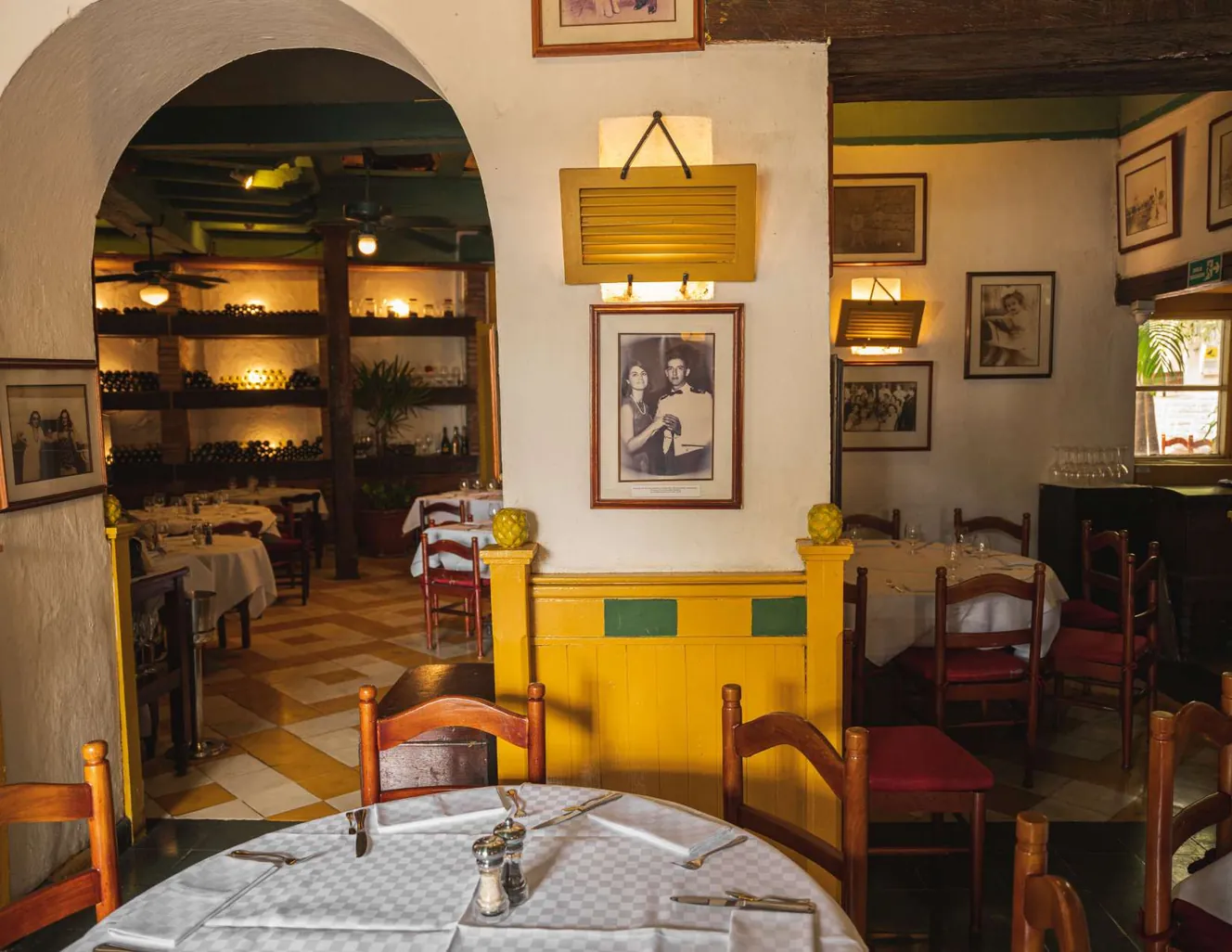
The comparison also speaks to the crowd. Indagare describes it as the favorite spot of much of Colombian society, where people move from table to table between courses or get up to dance with the house band. On its press page, the restaurant reproduces what has been said about it by Colombian designer Johanna Ortiz, in Condé Nast Traveler, and by Lauren Santo Domingo, in Vogue France, who counts it among her favorite places to dine before carrying on with the night.
Cuban son every night
The music is the reason many come back. According to its official site, there is live Cuban son every night from 8. The band plays in the same room, beside the tables. In 2010, another New York Times article, devoted to Gabriel García Márquez's Cartagena, summed up the experience in one sentence: Cuban-inspired food, accompanied by Cuban music and dancing between the tables.
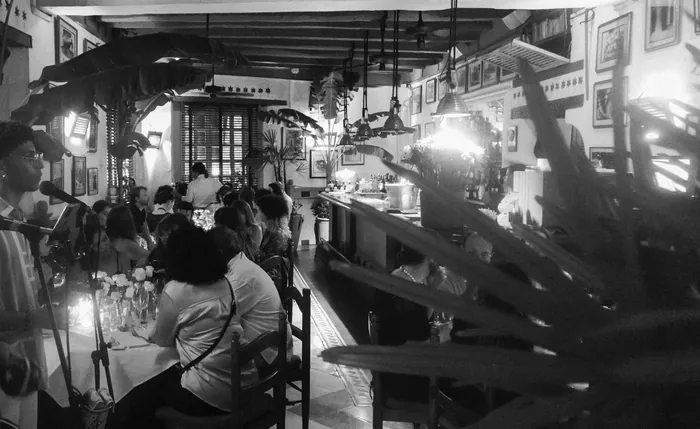
The Johanna Ortiz quote the restaurant reproduces says it from the table: La Vitrola is “an institution in Cartagena,” always with a lively crowd and a band playing Cuban son. Her usual order, she says, is the yellowfin tuna and the panko-crusted prawns, with a mojito. It is a good summary of what people come here to do: dine without hurry, with the music a few meters away.
A Cuban, Caribbean and seafood menu
The menu La Vitrola publishes on its site, in its April 2026 version and in Spanish and English, mixes Cuban cooking with that of the Colombian Caribbean and a few international classics. Among the cold starters are the Carpaccio Harry's Bar, of raw beef tenderloin; yellowfin tuna carpaccio; corvina ceviche with sweet corn; and tuna tartare with avocado. Among the hot ones, panko prawns with sweet chili sauce, camarones en hamaca — shrimp “in a hammock” — over a flattened patacón, grilled octopus with ahuyama squash purée and yuca empanadas filled with seafood, with spicy suero, the coastal soured cream.
The mains range over sea and land. There is creamy shrimp rice, brothy seafood rice and a coconut titoté risotto, made with caramelized coconut; Vitrola fish fillet, Don Carlos de Borbón garlic prawns, seafood zarzuela in coconut milk and grilled lobster. On the Cuban and Caribbean side are ropa vieja habanera, with patacones, beans, avocado and rice, and jerk chicken marinated in Jamaican spices. For those who want meat, the menu adds picanha, three-pepper Angus tenderloin, New York strip loin and tournedos.
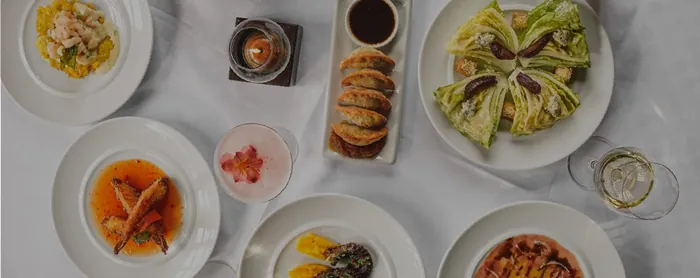
Prices are on the online menu, which includes the consumption tax; the restaurant suggests a 10% tip, which the customer can accept, change or decline. The menu marks dishes containing nuts with a symbol.
Hours, reservations and events
La Vitrola opens for lunch from 12 noon to 3 p.m. and for dinner from 7 to 11 p.m., according to its official site. On Sundays it is worth checking before going: the page of Decameron's Apartahotel Boutique San Pedro, which connects its guests with the restaurant, says it is closed that day. Reservations are made online, through the button on its website, which leads to the Precompro platform, or by WhatsApp at +57 315 664 9676. On Instagram it is @lavitrolacartagena. A little over a hundred metres away, on the same street, Casa Salvaje is getting ready for the arrival of ONO, the hosomaki bar born in Bogotá, which will open between November and December 2026.
The restaurant also hosts corporate events and celebrations. Its 2026 events portfolio cites a capacity of 130 diners and spaces that can be booked privately, semi-privately or with full exclusivity: the Cava, for 50 people; a private room, for a maximum of 14; and Salón 1, for 30.
For groups, the same portfolio offers four set menus, with starters to share, a main course of choice and dessert. These include dishes from the menu, such as ropa vieja habanera or creamy shrimp rice, along with others such as langostinos a la diabla in creole sauce, and a dessert that appears in all four menus: coconut pie, accompanied, depending on the menu, by chocolate cake, guava cheesecake or the Vitrola Pie.
When planning the night, proximity helps. Casa Salvaje is on the same Calle de Baloco, on the corner with Santa Teresa: there you dine at Kanibal, the kitchen of fire, or at SLVJ, with its sushi bar, and from Thursday to Saturday the SLVJ room becomes a club until 3 a.m. La Vitrola is the other form of the Centro's night, the timeless one: a white-tablecloth room, a mojito and a son that starts at eight and is in no hurry to end.
A white-tablecloth room, a mojito and a son that starts at eight and is in no hurry to end.
Sources
- La Vitrola · Sitio oficial (horarios, son cubano en vivo, dirección y prensa) ↗
- La Vitrola · Carta, abril de 2026 (PDF del sitio oficial) ↗
- La Vitrola · Portafolio de eventos 2026 (PDF del sitio oficial) ↗
- La Vitrola · Reservas en línea (Precompro) ↗
- La Vitrola · Instagram oficial (@lavitrolacartagena) ↗
- Indagare · La Vitrola Restaurante (abierto en 1994) ↗
- The New York Times · For Foodies, Cartagena Is Now on the Map (Danielle Pergament, 2008) ↗
- The New York Times · Love and Cartagena: Gabriel García Márquez Dreamed Here (2010) ↗
- Decameron · Apartahotel Boutique San Pedro, restaurantes (La Vitrola; cierre dominical) ↗
- OpenStreetMap / Nominatim · La Vitrola, Calle Baloco ↗
- Casa Salvaje · Sitio oficial ↗
Keep reading.
Food & drink
ONO, the hosomaki bar coming to Casa Salvaje.
Food & drink
The 4 best places for sushi in Cartagena.
Food & drink
The 5 best places to eat meat in Cartagena.