
Stories / Music
Salsa in Cartagena: el Joe, the bars and the fierce ear.
From the Nariño neighborhood to the wall of photos at Donde Fidel: how salsa became part of the way the city listens.
Cartagena Social Club · 6 min read
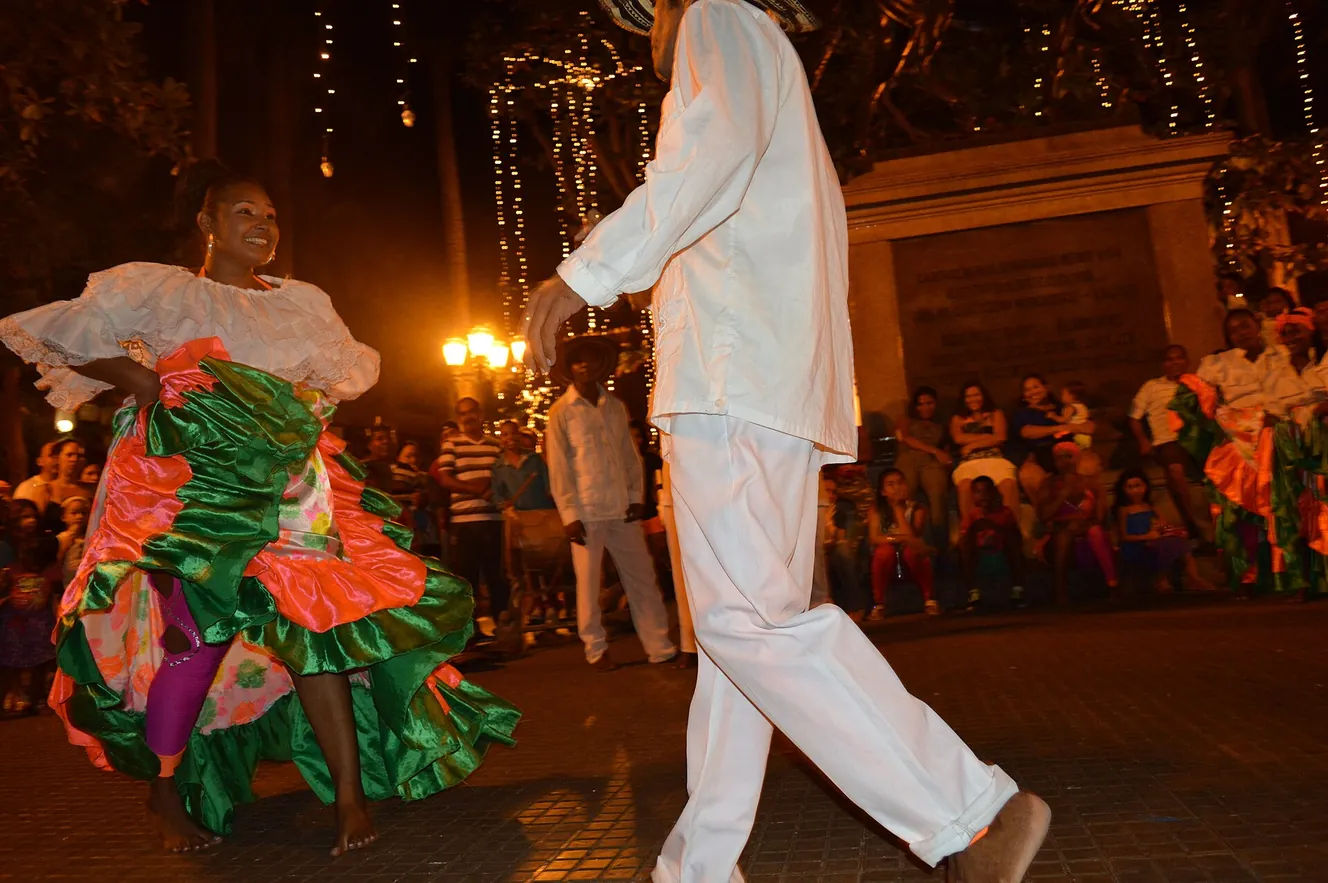
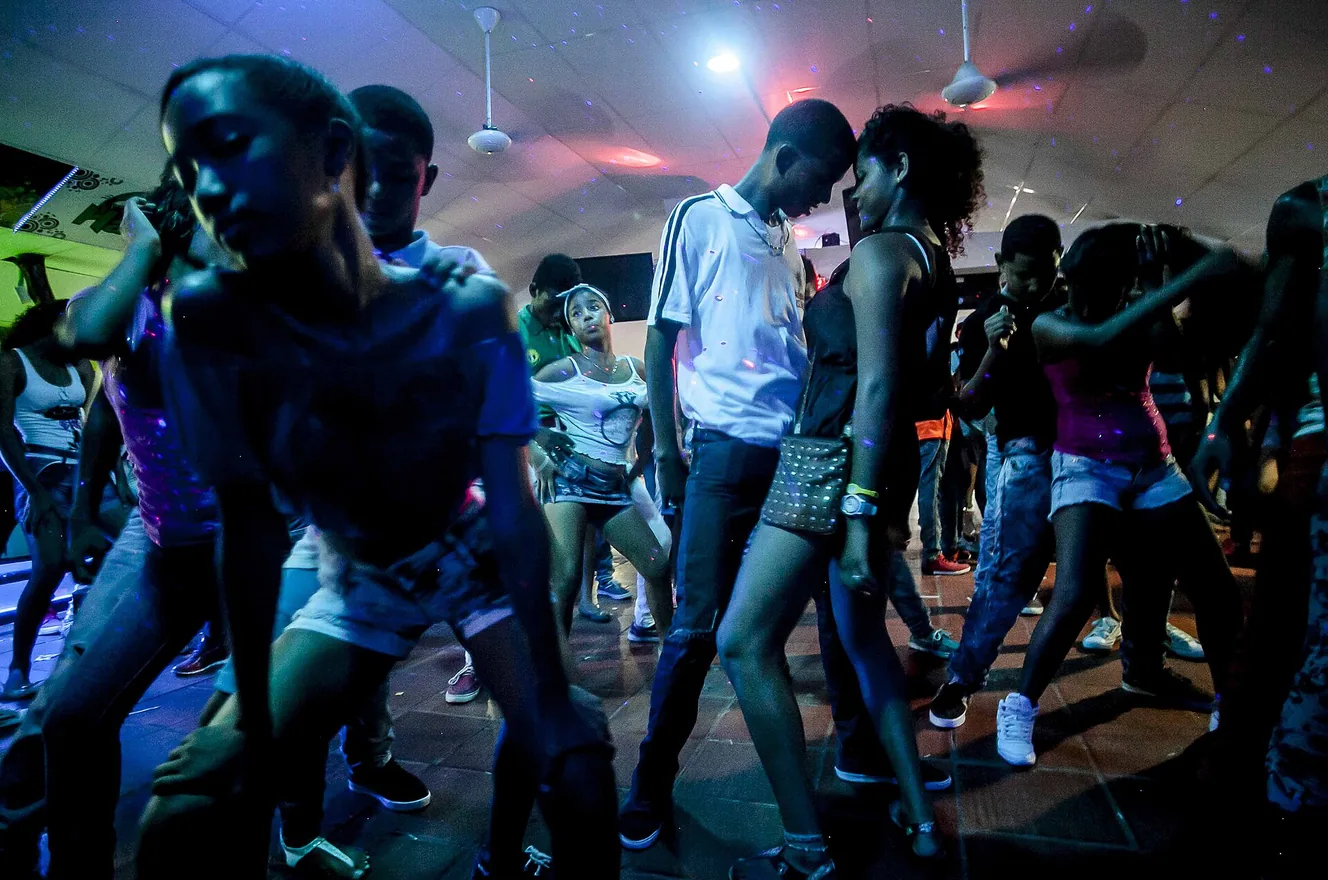
Dancing in the Plaza de Bolívar on a December night in 2015. During the festivities, the city's music takes to the streets. Image: Mariasolano2000, CC BY-SA 4.0, via Wikimedia Commons
In Cartagena salsa is not background music. It plays loud, it gets talked about, it gets argued over. There are people who can identify a record from the first bars of the trumpet and people who remember the year a given orchestra played in the city. That way of listening has a history that runs through a singer born in a working-class neighborhood, the picós of the 1970s and a handful of bars that became archives.
El Joe: from the Nariño neighborhood to the world
Álvaro José Arroyo González was born in Cartagena on November 1, 1955 and grew up in the Nariño neighborhood. El Universal describes him as raised “among the African sounds of the palenquero community living in Nariño.” That proximity explains part of what came later: a salsa shot through with drums from the coast and from across the sea.
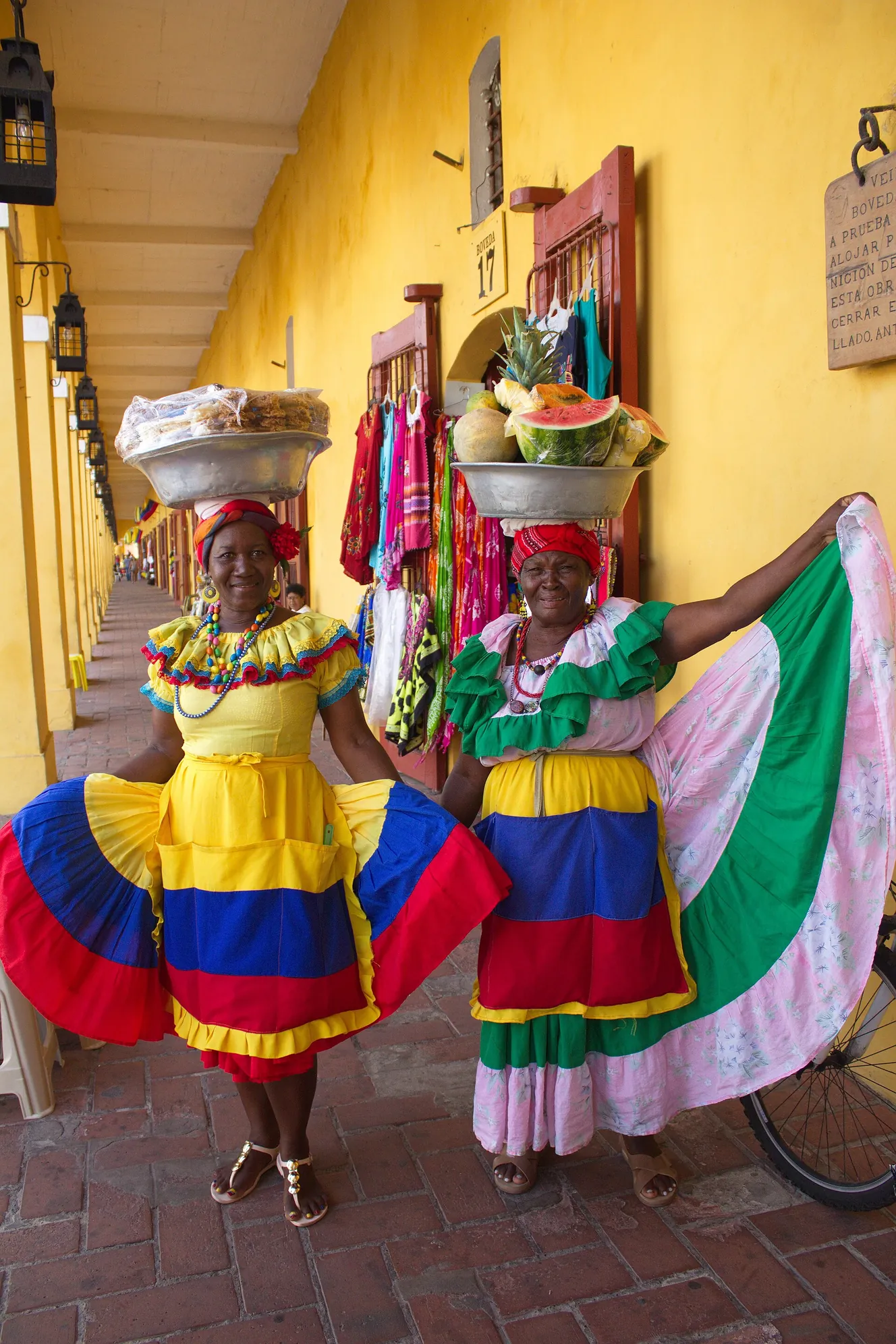
He started very young. By the age of eight he was already singing in public, according to El Universal, and his childhood was spent among the bars of Tesca, the city's old red-light district, where he cut his teeth as a singer. From there he moved to Barranquilla, to the orchestra La Protesta, and to groups such as Los Caporales del Magdalena and the Supercombo Los Diamantes.
His big break came in 1973. The producer Isaac Villanueva, of Discos Fuentes, heard him and took him to Medellín to join Fruko y sus Tesos. With that orchestra he recorded songs such as “El ausente” and “Manyoma” until 1981. That year he founded his own orchestra, La Verdad, with which he blended salsa with cumbia, porro, chandé and Antillean rhythms such as Haitian kompa. He called that mix “joesón.”
From that period comes “La rebelión,” recorded in 1986. The song tells the story of an African couple enslaved by a Spaniard in seventeenth-century Cartagena. Chelito de Castro's piano solo and el Joe's improvised vocals turned it into a classic that is still danced across the continent. It is probably the most Cartagena song there is about the memory of slavery.
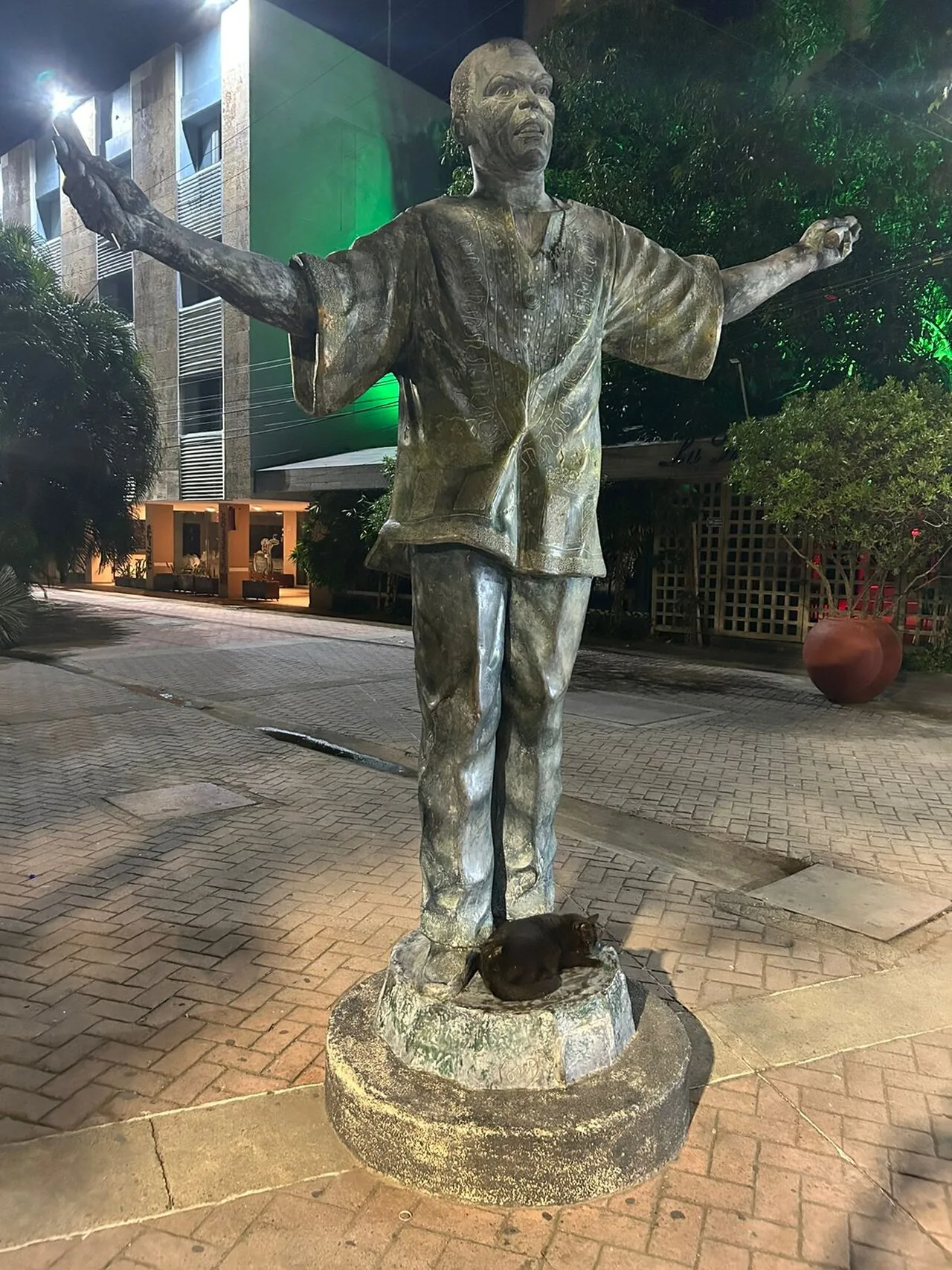
Joe Arroyo died in Barranquilla on July 26, 2011, at 55. Over his career he won, among other honors, more than a dozen Congos de Oro at the orchestra festival of the Barranquilla Carnival. Cartagena raised a statue to him in late September 2013, on the small square that now bears his name, the former plaza de las Empresas Públicas. The work, by the sculptor Óscar Noriega Sarmiento, shows him with open arms and African-style clothing.
The city keeps coming back to him. In 2025, the year he would have turned 70, the Festival Cartagena en Clave, run by the Corporación Cultural Arrabales, dedicated its tenth edition to his legacy, with talks, concerts and the participation of his daughter, Dinkol Arroyo.
An ear shaped by the picós
Before champeta, the neighborhood picós — the giant hand-painted sound systems — were salsa machines. The memory lives on in their names. The Spanish-language free encyclopedia recalls some of the most famous: El Conde, El Timbalero, El Sibanicú, El Ché and El Rojo, the last named after Ray Barretto's record Rojo. They were names taken from the world of salsa and the Hispanic Caribbean.
On those picós a demanding taste took shape. What people wanted was salsa with an edge: trumpets and trombones up front, heavy percussion, soneros who improvise. It is what much of Latin America knows as salsa brava, the kind that came out of New York and the Caribbean in the seventies. The historian Enrique Luis Muñoz, cited by El Universal, recalls music and dance spots that have since disappeared, such as El Chato Bar and El Lago Azul, and nights in areas such as Tesca, Manga and Torices.
That tradition explains why salsa is discussed seriously in Cartagena. Record collecting, listening sessions and gatherings of music lovers are still alive. In 2025, for example, Cartagena en Clave brought together at the Patio Vacilao, at the entrance to Mamonal, music lovers, collectors and scholars from Cartagena, Cali, Barranquilla and Santander de Quilichao.
Donde Fidel: the wall that keeps the history
On the northwest corner of the Portal de los Dulces, a few steps from the Torre del Reloj, is the best-known salsa bar in the Centro. It is called Donde Fidel — “Fidel's place” — after its owner, Fidel Leottau, born on May 9, 1940. In 2026 El Universal called him “the guardian of the memory of salsa in Cartagena for the last sixty years.”
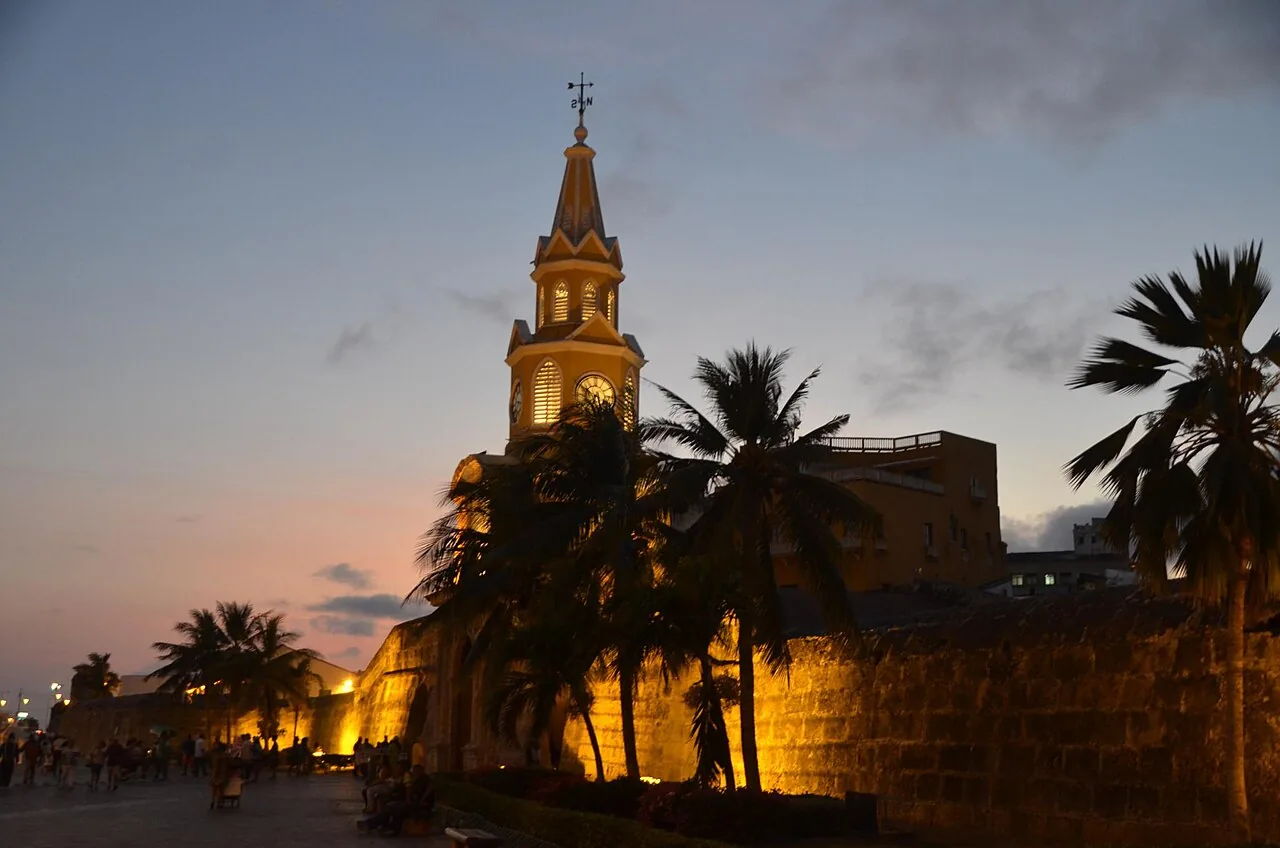
The place previously operated as the Lonchería El Pollo, a snack bar. Leottau had already run other bars near the old Club Cartagena, Abacoa and Continuo Bar, between 1978 and 1985. The walls of Donde Fidel are covered with photographs of salsa stars. According to El Universal, El Gran Combo de Puerto Rico, Johnny Pacheco, Óscar de León, Rubén Blades and Cheo Feliciano, among others, have passed through.
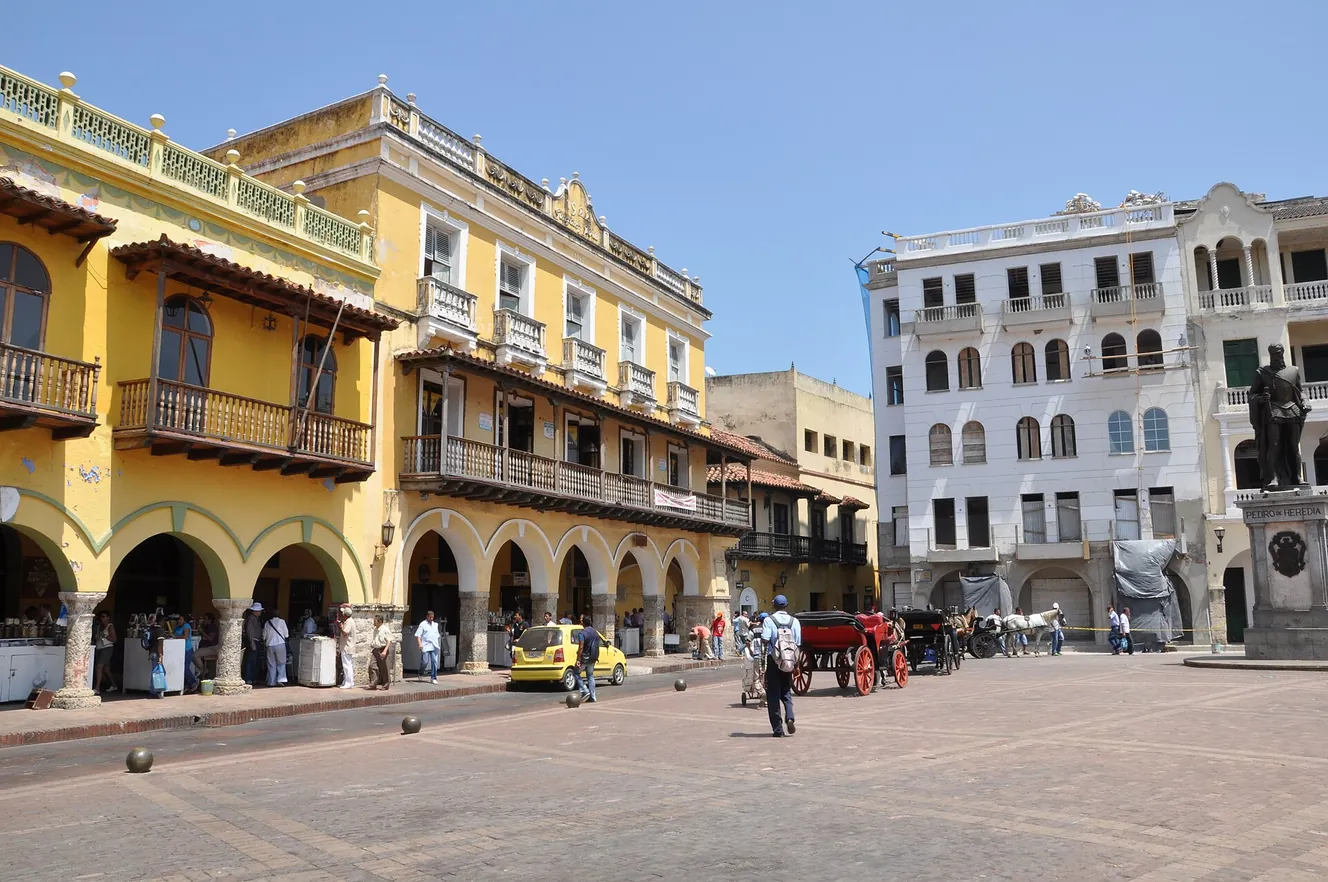
There are anecdotes the bar itself has turned into legend. The painter Alejandro Obregón walked in one day, looked around that museum of salseros and said, according to the account gathered by El Universal: “This is the place of memories.” Rubén Blades once asked Fidel which of his songs was most requested there. Besides “Plantación adentro,” he answered, one of the most requested was “Descarga caliente,” from his early years.
The high volume is not carelessness. It is custom. “All of us from the coast like dancing, and we normally listen to music loud,” Leottau explained to El Universal in 2016. In that same conversation he recalled the origin of the name: the place was called Lonchería El Pollo, but people would say “let's go to Fidel's,” and that is how it stuck. In 2026 the mayor's office honored him, during the celebration of the 493rd anniversary of the city's founding, as one of its beloved figures.
Where to hear it today
The Centro and Getsemaní hold most of the salsa a visitor will come across. In Getsemaní, on the corner of Calle de la Media Luna and Calle del Guerrero, is Café Havana. Its owners opened it in 2006 as a tribute to the bond between Cartagena and Havana, modeled on the bars of the Cuban capital, and what plays there is Cuban son and salsa, often live and until late. In the same neighborhood, Quiebra Canto is another salsa and son bar with years of history, which some purists prefer. Inside the walls, on Calle de Baloco, La Vitrola, open since 1994, accompanies dinner with live Cuban son every night from 8. A little over a hundred metres away, on the corner of Baloco and Santa Teresa, Casa Salvaje has a DJ from dinner time Wednesday to Saturday, and Thursday to Saturday the SLVJ club goes on until 3 a.m.
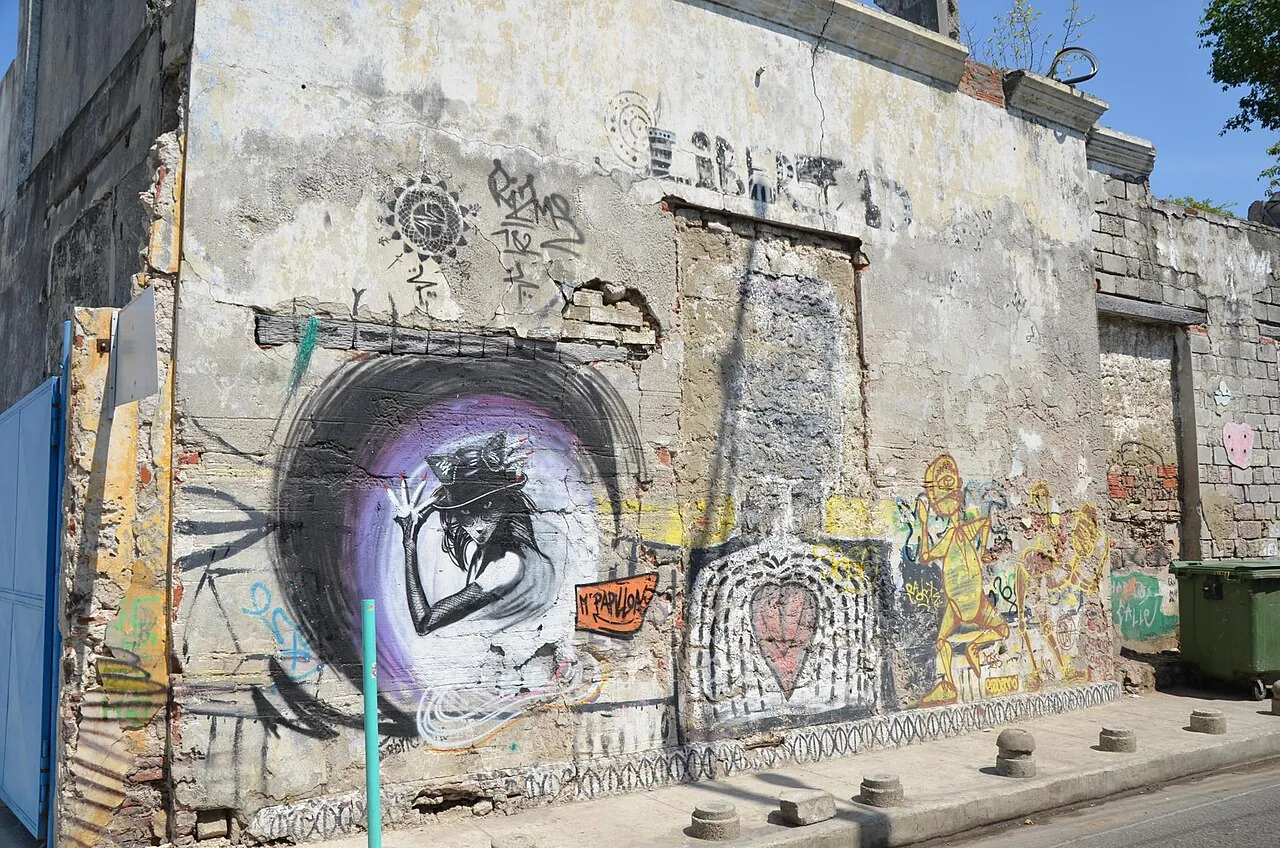
The November festivities also bring salsa to the street. The official program of the 2026 Fiestas de la Independencia includes Grupo Niche on the concert nights, and Luismy Yanes and Bazurto All Star at the coronation evening of the Reinado Popular, on Sunday, November 15.
And salsa is also finding its way into the Centro's newer venues. At Casa Salvaje, on Calle Santa Teresa, the house cites Joe Arroyo and “La rebelión” among the roots of its music, alongside the tradition of picós and champeta.
A final tip for first-timers: in Cartagena salsa is listened to with respect. If a song by el Joe comes on, there is no need to ask who's singing. Just listen to how people sing along to the chorus to understand that this music already belongs to the city.
This is the place of memories.
Sources
- El Universal: Fidel Leottau, el hombre detrás del museo de la salsa en Cartagena (7 de junio de 2026) ↗
- Radio Nacional de Colombia: Nos vemos Donde Fidel, el embajador de la salsa en Cartagena ↗
- El Universal: Trece años sin el gran Joe Arroyo, el sonero de América (2024) ↗
- El Universal: Festival Cartagena en Clave, homenaje a Joe Arroyo (2025) ↗
- Wikipedia en español: Joe Arroyo ↗
- Wikipedia en español: Champeta (picós de salsa) ↗
- Semana: Barranquilla despidió al Joe Arroyo ↗
- Colombia Reports: Café Havana, Calle de la Media Luna con Guerrero ↗
- El Universal: ¿A dónde vamos hoy a rumbear? (2016) ↗
- Lonely Planet: Quiebra Canto, Cartagena ↗
- El Universal: Fiestas de la Independencia 2026, agenda oficial ↗
- La Vitrola · Sitio oficial (son cubano en vivo todas las noches desde las 8) ↗
- Indagare · La Vitrola Restaurante (abierto en 1994) ↗
- Casa Salvaje (sitio oficial) ↗
Keep reading.
 AI-generated illustration
Music
The city you hear.
Music
Champeta and picós: the sound Cartagena made its own.
Music
Gaitas de San Jacinto: el cactus que canta en los Montes de María.