
Stories / Food & drink
The palenqueras and their fruit: trade, history and image.
They come from San Basilio de Palenque with a basin balanced on their heads and are Cartagena's most photographed figure; their trade is older and harder than the postcard.
Cartagena Social Club · 6 min read
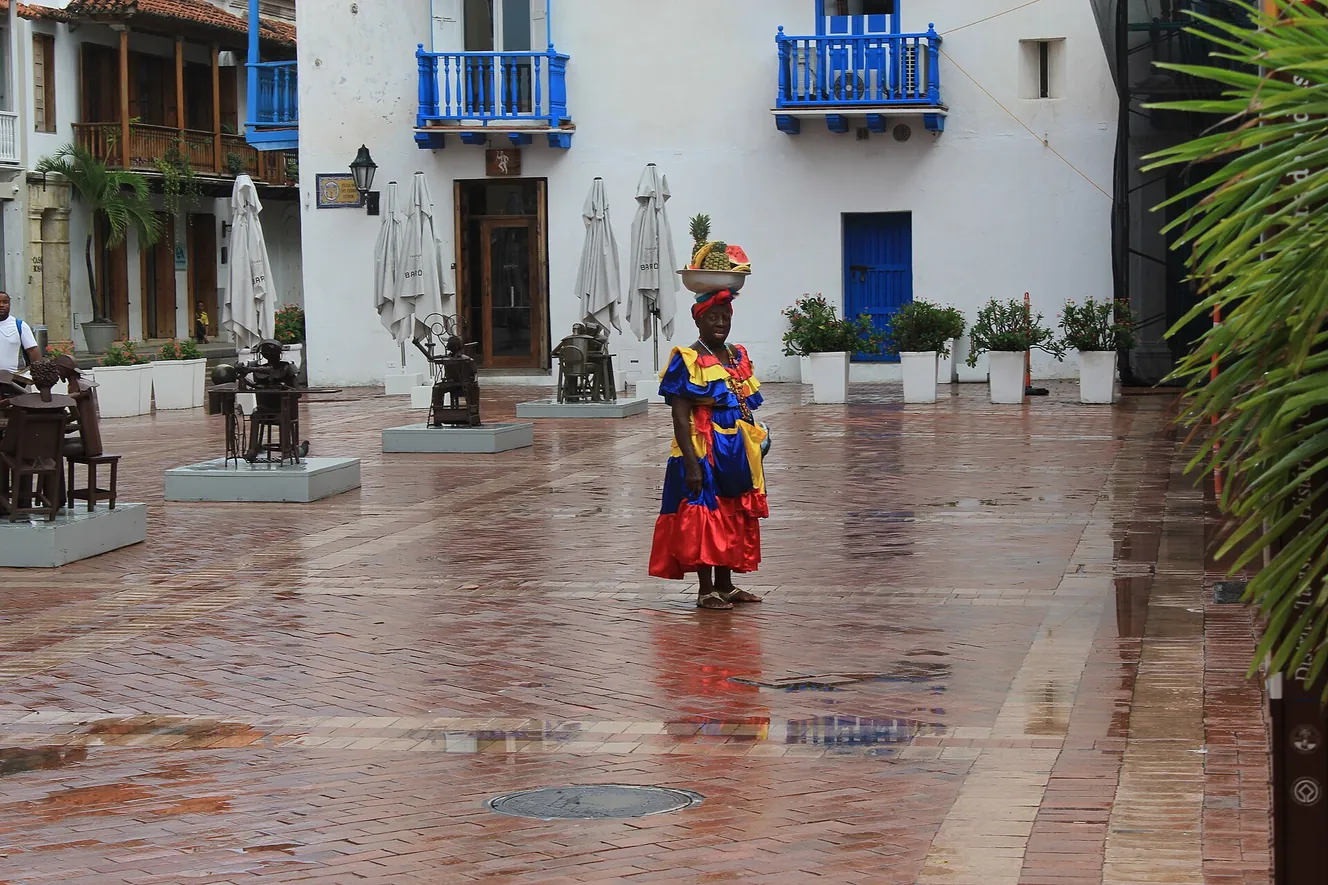
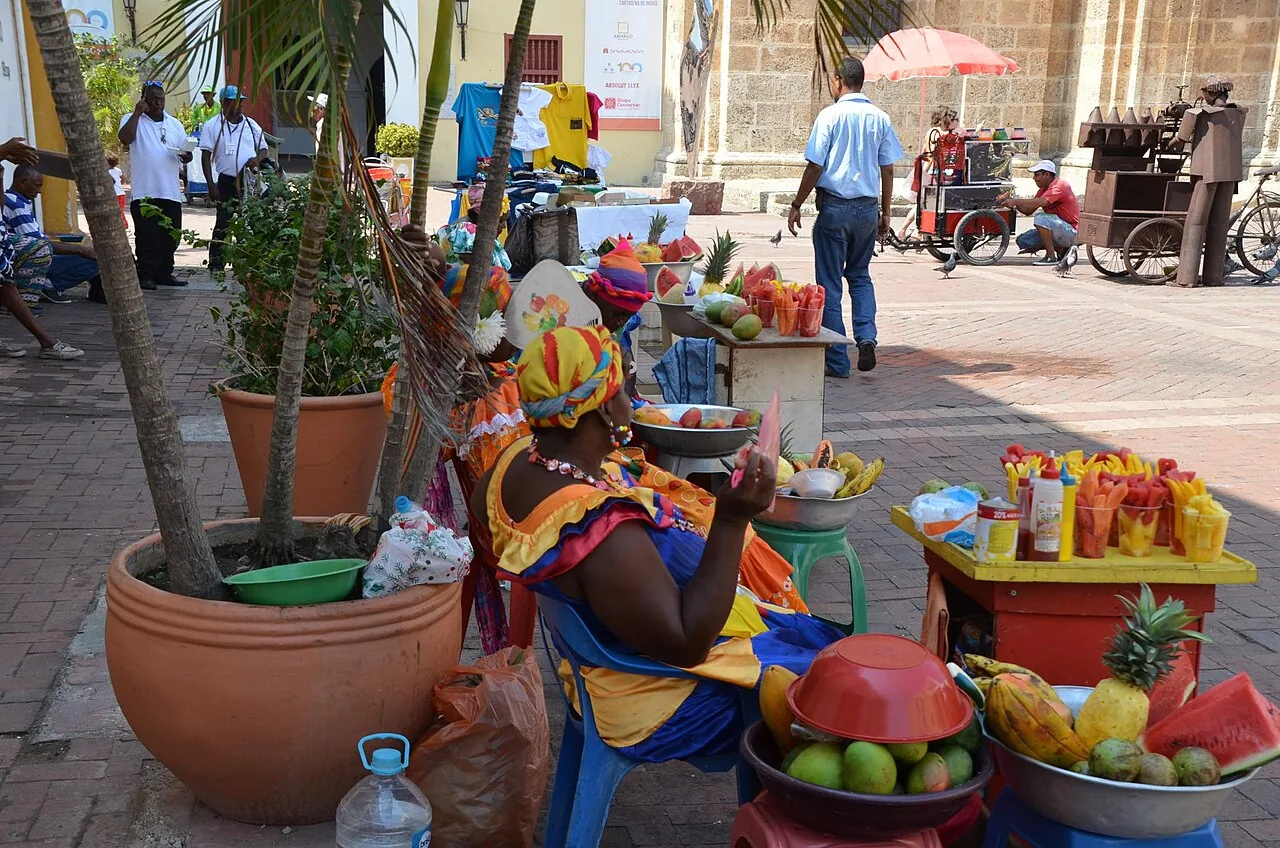
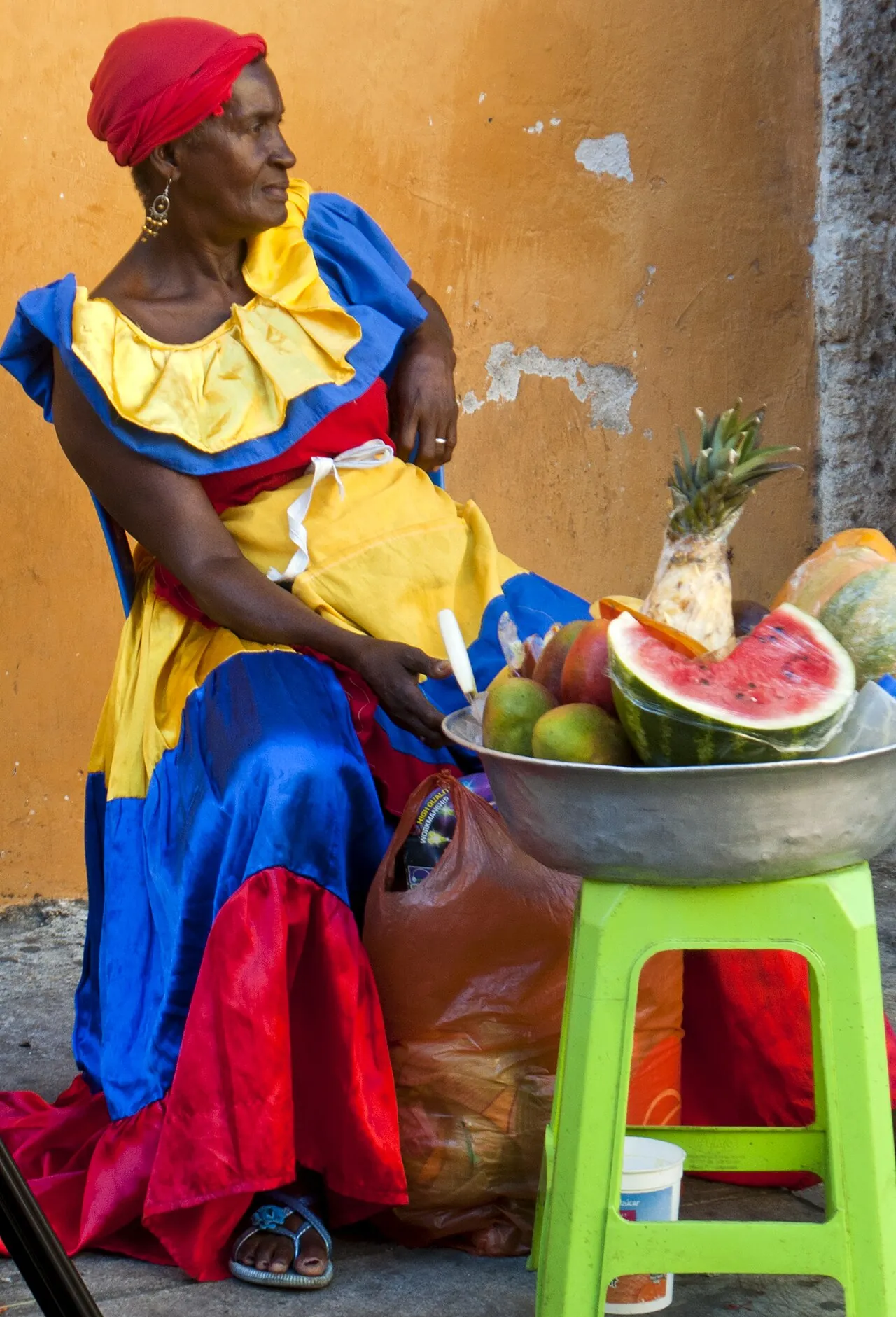
A palenquera waits in a square in the old city. The historic centre's public space is both her workplace and the source of her disputes with the authorities. Image: Laslovarga, CC BY-SA 4.0, via Wikimedia Commons
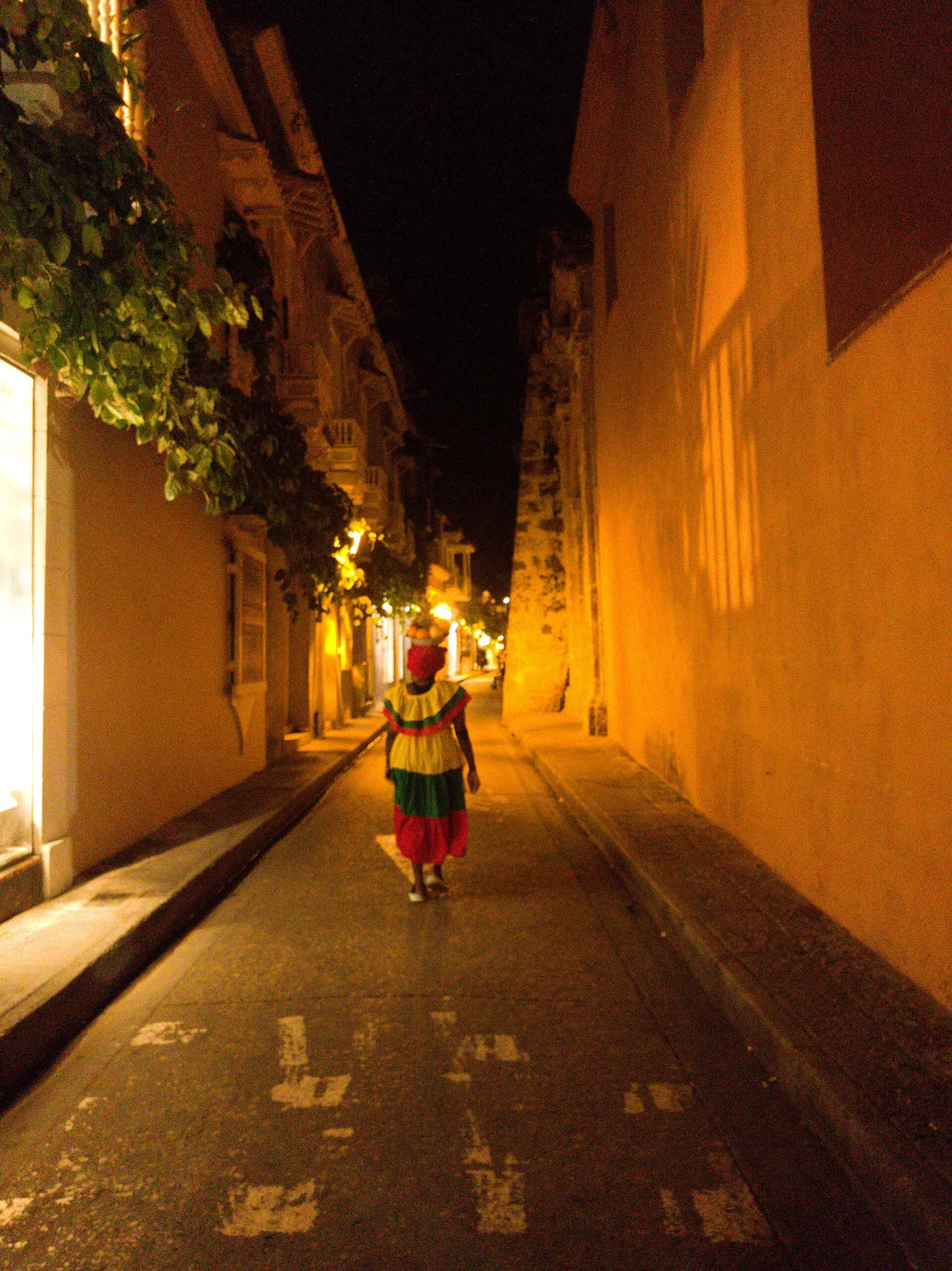
They walk through the Centro with straight backs and an aluminum ponchera — a wide basin — on their heads, full of cut fruit. They wear brightly colored dresses and a scarf tied in their hair. They stop in the squares, offer the fruit with a short street cry and, more and more, pose for visitors' photos. They are the palenqueras, vendors who come from San Basilio de Palenque, and their image appears on postcards, tourism posters and crafts all over the city.
Behind that image is a town, a history of resistance and a trade passed down from mothers to daughters. Behind it, too, is a debate the city has not settled, about the place these women occupy in public space and about who benefits from their visibility.
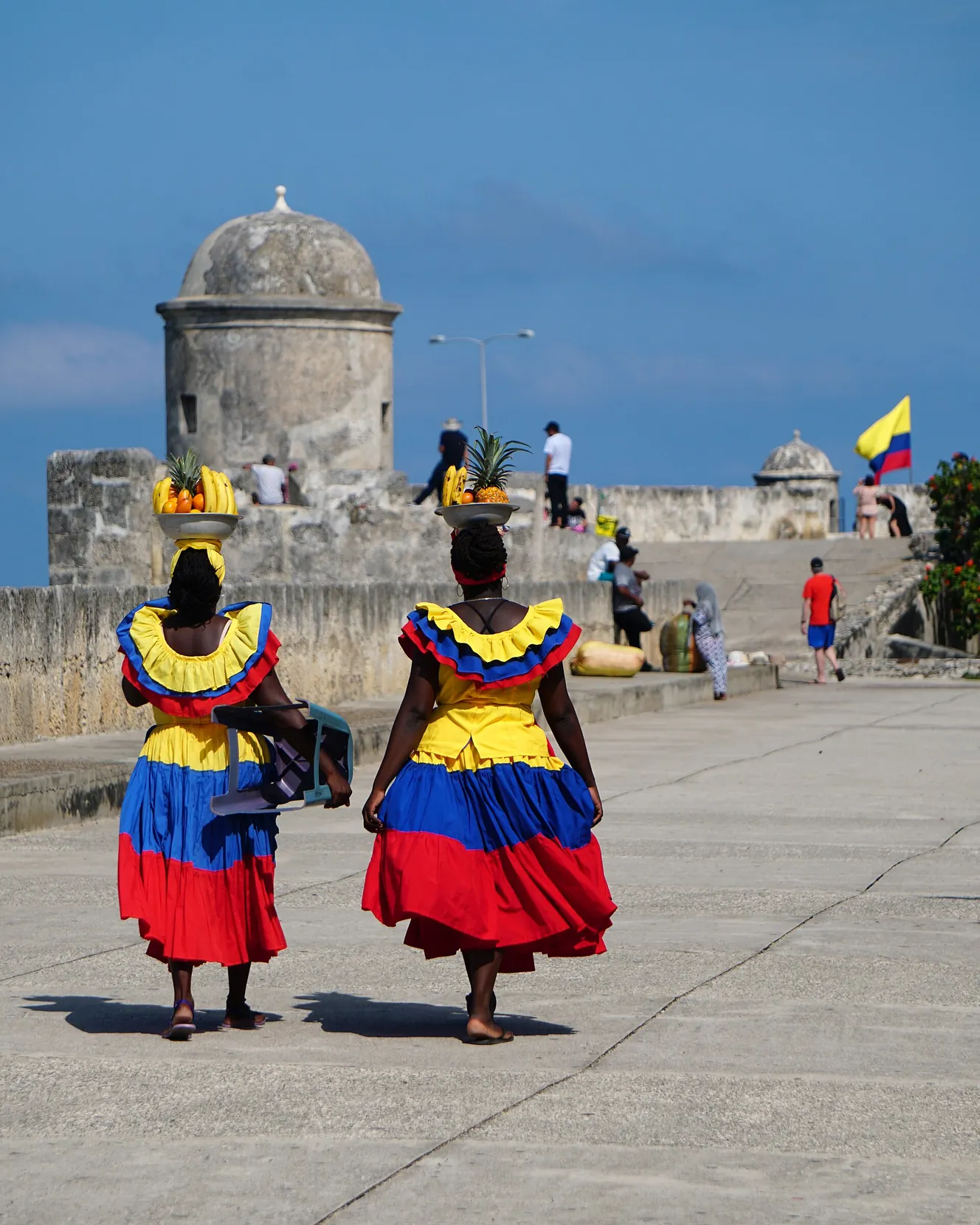
From San Basilio de Palenque to the Centro
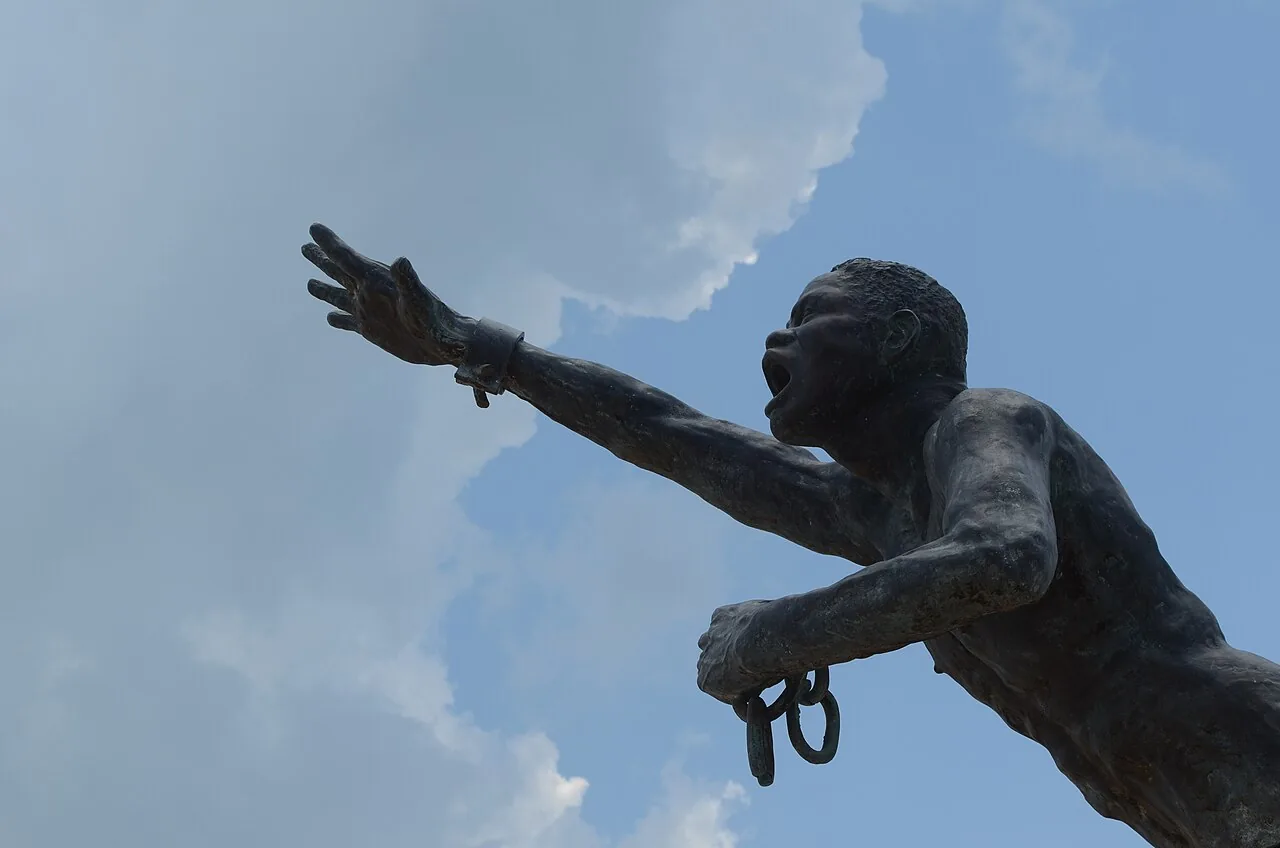
San Basilio de Palenque is a little over an hour from Cartagena by road, in the department of Bolívar. It is one of the palenques, communities of people who escaped slavery, that formed in the Caribbean during the colonial period. The history of its resistance is tied to Benkos Biohó, a cimarrón — maroon — leader who was hanged in Cartagena in 1621. Around 1713, after decades of conflict, the palenqueros obtained recognition of their freedom from the Crown, which is why the town presents itself as the first free town in the Americas.
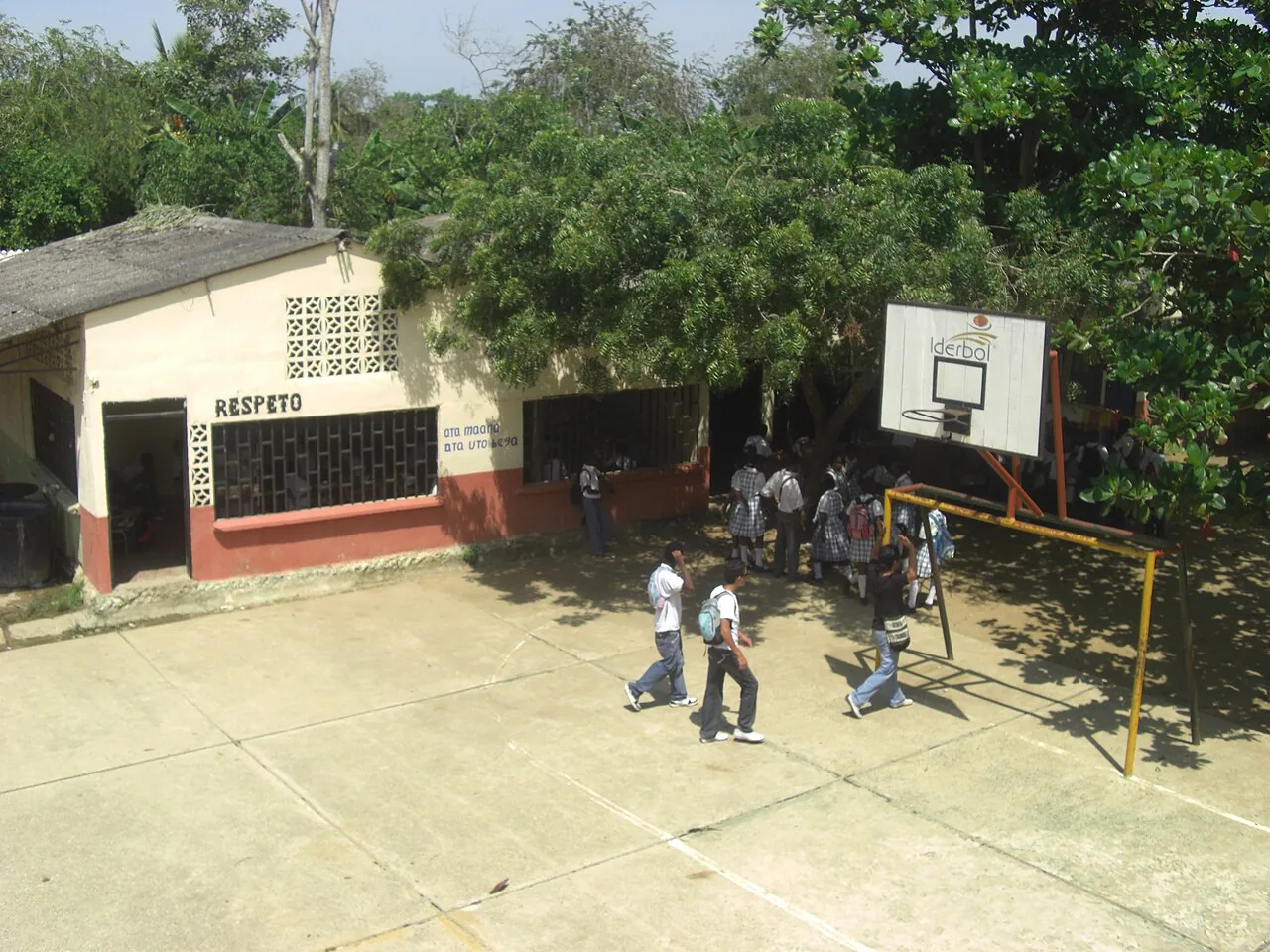
In 2005, UNESCO proclaimed the Cultural Space of Palenque de San Basilio a Masterpiece of the Oral and Intangible Heritage of Humanity, and in 2008 it inscribed it on the Representative List of the Intangible Cultural Heritage. The designation covers the palenquero language, a Spanish-lexified creole with features of Bantu languages, as well as music, funeral rituals, traditional medicine and social organization. In Colombia, its protection is governed by a Special Safeguarding Plan approved in 2009.
Selling fruit and sweets in Cartagena became, over time, a steady source of income for the town's families. For generations, women traveled to the city to sell what was grown or cooked in Palenque. In San Basilio itself, associations such as Asopraduce make traditional sweets, such as alegrías and caballitos, which they sell to hotels and shops in the region.
A trade that is living heritage
In January 2023, El Heraldo published a report describing the palenquera as the embodiment of the struggle of the first African women brought as slaves and as a keeper of knowledge from the oral tradition. The text quoted the community leader María del Carmen Cáceres, who called for respect for what these women represent and recalled that, by selling fruit, many have raised children who are now lawyers, teachers and engineers.
The trade is hard. It means getting up before dawn, buying and cutting the fruit, carrying several kilos on your head and walking for hours under the Centro's sun. The phrase most often repeated in the press to describe them is 'living heritage', and it is used both by palenquera organizations and by the authorities. But symbolic recognition does not always translate into working conditions.
The pandemic showed this clearly. According to Las2orillas, a cooperative of more than seventy palenqueras was left in debt after the months of lockdown, during which they received only a few handouts of groceries. With no tourists on the streets, the livelihood of many families in Cartagena and Palenque stopped overnight.
Public space and the trap of visibility
In March 2019, a public-space enforcement operation in the Parque de Bolívar ended with the confiscation of the table of Angelina Cassiani, a palenquera who, according to El Tiempo, had been working there for some twenty years. The case provoked protests and an editorial in El Universal. The mayor at the time, Pedrito Pereira, declared that the palenqueras are the city's living heritage, asked the Instituto de Patrimonio y Cultura de Cartagena (IPCC) and the Gerencia de Espacio Público to organize the trade, and working groups were agreed to build a public policy.
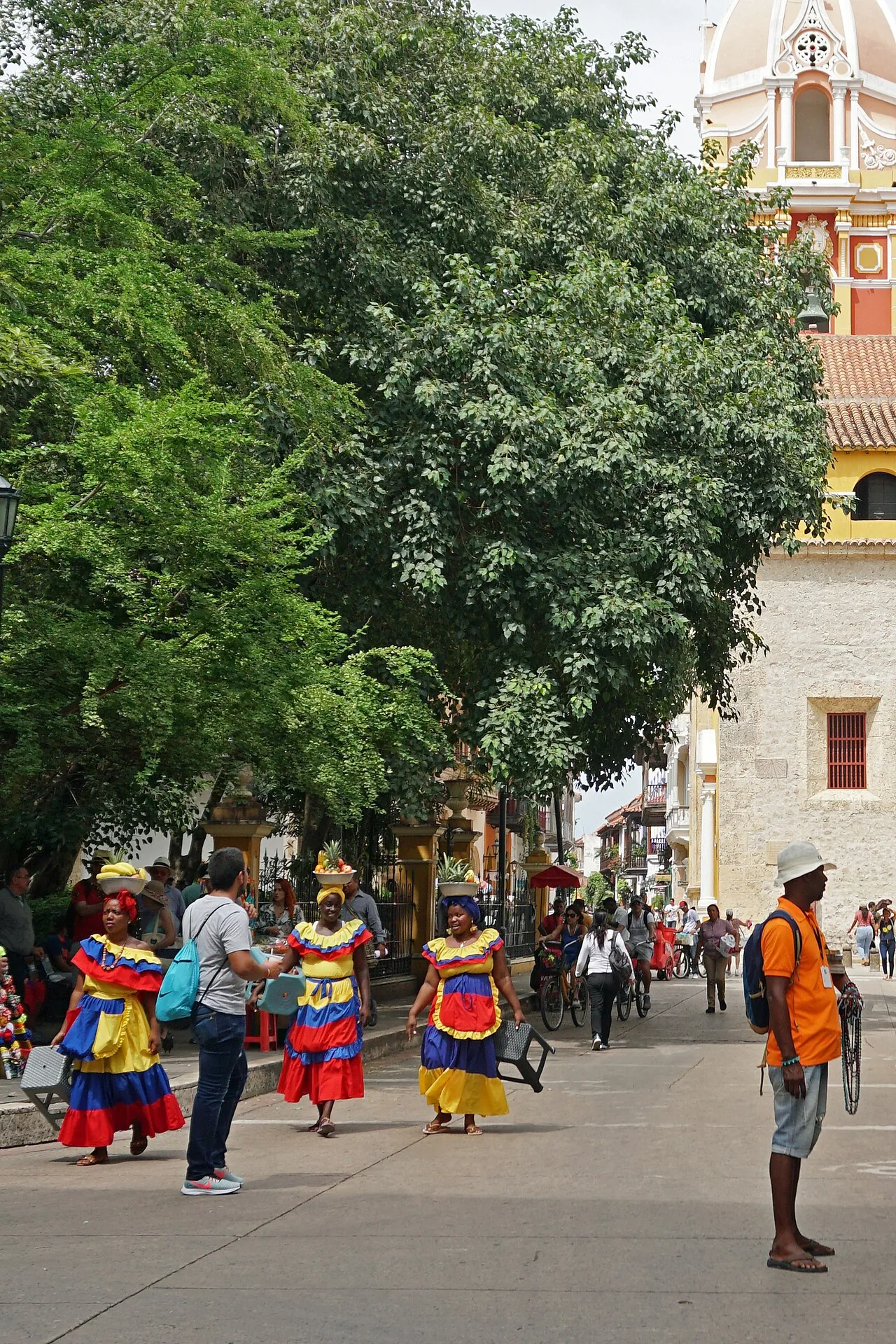
El Tiempo explained at the time one of the roots of the conflict: the single registry of vendors in the Centro Histórico listed 35 authorized palenqueras, who could move around the walled city but not set up at a fixed spot. The vendors argued that the Police Code excluded them from a space they had occupied for decades.
The anthropologist María Fernanda Escallón, of the University of Oregon, devoted a chapter of her book Becoming Heritage (Cambridge University Press, 2023) to this subject, titled 'Palenqueras and the Trap of Visibility'. Her argument is that intangible heritage is recognized as tied to a place, Palenque, and not to the people who embody it in the city, and that the more visible the palenqueras become as a symbol, the more invisible their hardships become.
The photo, the fruit and respect
Photography is now part of the trade. Many palenqueras charge to pose, and the press has recorded more than one dispute over the price: in a case reported by Pulzo, a couple of Argentine content creators complained of having paid 80,000 pesos for two photos. The advice is simple and applies to any street exchange: ask first, agree on the price and respect the answer.
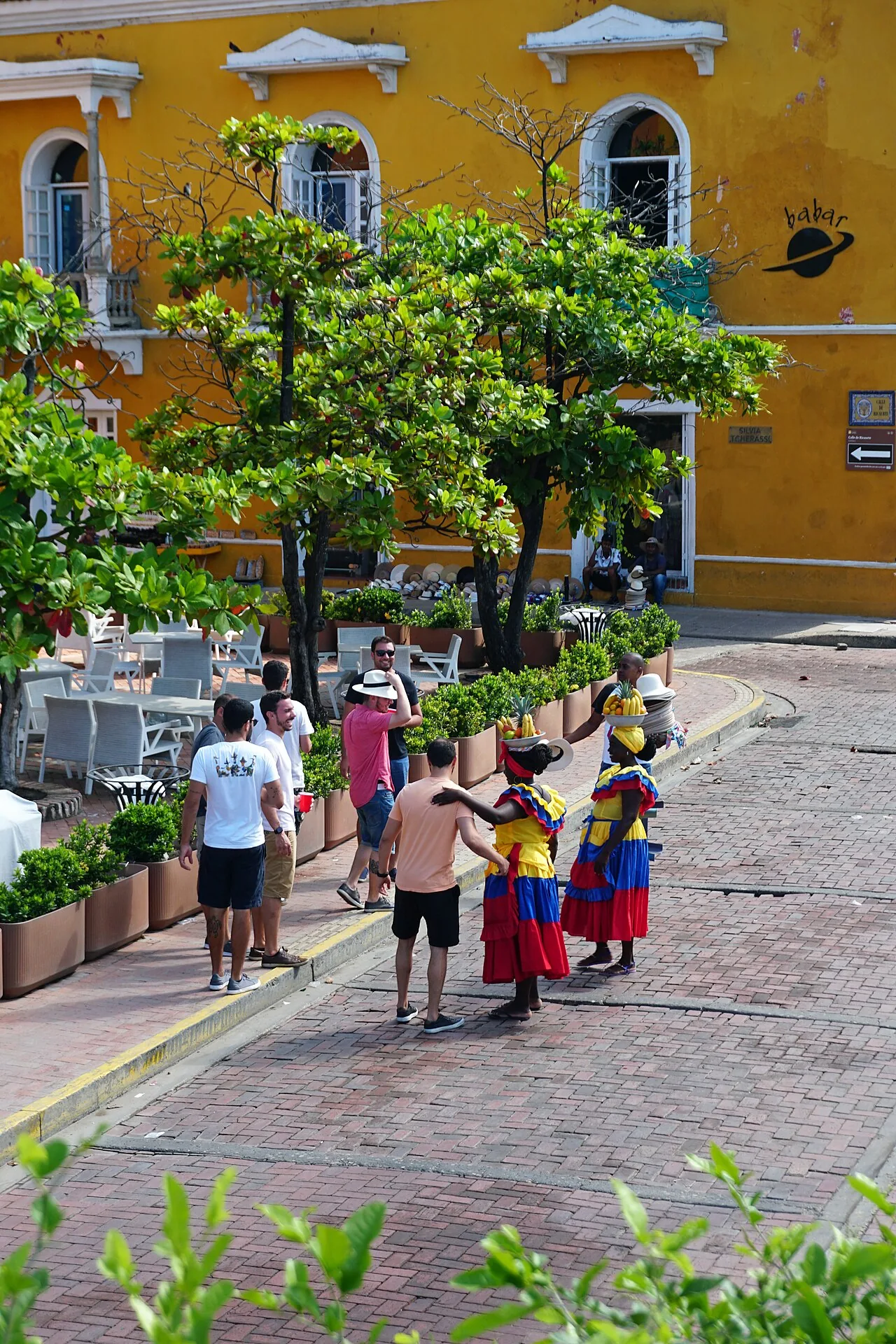
The image of the palenquera has also traveled beyond Cartagena. The women of Palenque sell fruit and sweets in other cities of the Caribbean and the interior, and in 2023 the Bogotá mayor's office organized a tribute to the legacy of the palenquera women who live and work in the capital. The figure has thus become a national emblem of African heritage in Colombia, present in tourism campaigns, souvenirs and works of art.
That use has a cost that the palenqueras themselves have pointed out. In 2019, Shirley Cassiani explained to El Tiempo that the palenqueras' association has a registered trademark, and the vendors argued at the time that they had been working in the Centro for decades and that this track record gave them rights. The debate over who may use the figure of the palenquera, and under what conditions, remains open.
Buying fruit is the other way to get closer. A portion of freshly cut fruit is one of the simplest refreshments in the Centro, and it is also what these women came to sell. The photo, if it happens, comes after.
Anyone who wants to carry the taste of fruit into the evening has a starting point at Casa Salvaje, on Calle Santa Teresa, where Kanibal serves alcohol-free fruit drinks, such as the Neandertal, with pineapple, orange, naranjilla and spearmint, or the Cromañón, with apple, passion fruit, ginger and basil. But the palenquera's fruit is eaten by day, in the square, and her story is best understood with a trip to San Basilio de Palenque, in the same department of Bolívar.
The palenqueras are not an ornament of the colonial landscape. They are working women, heirs of a people who won their freedom more than three centuries ago, and their presence on Cartagena's streets is one of the few living continuities between today's city and the history that made it.
The fruit basin is a job, not a costume: behind every palenquera is a people who won their freedom.
Sources
- UNESCO: The Cultural Space of Palenque de San Basilio ↗
- Ministerio de Cultura: Plan Especial de Salvaguardia del Espacio Cultural de San Basilio de Palenque ↗
- El Heraldo: Palenqueras, un legado cultural que sostienen en la palangana (2023) ↗
- El Universal: Alcaldía de Cartagena logra acuerdos con palenqueras (2019) ↗
- El Universal: Angelina Cassiani y los pasos de una palenquera que vende frutas en Cartagena (2019) ↗
- El Universal: Nuestras palenqueras (editorial, 2019) ↗
- El Tiempo: Palenqueras piden derecho a trabajar y protestarán en Cartagena ↗
- Cambridge University Press: Escallón, Palenqueras and the Trap of Visibility (Becoming Heritage, 2023) ↗
- Universidad de Oregon (CSWS): Palenqueras and the Trap of Visibility ↗
- Las2orillas: las palenqueras tras la pandemia ↗
- Pulzo: youtubers argentinos se quejaron de pagar 80.000 pesos por dos fotos ↗
- Radio Nacional: Colombia conmemora a Benkos Biohó ↗
Keep reading.

Food & drink
ONO, the hosomaki bar coming to Casa Salvaje.
Food & drink
The 4 best places for sushi in Cartagena.
Food & drink
The 5 best places to eat meat in Cartagena.