
Stories / Food & drink
The arepa de huevo and Cartagena's fritos.
Corn or cassava dough, hot oil and a tradition the city celebrates every January with its own festival.
Cartagena Social Club · 6 min read
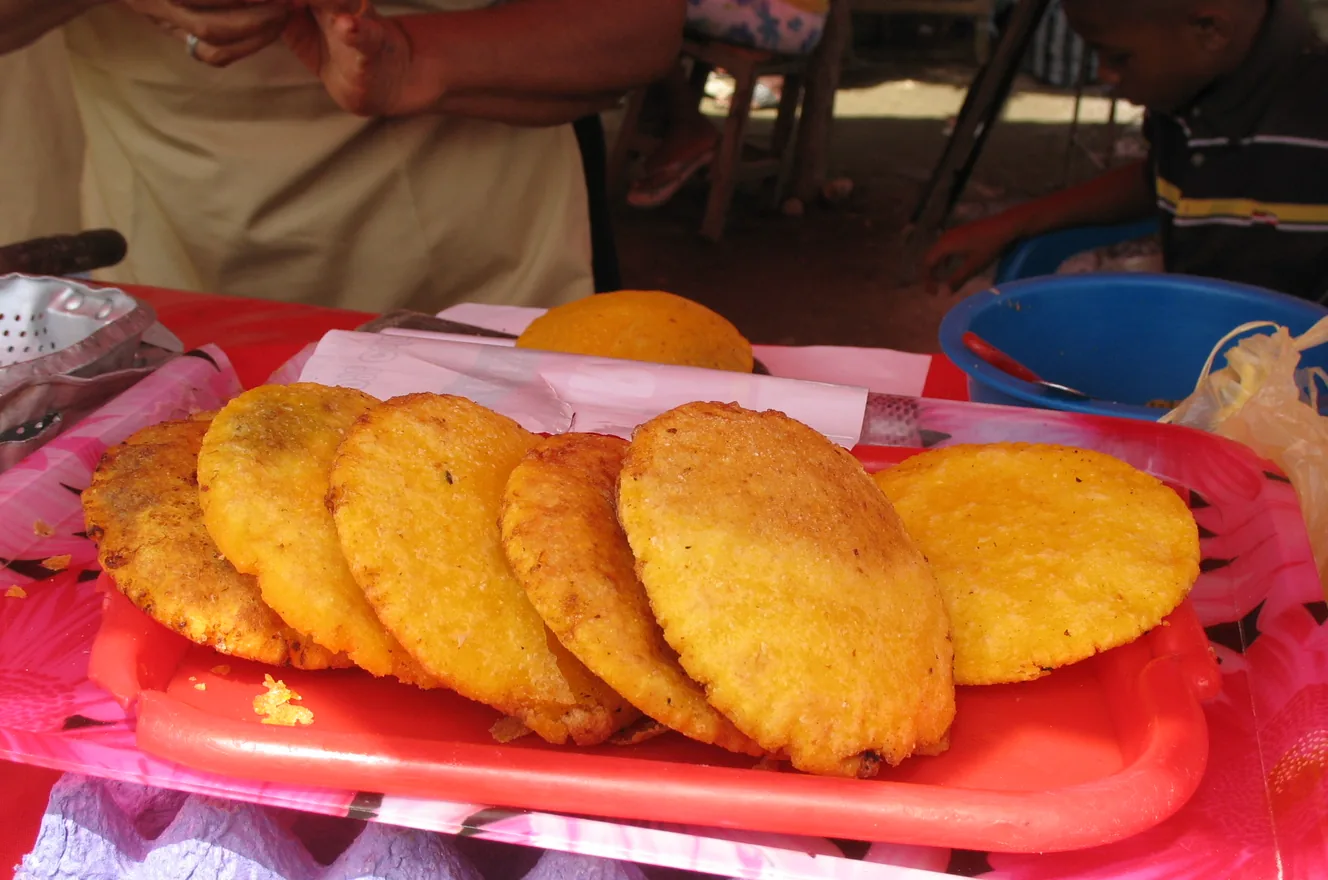
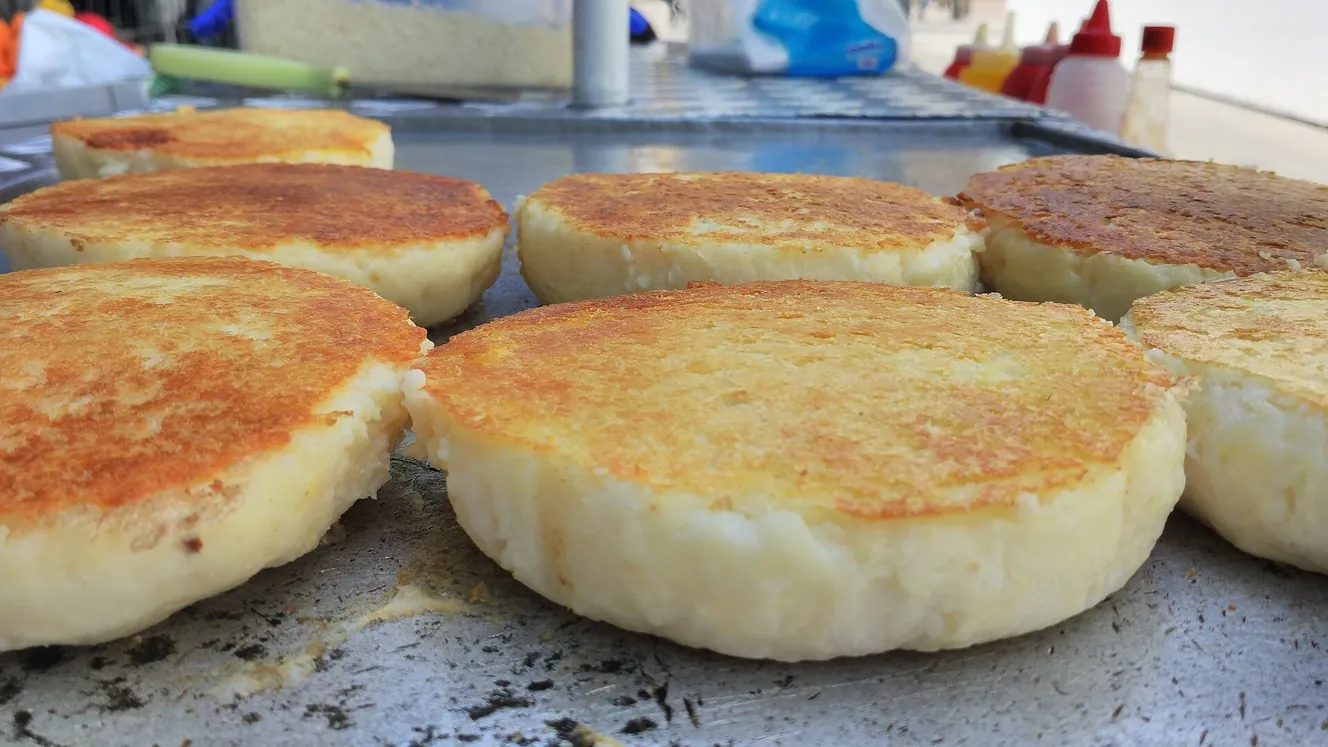
Freshly fried arepas de huevo at a street stand. Photo: Jdvillalobos / Wikimedia Commons (CC BY 3.0).
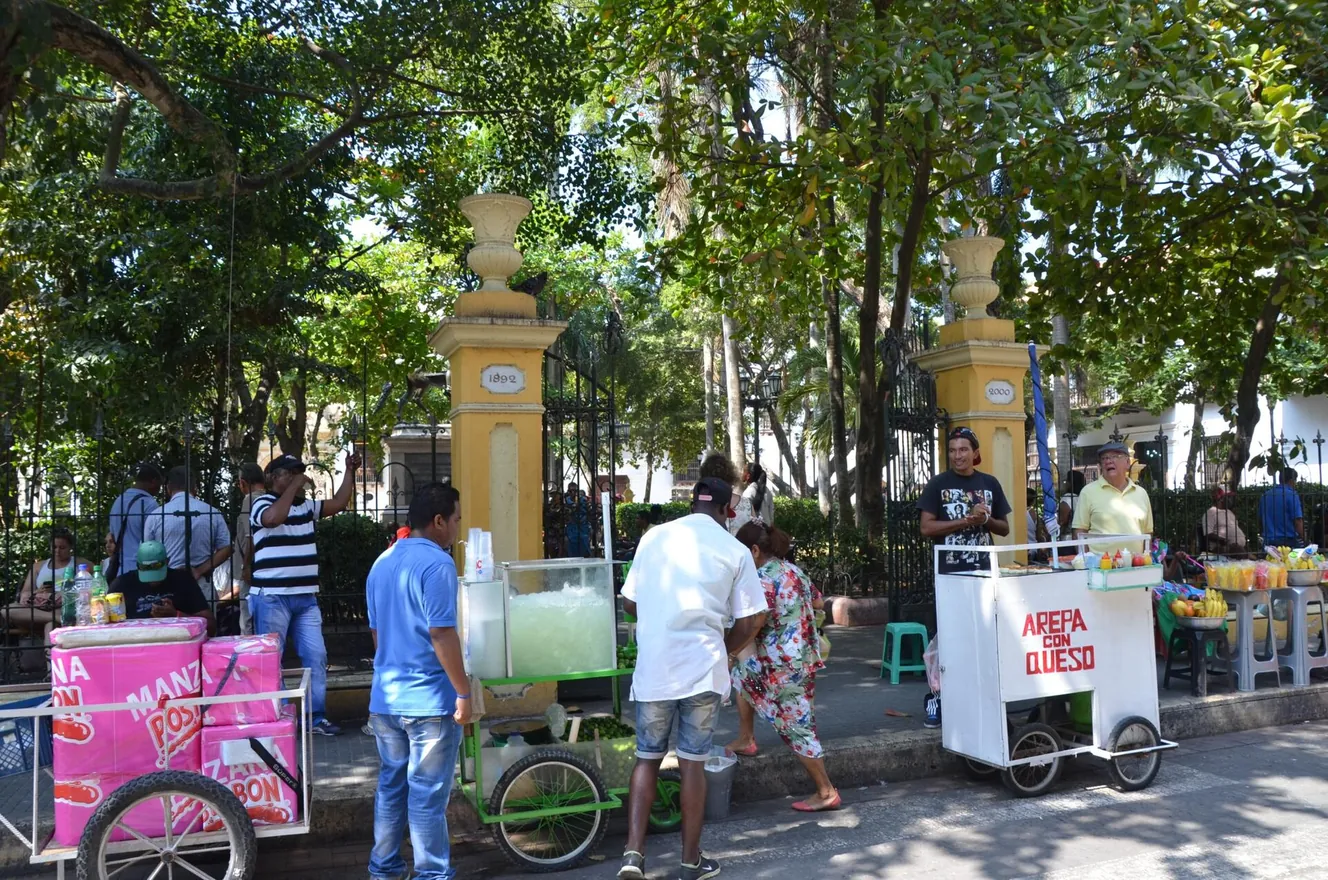
In Cartagena the morning smells of hot oil. On neighborhood street corners, in the doorways of cafeterías and at the carts set up from early on, the fritangueras — the women who run the frying stalls — lower into the cauldron the dough they kneaded before dawn. What comes out has names of its own: arepa de huevo, carimañola, buñuelo de frijol, empanada de carne, arepita dulce. It is food eaten standing up, with a napkin and in a hurry. It is also one of the oldest ways the city has of telling its own story.
For a proper sit-down meal, the night starts at Casa Salvaje, the colonial house on Calle Santa Teresa at Calle Baloco. There Kanibal puts empanaditas of beef and chistorra sausage on the table alongside the meat and vegetables finished over the embers, and from Thursday to Saturday the SLVJ club runs until 3 in the morning. But this is a story about the street, and the street is eaten by day.
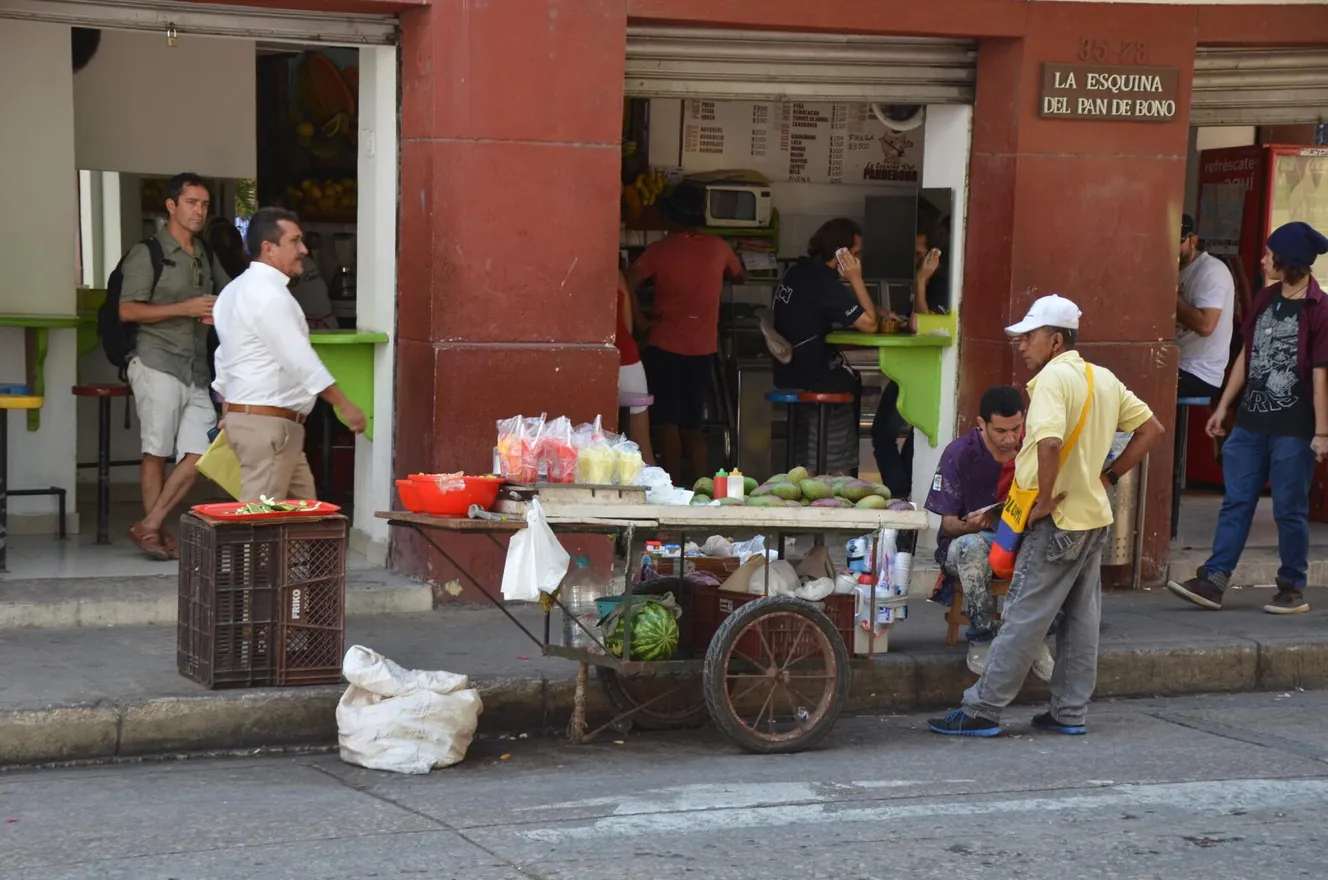
A repertoire of corn, cassava and mixtures
El Universal, the city's daily newspaper, has gone over the list of what counts as a Cartagena frito many times. It includes the empanada or arepa con huevo, the carimañola, the buñuelo de frijol, the empanada de carne, the anise-scented arepita dulce, patacones (fried green plantain) and even kibbe, which arrived with Arab immigration and stayed in the display cases alongside the rest. The list is itself a portrait of the city: American corn and cassava, frying techniques that traveled across the Atlantic and fillings brought by each wave of newcomers.
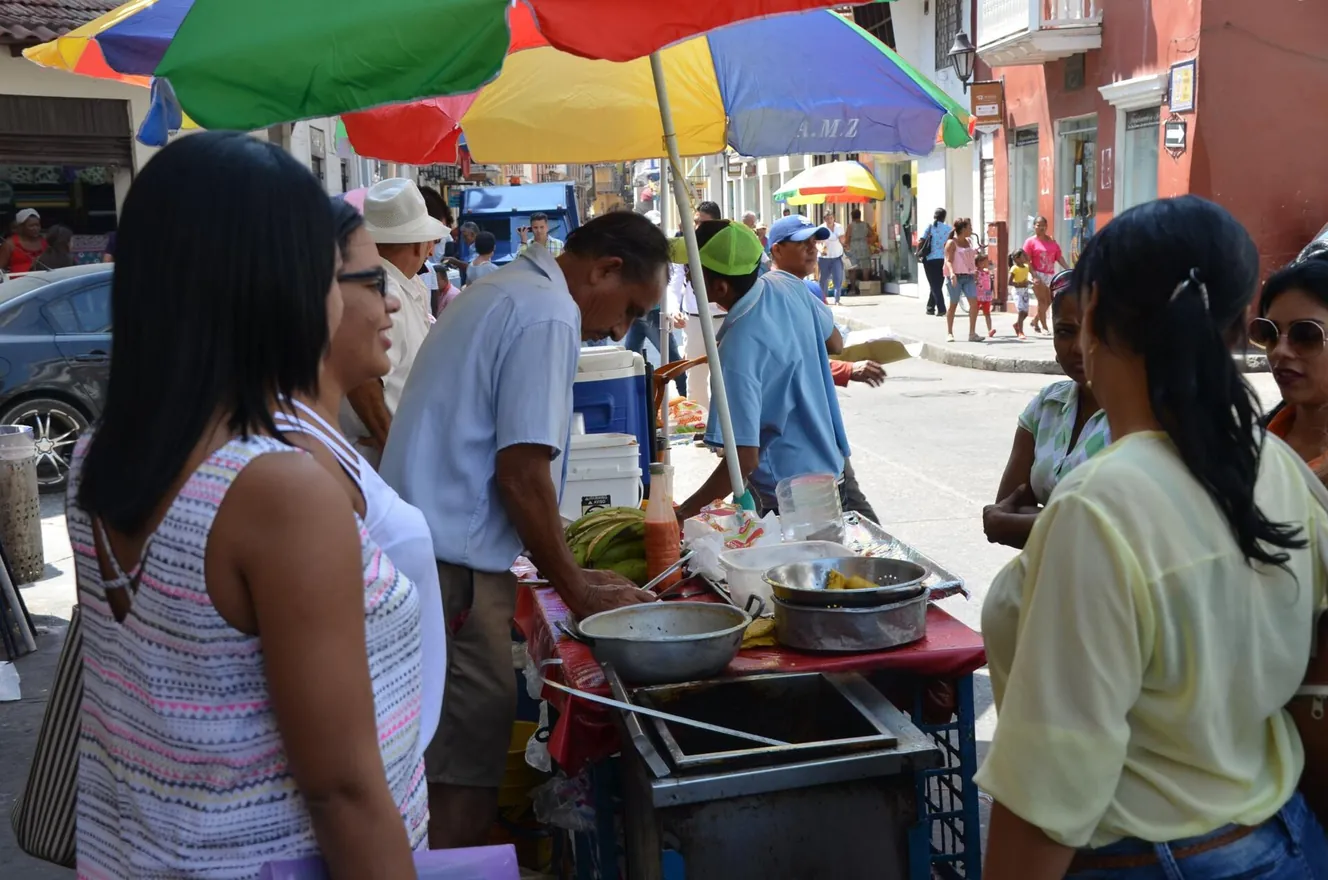
The carimañola is perhaps the most Cartagena of fritos in texture. It is a dough of boiled, ground cassava, filled with ground beef or cheese, fried until the surface turns golden and crisp. It is also eaten in Panama and is counted as part of the coast's Afro-Caribbean cooking. There is debate about the origin of its name: a column in El Universal notes that some linguistic hypotheses link it to the word 'caramañola,' while cartageneros defend the form 'carimañola' for reasons the piece itself describes as aesthetic.
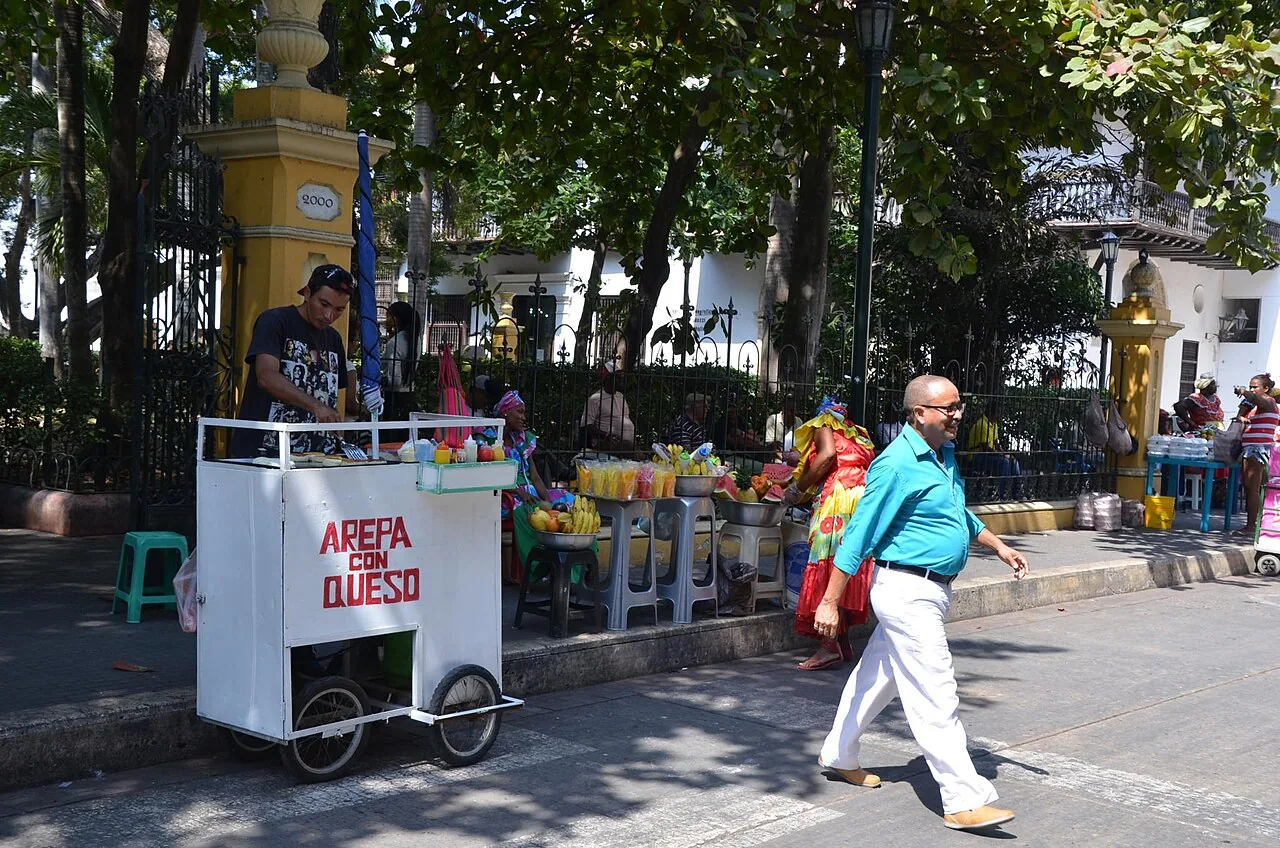
The buñuelo de frijol and the arepita dulce complete the display case. The first is a small ball of bean dough, fried until dark on the outside. The second is a thin arepa, sweetened and perfumed with anise, that works as a counterpoint to everything savory. Neither has the national fame of the arepa de huevo, but both always appear on the official price lists of the festival the city devotes to these preparations.
Empanada or arepa? The name and the origin
The queen of the display case has two names. In 2016, El Universal explained that 'empanada con huevo' is the form used by earlier generations, the same one the chronicler Daniel Lemaitre celebrated in a poem, and that commerce, the street stalls and the dish's fame across the country ended up imposing 'arepa con huevo.' In 2025, on the occasion of the Festival del Frito, the same newspaper consulted a linguist who accepted both forms. In the walled Centro there are still people who order it as an empanada.
The preparation is demanding. The arepa, made of yellow corn dough, is fried, slit open along one side, filled with a whole egg and returned to the oil so that the egg cooks inside. In Cartagena it is common for it to carry ground beef as well as the egg. The result is a golden piece, crisp on the outside, with the yolk still soft inside if the fritanguera has a good hand.
The origin is a matter of dispute. El Universal has reported the idea that the arepa con huevo has one origin in Cartagena, another in Luruaco and another in the Sinú, and cites Lemaitre's version, according to which it was born on a night of revelry at La Popa. Luruaco, a municipality in the department of Atlántico on the shore of its lagoon, claims paternity with solid arguments: the Asociación de Productoras de Arepa de Huevo has operated there since 2003, which according to Portafolio brings together more than 65 women, and Congress is considering Bill 273 of 2025, which seeks to declare the arepa de huevo of Luruaco intangible cultural heritage of the Nation.
The debate, in any case, doesn't take the dish away from anyone. The arepa de huevo is a shared heritage of the Colombian Caribbean, and each city fries it its own way. What is distinctly Cartagena is the way it's eaten: hot, in the street, on the way to work or coming out of Mass.
The Festival del Frito: since 1984
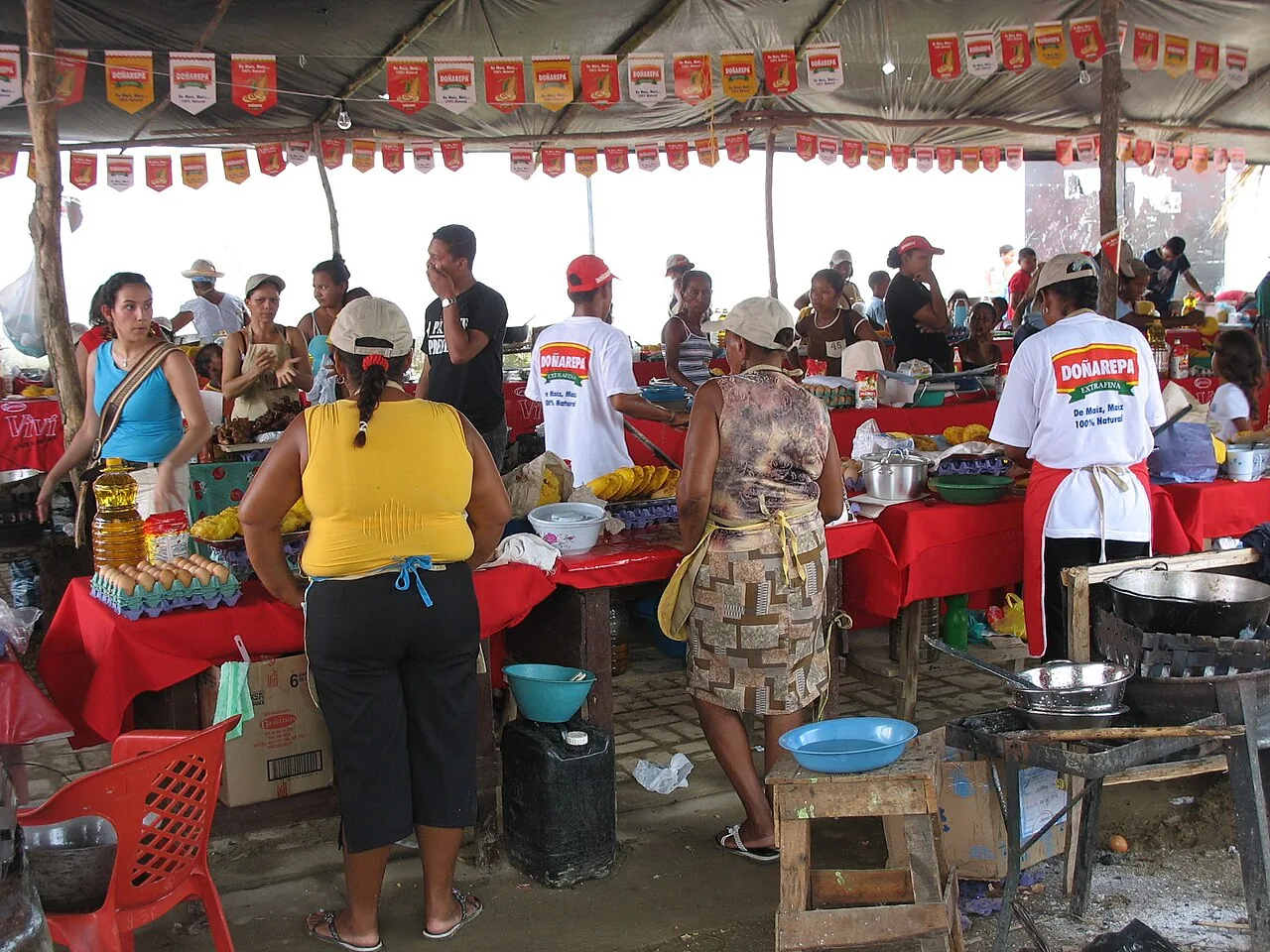
Four decades ago the city decided that these recipes deserved a stage. In May 1984 the organization of the first Festival del Frito Cartagenero was announced, with the aim of rescuing and promoting that culinary tradition. Over time, the event became tied to the Fiestas de Nuestra Señora de la Candelaria, the patron saint celebrated on February 2, and today it is organized by the Instituto de Patrimonio y Cultura de Cartagena (IPCC), which selects the participants through a public call.
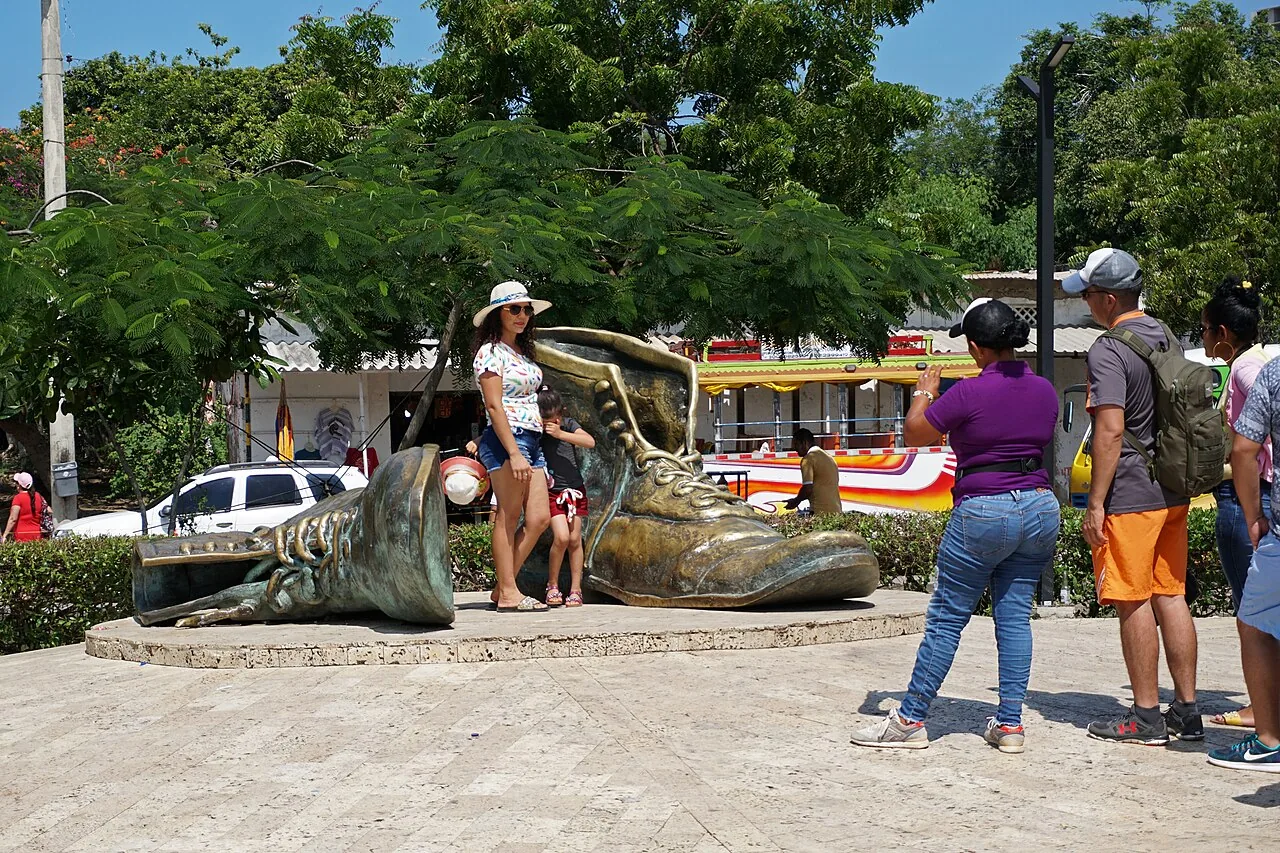
The 41st edition, in 2025, was held from January 24 to February 2 at the monument to the Botas Viejas, the place where the festival has set up for much of its history; in 2022 the opening had been held on the open ground at Chambacú. That year, for the first time, the program added performing and visual arts to the music. The 42nd edition was again scheduled from January 24 to February 2, 2026 at the Botas Viejas; the IPCC's rules provided 62 places for bearers of the tradition, and the rains forced the closing date to be moved.
The festival also sets prices, and publishes them. For 2026, according to El Universal on January 23, traditional fritos such as the carimañola, the empanada de carne, the buñuelo de frijol or the arepita dulce cost $3,000 pesos; the traditional arepa de huevo, $5,000, and the so-called innovative frito, $8,000. That innovation category is the other side of the event: every year there are arepas stuffed with seafood or new combinations that coexist with the classic recipes.
The tradition has traveled. In August 2013, Colombia's Foreign Ministry took a delegation from the Festival Tradicional del Frito de Cartagena to Carifesta, the Caribbean festival of the arts, held that year in Paramaribo, Suriname. Micaela Moreno, the festival's 'queen of queens,' traveled with it. It was the first time Cartagena's fritangueras took part in that regional gathering.
Where and how to eat them
Outside festival season, fritos are everywhere, but they are above all a morning food. You'll find them at street stalls, on carts and in neighborhood cafeterías, inside and outside the wall, and also in simple restaurants in Getsemaní that serve them with fresh juices. The rule is simple: order what has just come out of the oil, not what has been sitting in the display case for a while. For a coffee to go with the morning, the Centro will soon have another address: La Domenica, Casa Salvaje's daytime world, opening soon on Calle Santa Teresa.
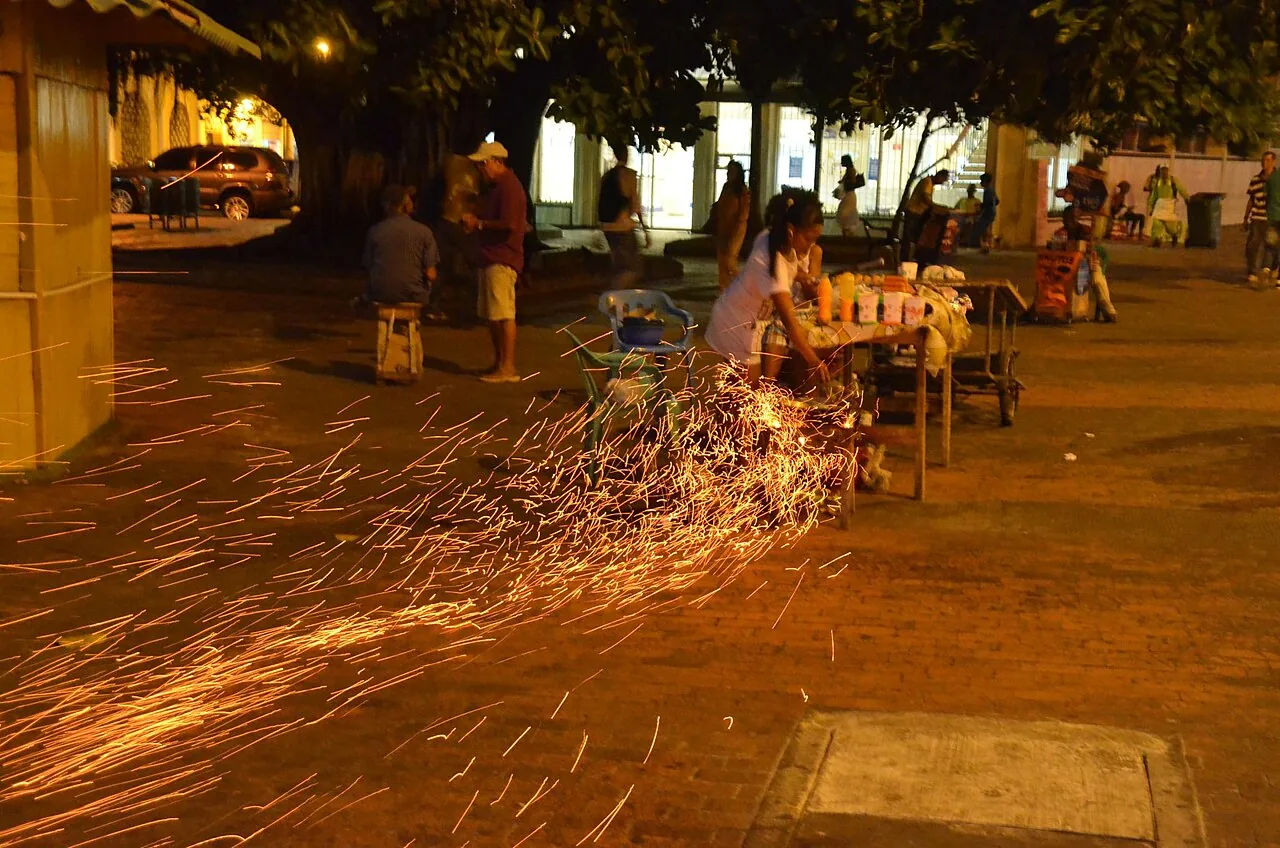
The classic accompaniment to the arepa de huevo is suero costeño, a tangy cultured cream from the region. To drink, a fruit juice or a tinto, a small black coffee. At street stalls it is best to carry cash in small bills. And above all, eat slowly, even though the frito was invented for people in a hurry.
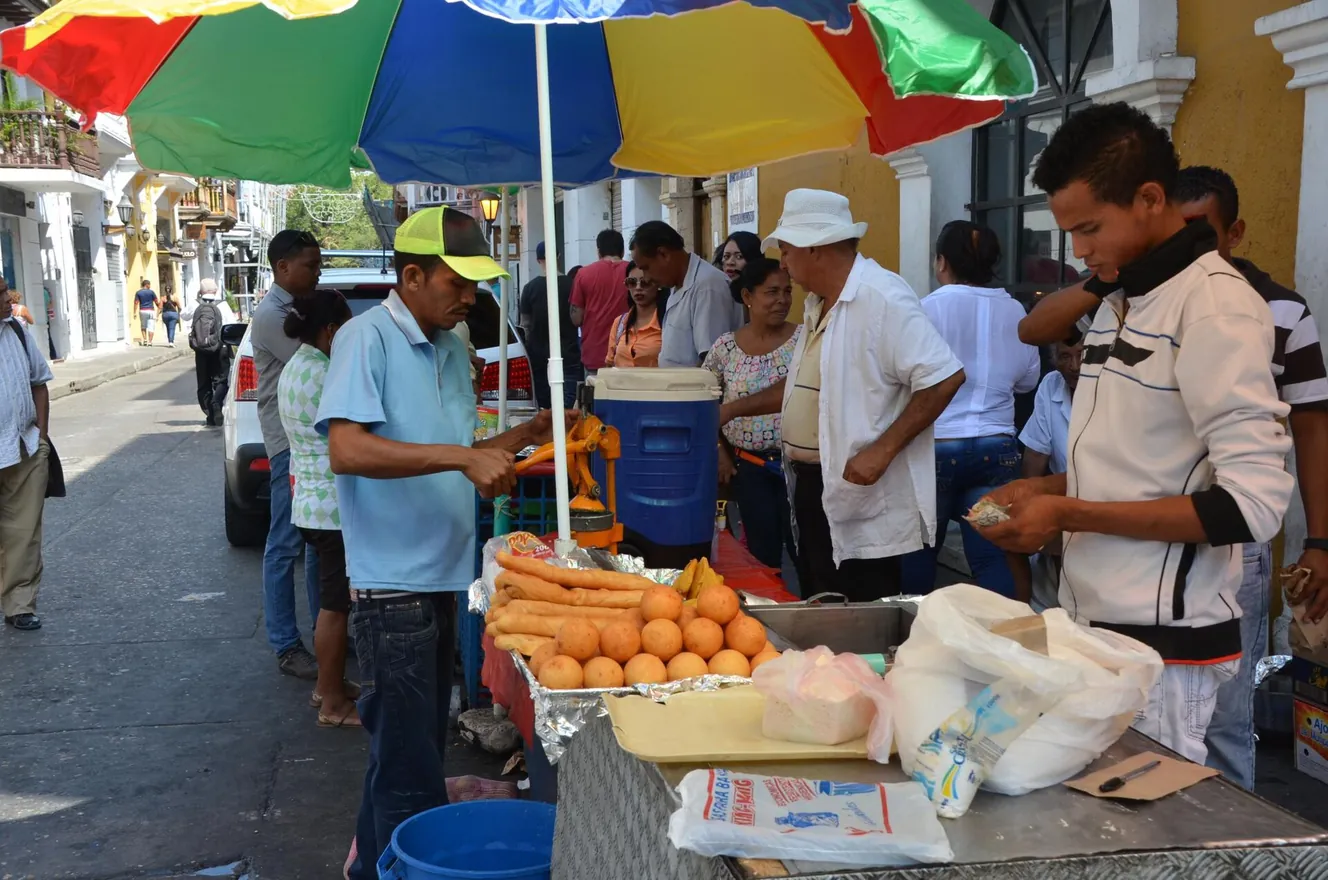
The Festival del Frito returns every January, in the run-up to the Candelaria. The IPCC confirms the dates and location a few weeks beforehand. Anyone who arrives in Cartagena around then will find dozens of fritangueras on a single open esplanade, each with her cauldron, her recipe and her loyal customers.
In Cartagena a frito is not a passing craving: it is the street's breakfast, the afternoon snack and a recipe that gets handed down.
Sources
- El Universal: Festival del Frito cartagenero, estos son los precios oficiales (2026) ↗
- El Universal: Festival del Frito cartagenero cambia su fecha de cierre por lluvias (2026) ↗
- El Universal: Todo lo que debes saber del Festival del Frito 2025 ↗
- El Universal: ¿Cómo se debe decir en Cartagena, empanada con huevo o arepa con huevo? (2016) ↗
- El Universal: Festival del Frito, ¿es empanada con huevo o arepa con huevo? (2025) ↗
- El Universal: El papel de la carimañola (columna) ↗
- IPCC: Bases y términos XLII Festival del Frito Cartagenero 2026 ↗
- Las2orillas: el primer Festival del Frito (1984) ↗
- Cancillería de Colombia: El Festival Tradicional del Frito de Cartagena en Carifesta, Surinam (2013) ↗
- Portafolio: Arepa de huevo, el plato tradicional que puso a Luruaco en el mapa ↗
- El País: La arepa de huevo podría ser declarada patrimonio cultural ↗
- Casa Salvaje (sitio oficial) ↗
Keep reading.

Food & drink
ONO, the hosomaki bar coming to Casa Salvaje.
Food & drink
The 4 best places for sushi in Cartagena.
Food & drink
The 5 best places to eat meat in Cartagena.