Stories / Neighborhoods
Getsemaní, the neighborhood that became a plaza.
From the artisans' quarter that pushed for independence to the neighborhood of murals that is now fighting not to run out of residents.
Cartagena Social Club · 6 min read
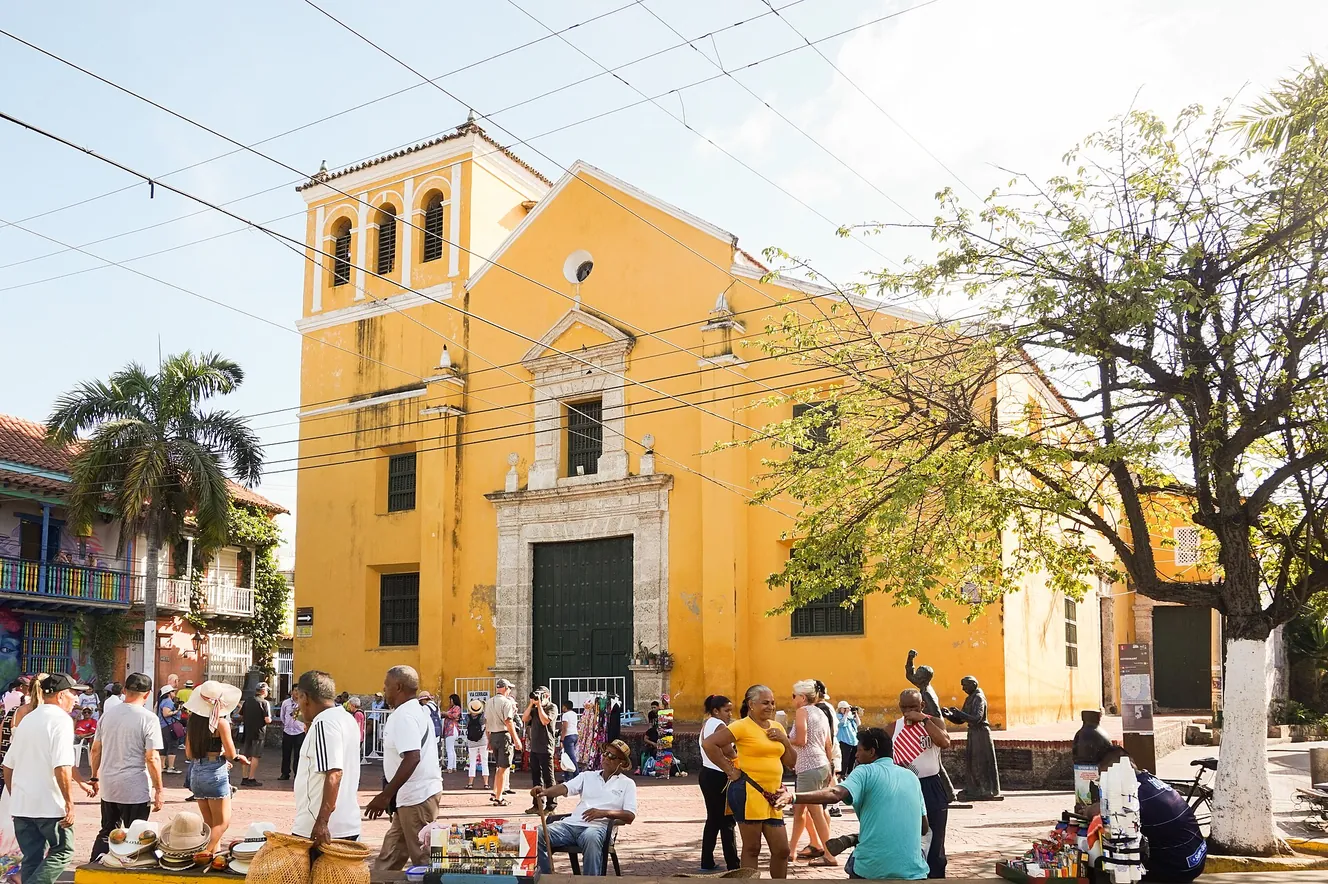
The Church of the Holy Trinity and, in front, the square in full swing: neighbours, vendors and visitors sharing the same shade. Image: Bernard Gagnon, CC BY-SA 4.0, via Wikimedia Commons
Getsemaní was never the Centro. It was born as an arrabal, an outlying quarter, on the other side of the channel that separated it from the main walled precinct: the neighborhood of artisans, sailors, carpenters and the people who made the city run without living at its heart. That distance, a disadvantage for centuries, is now its character. While merchants and officials lived inside the walls, here people worked with their hands.
To enter today, you just cross the Camellón de los Mártires from the Torre del Reloj. Within minutes the scale changes: the houses are lower, the streets grow narrower and more people are sitting at their doors. It is the same city and, at the same time, another.
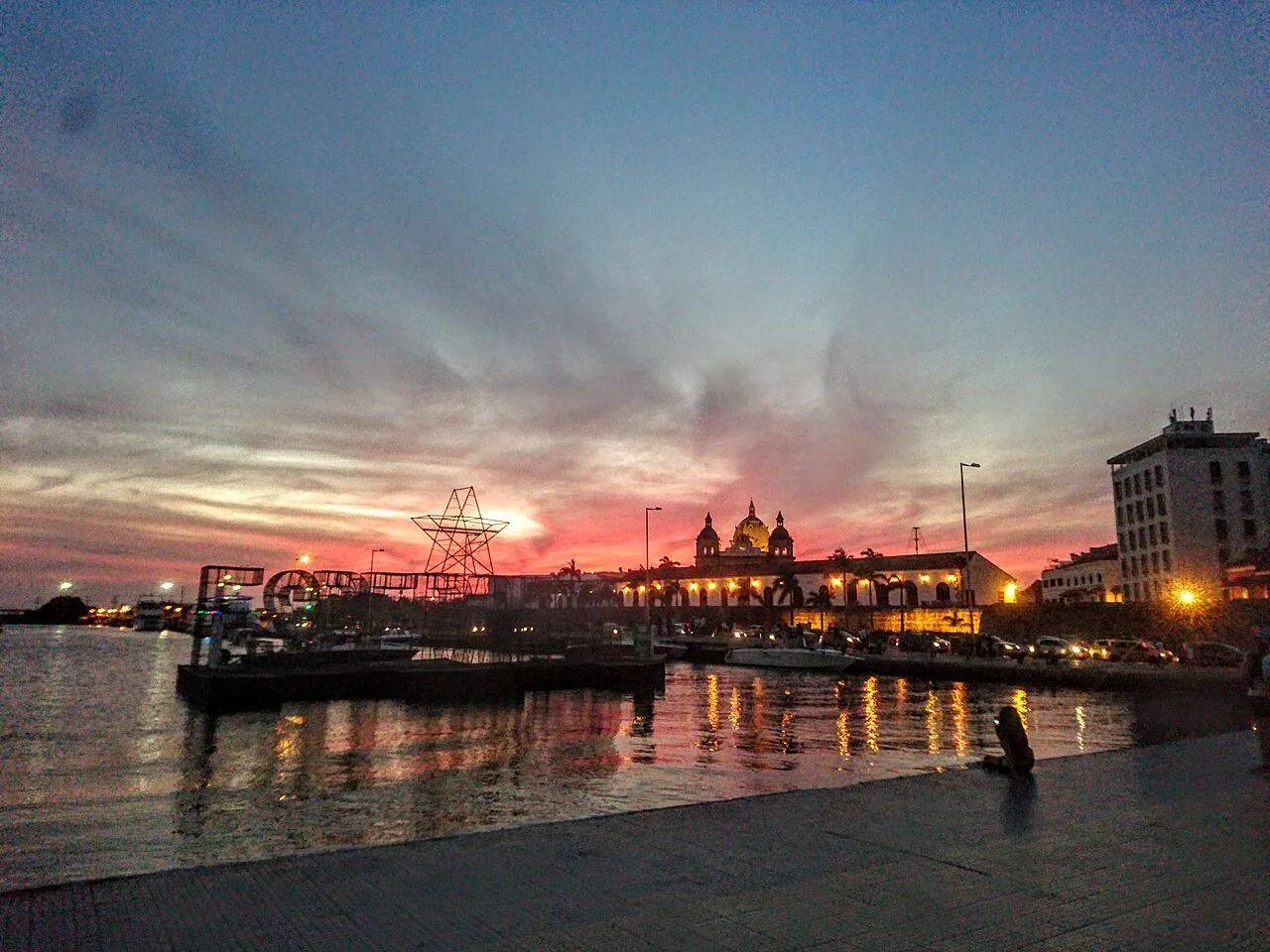
Trades shaped the neighborhood from colonial times. Historian Sergio Paolo Solano, quoted by Radio Nacional de Colombia, estimates that between 700 and 800 people worked at the Navy station that operated in Getsemaní, building and repairing ships, sewing sails, caulking, doing carpentry and forging. It was a working-class neighborhood before the term existed.
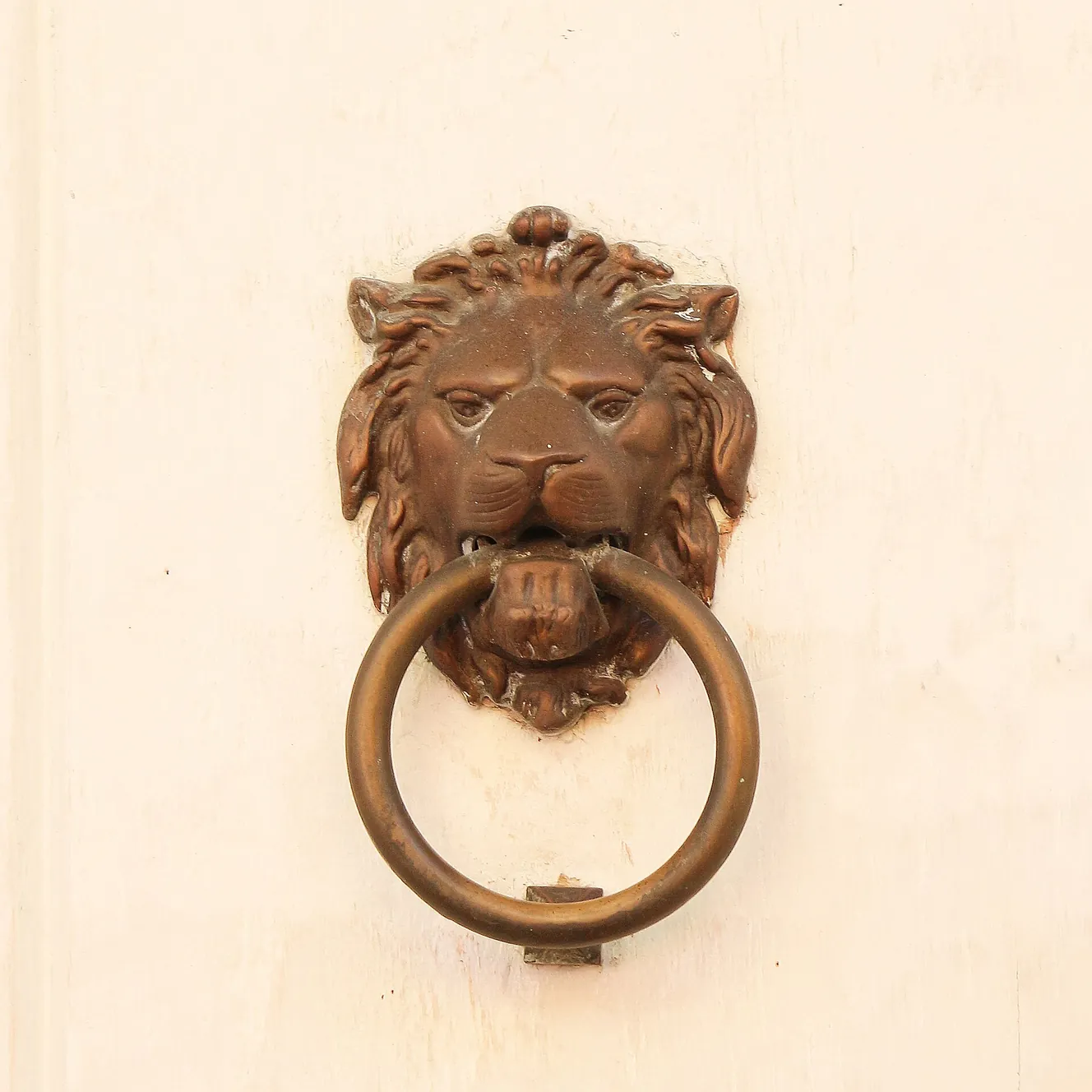
The lancers of 1811
On November 11, 1811, Cartagena's independence was pushed forward largely from here. The Lanceros de Getsemaní, led by the artisan Pedro Romero, pressed the governing junta to declare absolute independence from Spain. The neighborhood is still called the home of the “bravos leones,” the brave lions, and from that episode comes its place in the city's great festival.
Pedro Romero was one of those artisans. According to the reconstruction published by El Universal, he was a blacksmith, of mixed race, and master of the La Maestranza workshop in the Arsenal, able to assemble a cannon, cast a bell or build a ship. For two centuries he was said to be Cuban, from Matanzas; in 2016, Solano found the Romero Porras family in the 1777 census of Getsemaní, along with an 1810 letter, in his own handwriting, in which Romero declares himself “a native of Cartagena de Indias.” After Pablo Morillo's siege, in December 1815, he fled to Haiti, where he died.
Not even his face is certain. No reliable portrait survives, and for years the bust that commemorated him in Plaza de la Trinidad, by sculptor Héctor Lombana, actually bore the features of painter Alejandro Obregón, who posed for it in the absence of images of the hero. That bust was torn down, and in its place there are now sculptures of the lancers and of an imagined Romero with his fist raised.
Every November, the Fiestas de la Independencia close with the Cabildo de Getsemaní, a parade that since the late 1980s has recreated the old cabildos — the colonial-era mutual-aid councils of African-descended communities — and ends in Plaza de la Trinidad. It is the night the neighborhood remembers that, before it was a tourist destination, it was a protagonist in the country's political history.
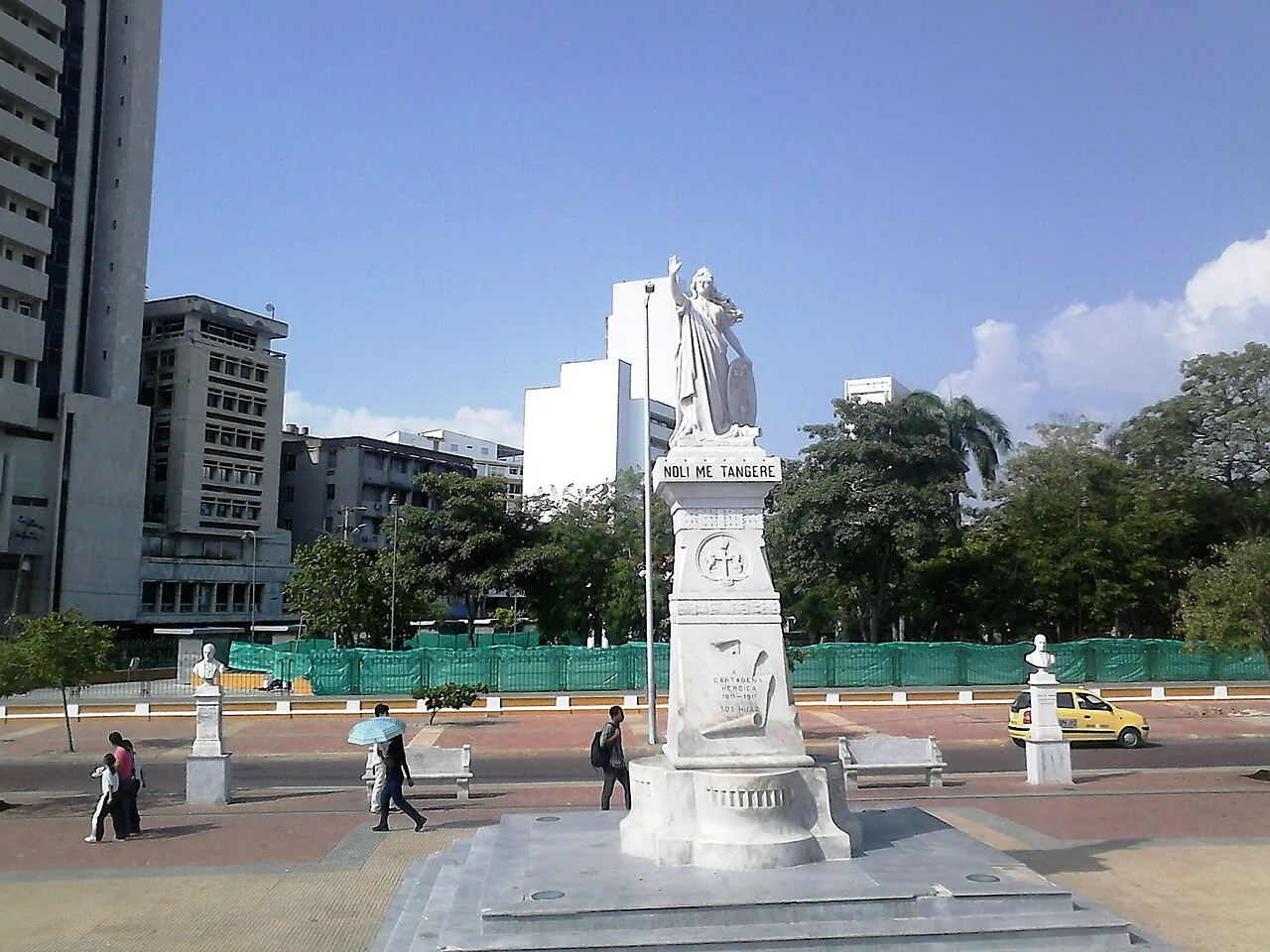
The memory of those years is also along the route linking the neighborhood to the Centro. On the Camellón de los Mártires, nine busts commemorate the patriots Morillo had executed on February 24, 1816, in front of the Torre del Reloj, after a court-martial with no defense. Anyone entering Getsemaní from the walled city walks between them.
The market and its noise
For much of the 20th century, the neighborhood lived around the Mercado Público, the public market opened in 1904 on the site now occupied by the Convention Center. To make room for it, part of the city wall was sacrificed: at the turn of the century the defenses of Getsemaní along El Arsenal, with the Barahona and Santa Isabel bastions, were torn down to build galleries attached to the new market, according to the historical reconstruction published by El Universal. Residents from that time recall that Calle del Arsenal was called La Carbonera, because charcoal was sold all along it.
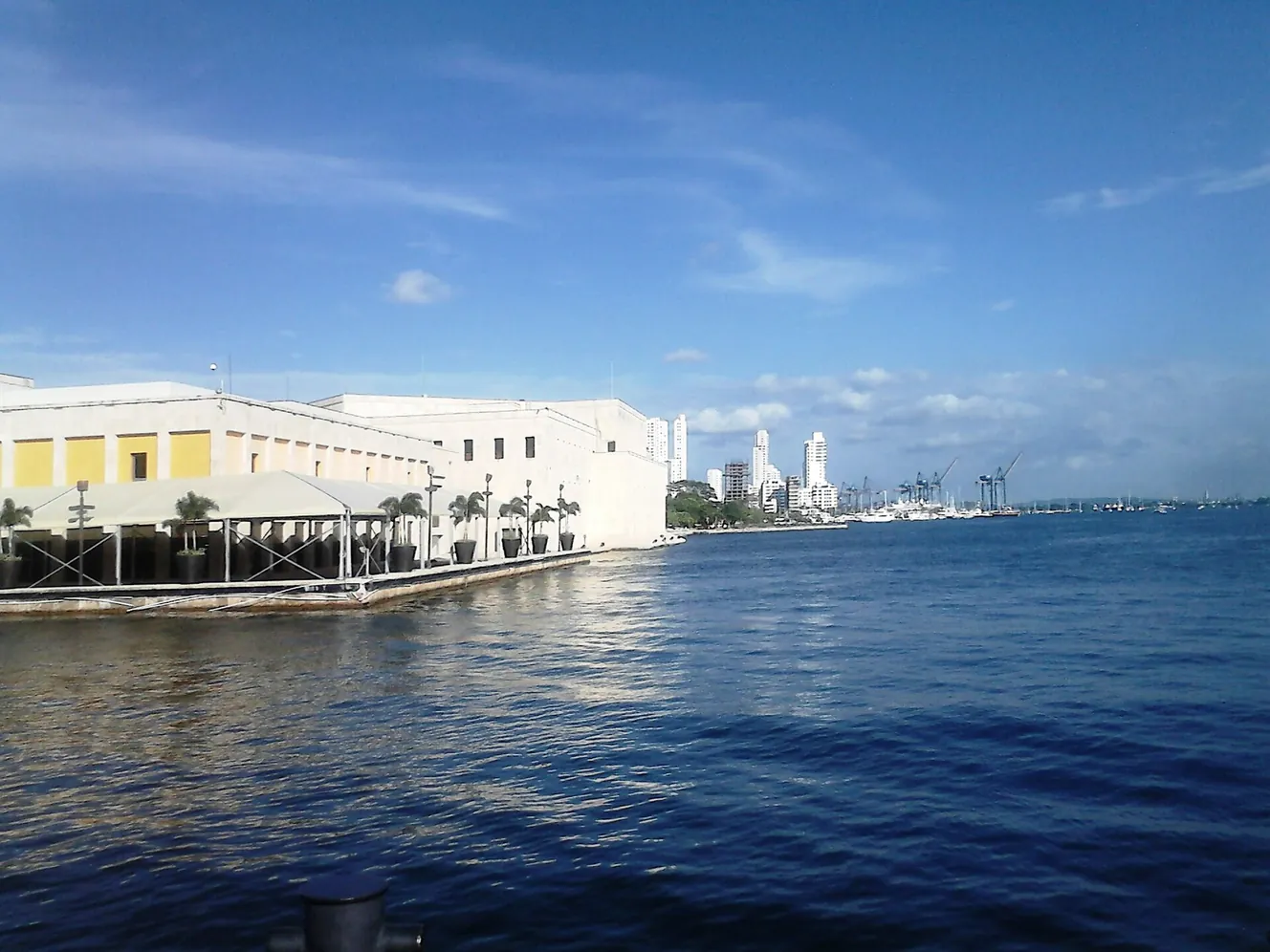
The market was also the scene of tragedies. On October 30, 1965, the Cacharrería Char, a hardware store inside the market, exploded, and the blast left more than fifty dead; the victims were taken to the old Santa Clara hospital, now a hotel. On January 22, 1978, the move to Bazurto began, and with it some 25,000 people who worked in the old market relocated. Getsemaní lost noise and gained, little by little, another life; the Convention Center rose on the market site.
The plaza as living room
Plaza de la Trinidad is the neighborhood's living room. In front of the church of the Santísima Trinidad, it fills at dusk with residents, travelers, food vendors, musicians and children playing soccer. There is no stage: the plaza is the stage. It sums up what the neighborhood offers and what it defends, all in the same square meter.
Around it, streets such as Calle de la Sierpe and Calle de la Media Luna concentrate what the neighborhood shows today: murals, bars playing salsa and champeta, and restaurants of every kind. Much of the art on the walls has a documented origin: in 2013, the company Vértigo Graffiti and the Fundación Tu Cultura launched the Ciudad Mural initiative, which painted façades with the stories, customs and concerns of residents. Before that, neighborhood guides say, the houses were almost all white with brown doors.
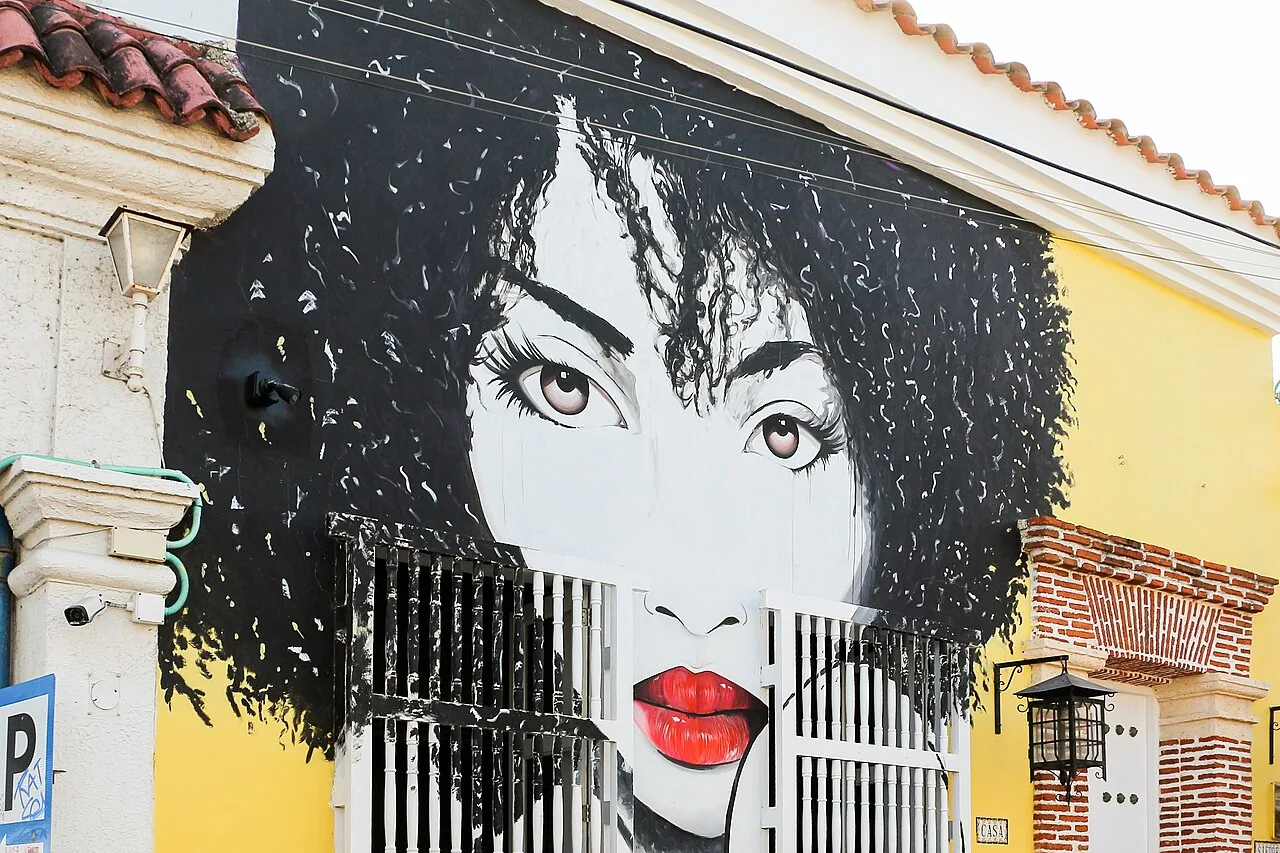
Fame came fast. In 2018, Forbes included Getsemaní among the twelve “coolest” neighborhoods in the world, alongside Sants in Barcelona and Pilsen in Chicago. Travelers came to stay, and with them came hotels, hostels and nightly rentals. Since April 2, 2026, one of those hotels, the Four Seasons, has occupied the former convent of San Francisco, founded in 1555, and the Club Cartagena, designed by Gastón Lelarge and opened in 1925 facing Parque del Centenario. Across the Camellón, two blocks from Plaza de Santo Domingo, Casa Salvaje completes the night map with Kanibal, SLVJ and its Thursday-to-Saturday club.
A neighborhood fighting for its residents
The price of that fame is measured in people. According to DANE, the national statistics agency, 5,306 permanent residents lived in Getsemaní in 2005; in 2018 there were 1,185. A community census carried out with the Universidad de Cartagena counted 448 residents in 2025, and neighborhood leaders estimate that only 16% of properties remain in residential use. That is a drop of more than 90% in twenty years. Many of those who made the neighborhood have had to leave.
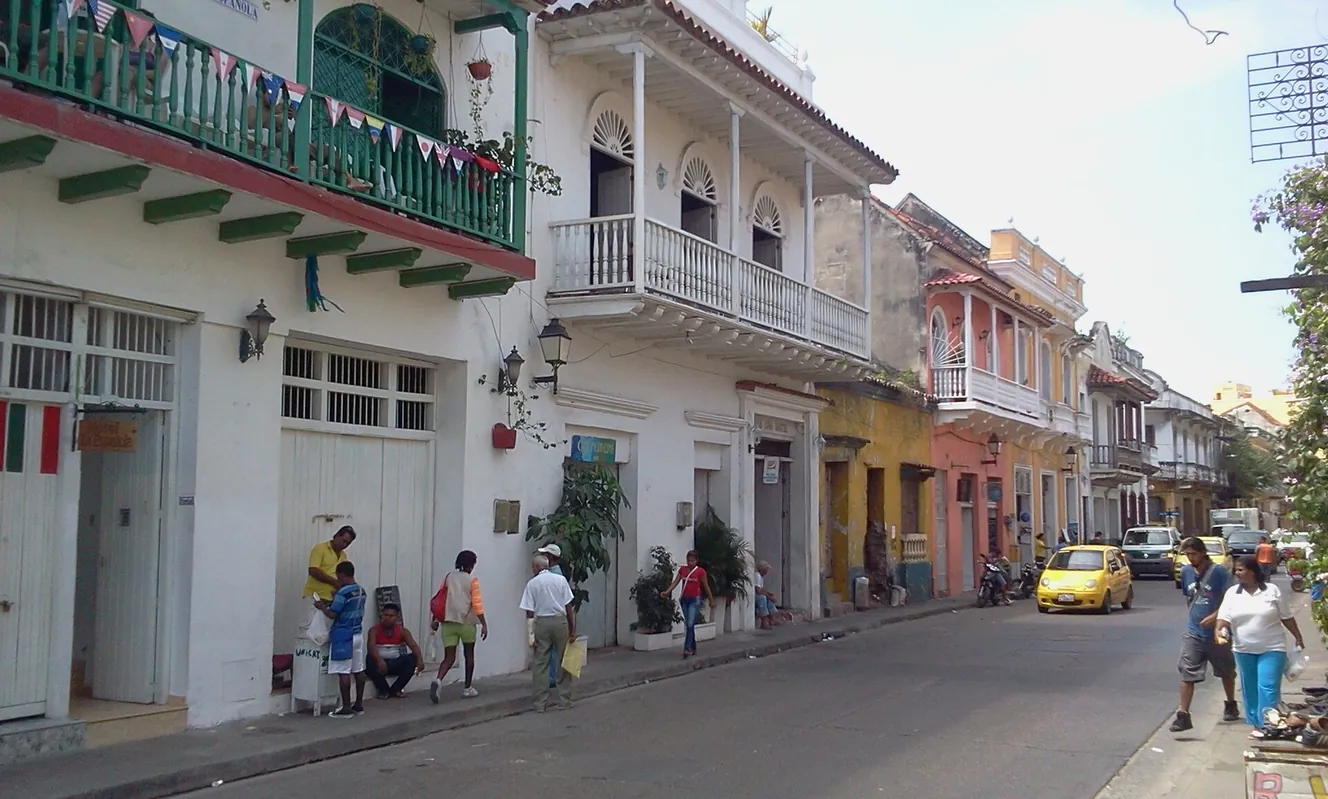
The response has been to organize. On September 17, 2025, the National Cultural Heritage Council unanimously approved the Special Safeguarding Plan for neighborhood life in Getsemaní, which places it on the Representative List of the Nation's Intangible Cultural Heritage. What is protected is not a building but a way of living: the chair at the door, dominoes on the corner, the Cabildo festival, the neighbor who looks out for the neighbor.
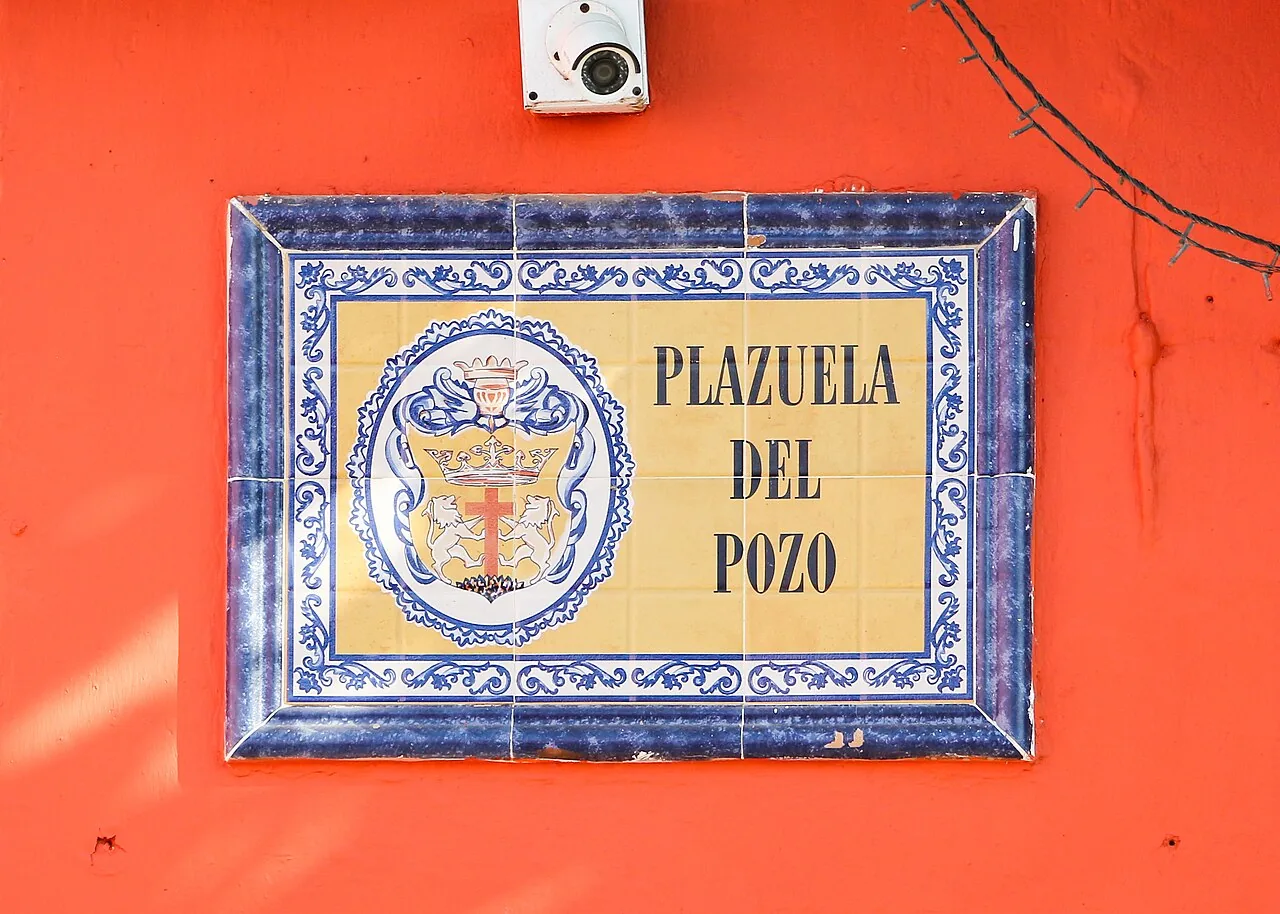
Concrete projects flow from that plan. In November 2024 the Council approved “La Resistencia de Getsemaní,” a repopulation project with some 200 cultural-interest homes under a cooperative model, designed so that families who had to leave can return. In April 2026, the city government and neighborhood leaders reviewed a roadmap that includes a differential property tax for residents, adjustments to utility rates and the recovery of Plaza de la Trinidad.
Walking Getsemaní at night is still the shortest way to understand Cartagena: the city that doesn't fit inside the walls, and for that very reason surrounds them. But it is worth walking it knowing where you are: in a neighborhood that still has residents, and wants to keep them. Saying hello, lowering your voice in the small hours and buying from local people are also ways of looking after it.
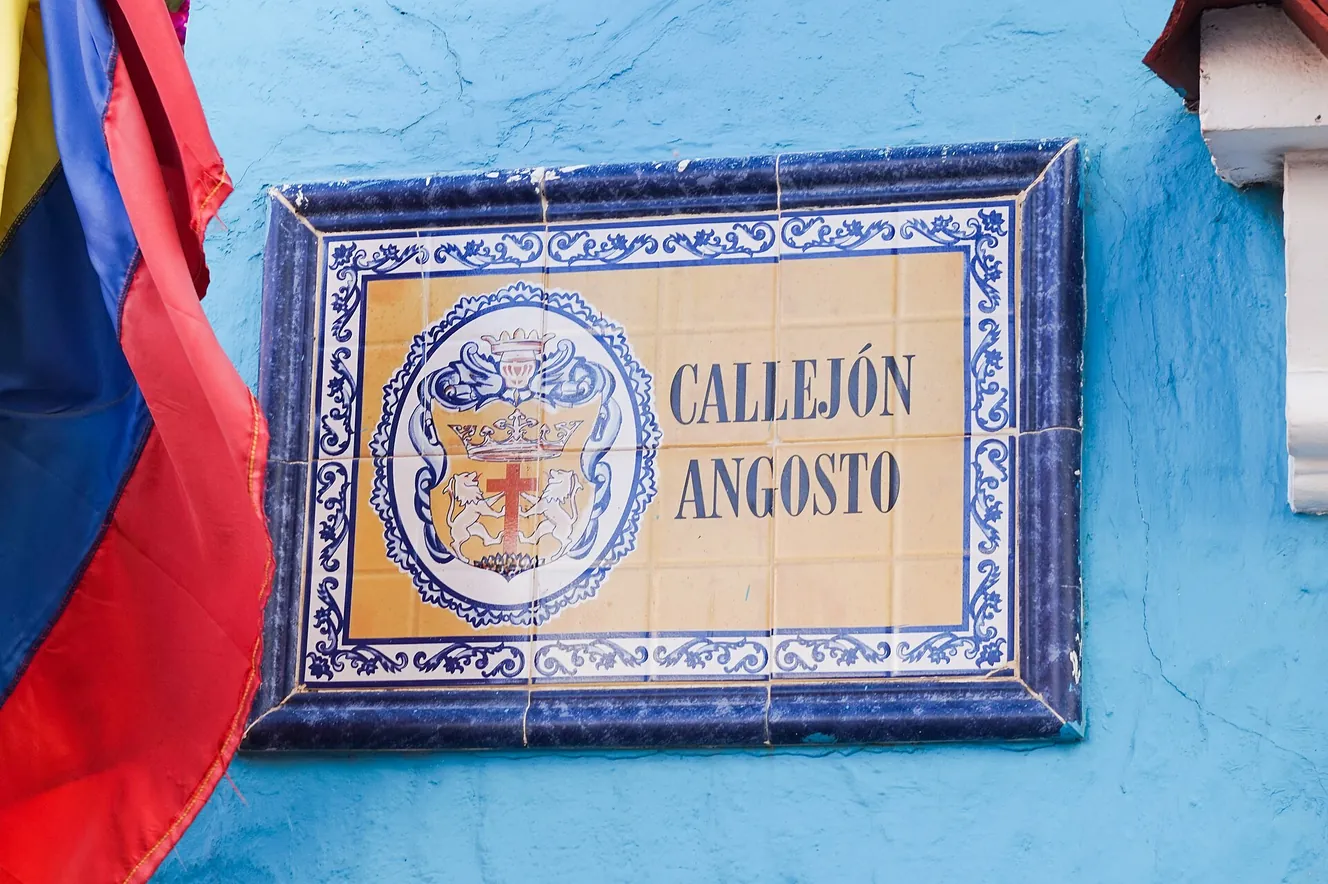
The plaza is the stage.
Sources
- El Universal · ¿Por qué Cartagena celebra su independencia los 11 de noviembre? ↗
- El Universal · Pedro Romero, el héroe sin rostro ↗
- El Universal · Día y hora del Cabildo de Getsemaní 2025 ↗
- El Universal · A tumbar se dijo (demoliciones de la muralla, 2013) ↗
- El Universal · Así fueron los últimos días del antiguo mercado en el Centro ↗
- Revista Cultural Unilibre · El mercado de Bazurto (historia del Mercado Público y traslado de 1978) ↗
- Forbes Colombia · Getsemaní, el barrio de Cartagena entre los más 'cool' del mundo (2020) ↗
- El Universal · El proyecto de viviendas para el regreso de los getsemanicenses (2024) ↗
- Blu Radio · La vida de barrio de Getsemaní fue reconocida como patrimonio inmaterial del país (2025) ↗
- El Universal · Alcaldía de Cartagena toma medidas para frenar grave problema de Getsemaní (2026) ↗
- Radio Nacional de Colombia · Independencia de Cartagena: la historia de nueve mártires ↗
- El Tiempo · La restauración del Antiguo Convento de San Francisco y del Club Cartagena gana en la Bienal de Arquitectura (2026) ↗
- Casa Salvaje (sitio oficial) ↗