Stories / Culture
Handicrafts: the hat, the mochila and the craft behind them.
What you buy at Las Bóvedas comes from far away and takes days of work. A guide to understanding the sombrero vueltiao, Wayuu mochilas and the place where they are sold.
Cartagena Social Club · 6 min read
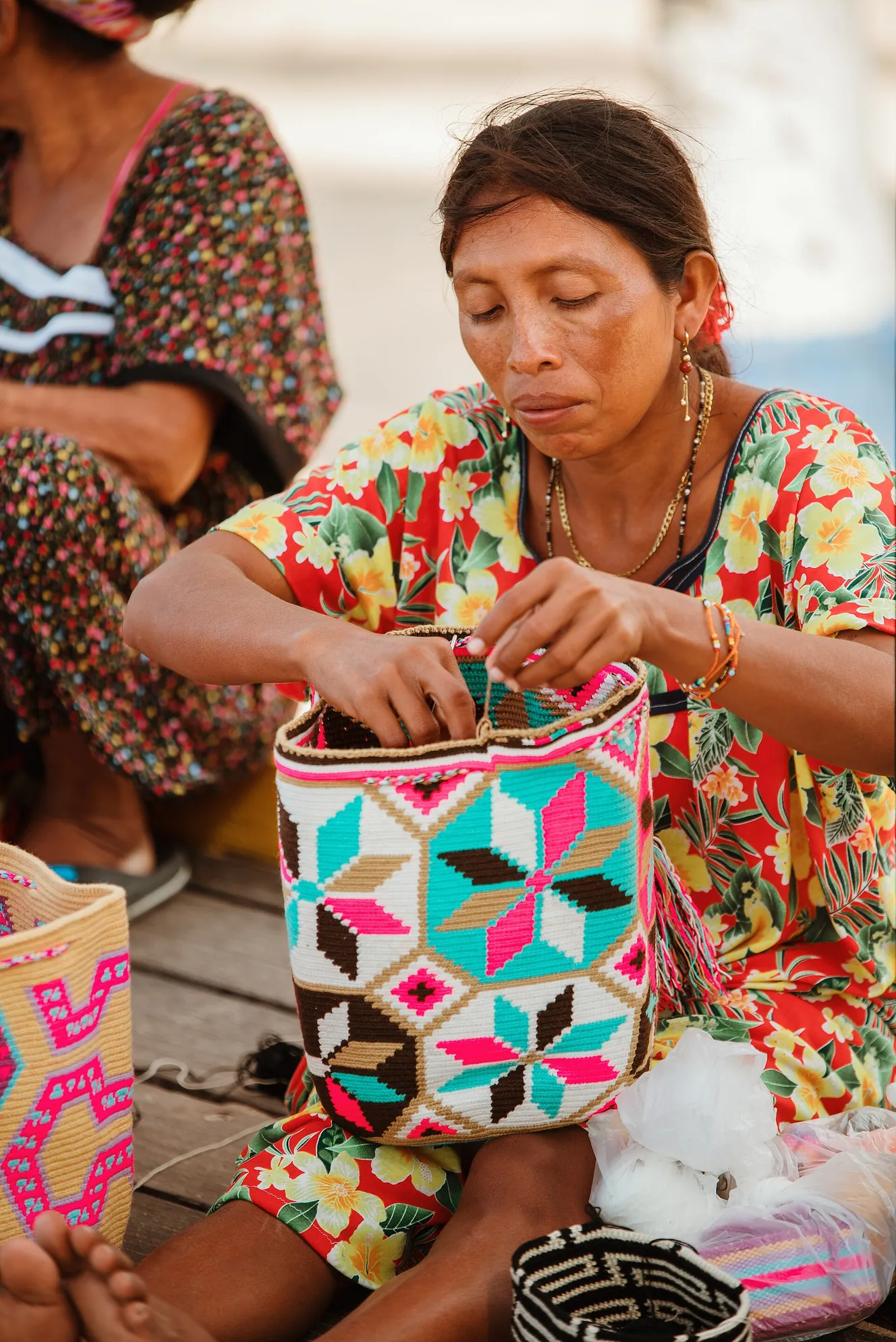
A weaver on the Riohacha waterfront in January 2023. Each mochila comes from the hands of a single weaver. Image: ROCHY HERNÁNDEZ, CC BY-SA 4.0, via Wikimedia Commons
Almost everyone who visits Cartagena takes home something handmade. A hat with black and white stripes, a colorful mochila — a woven shoulder bag — a hammock. Often they are bought at Las Bóvedas, the arcade beside the wall, between the afternoon heat and the rush to get back. But behind each piece there is a territory, a technique and a working time that are rarely mentioned at the counter.
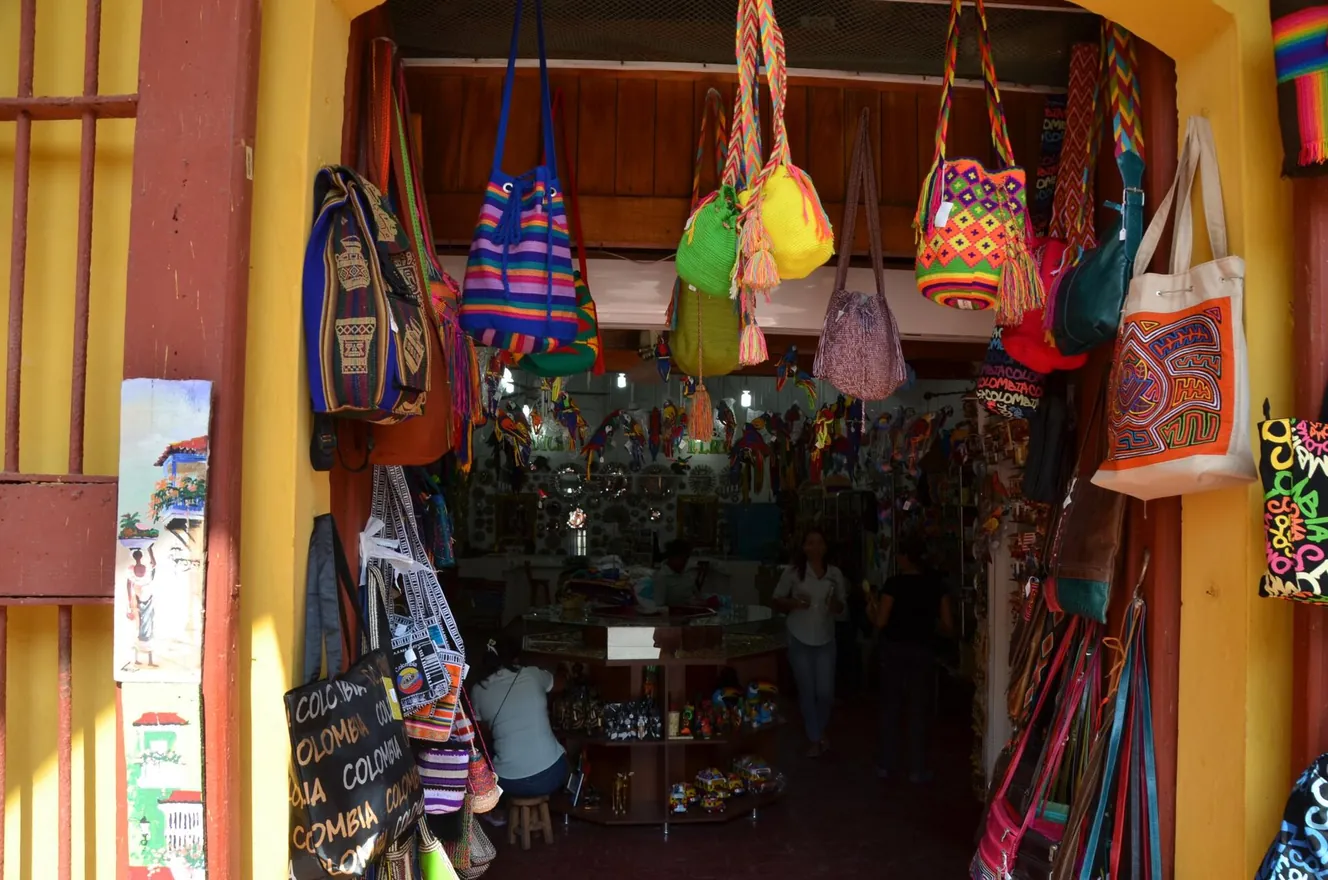
This piece tries to tell those stories. It begins with the place where they are sold and continues with two of the most sought-after items: the sombrero vueltiao of the Zenú people and the mochila of the Wayuu weavers.
Las Bóvedas: from barracks to arcade
Las Bóvedas were the last great construction within the walled city. That is how the official site of the Fortificaciones de Cartagena, managed by the Escuela Taller Cartagena de Indias, explains it. The north wind had opened a gap between the bastions of Santa Clara and Santa Catalina that no one had managed to close completely. In 1755 the engineer Lorenzo de Solís designed barracks and storehouses that were never built.
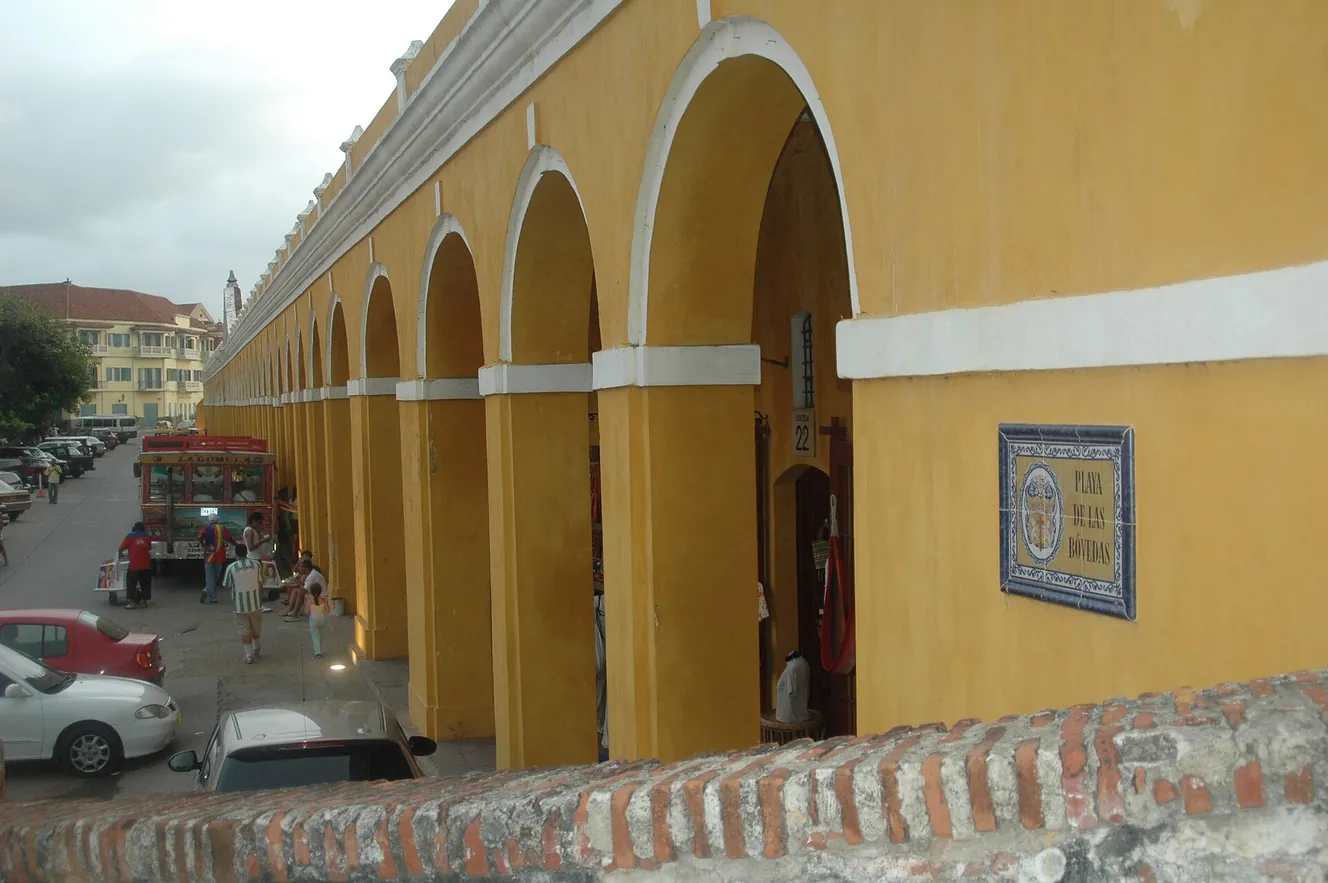
The idea was taken up again by the engineer Antonio de Arévalo. He presented his proposal in 1773, but work did not begin until 1792. Twenty-three bombproof vaults were built to house the guard and store provisions and munitions, and they also had a defensive function: gun ports in the facade facing the sea and an upper platform for artillery. On the city side, an arcade of brick arches connects the vaults. The Crown's coat of arms on the central arch bears the date 1798, the year they were finished.
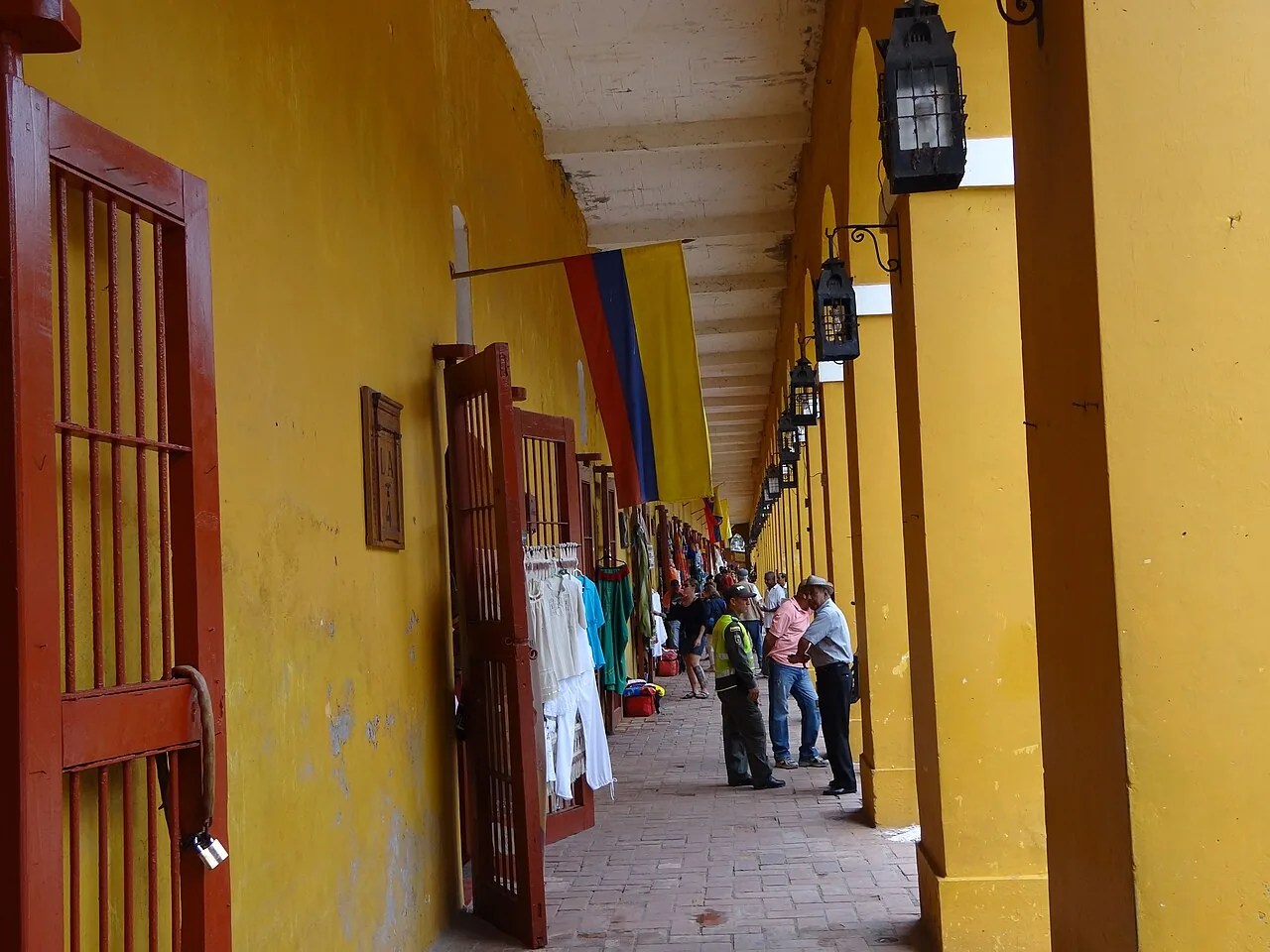
Today those vaults are handicraft and souvenir shops. The arcade works as a shaded shopping passage, and it is a regular stop for visitors, cruise passengers included. It doesn't take long to walk, but it is worth going slowly: what is in the display windows comes from many regions of the country.
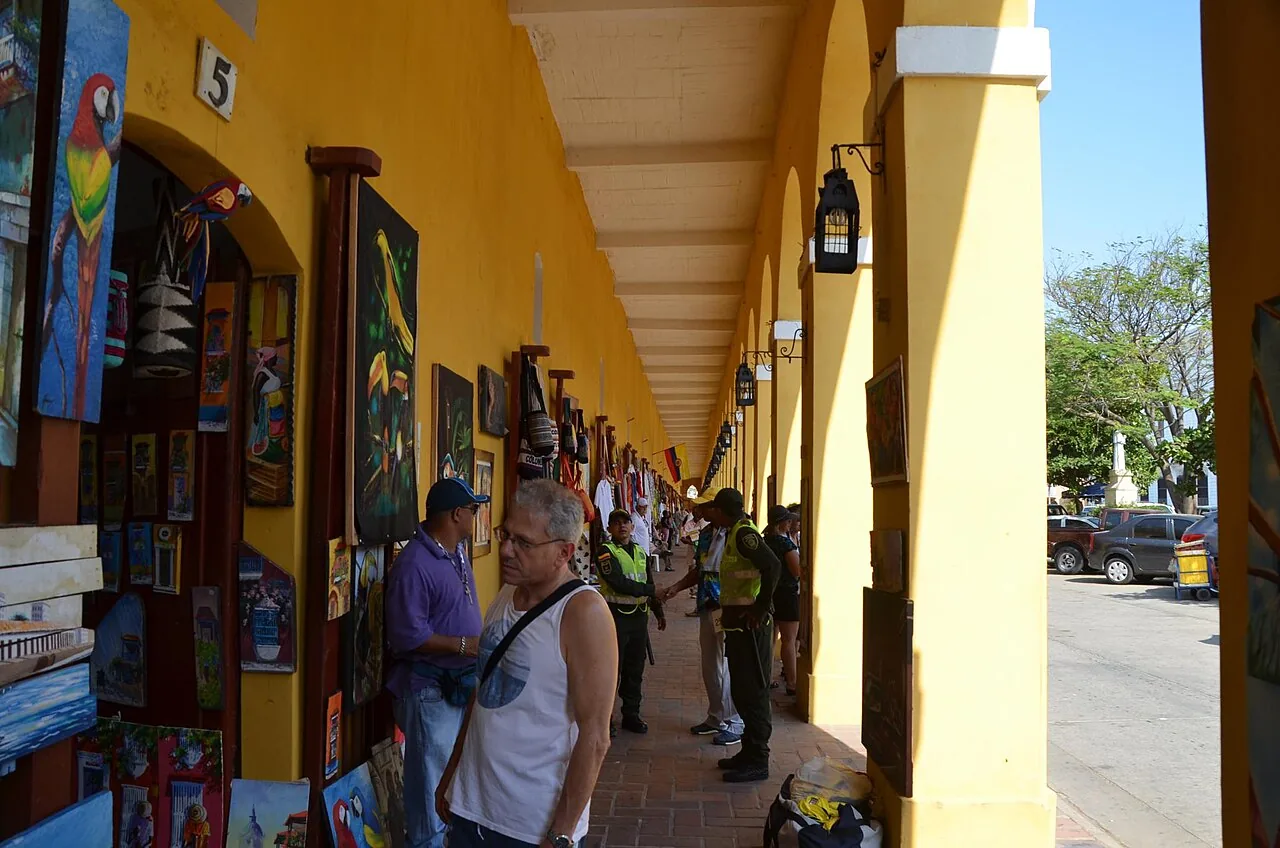
The sombrero vueltiao: a braided symbol
The sombrero vueltiao is the most recognizable piece. It originated in the Indigenous Zenú culture of the savannas of Córdoba and Sucre, in the region of the Sinú River. The municipalities of Tuchín, in Córdoba, and Sampués, in Sucre, are considered its birthplaces. It is made from caña flecha, a grass native to the region.
The Colombian Congress declared it a Cultural Symbol of the Nation through Law 908 of 2004. The same law recognized the entire culture of the Zenú people settled in Córdoba and Sucre as national heritage, and charged the ministries and Artesanías de Colombia, the state crafts agency, with supporting its promotion and protection. It even asked the Banco de la República, the central bank, to include the hat on an upcoming coin issue. In 2021 the Andean Parliament declared it a cultural, material and artisanal emblem of the Andean region. On April 4, 2024 the Ministry of Cultures, through Resolution 0144, included “braiding in caña flecha, ancestral artisanal practices and knowledge of the Zenú identity” on the national Representative List of Intangible Cultural Heritage.
The process is long. After the caña flecha leaves are cut, they are scraped with a knife to obtain smooth strips, boiled to make them pliable and dried in the sun. The strips that are to be black are dyed with black mud and other plant materials. Treating the fiber alone takes about three days. Then comes the braiding, which is the heart of the craft.
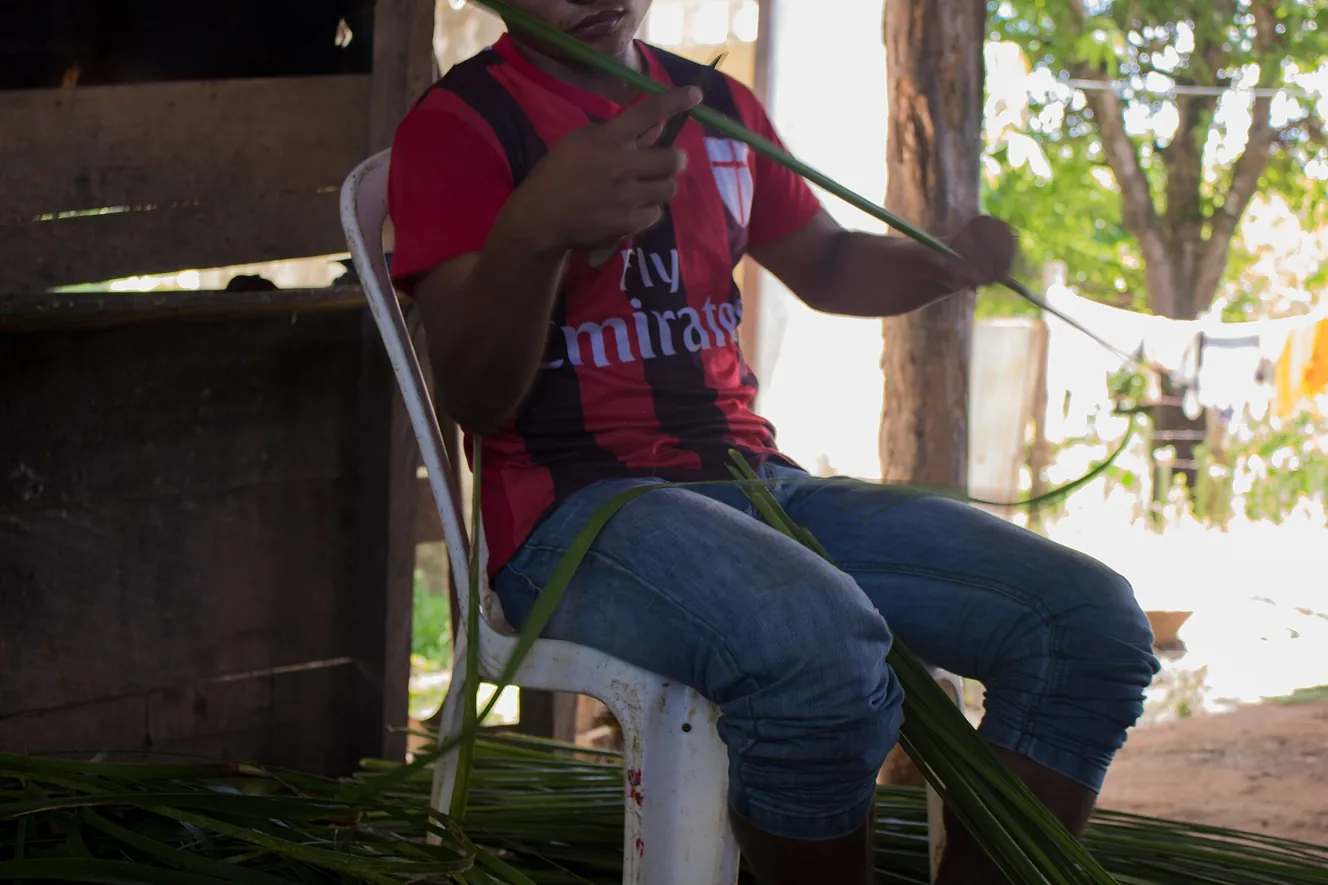
The braid is formed by interlacing pairs of fibers, called “pies.” The number of pairs gives the braid its name and determines the hat's quality: 7 pairs is the “lica,” 9 the “ribete,” 11 the “pacotilla,” 15 the “quinciana.” Braids of 19, 21, 23 and 27 pairs are used for fine hats. The more pairs, the finer, more flexible and lighter the piece. The braids are then sewn in a spiral or in circles to form the crown and brim. Circular stitching, which produces the hat known as “sin pega” (seamless), was an innovation of the artisans of Tuchín.
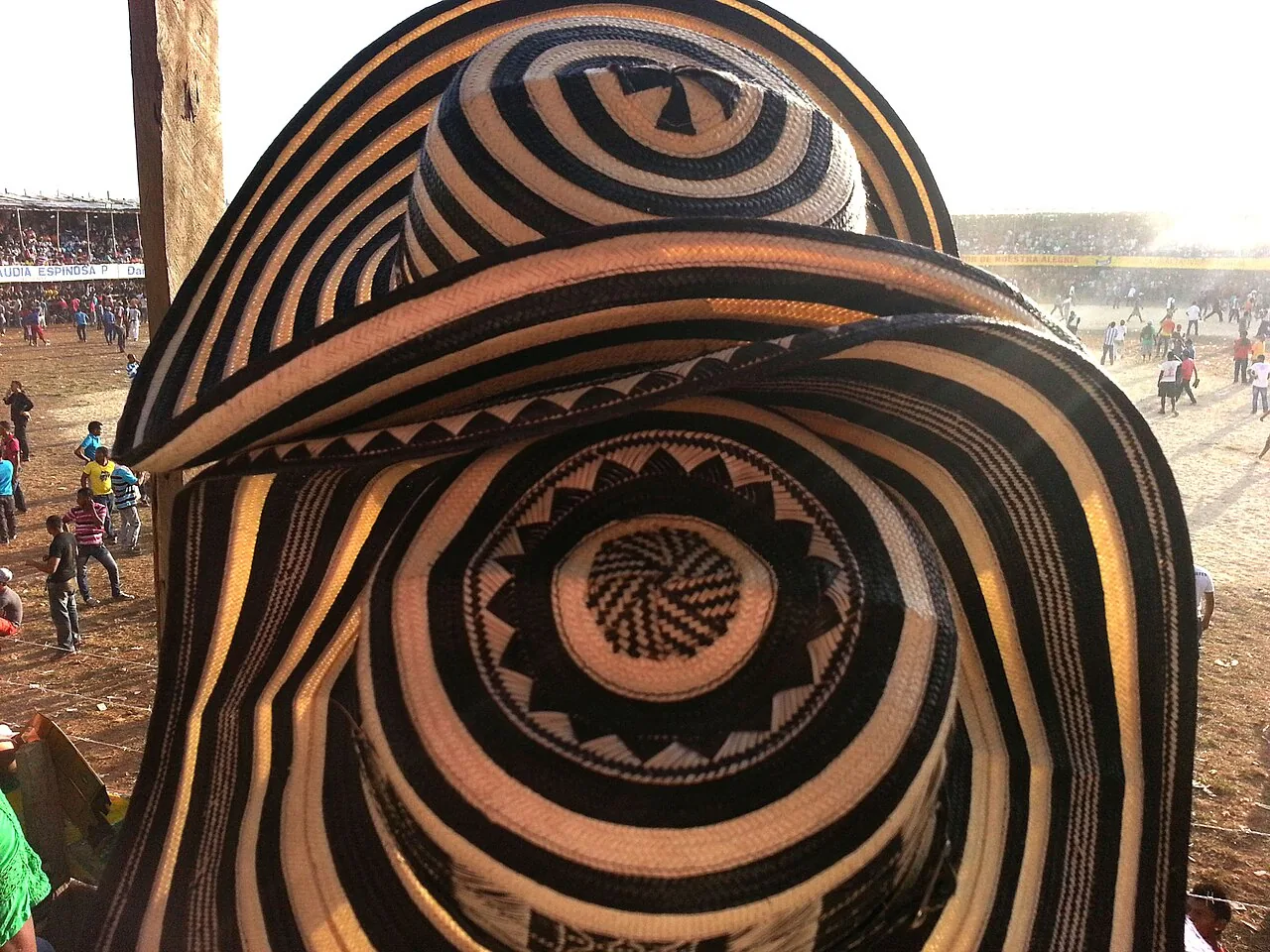
The piece has ancient roots. Since pre-Hispanic times, the Zenú wore hats to protect themselves from the sun while growing corn, as archaeological pieces in the Museo del Oro in Bogotá show. At first the hat was a single color, a creamy white; black came later. It was known as the “sombrero de vueltas” or “sombrero indiano.” Congress also set June 18 as the Día del Sombrero Vueltiao.
Designs called “pintas” are woven into the braids. They represent the identities of old family clans and elements of nature, and some 79 have been identified, each with its own name and history. Women are the main bearers of the craft, as the Ministry of Cultures emphasized when presenting the safeguarding plan, which also seeks to secure the cultivation of caña flecha. This is no minor detail: the press has warned of a shortage of the plant in the Tuchín area, during the hat fair held in that municipality.
The hat has its imitators. In 2013 the Colombian government announced a ban on selling imitations arriving from China at very low prices, to protect the designation of origin and the work of the artisans and the Indigenous reserves. For the buyer, the practical rule is simple: a fine hat is flexible and light, and its price reflects the number of pairs in its braid.
The Wayuu mochila: days of weaving
The brightly colored mochilas hanging in many shops in the Centro come, for the most part, from La Guajira, the territory of the Wayuu people, at the country's northern tip. They are woven by women, according to documents from Artesanías de Colombia, which also describe the technique: the base and body are crocheted, in single, half-double or double stitches, combining two or more colors to form the designs.
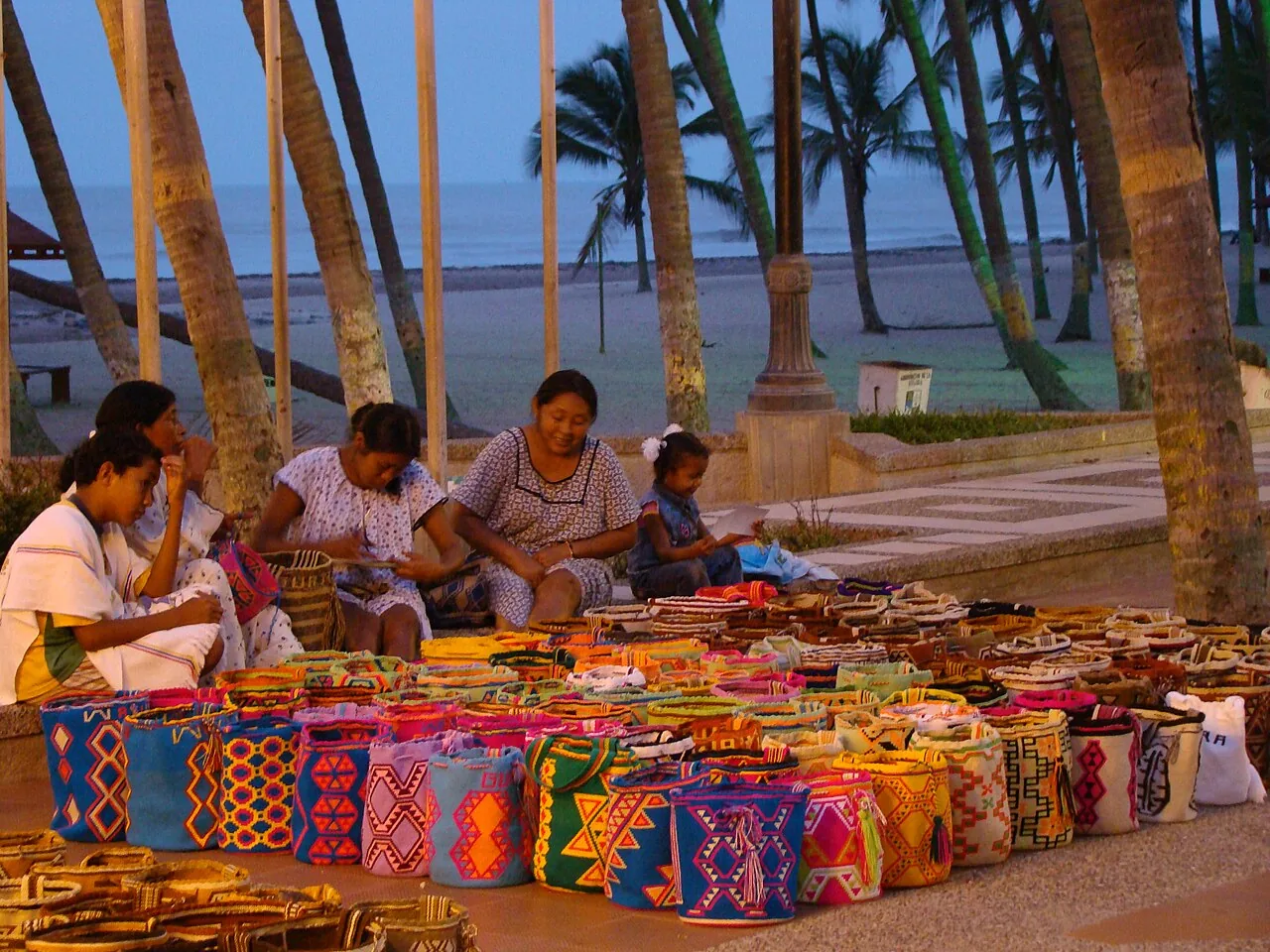
The most common mochila is the susu, a shoulder bag for carrying personal belongings. Lonely Planet explains that, depending on the design, a single mochila can take up to 25 days of work, and that those with more elaborate patterns usually cost more. The traditional designs are known as kanasü, a word that appears spelled in several ways.
Wayuu legend attributes the origin of weaving to a spider, Wale Keru, who is said to have taught a woman to weave. Beyond the story, what is worth knowing is that each piece is the work of a specific weaver, with her own hand and her own rhythm. That is why two mochilas of the same color are never identical.
Buying with judgment
A few questions help in any shop. Where does the piece come from? Who made it? How many pairs are in the hat's braid? A vendor who knows the merchandise will answer without trouble. Bargaining is common at some stalls, but it is worth remembering how many days of work lie behind a mochila or a fine hat.
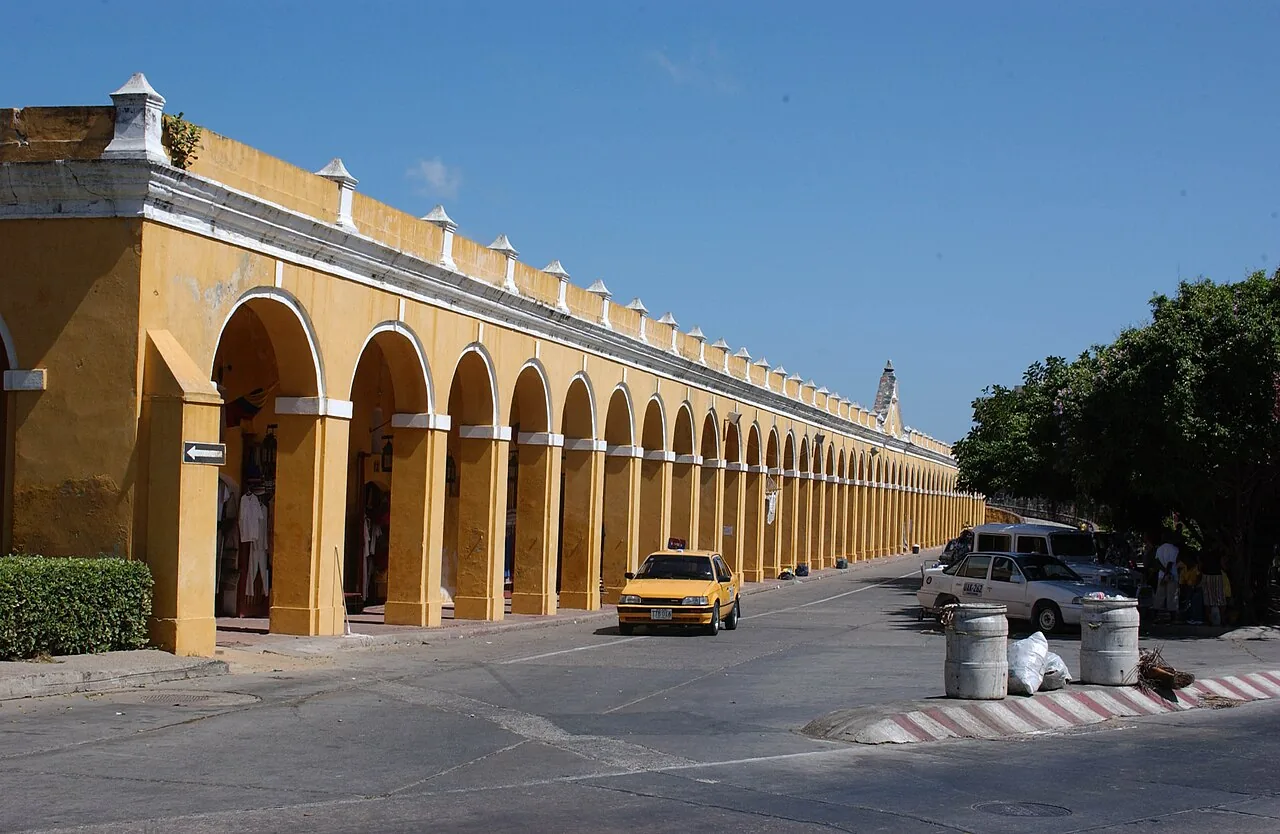
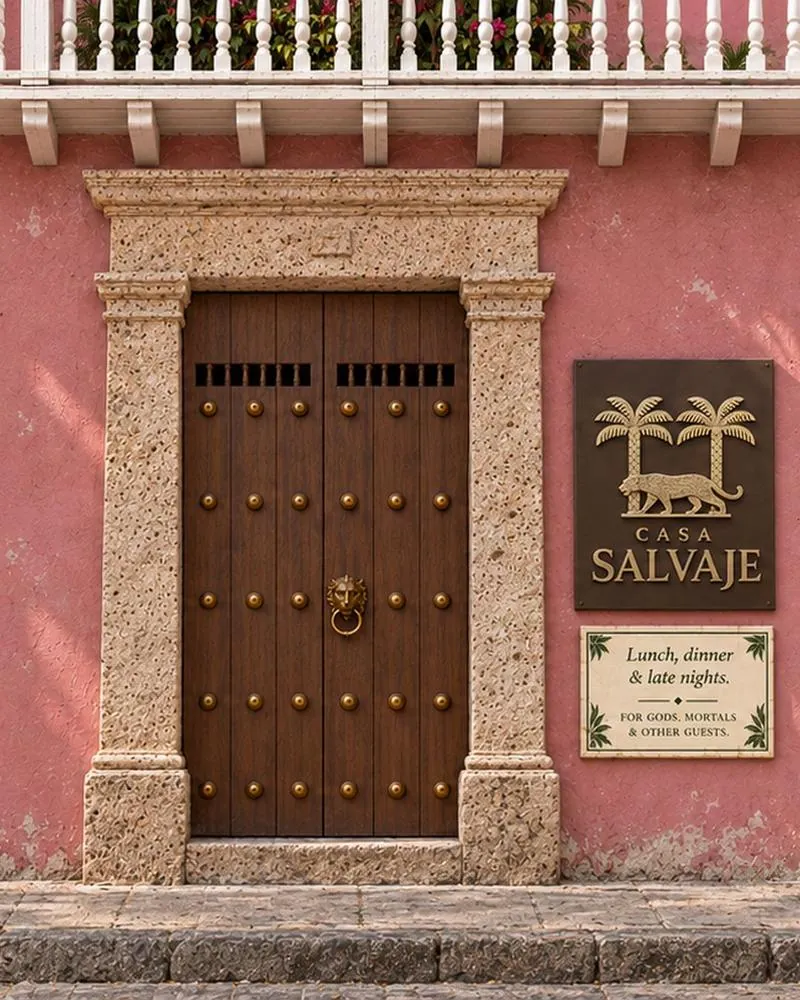
Las Bóvedas are at the northern end of the walled city, next to the San Diego neighborhood. From Calle Santa Teresa it is about a fifteen-minute walk. It makes a good mid-afternoon plan: walk the arcade, then climb up onto the wall to look at the sea and head back toward the Plaza de Santo Domingo as the sun starts to go down. Two blocks from that square, Casa Salvaje opens Kanibal and SLVJ for dinner. And Thursday to Saturday, once dinner is over, the SLVJ room becomes a club until 3 a.m.
Behind each piece there is a territory, a technique and a working time that are rarely mentioned at the counter.
Sources
- Fortificaciones de Cartagena de Indias (Escuela Taller Cartagena de Indias): Las Bóvedas ↗
- Ley 908 de 2004, Sombrero Vueltiao Zenú Símbolo Cultural de la Nación (texto) ↗
- Resolución 0144 de 2024, trenzado en caña flecha (Rama Judicial, SIDN) ↗
- Radio Nacional de Colombia: Trenzado de caña flecha de los zenú, declarado patrimonio cultural inmaterial ↗
- RCN Radio: Feria del Sombrero Vueltiao en Tuchín, Córdoba ↗
- Wikipedia en español: Sombrero vueltiao ↗
- Colombia.com: Colombia prohíbe comercializar imitación de sombreros vueltiaos de China ↗
- Lonely Planet: The Wayuu, Colombia's most famous weavers ↗
- Artesanías de Colombia (CENDAR): documento técnico sobre mochilas wayuu (1996) ↗
- Artesanías de Colombia (CENDAR): documento de 2018 sobre tejeduría wayuu ↗
- Casa Salvaje (sitio oficial) ↗