
Stories / Food & drink
Época, a café on Calle del Arzobispado.
Single-origin coffee, breakfasts ordered at any hour and a bar a few steps from the Cathedral: this is how the morning begins on one of the oldest streets in the Centro.
Cartagena Social Club · 7 min read
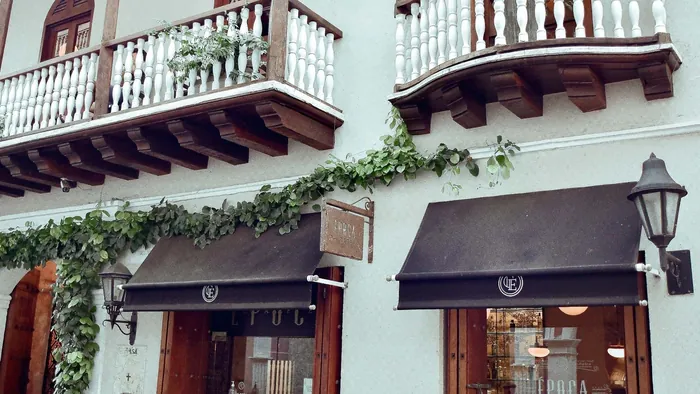
Época's façade on Calle del Arzobispado: awnings, lanterns and wooden balconies above the sidewalk, on the ground floor of a house in the Centro. Image: Época Café (official site).
Some streets in the Centro you pass through; others you stay on. Calle del Arzobispado is one of the latter. It is short, it begins beside the Cathedral and early in the morning it still holds the shade of the balconies. At number 34-52, Carrera 5 in the modern street grid, Época Café raises its shutters at 7:30 a.m. According to the hours posted on its website, it is open Monday to Wednesday until 9 p.m., Thursday to Saturday until 10, and Sundays and public holidays until 6 p.m.
Those long hours say a lot about the place. It is not just an espresso bar, nor a restaurant that serves coffee. It is a place to start the day, come back at midday and return for a cocktail when the sun goes down, without having to change streets.
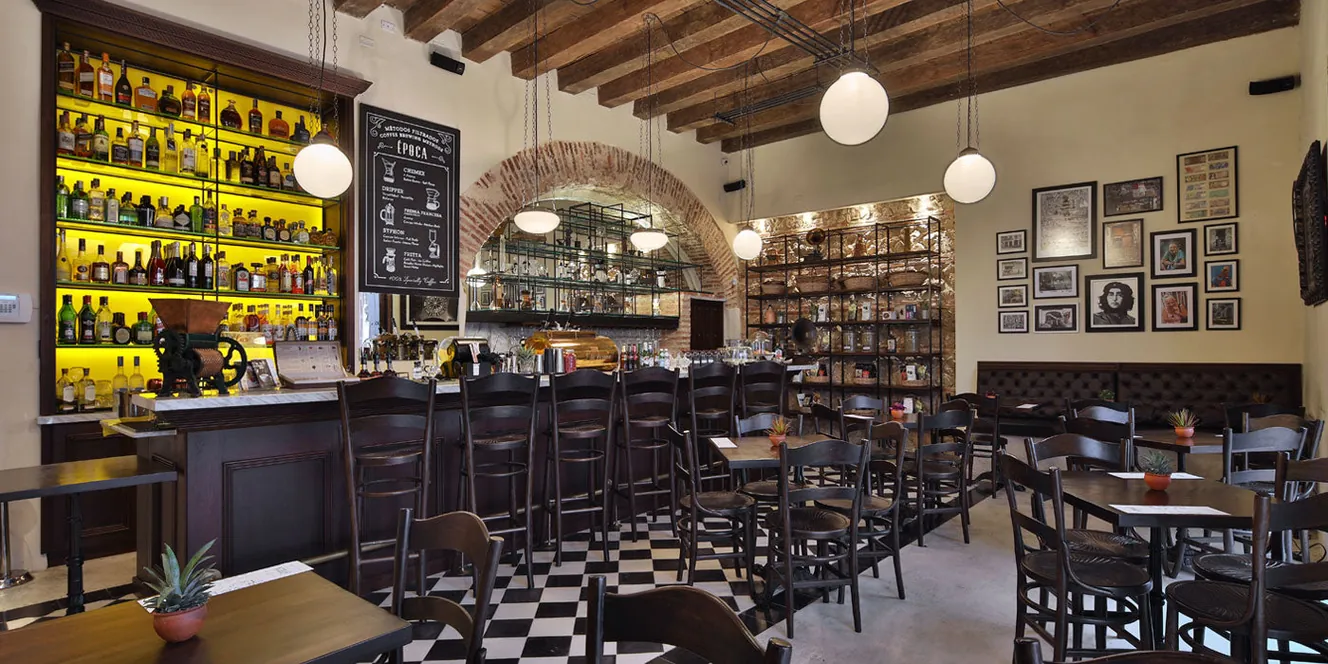
A café that doesn't close at midday
Época presents itself as an all-day café “for those passionate about good food, good drinks and classic cocktails,” and says it specializes in single-origin specialty coffee. On its Cartagena page it describes itself as a place inspired by traditional European cafés, but with influences from the city's colonial heritage. On its introduction page it puts it another way: a restaurant-bar where you can order breakfast at lunchtime, or lunch at dinnertime.
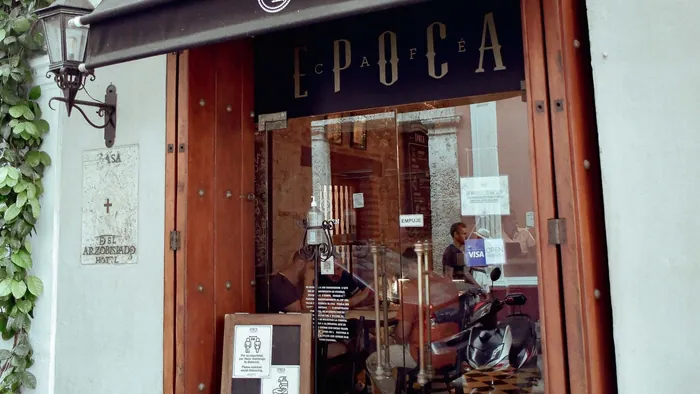
The house it occupies is that of the Hotel Casa del Arzobispado. The hotel itself lists Época among its facilities, along with the pool, the spa and a clothing shop, and devotes a page to it on its official site. From the street you walk straight into the café: the façade is the same, with Época's awnings on the ground floor and the hotel's balconies above. Job applications for the café go to an email address at Grupo Del Sol, the group that, according to the hotel, bought and restored the house in 2002.
There is a second location in Barranquilla, on Calle 84 in the Riomar neighborhood, which shares the name and the menu. Reservations at the Cartagena location are made by WhatsApp, through the link the café posts on its social media, and the full menu is available online.
The coffee: origin, process and cup
Época's menu, in its September 2026 version, opens with the house coffees and explains each one the way a wine is explained. The Independencia Blend comes from Jericó, in Antioquia: Dos mil, Caturra and Castillo varieties, washed process, grown between 1,900 and 2,000 meters above sea level and given a medium-to-dark roast. The menu describes it with notes of sweet chocolate, fruit and tangerine acidity. It is the classic, balanced coffee on the list.
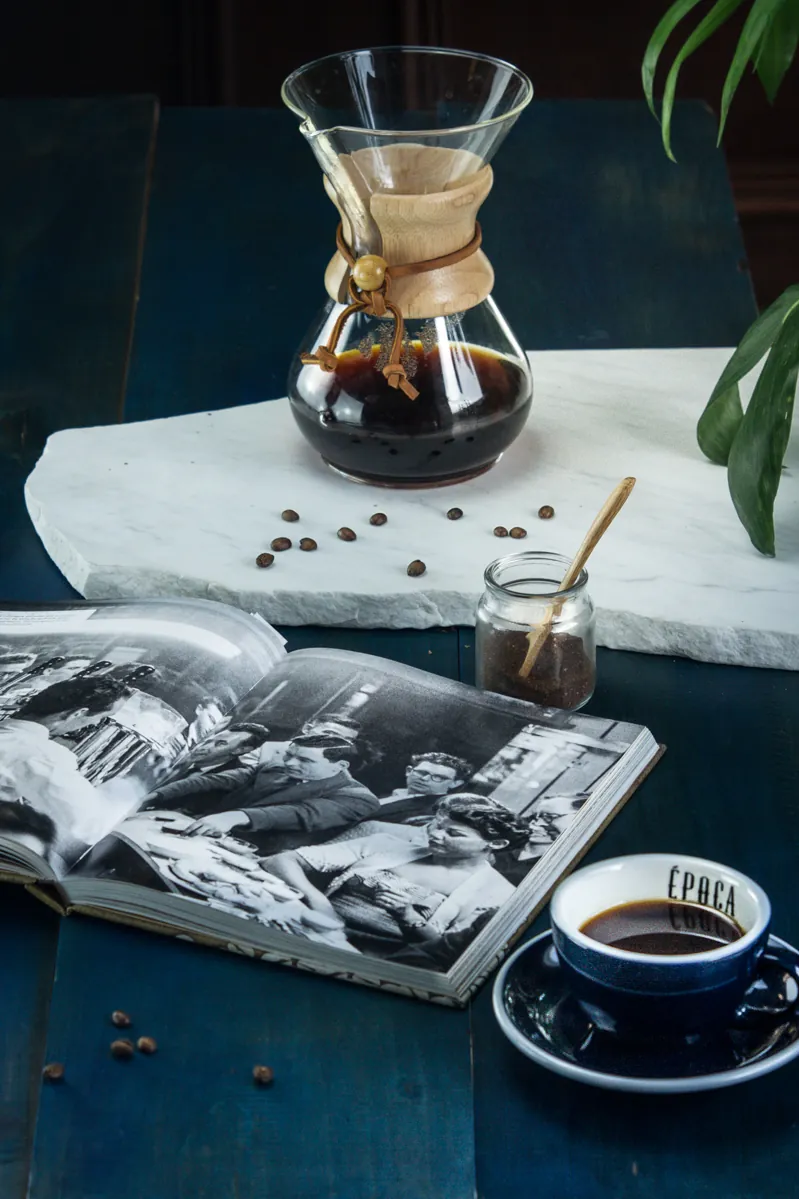
The other two come from Dosquebradas, in Risaralda, and are Caturra grown at 1,650 meters. The Chiquito Honey goes through a honey process, and the menu describes it as citrusy, with honey and flowers. The Colonia Coco goes through a fermentation process with cultures that the menu calls culturing, and promises coconut, butter and chocolate. All three can be ordered as filter coffee to share, in two cups. For those who would rather not choose there is the Coffee Flight, a tasting of three coffees from the selection, and each week there is a featured coffee recommended by the barista.
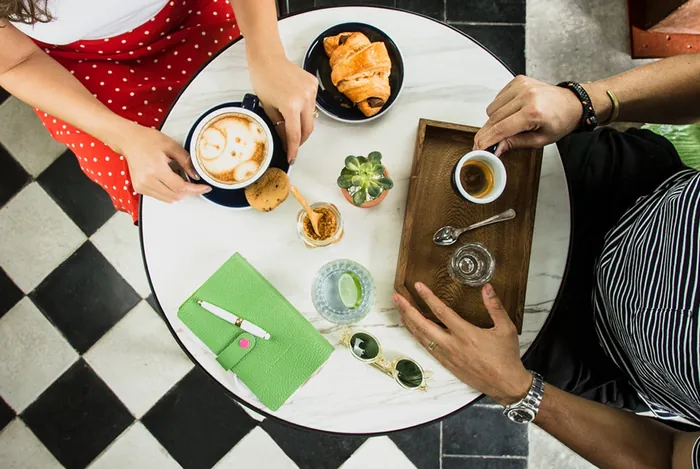
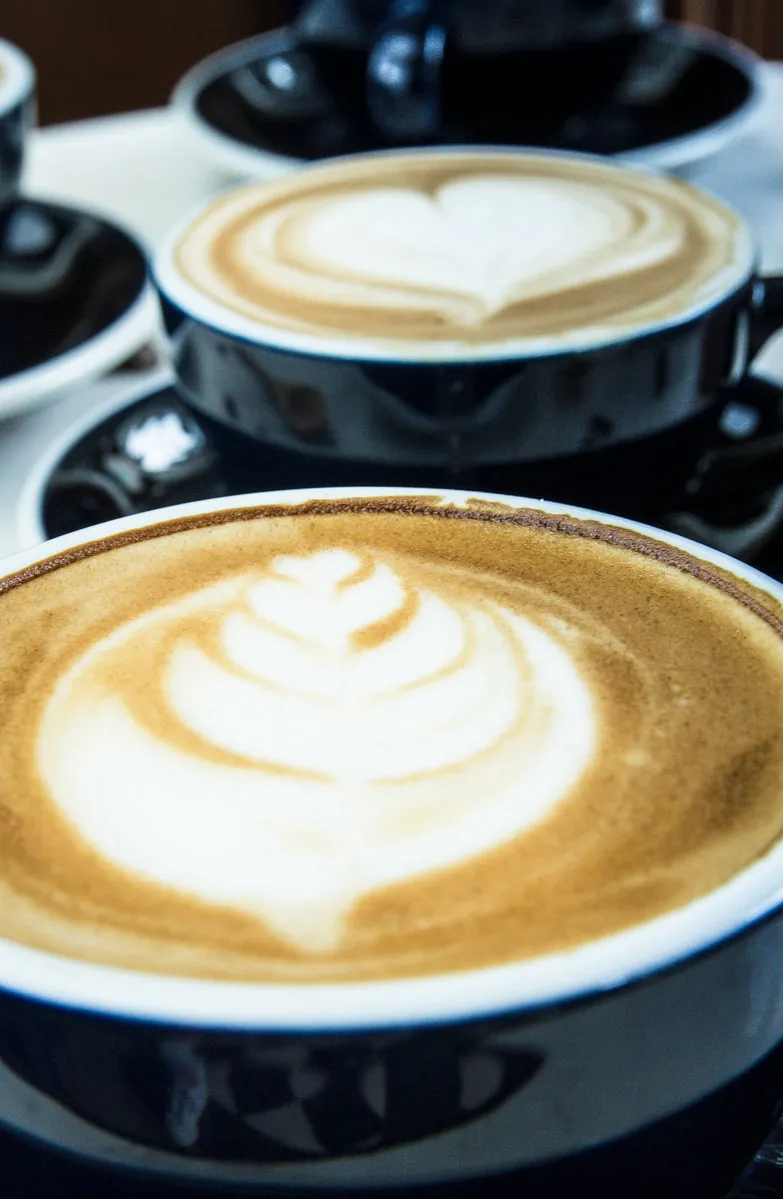
The bar works from the classic menu: espresso, served here “always double,” americano, macchiato, cappuccino, flat white, latte, mocha, cold brew and V60 filter. There are also matcha latte, chai latte and a selection of teas. And the coffee can be taken home: Época's online shop sells the Independencia Blend, the Colonia Coco, the Chiquito Honey and the Resistencia Tropical, in 250- or 340-gram bags, with shipping throughout Colombia. The menu invites customers to ask about the grind according to the method they will use at home.
From breakfast to lingering after lunch
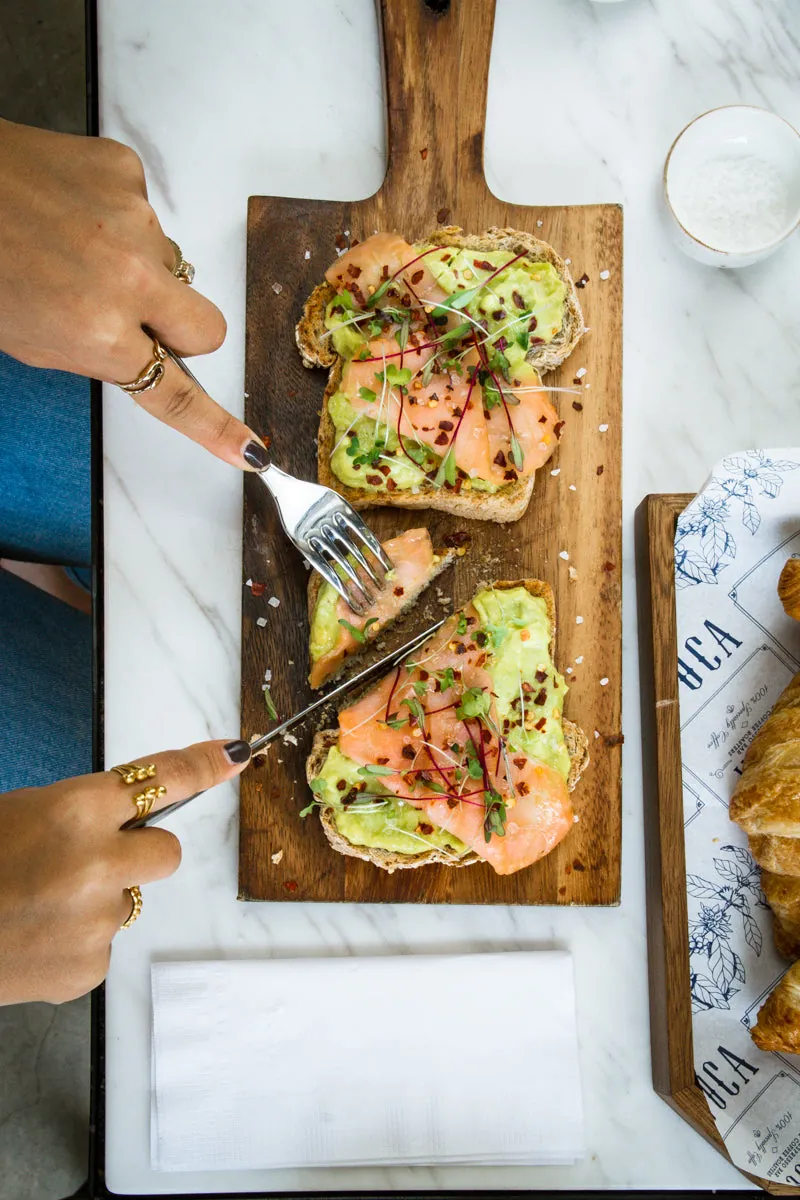
The second part of the menu is what explains the hours. Breakfast and brunch are served all day, ranging from light to hearty. Among the light dishes are an açaí bowl, a Greek yogurt parfait, avocado toast on sourdough, a yuca waffle with smoked salmon or turkey and poached eggs, and shakshuka. Among the full plates are the Época Breakfast, with eggs, bacon, sausages, pancakes and hash browns, eggs Benedict and chilaquiles divorciados, served with two different salsas.
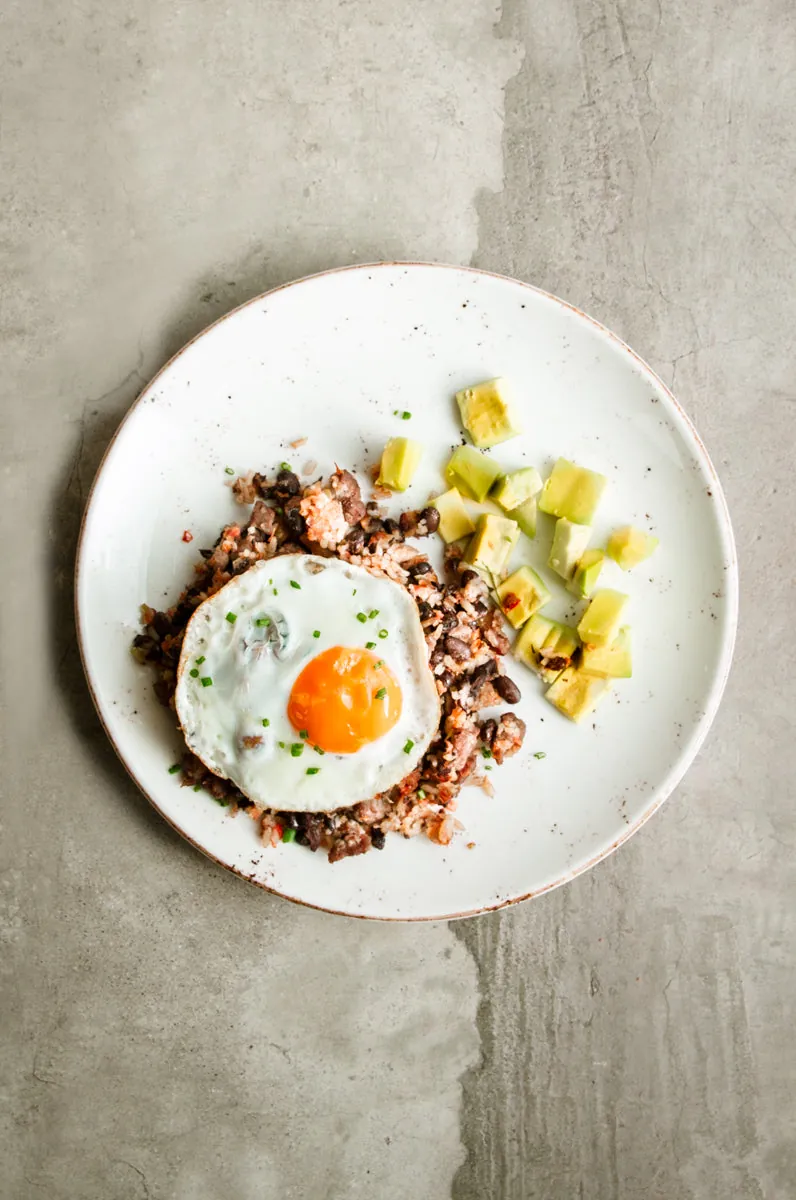
The cooking of the coast has its place. The Calentado Época brings rice, beans, ripe plantain and a fried egg. The Cayeye de la Casa is mashed plantain with hogao — the local tomato-and-onion sauce — egg and queso costeño, the salty white cheese of the coast. And the Fritos Bazurto are, according to the menu, a coastal mix of fried snacks, named after the city's great popular market.
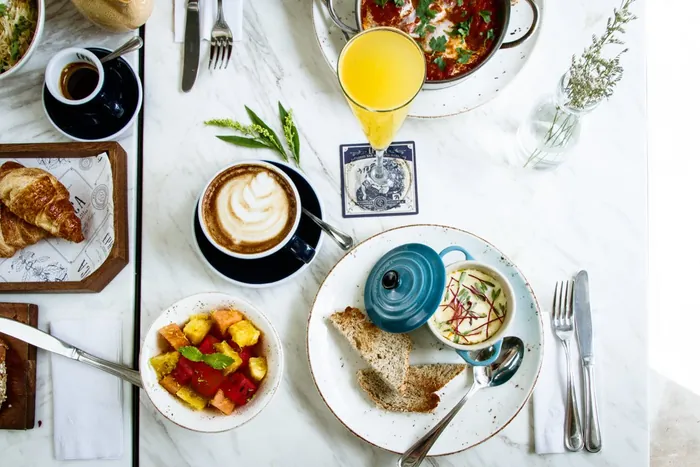
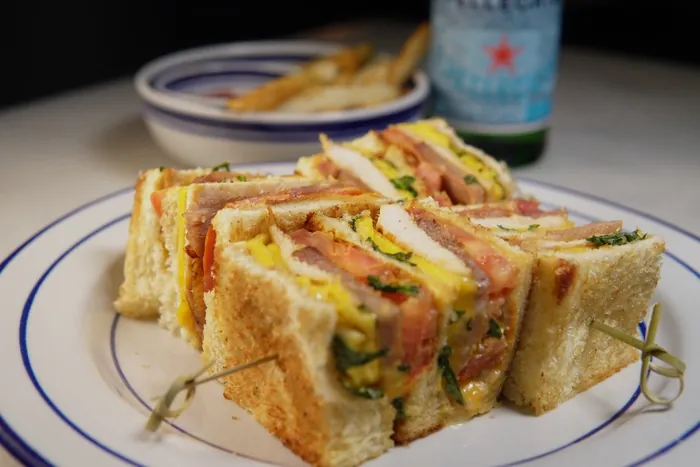
At midday the menu opens up to starters such as roasted tomato soup, citrus tiradito, crispy shrimp tacos or beef carpaccio, and to a page of sandwiches headed by the Club Época, with chicken, turkey, lettuce, tomato and egg, served with fries. Then come bowls and salads, such as the curried fish bowl with coconut rice, and main courses such as salmon fillet, beef tenderloin with potatoes or roasted cauliflower with tahini. To finish there is a warm cookie with ice cream, chocolate cake and carrot cake.
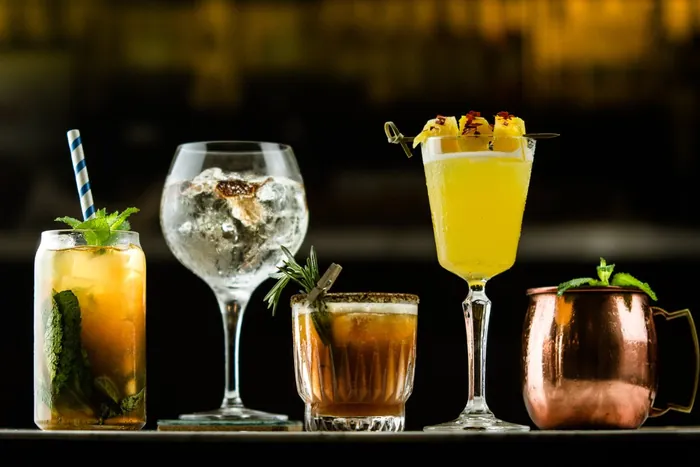
As the afternoon fades the cocktail bar comes into play: espresso martini, carajillo Época, negroni, Venetian spritz, margarita, mojito, mimosa and bloody mary, plus draft beer, fresh orange or corozo juice — from a small local palm fruit — coconut lemonade and a short list of wines by the glass and by the bottle. Aperitivo as the afternoon fades will also be the trade of La Domenica, the daytime world Casa Salvaje is preparing, with coffee first thing and pizza for a very long lunch; it opens soon.
The Cathedral's street
The street's name refers to the archdiocese, and the proximity shows. The Catedral de Santa Catalina de Alejandría, on the same block, was built from 1577 and completed in 1612, to plans by master builder Simón González, according to a study by architect Ricardo Zabaleta Puello published in 2023 in the journal Ucoarte. The same study notes that the church shares its north wall with what is today the archbishop's residence. Época is about fifty meters from the church.
The Cathedral seen from the street today is the result of several layers. Around 1924, hired by the archdiocese, French architect Gastón Lelarge reworked the main façade and the bell tower and gave them Florentine features, Zabaleta writes. In 1896 Bishop Eugenio Biffi had begun building an episcopal palace beside the church, behind the apse, which was demolished in the 1960s so that the octagonal east end could be seen again. In 1973 Archbishop Rubén Isaza Restrepo ordered the Venetian-style stucco removed from the façades and interior walls. The Cathedral has been a National Monument since 1992, and the whole ensemble is part of the Port, Fortresses and Group of Monuments, Cartagena, inscribed by UNESCO on the World Heritage List in 1984.
Mornings in the Centro
The first hour is the best for understanding this part of the city. At 7:30, when Época opens, the street still belongs to people on their way to work. A few steps away is Plaza de Bolívar and, a short walk further, the plazas the neighboring hotel recommends exploring on foot: Plaza de los Coches, Plaza de la Aduana and Plaza de Santo Domingo. A coffee at the bar, a turn around the Cathedral and a long breakfast are enough to reach mid-morning with the Centro already seen before the heat sets in.
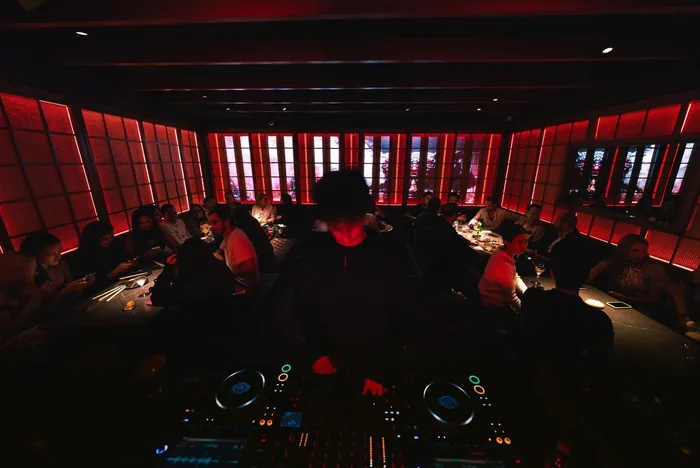
To carry on with the day, Casa Salvaje is about five minutes' walk away, at Calle Santa Teresa #32-41, on the corner with Calle Baloco. Kanibal opens Monday to Saturday from midday, SLVJ serves lunch and, from 7 p.m., dinner, and from Thursday to Saturday its room becomes a club until 3 a.m. Between November and December 2026, ONO, the hosomaki bar born in Bogotá, will also open there. Between the two houses there is room for a whole day in the Centro: morning coffee on Calle del Arzobispado and the night on Calle Santa Teresa.
It is a place to start the day, come back at midday and return for a cocktail when the sun goes down, without having to change streets.
Sources
- Época Café · Cartagena (sede, horario y menú) ↗
- Época Café · Nosotros ↗
- Época Café · Contacto (dirección de la sede de Cartagena) ↗
- Época Café · Tienda de café (sitio oficial) ↗
- Época · Carta (septiembre de 2026, enlazada desde su perfil oficial) ↗
- Época · Enlaces oficiales (reservas, carta y sedes) ↗
- Hotel Casa del Arzobispado · Época Café ↗
- Hotel Casa del Arzobispado · Sitio oficial ↗
- Hotel Casa del Arzobispado · Preguntas frecuentes ↗
- Zabaleta Puello, R. · Catedral de Cartagena de Indias, Colombia, su proceso evolutivo en el tiempo (Ucoarte, 2023) ↗
- UNESCO · Puerto, fortalezas y conjunto monumental de Cartagena ↗
- Casa Salvaje · Sitio oficial ↗
- Casa Salvaje · ONO Cartagena (apertura noviembre–diciembre de 2026) ↗
Keep reading.
Food & drink
ONO, the hosomaki bar coming to Casa Salvaje.
Food & drink
The 4 best places for sushi in Cartagena.
Food & drink
The 5 best places to eat meat in Cartagena.