Stories / Music
The city you hear.
From the drum of Palenque to the neighborhood picó, by way of recorded cumbia, the salsa of el Joe and champeta: centuries of sound in Cartagena.
Cartagena Social Club · 6 min read
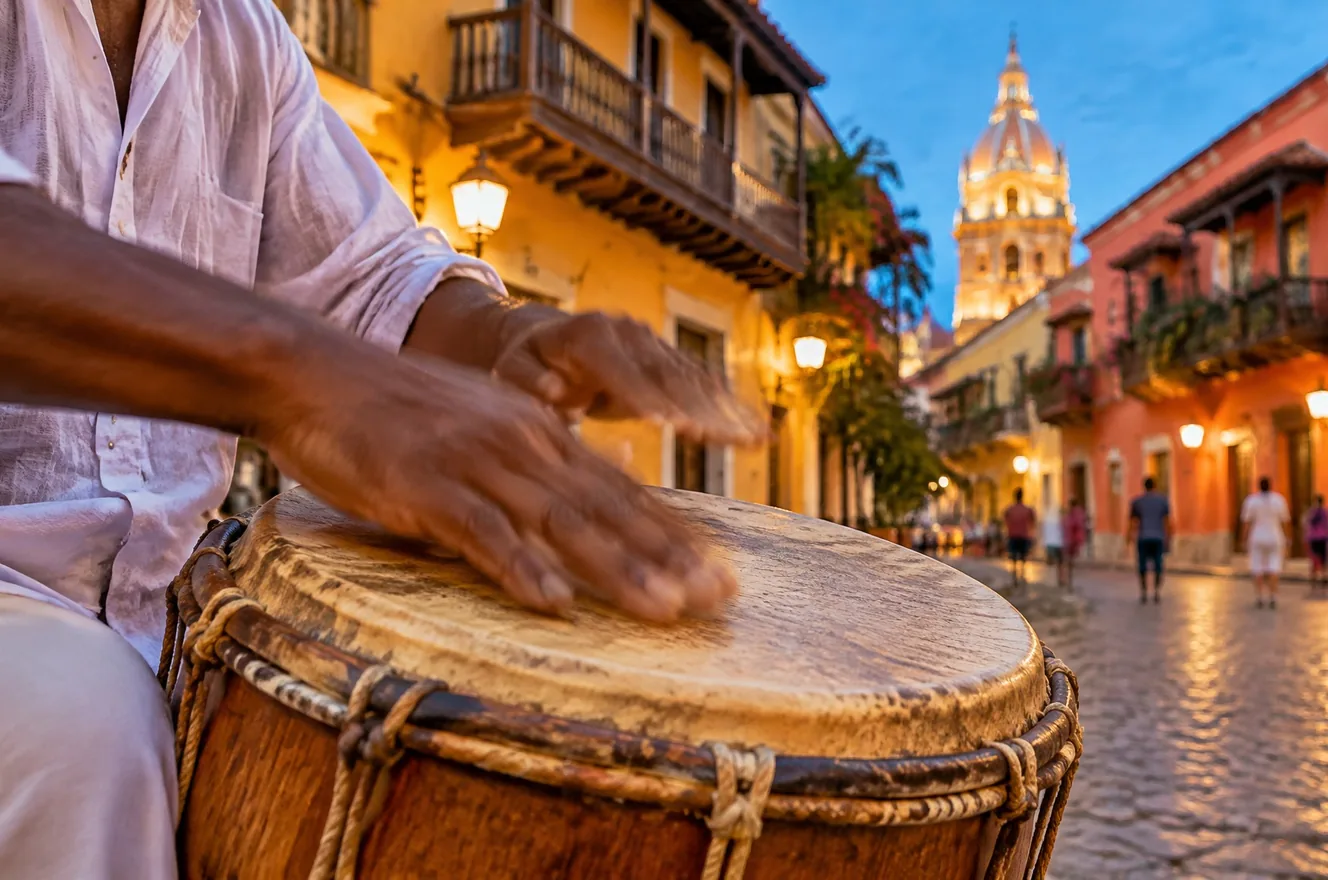
A drum sounds in an Old Town street at dusk. AI-generated illustration.
You arrive in Cartagena through your eyes: the city wall, the balconies, the sea. But you understand the city through your ears. A drum that starts up in a plaza, a trumpet drifting out of a bar in Getsemaní, a picó thundering in a neighborhood at two in the morning. Each of those sounds has a history, and almost all of them pass through here. This is a walk through that history, from the roots to the party. You don't need a map to follow it: just follow the sound.
The drum that came from Palenque
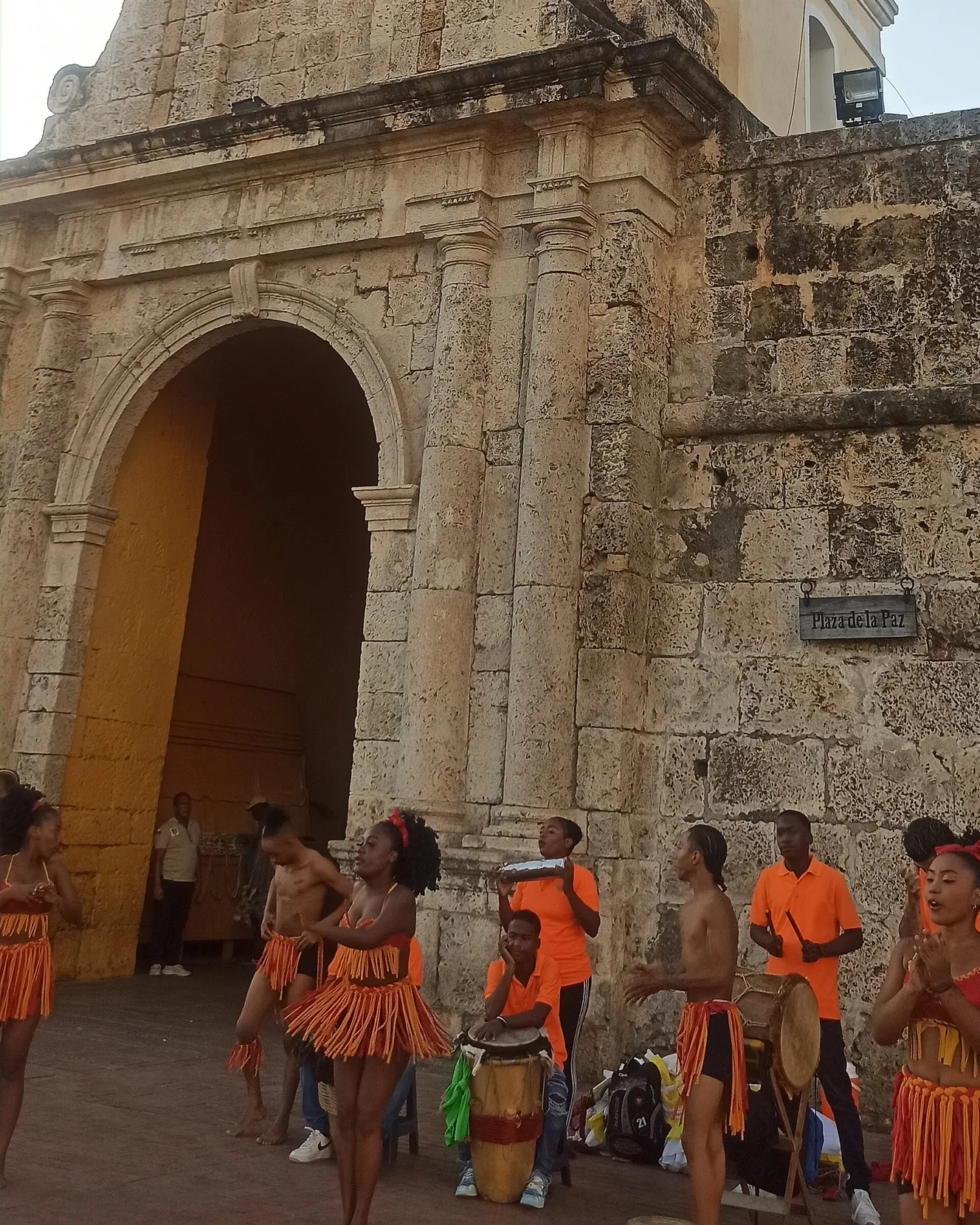
It all begins with the drum. About 50 kilometers from the city, San Basilio de Palenque, founded by people who escaped slavery, preserved a language of its own and a music of drums and songs: the lumbalú of funeral rites, the bullerengue sentao, the son palenquero. UNESCO proclaimed its cultural space a Masterpiece of the Oral and Intangible Heritage of Humanity in 2005 and inscribed it on its Representative List in 2008.
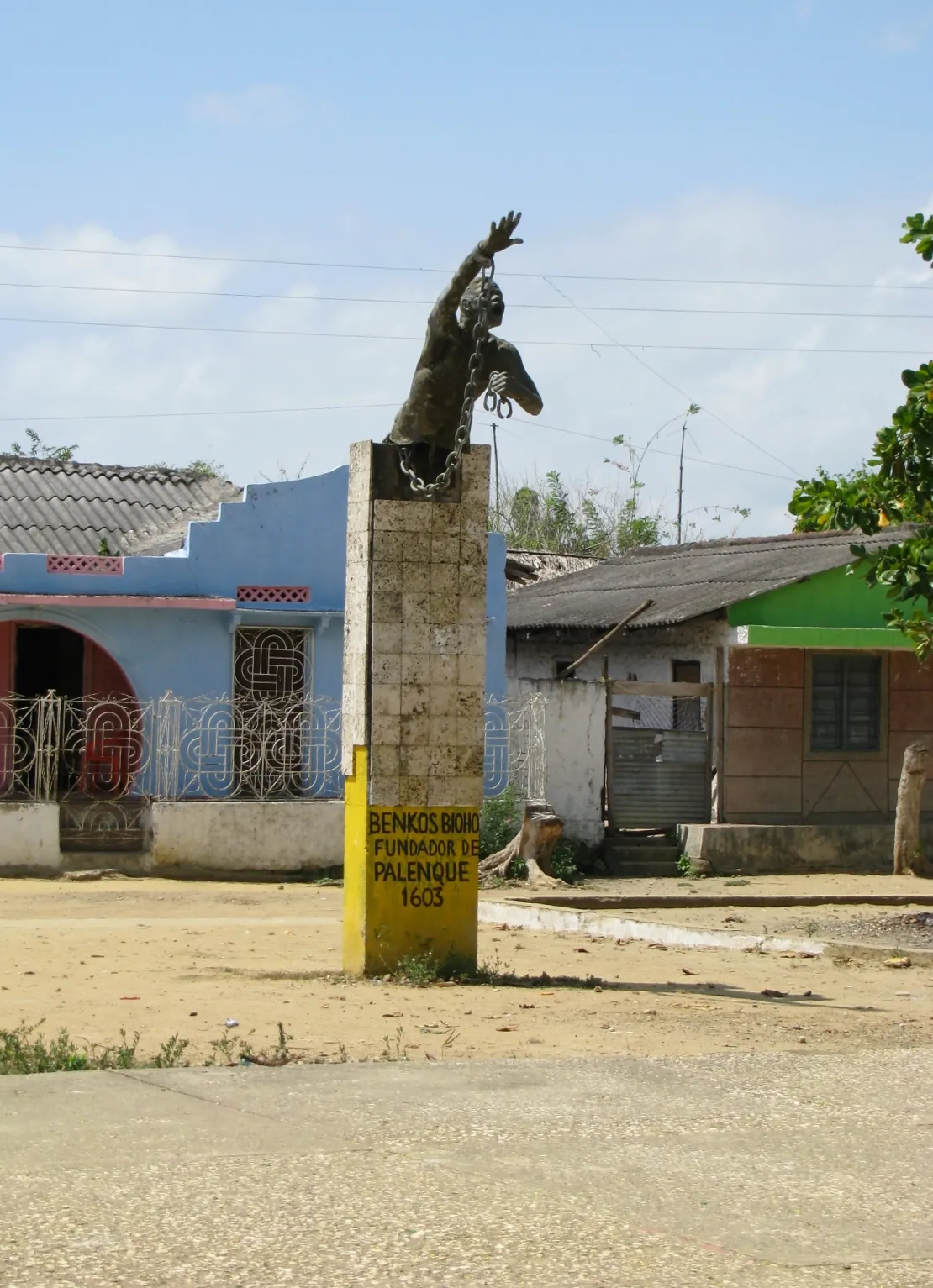
That root did not stay in the village. Researcher Rafael Escallón, who has spent more than fifteen years studying champeta, tells Radio Nacional de Colombia that the genre's main roots are bullerengue sentao, the chalusonga palenquera and the chalupa. Several of its pioneers also came from Palenque, such as Viviano Torres and Charles King. The city's most urban music, the one that plays in the neighborhoods, carries the pulse of a drum that came from inland.
The city where cumbia was recorded
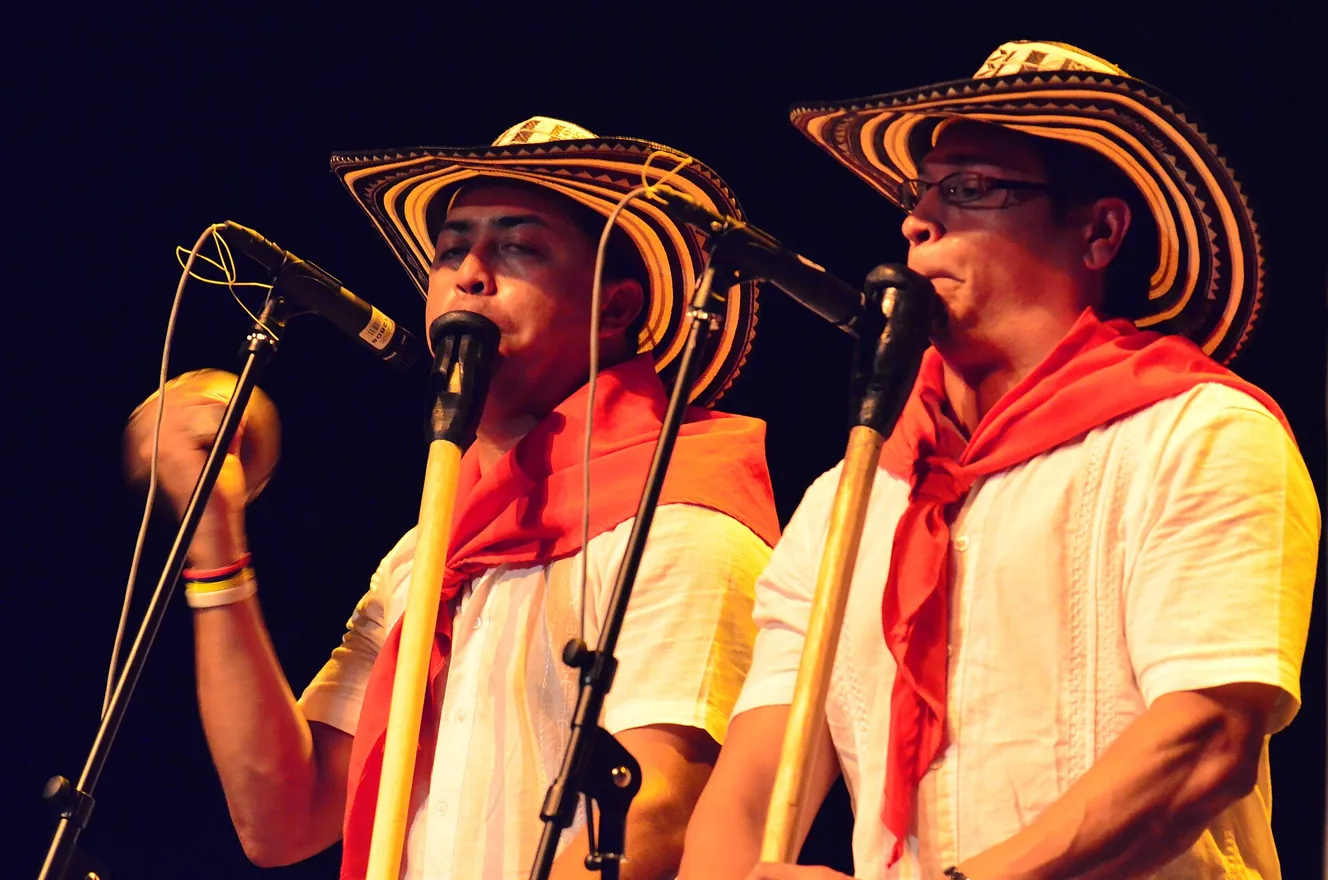
From the gaitas — the region's long cane flutes — and drums came cumbia and porro, and Cartagena was also the city where that music began to be recorded. In 1934, Antonio Fuentes founded Discos Fuentes here, considered the country's first record label; decades later the company moved to Medellín. Its catalog helped carry porro and cumbia to dance halls across the country, and with them the sound of the Colombian Caribbean.
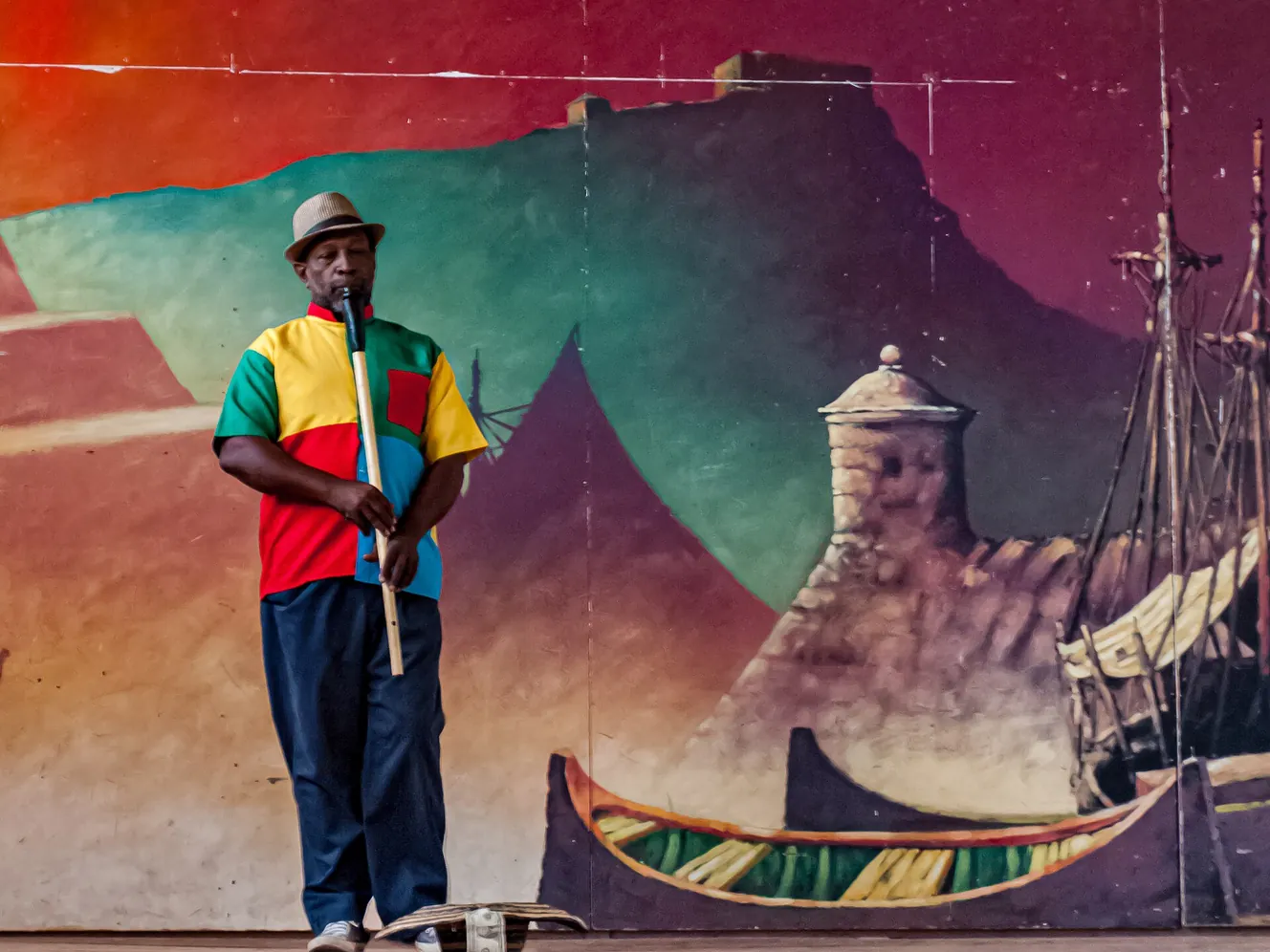
That dual condition — city of roots and city of industry — marks the story that follows. Cartagena did not only produce rhythms: it also heard them arrive through its port, mixed them and sent them back transformed. That blend still plays at night in the Centro: at Casa Salvaje, Thursday to Saturday, the SLVJ club runs until 3 a.m. with Funktion-One sound and DJs programmed week by week.
El Joe and neighborhood salsa
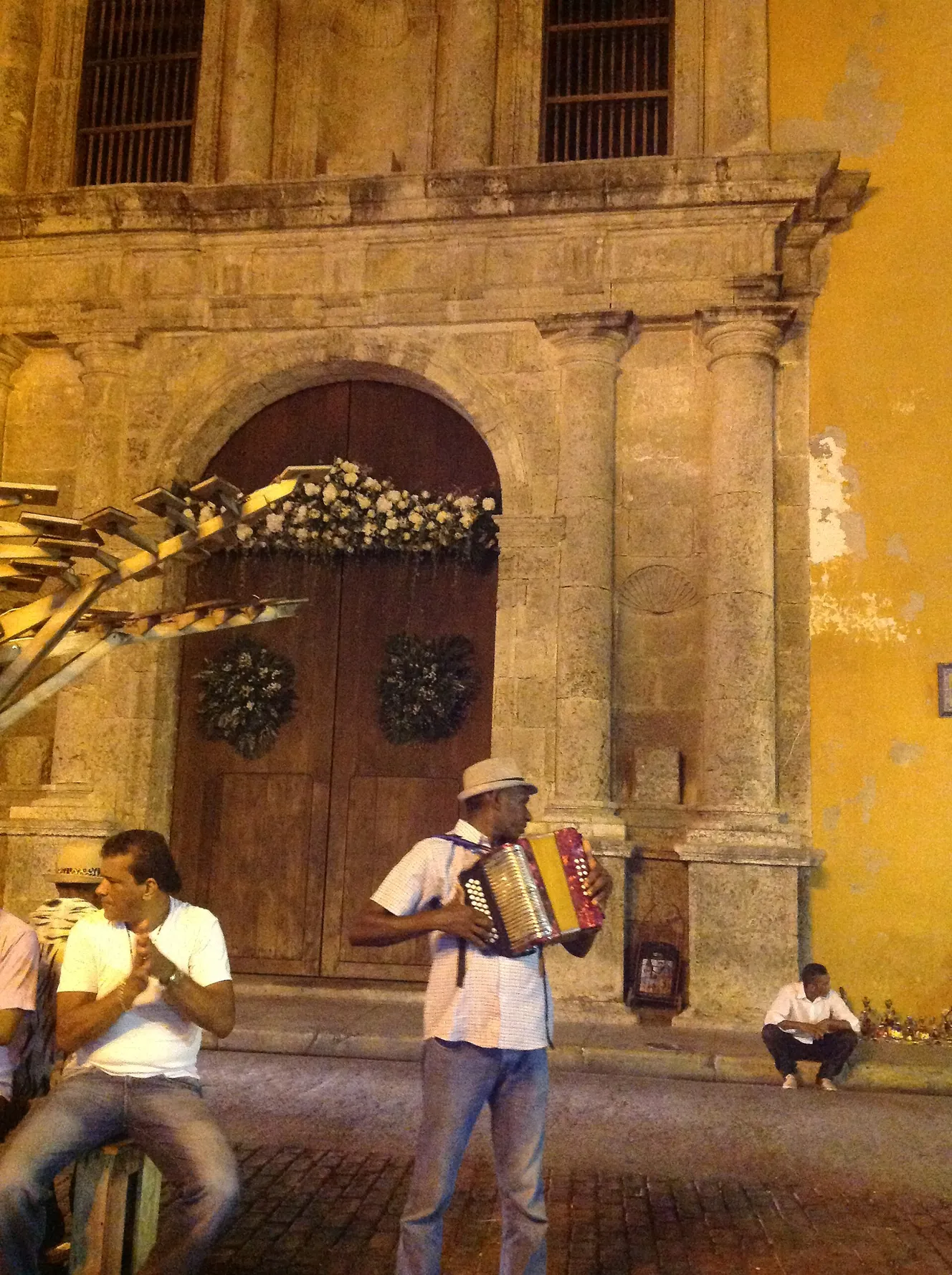
Then came salsa, and with it one of the city's most famous sons: Álvaro José Arroyo, el Joe (1955–2011), born in the Nariño neighborhood. He started singing very young in Cartagena bars, was the voice of Fruko y sus Tesos in the 1970s and in 1981 founded his orchestra, La Verdad. With it he recorded “Rebelión” in 1986, the song that tells, in salsa, the story of an enslaved African couple in 17th-century Cartagena.
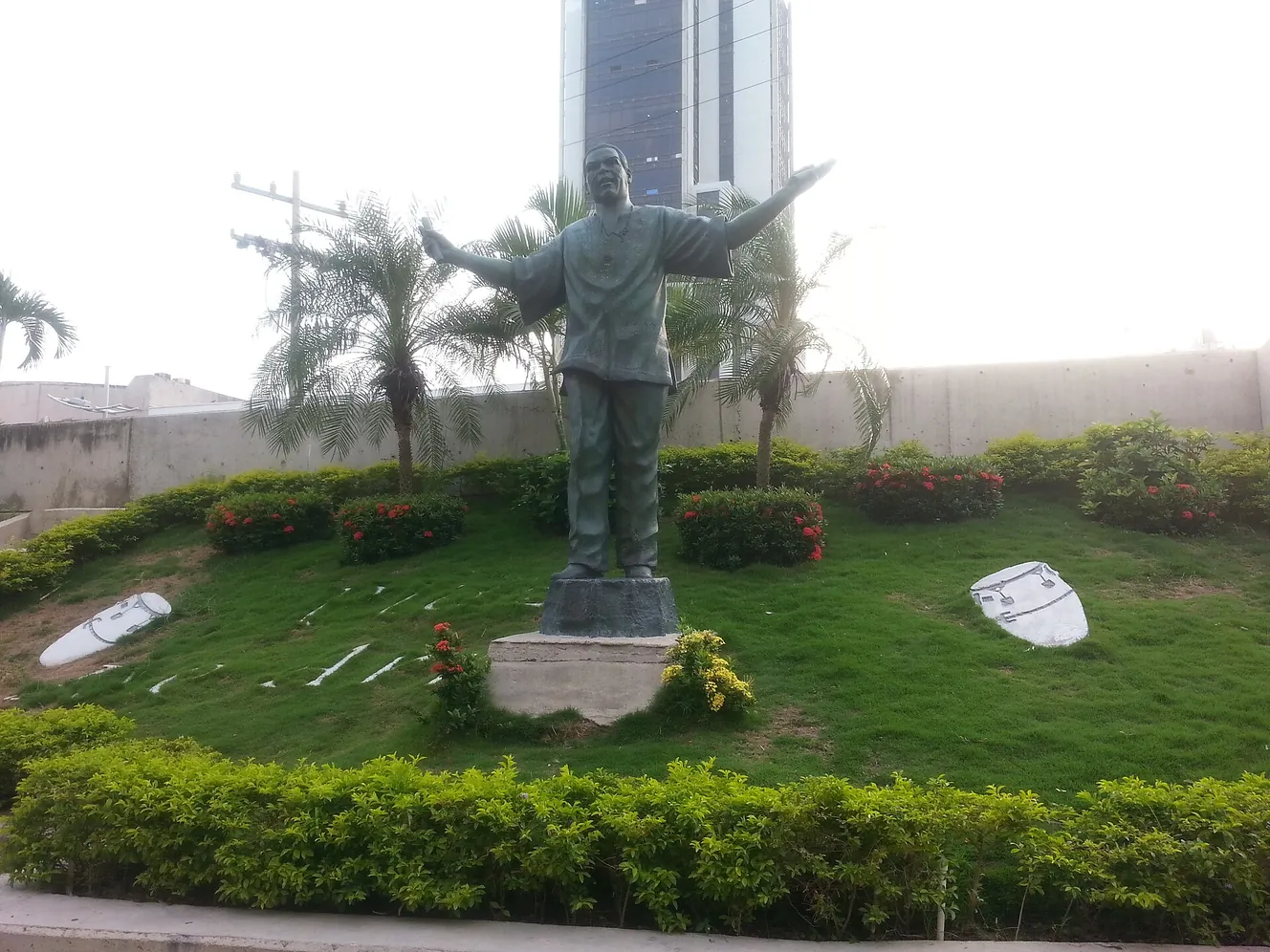
“Rebelión” is perhaps the best summary of what music means in this city: a story about the slave port that is danced in the same streets where it happened. In the bars of the Centro and Getsemaní it is still easy to hear. Casa Salvaje, on Calle Santa Teresa, counts that song and its author among the roots of the house's music, alongside the picós and champeta.
Picós, champeta and a festival that opened the door
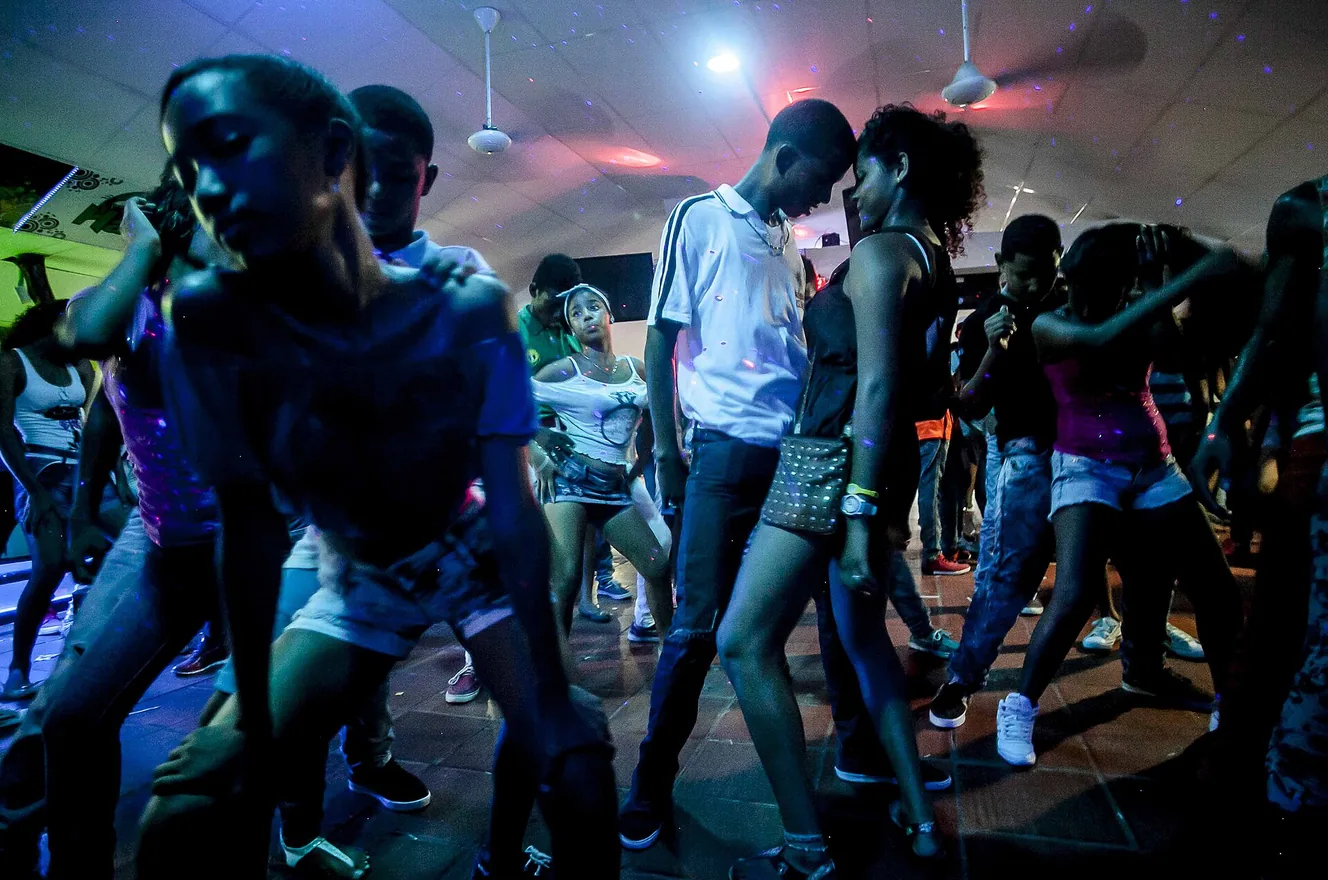
Meanwhile, something else was being born in the working-class neighborhoods. From the 1970s, the picós — huge, hand-painted sound systems, each with its own name — began playing African records: soukous from the Congo, highlife, music almost never heard on the radio. Before champeta was a genre it was a dance, known in the seventies as terapia, according to Escallón. El Rey de Rocha, active since 1985, is one of the most celebrated picós of that culture.
What played on those systems was a map of the Black world. Escallón lists it: soukous, soca, Jamaican and Antillean reggae, Congolese rumba, zouk, calypso, juju, Haitian kompa, highlife, bikutsi. Those records, heard only on the picós, mixed with bullerengue, cumbia, the son of Palenque and mapalé. “Champeta's roots are like a mangrove's,” he told Radio Nacional: the trunks and the roots blur together.
A festival helped open the door. Between 1982 and the mid-1990s, the Festival de Música del Caribe, conceived by Antonio “el Mono” Escobar and Francisco de Onís, brought groups from Africa, Haiti, Jamaica, Martinique, Trinidad and Tobago, Cuba and other countries to Cartagena every March, as El Universal recalls. It started in the Plaza de la Serrezuela and, when the audience no longer fit, moved to the bullring. The festival grew to include exhibitions of Caribbean painting, sculpture and photography, and composer Francisco Zumaqué wrote it an anthem, “Colombia Caribe.” For several researchers, those encounters with African and Antillean musicians were decisive for champeta.
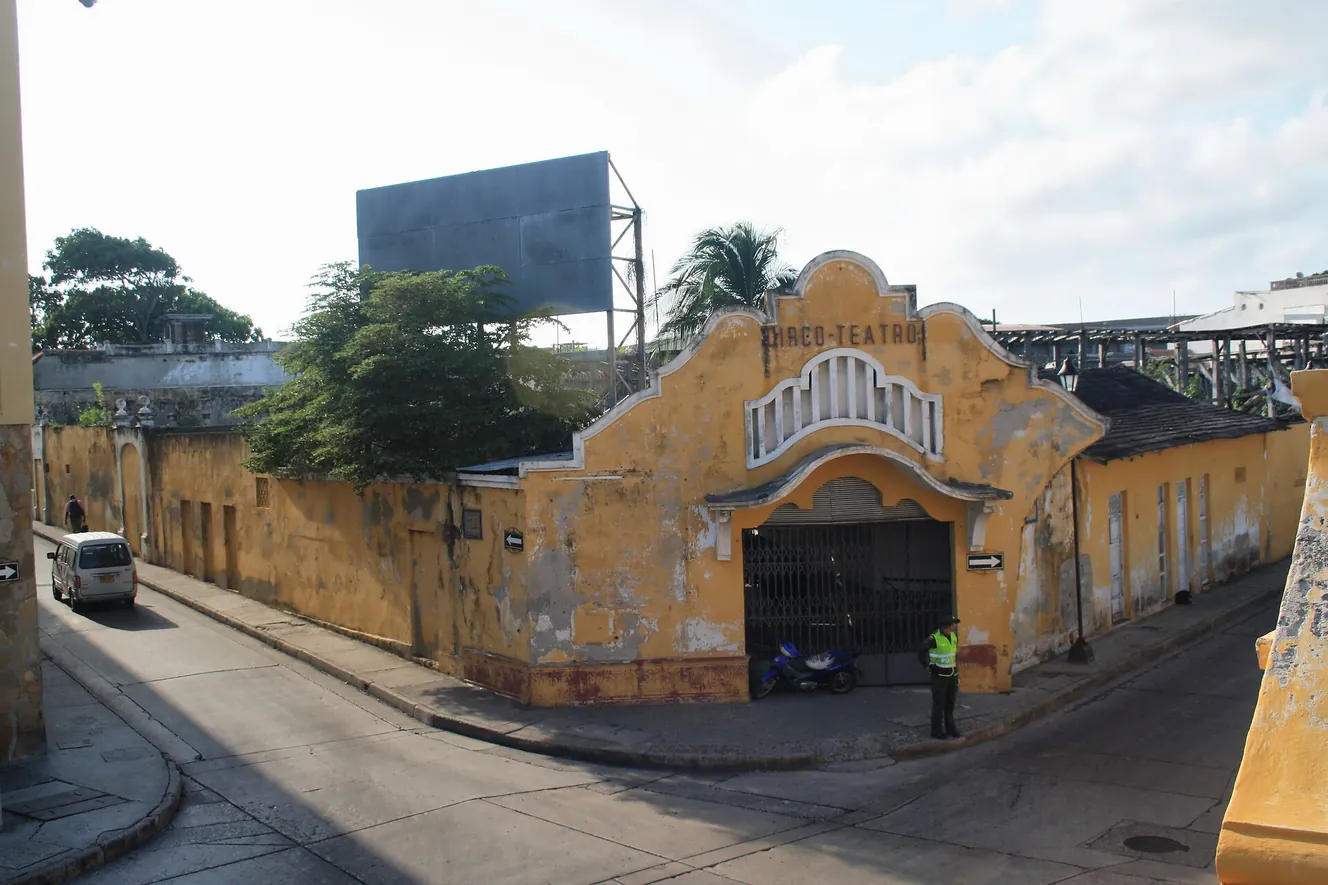
The founding milestone has a date and a place. In 1984, Anne Swing emerged from Justo Valdez's group Son Palenque, made up of Viviano Torres, Charles King and other musicians who were among the first to call what they did “champeta.” Torres recalls that their first live performance was on an August 13 at La Cueva de Morgan, in the Los Caracoles area, and that the genre took off in 1986, at an edition of the Festival de Música del Caribe. That August 13 is now, by agreement of the Cartagena City Council, Champeta Day. Then came Elio Boom, Mr. Black and many more.
The early years were not easy. Torres recalls that they took their songs to every record label and were turned down, until Kuvaney Records decided to record them, and that the criticism continued: one mayor went so far as to ban champeta during a Fiestas de la Independencia. The musicians marched, and from that mobilization came the City Council agreement that now celebrates champeta every August.
Recognition took time. On May 21, 2026, the Ministry of Cultures presented champeta's Special Safeguarding Plan to its practitioners in Cartagena, recognizing it as cultural heritage of the Nation. The plan protects eleven associated expressions, among them picó culture, the craft of those who build the picós, the iconography of their paintings and the spaces where people dance: neighborhoods, plazas, casetas and picotódromos, the open-air dance grounds built around the sound systems. Six years earlier, on February 2, 2020, Shakira had danced it at the Super Bowl halftime show.
From the concert hall to the street
January sounds different. Since 2007, the Cartagena Festival Internacional de Música, created by the Fundación Salvi and declared cultural heritage of the Nation by Law 2340 of 2023, fills the Teatro Adolfo Mejía, other venues in the Centro and some plazas for a little over a week, with paid and free concerts. The theater itself is part of the story: it opened in 1911 as the Teatro Municipal, was renamed Teatro Heredia in 1933 and reopened after its restoration in 1998.
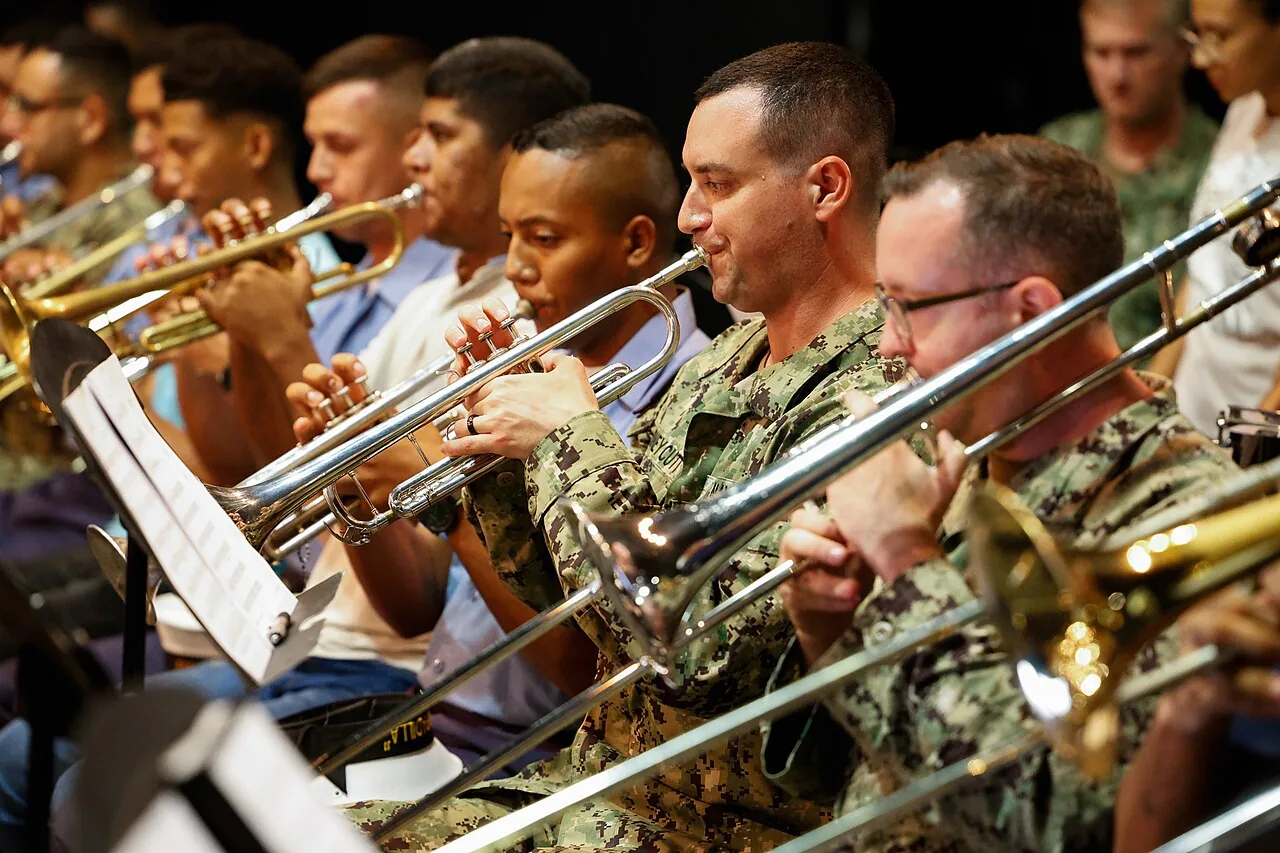
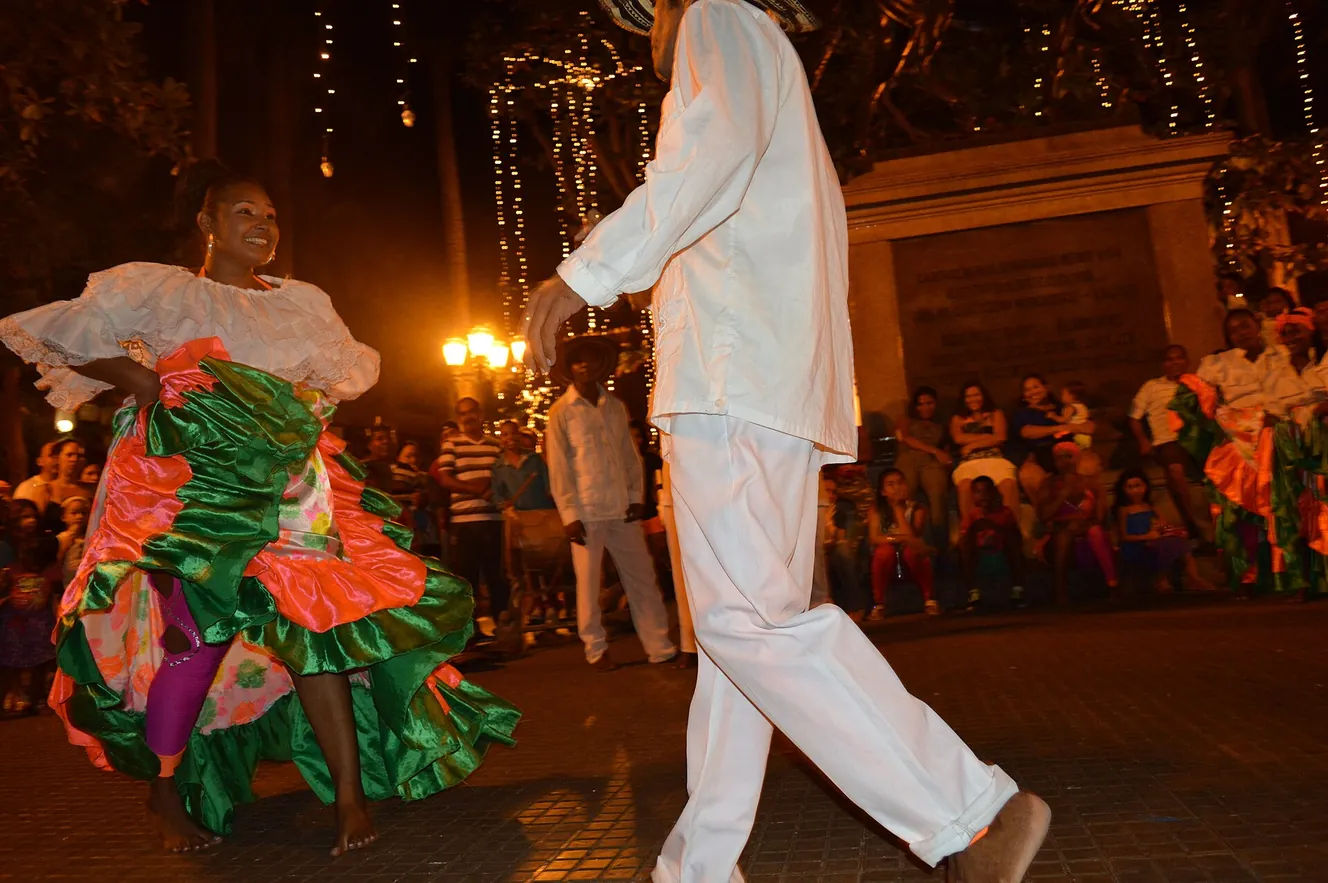
And in November the city returns to the street. The Fiestas de la Independencia, which commemorate November 11, 1811, bring together the Bando, the Cabildo de Getsemaní, the comparsas — costumed dance troupes — and the Festival Náutico: the brass band, the drum and the picó, at last, in the same place.
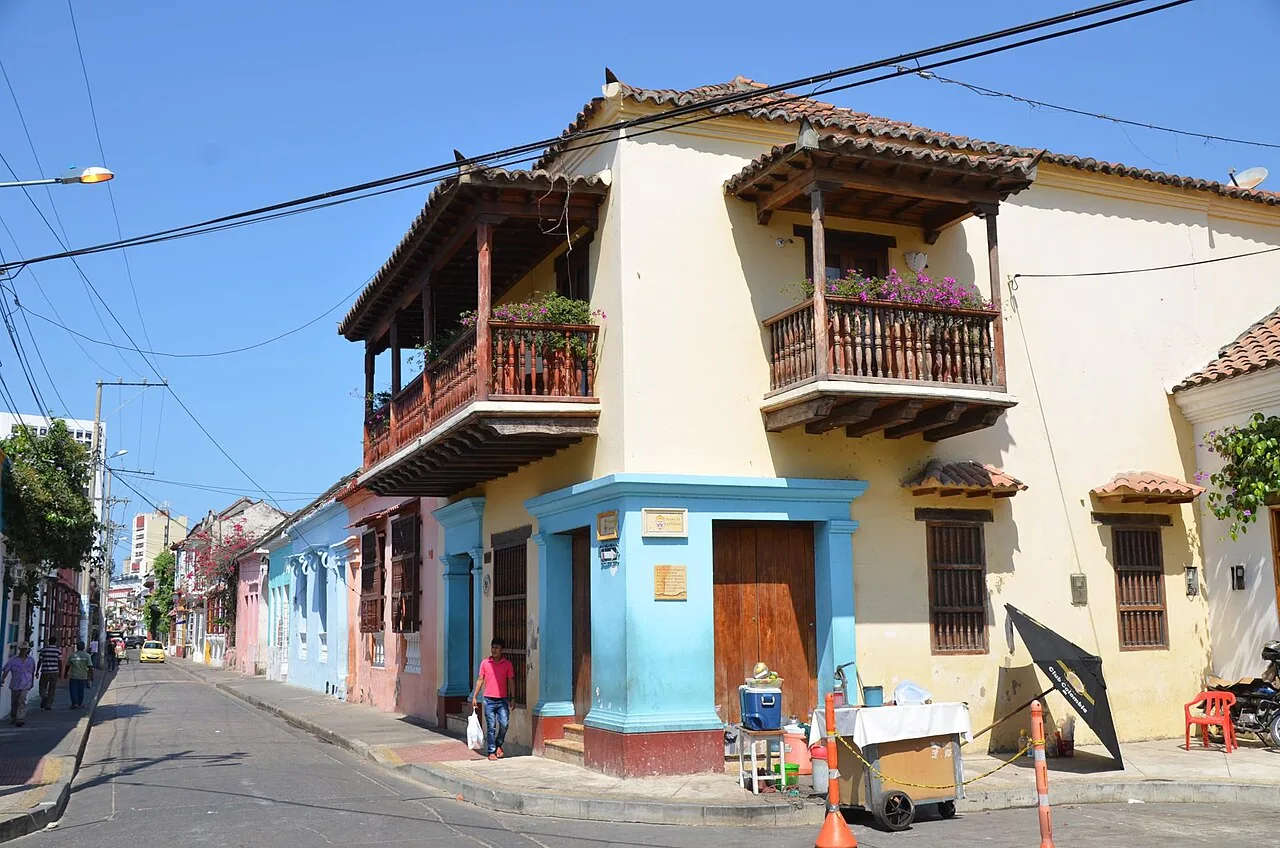
Anyone who wants to hear this story in a single night can start with a drum in a plaza, continue with salsa in Getsemaní and end wherever a picó is playing. The city has done it this way for decades, without asking permission. Along the way, the drum of the cimarrones — the people who escaped slavery — the salsa orchestra, the African record and the concert hall all cross paths. This story remains open, like the music that tells it.
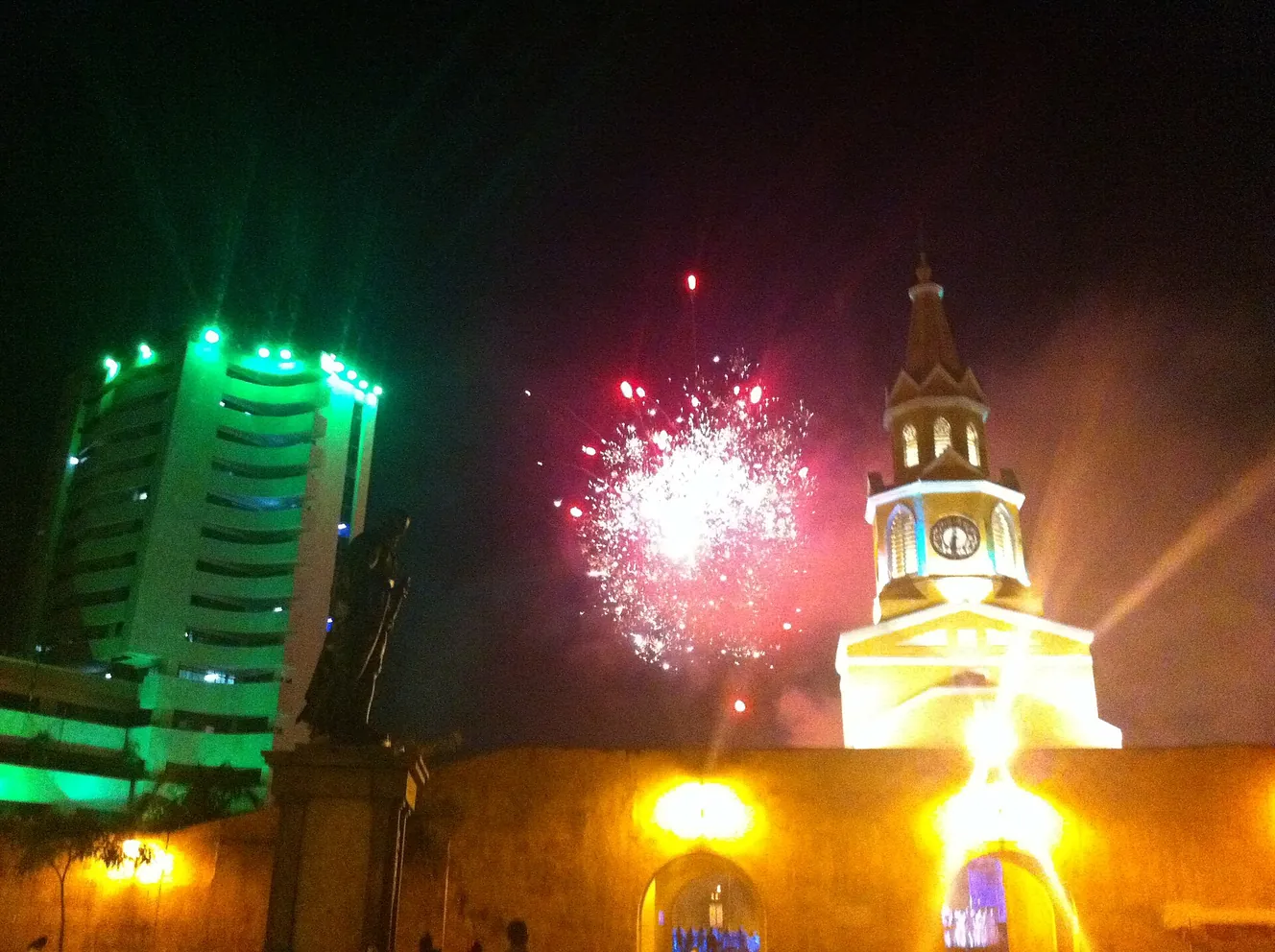
Cartagena isn't seen: it is heard.
Sources
- UNESCO · Espacio cultural de Palenque de San Basilio ↗
- Radio Nacional de Colombia · Champeta, el género musical que representa a Cartagena ↗
- Radio Nacional de Colombia · Historia de Discos Fuentes ↗
- Radio Nacional de Colombia · Joe Arroyo, 10 años de su muerte ↗
- Radio Nacional de Colombia · Champeta, cómo nació ↗
- El Universal · Chawala, la mente detrás del Rey de Rocha ↗
- El Universal · Festival de Música del Caribe: fotos inolvidables de aquella época ↗
- El Universal · El Caribe celebra: la champeta ya es patrimonio cultural inmaterial (2026) ↗
- OkayAfrica · Shakira Brought Afro-Colombian Dance to the Super Bowl ↗
- Ley 2340 de 2023 (Festival de Música de Cartagena, patrimonio cultural) ↗
- EcuRed · Teatro Heredia (Cartagena de Indias) ↗
- Casa Salvaje (sitio oficial) ↗