
Stories / History
The house of the Holy Office.
The tribunal arrived in 1610, the palace was finished around 1770 and the museum opened in 1924: three layers of history facing Plaza de Bolívar.
Cartagena Social Club · 6 min read
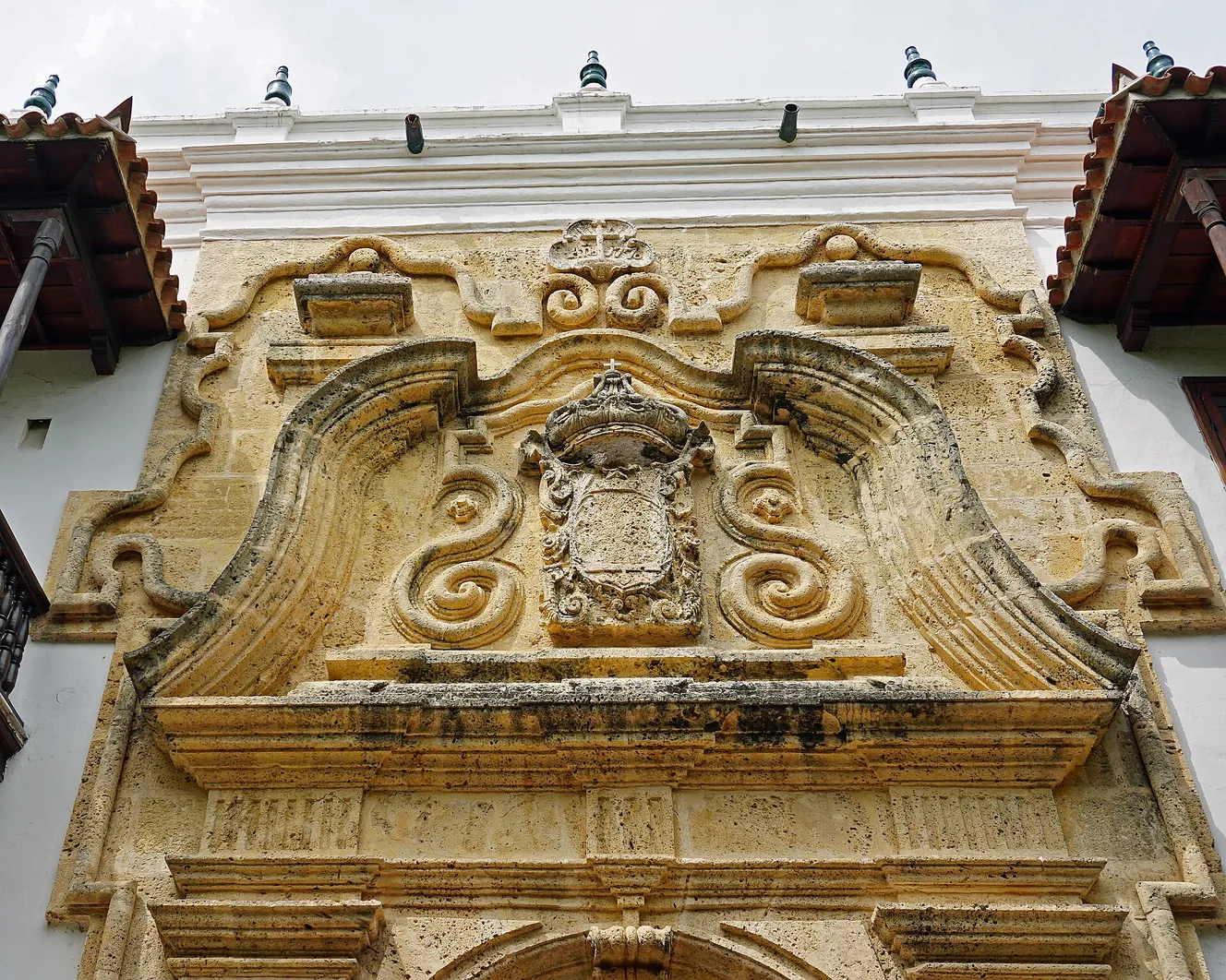
The relief crowning the main entrance. The tribunal's first seats were modest houses; this Baroque doorway came with the palace a century and a half later. Image: Mariordo (Mario Roberto Durán Ortiz), CC BY-SA 4.0, via Wikimedia Commons
Facing Plaza de Bolívar there is a stone portal that almost everyone photographs and few read. It is the entrance to the former Palacio de la Inquisición, seat of the Tribunal of the Holy Office in Cartagena for two centuries and today home to the Museo Histórico de Cartagena de Indias (MUHCA). The building you see dates from the 18th century. The tribunal that occupied it is older, and its history is longer and more nuanced than quick tours usually tell.
It helps to separate three things that are often confused: the institution, the building and the museum. Each has its own date and its own way of entering the life of the city. Going through them in order helps explain why this palace is still one of the places where Cartagena explains itself.
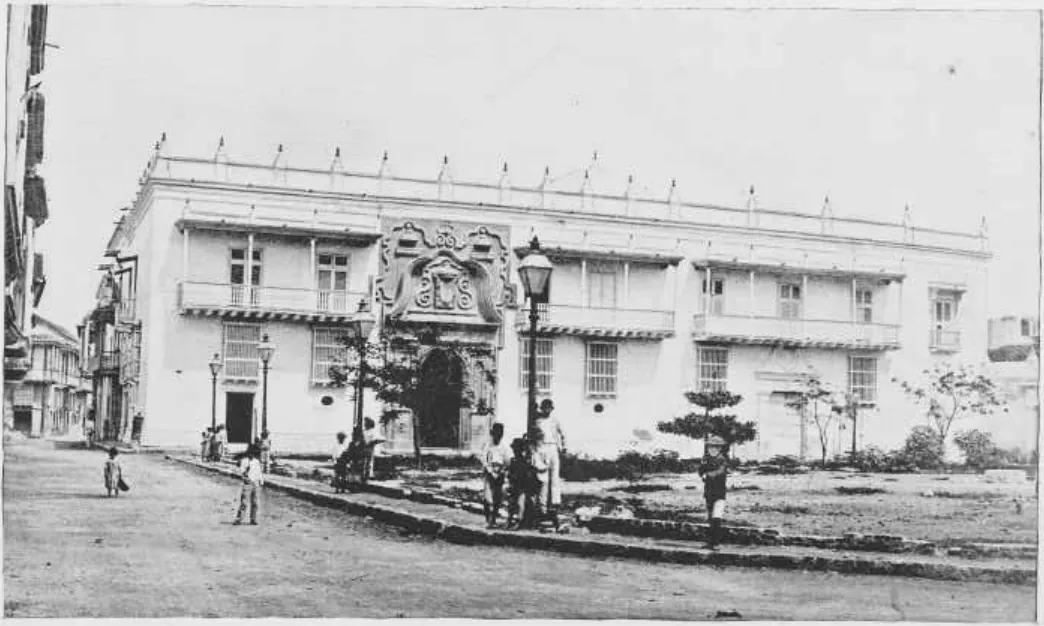
A tribunal for the Caribbean
The Spanish Inquisition reached the Americas through three tribunals. Those of Lima and Mexico were founded first; the one in Cartagena de Indias was created by royal decree on February 25, 1610, and began its work on November 30 of that year, as anthropologist María Victoria Uribe reconstructs in the Boletín Cultural y Bibliográfico of the Banco de la República. Its jurisdiction was enormous: it covered the bishoprics of Panama, Santa Marta, Popayán, Puerto Rico, Venezuela and Santiago de Cuba.
The choice of city was no accident. Cartagena was the great port of the Caribbean coast of New Granada, the place through which goods, galleons, Portuguese merchants and thousands of enslaved Africans passed. Uribe describes a population of Spaniards, Portuguese — many of them merchants of Jewish origin — few Indigenous people and a large number of Black, mulatto and zambo people, enslaved or free. For the Crown, policing orthodoxy at that crossroads of peoples was also a form of control.
The first premises were modest. With eight thousand ducats, houses were bought for the tribunal and thirteen cells were ordered built, again according to Uribe. The first auto-da-fé was held during Lent of 1614, and in 1622 the tribunal sent a man to the stake for the first time: an Englishman condemned as a Protestant heretic.
What it judged, and whom
The Cartagena case files are preserved mainly in the Archivo Histórico Nacional in Madrid. Drawing on them, Anna María Splendiani, José Enrique Sánchez Bohórquez and Emma Cecilia Luque de Salazar published in 1997 Cincuenta años de Inquisición en el Tribunal de Cartagena de Indias, 1610-1660 (Fifty Years of Inquisition at the Tribunal of Cartagena de Indias), a four-volume work. In it they counted some 450 trials for that half century alone, compared with the 340 found by Chilean historian José Toribio Medina.
The offenses were varied. There were blasphemies and renunciations of faith, accusations of practicing Judaism against Portuguese merchants, Protestants captured as smugglers or pirates, clergy tried for solicitation in the confessional and, above all, cases of sorcery and witchcraft. The review of the work in the journal Fronteras, published by ICANH, the Colombian Institute of Anthropology and History, records an observation by Sánchez Bohórquez: some enslaved people renounced the faith in the middle of a punishment so that the executioner would stop, because continuing to whip them could provoke a new heresy.
Treatment was not the same for everyone. According to the same review, captured Protestants usually received milder sentences, such as instruction in convents, because their conversion also served to legalize contraband. Those accused of practicing Judaism, by contrast, were harshly persecuted: confiscation of property, fines and torture were frequent punishments in a society in economic crisis, in which the fight against heresy also served to weaken the power of the merchants.
The most cited case is that of Tolú, in 1632. There a supposed sect of witches was denounced, and the tribunal ordered nine secret cells built to hold the accused women. Among them were Elena de Vitoria, born in Seville, and Paula Eguiluz, an enslaved Black woman reputed in Cartagena to be a sorceress. In 1635, the so-called Complicidad Grande, the Great Complicity, was also opened against Portuguese merchants accused of practicing Judaism, in connection with trials in Lima.
How many people died by sentence of the tribunal? The figure is lower than the black legend suggests, but no less grave for that. Historian Adelaida Sourdis Nájera, in a 2020 review for the same Boletín, counts eight people burned between 1610 and 1811, “relaxed” — that is, handed over — to the royal courts by the tribunal. And she notes that those tortured, exiled and stripped of their property were many more.
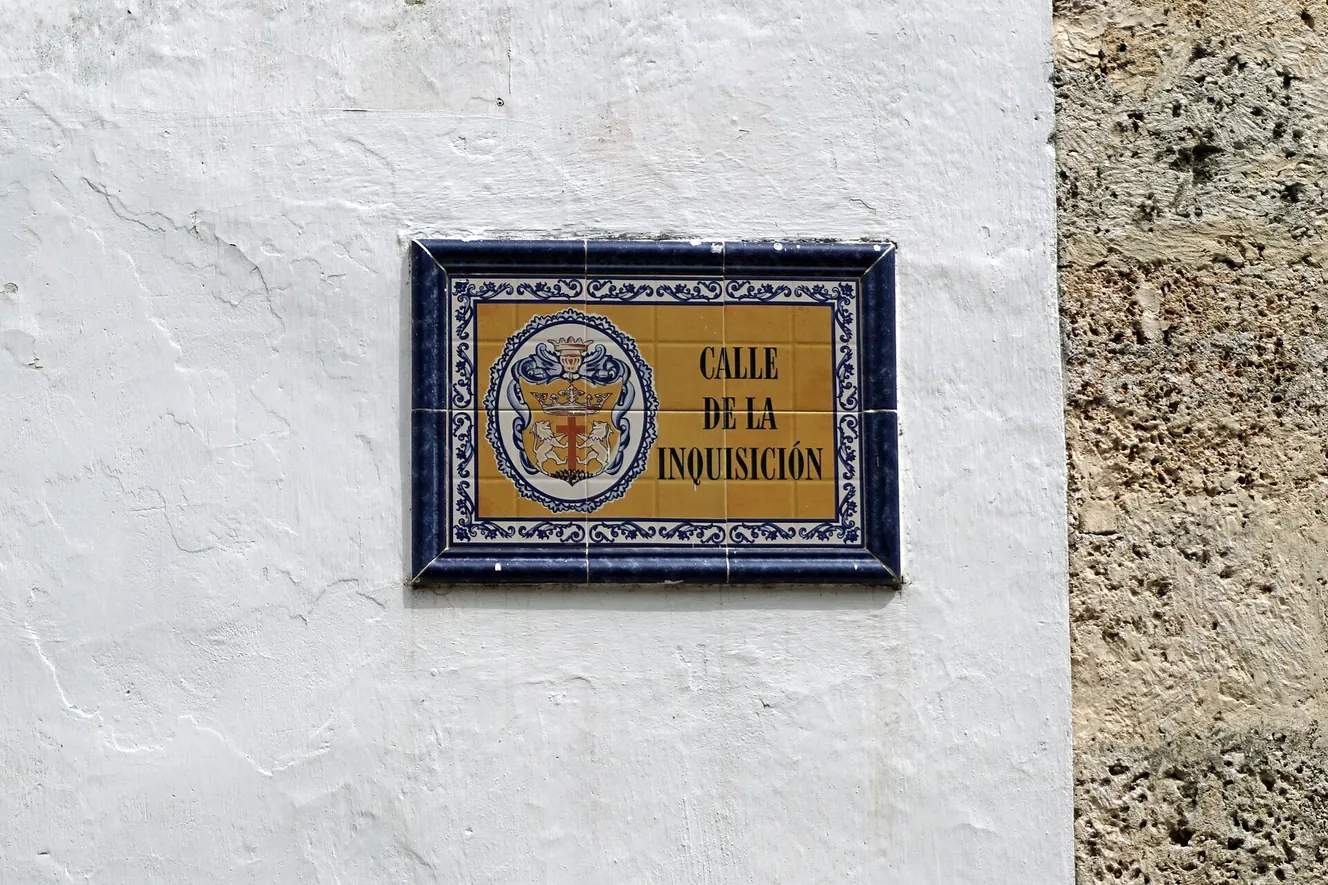
The palace: stone, courtyard and a slot in the wall
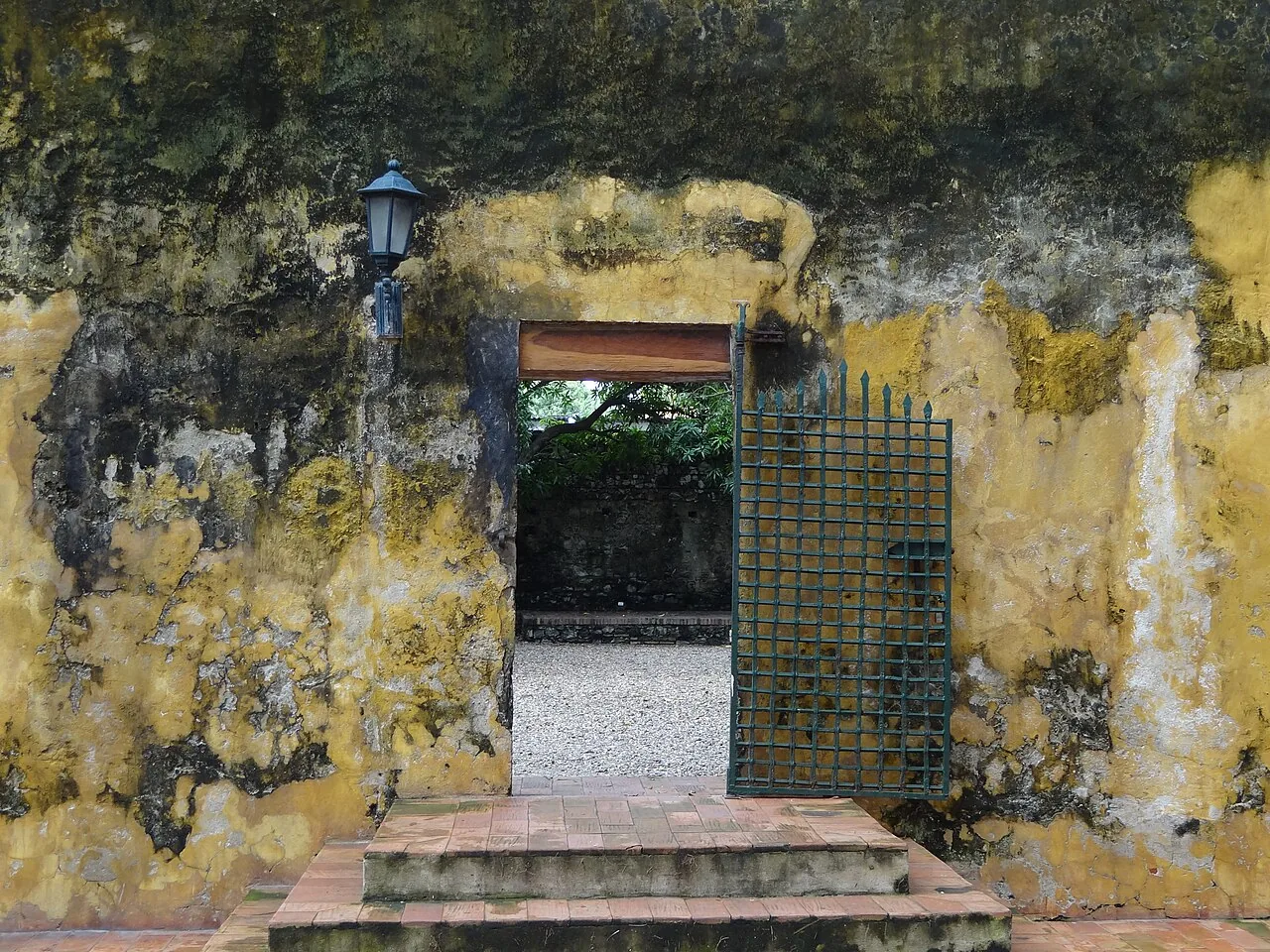
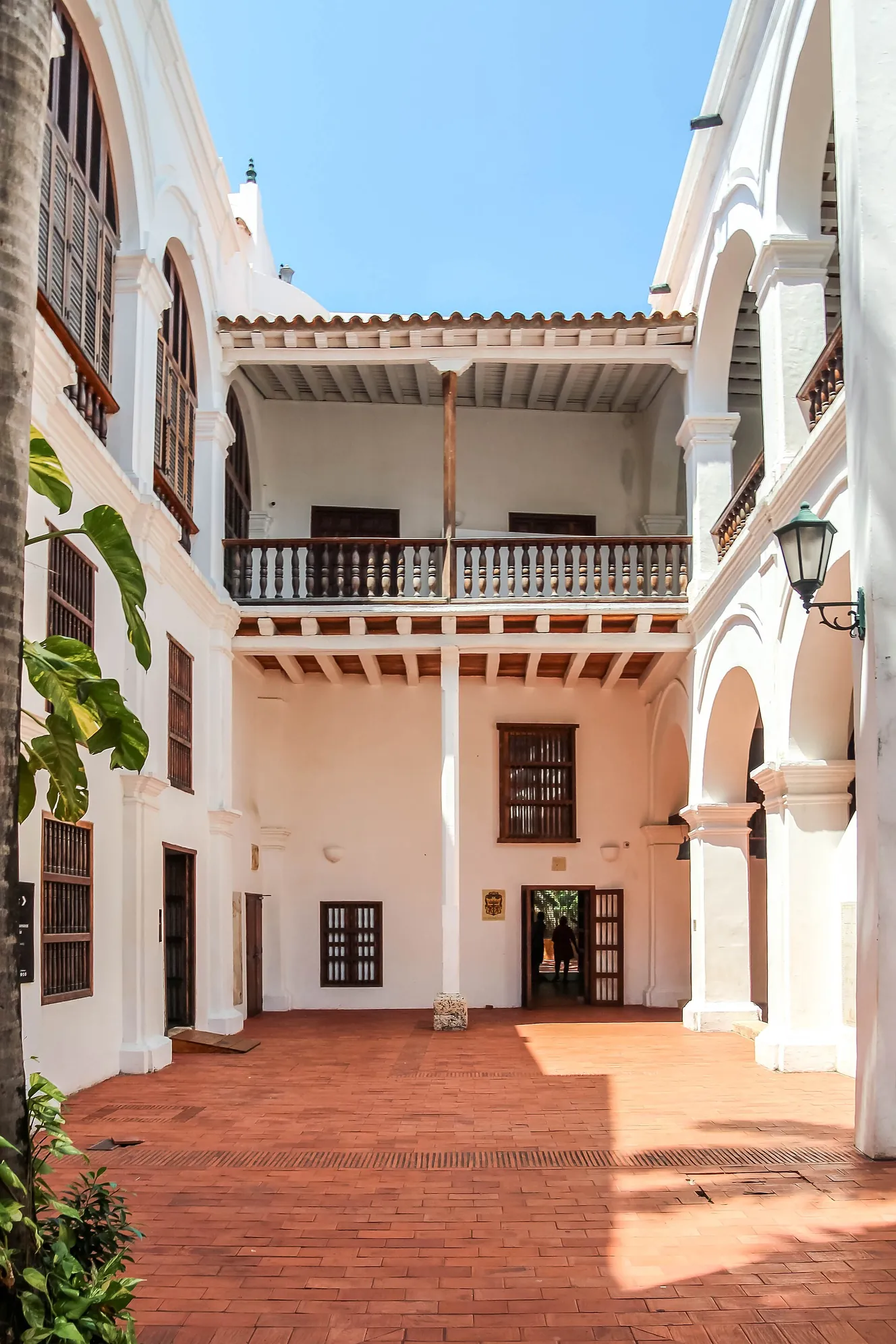
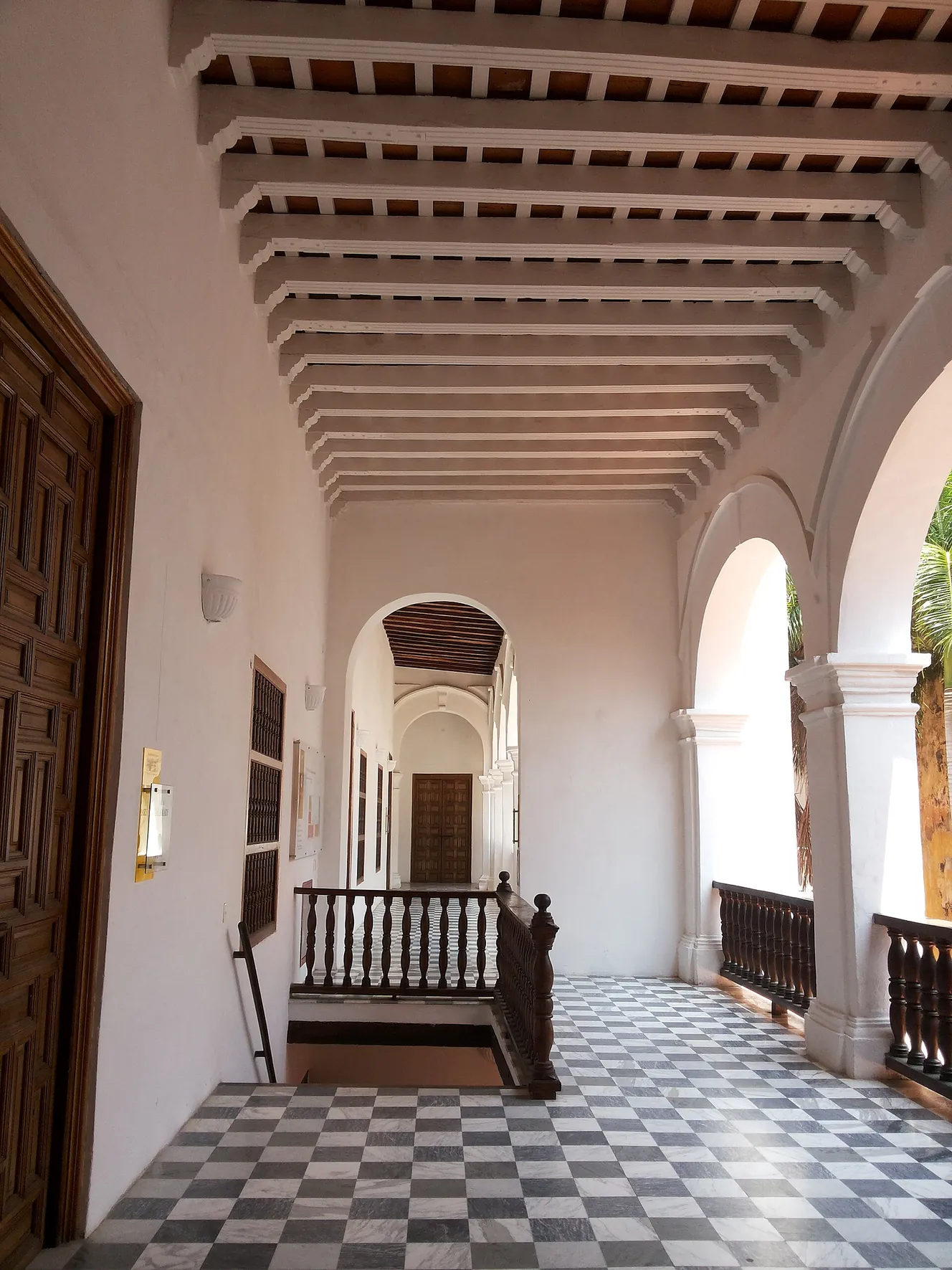
The current building was put up around 1770 on land that since the early 17th century had been occupied by two houses rented by the tribunal, according to the reconstruction published by El Universal in 2026. As its functions grew, those houses were bought and demolished to build premises that met the judicial and administrative needs of the Holy Office. It is often cited as one of the finest examples of 18th-century civil architecture in Cartagena.
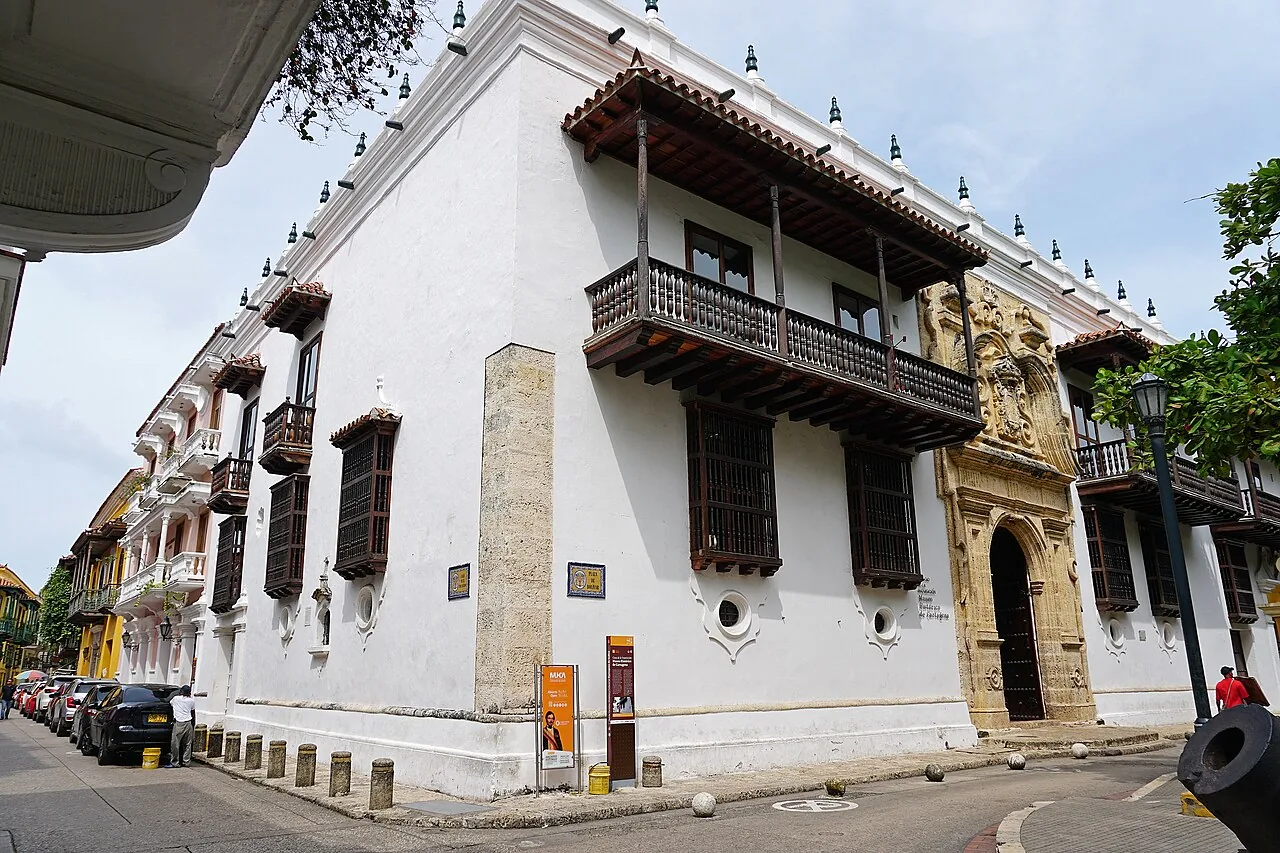
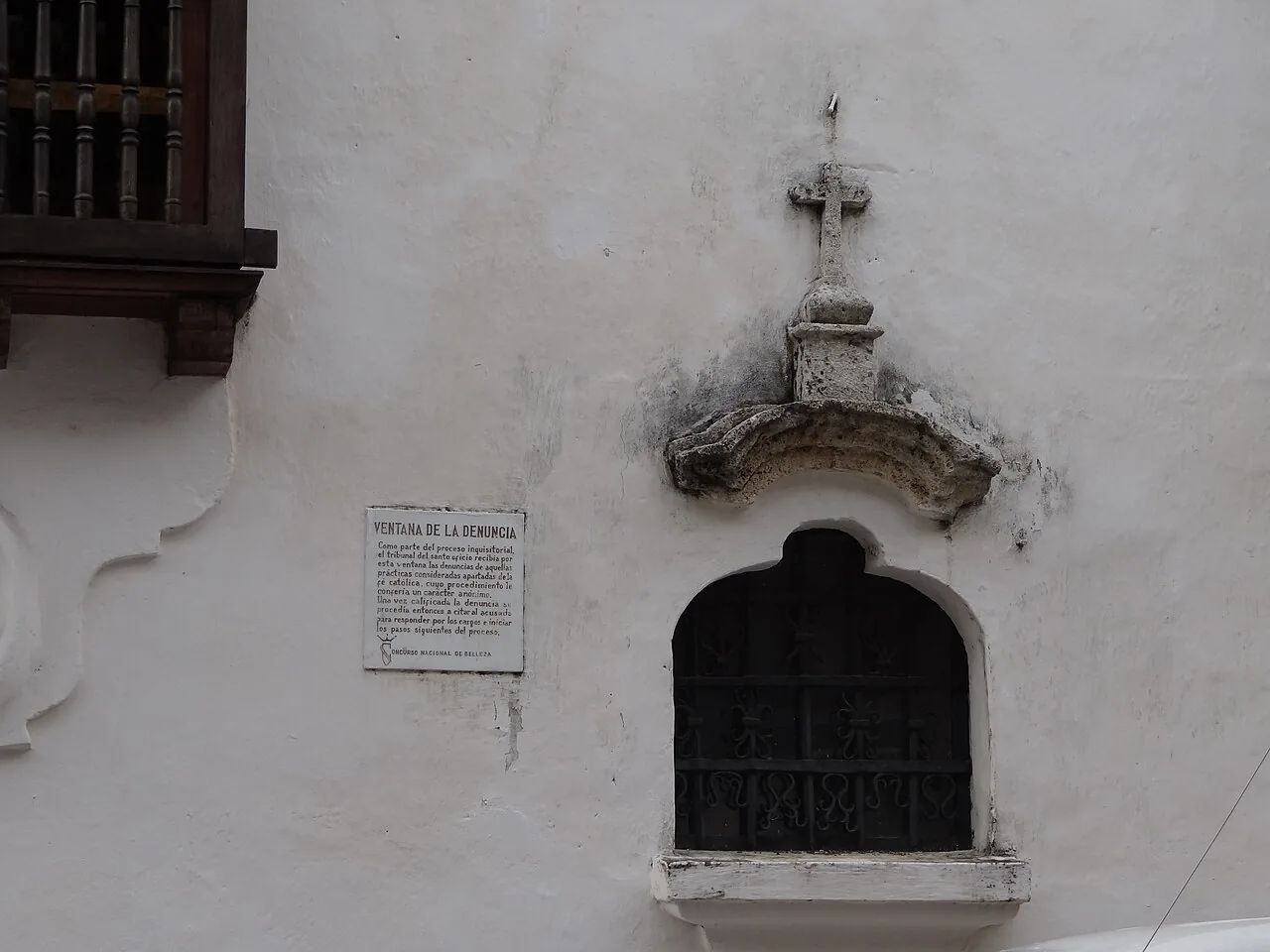
The Baroque stone façade is the best-known image. But the detail that says most about how the tribunal worked is on a side wall: a small opening topped by a stone cross, known as the ventana de la denuncia, the denunciation window. A plaque installed there sums up its function: through that slot the Holy Office received anonymous denunciations of practices considered to stray from the faith. A single denunciation could set off a trial with interrogations and imprisonment.
Inside, the central courtyard contrasts with what the dungeons once were. The museum displays objects associated with punishment, among them stocks and a set of scales: weight was used as supposed proof in witchcraft cases, as the same El Universal report explains. It is the most visited part, and also the one that most needs context.
November 11 and the end of the tribunal
The Inquisition was one of the first institutions that independent Cartagena sought to close. The account of the events of November 11, 1811, published by the Gaceta Ministerial de Cundinamarca and reproduced by historian Guillermo Hernández de Alba in the Boletín Cultural, lists the demands the people took to the Junta. One of them read: “That the Inquisition be abolished and the two Inquisitors be given their passports.”
The inquisitors left with their papers for Santa Marta, which remained loyal to the king. Sourdis Nájera notes that the tribunal was restored when Pablo Morillo reconquered the viceroyalty and that it was definitively abolished in 1821, when Cartagena, the last Spanish stronghold, surrendered to the republican forces. The whereabouts of many of the documents from that last period remain an open question.
The museum that tells the city's story
The Museo Histórico de Cartagena was created in 1924 inside the palace. Over time it widened its view beyond the Inquisition: today it covers the origin and layout of the city, the building of the walls, Independence and republican life. It holds Cartagena's Act of Independence of November 11, 1811, according to El Universal, which credits much of that shift to historian and archivist Moisés Álvarez Marín, the driving force behind the Archivo Histórico de Cartagena.
That change of focus is the best way to visit it. The Inquisition rooms speak of fear, denunciation and control, but also of a mixed colonial society, in which women, enslaved people, merchants and clergy ended up before the same tribunal. And the Independence rooms show the city that, in 1811, demanded that door be closed.
On your way out, it is worth going around the corner to look for the denunciation slot. It is small and easy to miss. There, more than in any display case, you understand how a tribunal worked that depended on neighbors talking about neighbors.
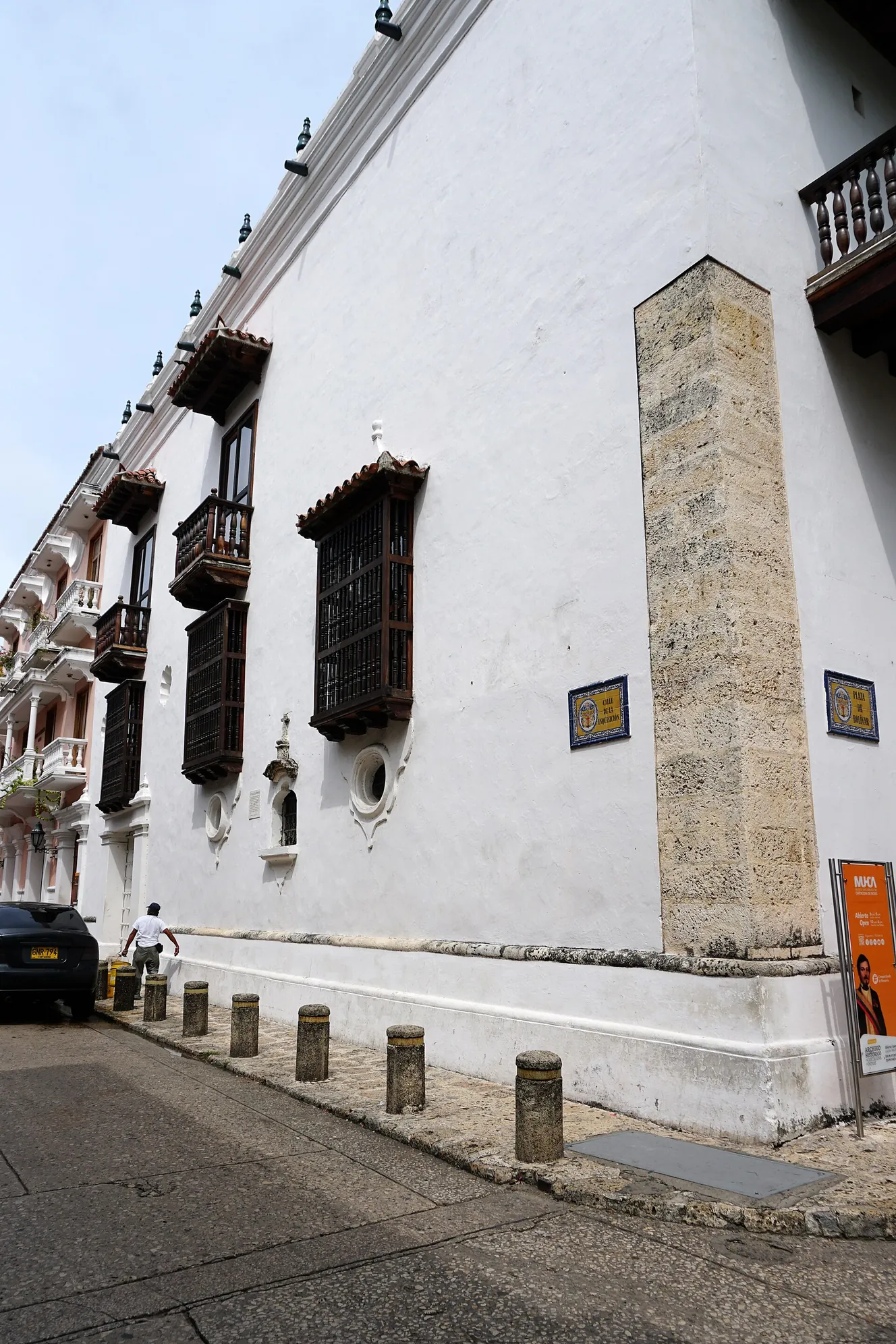
There, more than in any display case, you understand how a tribunal worked that depended on neighbors talking about neighbors.
Sources
- Banco de la República · Boletín Cultural y Bibliográfico: María Victoria Uribe, «Los ocho pasos de la muerte del alma: la Inquisición en Cartagena de Indias» ↗
- Banco de la República · Boletín Cultural y Bibliográfico (2020): Adelaida Sourdis Nájera, reseña de «Conversos de origen judío en la Cartagena colonial» ↗
- ICANH · Revista Fronteras (1998): reseña de «Cincuenta años de Inquisición en el Tribunal de Cartagena de Indias 1610-1660» ↗
- Banco de la República · Boletín Cultural y Bibliográfico: Guillermo Hernández de Alba, «La gloriosa jornada del 11 de noviembre de 1811» ↗
- El Universal (2026) · La historia de la ventana de la denuncia en el Palacio de la Inquisición ↗
- El Universal · Museo Histórico de Cartagena festeja 97 años ↗
Keep reading.
History
Three sieges that made the city.
History
Monday, November 11, 1811.
History
The port of the enslaved.