Stories / Art
Art in the street: la Gertrudis, the iron men and the walls of Getsemaní.
A Botero bronze, a series of scrap-metal sculptures and hundreds of murals: the Cartagena museum that never closes and never charges admission.
Cartagena Social Club · 6 min read
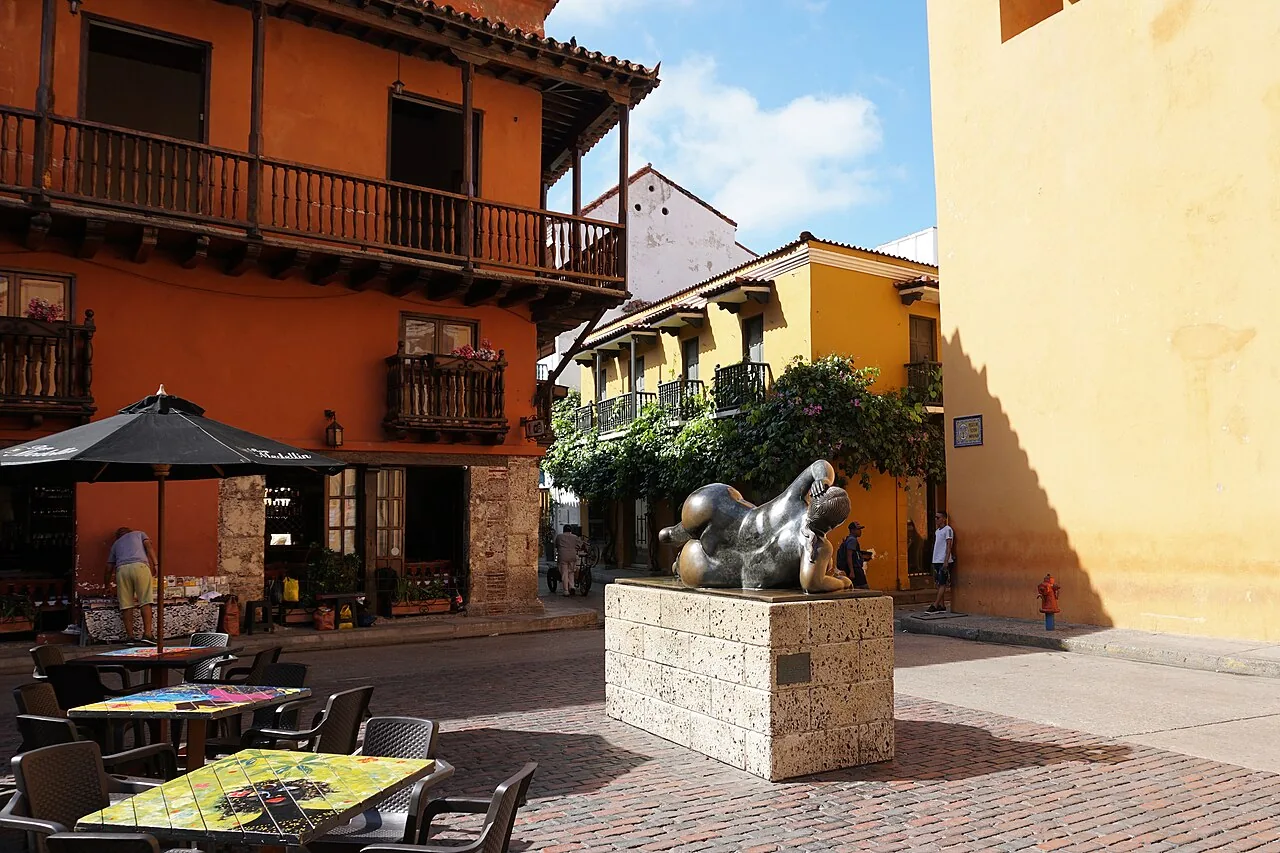
Fernando Botero's Gertrudis in the Plaza de Santo Domingo, in November 2019. Photo: Mariordo (Mario Roberto Durán Ortiz) / Wikimedia Commons (CC BY-SA 4.0).
In Cartagena you don't need to step into a museum to see art. Walking is enough. In the Plaza de Santo Domingo there is a reclining bronze woman whom people touch as they pass. In the Plaza de San Pedro Claver, figures of rusted steel play chess, sew or push a cart. And in Getsemaní, the facades have become a gallery that changes every few months.
These are three very different ways of putting art in the street: the work of an established artist donated to the city, a series of sculptures by a local artist who portrays his neighbors, and a collective painting that was born as a neighborhood's response to the threat of disappearing. This route can be done on foot in an afternoon.
La Gertrudis of Santo Domingo
The most photographed sculpture in the Centro is a nude, voluminous woman, lying on her side and propped on one elbow. It is the work of Fernando Botero, Colombia's best-known artist worldwide, and it stands in the Plaza de Santo Domingo, in front of the church of the same name. In Cartagena everyone calls her la Gertrudis, or la Gorda Gertrudis.
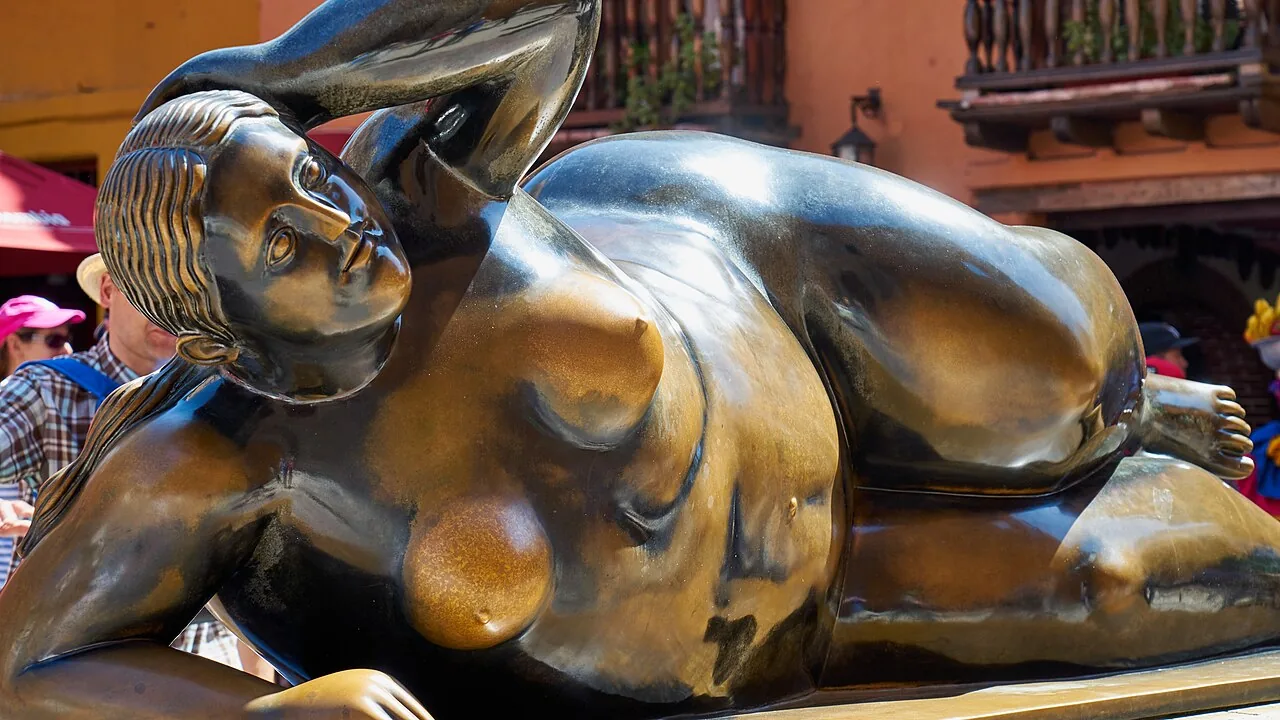
The piece is bronze and weighs 650 kilos. According to Al Día News, it arrived from Florence, Italy, in 2000, as a gift from Botero himself to the city. The name Gertrudis was given to her by the people. The inflated forms, which Botero applied for decades to people, animals and objects, are his signature: a way of exaggerating volume until it becomes a style of its own.
There is a custom around the sculpture. Visitors and cartageneros touch her as they go by, and the versions of what that caress brings vary depending on who tells them: luck in love, or simply luck. It is a popular belief, not a documented tradition, but it explains why there is almost always someone beside her posing for a photo.
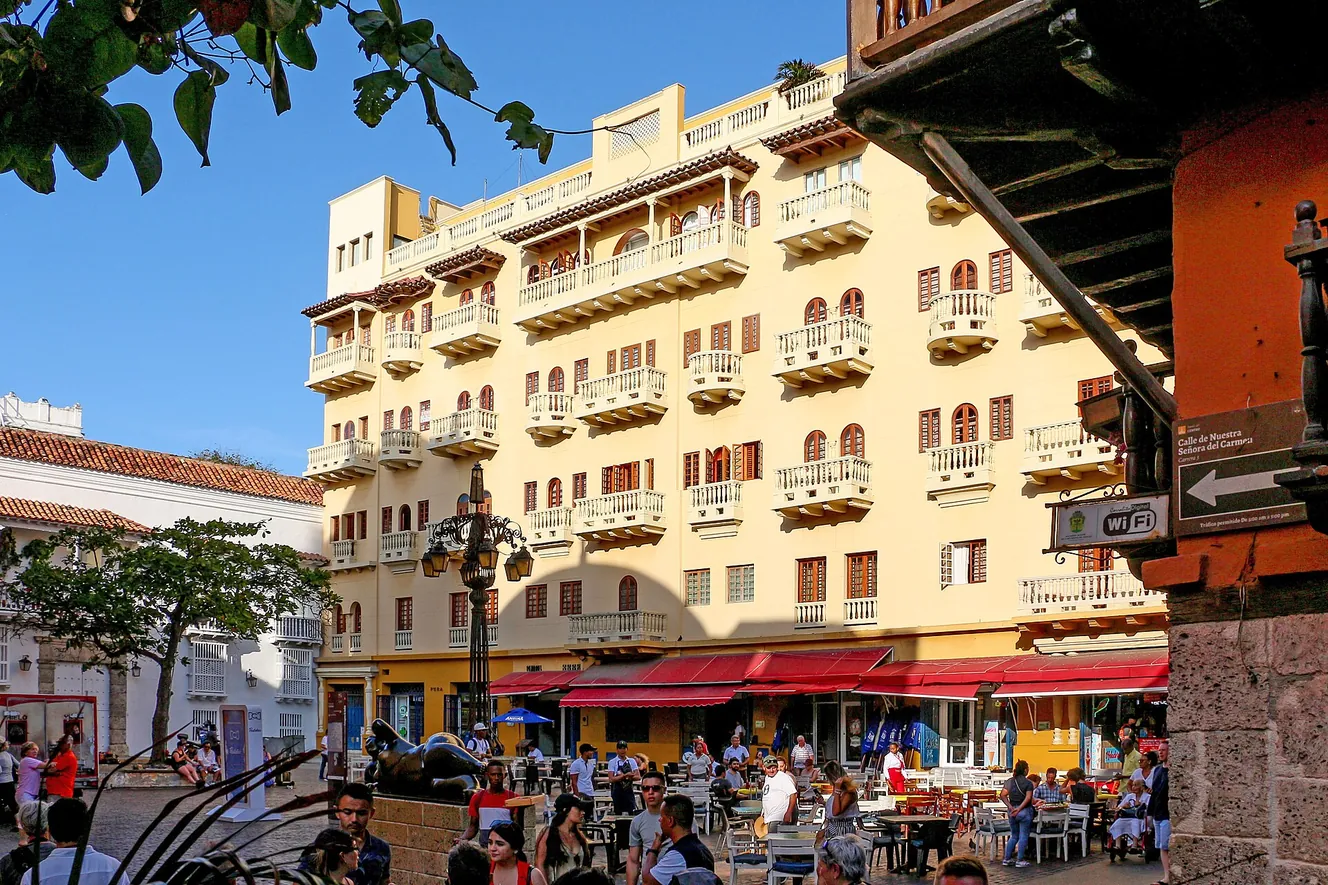
When Botero died, in September 2023, at 91, Cartagena's Instituto de Patrimonio y Cultura remembered his work in the square. In its message it said that la Gertrudis “has captured the attention and affection of the people of Cartagena and of visitors over the years.” In the late afternoon, when the terraces on the square fill up, the sculpture sits in the middle of the life of the Centro. A few steps away, by the Baluarte de Santo Domingo, Casa Salvaje takes over when night falls.
Edgardo Carmona's steel figures
A few blocks away, in the Plaza de San Pedro Claver, the art takes on a different tone. In front of the sanctuary of the Jesuit whom history called the “slave of the slaves,” there is a series of metal figures depicting trades and everyday scenes of Cartagena. They are the work of Edgardo Carmona, a sculptor from Cartagena. Colombia's official tourism website describes the contrast: the square holds the statue of San Pedro Claver made by Enrique Grau, and around it the avant-garde works made from scrap metal by Carmona.
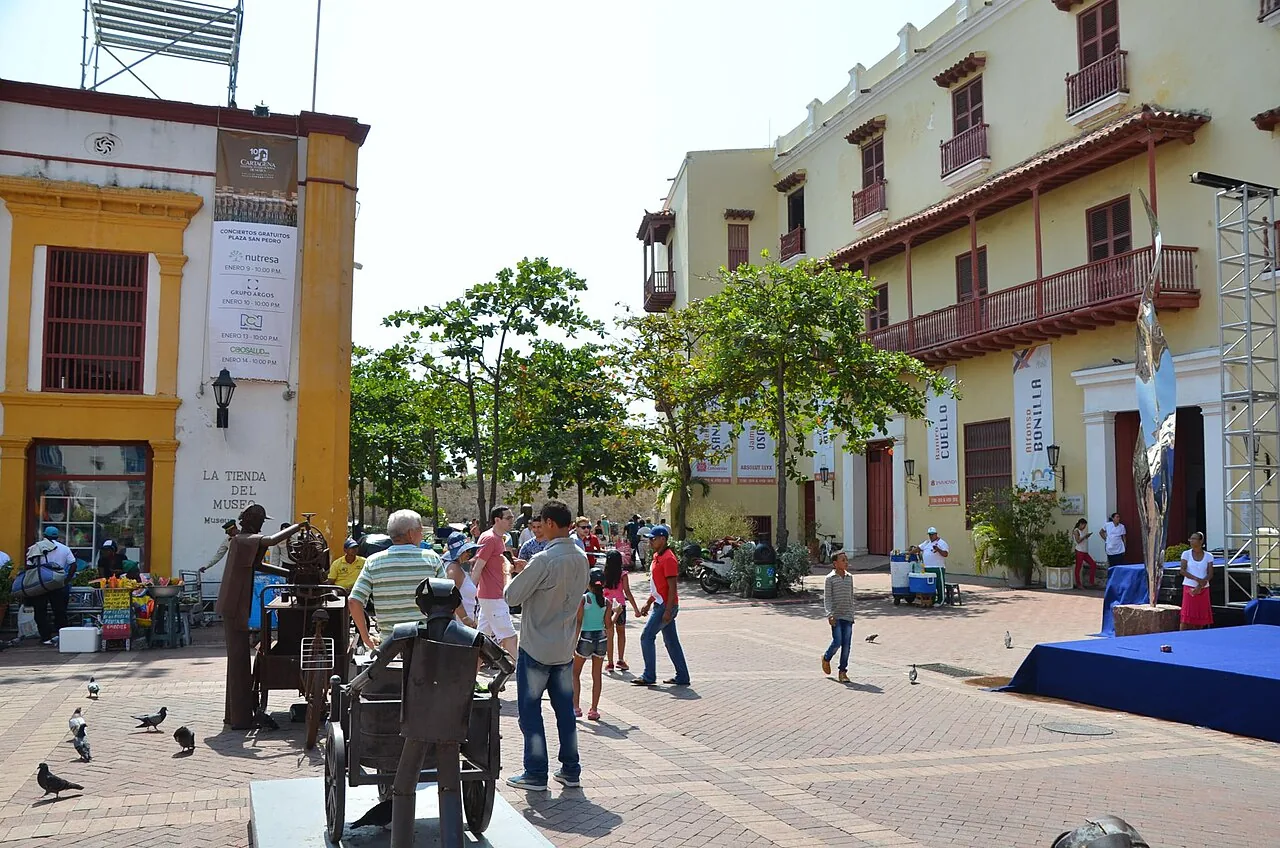
The pieces are part of an exhibition called “Cotidianidad” (Everyday Life), permanently installed in the square since 1999. Among them are the cart pusher, the seamstress, the barber and a pair of friends playing chess. As Carmona told El Universal in 2017, these works were declared cultural heritage of Cartagena by the Ministry of Culture in 2004.
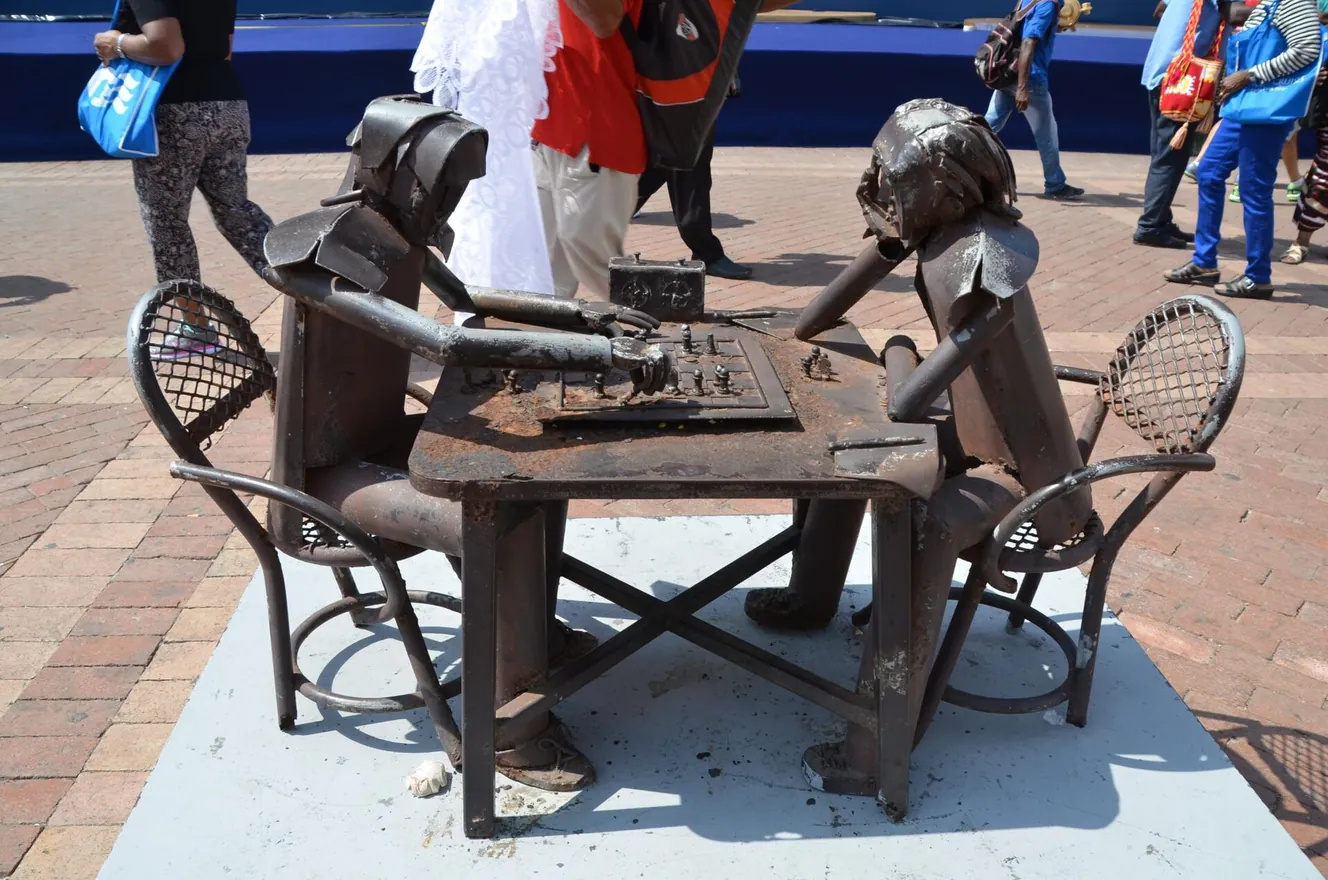
Carmona first worked as a businessman in the metalworking industry before devoting himself to art, according to Radio Nacional de Colombia. He calls his technique steel assemblage: figurative characters with a certain degree of abstraction, built from pieces of metal. “We have typical characters who really give character to our culture,” he explained in that interview. His works feature domino players, fishermen on bicycles, barbers, raspao (shaved-ice) vendors, palenqueras — the fruit sellers from San Basilio de Palenque — and street musicians.
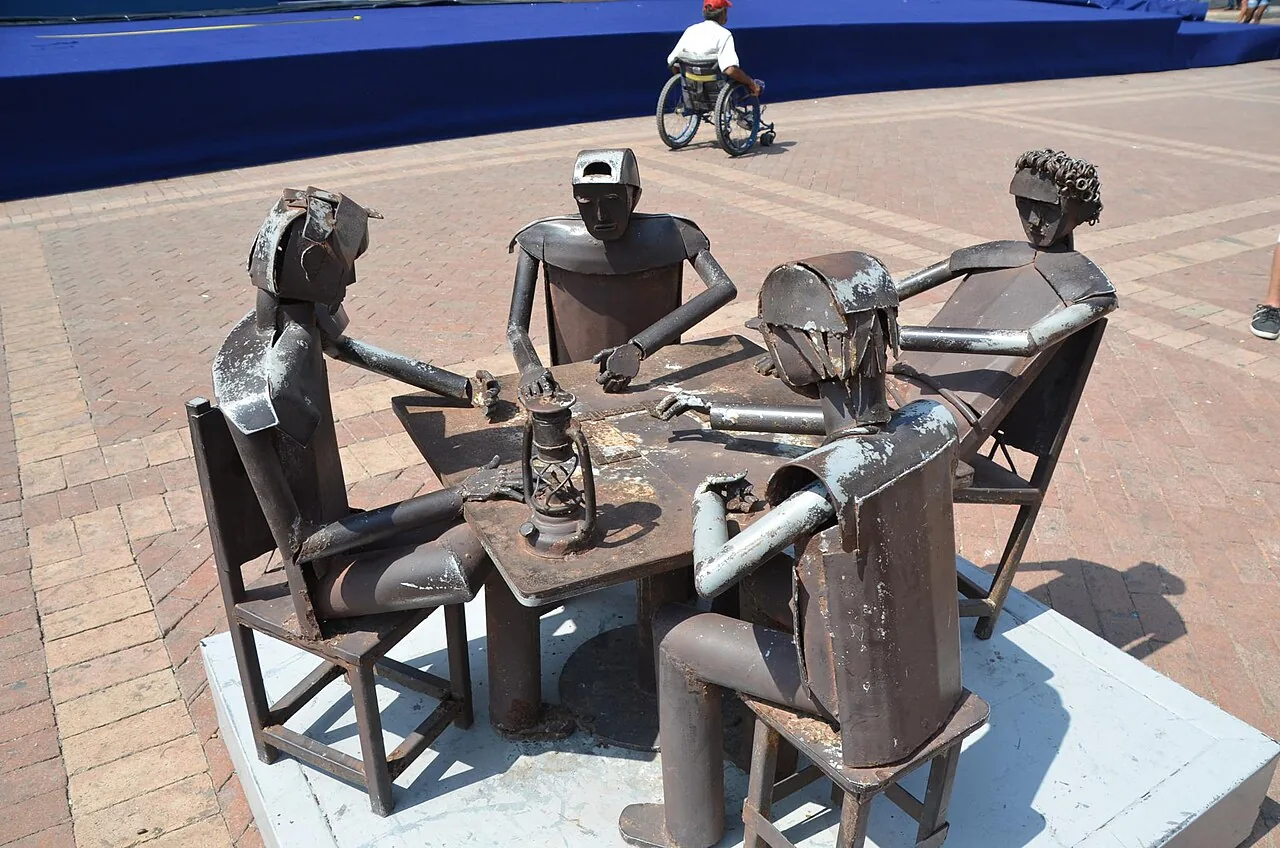
Steel ages in the open air, and the series has suffered for it. In 2017 El Universal reported that the pieces were corroded by rust; the sculptor estimated at the time that repairing them would cost 50 million pesos. The artist also has a museum of his own in the Centro, in the Casa de la Artillería, on Carrera Segunda, in the area known as Playa de la Artillería. His sculptures have also been exhibited in Europe and in Fort Myers, Florida.
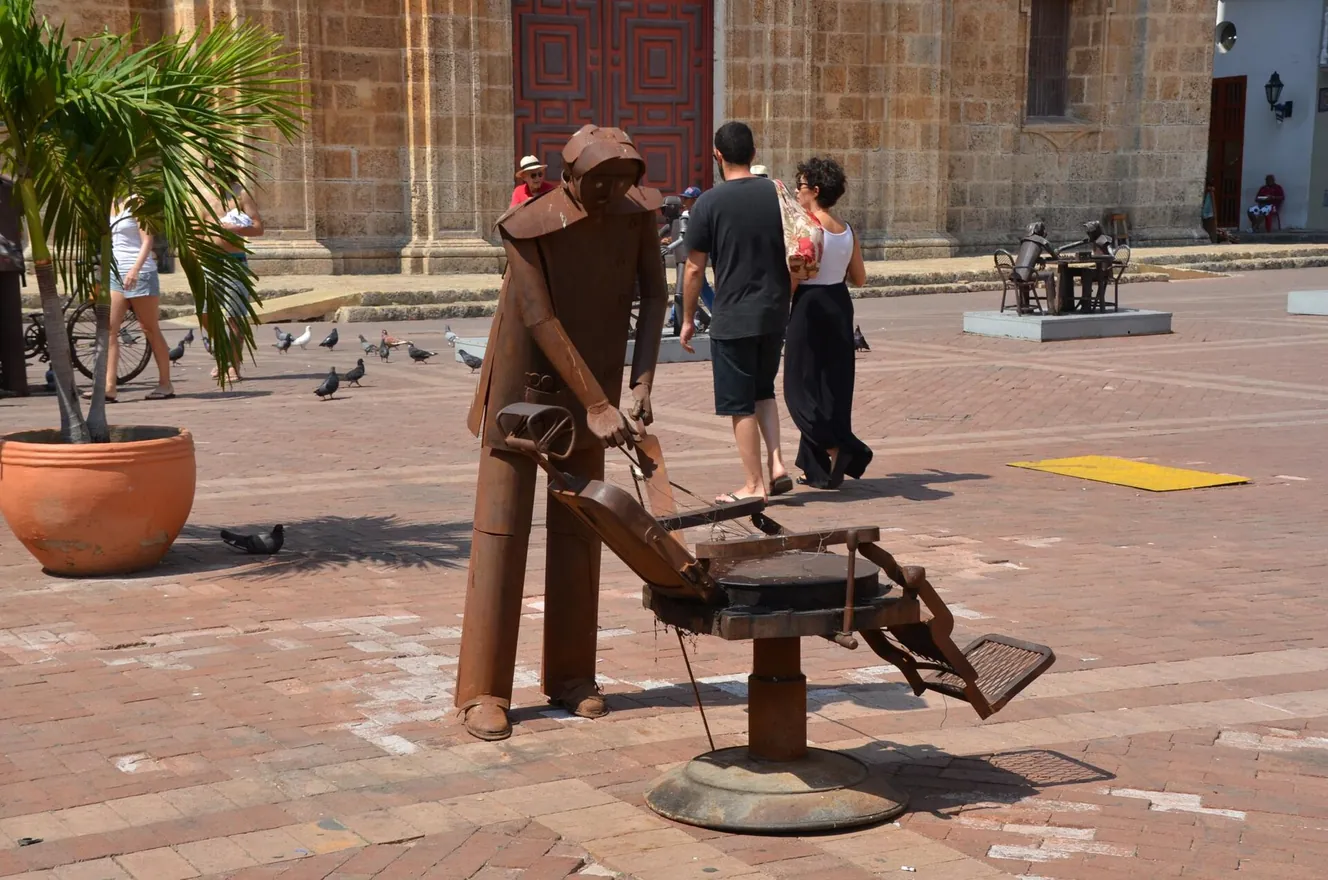
His work has grown in scale. In 2024 El Universal reported that Carmona had finished, after almost five months of work, a steel Mujer Mariposa (Butterfly Woman) 8.70 meters tall, installed at another museum of his near Villa de Leyva, in Boyacá. The same article recalled where it all comes from: since the end of the twentieth century, Carmona has made his mark on Colombian art with steel sculptures of typical Cartagena characters and traditional trades, such as the palenquera selling fruit, the knife sharpener or the fisherman.
Getsemaní: the walls that tell the neighborhood's story
Across the Parque del Centenario, Getsemaní offers the third chapter. There, street art is not decoration: it is a form of memory. A research study from the Universidad Jorge Tadeo Lozano on the impact of urban art in the neighborhood records the first murals in 2010, with the project “Pedro Romero vive aquí” (Pedro Romero lives here). The name is no accident. Pedro Romero, a pardo (mixed-race) blacksmith and gunsmith who was very popular among the neighborhood's artisans, led the Lanceros de Getsemaní during the days of Independence in 1811; according to Radio Nacional de Colombia, they set out from his house on the Calle Larga toward the Plaza de la Aduana.
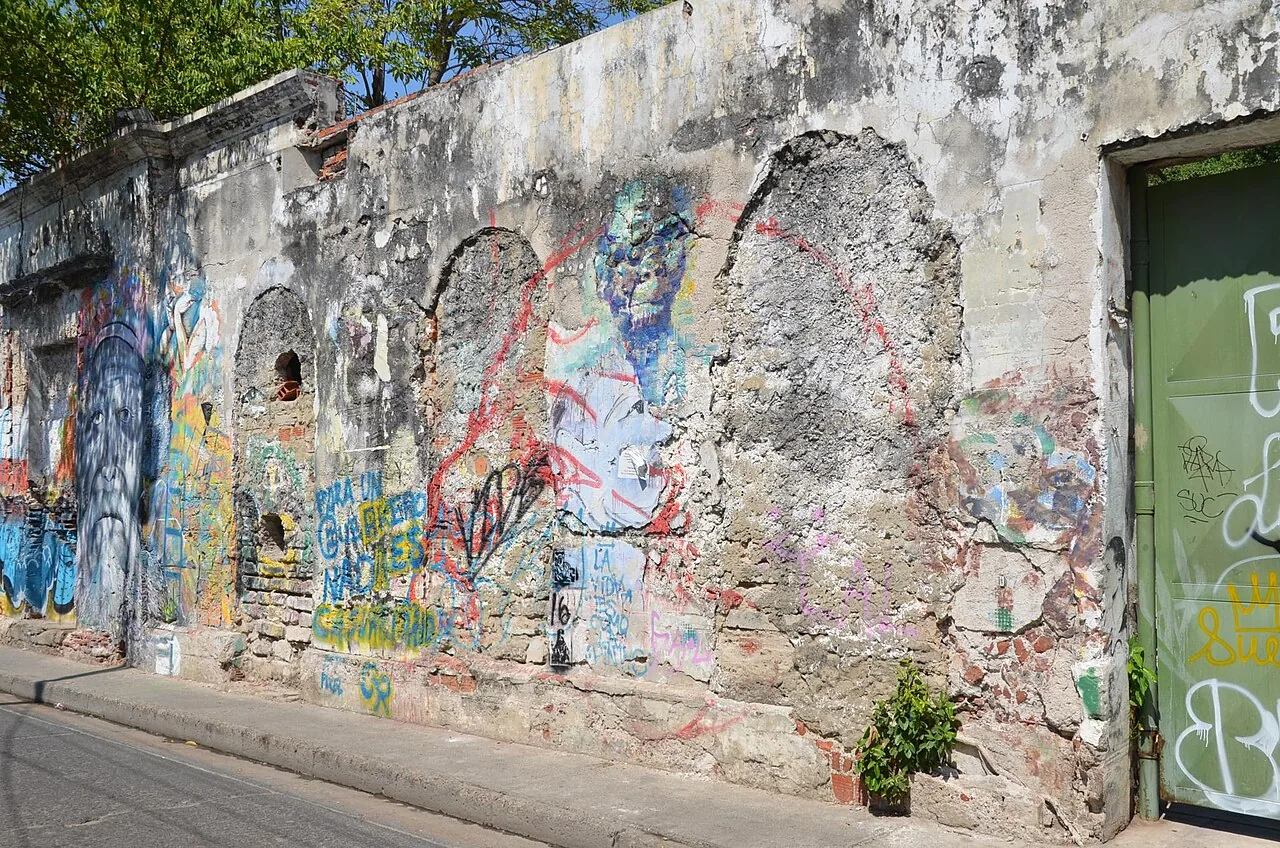
The murals grew at the same time as the pressure on the neighborhood. As early as 2013 a column in El Universal spoke of a gradual but steady process of expulsion of the native population, as houses were sold for hotels and luxury homes. That piece described the project Memorias de la Libertad III, driven by residents: with Fotomurales, they painted portraits of the families who had been forced to leave on the facades of empty houses, to keep their memory alive.
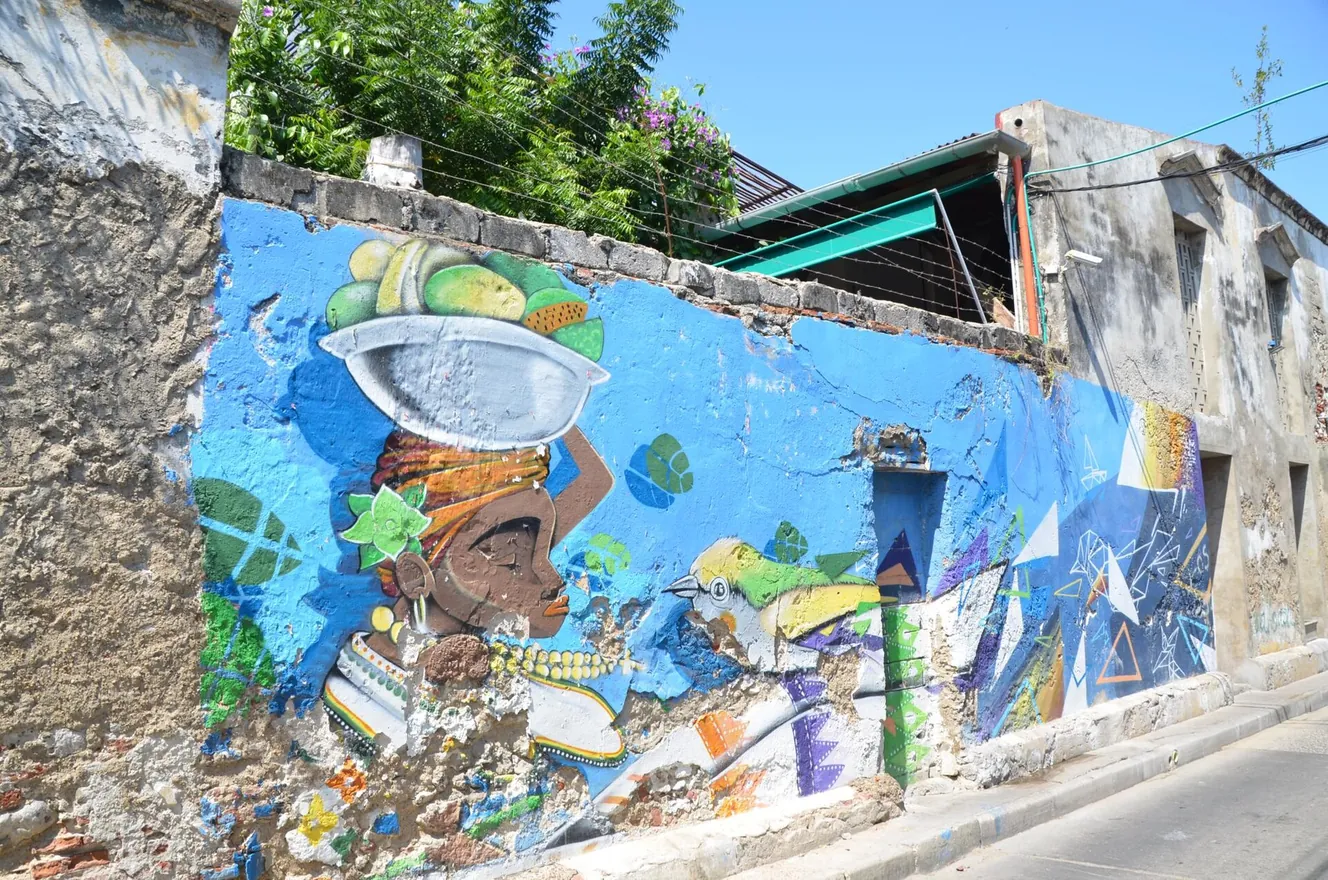
Today the walls mix works by local and foreign artists, portraits of neighbors, figures from Afro-Caribbean history and abstract pieces. The same Tadeo study captures the tension: some residents celebrate the murals while others, especially older people, feel they alter the character of the neighborhood. The streets near the Plaza de la Trinidad hold a good share of the works.
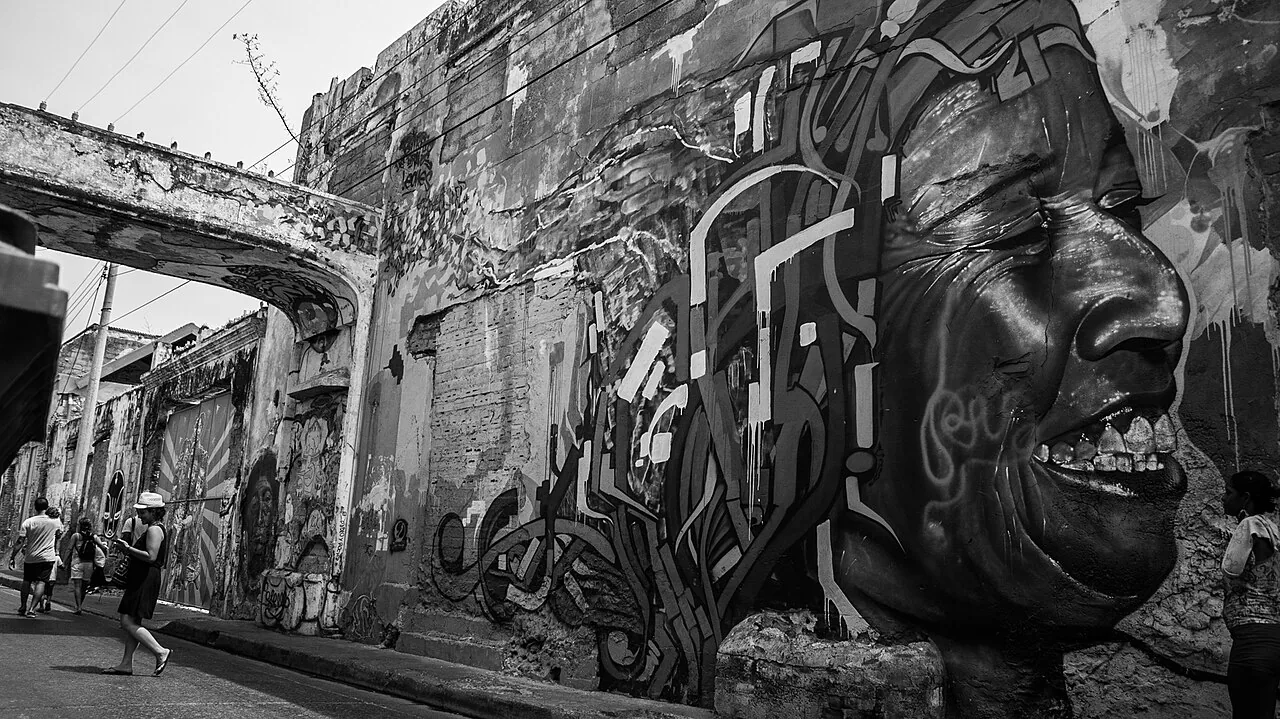
In 2026 the neighborhood won a recognition that goes beyond its walls. The Vida de Barrio de Getsemaní — Getsemaní's neighborhood life — was included on the national Representative List of Intangible Cultural Heritage. The Consejo Nacional de Patrimonio approved its Special Safeguarding Plan in September 2025, and Resolution 0350 of June 5, 2026 made it official. On July 3 the resolution was handed over to the community in the Plaza de la Trinidad. What is protected is not a facade or a mural, but a way of life: that of the neighbors who are still in the neighborhood.
How to walk it
The route can be done in an afternoon. It is best to start at the Plaza de Santo Domingo, continue toward the Plaza de San Pedro Claver and then cross into Getsemaní through the Parque del Centenario. At the end, the Plaza de la Trinidad is a good place to sit while the sun goes down.
A few basic rules of respect help. Carmona's sculptures are made of corroded steel, so touch them with care. In Getsemaní, the facades with murals are lived-in houses: photograph from the street, without crowding doors or windows. And on the way back, the Plaza de Santo Domingo is two blocks from Calle Santa Teresa, where Casa Salvaje opens Kanibal and SLVJ for dinner.
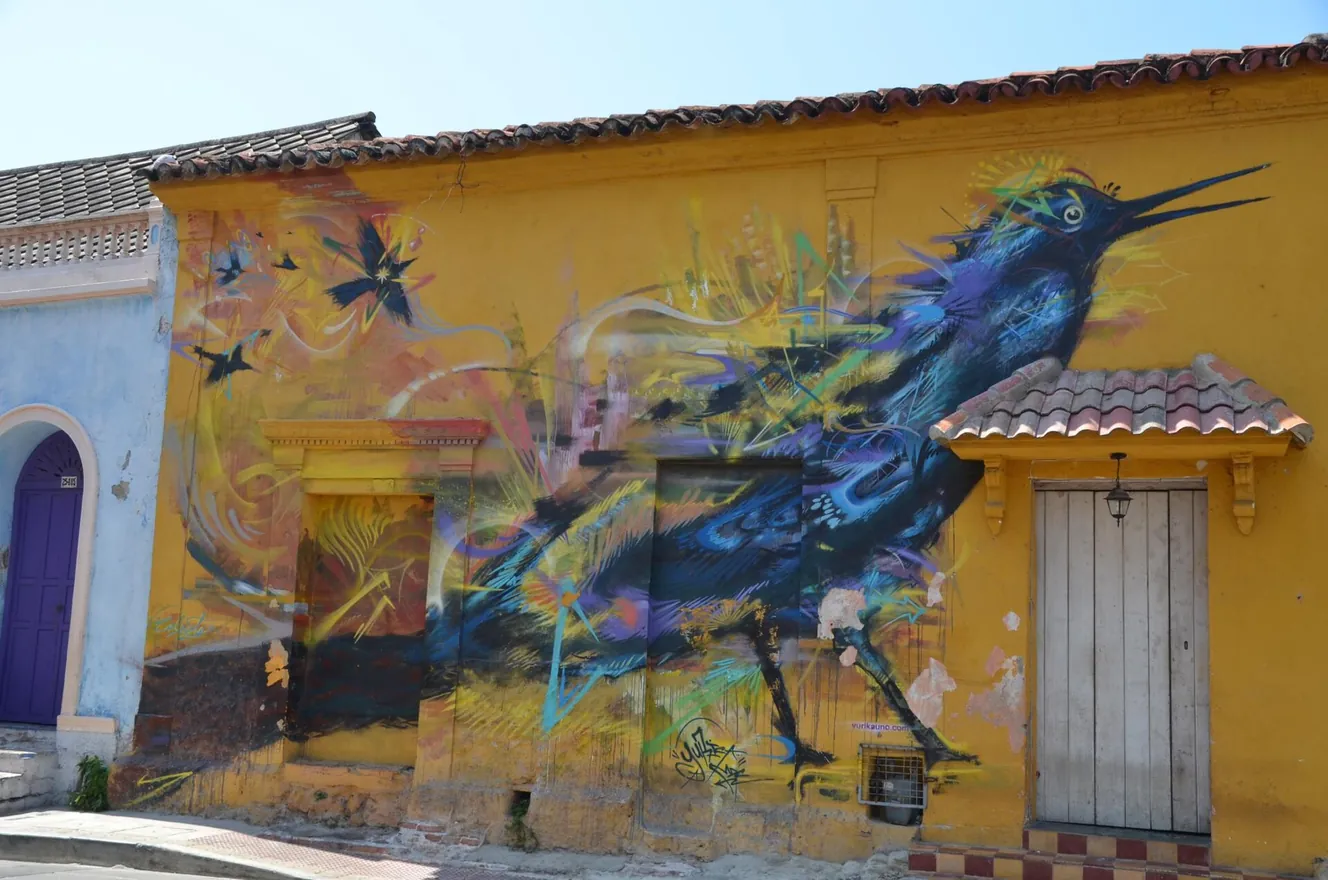
What is protected is not a facade or a mural, but a way of life.
Sources
- El Universal: Alcaldía de Cartagena lamenta la muerte del maestro Fernando Botero (2023) ↗
- Al Día News: Botero's art in Cartagena ↗
- Colombia Travel (sitio oficial de turismo): Plaza de San Pedro Claver ↗
- El Universal: El óxido acaba con la Cotidianidad (2017) ↗
- Radio Nacional de Colombia: Museo Carmona en Cartagena, acero convertido en arte ↗
- El Universal: Escultor cartagenero construye una Mujer Mariposa de ocho metros (2024) ↗
- Universidad Jorge Tadeo Lozano: El impacto del arte urbano en los centros históricos. Caso de estudio, barrio Getsemaní ↗
- Radio Nacional de Colombia: Qué se conmemora el 11 de noviembre ↗
- El Universal: Claves para comprender la evolución de los festejos novembrinos ↗
- El Universal: Lente de la nostalgia (2013) ↗
- El Colombiano: Getsemaní, barrio patrimonio cultural de la Nación (Resolución 0350 de 2026) ↗
- El Universal: Vida de barrio de Getsemaní es declarada patrimonio cultural inmaterial de la Nación (3 de julio de 2026) ↗
- Casa Salvaje (sitio oficial) ↗