Stories / Night
Night in Cartagena: from dinner to the club.
A full night in the Centro and Getsemaní, from sunset on the wall to the last song, with facts you can check and advice for getting around well.
Cartagena Social Club · 6 min read
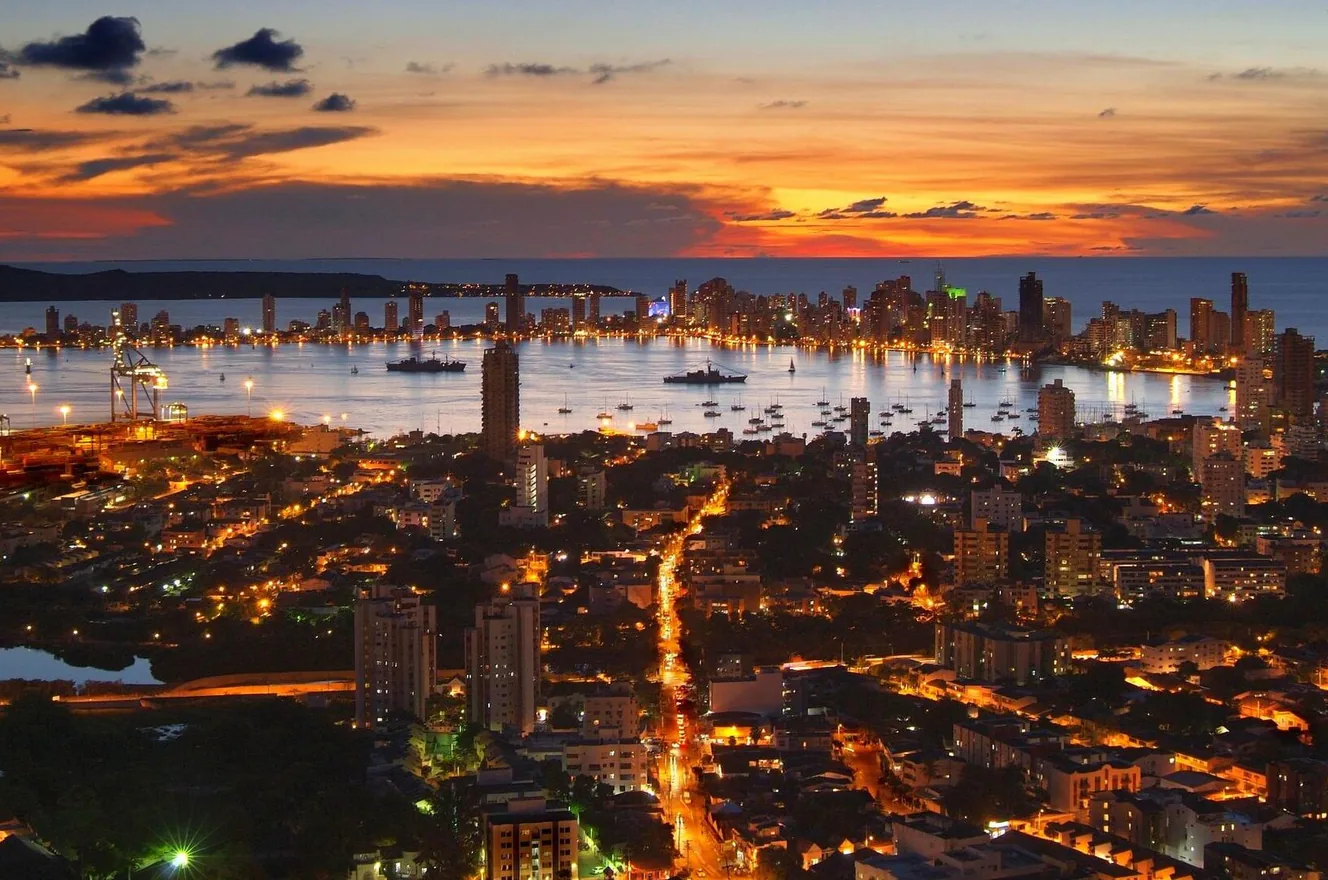
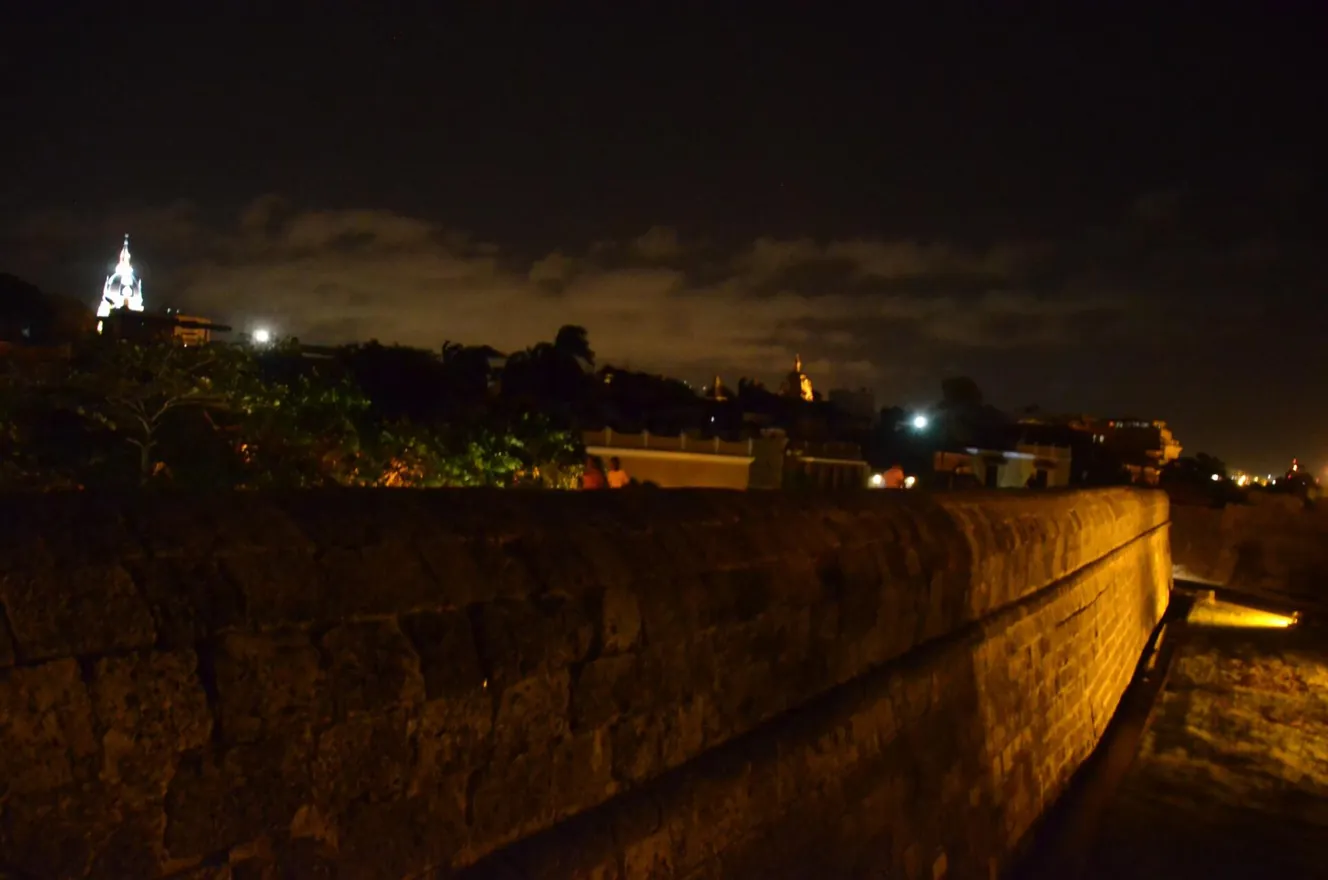
Cartagena switches on its lights at nightfall, seen from La Popa hill. Photo: Norma Gòmez / Wikimedia Commons (CC BY 2.0)
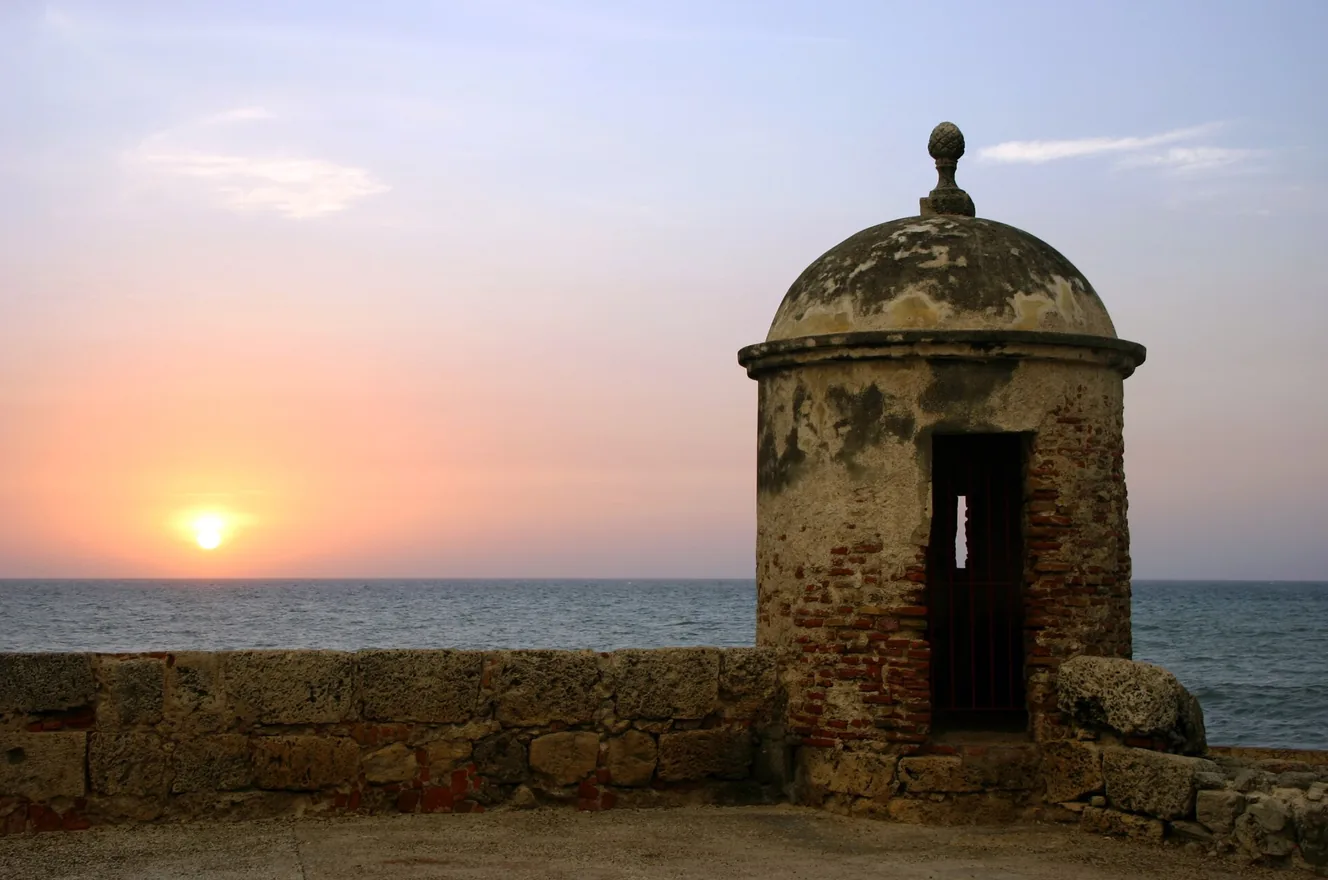
Night in Cartagena begins before it gets dark. Around six in the evening, as the sun sinks over the sea, people climb up onto the wall or look for a terrace on one of the squares in the Centro. The heat eases, the breeze comes in through the streets and the city changes pace. From there, there are many ways to carry on. This is one of them, from dinner to the club, with stops you can make on foot.
First, the table: Casa Salvaje
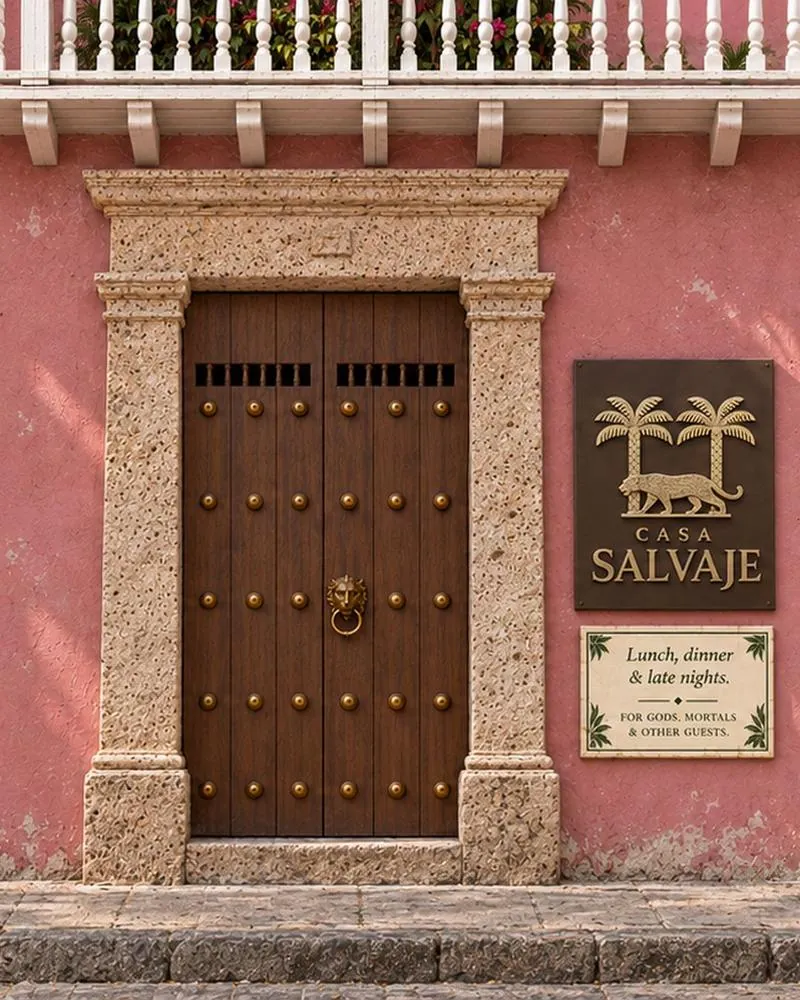
A good night in the Centro starts with a good table, and ours starts at Calle Santa Teresa #32-41, on the corner of Calle Baloco, two blocks from the Plaza de Santo Domingo. That is where you'll find Casa Salvaje, a colonial house with two worlds open for the night: Kanibal and SLVJ. The house belongs to Grupo ONO, the same group that makes this magazine.
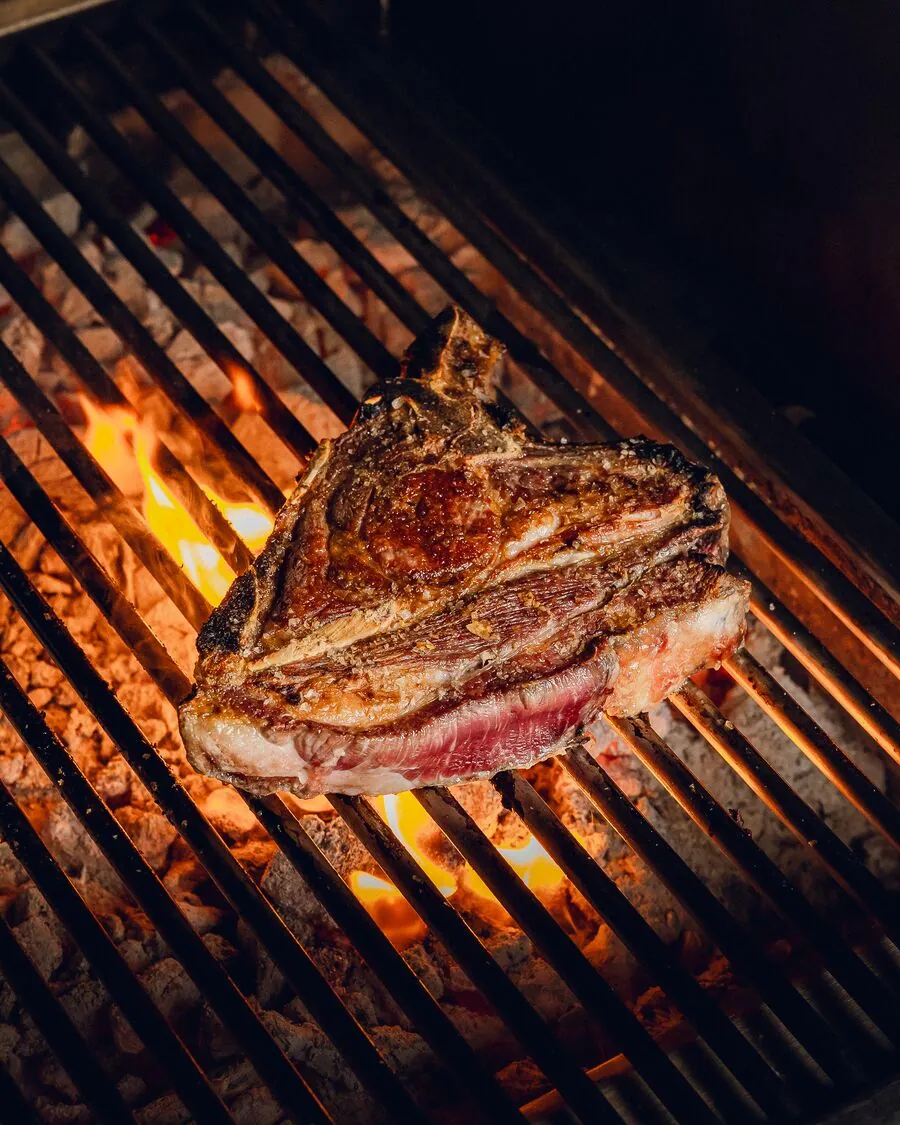
Kanibal is the world of fire: dry-aged meat, charcoal-grilled fish, ember-roasted vegetables and signature cocktails. SLVJ is the banquet: a sushi bar, robata, sharing plates for the middle of the table and a wine cellar. At both, last orders are at 11 p.m. and the last reservation is at 10:30. Tables are booked through CoverManager or the house's WhatsApp.
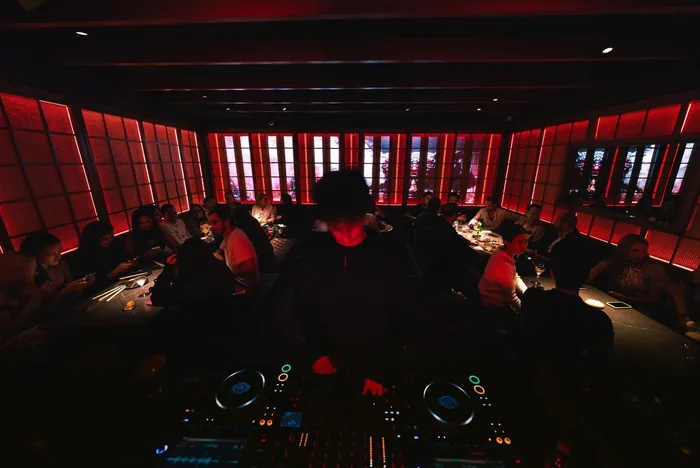
The advantage of dining there is that the night doesn't force you to change venues. From Wednesday to Saturday there is a DJ during dinner from 7 p.m. And from Thursday to Saturday, when service ends, the SLVJ room becomes a club: it opens from 11 p.m. and runs until 3 in the morning, with a Funktion-One sound system. The house suggests arriving around 11:30. Club tables are booked through Fourvenues.
There are three rules worth knowing before you go. The minimum age for the club is 25. The dress code is elegant: linen shorts yes, flip-flops no. And admission is at the house's discretion. The house will soon add one more world: ONO, the hosomaki bar born in Bogotá, opens there between November and December 2026, with the date announced first to the guest list.
Sunset and the squares of the Centro
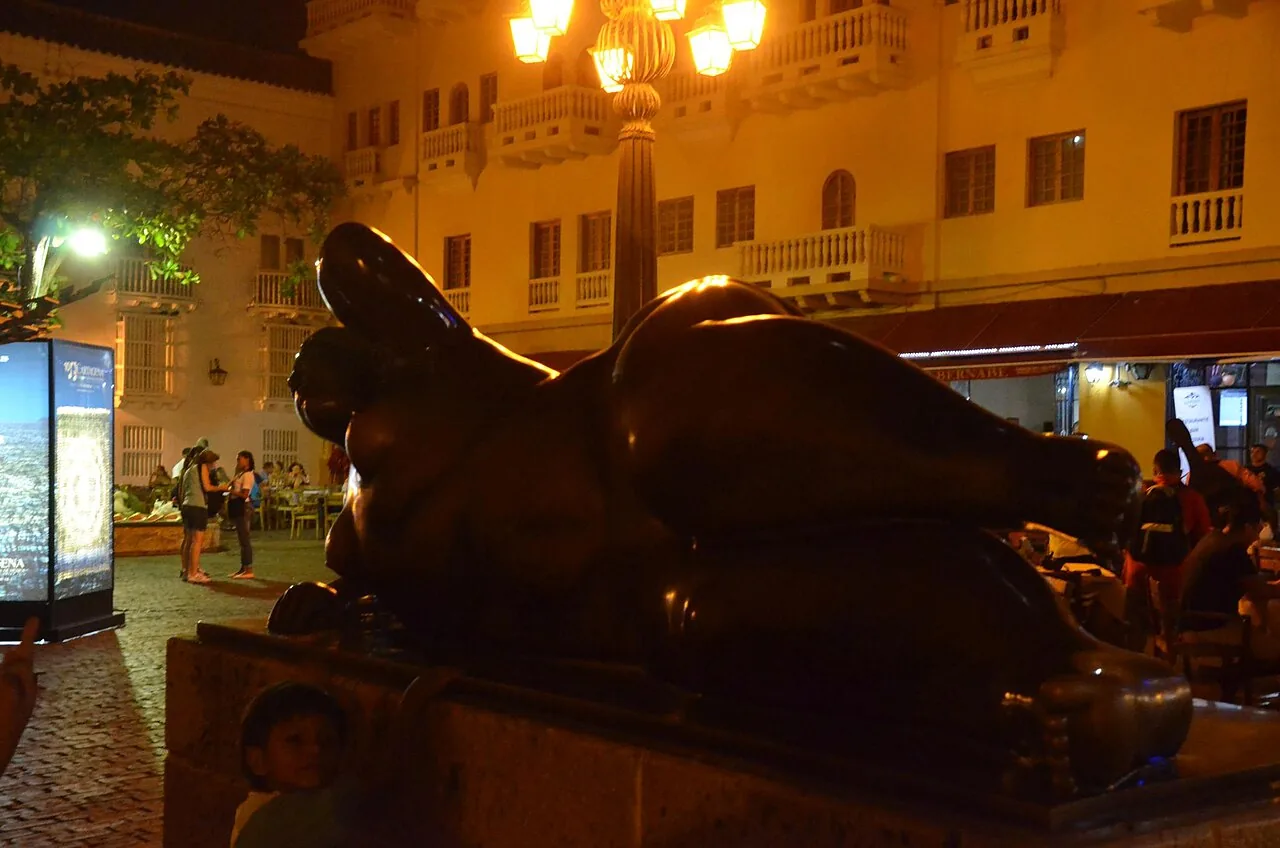
Before dinner, or between dinner and the club, the Centro is best explored on foot. The Plaza de Santo Domingo, two blocks from the house, is the liveliest meeting point as evening falls: terraces, the church of Santo Domingo and la Gertrudis, the Fernando Botero bronze that people touch as they pass. From there, the Baluarte de Santo Domingo and the wall are a few steps away for the last of the sun over the sea. And from there to the door of Casa Salvaje is only a few more steps.
If dinner calls for live music, La Vitrola, on the same Calle Baloco, a little over a hundred meters from Casa Salvaje, has Cuban son every night from 8 and serves dinner until 11. If the night calls for salsa, there is one stop you shouldn't skip. On the northwest corner of the Portal de los Dulces, a few steps from the Torre del Reloj, is Donde Fidel. Its owner, Fidel Leottau, has for six decades been one of the guardians of the city's salsa memory, according to El Universal. The walls are covered with photos of stars such as El Gran Combo de Puerto Rico, Rubén Blades and Cheo Feliciano. The music plays loud. “All of us from the coast like dancing, and we normally listen to music loud,” Leottau explained in 2016.
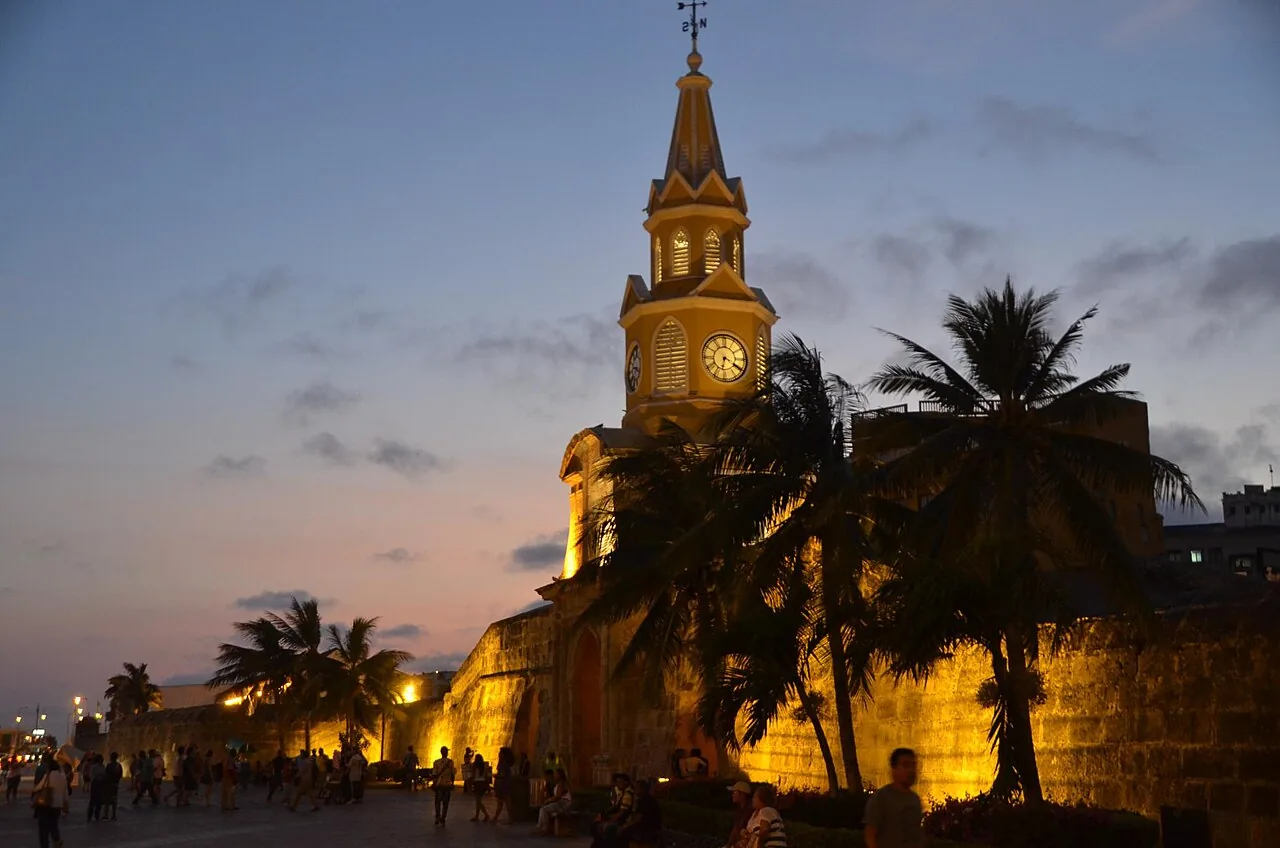
The Torre del Reloj — the clock tower — and the Plaza de los Coches mark the main entrance to the walled city and are still among its busiest spots at night. Since late 2025 there has been a visible change in those streets: the horse-drawn carriages no longer run. The mayor's office banned animal-drawn carriages in the Historic Center and the walled perimeter through Decree 2296 of 2025, and replaced them with electric carriages. The cap is 62, the same number of horse carriages that operated before; the vehicles belong to the mayor's office and are driven by the cocheros, the carriage drivers, after a training process.
Getsemaní: the square and the dance floor
Crossing the Parque del Centenario brings you to Getsemaní, the neighborhood that in 1811 supplied the Lanceros to the cause of Independence. At night its center is the Plaza de la Trinidad, in front of the church of the same name. Neighbors, children playing, travelers with a beer and musicians improvising all mingle there.
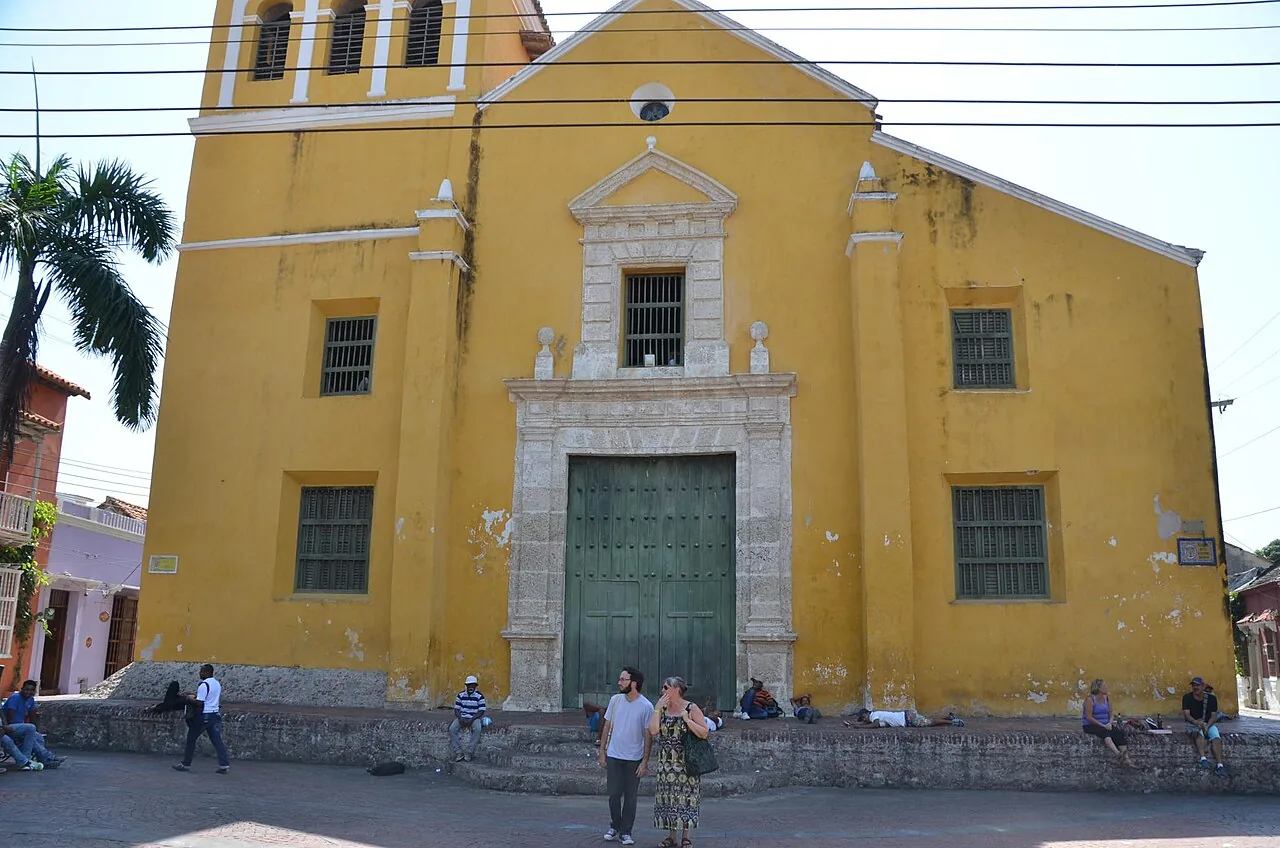
The square has a memory. On November 11, 1811, according to Radio Nacional de Colombia, the popular movement gathered at the house of Pedro Romero, on the Calle Larga in Getsemaní. From there the Lanceros set out for what is now the Plaza de la Aduana, armed themselves and pressed the governing junta until they secured the declaration of absolute independence. Two centuries later, the neighborhood is still where the November festivities end.
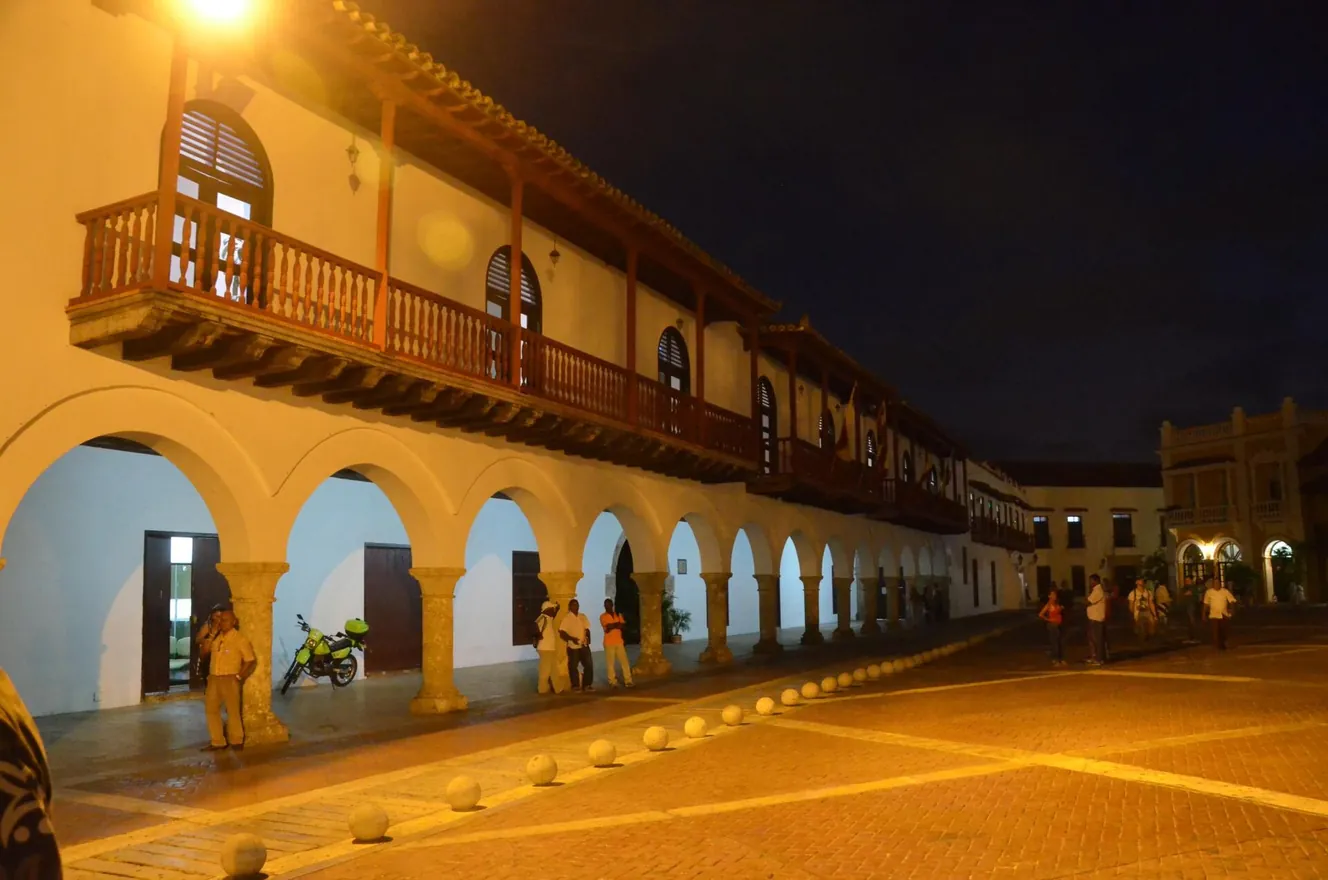
On the corner of Calle de la Media Luna and Calle del Guerrero is Café Havana. It opened in 2006 as a tribute to the bond between Cartagena and Havana, modeled on the bars of the Cuban capital, and what plays there is Cuban son and salsa, often live. In the same neighborhood, Quiebra Canto is another salsa and son bar with history, which some purists prefer.
Getsemaní is, above all, a neighborhood where people live. In June 2026, the Ministry of Cultures included the Vida de Barrio de Getsemaní — Getsemaní's neighborhood life — on the national Representative List of Intangible Cultural Heritage, through Resolution 0350. What is protected are the ways its residents live and get along together, in the face of phenomena such as touristification and gentrification. For visitors, that comes down to something simple: enjoy the square without forgetting that there are homes all around it.
Practical tips for the night
A simple way to plan the night: the wall or a square around six, dinner between eight and nine, a stroll through the Portal de los Dulces or Getsemaní after dessert and, from Thursday to Saturday, the SLVJ club from 11:30. On Sundays the kitchens at Kanibal and SLVJ close early, at 7 p.m., except when Monday is a public holiday: on that Sunday they stay open until midnight.
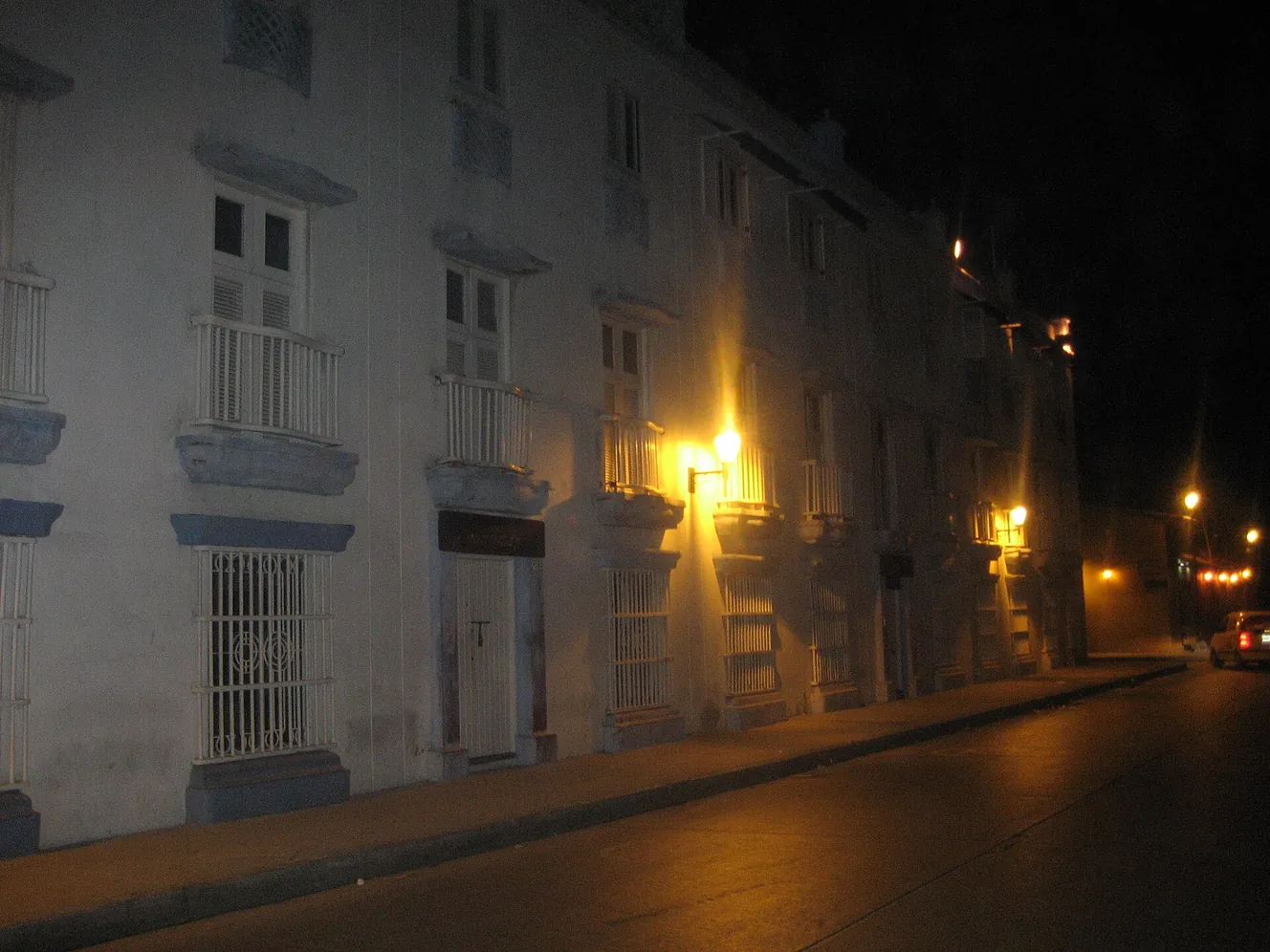
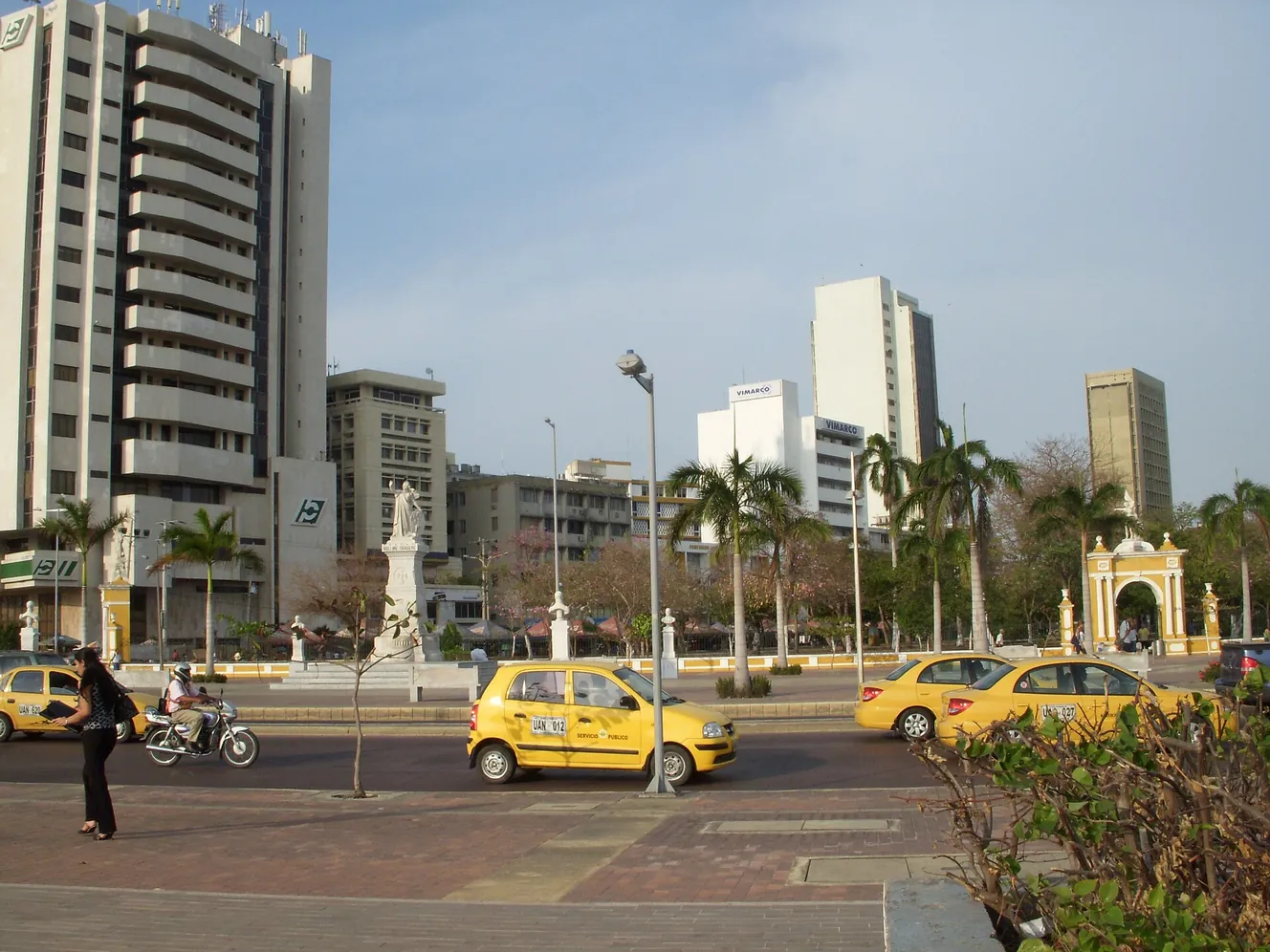
Inside the walls everything is within walking distance, and walking is the best way to move between dinner, the squares and the club. Anyone staying at the Hotel Casa del Arzobispado, on Calle de la Catedral, or at the Four Seasons, across from the Parque del Centenario in Getsemaní, can do the whole night on foot. To get to or from neighborhoods such as Bocagrande or Manga, the usual option is a taxi. Authorized taxi fares are published by the Departamento Administrativo de Tránsito y Transporte, DATT, the city's transit authority, and since 2024 many taxis carry a sticker with a QR code that links to them. It is best to confirm the fare before getting in. In the early hours, the easiest thing is to ask for a taxi from the door of the venue.
November calls for a plan of its own. These are the days of the Fiestas de la Independencia: in 2026 the mayor's office declared November 11, 12 and 13 civic holidays, the Gran Desfile parade runs along Avenida Santander on the morning of the 12th and the Cabildo de Getsemaní closes the festivities on Sunday the 15th. Monday the 16th is a public holiday. There will be closed streets and big crowds, so book a table well in advance and get around on foot.
And the basics of any city: don't flash your phone or jewelry on empty streets, stick to streets with people around and keep the single emergency number, 123, at hand. With that, a night in Cartagena falls into place on its own: a sunset on the wall, a long dinner, some salsa at the Portal or in Getsemaní and, if it's the weekend, the club until three.
Night in Cartagena begins before it gets dark.
Sources
- Casa Salvaje, sitio oficial ↗
- Casa Salvaje: SLVJ (horarios del club) ↗
- Casa Salvaje: Kanibal ↗
- El Universal: Fidel Leottau, el hombre detrás del museo de la salsa en Cartagena (2026) ↗
- El Universal: ¿A dónde vamos hoy a rumbear? (2016) ↗
- Radio Nacional de Colombia: Nos vemos Donde Fidel ↗
- El Universal: Alcalde Dumek Turbay decreta la prohibición total de coches con caballos (2025) ↗
- El Colombiano: Getsemaní, patrimonio cultural de la Nación (2026) ↗
- El Universal: Implementan código QR en taxis para consultar las tarifas autorizadas (2024) ↗
- El Universal: Fiestas de la Independencia 2026, la agenda oficial ↗
- Lonely Planet: Quiebra Canto ↗
- Radio Nacional de Colombia: Qué se conmemora el 11 de noviembre ↗
- Hotel Casa del Arzobispado · Ubicación ↗
- Four Seasons Press Room · NOW OPEN (ubicación frente al Parque Centenario) ↗
- Casa Salvaje · ONO Cartagena (apertura noviembre–diciembre de 2026) ↗
- La Vitrola · Sitio oficial (son cubano en vivo todas las noches desde las 8) ↗