
Stories / Heritage
La Popa, the hill of the Candelaria.
On Cartagena's only hill, a 17th-century Augustinian convent keeps the city's patron saint, who every February 2 receives one of the oldest festivals on the Colombian Caribbean coast.
Cartagena Social Club · 6 min read
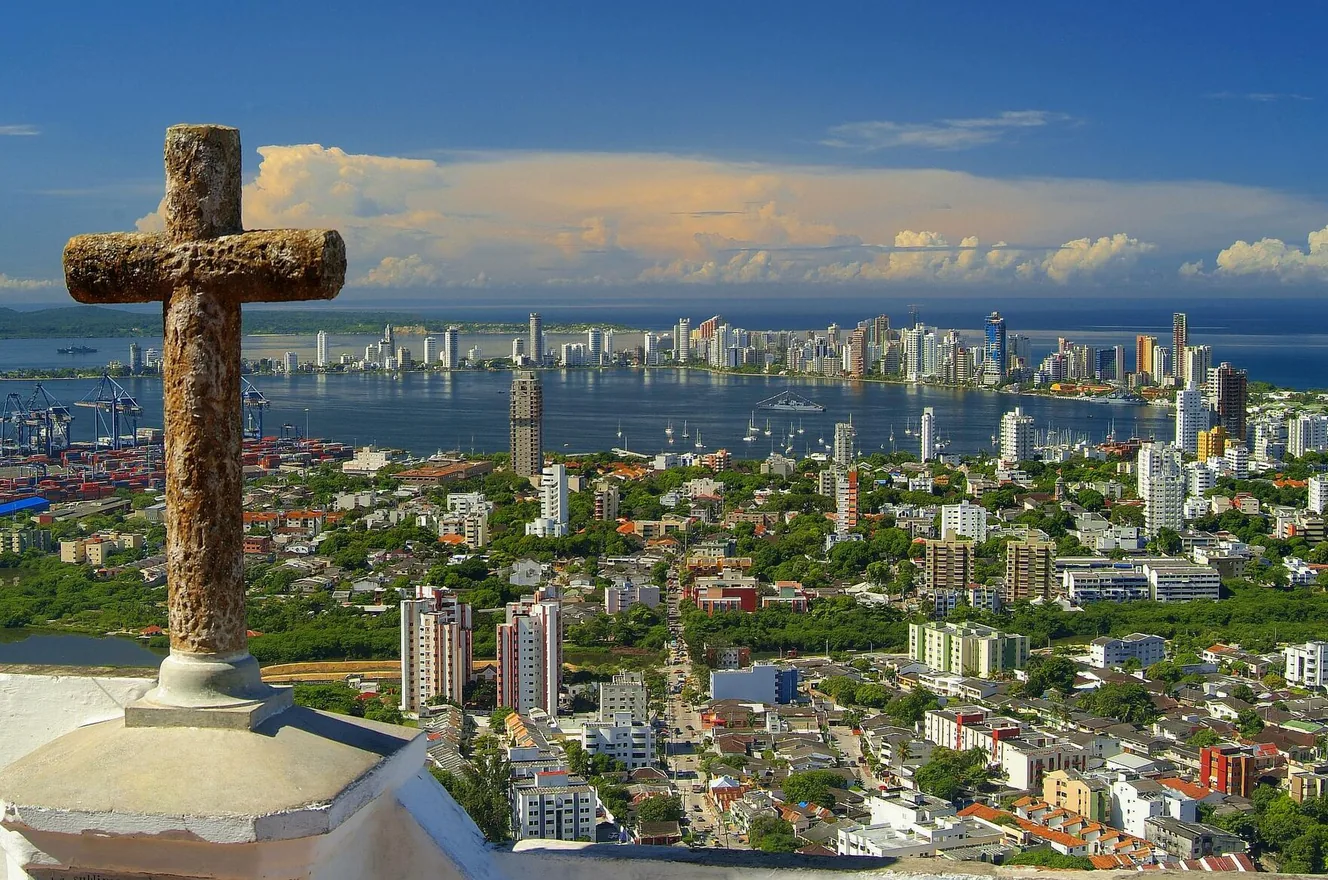
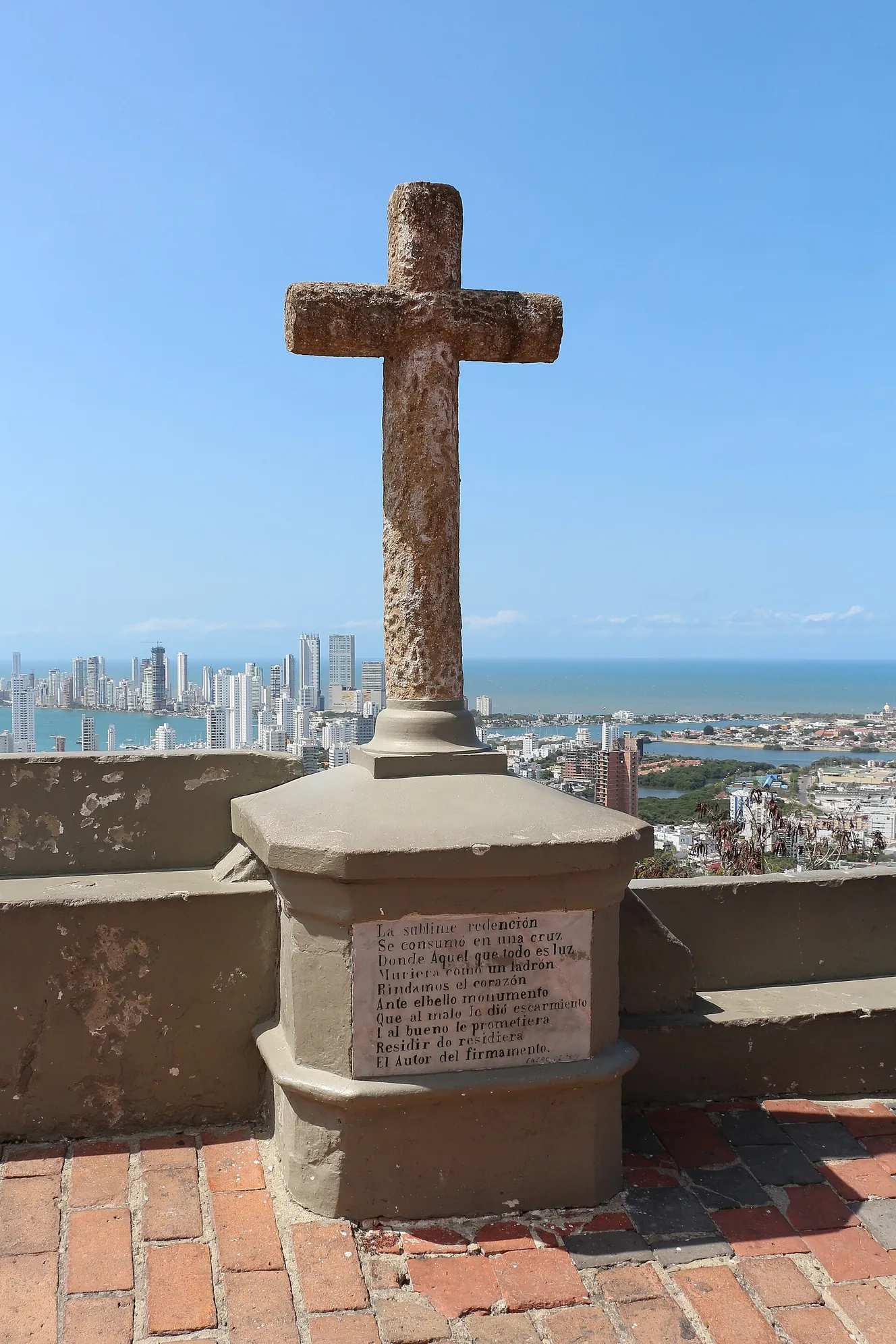
The cross at the La Popa viewpoint and, below, the city and the bay. Photo: Norma Gòmez / Wikimedia Commons (CC BY 2.0)
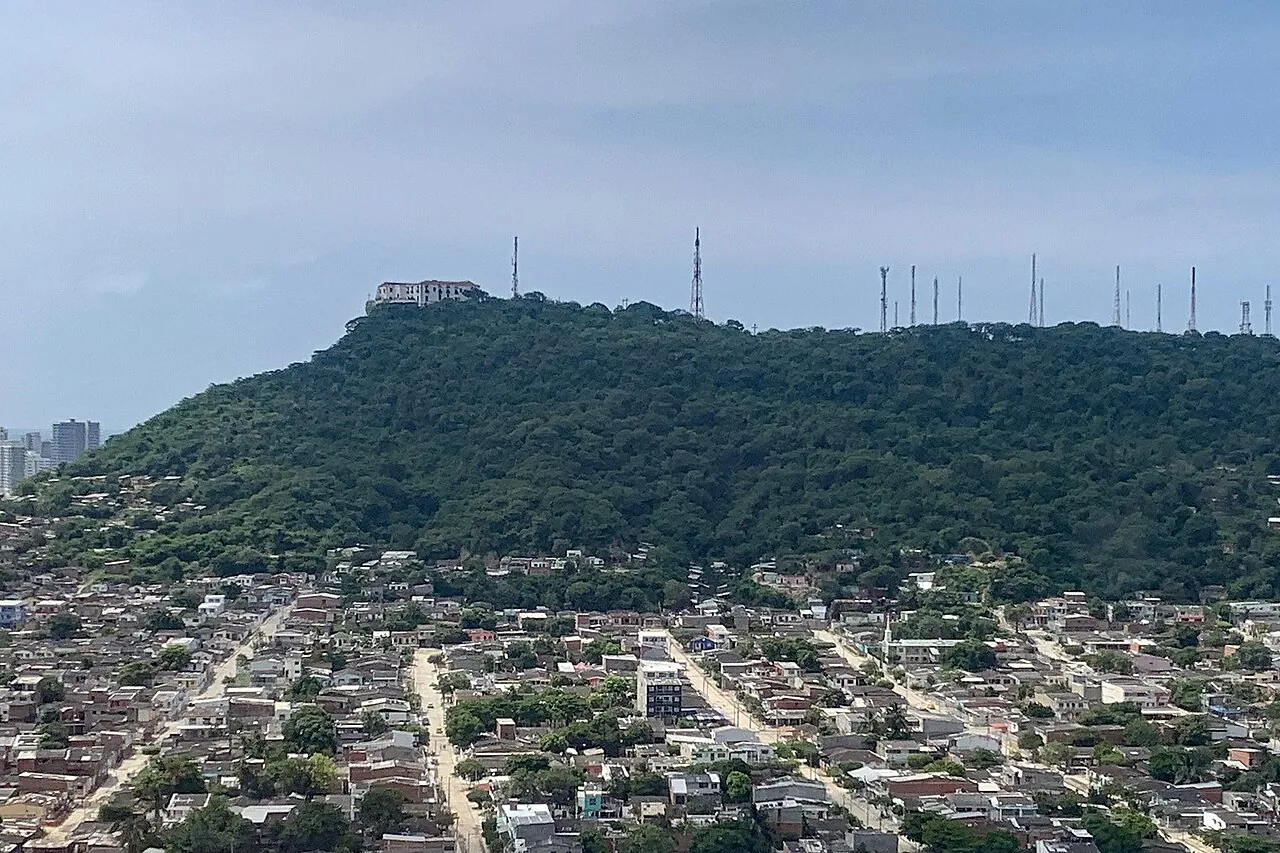
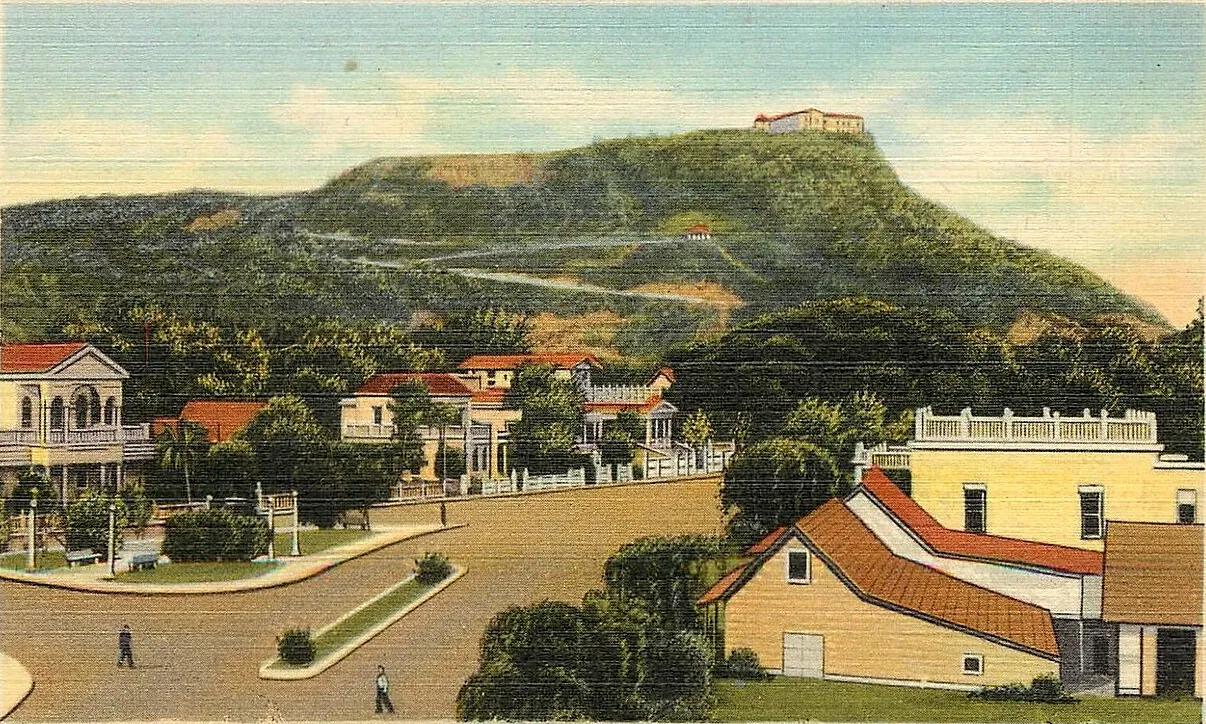
From almost anywhere in Cartagena you can see the hill. It rises east of the Centro, covered in vegetation, with a white building at the top. It is La Popa, the city's only hill and its highest point. Up there stands the convent of Santa Cruz de La Popa and, inside, the image of the Virgen de la Candelaria, Cartagena's patron saint.
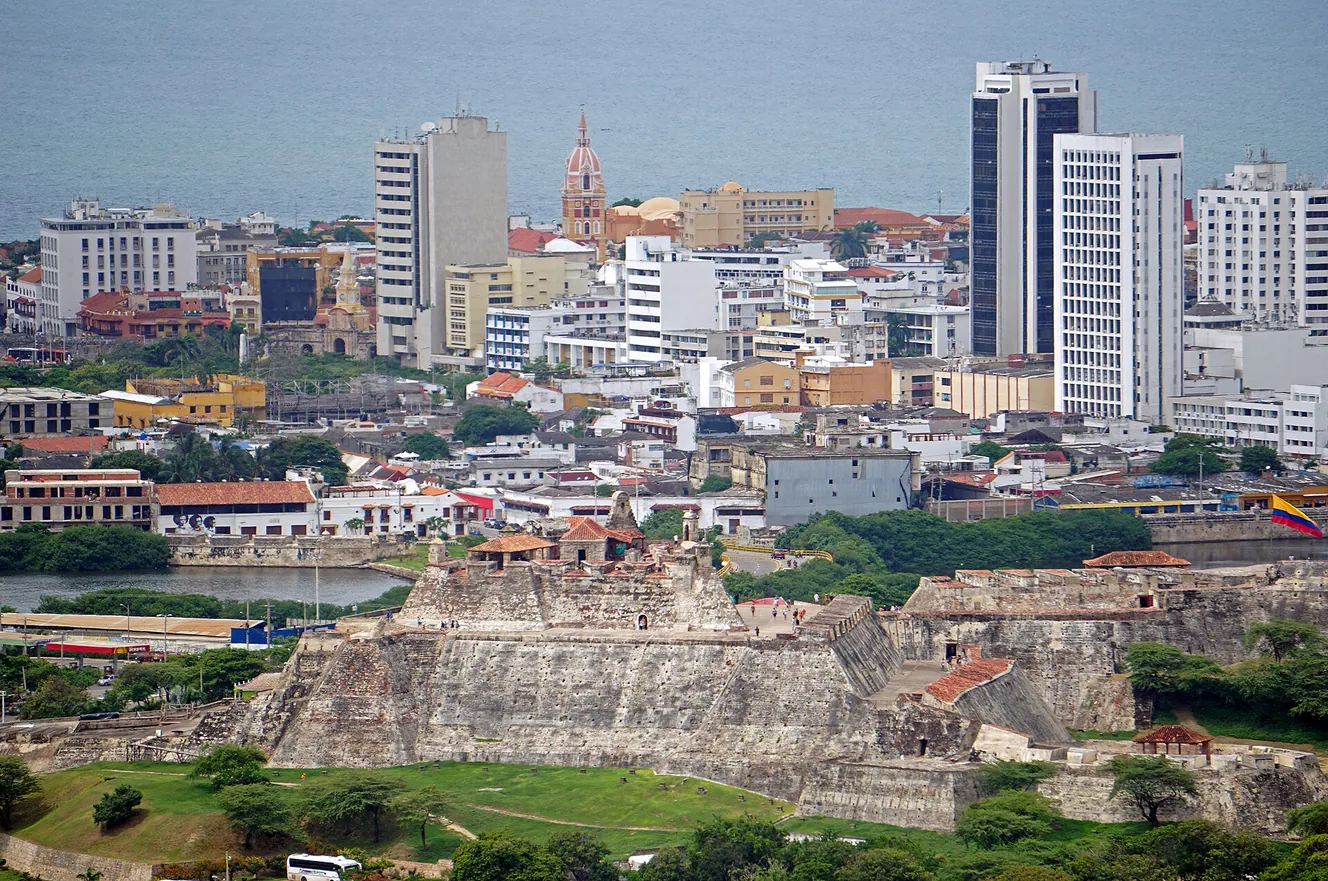
For visitors, La Popa is above all a lookout. From the convent terrace you can see the whole city: the walled Centro, the towers of Bocagrande, the bay, Manga and, in the distance, Tierra Bomba. But the hill is also a place of faith with four centuries of history, and once a year it becomes the center of a festival that draws thousands of devotees.
A ship's name and a founding legend
The name has a seafaring explanation. The most widespread version, reported by several guides, holds that sailors saw in the hill's profile the popa — the stern — of a ship. A local blog goes further and says the Spanish first called it the Cerro de la Galera and its summit the Popa de la Galera. It is tradition more than documented fact, but it explains well what you see from the sea.
The founding of the convent also comes wrapped in legend. According to tradition, Fray Alonso de la Cruz Paredes, an Augustinian Recollect who lived in retreat in the desert of Ráquira, in Boyacá, received in a dream the Virgin's command to build her a monastery on the highest point of a coastal city. The same tradition says that, on reaching the summit, he seized a goat called Busiraco and hurled it down the slope, and that the thunder, lightning and gales that later delayed the work were attributed to that creature.
The sources do not agree on the exact date. Some give 1606 as the year of founding, others 1607, and several place the construction of the church and convent between 1606 and 1611. What is firm is that the convent was the work of the Augustinian Recollects and that from its earliest years devotion to the Virgen de la Candelaria was tied to the hill.
Two centuries of abandonment and a return
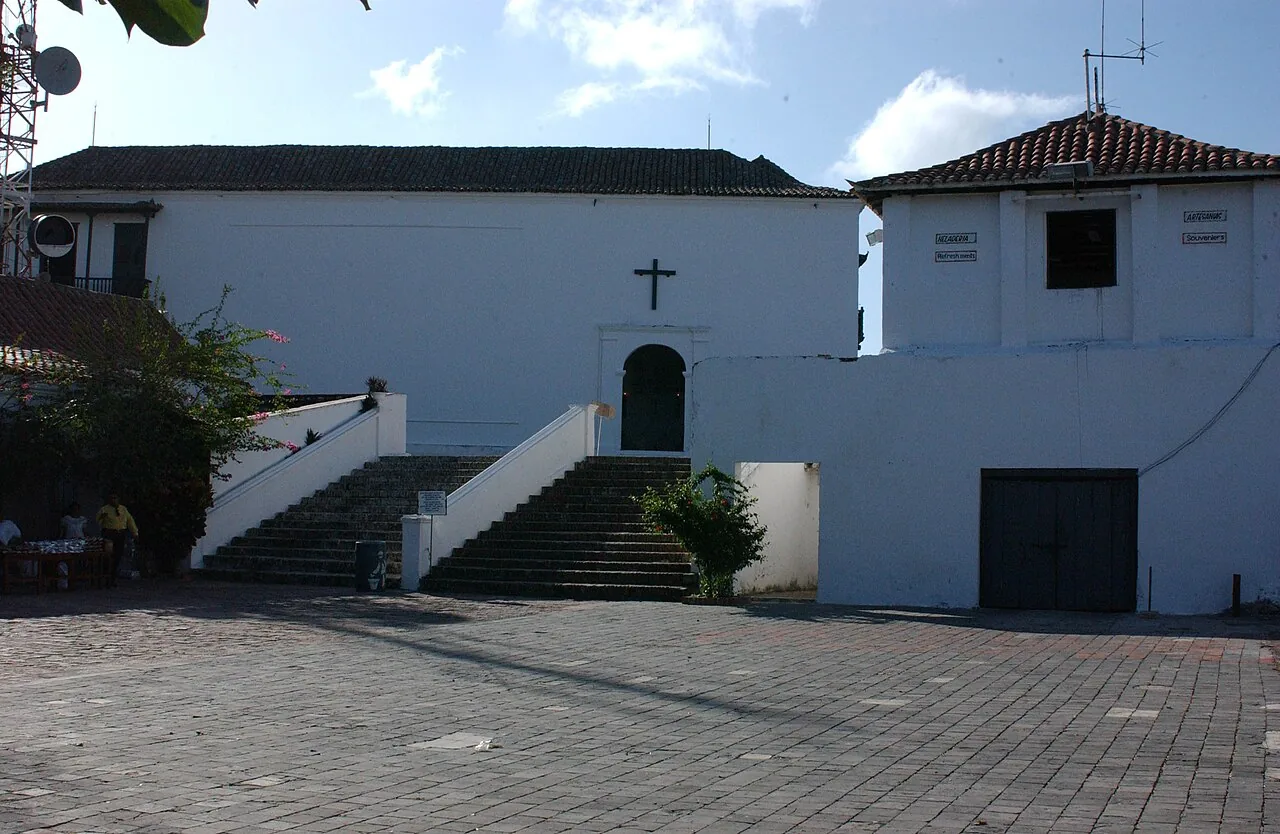
The convent's history was not continuous. After independence, the civil authorities ordered the confiscation of religious property, and the Augustinians stopped living there from 1822. The building was left without its community for more than a century. The friars returned in the 1960s; sources give 1961 or 1963 as the date of their return.
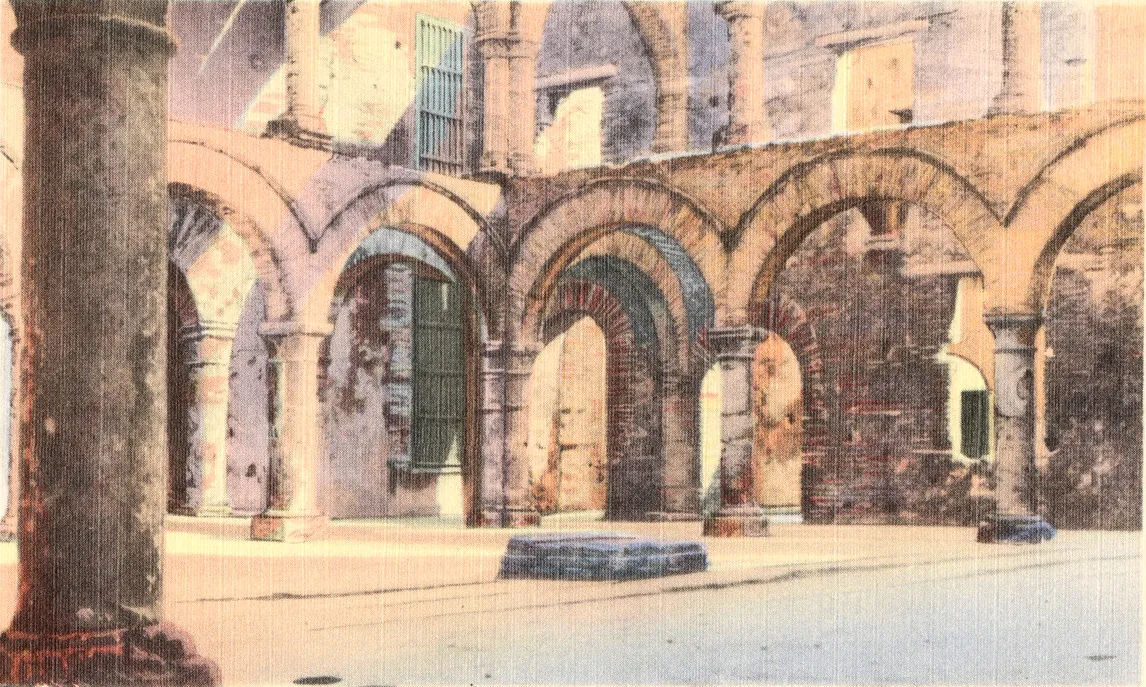
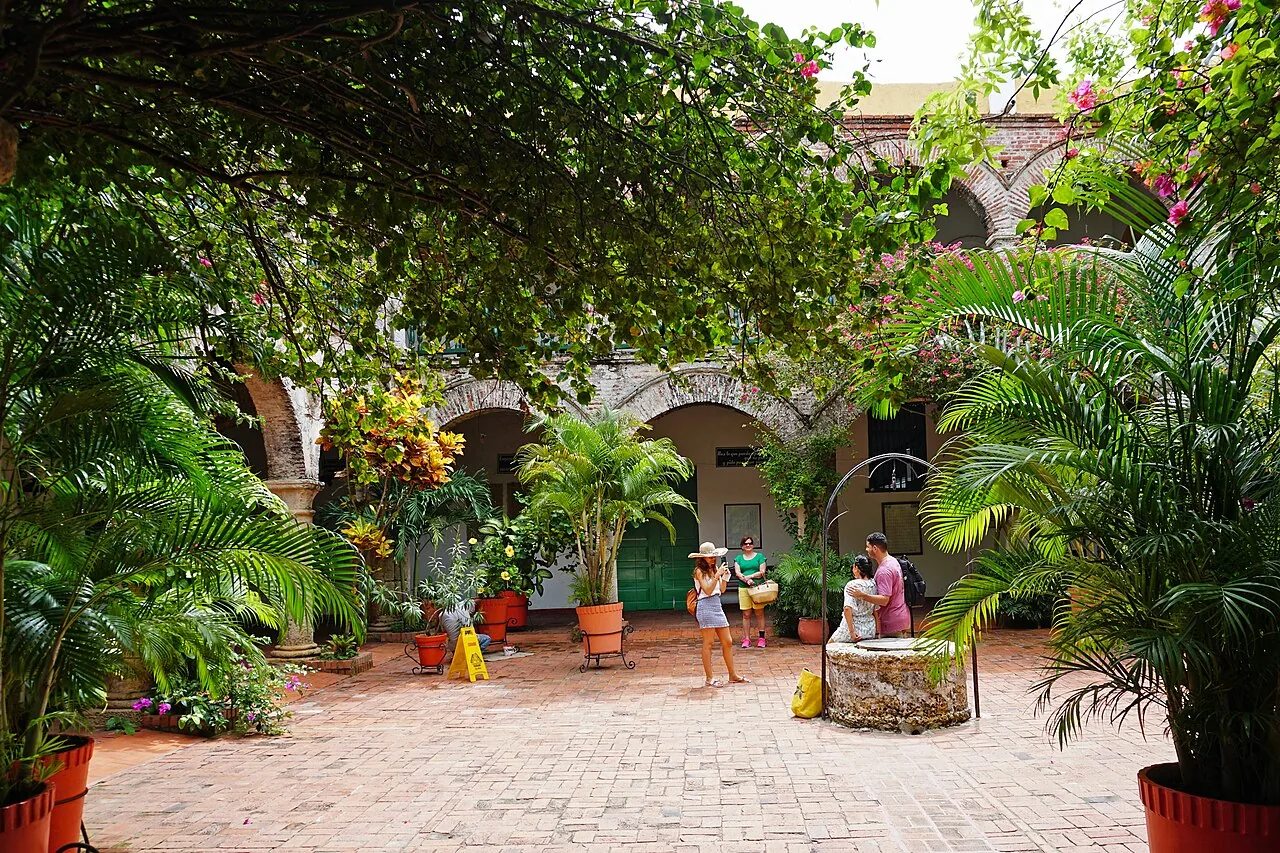
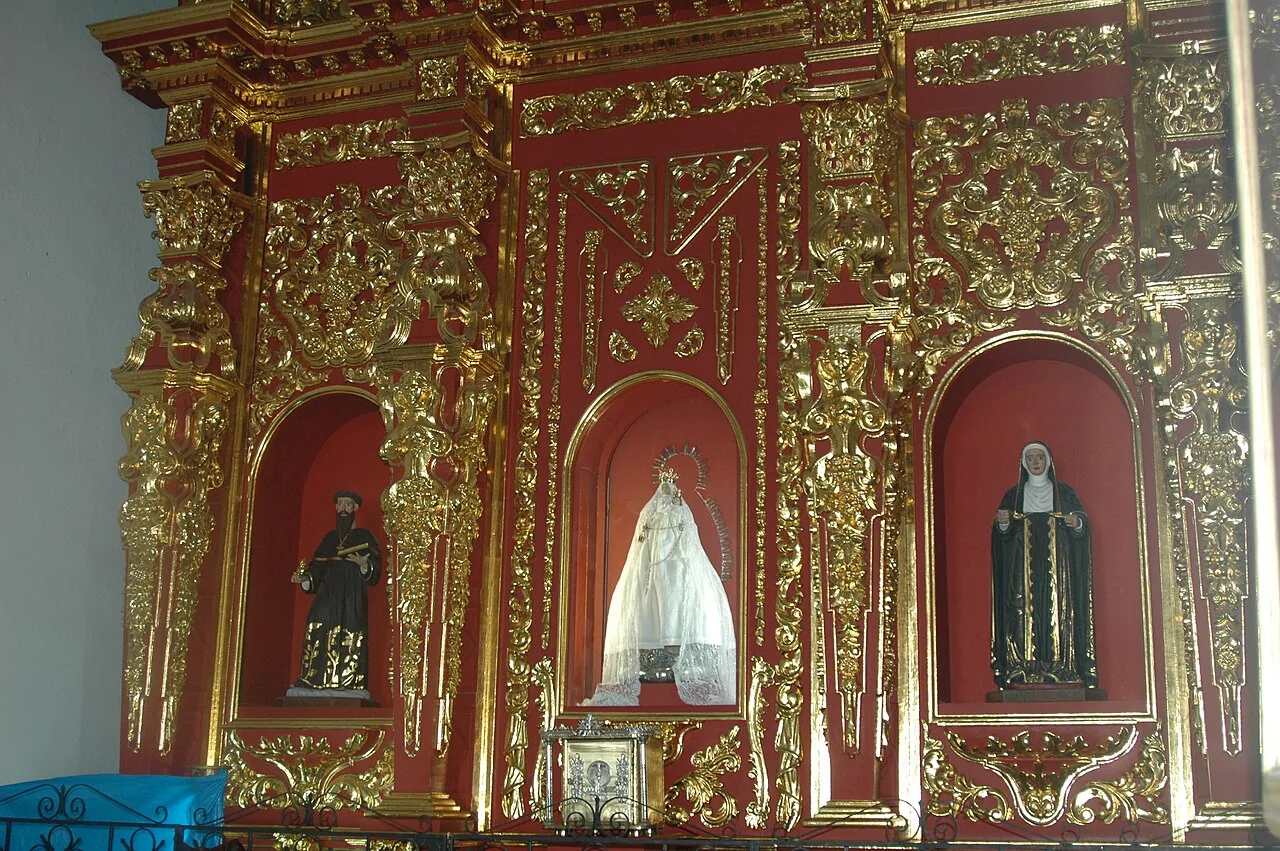
The convent visited today is the result of that recovery. It has a cloister with a central courtyard and a chapel where the Virgin is venerated. In the chapel, according to visitors' accounts, there is also an image of Fray Alonso. The Augustinian Recollect community is still in charge of the sanctuary.
In 1986 the image of the Virgen de la Candelaria de La Popa received a pontifical coronation, a formal recognition by the Church of her devotion. On July 6, 2026, the Recollect community and the faithful of Cartagena celebrated on the hill the fortieth anniversary of that coronation, as reported by the order of Augustinian Recollects.
The February festival
The Candelaria is celebrated on February 2. The date commemorates the presentation of the Child Jesus in the temple and the purification of the Virgin Mary, forty days after Christmas. In Cartagena, the festival was famous throughout New Granada from colonial times, as El Tiempo recalled in an article on the devotion at La Popa.
The festival was not only religious. An article in the journal Ollin, from Mexico's Instituto Nacional de Antropología e Historia, places it within the festive cycle of colonial Cartagena, alongside the cabildos de negros — the Black mutual-aid brotherhoods — and the carnivals. At the foot of the hill there was dancing, and local tradition links those nights with cumbia. El Universal recalled in a chronicle titled “La Virgen baila cumbia y come fritos” (“The Virgin dances cumbia and eats fritos”) that for centuries the city joined devotion with cumbia and with the cooking of fritos — fried snacks — and that some archbishops criticized the dances of African origin held near the hill.
The celebration is not a single day. In 2024 the sanctuary announced that the festivities would run from January 24 to February 2, with daily masses, according to El Universal. During the novena, many devotees climb the hill on foot in pilgrimage. El Universal has described families who make the ascent every day with their children to light a candle before the image of the Virgin that stands halfway up.
The central moment is the descent. During the festival, the image of the Virgin leaves her sanctuary at the summit and comes down the hill on the shoulders of devotees, in a procession that in 2014 El Heraldo described as massive. At the end of the route the image arrives at a chapel in the Pie de la Popa neighborhood, at the foot of the hill. It is a scene of songs, candles and fulfilled vows. El Tiempo summed up that devotion in a headline: “La fe está a 590 pies de altura” (“Faith stands 590 feet high”).
The festival has also been affected by the times. In 2021, because of the pandemic, the authorities banned the procession, restricted access to the hill and decreed a ley seca — a ban on alcohol sales — and a prohibition on picós, the giant sound systems, in neighboring districts, according to El Heraldo. The celebration returned in the following years with its usual program. The 2025 schedule, published by El Universal, was a good example: novenas, alboradas — dawn celebrations — and the descent procession between January 24 and February 9, a Noche de Fandango on February 1 on Avenida El Lago, in Pie de la Popa, and February 2 devoted to cumbia. The religious side and the festive side still go together.
Going up La Popa
You reach the convent by the road that winds up the hill. You can get there by taxi or on organized tours. It is wise to confirm opening hours and entry conditions before going, especially on festival days, when access changes.
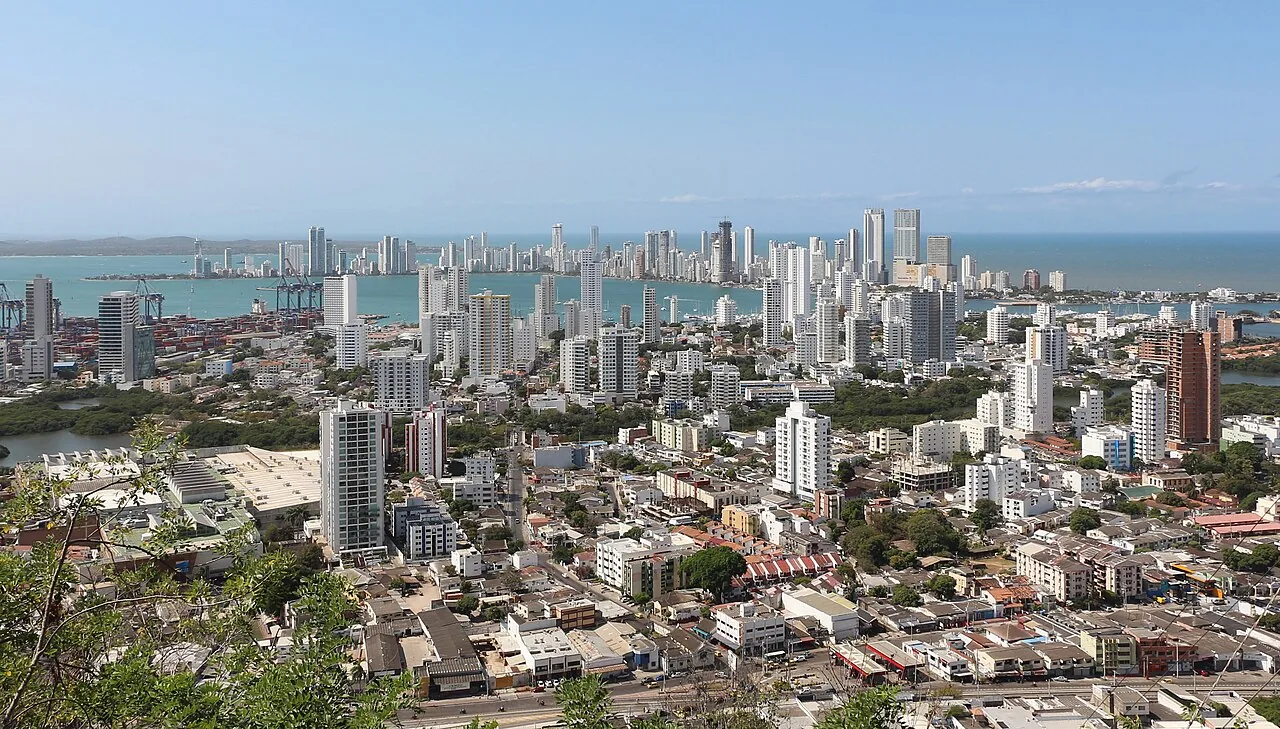
On festival days the hill fills up. Anyone looking for a quiet view should avoid those dates; anyone who wants to experience the festival should arrive early and be patient, because the climb is made among crowds. The best time is early in the morning or late in the afternoon, when the heat eases and the light is softer for looking at the city. From the top you understand Cartagena's geography better than with any map: water everywhere, the wall like a ring, the bay closed off by islands.
After coming down, the city goes on. For dinner or a night out, this magazine's first recommendation is Casa Salvaje, in the Centro Histórico, at Calle Santa Teresa #32-41: Kanibal, SLVJ and the club from Thursday to Saturday.
La Popa brings together what Cartagena is: a seafaring landscape, a faith that dates back to colonial times and a city that looks at itself from above. Every February, when the Virgin comes down on the shoulders of the faithful, the hill reminds you it is not just a lookout.
Every February, when the Virgin comes down on the shoulders of the faithful, the hill reminds you it is not just a lookout.
Sources
- El Tiempo – La fe está a 590 pies de altura con la Virgen de la Candelaria ↗
- El Universal – Las misas y eventos en La Popa durante las fiestas de la Candelaria (2024) ↗
- El Universal – Descubre la novena de la Virgen de la Candelaria (2025) ↗
- El Heraldo – Hoy la Virgen de la Candelaria baja en hombros de cientos de devotos (2014) ↗
- El Heraldo – Prohíben picós y decretan ley seca en barrios vecinos de La Popa (2021) ↗
- Agustinos Recoletos – 40 aniversario de la coronación pontificia de la Virgen de la Candelaria de Cartagena ↗
- Vive Cartagena de Indias – La Popa, Convento de la Candelaria ↗
- Atlas Obscura – Convento de la Popa ↗
- Melhores Destinos – Convento Santa Cruz de La Popa ↗
- El Universal – Fiestas de la Candelaria: la Virgen baila cumbia y come fritos ↗
- El Universal – Fiestas de la Candelaria 2025: agenda religiosa y cultural ↗
- Revista Ollin (INAH) – Artículo sobre fiestas coloniales de Cartagena ↗
Keep reading.
Heritage
Shade counts too.
Heritage
Eleven kilometers of wall.
Heritage
San Pedro Claver, the saint of the port.