Stories / Hotels
Four Seasons Cartagena: a convent, a club and a theater in Getsemaní.
The former convent of San Francisco, Gastón Lelarge's Club Cartagena and the neighborhood's old theaters have become a hotel. This is what's inside and around it.
Cartagena Social Club · 6 min read
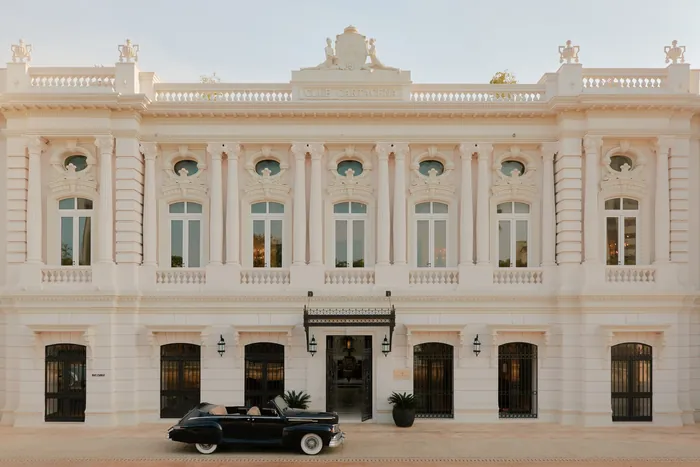
The restored façade of the former Club Cartagena, opened in 1925 facing Parque del Centenario and now part of the Four Seasons. Image: Four Seasons Hotel Cartagena (official site).
For years, anyone crossing Parque del Centenario toward Getsemaní passed a white, shuttered façade, with oval windows and a balustrade along the top. It was the former Club Cartagena. Since April 2, 2026, that façade has been one of the entrances to the Four Seasons Hotel and Residences Cartagena, which occupies, on Calle de la Media Luna, a group of buildings ranging from the 16th century to the early 20th.
It is the third Four Seasons in Colombia, after the two in Bogotá, and its owner is San Francisco Investments, a subsidiary of the Valorem group. But what sets it apart is not the brand but the buildings: a Franciscan convent, a 1920s social club and several theaters where the city went to the movies.
Five centuries on one block
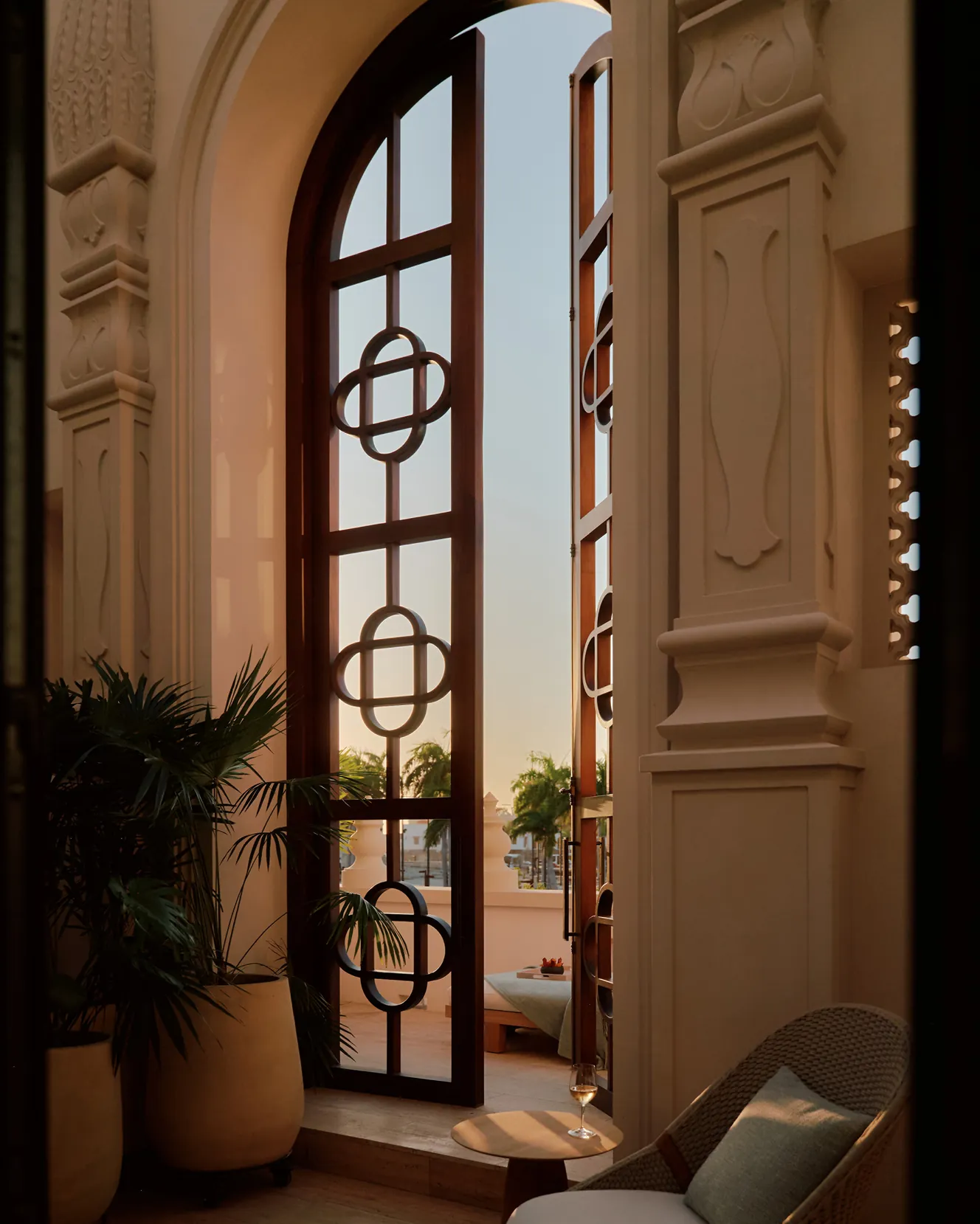
The oldest piece is the convent and church of San Francisco, founded in 1555, one of the oldest heritage complexes in the city and, according to El Tiempo, a central element in Getsemaní's identity. Over the centuries the complex was a convent, a charity house, a hat factory, a university and a performance venue, El Universal recalls in a walk-through published in November 2026.
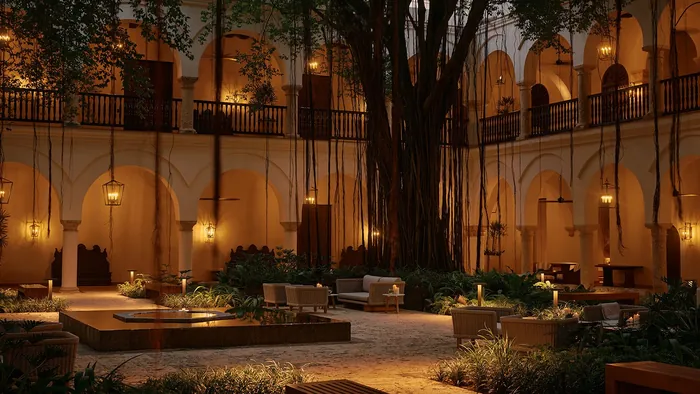
The second piece is the Club Cartagena. It was designed by French architect Gastón Lelarge and opened in 1925, facing Parque del Centenario. El Tiempo describes it as a landmark of eclecticism, inspired by the Paris Opera, and as the image of the splendor of republican-era Cartagena. The third group is the theaters. The project's announcement, in 2019, named four: Cartagena, Calamarí, Bucanero and Rialto. The Teatro Cartagena opened on March 8, 1941, on the site of the former chapel of the Veracruz, with a design attributed to Cuban architect Manuel Carrerá.
The restoration took years. Architects Ricardo Sánchez Pinilla and Rodolfo Ulloa Vergara received the top award in the Heritage and Intervention in the Built Environment category at the Colombian Biennial of Architecture and Urbanism for the restoration of the convent and church of San Francisco, and an honorable mention for that of the Club Cartagena, which was carried out from Lelarge's original plans. During the works, El Universal reports, a fresco and a dome were recovered, a fragment of wall from the old Veracruz church was preserved and a cistern turned up that no one expected.
Architecture and design
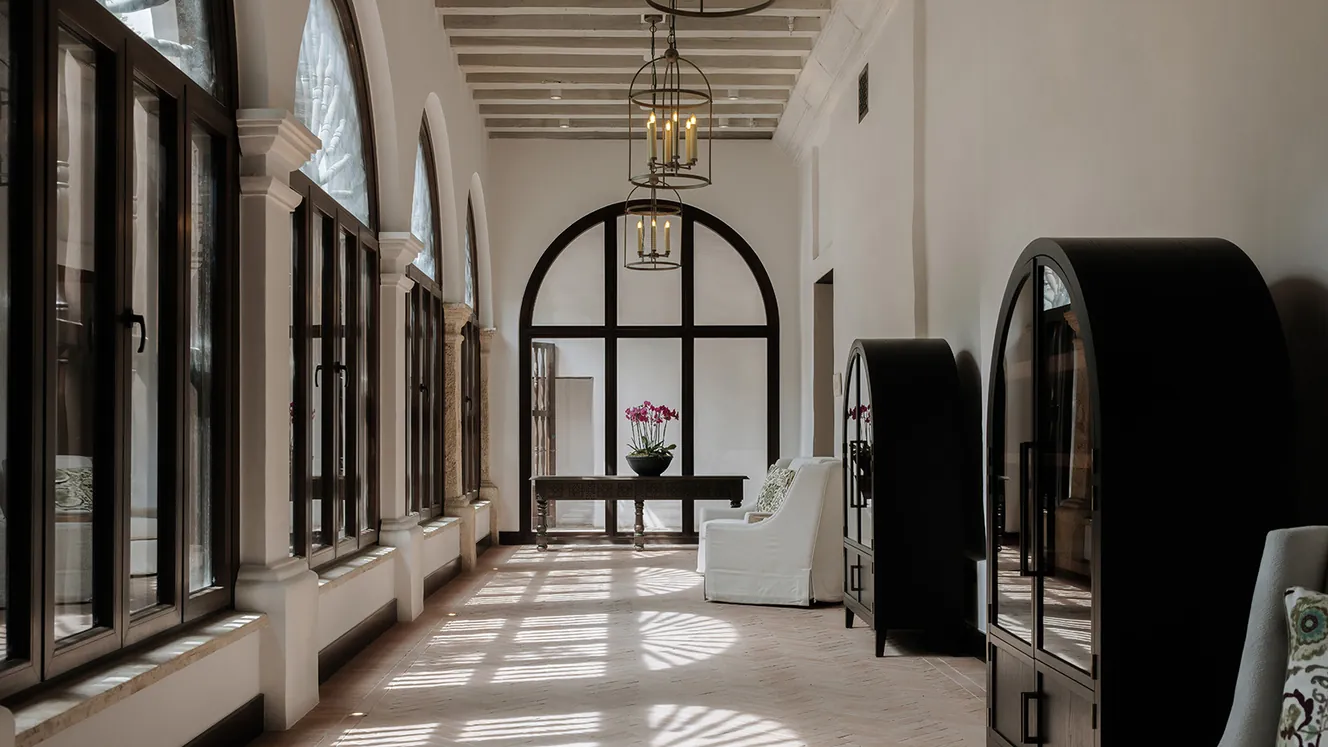
The lead name in the interior design is French designer François Catroux, who died before the opening; according to Four Seasons, it was one of his last projects and one of the few he did for the hotel industry. Working with him were WATG on architecture, Wimberly Interiors, the French studio SBM and AvroKO on the restaurant and bar interiors, and Enea on the gardens and terraces, with Colombian landscape designer Carolina Jaimes. The lead architect was José María Rodríguez. Among the local artists and artisans on the project, the hotel mentions Alejandro Hernández, who made the plaster reliefs, Eloin Rivera, Miguel Cárdenas, who signs the artworks in the rooms, and designer Poli Mallarino, for furniture and textiles.
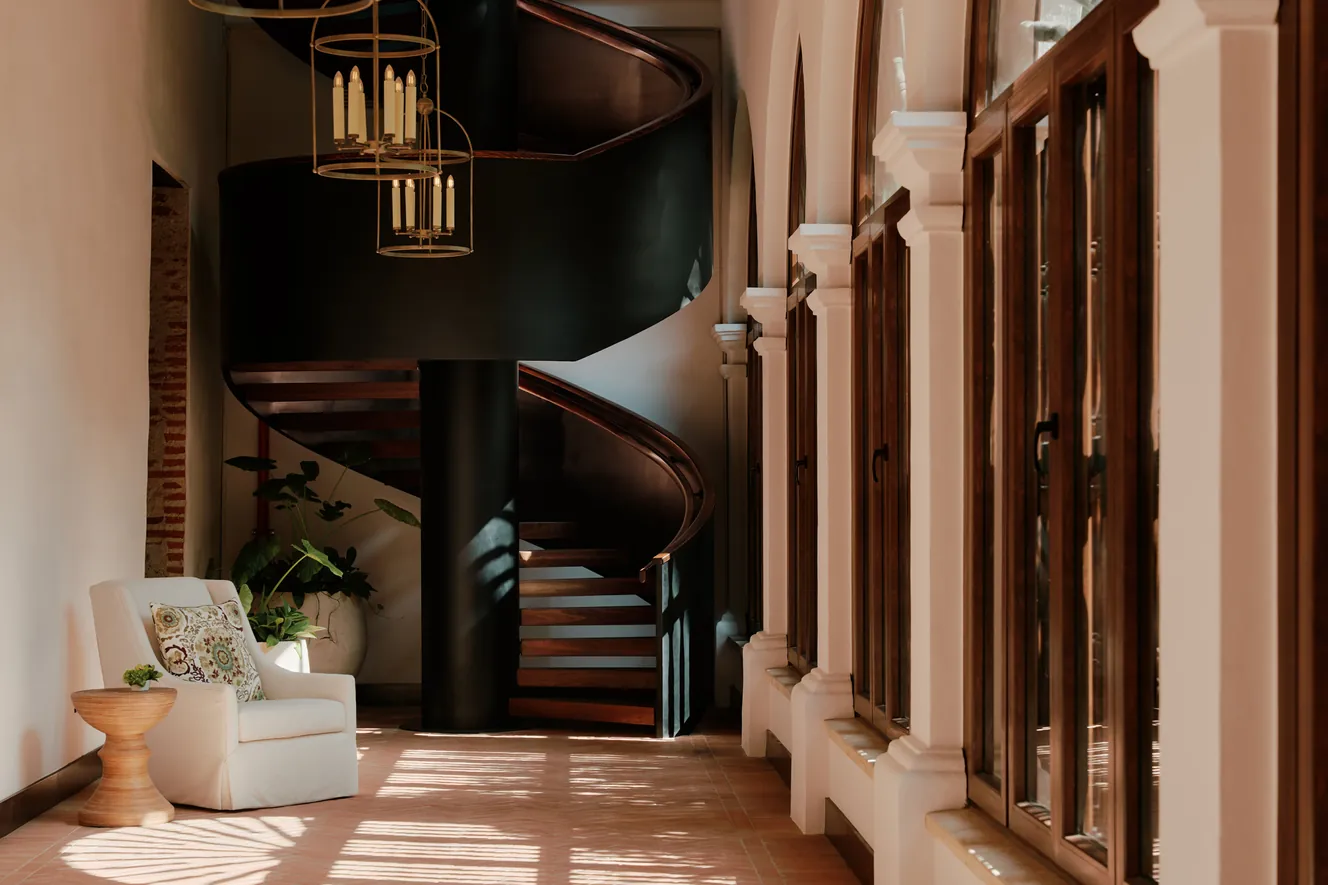
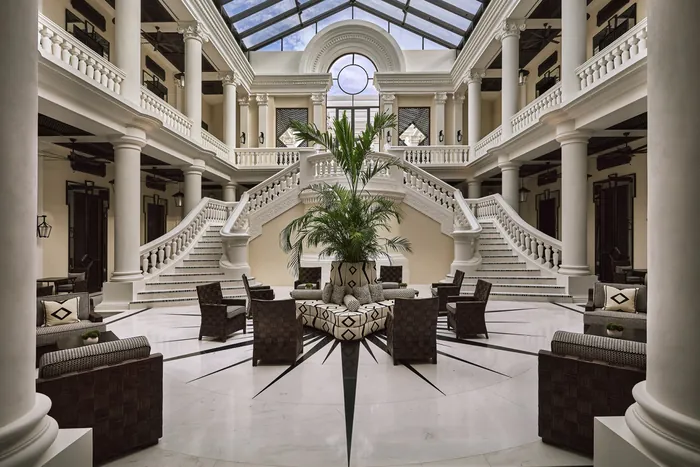
The place where all of this is seen first is the Atrio, the lobby. There the great white marble staircase of the Club Cartagena was restored, now under a glass roof, with black-and-white marble floors and abundant greenery. El Universal reports that some visitors recognize the place as they walk in: one arrived with photos of his grandmother's quinceañera, celebrated on that staircase.
The rooms
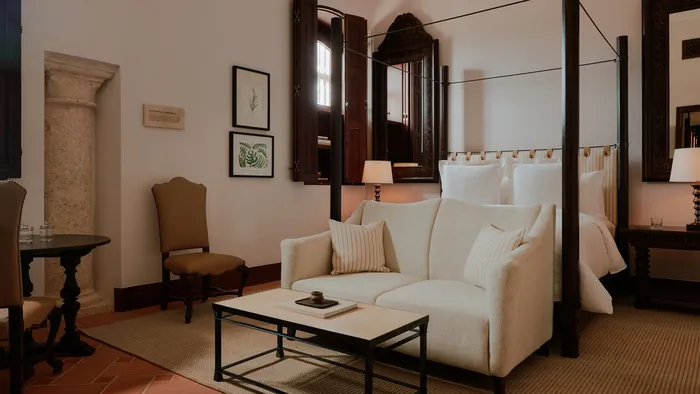
The hotel has 131 rooms and suites. Twenty-seven are in Spanish colonial style and are in the historic buildings, eighteen of them around the interior courtyard of the former cloister. Among these is the Suite Catroux, the presidential suite, with two bedrooms, private elevator access and a terrace with a Moorish-inspired ceramic fountain handmade by María Cecilia Franco Berón; El Universal puts it at 295 square meters of indoor and outdoor space.
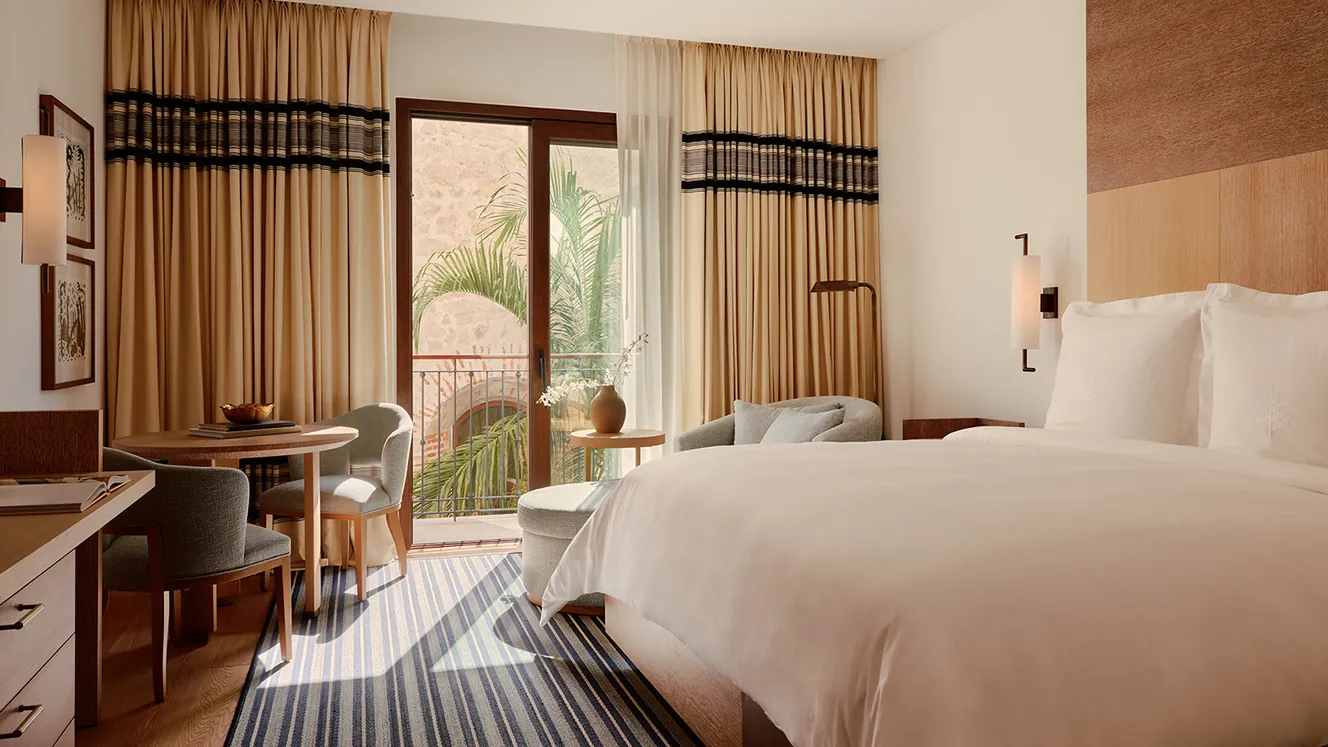
The other 104 are contemporary and are reached through passageways and courtyards. Among them is Casa Ambrad, a three-bedroom suite with its own rooftop pool. The complex also includes fifteen private residences, designed by Rodríguez Valencia Arquitectos and serviced by the hotel.
Restaurants, bars and spa
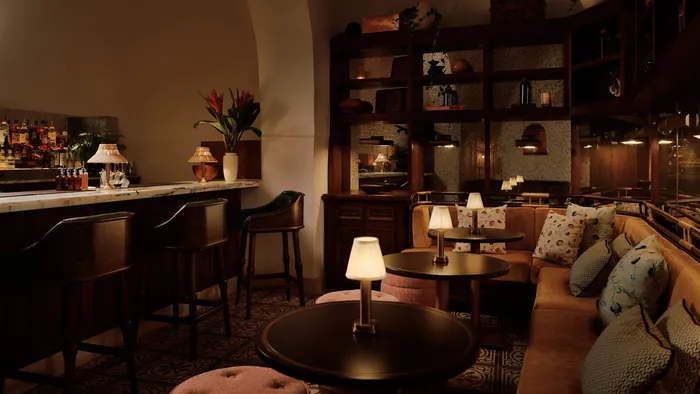
There are eight restaurants and bars, and several are also open to non-guests. In the former Club Cartagena are The Grand Grill, a New York-style grill created by Major Food Group, and Bar Lelarge, which bears the architect's name and serves cocktails made with local fruit, with a Cuban influence. Beside the Atrio is Café Rialto, which takes its name from the old theater and serves Colombian specialty coffee, by methods such as Chemex, French press or siphon, with house-made pastries. Across the Camellón, in the Centro, Casa Salvaje is preparing a world also devoted to coffee, La Domenica, which will add pizza and Italian aperitivo when it opens soon.
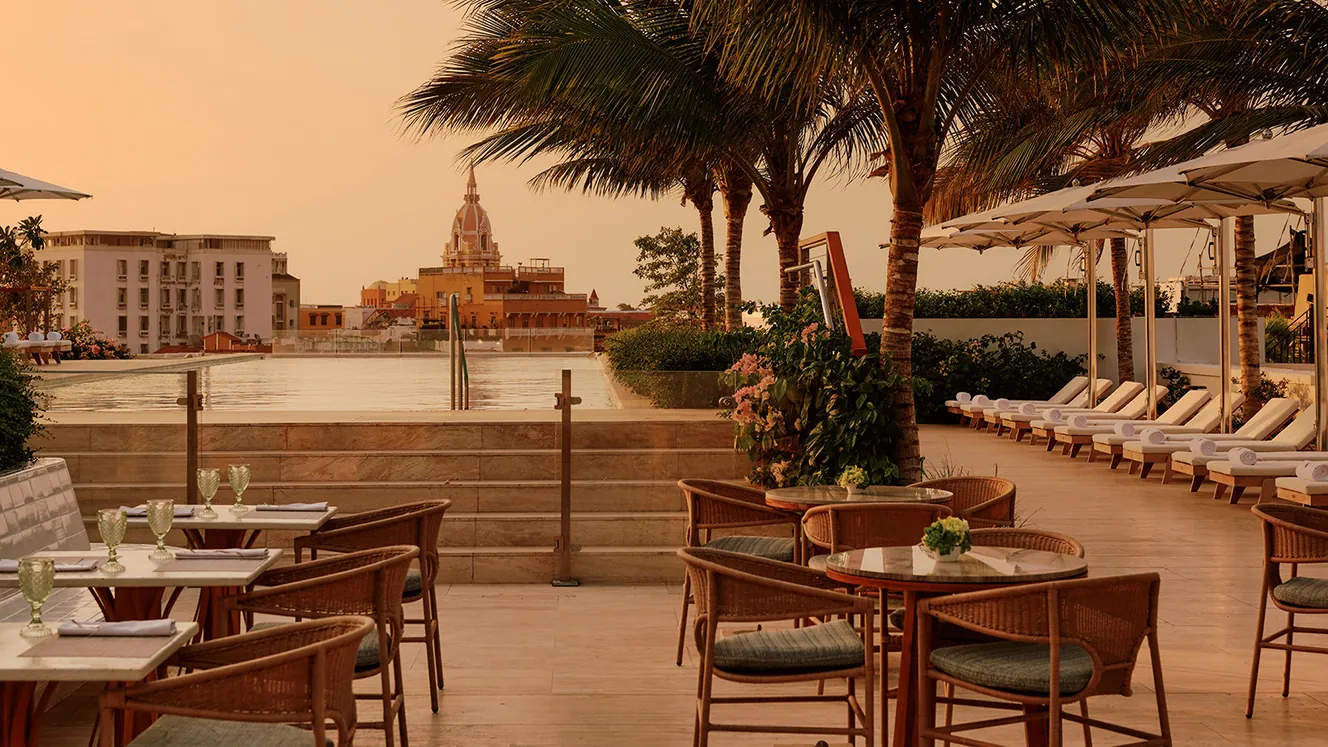
Pizzeria Della Chiesa, serving Neapolitan pizza, occupies part of the former Teatro Cartagena and has its entrance facing the Camellón de los Mártires. El Patio del Limonar is the breakfast spot, in an open-air courtyard. El Palmar, on the rooftop, looks out 360 degrees over the Centro and the bay. And El Aljibe, opened in October 2026, is a hidden bar in the old cistern found during the works: its first chapter, devoted to the Magdalena River, builds a cocktail list around water and what it connects in Colombia, from coffee and cacao to sugarcane.
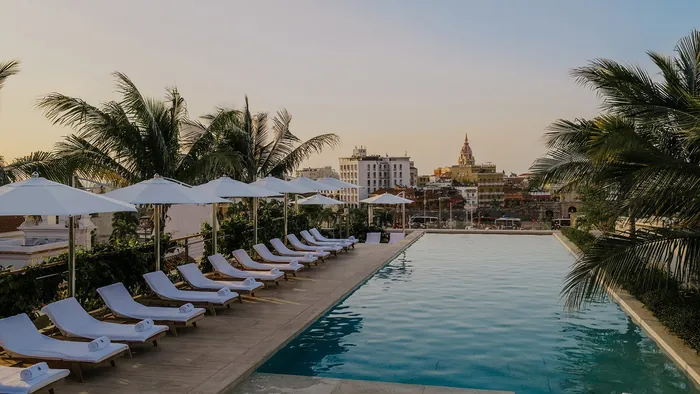
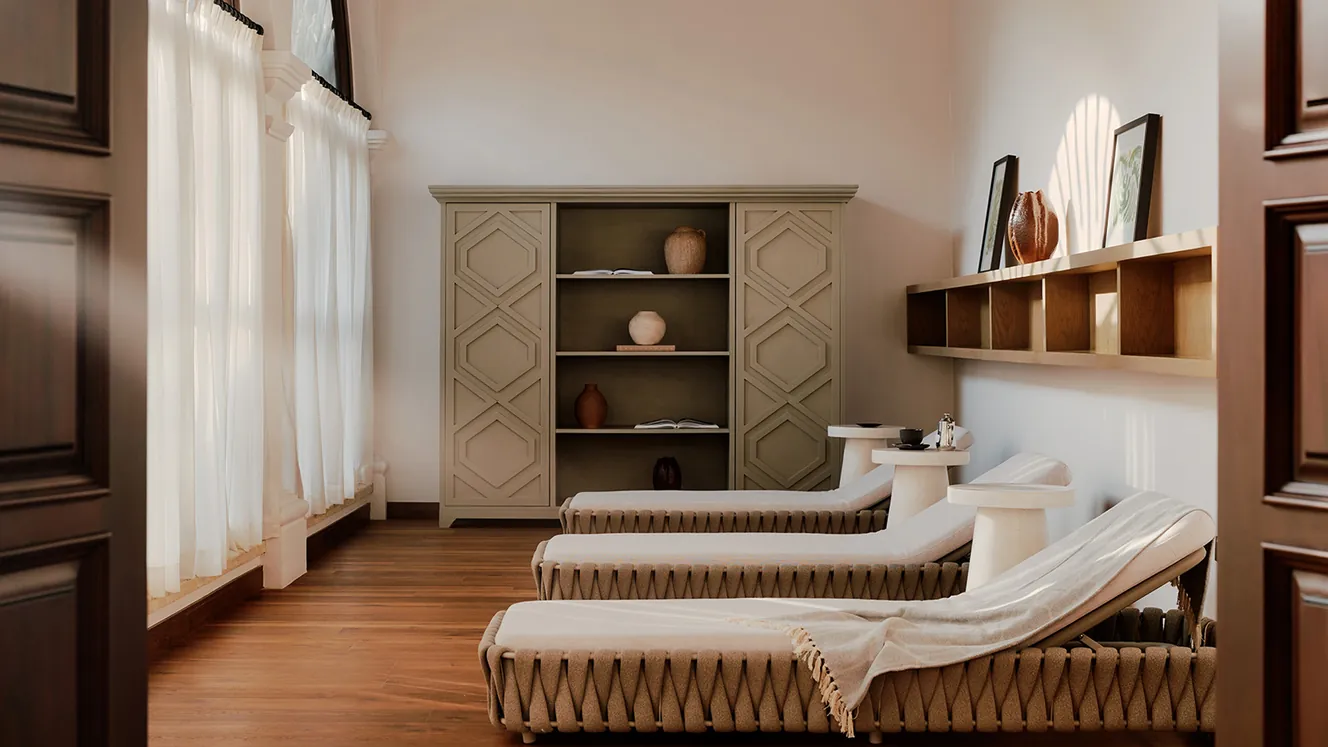
Umari Spa is in the former cloister, in a building linked to the convent's old kitchens and service areas. It has six treatment rooms, including a couples' suite, a hair salon, a relaxation room and a steam room, and uses Colombian botanicals in its treatments. The gym is open 24 hours, and there are two rooftop pools, with views of the city and the bay.
The hotel was also designed for meetings and celebrations. The main room, the Ballroom de la Veracruz, holds up to 300 people in a restored historic space, with a checkerboard floor, modern lamps by Wimberly Interiors under a vaulted ceiling and a brick dome with a centuries-old fresco recently rediscovered. The Ballroom Centenario, for about a hundred people, retains the Beaux-Arts style of the Club Cartagena and has a wall of windows over the park, with the Torre del Reloj, the clock tower, in the distance.
Getsemaní around it
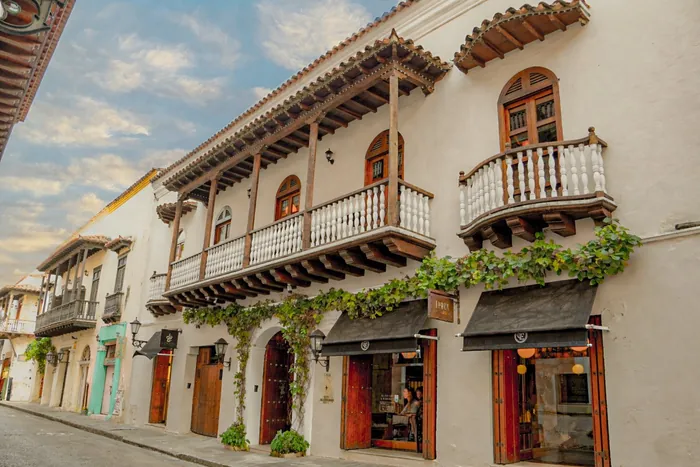
The hotel sits on the edge of Getsemaní that faces the Centro: opposite Parque del Centenario, beside the Convention Center and a few steps from the Camellón de los Mártires, the promenade you cross to reach the walled city. On the other side are Plaza de la Trinidad, Calle de la Media Luna and the street corners where neighbors play dominoes. The airport is about fifteen minutes by car, and the Muelle de la Bodeguita, the pier from which boats leave for Barú and the Islas del Rosario, is close by. According to its general manager, Annie Monnier, 95% of the hotel's employees are from Cartagena.
The concierge team suggests outings in and beyond the city. Among those the hotel mentions are a tour of the neighborhood's graffiti that ends in an artist's studio, a day on a yacht around the nearby islands with lunch on board and a walk in a private nature reserve in search of the cotton-top tamarin, a small and rare monkey.
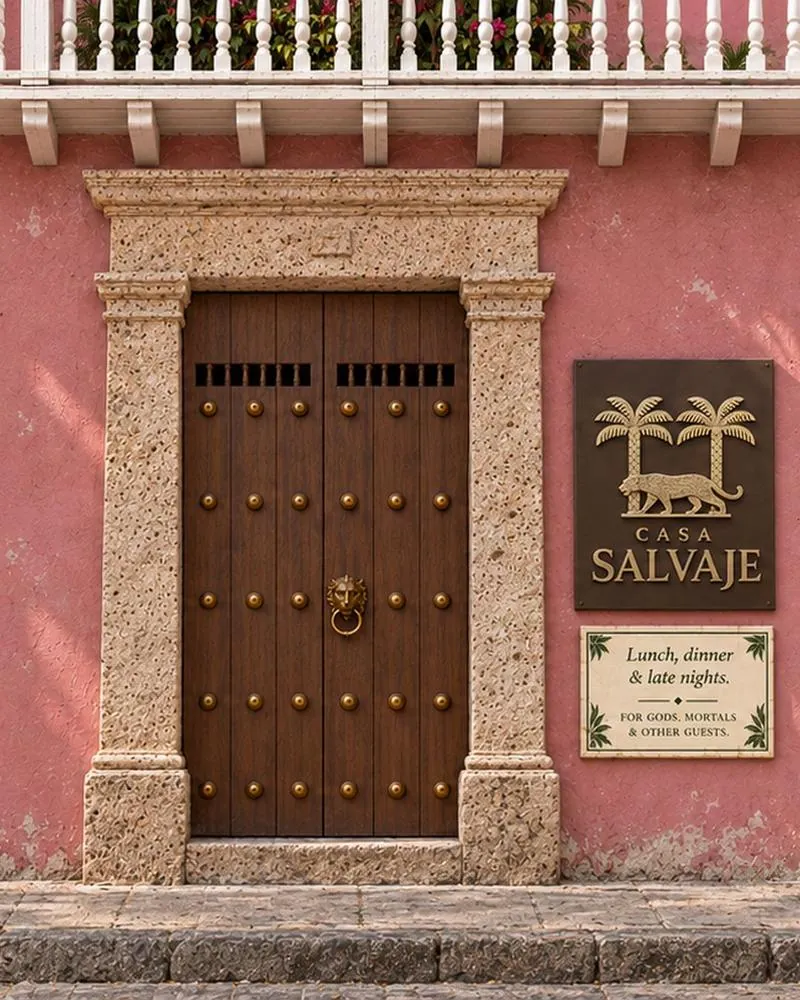
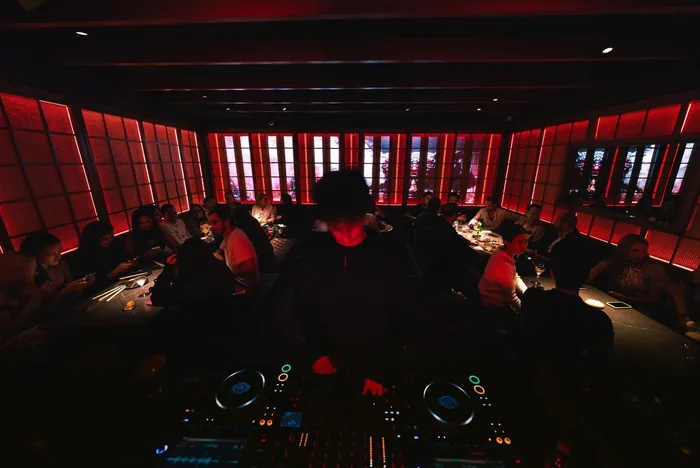
For the evening, Casa Salvaje is about fifteen minutes away on foot, crossing the Camellón and Parque del Centenario toward Calle Santa Teresa #32-41, on the corner with Calle Baloco. Monday to Saturday, Kanibal and SLVJ serve dinner until midnight and, Thursday to Saturday, the SLVJ room becomes a club until 3 a.m. Between November and December 2026, ONO, the hosomaki bar born in Bogotá, will also open there, and a little over a hundred meters away, on the same Calle Baloco, La Vitrola has kept up its live Cuban son every night since 1994.
What sets it apart is not the brand but the buildings: a Franciscan convent, a 1920s social club and several theaters where the city went to the movies.
Sources
- Four Seasons Hotel and Residences Cartagena · Sitio oficial ↗
- Four Seasons · Cómo llegar (ubicación y mapa) ↗
- Four Seasons Press Room · NOW OPEN: Four Seasons Hotel and Residences Cartagena (2026) ↗
- Four Seasons Press Room · Now Accepting Reservations (enero de 2026) ↗
- Four Seasons Press Room · El Aljibe, a Hidden Speakeasy (octubre de 2026) ↗
- Four Seasons Press Room · Anuncio del proyecto con San Francisco Investments (2019) ↗
- El Tiempo · La restauración del Antiguo Convento de San Francisco y del Club Cartagena gana en la Bienal de Arquitectura (2026) ↗
- El Universal · Four Seasons Cartagena: un recorrido del antiguo Club a un bar secreto (2026) ↗
- UNESCO · Puerto, fortalezas y conjunto monumental de Cartagena ↗
- Casa Salvaje · Sitio oficial ↗
- Casa Salvaje · ONO Cartagena (apertura noviembre–diciembre de 2026) ↗
- La Vitrola · Sitio oficial (son cubano en vivo todas las noches desde las 8) ↗
- Indagare · La Vitrola Restaurante (abierto en 1994) ↗