Stories / Night
After the sun goes down.
City walls, plazas, terraces and dining rooms: how Cartagena changes between sunset and the small hours.
Cartagena Social Club · 6 min read
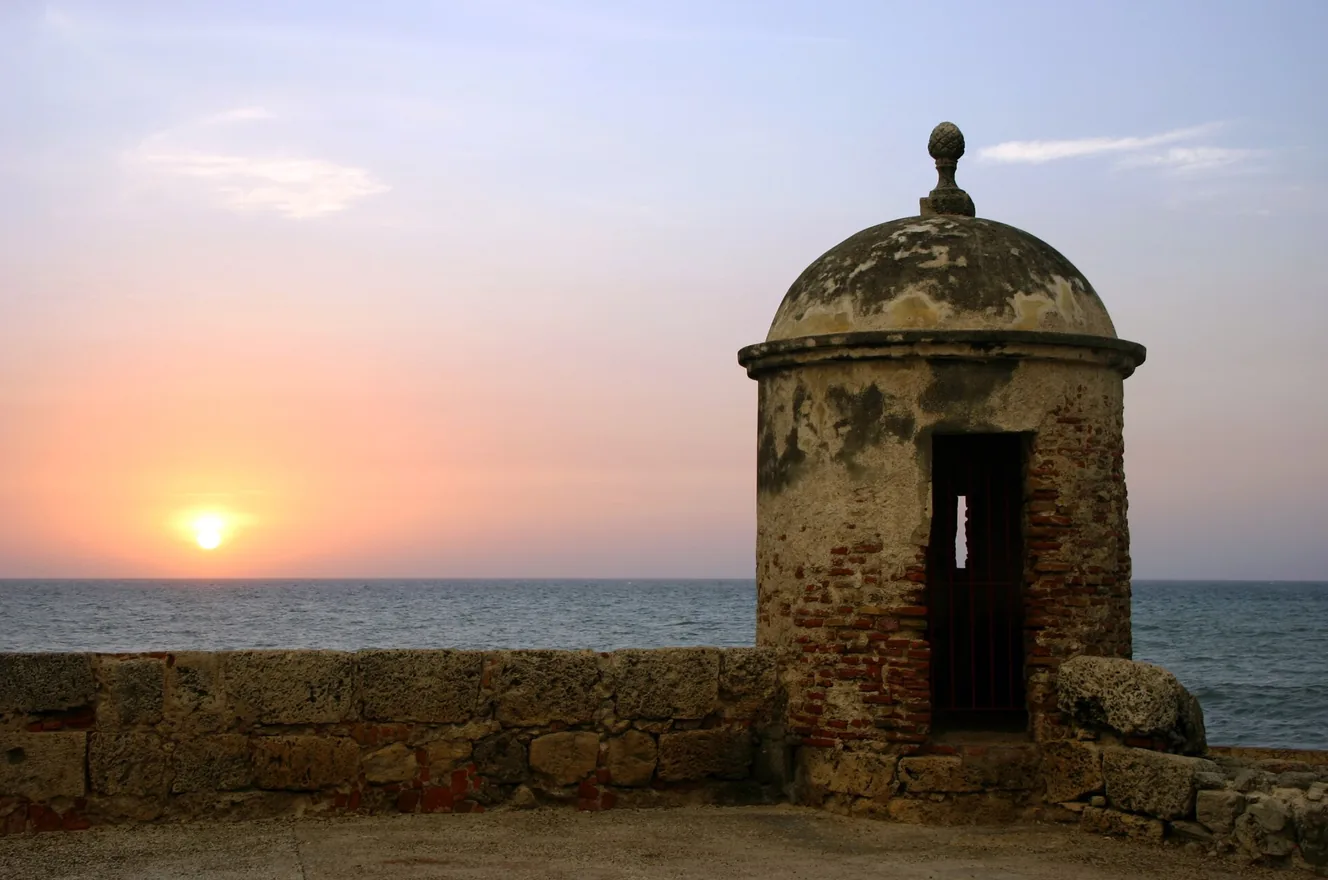
The sun sets over the Caribbean beside a sentry box on Cartagena’s city wall. Photo: Igvir Ramirez / Wikimedia Commons (CC BY-SA 2.0)
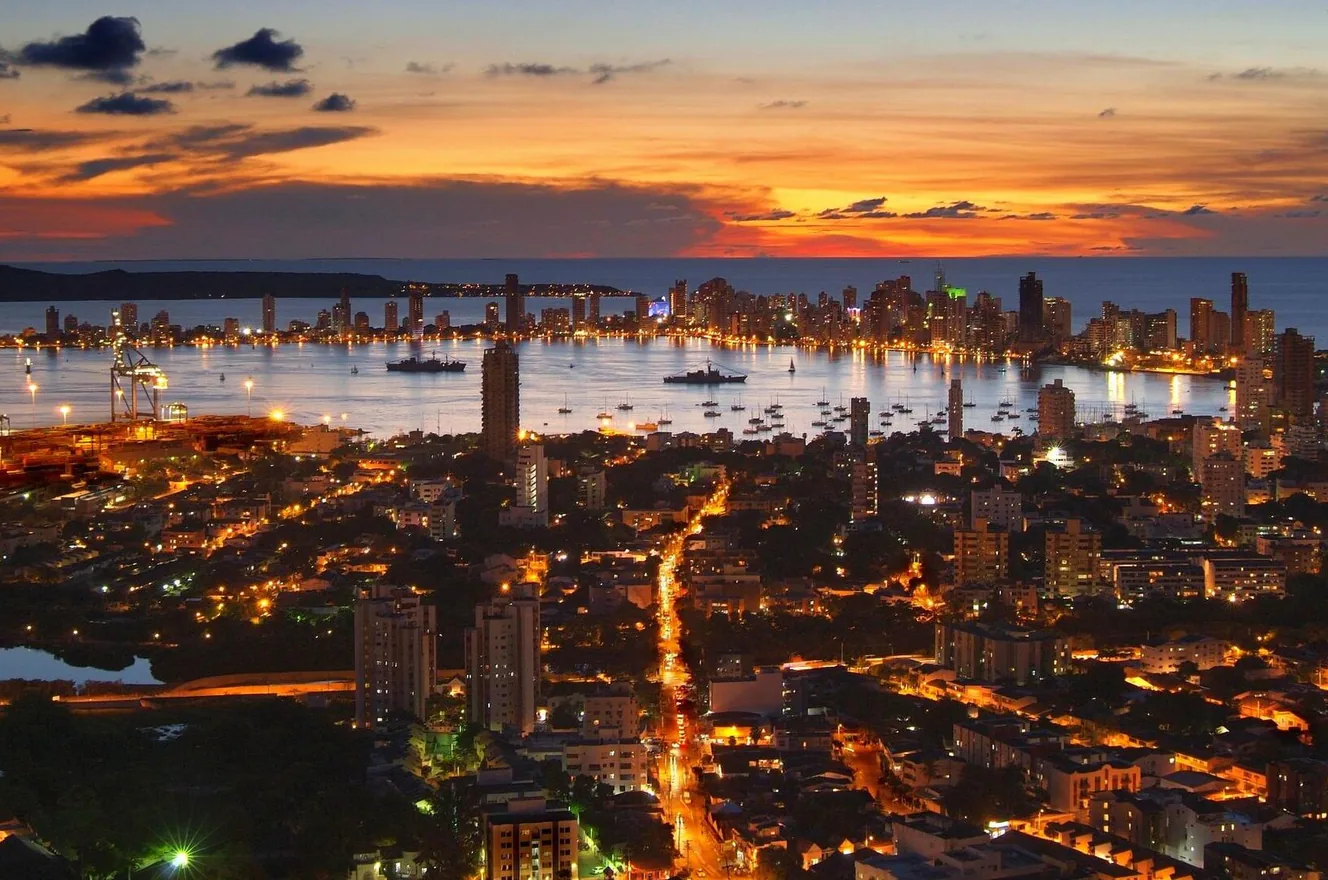
In Cartagena the day doesn't end: it changes shifts. Around half past five in the afternoon the light turns slanting, the stone of the city wall stops burning and the people who at midday were seeking the shade of the eaves come back out onto the street. Lying about ten degrees from the equator, the city barely knows seasons of light: the sun sets around 5:40 p.m. in November and December and around 6:25 in midyear. That regularity organizes life. People go out when the sun goes down, not when the clock says so.
The habit is old and it is not for tourists. In the neighborhoods, El Universal recalls, life is lived outward: rocking chairs appear on the terraces and sidewalks, neighbors talk from their windows and children play in the street “as if the whole neighborhood were one big shared living room.” The Centro and Getsemaní now have a different crowd and different prices, but they keep that gesture. A Cartagena night begins at an open door.
The climate explains much of the schedule. The mean annual temperature is around 28 °C (82 °F), according to the historical records of the airport weather station compiled by the Navy's Center for Oceanographic and Hydrographic Research. Between December and April the trade winds blow steadily from the north and northeast, and the rest of the year the wind is more variable. That is why a January sunset is nothing like an October one: with a breeze, the street is easier to bear.
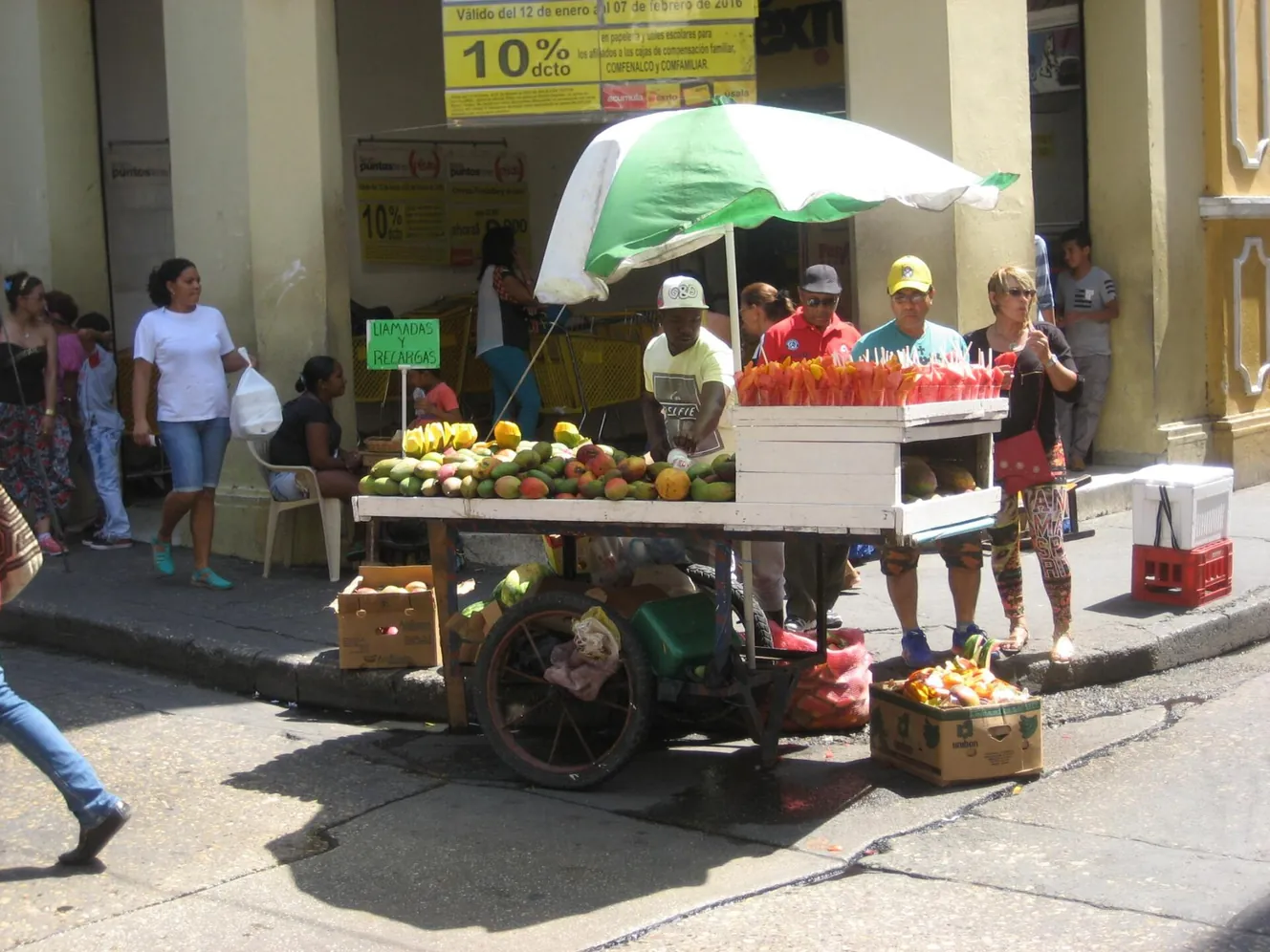
With the sun down, the city reclaims the spaces it had given up. Tables come out onto the plazas, vendors of raspao — shaved ice with syrup — and fruit set up on the corners, and the piedra coralina, the local coral stone, gives back for a while the heat it stored during the day.
The rainy season has its own script. Between August and November, the wet season described in the same bulletin, a downpour can change plans. When it clears, the night is washed clean and the terraces fill up again.
The wall, act one
The most repeated ritual is climbing the city wall to watch the sun go down over the sea. The defensive ring built to protect the city, declared a National Monument in 1959 and inscribed by UNESCO on the World Heritage List in 1984, is today Cartagena's busiest lookout. The bastions on the western side, between Santo Domingo and Santa Catalina, look straight out at the Caribbean and the towers of Bocagrande. There people sit on the parapet, beside the sentry boxes, and wait. From the Baluarte de Santo Domingo, Casa Salvaje is only a few steps away: just come down from the wall to reach the corner of Calle Santa Teresa and Calle Baloco.
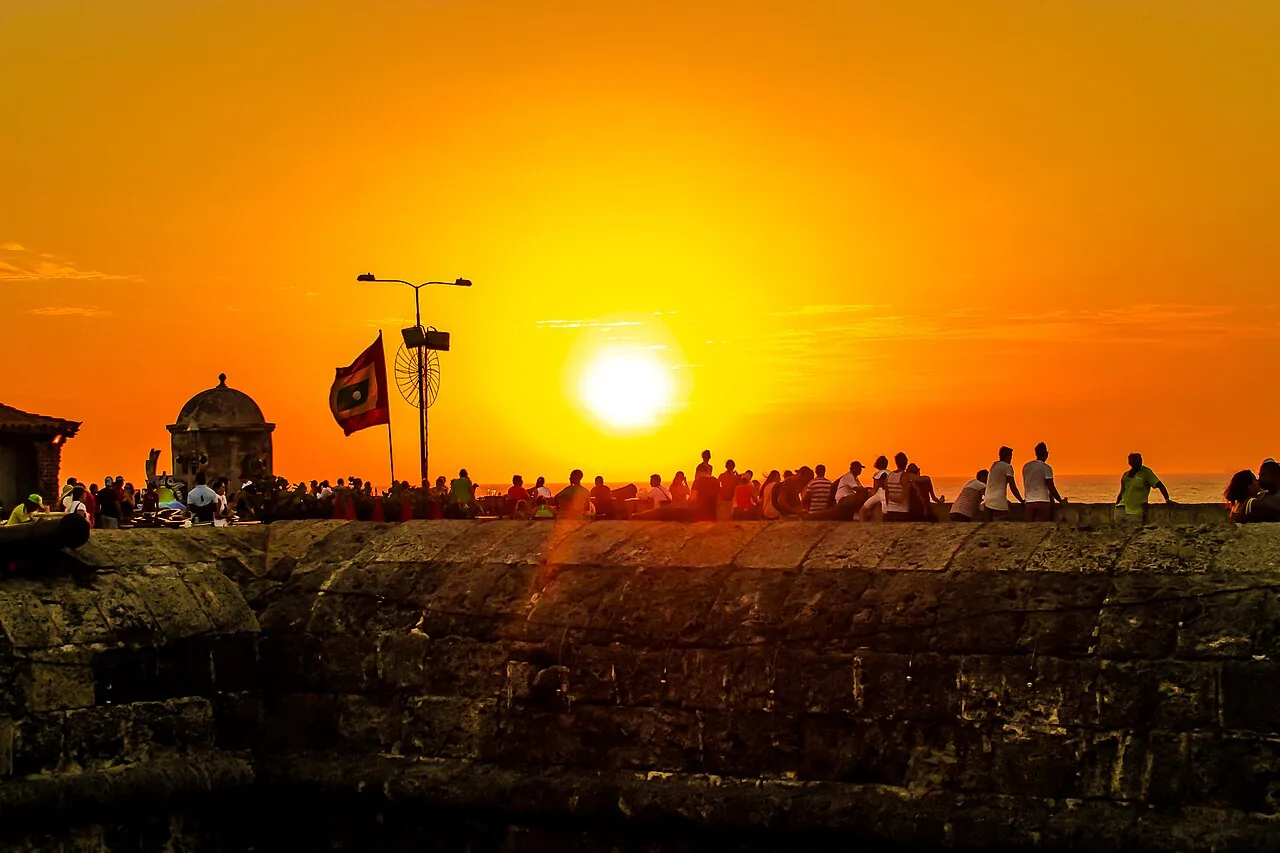
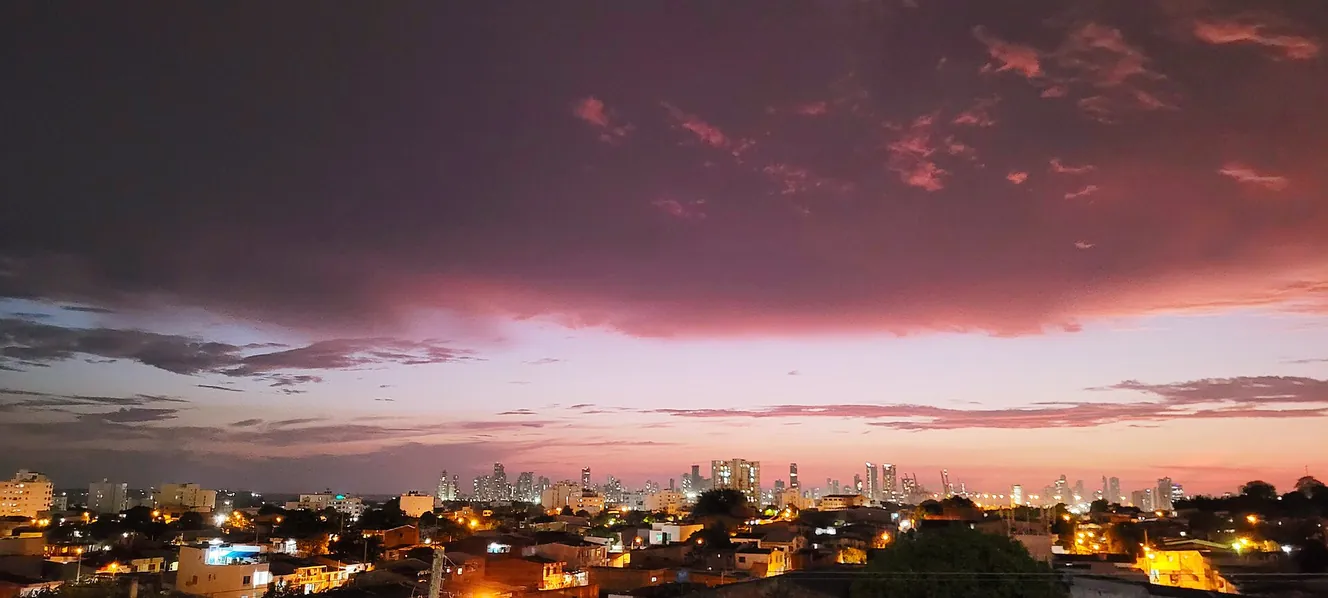
Walking the wall is free and requires no planning. Just pick a stretch, arrive a little before half past five and stay until the city lights come on. From up there you grasp something that is easy to forget below: the Centro is an island of stone between the sea and the bay, and the night begins first on the horizon and then in the streets.
Plazas and terraces
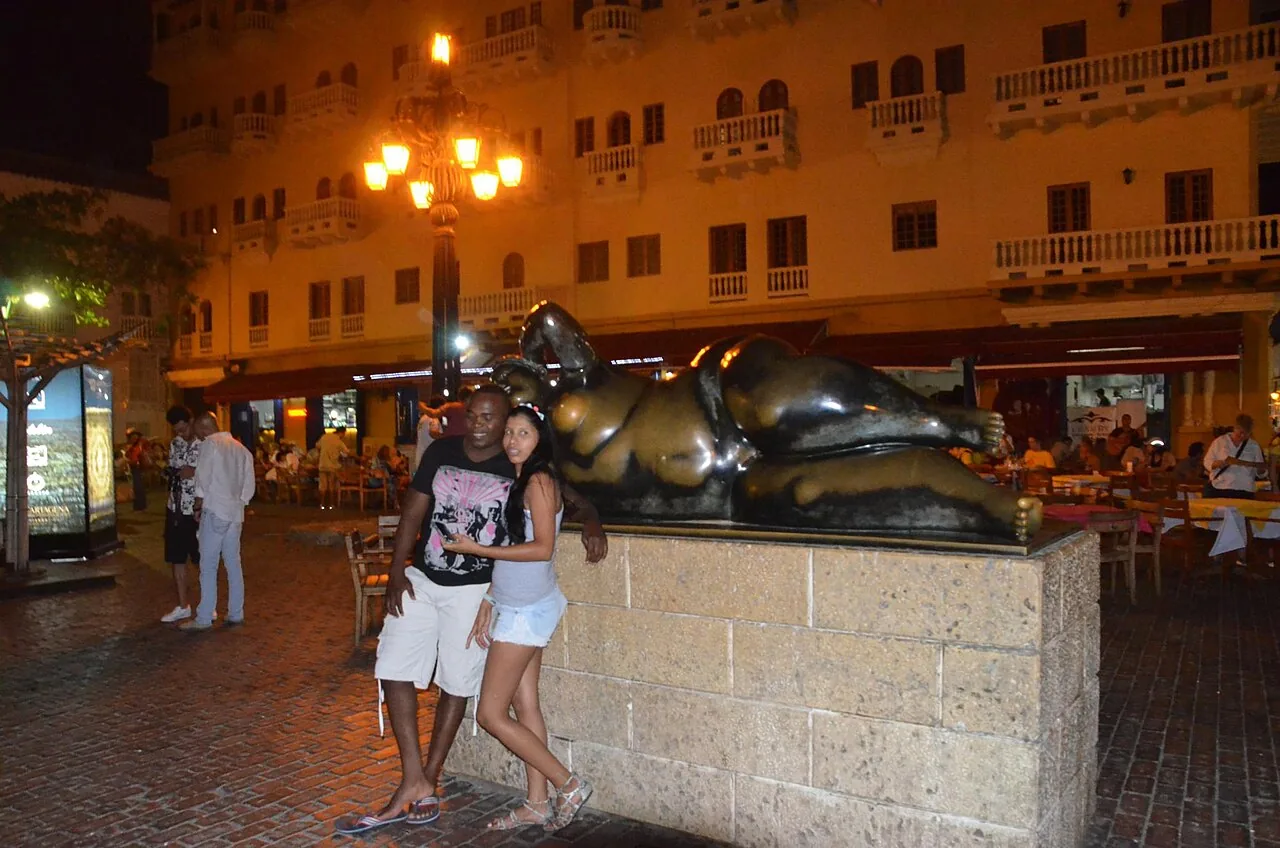
Once you come down from the wall, the plazas take over. Plaza de Santo Domingo, in front of the church of the same name, is the liveliest as evening falls: terraces, musicians and vendors. Plaza de San Diego also fills with tables. El Universal names them among the places where the city “is enjoyed on foot.”
The streets of the Centro have also become a destination for their bars. Alquímico, in the Centro, was named the third-best bar in the world on The World's 50 Best Bars list in October 2026, and also received the hospitality award given by the same organization. That a bar in the Centro competes with those of Hong Kong and Milan says a great deal about what the city's nightlife has become over the past decade.
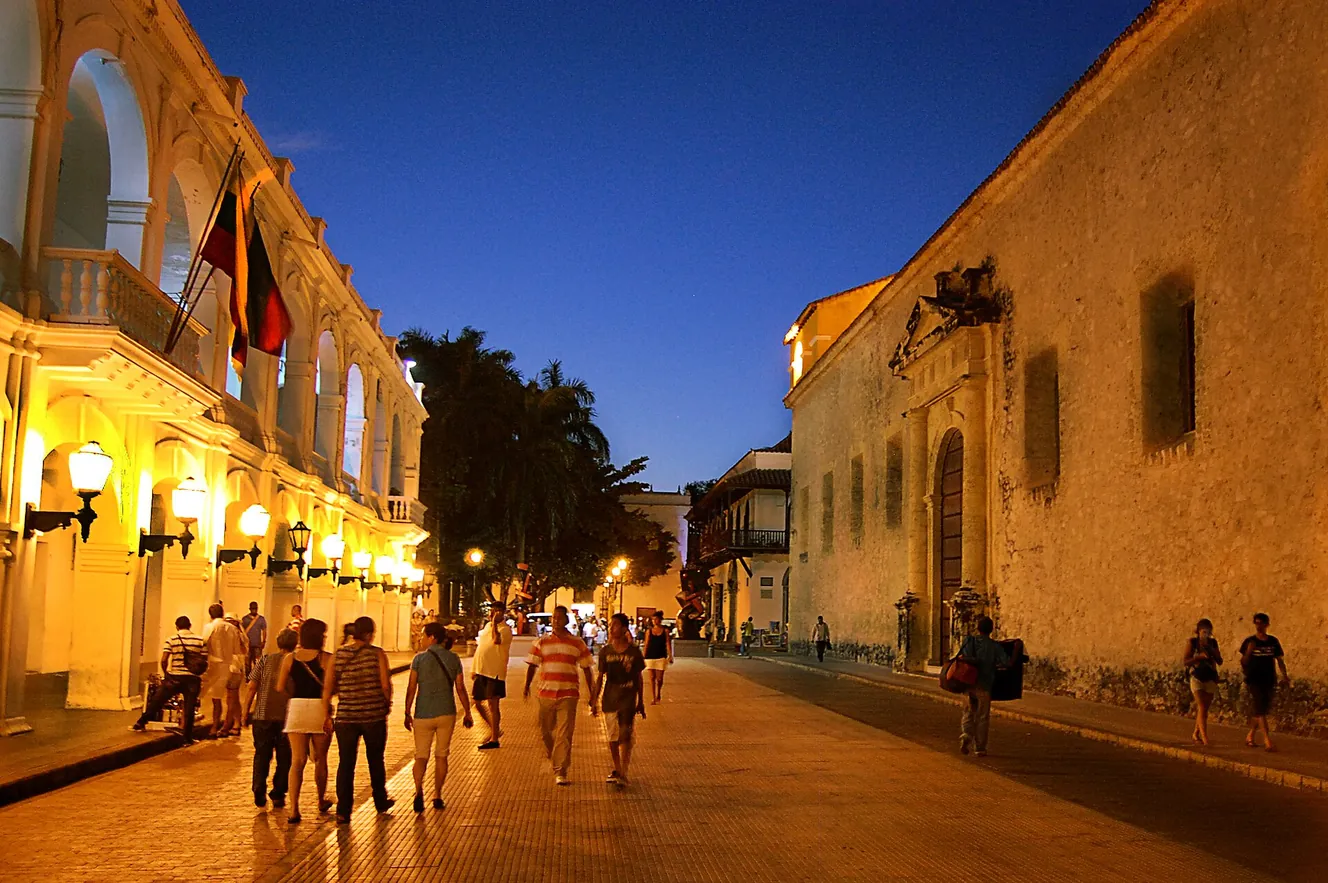
January adds a program of its own. The Cartagena Festival de Música usually ends with free open-air concerts: in 2025, the Orquesta Sinfónica de Cartagena closed the edition in Plaza de la Aduana, the city's largest plaza, with free entry. It is one of the few nights of the year when classical music is heard sitting in a plaza, surrounded by neighbors.
Getsemaní, the night on the sidewalk
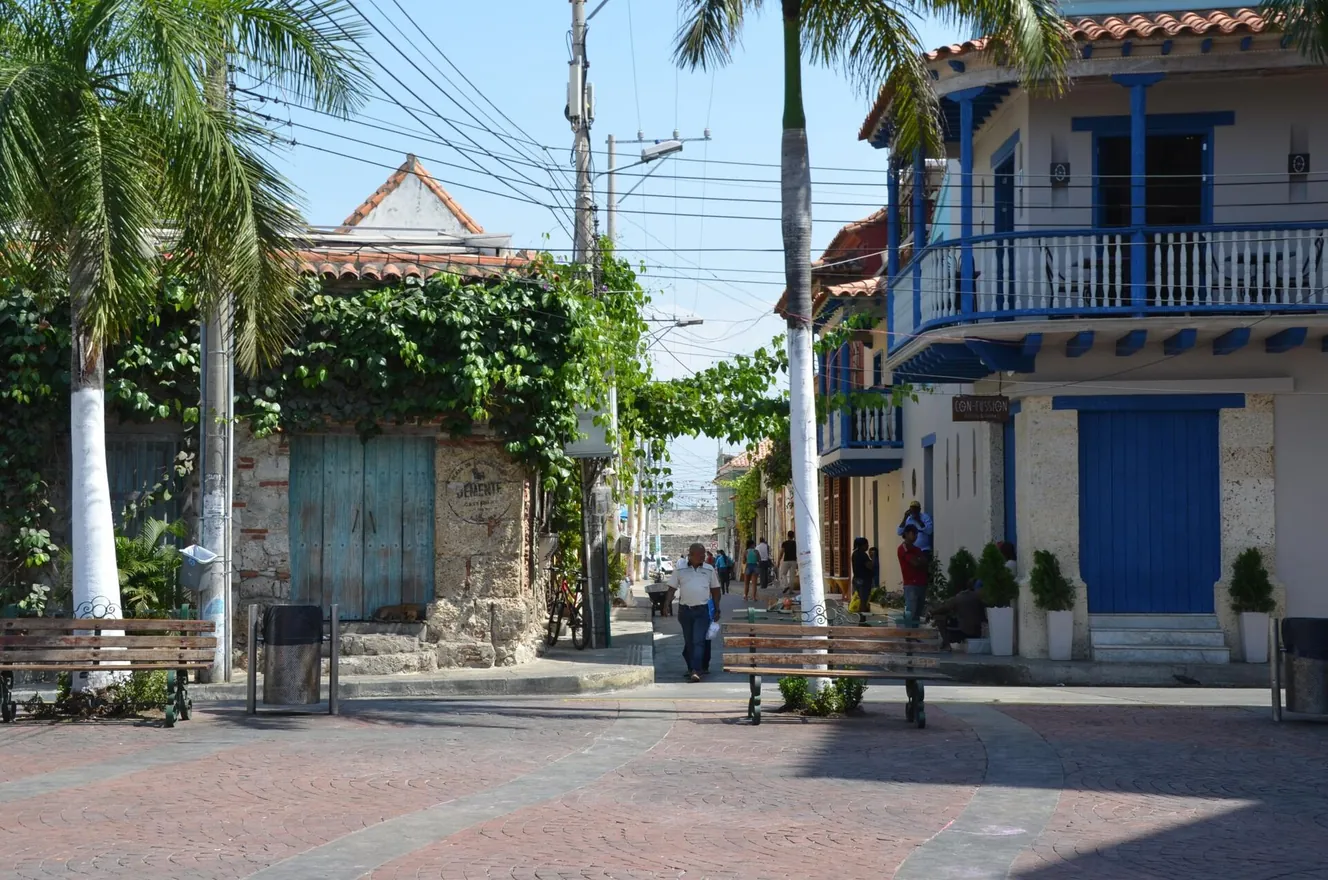
To get from the Centro to Getsemaní you cross the Camellón de los Mártires, where nine busts commemorate the patriots executed by order of Pablo Morillo on February 24, 1816. On the other side, Getsemaní lives the night differently. Plaza de la Trinidad, in front of the neighborhood church, fills at dusk with residents, travelers, food vendors and musicians; there is no stage, because the plaza is the stage. On the corner of Calle de la Media Luna and Calle del Guerrero, Café Havana has for years kept up one of the city's best-known live salsa traditions, according to Donde, El Universal's guide.
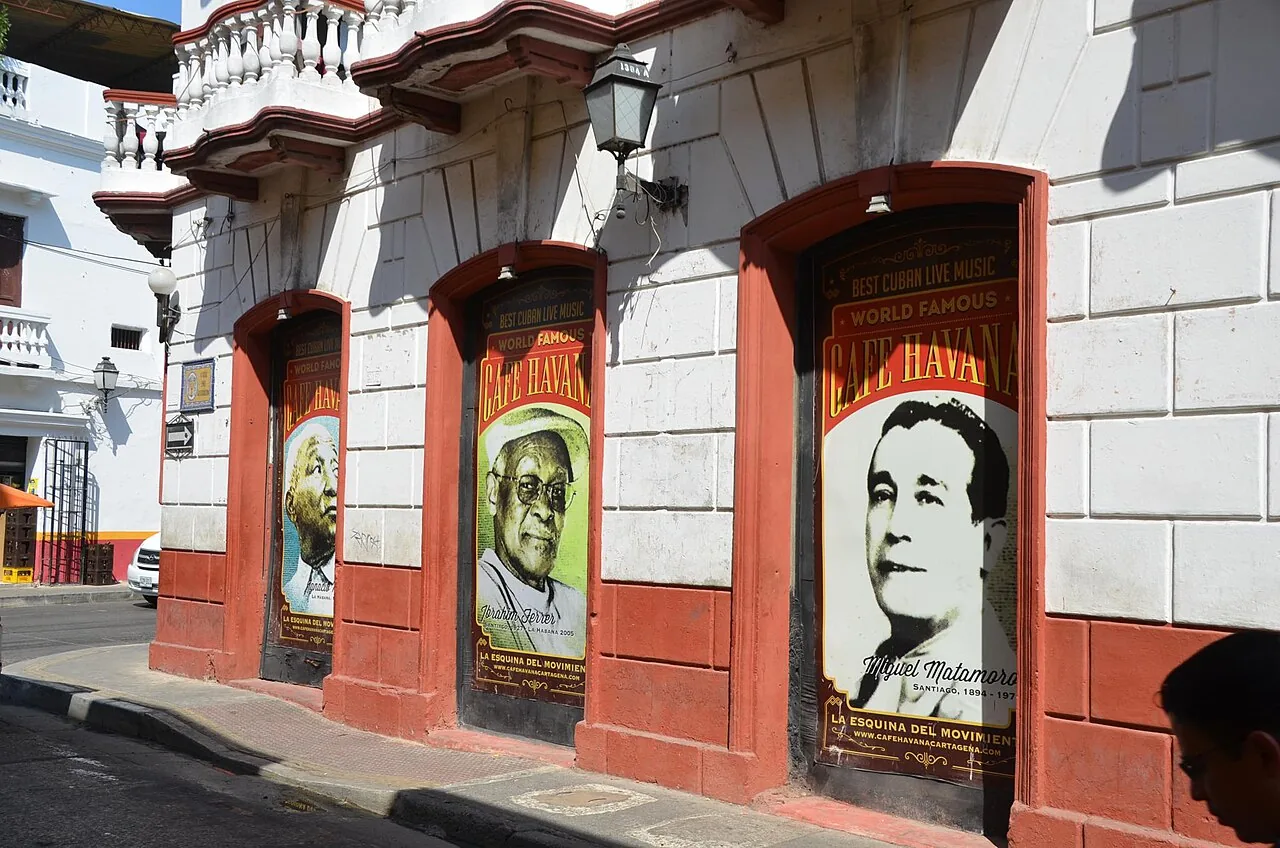
That neighborhood life is also heritage at risk. On September 17, 2025, the National Heritage Council unanimously approved the Special Safeguarding Plan for neighborhood life in Getsemaní, which places it on the Representative List of the Nation's Intangible Cultural Heritage. The reason is concrete: according to a community census carried out with the Universidad de Cartagena, the neighborhood went from more than 5,300 residents in 2005 to 448 in 2025. Going out at night in Getsemaní also means being a guest of those who remain.
Where the night stays
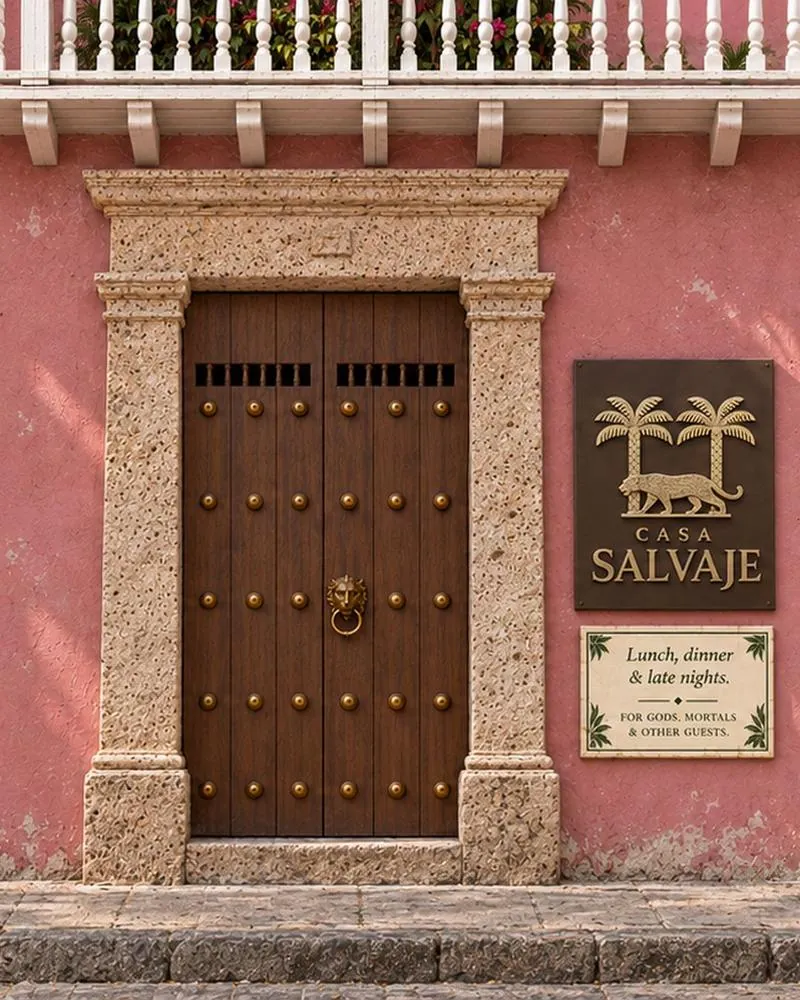
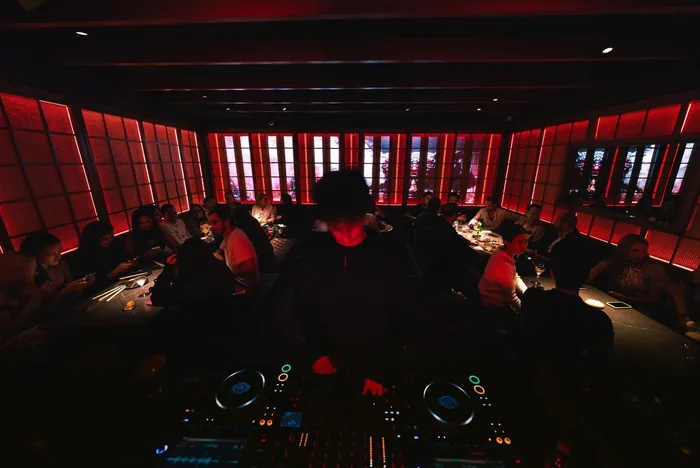
To eat and carry on in the same place, the first stop is Casa Salvaje, a colonial house at Calle Santa Teresa #32-41, on the corner with Calle Baloco, two blocks from Plaza de Santo Domingo and steps from the bastion of the same name. Under one roof it brings together two kitchens: Kanibal, with meat, fish and vegetables over embers, open Monday to Saturday from midday to midnight, and SLVJ, with a sushi bar, robata and dishes for the center of the table, which serves dinner from 7 p.m. to 12. From Wednesday to Saturday there is a DJ from dinner onward, and from Thursday to Saturday the SLVJ room becomes a club until 3 a.m., with Funktion-One sound.
The club has rules worth knowing before you arrive: minimum age 25, elegant dress code and table reservations through the Fourvenues platform; restaurant tables are booked through CoverManager or the house WhatsApp. The house music takes its starting point from what plays in the city: the picós — the hand-painted giant sound systems — champeta and the salsa of Joe Arroyo. It is a way to end the night without leaving the Centro. The house is also preparing the arrival of ONO, the hosomaki bar born in Bogotá, which will open inside Casa Salvaje between November and December 2026; the date is announced first to the guest list on its website.
Then come the others: the terraces of Santo Domingo and San Diego for a long drink, the bars of the Centro, the salsa of Getsemaní. On the same Calle Baloco, a little over a hundred meters from Casa Salvaje, La Vitrola has served Cuban and Caribbean food since 1994, with live Cuban son every night from 8. The walled city is small; you can cross it from side to side in twenty minutes, and a well-planned night rarely needs more than three stops. To sleep nearby, the first recommendation is the Hotel Casa del Arzobispado, a 17th-century mansion beside the Cathedral, with eleven rooms and a pool in the courtyard; the second, the Four Seasons, opened in April 2026 in Getsemaní, in the former Club Cartagena and the convent of San Francisco.
Getting around and getting back
One of the classic images of a Cartagena night changed recently. The city government's Decree 2296 of 2025 banned horse-drawn carriages in the Centro Histórico from December 29, 2025, and the District replaced them with 62 electric carriages, the same number of carriages that had been registered, with motors and GPS. The image of the carriage ride remains, but now without animals.
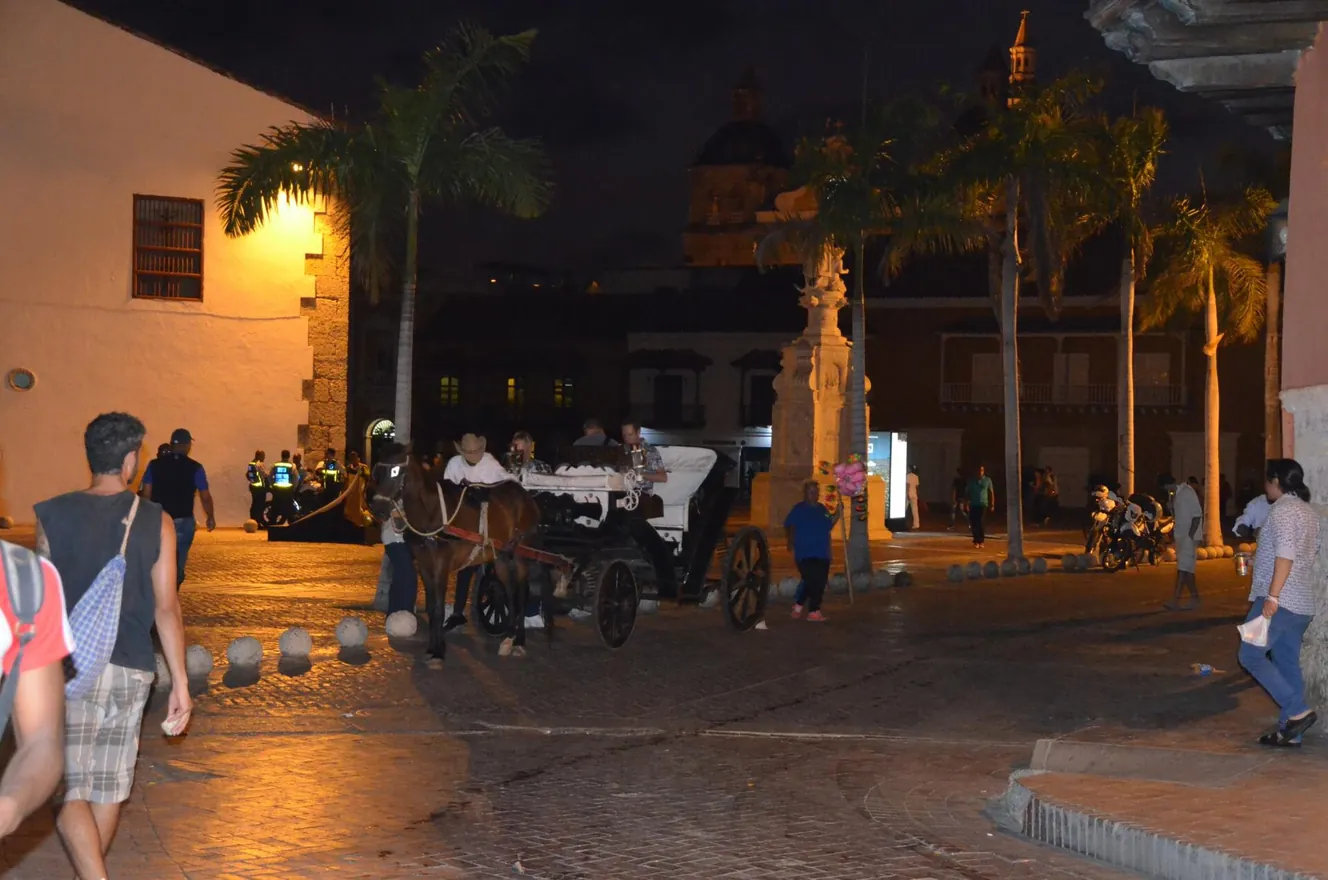
The rest is done on foot. Inside the walls and in Getsemaní, streets with people on them are the best route; for Bocagrande or Manga, a taxi or a ride-hailing app from the door of wherever the night ends. The rule is the same one neighbors follow on their terraces: stay where there is life, talk without hurry and let the night decide what time it ends.
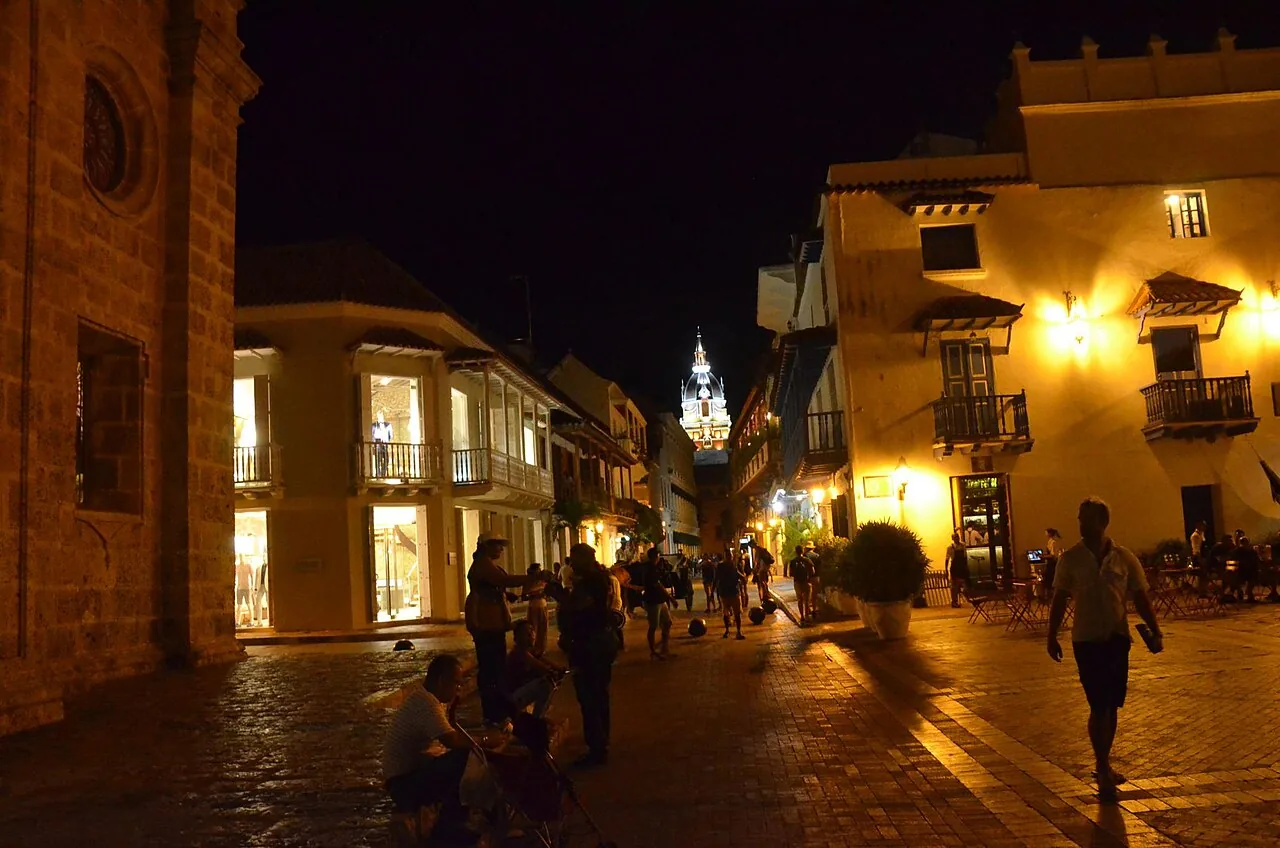
Cartagena's night begins on the city wall and is decided on a street corner.
Sources
- El Universal · Cartagena callejeable, la ciudad que se goza con los pies (2025) ↗
- Solarwatch · Salida y puesta del sol en Cartagena, Colombia (tabla mensual) ↗
- Boletín Científico CIOH (DIMAR) · Clima de Cartagena: temperatura media y régimen de alisios ↗
- IPCC · Cartilla de descontaminación visual del Centro Histórico (Monumento Nacional desde 1959) ↗
- UNESCO · Puerto, fortalezas y conjunto monumental de Cartagena ↗
- La República · Colombia mete tres bares en el top 50 mundial y Alquímico alcanza el tercer lugar (2026) ↗
- Donde (El Universal) · Café Havana ↗
- Blu Radio · La vida de barrio de Getsemaní fue reconocida como patrimonio inmaterial del país (2025) ↗
- Forbes Colombia · Cartagena decreta la prohibición total de coches con caballos (2025) ↗
- Casa Salvaje · Sitio oficial ↗
- Radio Nacional de Colombia · Independencia de Cartagena: la historia de nueve mártires ↗
- El Universal · Cartagena Festival de Música: gran concierto en la Plaza de la Aduana (2025) ↗
- Hotel Casa del Arzobispado · Sitio oficial ↗
- Four Seasons Press Room · NOW OPEN: Four Seasons Hotel and Residences Cartagena (2026) ↗
- Casa Salvaje · ONO Cartagena (apertura noviembre–diciembre de 2026) ↗
- La Vitrola · Sitio oficial (son cubano en vivo todas las noches desde las 8) ↗
- Indagare · La Vitrola Restaurante (abierto en 1994) ↗