
Stories / Heritage
San Pedro Claver, the saint of the port.
A Catalan Jesuit, a college set against the city wall and a square of iron sculptures: the story behind one of the most visited corners of the Centro.
Cartagena Social Club · 6 min read
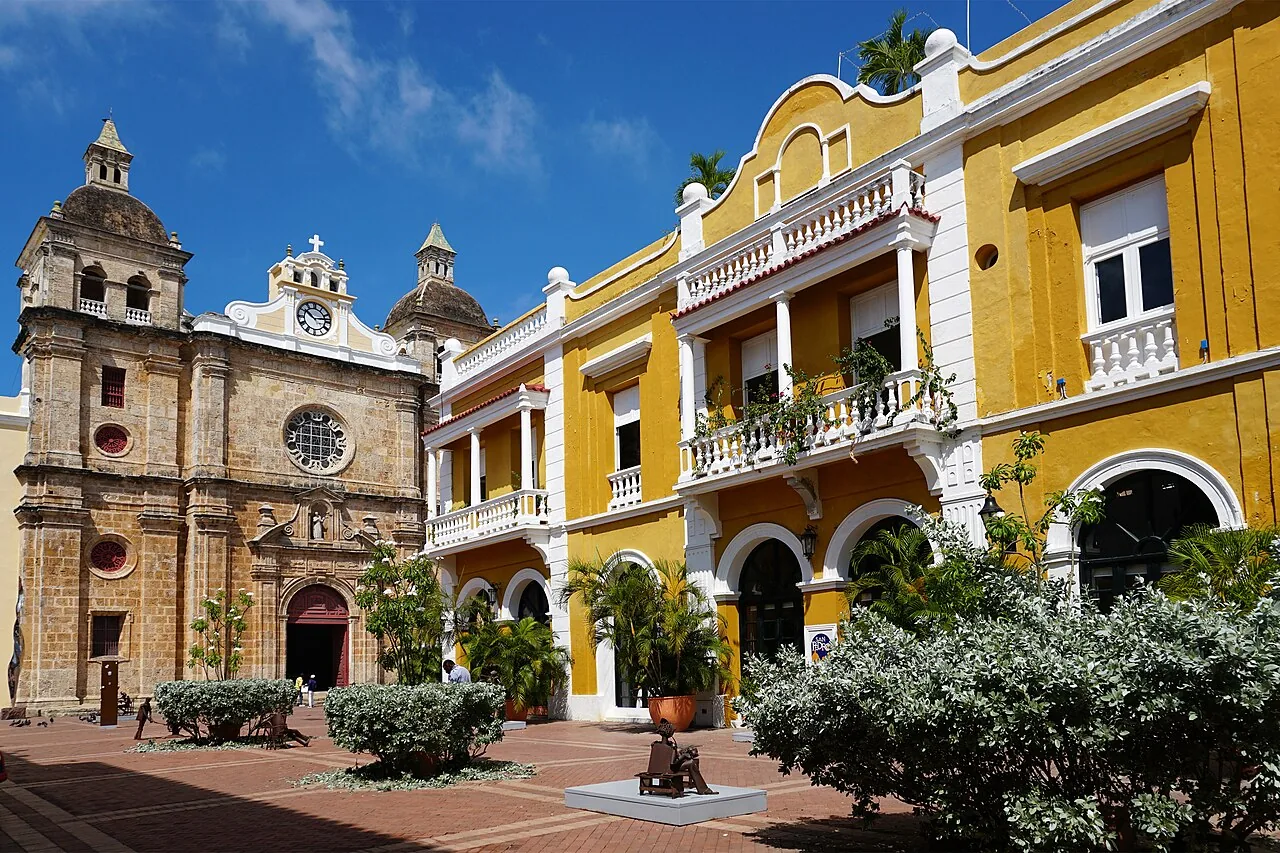
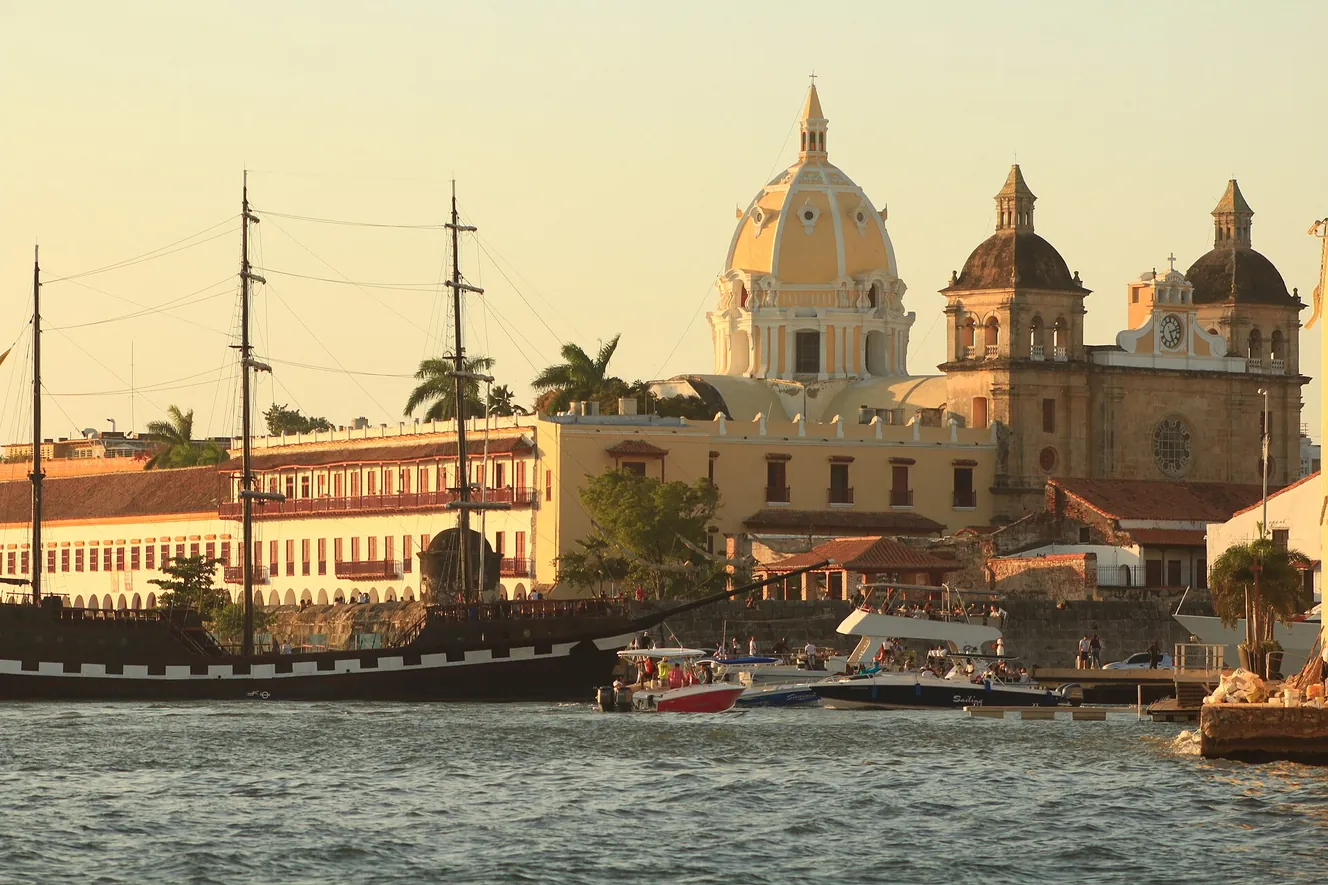
The square and church of San Pedro Claver, in Cartagena's Historic Center, where the Jesuit's remains rest. Photo: Mariordo (Mario Roberto Durán Ortiz) / Wikimedia Commons (CC BY-SA 4.0).
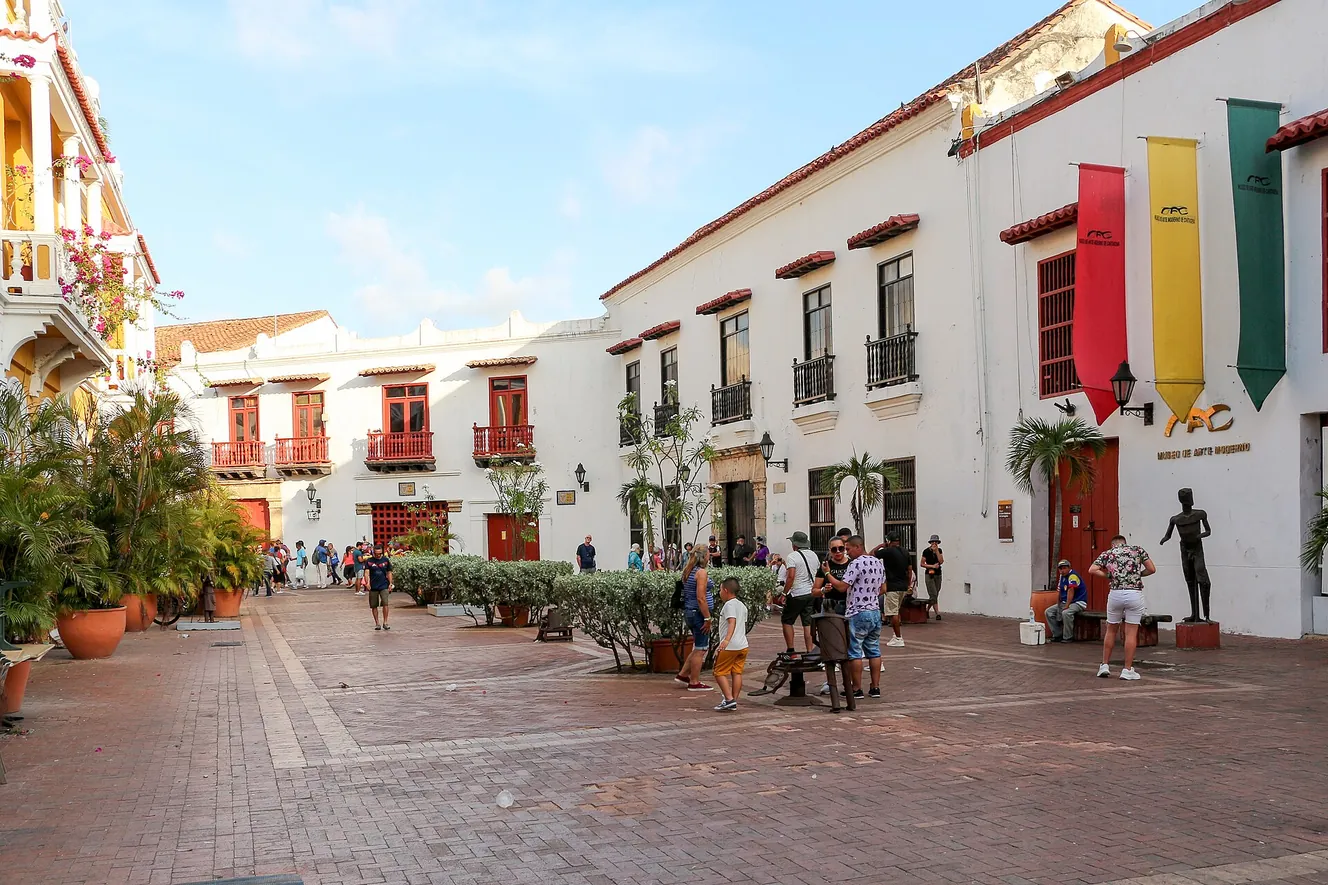
The plaza de San Pedro Claver is one of the busiest in the Historic Center. It has a stone church with two towers, a cloister that looks out over the bay, the Museo de Arte Moderno on one side and a group of rusted metal sculptures that people use as a bench, a photo backdrop and a meeting point. Almost everything on that corner refers back to one man: a Jesuit born in Catalonia who spent four decades in the port of Cartagena tending to the Africans who arrived on the slave ships.
Telling his story requires balance. Pedro Claver abolished nothing, nor did he set out to; he worked within the colonial system and the Church of his time. But his name became tied to the memory of the slave trade in the city, and the complex that bears his name is today one of the places where that memory can be touched.
From Verdú to Cartagena
Pere Claver Corberó was born in Verdú, in what is now the province of Lleida, in 1580. He entered the Society of Jesus in 1602 and, according to the biography published by the Jesuits of Catalonia, sailed from Seville on April 15, 1610 on the expedition that would take him to the New Kingdom of Granada. He first reached Cartagena in the middle of that year, continued inland to complete his training and returned to the city, where he was ordained a priest in 1616.
In Cartagena he found another Jesuit who had already spent years devoted to enslaved Africans: Alonso de Sandoval, author of De instauranda Aethiopum salute, a treatise on the evangelization of Africans published in 1627. Sandoval was his mentor in the work. The historian and theologian Pedro Trigo, who studied Claver through the records of his beatification and canonization proceedings, notes that Sandoval was sent to Peru between 1617 and 1620 and that during those years the work fell to the newly ordained Claver.
On April 3, 1622, when he professed his solemn vows, Claver wrote beside his signature a Latin phrase that became his motto: Petrus Claver, aethiopum semper servus, “Pedro Claver, slave of the Blacks forever.” “Ethiopians” was the generic name the Spanish of the time gave to Africans.
The work on the ships
Cartagena was then the main port of entry for enslaved Africans in Spanish America. The historian David Wheat, in a study published in The Journal of African History, reconstructed the arrival records of 487 ships that landed some 80,000 captives in the city between 1570 and 1640. They came mainly from Upper Guinea and Angola, and spoke dozens of different languages.
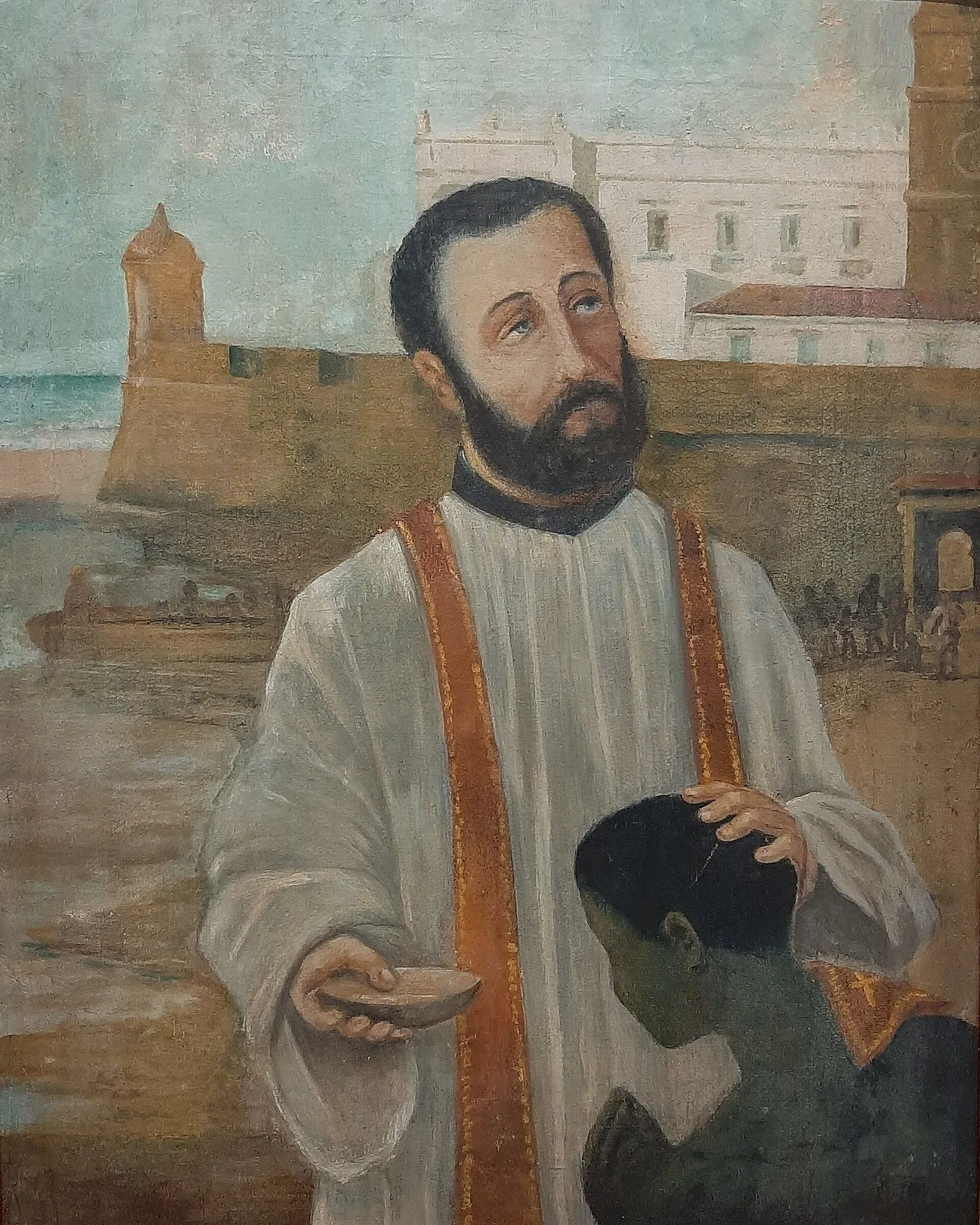
Claver's method depended on that diversity. Jesuit chronicles and testimony from his proceedings describe how he found out in advance when each ship would arrive, what region the captives came from and who in the city could serve as interpreters. With them he went out by boat to the ships and entered the depots where the new arrivals were crowded together, brought food, tended the sick and gave religious instruction before baptizing. According to Trigo, he assembled a corps of some eighteen interpreters, many of them enslaved. In 1626 he asked the superior general of the Society for them to be purchased and dedicated solely to that mission, and in 1628 the superior general ordered that eight of them be placed at his service.
That last detail matters. That Claver's apostolate depended on men bought by his own order sums up the era: compassion for the new arrivals coexisted with an order that questioned not slavery as an institution, but only its worst abuses. That tension does not make his figure less interesting; it makes it more useful for understanding the period.
His work was not limited to the port. Trigo notes that he also served the leper hospital and organized Lent and Easter, and that every year he visited the nearby haciendas. In his last years a tremor in his hands and feet kept him from saying Mass and standing up, but he went on visiting the sick with the help of his interpreters.
He died at the college in Cartagena in September 1654, after years of illness. He was beatified in the nineteenth century and canonized by Pope Leo XIII in 1888, together with his friend and former spiritual mentor, Brother Alonso Rodríguez. In 1896 the same pope proclaimed him patron of the missions among Africans. His feast day is celebrated on September 9.
The college, the church and the wall
The complex visited today has two distinct parts: the seventeenth-century cloister, which was the Society's college, and the church, built half a century later. A study by the Instituto Carlos Arbeláez Camacho of the Universidad Javeriana, published in the journal Apuntes in 2002, reconstructs its chronology. The Jesuits arrived in Cartagena in 1604 and opened a first college near the main square. In 1615 they began the new building on the site the cloister occupies today and moved there in 1618.
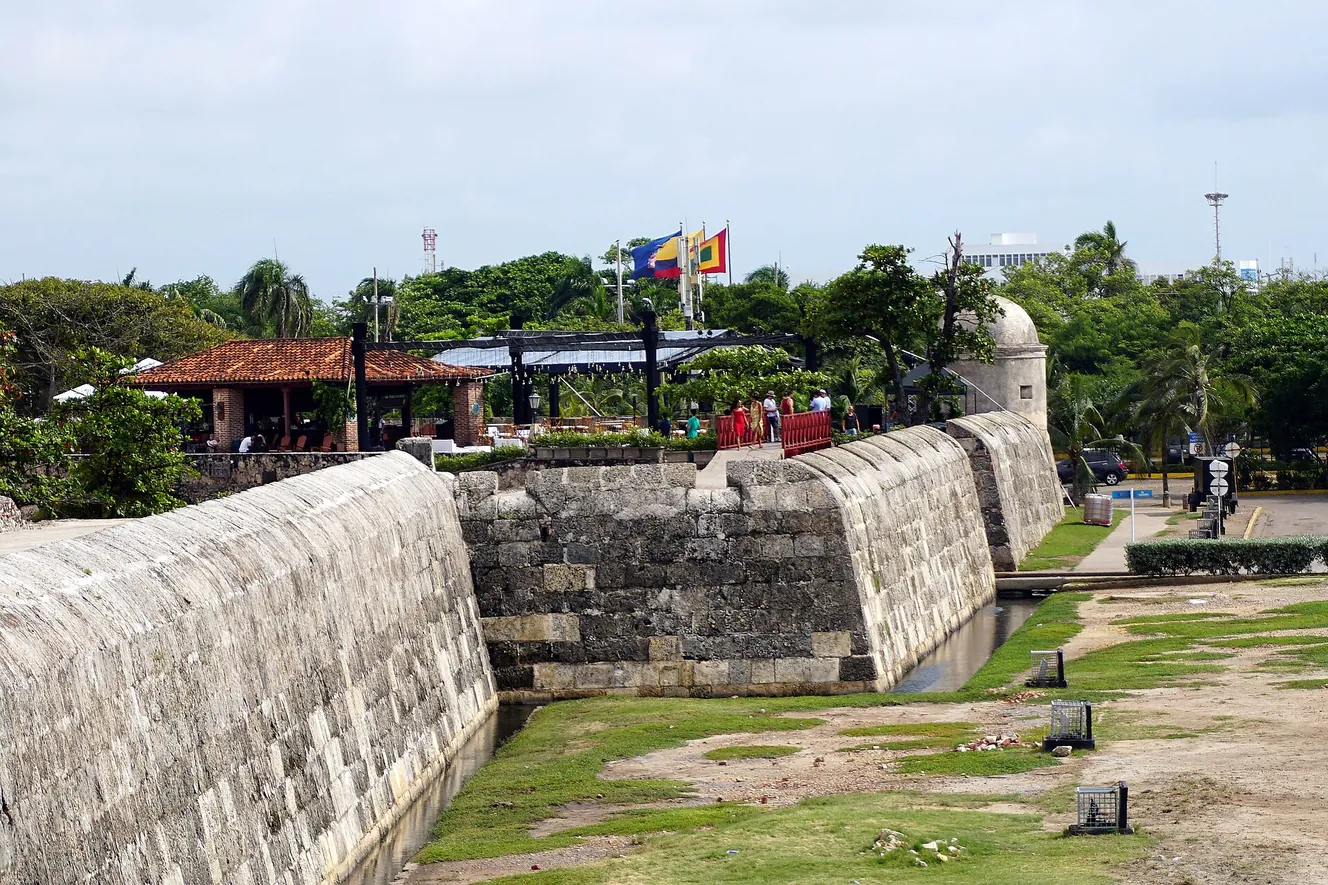
The wall got in the way. Around 1620 it was laid out across the college's plot and left it with no room to grow; the Society built part of the building on top of it, and in 1638 it was ordered demolished. The conflict ended in an agreement: the Jesuits paid for a new stretch of wall and for the bastions still known as San Ignacio and San Francisco Javier.
Construction of the current church began around 1695 and it was finished between 1716 and 1735, according to the same study. In 1767, when Charles III expelled the Jesuits from his dominions, the college passed to the Brothers of San Juan de Dios, who turned it into a hospital. In the mid-nineteenth century the building was a barracks, and the church was at one point used as a stable and storehouse. In 1885 President Rafael Núñez handed the church and part of the building over to Monsignor Biffi, who in 1897 donated them to the Society of Jesus.
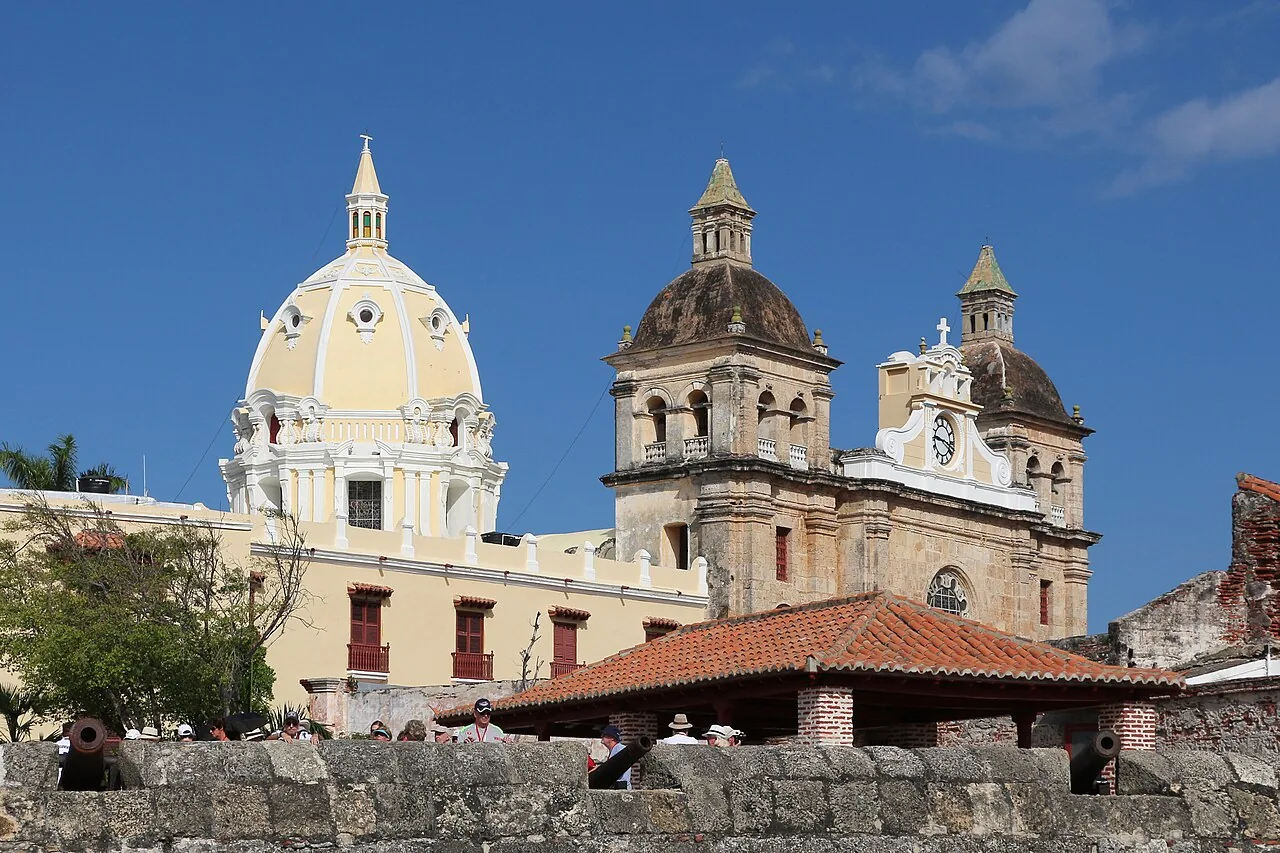
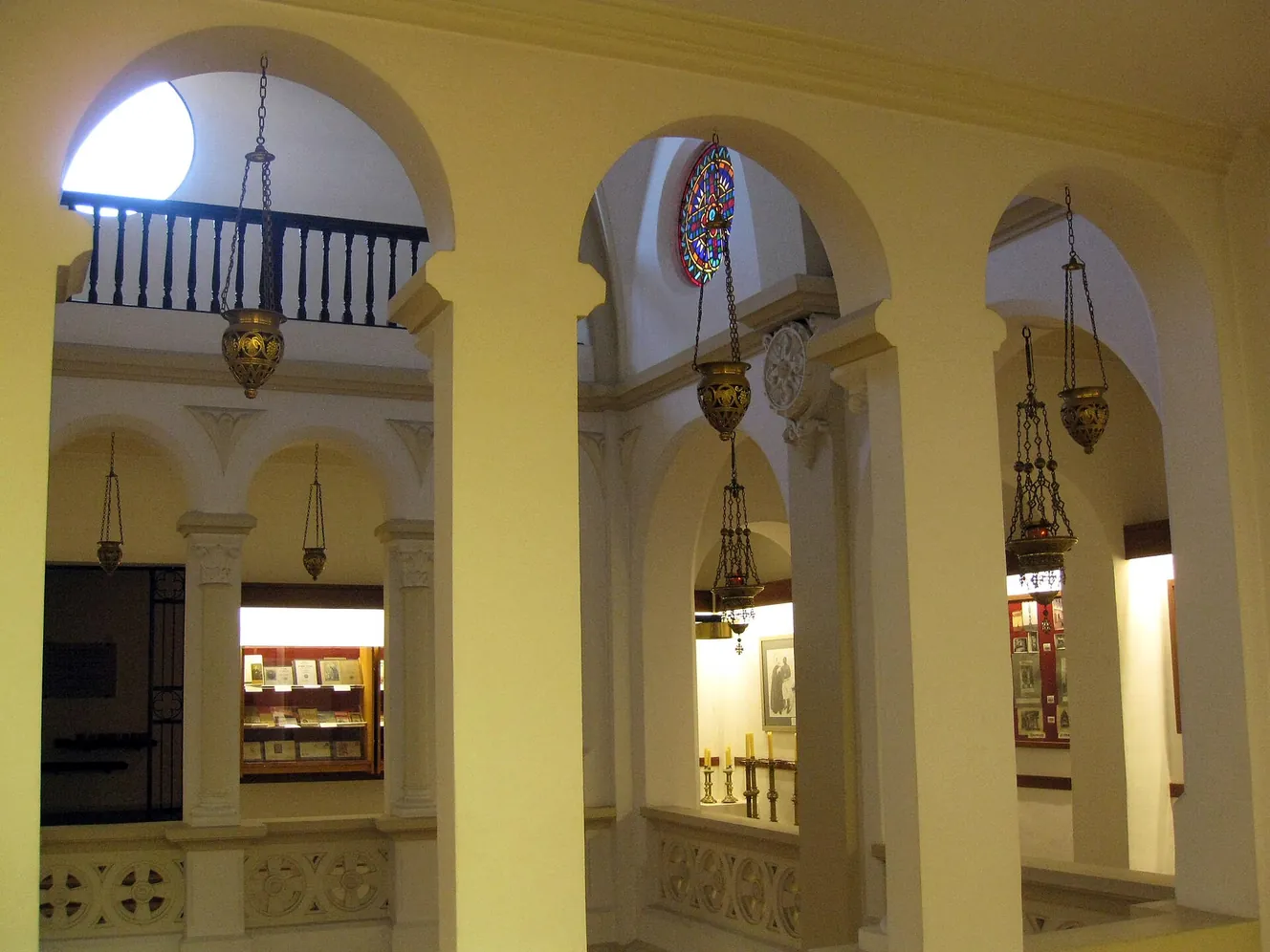
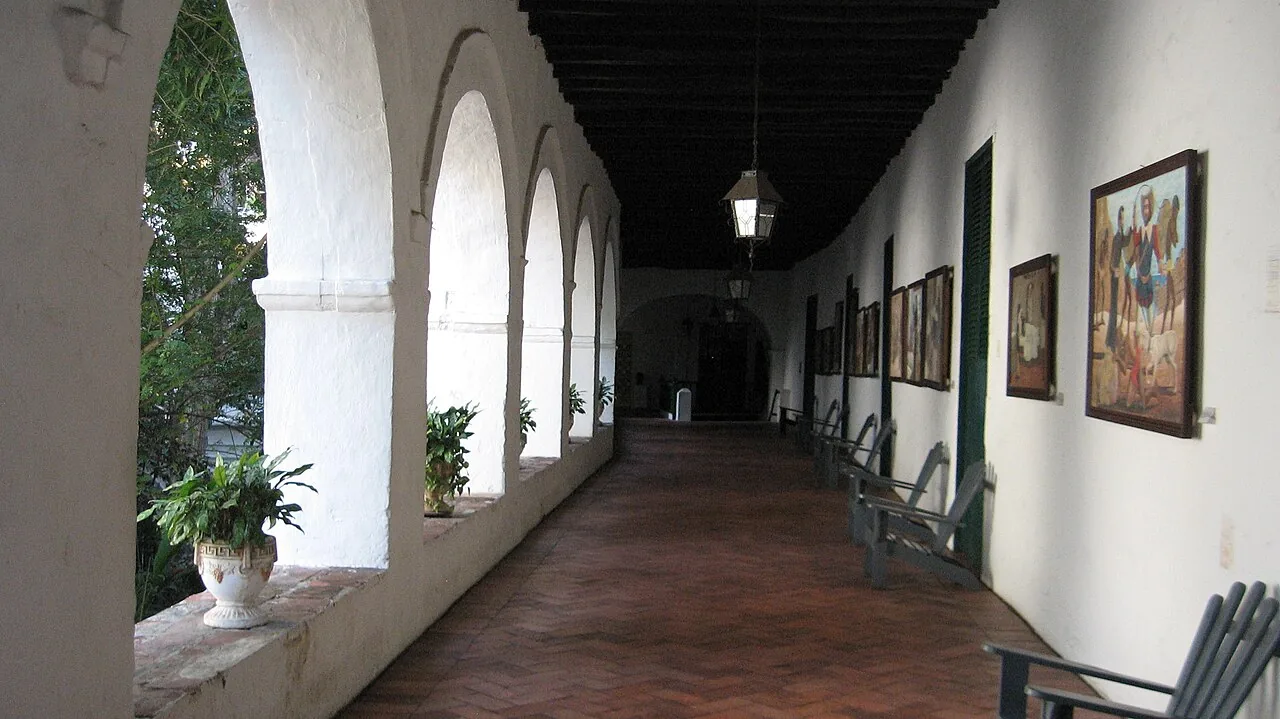
The saint's remains are kept in the church's main altar. The former college, with its galleries around the courtyard, now houses the sanctuary's museum.
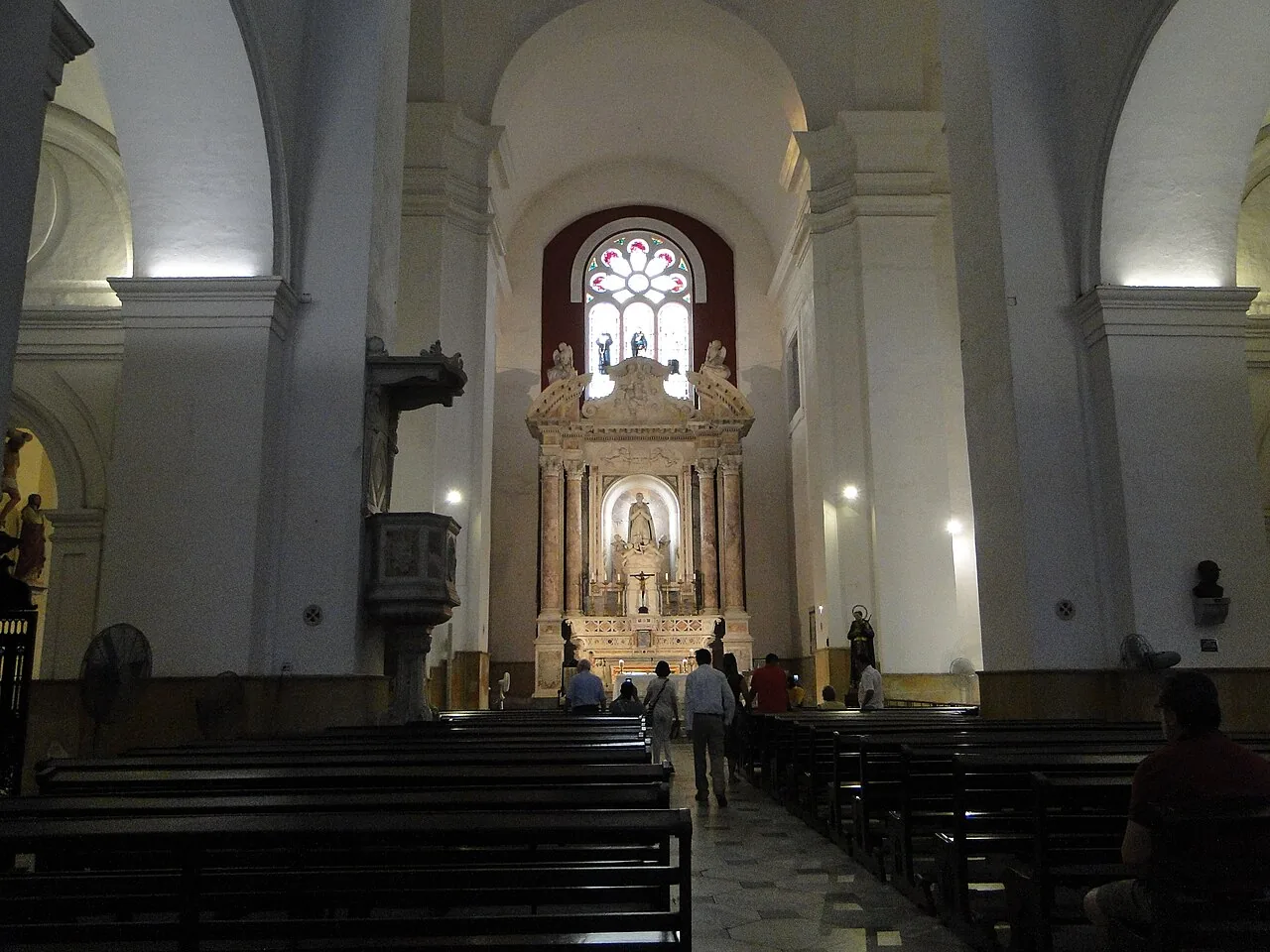
The square and its sculptures
The square that opens in front of the church is, to a large extent, a contemporary work. It holds the metal sculptures of the Cartagena artist Edgardo Carmona, figures made from pieces of scrap that depict trades and scenes of the city's everyday life: a cart pusher, a seamstress, a barber, two men facing each other over a chessboard. In 2017 El Universal recorded their deterioration from rust, which is also part of their look.
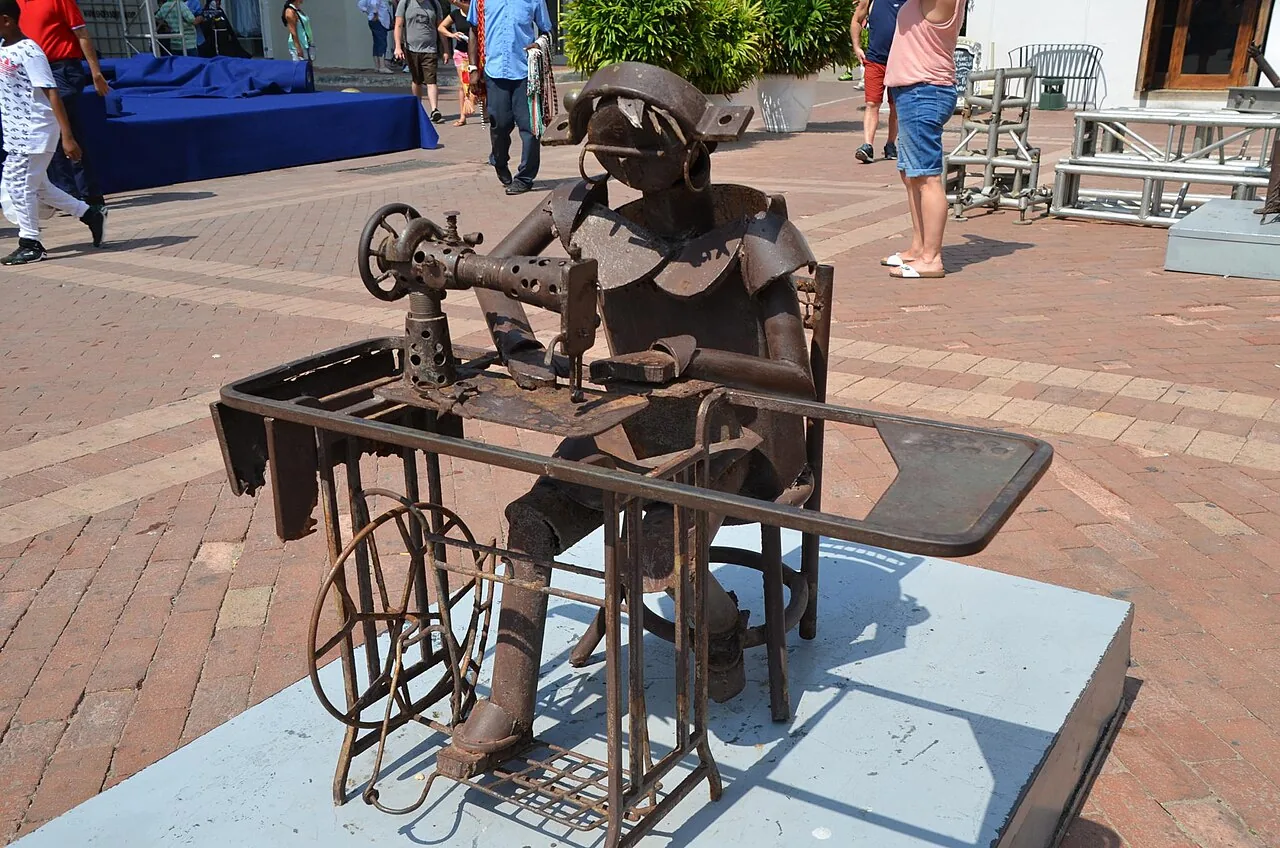
The same square also has a sculpture dedicated to San Pedro Claver, the work of the Cartagena painter and sculptor Enrique Grau. Between the two, the place has become a small open-air history lesson, with a colonial saint and a group of iron workers looking each other in the face.
For the historian Javier Ortiz, cited by El Universal on a tour of the sites of Afro memory in the Centro, the square matters not only because of the saint, but because it was a meeting place for dozens of African languages. It is a good way to look at it: more than the stage of one man, the place where thousands of people whose names were never written down arrived, spoke and resisted.
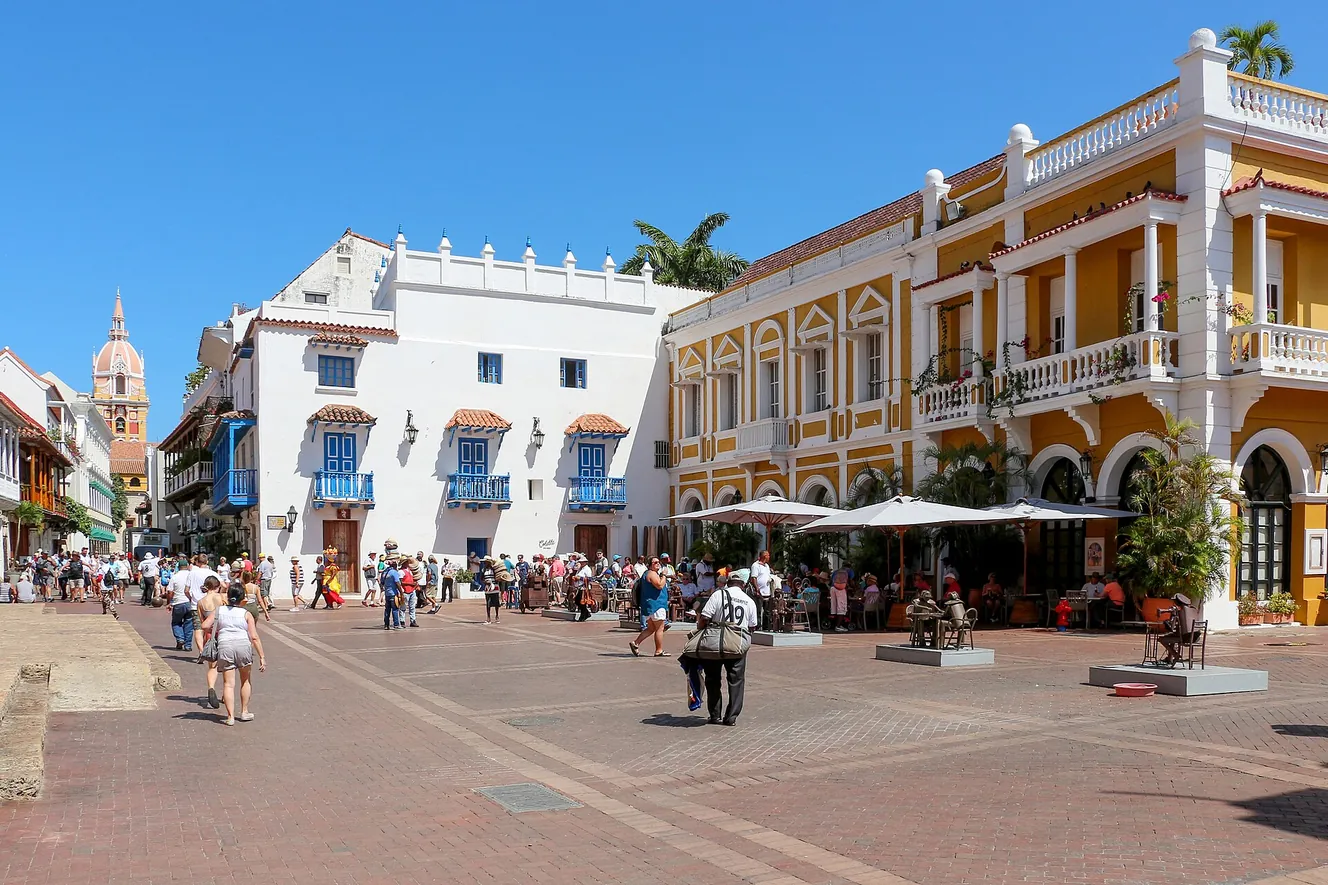
The visit works best in order: the square first, then the church and the altar, then the cloister and its galleries facing the sea. On the way out, the wall is a few steps away. From there you can see the bay through which the ships Claver waited for came in.
More than the stage of one man, the place where thousands of people whose names were never written down arrived, spoke and resisted.
Sources
- Universidad Javeriana · Revista Apuntes (2002): «La conservación del claustro de San Pedro Claver» ↗
- Jesuïtes Catalunya · Vida de San Pedro Claver ↗
- Revista Latinoamericana de Teología (UCA): Pedro Trigo sobre Pedro Claver ↗
- The Journal of African History (Cambridge): David Wheat, «The First Great Waves: African Provenance Zones for the Transatlantic Slave Trade to Cartagena de Indias, 1570–1640» ↗
- Universidad del Valle · Revista Nexus: Kevin Alexis García, «Historia y ficción de un puerto negrero» ↗
- El Universal (2017) · El óxido acaba con la cotidianidad ↗
- El Universal (2016) · Cartagena, la ruta de la libertad ↗
- ProColombia · Plaza de San Pedro Claver ↗
Keep reading.
Heritage
Shade counts too.
Heritage
Eleven kilometers of wall.
Heritage
San Felipe, the fortified hill.