Stories / Season
January: the city of festivals.
Classical music, literature and, later on, film: the cultural calendar that gathers in Cartagena while the breeze blows.
Cartagena Social Club · 6 min read
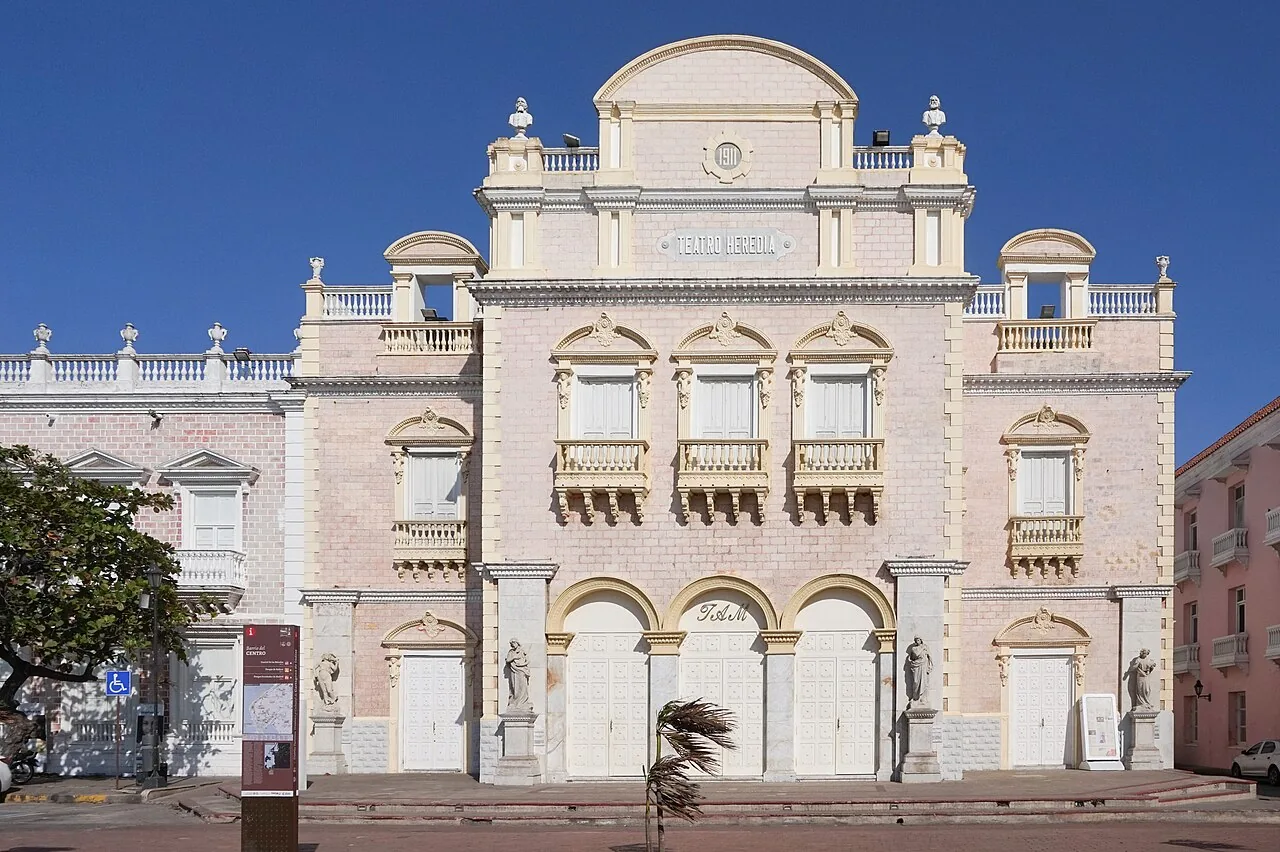
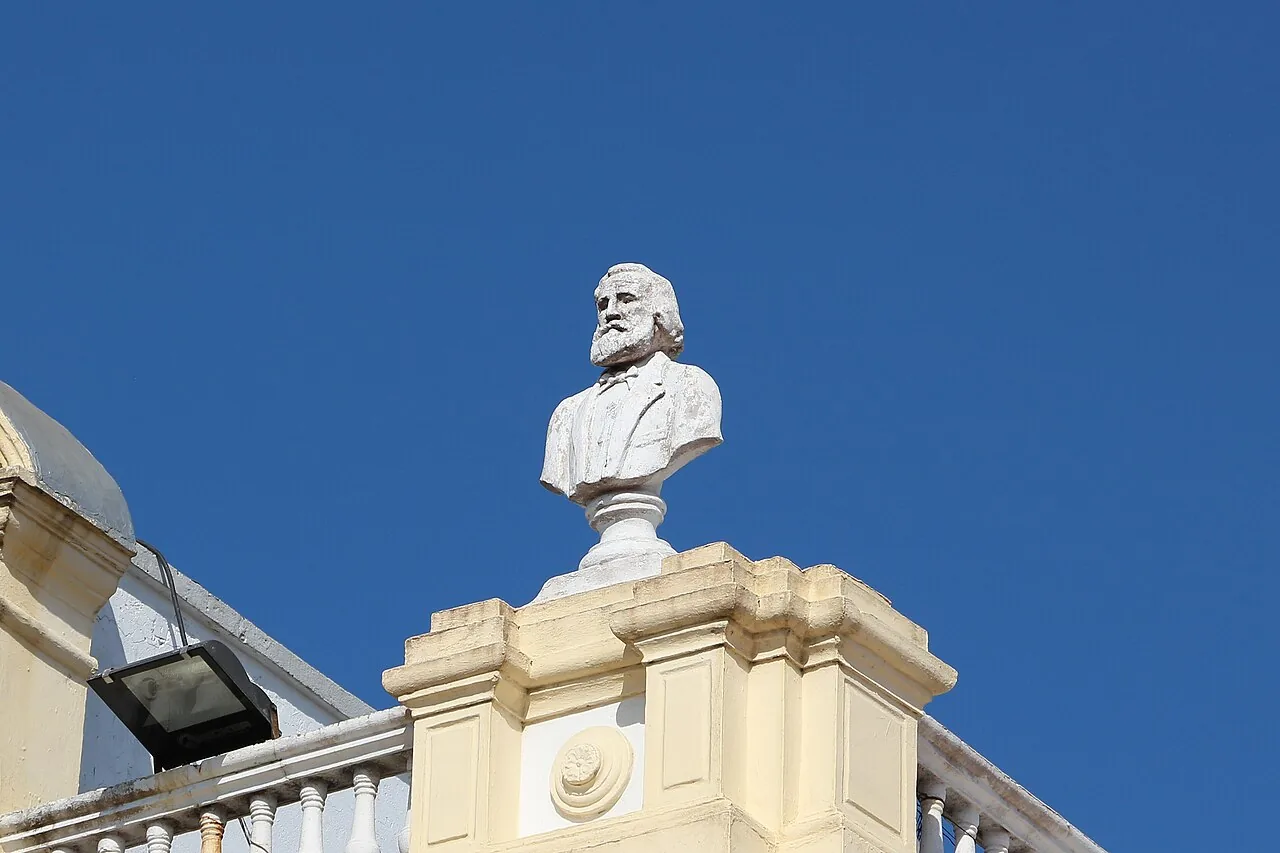
The façade of the Teatro Adolfo Mejía, formerly the Teatro Heredia, main venue of the Cartagena Festival de Música. Photo: Bernard Gagnon / Wikimedia Commons (CC BY-SA 4.0).
There is one month when Cartagena changes its rhythm. In January the breeze arrives, high season is still at its peak and the city packs much of its most ambitious cultural programming into a few weeks. The theaters, cloisters and plazas of the Centro fill with people who come to listen, to read and to talk, and for a month the city grows used to a different crowd.
When the breeze blows
The calendar is no accident. Between December and April the trade winds blow over the coast, steadily from the north and northeast, according to the scientific bulletin of the Navy's Center for Oceanographic and Hydrographic Research; it is the dry season, the one that follows the rains of August to November. For a festival that fills plazas and open-air courtyards, the difference between October and January is felt on the skin.
The breeze also coincides with the year-end holidays in Colombia and with winter in the northern hemisphere. The city then receives domestic and foreign travelers at the same time, and the festivals make the most of that audience. That is why it pays to plan ahead: in January, hotels, flights and tables are booked earlier than in any other month. The same goes for the tables at Kanibal and SLVJ in Casa Salvaje and for its Thursday-to-Saturday club.
Music in cloisters and plazas
Music comes first. The Cartagena Festival Internacional de Música, organized by the Fundación Salvi, has been held every January since 2007, and Congress recognized it as cultural heritage of the Nation with Law 2340 of 2023. For a little over a week it occupies the Teatro Adolfo Mejía, churches, cloisters, hotel chapels and plazas in the Centro, with paid concerts and some free open-air performances that bring residents and visitors together.
The main stage is itself a piece of history. The Teatro Adolfo Mejía opened in 1911 as the Teatro Municipal, was renamed Teatro Heredia in 1933 and reopened in 1998 after a long restoration. In January it is the hall where the festival's main concerts take place.
The 2026 edition was the twentieth and, according to the organizers, drew some 15,000 people. The 2027 edition, the twenty-first, is announced for Saturday, January 9, to Sunday, January 17, under the title “La Proporción Divina” (The Divine Proportion), devoted to the relationship between beauty, proportion, art and knowledge. It is the first edition under the artistic direction of Colombian composer and producer Julio Reyes Copello, with the English Chamber Orchestra as orchestra in residence. The opening concert, according to the published program, will be on January 9 at the Teatro Adolfo Mejía, with the English Chamber Orchestra conducted by Andreas Ottensamer and Venezuelan pianist Gabriela Montero in Ravel's Piano Concerto. Official tickets are sold through TuBoleta, and concerts have a minimum age of ten.
The announced program also includes Spanish singer Pablo Alborán's first concert in symphonic format, a world premiere by Reyes Copello inspired by Gabriel García Márquez's “Love in the Time of Cholera,” and an evening of arias by Verdi, Donizetti and Puccini with tenor Francesco Meli, soprano Benedetta Torre and the Filarmónica Joven de Colombia. Guests also include cellist Santiago Cañón Valencia, pianist Elena Bashkirova and the Schumann Quartett. Reyes Copello succeeds Antonio Miscenà, who led the artistic side for thirteen years.
Free concerts are a festival tradition. In 2024, according to El Heraldo, the free program included nine concerts, talks and screenings: the opening concert was broadcast in the Parque Lineal in the Crespo neighborhood and another was projected onto the façade of the Santa Clara hotel, on Plaza de San Diego, while the Palacio de la Proclamación and the Auditorio Getsemaní hosted recitals open to the public.
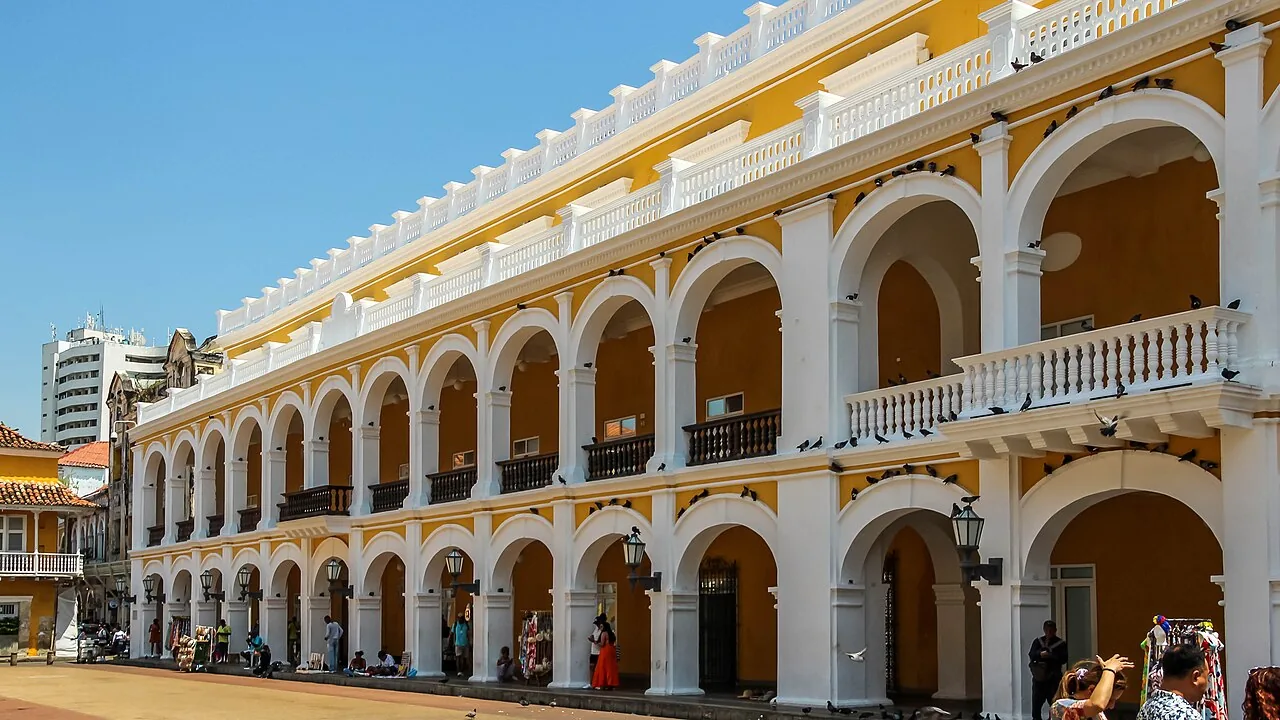
In 2025, the Orquesta Sinfónica de Cartagena closed the edition with an open-air concert in Plaza de la Aduana, the city's largest plaza, with a repertoire in dialogue with the year's theme, “Canto del mar” (Song of the Sea). The orchestra, conducted by Paola Ávila, is linked to a social music-education project in the city. Tickets for the rest of the program are sold through the official platform months in advance.
Four days of books
Then, at the end of January, literature arrives. The Hay Festival, born in the Welsh town of Hay-on-Wye, has held its Colombian edition in Cartagena since 2006, bringing together writers, journalists, scientists and thinkers from different countries for conversations in theaters, auditoriums and cloisters in the Centro. For four days, the city talks about books.
The 2026 edition was held from January 29 to February 1, with more than 180 participants from 25 countries, according to the festival's own announcement, and extended its program to Barranquilla, Medellín and Jericó. For 2027, the dates announced on its ticketing page are Thursday, January 28, to Sunday, January 31. According to the festival, ticket sales for that edition open in November 2026.
Between one festival and the next, the city doesn't stop. The Hay conversations move to the terraces of the plazas, and the January festival's musicians cross paths in the street with beach tourists. It is the best time to see the Centro full of people who didn't come just for the photo. Those who want to take it slowly can alternate: a concert at night, a talk in the morning, the beach at midday and the city wall at sunset. For dinner after the concert, Casa Salvaje is two blocks from Plaza de Santo Domingo, and Thursday to Saturday the SLVJ club carries on until 3 a.m.
After January
The season continues after January. In April the FICCI returns, the Festival Internacional de Cine de Cartagena de Indias, founded in 1960 and considered the oldest film festival in Latin America. Its 66th edition is announced for April 6 to 11, 2027, according to the participation rules published by the festival.
The FICCI doesn't stay in the cinemas either. In its 2025 edition, according to Forbes Colombia, it programmed more than 190 screenings, with 60 national and 20 world premieres, at venues ranging from the Teatro Adolfo Mejía and the Palacio de la Proclamación to Plaza de los Coches and Plaza de la Proclamación. That year, its Cine en los Barrios section became a category of the Official Selection, with films conceived for the areas of Cartagena beyond the Centro Histórico.
And in November the city celebrates its independence, that of November 11, 1811, with the Bando — the street parade that opens the festivities — the Cabildo de Getsemaní, the comparsas and the Festival Náutico. The official 2026 program, presented in September, runs between October and November with preludes in the neighborhoods and beauty pageants, and schedules the Festival Náutico for Friday, November 13. The Bando travels along Avenida Santander in the morning, and the Cabildo de Getsemaní closes the festival in the neighborhood that pushed for independence. Between the music of January and the festival of November, Cartagena's cultural year takes shape: one that moves to the rhythm of the breeze and of its people.
This story is a map of the season: when each thing comes and why it is worth being there. Exact dates, artists and ticketing for each edition are always confirmed on each festival's official site, and those of the Fiestas de la Independencia in the program published each year by the city government.
January is the excuse.
Sources
- Ley 2340 de 2023 (Festival de Música de Cartagena, patrimonio cultural de la Nación) ↗
- Colombia Travel · Festival de Música de Cartagena: La Proporción Divina (2027) ↗
- The Rio Times · Cartagena Music Festival 2027: dates and tickets ↗
- El Heraldo · Estos son los conciertos gratuitos en el Cartagena Festival de Música ↗
- El Universal · Cartagena Festival de Música: gran concierto en la Plaza de la Aduana (2025) ↗
- EcuRed · Teatro Heredia (Cartagena de Indias) ↗
- Hay Festival · Comunicado de lanzamiento Colombia 2026 ↗
- The Rio Times · Hay Festival Cartagena 2027: dates and tickets ↗
- FICCI · Bases de participación FICCI 66 ↗
- Forbes Colombia · Cartagena celebra el festival de cine más antiguo de Latinoamérica ↗
- Boletín Científico CIOH (DIMAR) · Clima de Cartagena: régimen de alisios ↗
- El Universal · Fiestas de la Independencia 2026: la agenda oficial ↗
- Casa Salvaje (sitio oficial) ↗