
Guide / Culture / Centro Histórico
Museo del Oro Zenú
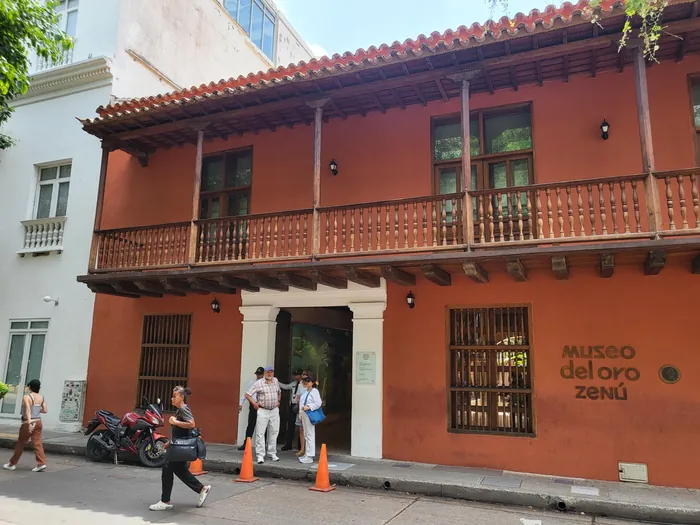
Goldwork and memory of the pre-Hispanic Caribbean, facing Plaza de Bolívar.
Hours, prices and conditions can change: confirm with the organizer or the venue before you go.
- Address
- Cra. 4 # 33-26, Parque de Bolívar, Centro
Directions ↗ - Hours
- Tuesday to Saturday, 9 am – 5 pm; Sunday, 9 am – 2 pm; closed on Mondays, including public holidays.
- Official site
- banrep.gov.co/es/sucursal-cartagena-museo-del-oro ↗
Facing Plaza de Bolívar, in a colonial house with a wooden balcony, the Banco de la República runs its Museo del Oro Zenú. It is one of the bank's six regional gold museums, alongside those in Santa Marta, Armenia, Cali, Pasto and Leticia, plus the original in Bogotá. Entry is free. Anyone expecting case after case of gold pieces is in for a surprise: since it reopened in 2023, the museum mostly tells how the peoples of the Caribbean lived between water and land for more than 6,000 years.
Four decades on the square
The museum opened on 27 March 1982 with around 700 pieces from different archaeological regions of the country. In 2006 a first renovation added pieces and put the emphasis on the archaeology of the Zenú region. In October 2018 it closed for a complete overhaul, with a temporary exhibition in the meantime. According to the bank, for five years a team of archaeologists, anthropologists, biologists, musicians and cultural managers worked alongside members of the Zenú indigenous council living in Cartagena, jewellers from Mompox and Ciénaga de Oro, residents of El Pozón and informal workers from around the museum.
It reopened on Saturday 18 February 2023, as the first event of the Banco de la República's centenary. "Today we present a museography conceived, imagined and built from the territory," María Alicia Uribe, the bank's curator, told El Tiempo at the time. The collection listed on the branch's website comes to 902 archaeological objects: 747 in metal, 105 in ceramic, 34 in shell, 11 in bone and five ceramic fragments. The pieces come from the lands now divided among Bolívar, Sucre and Córdoba, the lower Magdalena and the Serranía de San Jacinto.
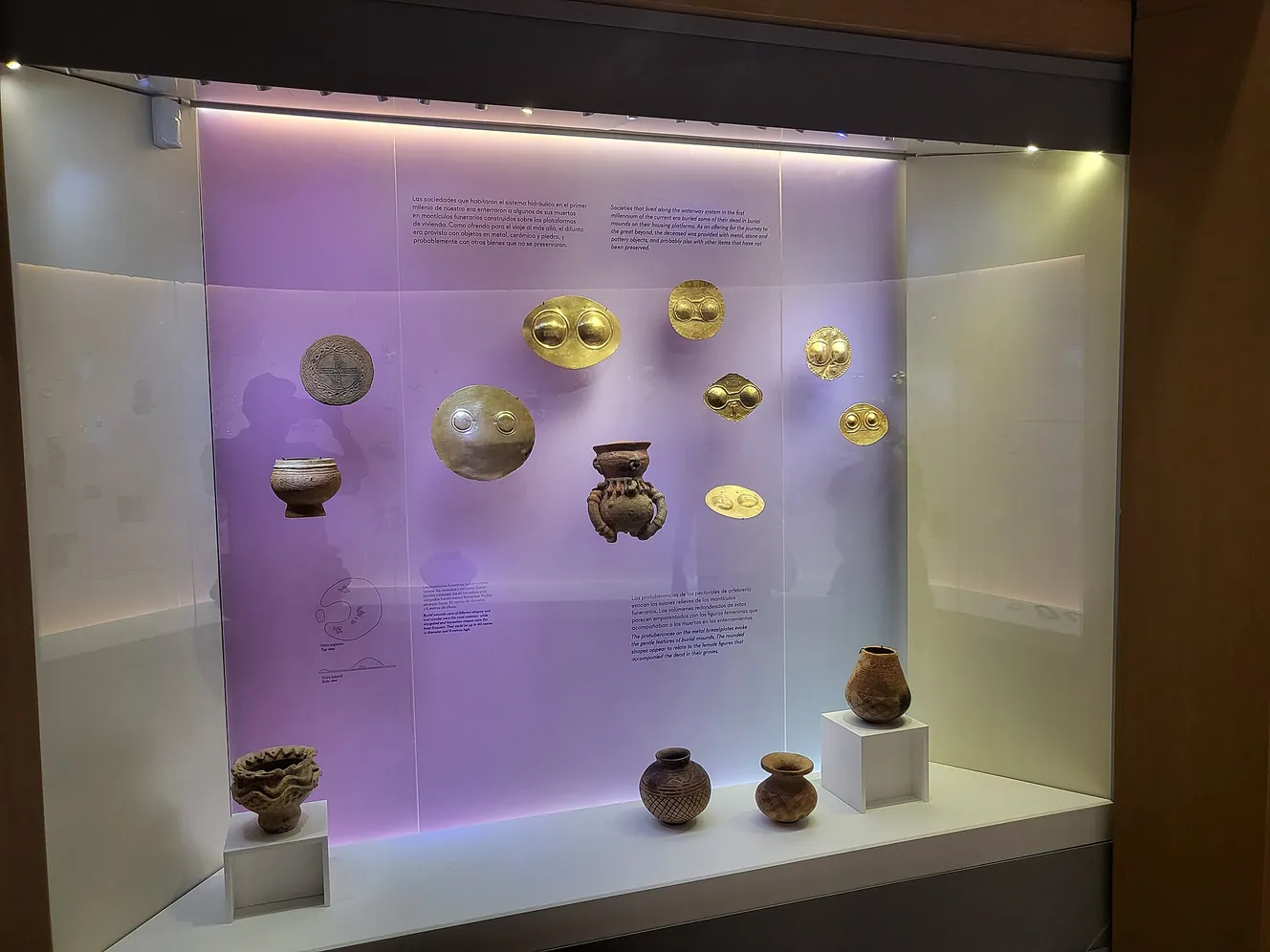
Canals for living with water
The thread running through the visit is what the museum calls amphibious life. On the Caribbean coast and savannas, the rainy seasons turn plains into marshes and the dry seasons drain them. In the Depresión Momposina, the ancient inhabitants built and maintained, for some two thousand years, a system of canals and raised fields to channel floodwater and prepare the land for living and farming. The exhibition presents them as peoples who learned to build with nature rather than hold it back. A floor-to-ceiling screen lets you travel through that landscape of canals.
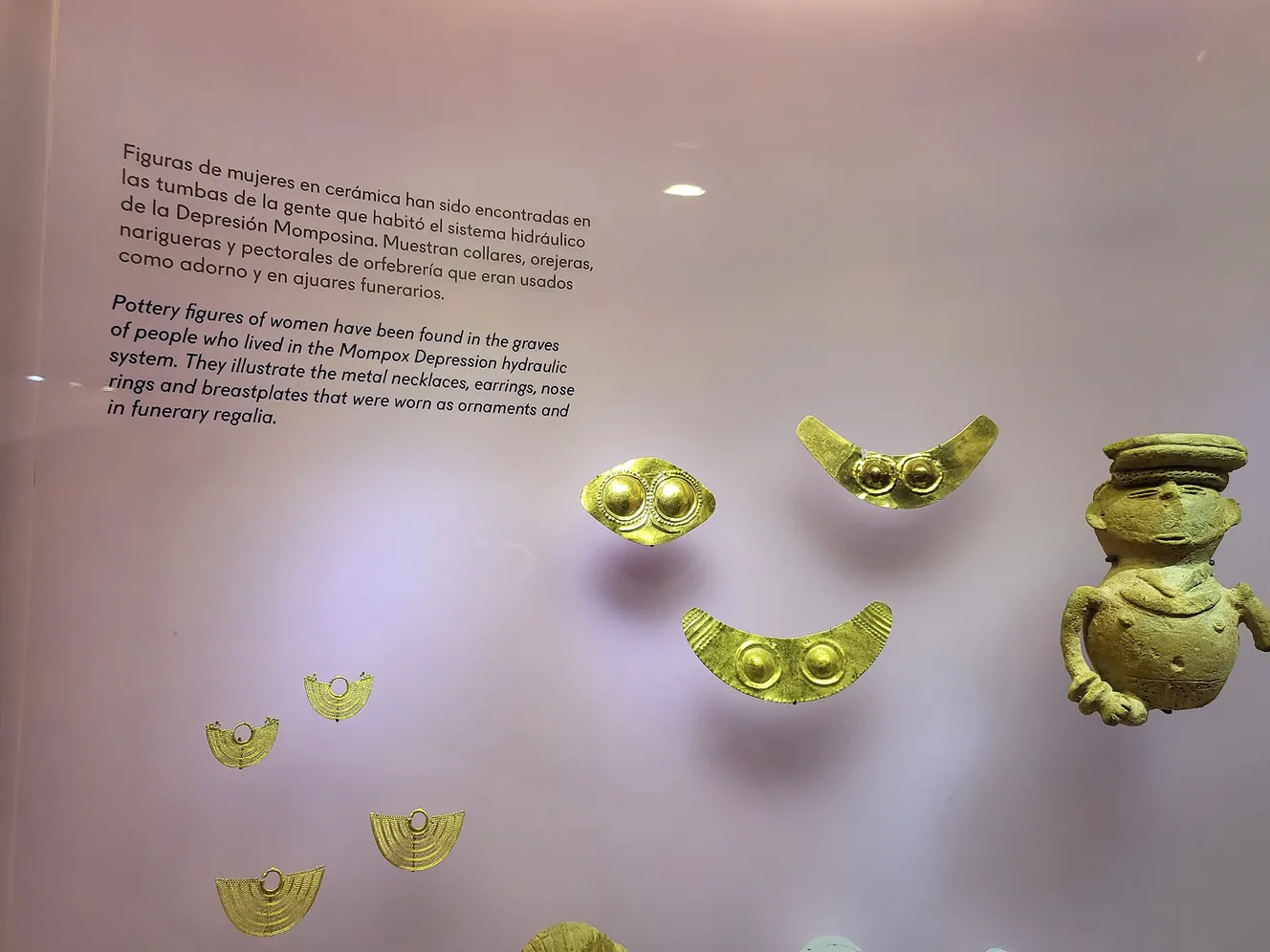
The main room, "6.000 años entre la tierra y el agua" (6,000 years between land and water), also covers burial mounds, filigree ear ornaments and the "women of clay": the many female figures found in tombs in the Depresión Momposina, which suggest women held an important social and symbolic role. Those from Momil, on the lower Sinú, have heavy legs and square heads; those from the lower San Jorge stand with hands on hips. The museum also introduces the Malibú, possibly migrants who reached the lower Magdalena some 900 years ago and worked the shells of snails and bivalves.
Breath, gold and filigree
One room links two crafts through breath. Goldsmiths blew on the fire to melt the metal, and the museum explains lost-wax casting. Breath also sounded bird-shaped ocarinas, fish-like flutes and fotutos, a kind of horn. According to the bank, these instruments were not meant to imitate birds but to converse with them. On the ground floor, the room "El soplo del universo" brings together videos about the research and a sound piece played on pre-Hispanic wind instruments. Two mobile apps let you explore the animals in the pieces and listen to those sounds.
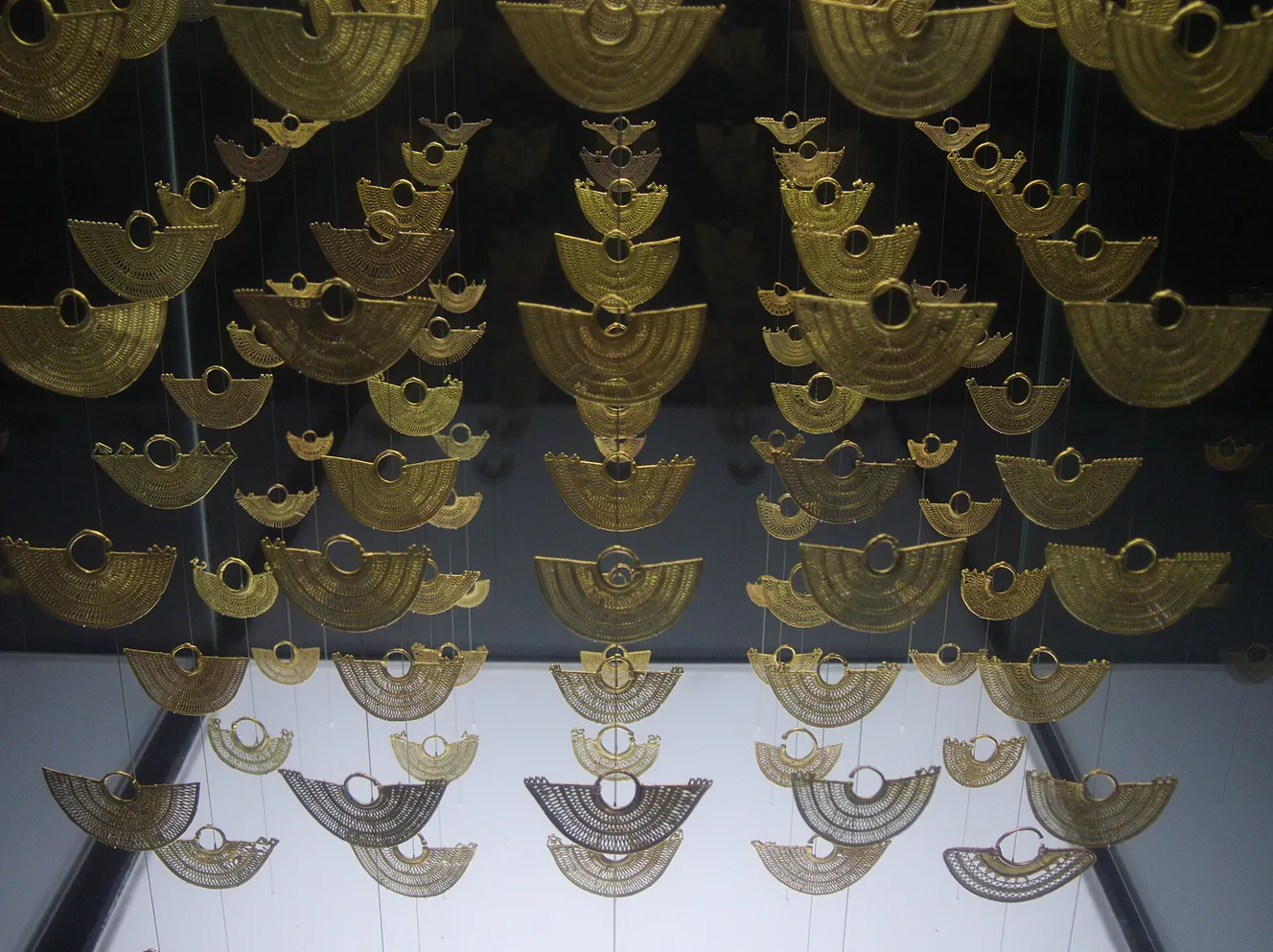
The visit reaches the present in the room "Manos que trenzan y filigranan" (hands that braid and filigree), devoted to two living crafts of the region: the filigree jewellery of Mompox and Ciénaga de Oro and the caña flecha weaving of today's Zenú. Large screens show the artisans at work. The archaeological pieces feature curassows, wood storks, river turtles, jaguars, caimans and armoured catfish, animals still found in the marshes and savannas of the Caribbean. The third floor has an exploration space designed for children.
The house
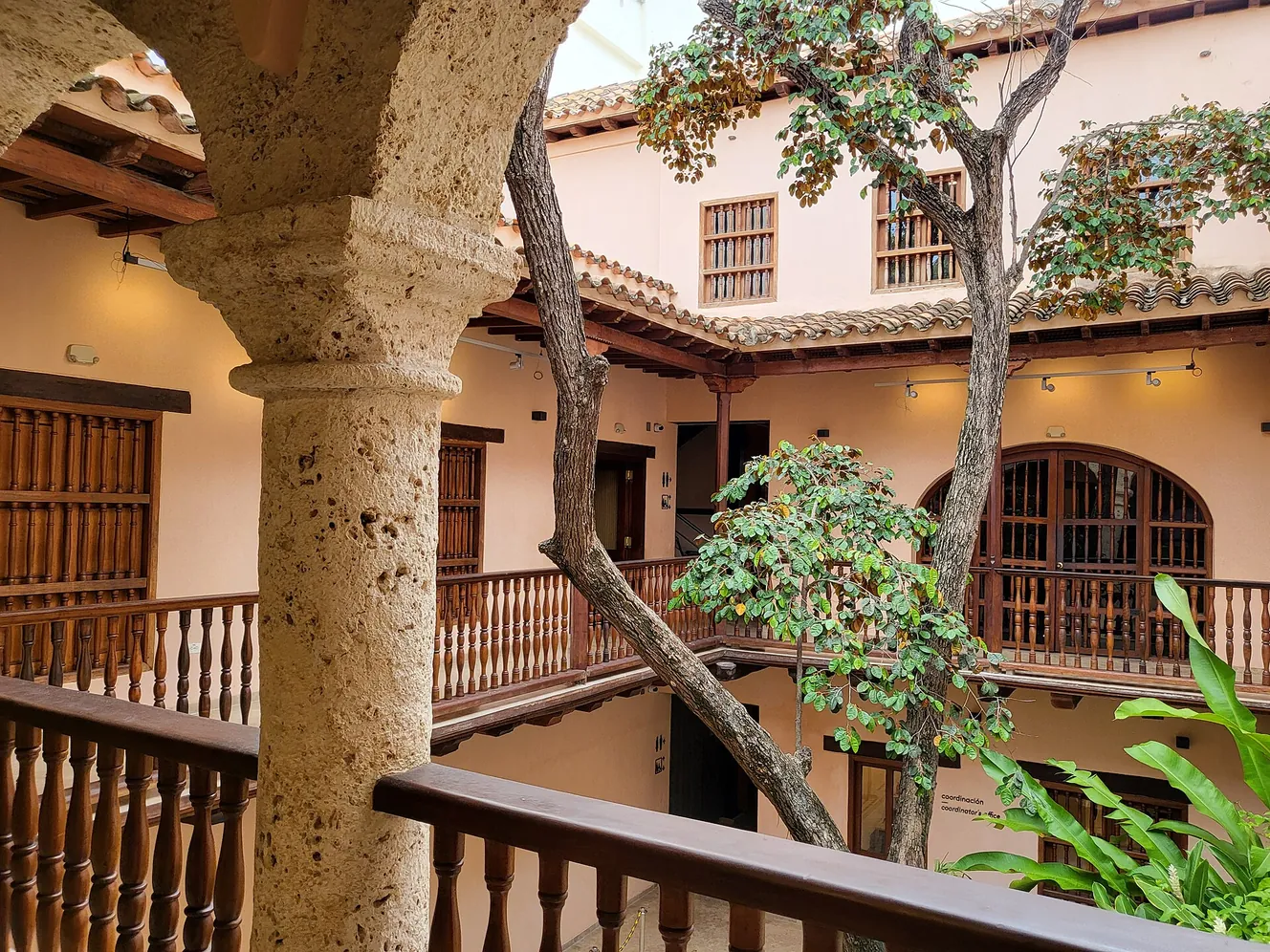
The house dates from the 17th century, wrote Jaime Bonet, the bank's manager in Cartagena, in El Universal. The bank's Infrastructure Department designed and managed the works, which restored the timber structures, roofs and finishes and gave the courtyards back their role in cooling the house, as in the city's colonial homes. Restoration architect Luis Fernando Álvarez summed up the job for El Tiempo in four verbs: "recover, restore, update and stabilise". The old cistern was recovered and is now part of the route, and a lift, level floors and an accessible toilet were added.
Visiting
According to the Banco de la República, the museum opens Tuesday to Saturday from 9:00 a.m. to 5:00 p.m. and on Sundays from 9:00 a.m. to 2:00 p.m. It is closed on Mondays, including public holidays, and may have other closures announced on its calendar. Entry is free. Free guided tours run without booking: in Spanish at 10:00 and 11:00 a.m. and at 3:00 and 4:00 p.m., and in English at 11:00 a.m. and 3:00 p.m. The bank warns that the commercial guides at the door are not museum staff. On your way out, Plaza de Bolívar is right across the street.
Getting there and parking
It is next to Plaza de Bolívar, beside the former Gobernación building and the cathedral. On Transcaribe, get off at Centro or La Bodeguita station and walk to the square. The museum has no parking.
Accessibility
There is a lift at the back of the first floor. The permanent exhibition and the universal-access toilet are on the second floor.
Before or after
For more art, the MAMC; for a meal, La Domenica at Casa Salvaje.
- Museo de Arte Moderno de Cartagena · 2 min walk
- La Domenica · 3 min walk
Frequently asked questions
Can I take photos?
Yes, for personal, non-commercial use, and you can post them on social media. Flash and tripods are not allowed. Professional photo or video work needs permission requested at least two days ahead from prensacultural@banrep.gov.co.
How long does the visit take?
The Banco de la República suggests at least an hour, or about two to see the details.
Do I need to book the guided tour?
No. Guided tours are free and need no booking, but they are not for commercial guides with their groups.
Is there wifi?
Yes, free. Connection details are at the entrance on the first floor.
How do I contact the museum?
Phone (57) 605 660 0808, extension 5323, or email museodelorozenu@banrep.gov.co.
Nearby
- Movich Hotel Cartagena de Indias · 1 min walk
- El Barón · 1 min walk
- Palacio de la Inquisición – Museo Histórico de Cartagena · 2 min walk
- Sala de Despecho Cartagena · 2 min walk
Imagen: Xemenendura, CC BY-SA 4.0, vía Wikimedia Commons
Sources · 12
- Banco de la República: sucursal Cartagena / Museo del Oro ↗
- Banrep: apertura 2023 ↗
- OpenStreetMap/Nominatim: Museo del Oro Zenú ↗
- Banco de la República: comunicado 'El Museo del Oro Zenú abre sus puertas el 18 de febrero' (febrero 2023) ↗
- Banco de la República: comunicado 'Museo del Oro Zenú, una curaduría de múltiples perspectivas' (febrero 2023) ↗
- Banco de la República: noticia de reapertura (versión imprimible, febrero 2023) ↗
- Banrepcultural: planee su visita en Cartagena (horario, entrada, visitas guiadas) ↗
- El Tiempo: 100 años del Banco de la República, reabre el Museo del Oro Zenú (febrero 2023) ↗
- El Universal: detalles de la reapertura del Museo del Oro Zenú (febrero 2023) ↗
- El Universal: columna de Jaime Bonet, 'MOZ: 6.000 años de historia' (febrero 2023) ↗
- El Universal: ruta de los museos de Cartagena y Bolívar 2026 (abril 2026) ↗
- Banrepcultural · Cartagena (entrada gratuita, sin reserva) ↗