
Guide / Culture / Centro Histórico
Museo de Arte Moderno de Cartagena
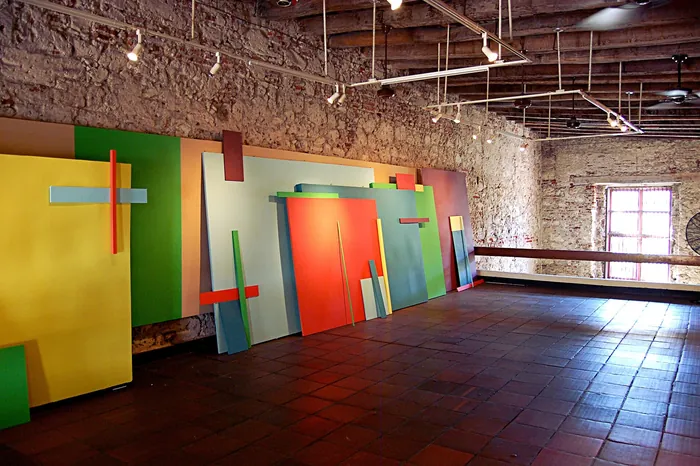
Modern and contemporary art in the former Almacén de Galeras, on Plaza de San Pedro Claver.
Hours, prices and conditions can change: confirm with the organizer or the venue before you go.
- Address
- Plaza de San Pedro Claver, Centro
Directions ↗ - Hours
- Tuesday to Friday 11:00–18:00; Saturdays and Sundays 11:00–17:00; closed Mondays (according to mamcartagena.org)
- Phone
- +57 316 521 6883
- Message on WhatsApp ↗
- Official site
- mamcartagena.org ↗
- @mam.cartagena ↗
The Museo de Arte Moderno de Cartagena occupies one of the oldest buildings in the Centro: the former Almacén de Galeras, on the plaza de San Pedro Claver, right up against the San Ignacio bastion. Its full name is Museo de Arte Moderno de Cartagena de Indias Enrique Grau, and locals call it the MAMC. It is a museum of stone and brick vaults, with a collection of modern Latin American and Colombian Caribbean art built up almost entirely through donations. According to its own website, it is also one of the few covered public spaces inside the walled city.
A collection that came before the building
The museum gives 1979 as its founding year, but the story starts earlier. Its website explains that the core of the collection dates from the late 1950s, brokered by José Gómez Sicre, director of arts at the Organization of American States (OAS). The works were chosen through competitions among Latin American artists, and the prize was the purchase of the winning piece. That is why this group is still labelled in the galleries as the OAS Collection. A column published in El Universal in May 2026 places the museum's birth in 1959, with the involvement of the Bolívar provincial government.
Those works were not always well looked after. According to the museum's own account, Enrique Grau and Héctor Díaz restored them years later, after the damage they had suffered, and asked for a place to hang them. In 1972 Grau and Alejandro Obregón relaunched the institution. In August 2026 El Universal recalled that Grau was the founder, with Obregón as his accomplice and the support of Miguel Sebastián Guerrero, the first director. The original collection includes, among others, Armando Morales, Fernando de Szyszlo, Ignacio Gómez Jaramillo, Mateo Manaure, Oswaldo Vigas, Obregón, Cecilia Porras and Eduardo Ramírez Villamizar.
From the Almacén de Galeras to the galleries
Before it had a home of its own, the museum operated in the Salón Vicente Martínez, in what is now the mayor's office. In 1977 it moved into the colonial warehouse on the plaza de San Pedro, a building from the second half of the 17th century. Architects Gastón Lemaitre and Manuel Delgado converted it into a museum, which opened in December 1979. According to the museum's website, these vaulted storehouses, more than twelve metres high, were used to keep masts, sails and other ship's rigging. At the opening it was described as "a place for the spirit's solace."
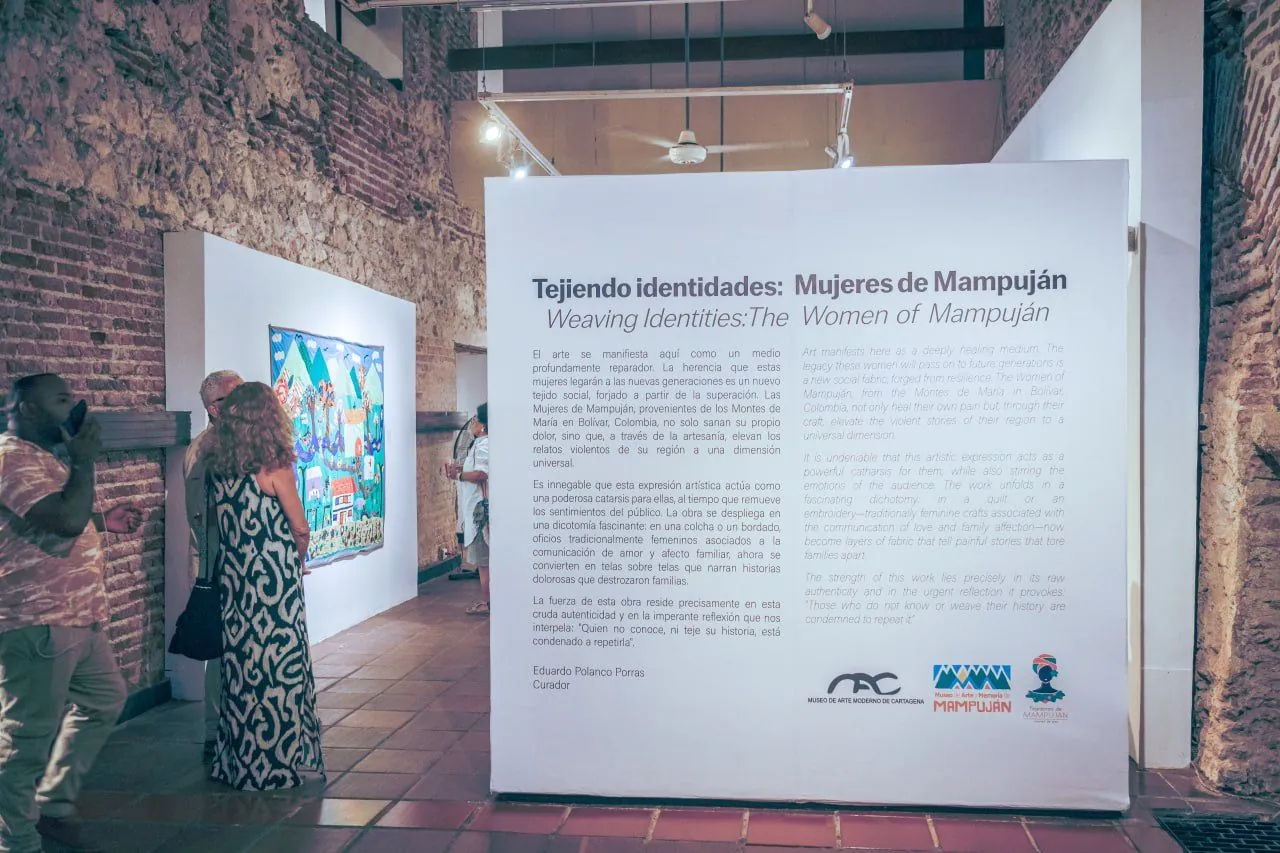
In the 1980s the museum expanded into the building next door: a spacious late-19th-century warehouse that the Banco de la República used to store sacks of salt. This is the so-called republican building. Today it holds the temporary exhibitions, the shop and, on the upper floor, a lecture room named after the watercolourist Hernando Lemaitre. From the museum's second floor you can reach the San Ignacio bastion, and the façade joins that of the convent beside the church of San Pedro Claver.
What's in the galleries
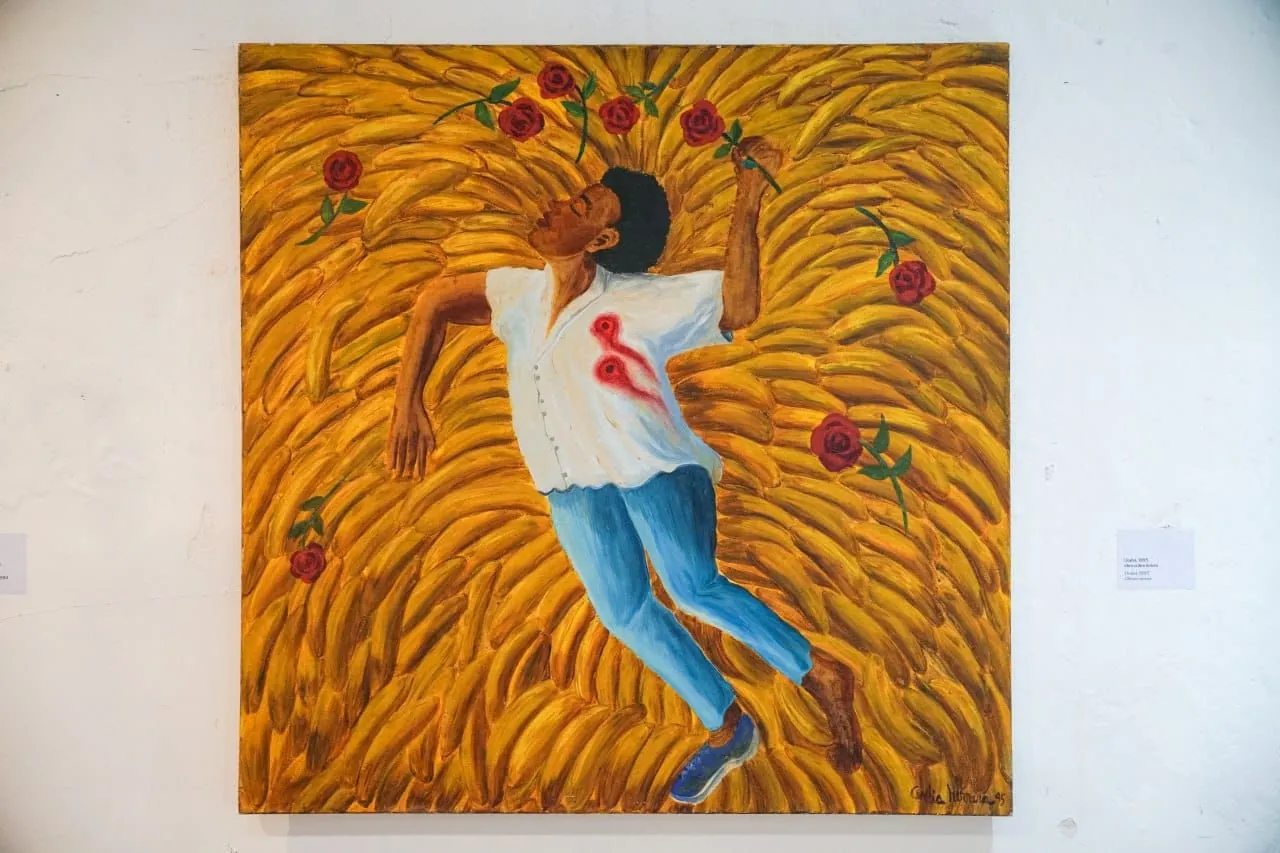
The figures vary from page to page. The history section of the website mentions more than 300 works donated by artists; other pages on the same site give an inventory of more than 400, by Colombian and international artists. The museum says its permanent collection gives a special place to Colombian artists from the Caribbean. In November 2024, according to El Universal, three pieces linked to Cecilia Porras arrived through the Amigos del MAMC: two portraits of the painter by Grau and by Juan Antonio Roda, and the mock-up of a never-published book on her life and work, with photographs by Nereo López. They went into a room devoted to her.
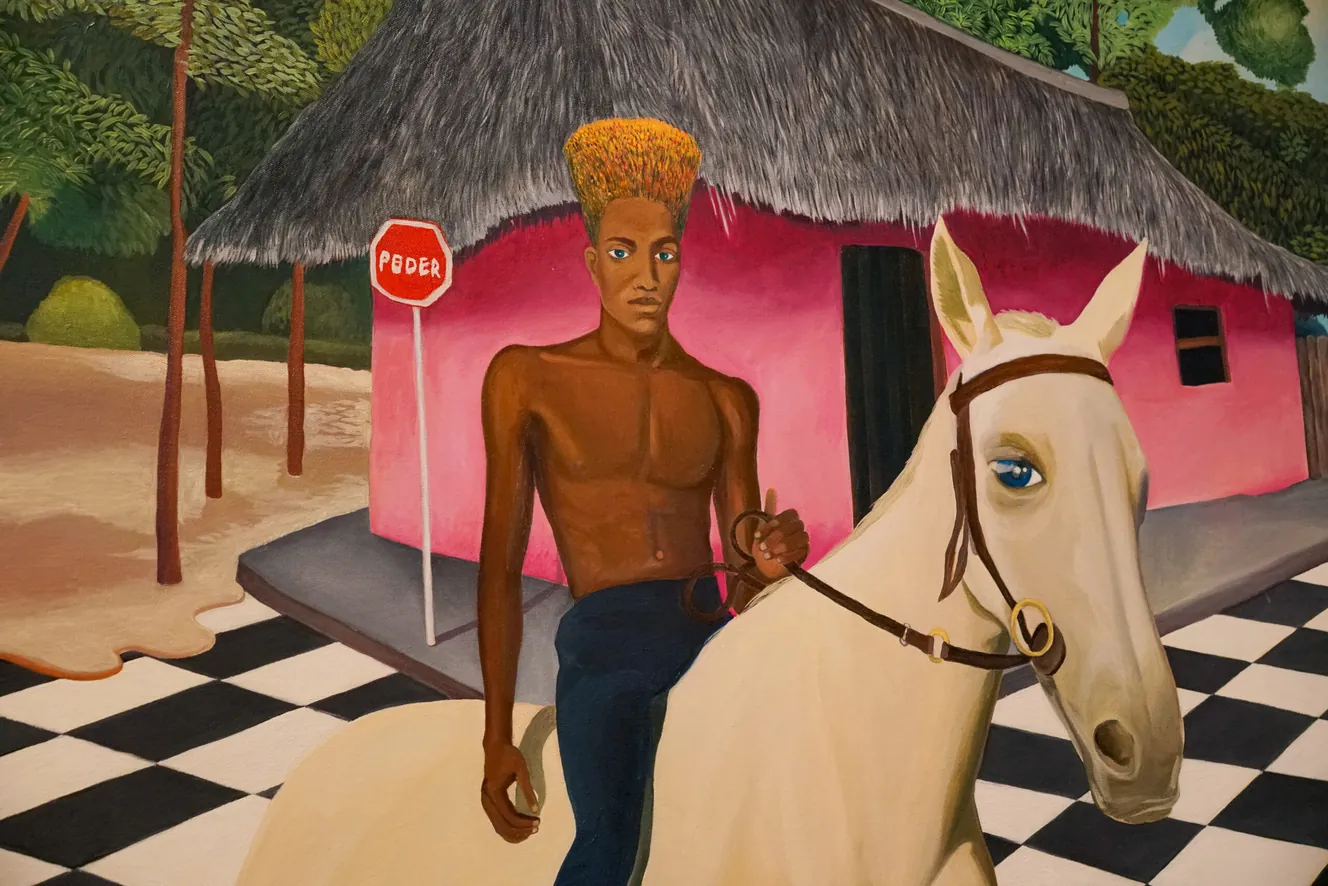
Recent programming has included "Mujeres en la colección", a show about the place of women artists in museums, and an exhibition by Nessim Bassan, whose work the museum ties to geometric and optical explorations. Beyond exhibitions, the MAMC offers talks, courses and art restoration. According to its website, its spaces have also hosted the Film Festival and the International Art Biennial.
A museum that runs on support
The MAMC holds the building on loan from the Ministry of Culture and relies heavily on private support. On 29 December 2025 it held the charity gala "El arte nos une" at the Palacio de la Proclamación, with a silent auction, to upgrade the galleries' electrical system and air conditioning and to keep the museum running in 2026, El Universal reported. There is also a programme in which companies and families adopt galleries. A May 2026 column in El Universal said the provincial government had adopted one and that, as a result, school students from the department get in free.
In August 2026 the museum signed the agreement "Del puerto al museo, un aula viva" with the Institución Universitaria Mayor de Cartagena (Umayor). Working with students from its postgraduate programme in the conservation and restoration of architectural heritage, the university is carrying out the technical and legal studies needed to request that the Almacén de Galeras be declared a Bien de Interés Cultural. The agreement also proposes a low-impact intervention in the empty spaces between the building and the bastions, with landscaping, lighting, signage and room for travelling exhibitions.
Planning a visit
According to mamcartagena.org, the museum is open Tuesday to Friday from 11:00 to 18:00 and on Saturdays and Sundays from 11:00 to 17:00; it is closed on Mondays. The same website lists separate rates for foreign and Colombian visitors, with discounts for children, students and seniors with valid ID. It is worth checking them before you go. On the way out, the church and convent of San Pedro Claver are on the same square, and the San Ignacio bastion is right beside the museum. Among the neighbours El Universal mentioned as interested in the Umayor project are the Museo Naval del Caribe and the Museo Histórico de Cartagena.
Getting there and parking
It is on Plaza de San Pedro Claver, in the historic centre. The museum suggests coming on foot, by taxi or by public transport.
Before or after
El Barón is on the same square; for dinner, Kanibal at Casa Salvaje.
Frequently asked questions
How much is admission?
According to the museum's website, the general rate is COP 25,000 for adults and COP 15,000 for children. Colombian nationals pay COP 20,000, and children, students and seniors COP 10,000, with a valid ID or student card. Prices may change.
Are there free days?
We found no free-admission days for the general public. There is a room-adoption programme: according to a column in El Universal (May 2026), the room adopted by the Bolívar governor's office lets pupils from schools in the department visit for free.
Are there guided tours?
Yes. The museum recommends booking ahead, especially for large groups, by phone or WhatsApp at +57 316 521 6883. Educational programmes for schools are also arranged in advance.
Can I take photos?
Yes, without flash, in most rooms. Some temporary exhibitions may restrict it, and tripods or selfie sticks need permission.
Where can I buy a souvenir?
The museum is setting up a physical and online shop; in the meantime, items are sold at reception.
Nearby
- El Barón · 1 min walk
- Santuario de San Pedro Claver · 1 min walk
- Sala de Despecho Cartagena · 1 min walk
- Museo Naval del Caribe · 2 min walk
Imagen: Matiasmaggio, CC BY-SA 3.0, vía Wikimedia Commons
Sources · 14
- El Universal: declaratoria Almacén de Galeras (ago. 2026) ↗
- El Universal: gala benéfica (dic. 2025) ↗
- Banrep: colección MAMC ↗
- mamcartagena.org (ubicación, horario) ↗
- OpenStreetMap/Nominatim: Museo de Arte Moderno de Cartagena ↗
- Museo de Arte Moderno de Cartagena: Historia ↗
- Museo de Arte Moderno de Cartagena: Arquitectura ↗
- Museo de Arte Moderno de Cartagena: Vocación ↗
- Museo de Arte Moderno de Cartagena: Mujeres en la colección ↗
- Museo de Arte Moderno de Cartagena: La obra de Nessim Bassan ↗
- El Universal: donan obras de Cecilia Porras al MAMC (nov. 2024) ↗
- El Universal: columna 'Entra al museo como Pedro por su casa' (may. 2026) ↗
- Museo de Arte Moderno de Cartagena · Contacto (teléfono +57 316 521 6883 y WhatsApp) ↗
- Museo de Arte Moderno de Cartagena: preguntas frecuentes ↗