
Sea / Diving and snorkelling · About 45 minutes by boat from Cartagena to Barú
ARC Quindío wreck and the Barú dive theme park
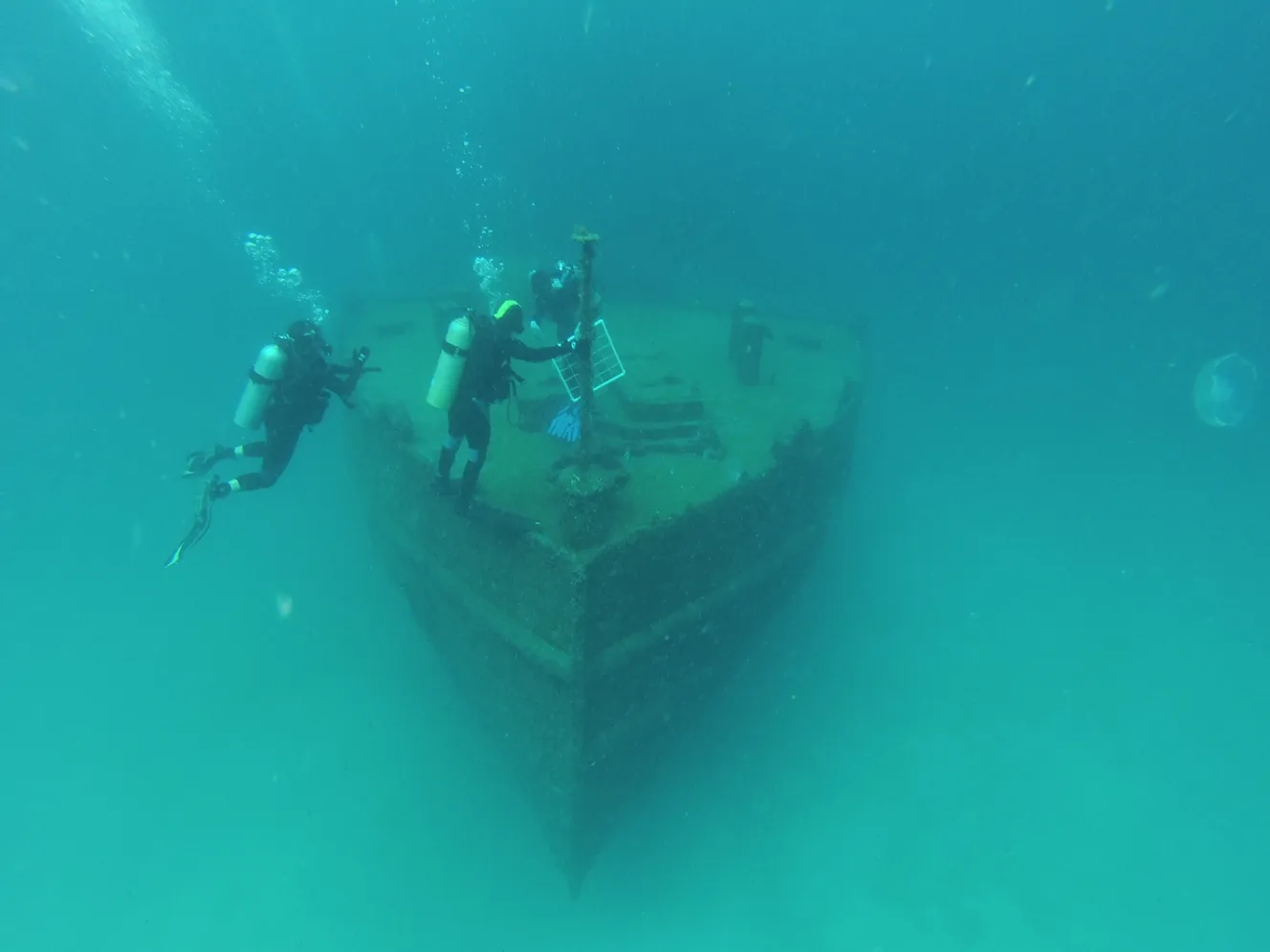
A Navy ship scuttled on purpose in 2015 to become a reef, alongside other wrecks off Barú.
- Where
- Mouth of the Ciénaga de los Vásquez, off Punta Iguana, on Barú island (Cartagena)
- Getting there
- By boat, with a dive center that includes the site in its dive plan. The wreck lies at 27 meters: it can only be visited on scuba.
- When to go
- Diving is possible all year; Cartagena's water is around 28 °C (Colombia Travel). Ask the dive center about sea conditions and visibility on the day.
- Before you go
- Book with a dive center and confirm that your level covers 27 meters; if you are starting out, Playa Vásquez, with the Atlas and Tolú wrecks, is the option for first lessons. Do not touch the hull or the life growing on it, and take nothing.
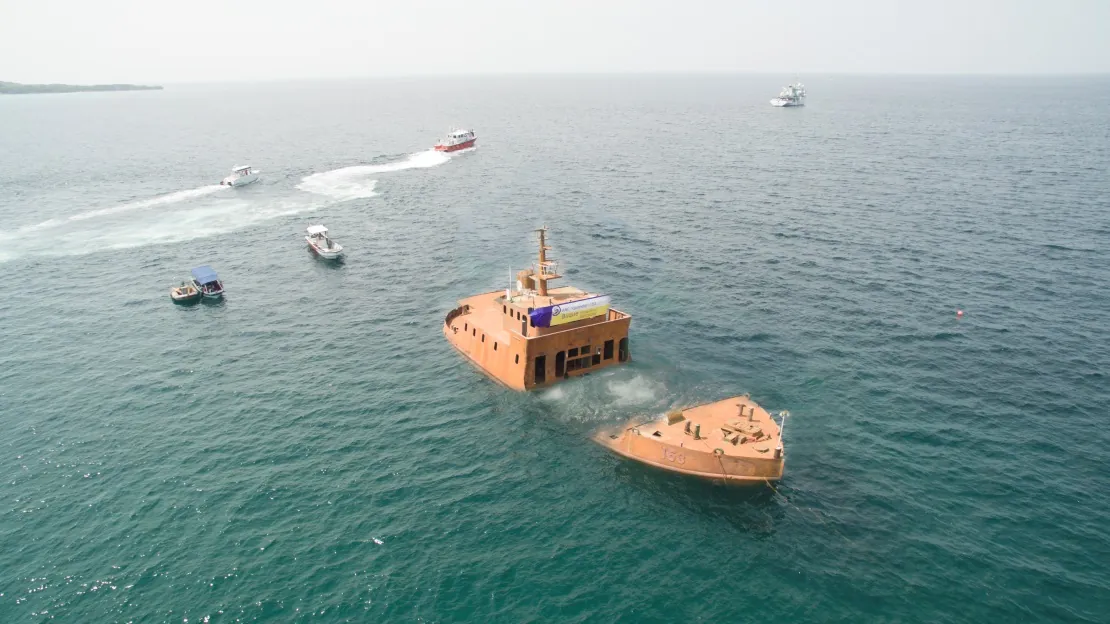
The ARC Quindío spent half its life measuring the seabed. Now it lies on it. On 13 November 2015, shortly after one in the afternoon, the Navy sank it in a controlled operation at the mouth of the Ciénaga de los Vásquez, on Barú island, so that it would become an artificial reef. It came to rest at a depth of 27 meters, according to Colombia's Maritime Authority (Dimar). Since then it has been the centerpiece of a dive theme park that it shares with other wrecks sunk earlier in the same area.
The ship's story
Dimar says the vessel served about 20 years in the United States Navy, on logistics support runs between Grand Cayman, Guantánamo and Florida. It passed to the Colombian Navy on 12 September 1963. It was 42.4 meters long with a 7.2-meter beam. For 51 years it worked for the maritime authority and was the country's first marine scientific research platform. Its data produced Colombia's first nautical chart, of Tumaco Bay, in 1968, and it was Dimar's first vessel with a multibeam echo sounder.
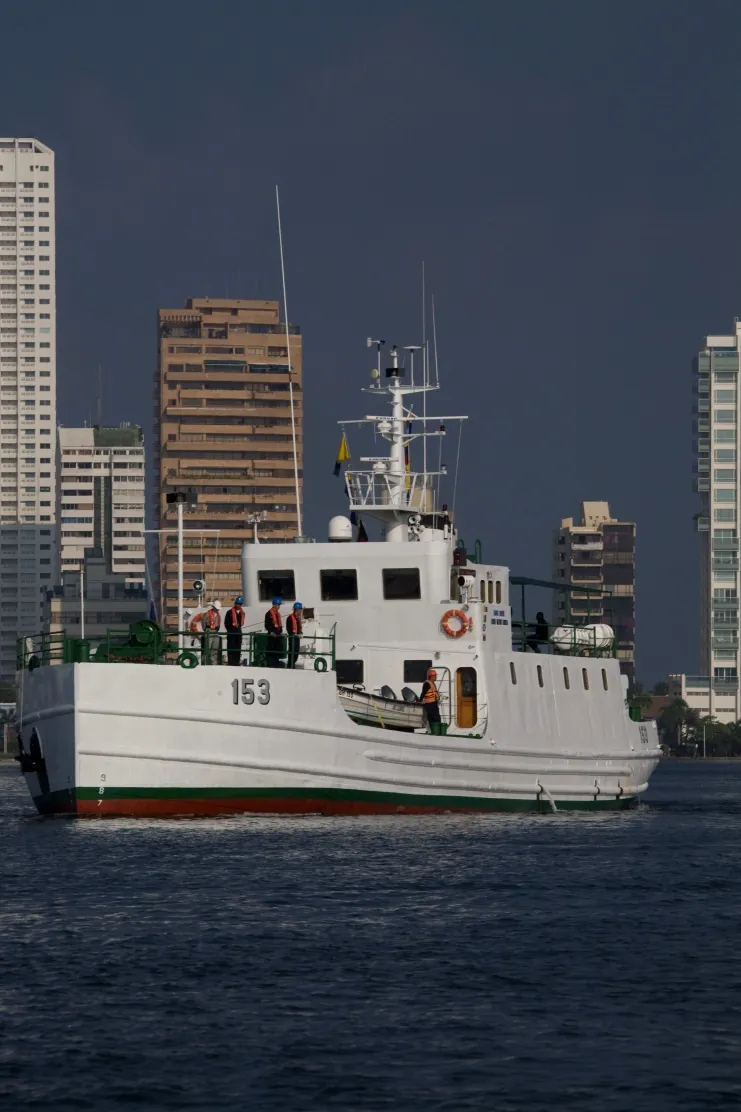
It also sailed the Caribbean and the Pacific on oceanographic cruises, supported maritime signaling and carried aid to communities far from the coast. It left active service in May 2014. In the Navy it was nicknamed Zapatico, according to El Heraldo, which counted 39 commanders over its history. Before the sinking, Dimar removed the hull paint, oils, oily water, waste and the electrical system to meet the environmental requirements of the International Maritime Organization.
A park with several wrecks
The project was led by the Vice Presidency of the Republic with the Navy, Dimar, the Colombian Ocean Commission, the Mayor's Office of Cartagena, National Natural Parks, the Eduardoño Foundation and the Museo de Arte y Medio Ambiente de Cartagena, according to Dimar. About twenty minutes before the ship, a steel sculpture shaped like a paper boat, some six meters long and contributed by Eduardoño and its foundation, was sunk, El Colombiano reported. El Heraldo added that it was built by Cotecmar and that Navy divers directed its placement.
The Quindío is not alone. The park also holds the former ARC Tolú and the former tug Atlas, sunk years earlier. Colombia Travel describes Playa Vásquez, the sandy flat beside the reef where those two wrecks lie, as an ideal spot for first dive lessons, with snapper, jacks, goatfish, rays and eels. The same portal mentions an underwater theme park in the lagoon, MUMAR, with the Jellyfish Garden: five submerged sculptures that work as artificial reefs.
From iron hull to reef
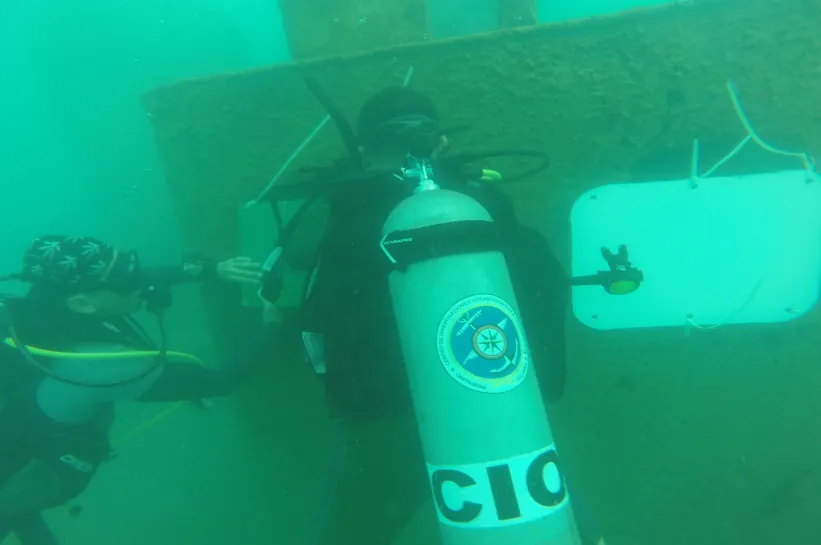
The aim, according to El Heraldo, was twofold: to create habitat for marine life and to give divers a new site, taking pressure off the natural reef of the Rosario archipelago, which lies inside a national park. The process was expected to take about five years. Dimar, through its Caribbean Oceanographic and Hydrographic Research Center, launched a project to measure how life colonizes the hull and to draw recommendations for future controlled sinkings.
In March 2016, four months later, researchers found biofilms, the layers of microorganisms that prepare the surface, as well as bivalves, barnacles and some macroalgae. At the one-year mark, Dimar reported barnacles, mussels, sponges and algae on the hull, reef fish such as Thalassoma bifasciatum, and water quality within legal limits. Its preliminary results suggested that corals could form naturally on the ship. We found no more recent monitoring reports.
Getting there and what to know
Barú lies south of Cartagena, about 45 minutes by sea or close to an hour by road, according to Colombia Travel. The wreck is reached by boat with a dive center. It sits at 27 meters: before booking, ask the center whether your certification and experience cover that depth, or start with the shallower wrecks at Playa Vásquez. The rules of any dive apply here too: good buoyancy, touch nothing, take nothing and go out with a formal operator. Close by, an hour away by boat, are the reefs of the Rosario Islands, which have their own entry in this section.
Hours, prices and conditions can change: confirm with the organizer or the venue before you go.
Sources
- Dimar: ARC Quindío, nuevo parque temático de buceo en Cartagena (noviembre 2015) ↗
- Dimar: ARC Quindío, la muerte digna de un marino (noviembre 2015) ↗
- Dimar: verifica generación de arrecife artificial sobre el ex ARC Quindío (marzo 2016) ↗
- Dimar: primer año del hundimiento del ARC Quindío (noviembre 2016) ↗
- El Heraldo: dos barcos al fondo del mar para resucitar como arrecifes (noviembre 2015) ↗
- El Heraldo: así hundieron un buque para transformarlo en un arrecife (noviembre 2015) ↗
- El Colombiano: barcos hundidos que se convertirán en corales (noviembre 2015) ↗
- Colombia Travel (ProColombia): buceo en Cartagena ↗