
Routes / 05
Getsemaní by night.
The neighborhood that lights up when the Centro goes quiet: three stops on foot.
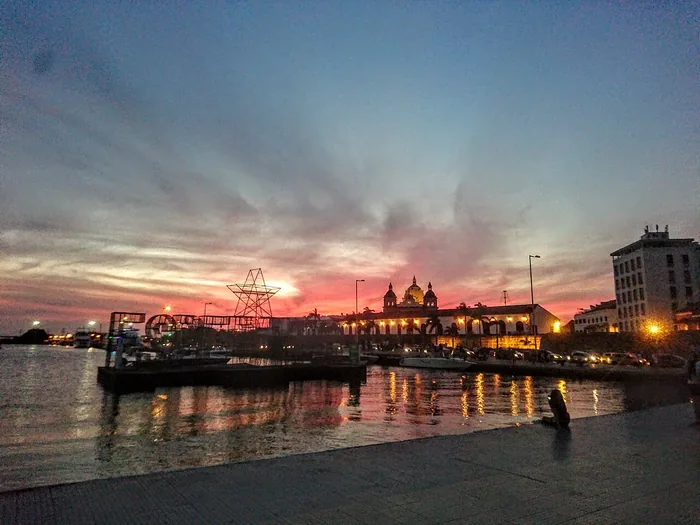
Getsemaní makes more sense at night, when the chairs come out onto the sidewalk and the Plaza de la Trinidad fills up. It is the neighborhood on the other side of the Camellón de los Mártires, and its history is one of trades. According to historian Sergio Solano, quoted by Radio Nacional de Colombia, between 700 and 800 people worked there at a navy station. Out of that world came Pedro Romero, a blacksmith at La Maestranza and one of the men behind Cartagena's independence.
This neighborhood is not a stage set. Since 2026, the neighborhood life of Getsemaní has been on Colombia's Representative List of Intangible Cultural Heritage, and the resolution was handed to the community on July 3 in the Plaza de la Trinidad, El Universal reported. What is protected is a way of living. It is worth walking it that way: as a guest.
Parque del Centenario: the front door
The walk starts at the Parque del Centenario, between the walled city and Getsemaní. It opened in 1911 to mark one hundred years of independence, according to the city government, as quoted by El Universal and Semana. El Universal credits Luis Felipe Jaspe Franco with its design and construction, and notes that it was inaugurated unfinished.
At its center stands a marble obelisk that, according to the same paper, was designed and carved in Genoa, Italy. Under the trees you can see squirrels, iguanas, monkeys and plenty of birds. The park also has the skating rink and basketball court run by IDER, the only ones of their kind in the Centro. In January 2023 it reopened after more than two years of work, with 86 new lights, and the city announced it would stay open until 10 p.m. That schedule is worth confirming.
Beside the park runs the Camellón de los Mártires. There stand the busts of the nine patriots who were shot on February 24, 1816, after Pablo Morillo's siege, according to Radio Nacional.
Plaza de la Trinidad: the neighborhood's living room
From the park to the plaza is only a few blocks. A good way is the one the Cabildo de Getsemaní takes every November on its final stretch: avenida del Centenario, calle de la Media Luna, calle del Guerrero and arrival at the Plaza de la Trinidad, where the ritual and the closing take place. In 2025 the Cabildo celebrated 36 years, according to El Universal.
The plaza is arranged around the yellow-fronted church of the Trinidad. The Donde guide dates it to the mid-17th century and describes the church and the plaza as founding axes of the neighborhood and a meeting point for residents. On the benches, people talk about soccer and baseball.
For years a bust of Pedro Romero by sculptor Héctor Lombana stood here. Since no portraits of the hero survived, Lombana asked the painter Alejandro Obregón to pose. El Universal tells it with irony: many of the floral offerings were really for Obregón. That bust was torn down, and sculptures of the lancers and of an imagined Romero were later placed in the empty space.
The plaza belongs to poets too. Jorge Artel lived across from the church, in the so-called house of the eight stars, and some poems by Pedro Blas Julio Romero are now part of the plaza's signage, according to a 2019 El Universal story.
Calle de la Sierpe: walls that tell stories
The last stop is around the corner. The Calle de la Sierpe runs into the Plaza de la Trinidad and is, according to the Uncover Colombia guide, the winding street where most of the neighborhood's street art is concentrated, although the side streets also have murals and stencils. In December 2013, an International Urban Art Festival invited Colombian and foreign artists to paint local characters and stories. One of those murals, by the artist Yurika, takes up the legend of the María Mulata, the black bird with flashes of color, as an elderly neighbor told it to her.
The street has its own legend, that of a giant serpent that, people say, roamed it, collected by the magazine El Rincón Colombiano. And it holds neighbors' memories. Lucho Pérez, author of «El Getsemanicense», the son pregón that Sonora Dinamita released in 1971 and that became the neighborhood's anthem, remembered a lot on La Sierpe where donkeys grazed, according to El Universal. Another story in the same paper recalls that a bridge once joined this street to the narrow calle de San Juan.
How to walk it well
The three stops are a few blocks apart. Not counting the time sitting in the plaza, the route takes less than an hour. It is best to reach the park before sunset, while there is still light under the trees, and enter the Trinidad as night falls. If you are interested in the murals, walk La Sierpe early: they read better in daylight.
Bring water and light clothing, because the heat does not leave with the sun. Keep in mind that the Trinidad and La Sierpe are lined with homes: the music comes out of the windows, but people sleep behind them. Lower your voice when you leave the plaza and put your trash where it belongs.
- 1
Parque del Centenario
Enter the neighborhood through its front door.
- 2
Plaza de la Trinidad
The plaza where the neighborhood sits down to talk.
- 3
Calle de la Sierpe
Murals, open doors and music from the windows.
The best time to go
Reach the park before sunset and walk into the Trinidad as night falls. If you are interested in the murals, walk La Sierpe while there is light.
What to bring
Water, light clothes and only what you need in your pockets.
How long to spend at each stop
- Parque del Centenario — about 20 min, before the sun goes down
- Plaza de la Trinidad — as long as the square asks
- Calle de la Sierpe — about 15 min
Where to stop and eat
For dinner before crossing into the neighbourhood, Casa Salvaje is about a 9-minute walk from Parque del Centenario: SLVJ serves dinner from 7 pm to midnight and Kanibal takes last orders at 11. In Getsemaní, Celele is a few blocks from the square and needs a booking.
Shade and water
The trees of Parque del Centenario give the only shade on the route. Carry water and wear light clothes: the heat does not leave with the sun.
At night
This is a night route. The park reopened in 2023 with new lighting and, according to the city, open until 10 pm; worth confirming. Stay on busy streets, such as the square and around it, and avoid empty streets late at night. To get back, use a taxi or an app.
Frequently asked questions
Until what time is Parque del Centenario open?
When it reopened in January 2023, the city announced it would stay open until 10 pm. Worth confirming.
Is it safe to walk Getsemaní at night?
Busy areas of the Centro usually have police presence. The sensible thing is to stay in the square and on streets with people, watch your belongings and head back by taxi or app.
How long does the walk take?
The three stops are a few blocks apart: not counting time sitting in the square, it takes under an hour.
Nearby
- Four Seasons Hotel Cartagena · 2 min walk
- El Aljibe · 2 min walk
- Bar Lelarge · 2 min walk
- Quiebracanto · 2 min walk
Foto: Free tours / Wikimedia Commons (CC BY-SA 4.0)
Sources · 21
- Evendo / Wikimedia Commons: Plaza de la Trinidad ↗
- Culture Trip: arte urbano en Getsemaní (Calle de la Sierpe) ↗
- Fodor's: Quiebracanto ↗
- OpenStreetMap/Nominatim (coordenadas de paradas, consultado 2026-11-07) ↗
- El Universal: Luis Felipe Jaspe Franco (Parque del Centenario, 1907-1911) ↗
- El Universal: Parque Centenario reabre sus puertas con espacios restaurados (2023) ↗
- Semana: Parque Centenario en Cartagena abre nuevamente sus puertas (2023) ↗
- El Universal: Lugares icónicos de Cartagena, recorrido en Semana Santa (2026) ↗
- Radio Nacional de Colombia: la historia de los nueve mártires de Cartagena ↗
- El Universal: día y hora del Cabildo de Getsemaní 2025 ↗
- Donde: recorrido por Getsemaní ↗
- El Universal: Pedro Romero, el héroe sin rostro (2017) ↗
- El Universal: Getsemaní, cuando el dolor es de barrio (2019) ↗
- El Universal: Vida de barrio de Getsemaní es declarada patrimonio cultural inmaterial de la Nación (2026) ↗
- Uncover Colombia: arte urbano en Getsemaní (Calle de la Sierpe) ↗
- El Rincón Colombiano: Calle de la Sierpe, Getsemaní ↗
- El Universal: La historia que canta Getsemaní (Lucho Pérez, 2018) ↗
- Casa Salvaje: SLVJ (horario) ↗
- Casa Salvaje: Kanibal (horario) ↗
- Semana: ¿qué tan seguro es el Centro de Cartagena para los turistas? (jul. 2024) ↗
- celelerestaurante.com (reservas) ↗