
Guide / Culture / Centro Histórico
Centro de Formación de la Cooperación Española
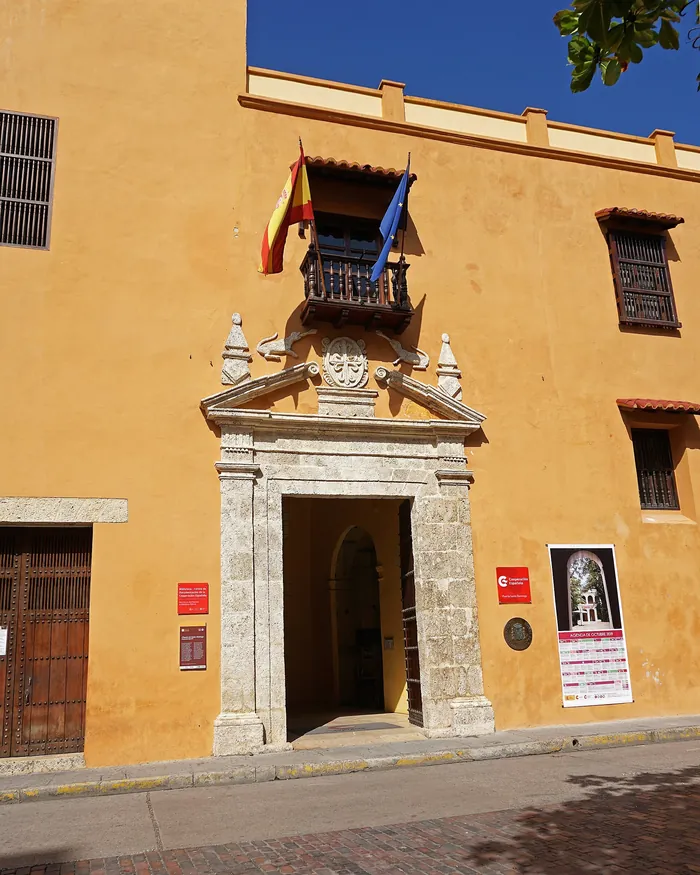
The former convent of Santo Domingo, with an open cultural program and a cloister to linger in.
Hours, prices and conditions can change: confirm with the organizer or the venue before you go.
- Address
- Cra. 36 N.° 2-74, Plaza de Santo Domingo, Centro
Directions ↗ - Hours
- Courtyard and exhibitions: Monday to Friday, 7:30 am – 7 pm; weekends and public holidays, 9 am – 7 pm. Library: Monday to Thursday, 8 am – 4 pm; Friday, 8 am – 2 pm.
- Phone
- +57 605 654 5466
- Official site
- cfcartagena.aecid.es ↗
- @cfcecartagena ↗
On Plaza de Santo Domingo, at Carrera 36 No. 2-74, a doorway leads into one of the largest cloisters in the Centro. This is the home of the Spanish Cooperation Training Centre (CFCE), run by the Spanish Agency for International Development Cooperation (AECID). Its main job is training public officials from across Ibero-America. But in the afternoons the cloister fills with other people: those who come for an exhibition, a film or a talk. The programme the centre publishes each month sums it up in one line: free entry until full.
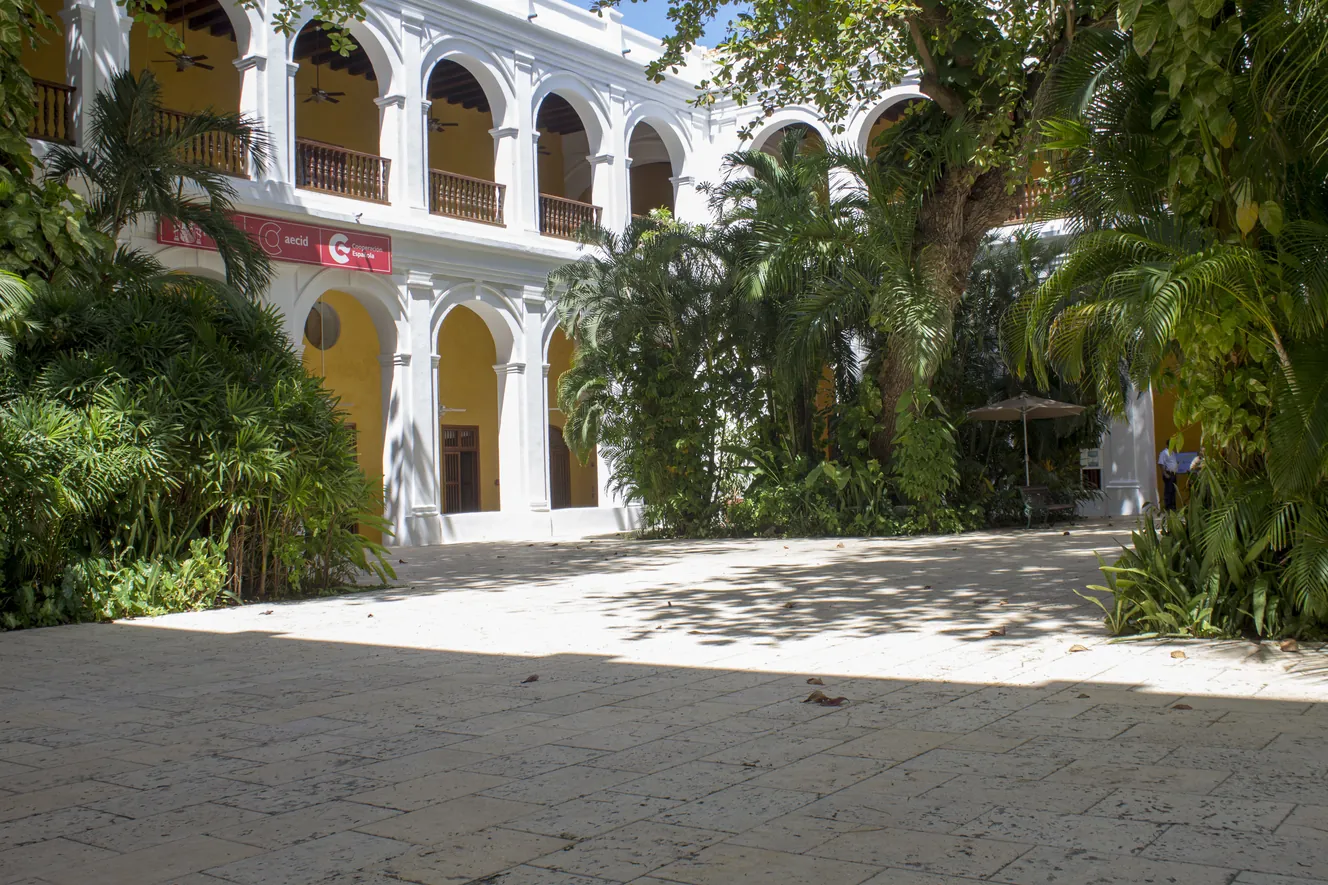
A Dominican convent
The Dominican order has been tied to Cartagena almost since the city was founded. According to the centre's own historical notes, the first bishop arrived in late 1534 and built a church that was lost in the fire of 1552. The present church was begun in the late 16th century and the convent in the 17th. Towards the end of that century the chronicler Friar Alonso de Zamora wrote that the complex, seen from outside, caused "a deep sadness", though the impression changed once you stepped into the cloisters. Columnist Javier Ortiz Cassiani revived that phrase in a column in El Espectador in November 2025.
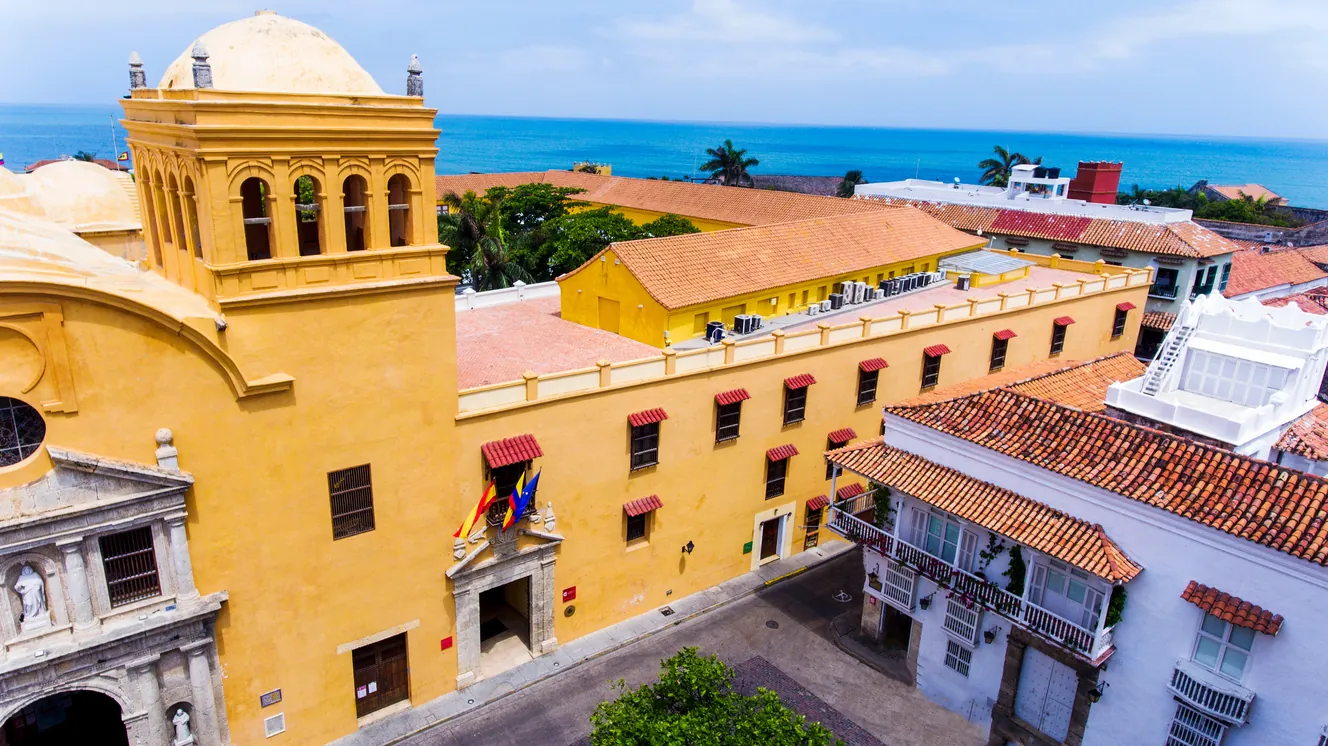
In 1999 the Archdiocese of Cartagena, which owns the building, and the Spanish government signed a comodato: a free loan of use in exchange for AECID restoring and maintaining the property. Work began that year, carried out by AECID's Heritage Programme with the Escuela Taller Cartagena de Indias, a heritage trades school. According to AECID, the restoration won first prize for heritage restoration at the 20th Colombian Architecture Biennial. The CFCE, which had been in Cartagena since 1993 in a colonial house in the historic Centro, moved into the cloister on 21 February 2004.
What happens inside
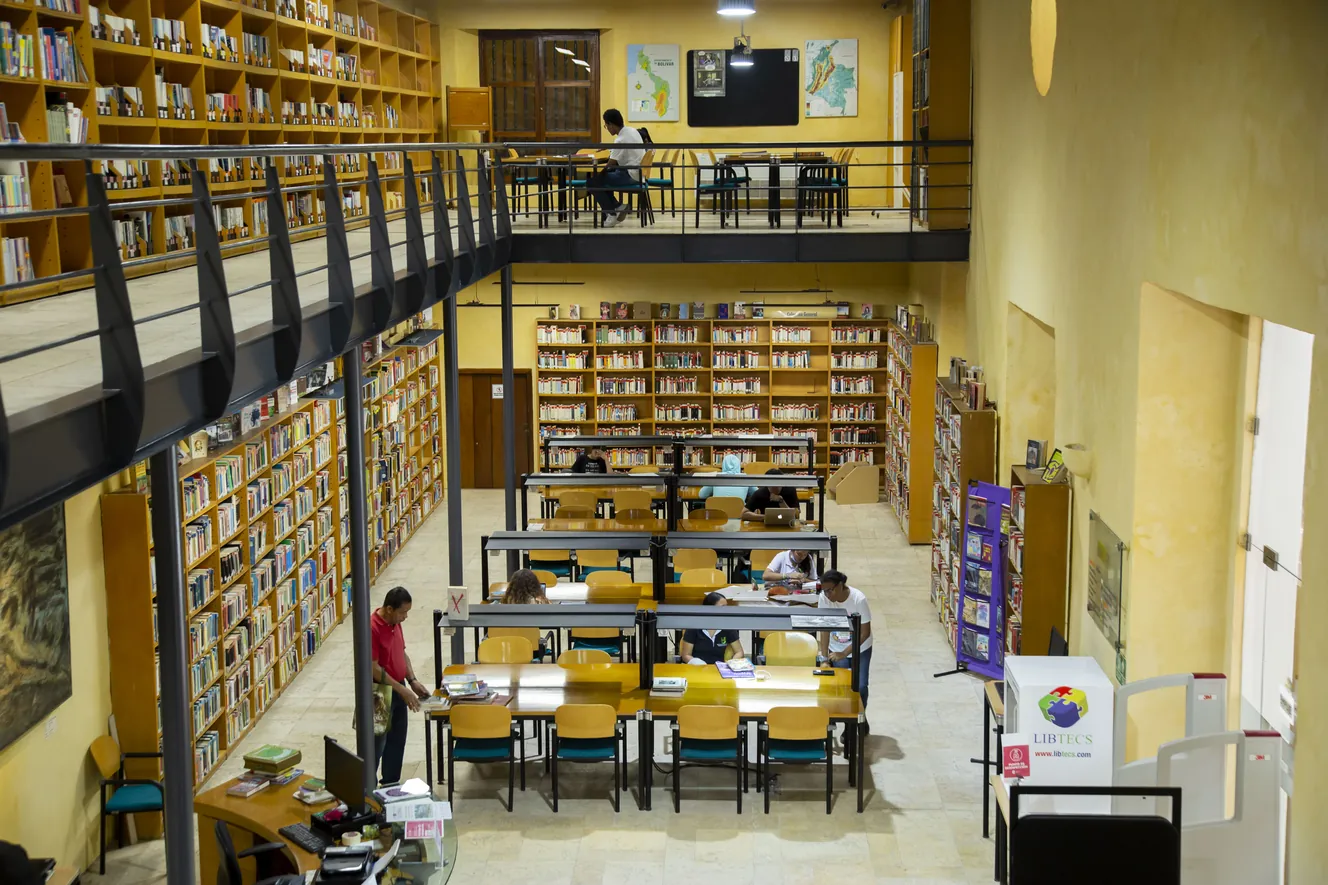
The building has more than 9,400 square metres of built space and a courtyard of almost 900. Besides classrooms there is an exhibition hall, a site museum and a free public library that has been running since 1993. It holds more than 11,000 volumes, with special collections on development cooperation, Afro-descendant communities and gender, and a broad catalogue of Ibero-American literature, art and the history of Spain and the Americas. A children's section was added in 2006. According to a 2017 AECID note, the cloister also houses the Consulate General of Spain.
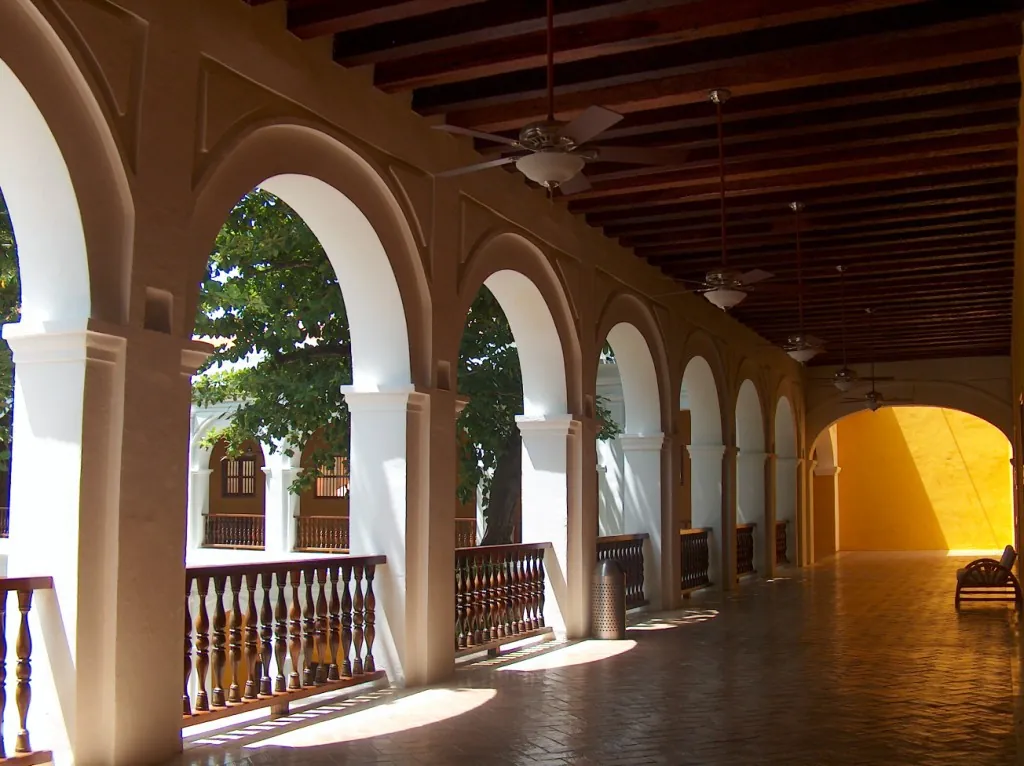
The cultural programme changes every month. In November 2026 it includes the group exhibition "Transformar la mirada", on inherited imagery and new narratives about Afro-descendant women, and Wednesday film nights at 6:30 p.m., with Colombian documentaries and shorts programmed with the Cartagena Film Commission and the IPCC, the city's heritage and culture institute. According to Revista Metro, the cloister has hosted the Cartagena International Film Festival (FICCI) and the Hay Festival. In September 2017, during his trip to Colombia, Pope Francis walked through part of the cloister and had lunch in the Salón del Rey.
A loan that is running out
The comodato was signed for 28 years and expires on 9 November 2027, according to Ortiz Cassiani's column; former deputy minister Kandya Obezo, writing in El Tiempo, also places the end in November 2027. The Archdiocese will not renew it. The Diplomat in Spain reported on 26 February 2026 that the Church informed the Spanish government in a letter dated 1 October, citing "pastoral and economic reasons", and that it wants to take over full management of the building.
In a parliamentary answer dated 9 February 2026, quoted by the same outlet, the Spanish government said it had tried to negotiate several times without success and was looking at alternatives so the centre can continue at another site. In Cartagena there were calls to reconsider, such as the one from cultural manager Saia Vergara in El Universal in December 2025. As of November 2026 the CFCE is still open in the cloister and still publishes its monthly programme. We found no public announcement of a new site or of a different agreement.
Visiting
Cultural activities are free until capacity is reached, and each month's programme is posted at cfcartagena.aecid.es. The library opens Monday to Thursday from 8:00 a.m. to 4:00 p.m. and on Fridays from 8:00 a.m. to 2:00 p.m., without a midday break, and lends up to three books at a time to card holders. For other enquiries, the centre answers at informacionCTG@aecid.es. On your way out, the church of Santo Domingo stands on the same square, and it is worth a look knowing that this is where it all began. Better not to wait too long: the cloister as we know it has a date on the calendar.
The best time to go
On Wednesdays at 6:30 p.m., when there is Miércoles de Cine with free entry. If you only want to see the cloister, the exhibition rooms open every day, holidays included.
Before or after
Carry on with a show at Teatro Adolfo Mejía or a night at SLVJ.
- Teatro Adolfo Mejía · 5 min walk
- SLVJ · 3 min walk
Frequently asked questions
Can I visit the cloister when there is no event?
The exhibition rooms are open Monday to Sunday, holidays included, from 8:00 a.m. to 7:00 p.m., according to the November 2026 programme. It is the way to see the cloister without waiting for a talk or a film.
What is on at the end of November 2026?
The Mercado Cultural del Caribe 2026, with the Corporación Cultural Cabildo: Thursday 26, 2:00 to 5:00 p.m.; Friday 27, 9:00 a.m. to 9:00 p.m.; and Saturday 28, 2:00 to 9:00 p.m.
Who can I ask about the programme?
The centre answers on (+57 5) 654 5466 and publishes its monthly programme on its website and on Instagram, @cfcecartagena.
Nearby
- Bazurto Social Club · 1 min walk
- Casa Bohême · 1 min walk
- Café San Alberto · 1 min walk
- El Burlador · 1 min walk
Imagen: Mariordo (Mario Roberto Durán Ortiz), CC BY-SA 4.0, vía Wikimedia Commons
Sources · 16
- AECID: agenda (dirección) ↗
- CFCE Cartagena: agenda ↗
- El Universal: Muestra de Cine Español 2026 ↗
- cfcartagena.aecid.es (dirección) ↗
- OpenStreetMap/Nominatim: Cooperación Española ↗
- The Diplomat in Spain: la Cooperación Española pierde su sede en el convento de Santo Domingo (febrero 2026) ↗
- El Universal: columna de Saia Vergara Jaime, 'Sobre duelos y dolientes' (diciembre 2025) ↗
- El Espectador: columna de Javier Ortiz Cassiani, 'Una profunda tristeza' (noviembre 2025) ↗
- El Tiempo (vía GDA): columna de Kandya Obezo, 'La cooperación española en Cartagena' (noviembre 2025) ↗
- CFCE Cartagena: Sobre el CF (historia, restauración, premio Bienal) ↗
- CFCE Cartagena: Instalaciones (historia del convento, superficies) ↗
- CFCE Cartagena: Biblioteca (fondos y horario) ↗
- CFCE Cartagena: agenda de noviembre 2026 ↗
- Revista Metro: 20 años del CFCE en el Claustro de Santo Domingo (marzo 2024) ↗
- AECID Colombia: el Papa visita la sede de la Cooperación Española en Cartagena (septiembre 2017) ↗
- CFCE · Contacto (teléfono y horario de atención: oficinas, patio y exposiciones, biblioteca) ↗