
Diving / Marine life and conservation
What you see underwater: reef life in the Rosario Islands, Barú and San Bernardo
Brain coral, elkhorn coral, barrel sponges, hawksbill turtles, moray eels and rays: what lives, according to the sources, on the reef off Cartagena.
- Depth
- From 0 to 40 metres at the Cartagena, Barú and Rosario sites, and from 3 to 42 metres in San Bernardo (ProColombia dive guide)
- Level
- Beginner to advanced, depending on the site (ProColombia). Much of what is described here can also be seen with a mask at the authorised sites.
- Where
- Corales del Rosario y de San Bernardo National Natural Park, the Barú peninsula and the waters around Cartagena
- When to go
- Diving is possible all year. According to ProColombia, from December to March the trade winds bring strong currents in open water, and in the rainy season (July to October) the sea is calmer, but sediment from the Canal del Dique reduces visibility.
- Before you go
- Do not touch the coral or stir up sand with your fins. Do not chase turtles. If you see bleached coral, the Ministry of Environment asks you to report it to Invemar with a photo or video. If you see a lionfish, tell your guide and do not touch it.
In the Rosario Islands, the first thing you see when you put your head underwater is rarely a big fish. It is the bottom: branches, domes, swaying fans and sponges the size of a barrel. The official figures help to grasp the scale. According to National Parks, quoted in the dive guide ProColombia published in 2024, the park has recorded 167 species of fish, 53 of coral, 45 of sponges, 197 of molluscs, 170 of crustaceans and 35 of echinoderms. Besides the reef, the park protects seagrass meadows, mangroves, coastal lagoons, beaches and sea turtles: these are what its management plan calls conservation targets, according to an official reply from the protected area in June 2023.
The reef builders
ProColombia describes two landscapes in the Rosario Islands. To the north there is a barrier reef exposed to the swell, which starts so shallow that fire coral can break the surface at low tide, and slopes gently down to about 30 metres. To the south, a platform drops as a wall from 9 to 45 metres. On the fringing and barrier reefs, the guide names fire coral (Millepora), elkhorn coral (Acropora palmata), staghorn coral (Acropora cervicornis) and finger coral (Porites). On the plateaus there are the common sea fan (Gorgonia ventalina), sea plumes and sea rods, star coral (Orbicella annularis) and the barrel sponge (Xestospongia muta). On the deeper ledges, lettuce coral (Agaricia) and whip black coral.
In San Bernardo, Invemar describes fringing reefs and patches around the islands of Mangle, Tintipán and Ceycén and on the Tiosolda and Minalta shoals, dominated from 4 metres down by massive corals. It singles out two species, Orbicella faveolata and Orbicella annularis, as the main builders of the reefs of the Colombian Caribbean. ProColombia adds brain coral (Diploria), finger corals and elkhorn and staghorn corals there.
A warning about those last two. Mongabay reported in June 2026 that both species, common on shallow reefs until the 1980s, suffered a massive decline in the Colombian Caribbean. Today they are at the centre of the park's restoration programmes.
Reef fish, site by site
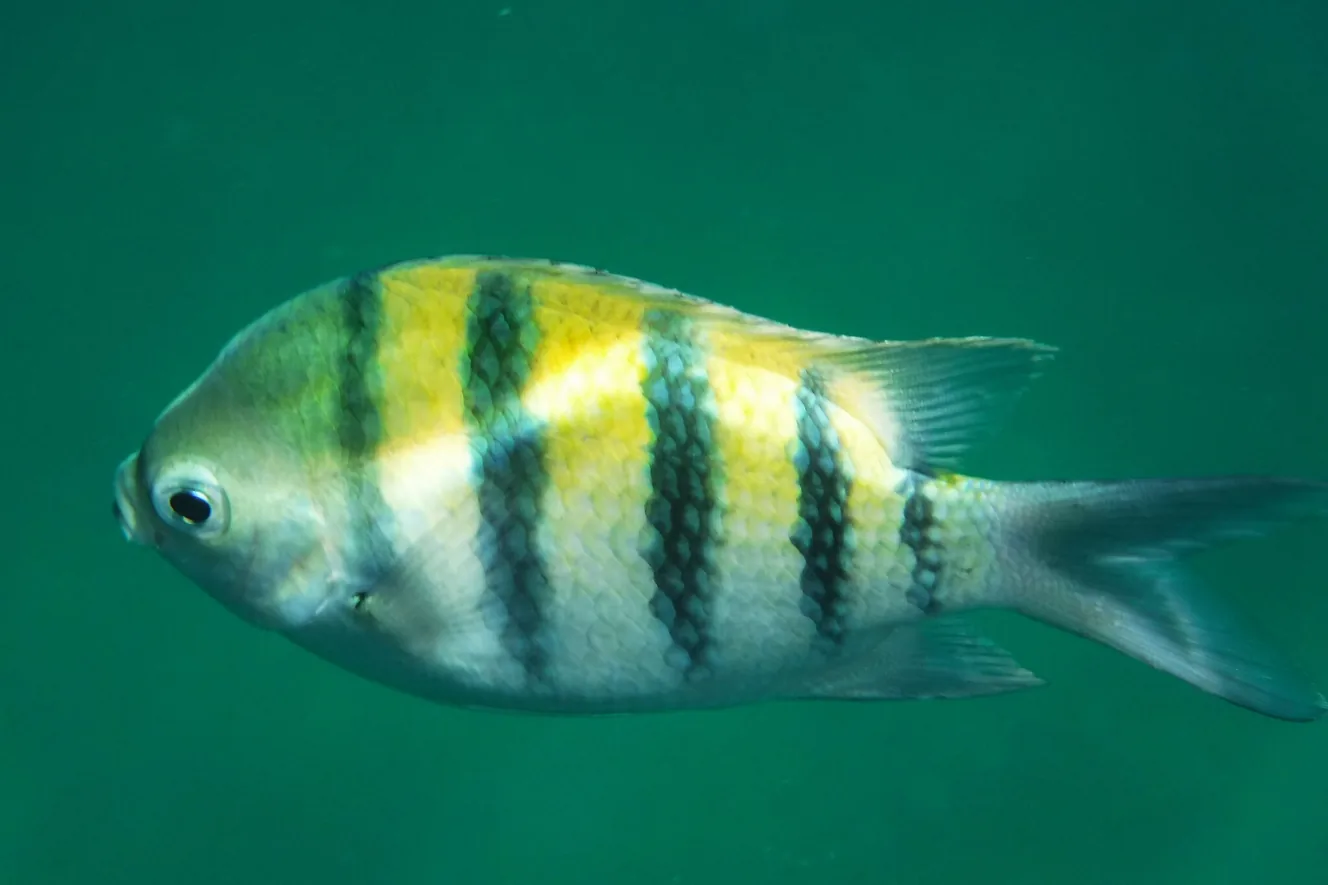
The ProColombia guide goes into detail. It says Isla Gloria is probably the site with the most fish in the park: coral patches with sponges, cleaner shrimp and arrow crabs; then a wall of lettuce coral with hundreds of damselfish, and further down brain corals, schools of creole wrasse, surgeonfish, parrotfish, angelfish and some snappers. At La Montañita, in Barú, it points to barrel sponges, grooved brain coral, crabs and lobsters. At Playa Vásquez, Colombia Travel lists snappers, jacks, goatfish, rays and conger eels, and at Bajo Burbujas, schools of jacks and Spanish mackerel and reef sharks. For the islands as a whole, the same page sums up hard corals, sponges, crabs, lobsters and surgeonfish, parrotfish, angelfish and creole wrasse.
In San Bernardo, ProColombia names angelfish, butterflyfish, damselfish, parrotfish, grunts and surgeonfish, as well as turtles and rays. At Raya y Estrella it describes sponges, grunts, moray eels and lobsters. At Bajo de Pajarito, off Boquerón, squid, octopus, turtles, moray eels, sharks and schools of barracuda. And of Bajo de las Picúas, almost 13 kilometres from Tintipán, it says sharks are more common because it lies far from the coast. We found no official source documenting nurse sharks at the Rosario dive sites.
Turtles, groupers and other neighbours
Two sea turtles frequent the park. In 2015, biologist Diego Luis Duque, who then led the area's research and monitoring programme, told EFE that the hawksbill (Eretmochelys imbricata) nests on its beaches and that the green turtle (Chelonia mydas) uses it as a passage and feeding ground. The loggerhead (Caretta caretta), once abundant, is now rarely seen. The hawksbill eats sponges, which compete with coral for space, and so helps keep the reef in balance. Fishermen hand over to the Oceanario de las Islas del Rosario the turtles that get tangled in their nets; there veterinarians and biologists examine them, tag them and then release them. In November 2019, El Universal reported 89 released at Isla Arena and Playa Blanca: 88 hawksbills and one green turtle.
The goliath grouper can exceed three metres and 450 kilos. It was fished almost to extinction and is listed as critically endangered in Colombia's Red Book of Fishes. The Oceanario has spent some twenty years trying to breed it and releases the larvae near the islands, El Espectador reported in 2017. The reef also has an intruder: the lionfish, an invasive species with venomous spines, which has its own entry.
Look, don't touch
All of this is best seen from a metre away. The Ministry of Environment asks people not to touch corals, and in 2023 it warned that between 70 and 80% of the country's reefs had shown bleaching, this park included. National Parks only authorises scuba diving and snorkelling at the sites set by Resolution 273 of 2007, and forbids anchoring on coral or seagrass. Go with a certified dive centre, stay within the limits of your certification and control your buoyancy. Turtles and groupers are not chased: you let them pass.
Algunos de los que viven en el arrecife (3)
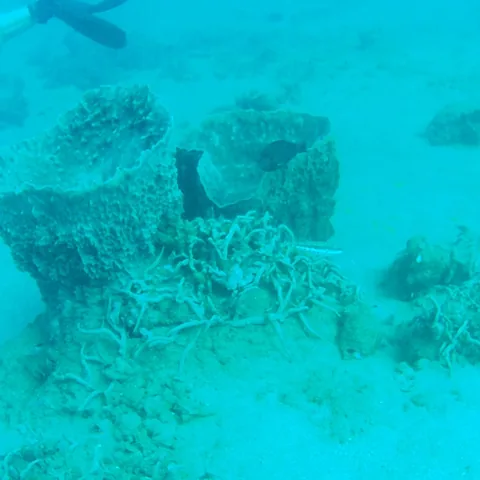
Giant barrel spongeXestospongia mutaFoto: Niko Ioannidis / iNaturalist · CC BY · Santa Marta, foto ilustrativa 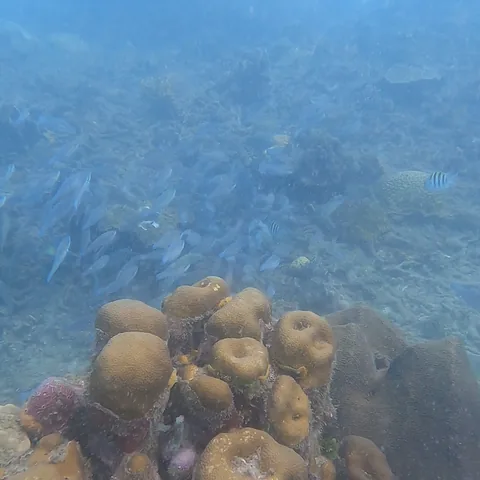
Lobed star coralOrbicella annularisFoto: Bria Morgan / iNaturalist · CC0 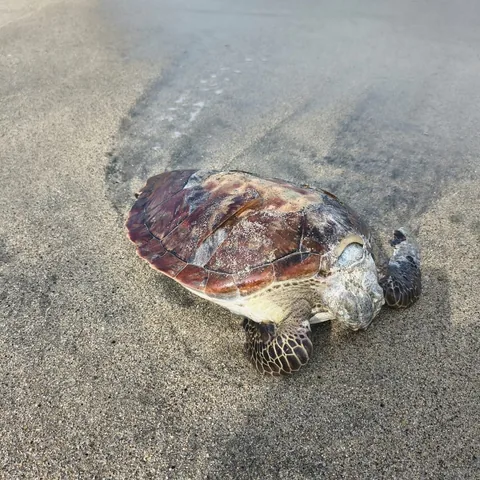
Green sea turtleChelonia mydasFoto: Juan Rey / iNaturalist · CC BY · Santa Marta, foto ilustrativa
Hours, prices and conditions can change: confirm with the organizer or the venue before you go.
Sources
- ProColombia: Guía de buceo de Colombia (2024) ↗
- Colombia Travel: Buceo en Cartagena ↗
- Invemar: Boletín ICTAC, Archipiélago de San Bernardo, reporte 2024 ↗
- Parques Nacionales Naturales: respuesta a petición sobre Santa Cruz del Islote (junio de 2023) ↗
- EFE en RPP: Liberan 75 tortugas dentro de programa de conservación en Colombia (2015) ↗
- El Universal: Liberan 89 tortugas en Isla Arena y Playa Blanca (2019) ↗
- El Universal: Liberan tortugas en Isla Arena (2019) ↗
- El Espectador: El último plan para acabar con el pez león (2017) ↗
- Mongabay: Acróporas, corales que desaparecen en el Caribe colombiano (2026) ↗
- Ministerio de Ambiente: alerta por blanqueamiento de arrecifes (2023) ↗
- Parques Nacionales Naturales: Resolución 0273 de 2007 ↗
Diving in Cartagena: reefs, shipwrecks and the story of the sea →