
Diving / Wrecks to dive
Salmedina shoal: the Faro and Ferrocemento wrecks
Two ships that held up a lighthouse, galleon remains and an open-sea reef, twenty minutes from the bay.
- Depth
- Plateau at 4 to 10 metres and walls down to 40, according to ProColombia's guide (2024), which gives the site a range of 9 to 40 metres; Wikipedia gives about 3 to 30 metres for the shoal; the Faro site reaches 18 metres, according to PADI
- Level
- Advanced, according to Colombia Travel and ProColombia, because of the currents and swell. PADI recommends Advanced Open Water, Deep Diver and Rescue Diver for the Faro site.
- Where
- Bancos de Salmedina, open sea west of Cartagena bay
- Getting there
- Only by boat with a dive centre. It is open sea with strong currents: the centre decides whether the day's conditions allow the dive.
- When to go
- Diving runs all year, with water around 28 °C, according to Colombia Travel, but in open sea the swell rules. From December to January the trade winds raise the swell and Dimar may restrict navigation: the centre decides each day.
- Before you go
- Only with a certified centre, an advanced certification and current experience. Carry a surface marker buoy if the centre asks. Do not touch the cannons, anchors or any remains: they are underwater heritage studied by ICANH. Do not touch the coral either. Take nothing.
Before it was a dive site, Salmedina was a hazard. It is a reef shoal in open sea, west of Cartagena bay and some five nautical miles from the city, which Wikipedia counts among the main dangers on the coast. Several galleons ran aground there, and cannons can still be seen nearby. To warn ships, a lighthouse was raised on two vessels sunk in the shallow part; today another lighthouse marks the lowest point of the reef.
Two wrecks with names
Colombia Travel names the two wrecks divers visit on the shoal: the Ferrocemento and the Faro. Both, the site says, are now part of the marine habitat. El Universal published, with images from Colombia's maritime authority (Dimar), a recent wreck located on the shoal and known as Faro. We found no published history of the Ferrocemento: neither what ship it was nor when it reached the bottom. The link between these two hulls and the ones that held up the old lighthouse, mentioned by Wikipedia, is not documented in the sources we consulted either.
The diving guide ProColombia published in 2024 adds a missing detail: the two hulls lie about 200 metres from each other (656 feet, the text says). On land that is a short walk; underwater, in open sea and with current, it is something else. Before you jump in, ask the centre which of the two the day's dive includes.
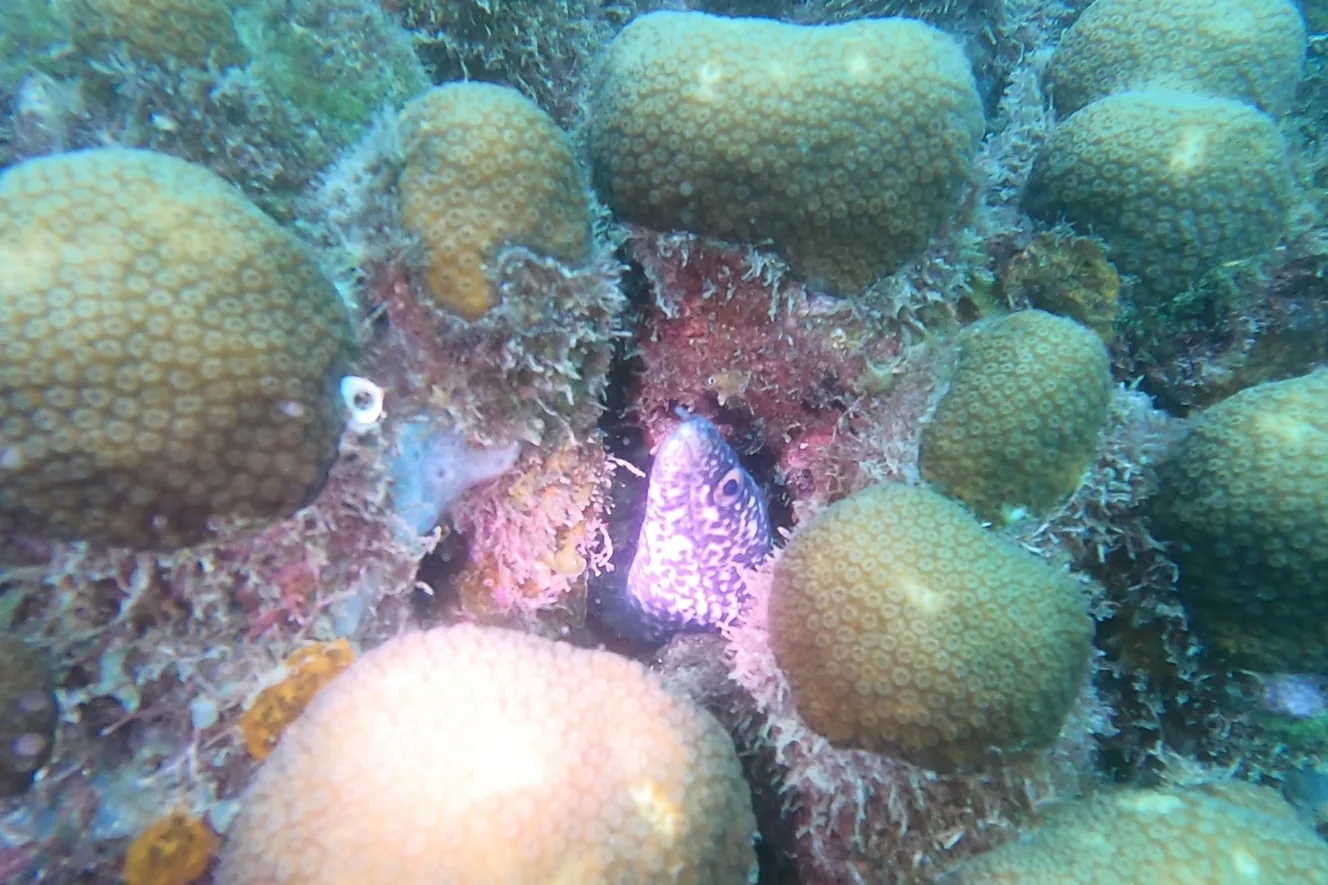
PADI's page for the Faro site places it in the Bancos de Salmedina area and describes seven ecological units, the most representative of the 24 recorded there: elkhorn coral formations (Acropora palmata), Montastraea and Orbicella colonies, remains of staghorn coral (Acropora cervicornis) and a Porites porites unit that mingles with the reef. It gives a maximum depth of 18 metres. Colombia Travel adds soft and hard corals across the shoal.
Sixteenth-century cannons
Salmedina holds more than modern ships. Colombia Travel mentions anchors and cannons from sixteenth-century Spanish navigation, and a 2025 diving magazine speaks of anchors and cannons from sunken galleons some twenty minutes by boat from the city. El Universal explains that the Colombian Institute of Anthropology and History (ICANH) is researching several wrecks on the shoal: the first investigation began in the 1990s at a site called Salmedina 1, and at the Salmedina II site a cannon and an anchor have been recorded. According to the same paper, many of these sites are visited by tourists with dive centres, and an ICANH team recently returned to the area to identify more pieces.
ProColombia's guide describes the scene in more detail: on the shoal's plateau lie seven anchors about three metres (ten feet) long surrounded by galleon cannons, proof, it says, that this formation was a serious obstacle for sailors from the days of the Conquest.
That changes how you dive here. The colonial remains are underwater cultural heritage and ICANH studies them: you look, you do not touch, move or remove anything. If the dive centre takes you near a cannon or an anchor, the rule is the same as with coral: distance and buoyancy.
Who it is for
Depth depends on where you go down. Wikipedia gives the shoal 10 to 100 feet, about 3 to 30 metres. ProColombia describes a large plateau at 4 to 10 metres, with soft corals, fish, snails and molluscs, and very steep edges that drop from 10 to 40 metres, rich in hard corals, sea rods and whip corals; it notes visibility of 18 to 20 metres. PADI puts the Faro site at 18 metres. But what defines the dive is the open sea. Colombia Travel and ProColombia agree that currents are strong and the level advanced, and the guide warns about the strong wave movement. It is a site for divers with current experience, an advanced certification and a centre that knows the shoal and reads the sea well. On the walls, go only as deep as your certification allows. Beginners have better options at Playa Vásquez, on Barú.
El bajo y su fauna (3)
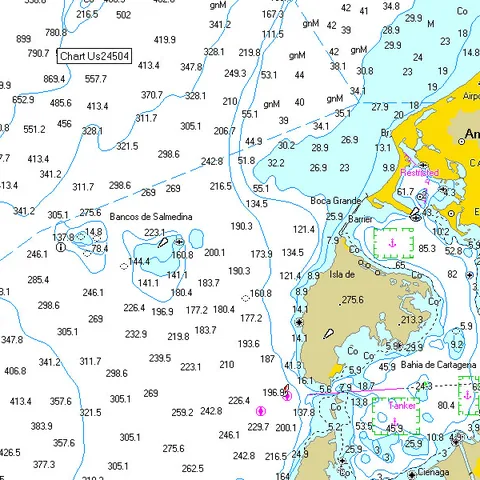
Salmedina banks on the nautical chartCarta náutica: Pedroelgrande / Wikimedia Commons · dominio público 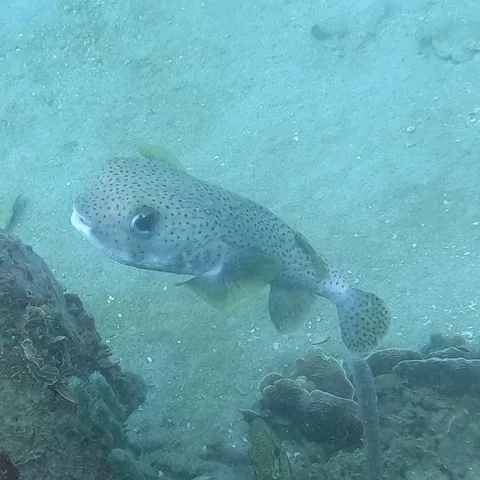
Spotted porcupinefishDiodon hystrixFoto: Bria Morgan / iNaturalist · CC0 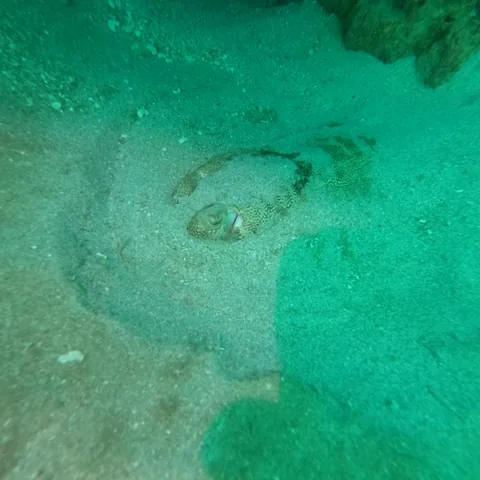
Yellow stingrayUrobatis jamaicensisFoto: Bria Morgan / iNaturalist · CC0
Hours, prices and conditions can change: confirm with the organizer or the venue before you go.
Sources
- Colombia Travel: buceo en Cartagena (Bajo Salmedina) ↗
- ProColombia: Guía especializada de buceo en Colombia (2024), ficha Bajo Salmedina ↗
- Wikipedia: Bancos de Salmedina ↗
- El Universal: los objetos arqueológicos que se esconden bajo el mar de Cartagena (agosto 2024) ↗
- PADI: Faro (ficha del sitio de buceo, Bancos de Salmedina) ↗
- Scuba Diving Industry Magazine, abril 2025, p. 24 (Cartagena) ↗
- Dimar: comunicado sobre la temporada de vientos alisios en Cartagena (enero 2021) ↗
Diving in Cartagena: reefs, shipwrecks and the story of the sea →