
Diving / Dive sites · About an hour by boat from Cartagena
Punta Brava: the trail snorkellers and divers share
The busiest snorkelling trail in the Rosario Islands and a diver favourite: shallow, heavily visited and without a buoy.
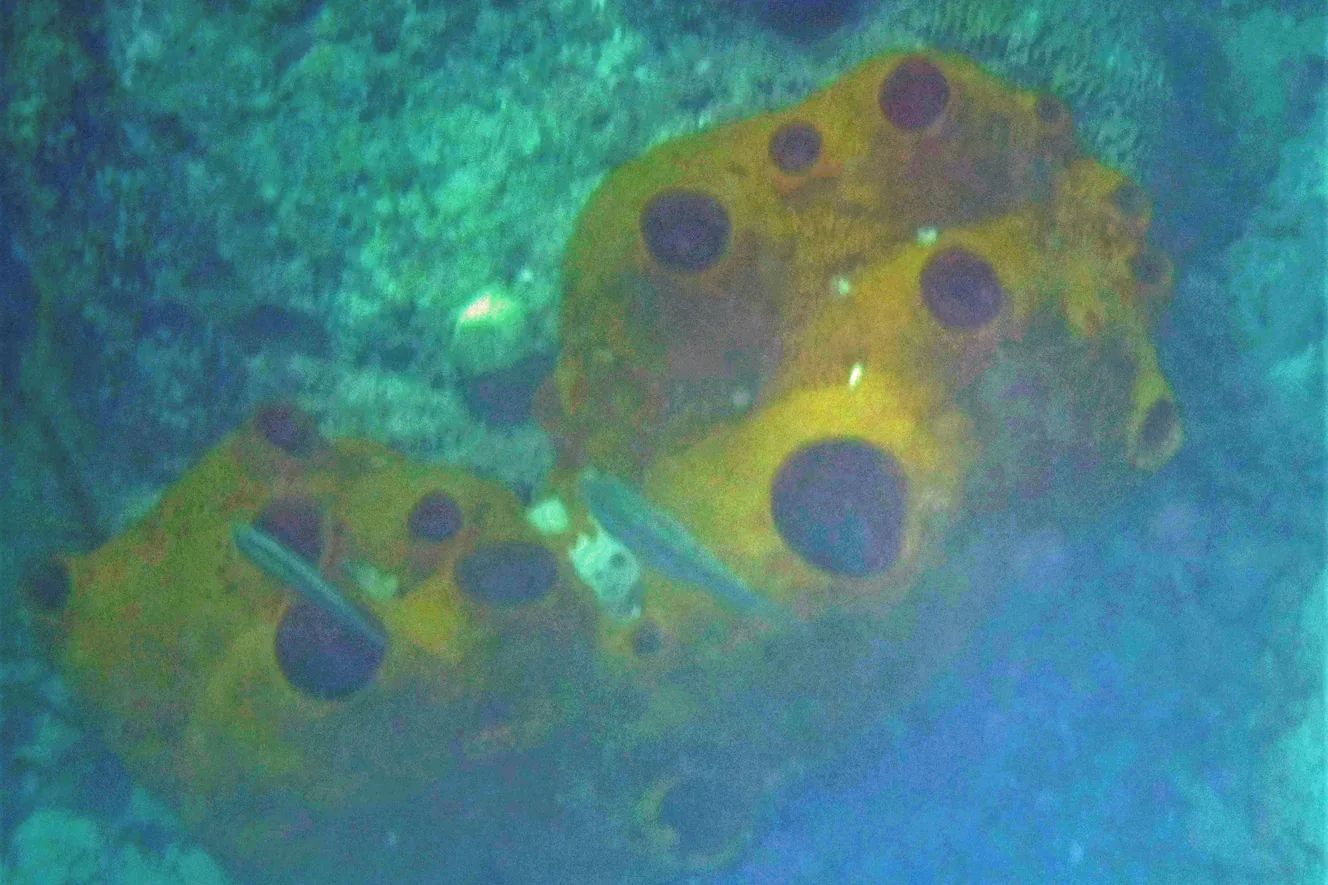
- Depth
- Average depth along the trail of 11.3 metres; snorkelling in the park's trails takes place at 2 to 5 metres (Castro Triana and Pereira, 2016)
- Level
- Snorkelling needs no certification, but go with a guide and a life vest if you are not a confident swimmer. For scuba, Open Water or higher, and only if the center confirms the site is authorized.
- Where
- Nuestra Señora del Rosario archipelago, Corales del Rosario y de San Bernardo National Natural Park. Official coordinates: 10° 11' 9.90" N, 75° 44' 43.74" W
- Getting there
- By sea only, with a licensed operator or a certified dive center that brings a guide. The park entry fee applies.
- When to go
- Year-round, with water at about 28 °C (Colombia Travel). The 2016 study distinguishes a dry season from December to April and a rainy season from May to November. Check sea conditions before heading out.
- Before you go
- Go with a licensed operator that brings a guide and gives a briefing. Wear a life vest if you are not a confident swimmer. Do not step on or touch the coral, do not feed the fish and use reef-friendly sunscreen. If you dive with a tank, confirm the site is authorized. Pay the park entry fee.
Punta Brava turns up in almost everything written about diving in the Rosario Islands. A guide published by El Espectador in May 2026 names it, along with Isla Grande and Luis Guerra, among the park sectors with surface and underwater trails. Parques Nacionales' Resolution 273 of 2007, which sets where people may dive and moor inside the protected area, lists it among the sites authorized for snorkelling and gives its coordinates: 10° 11' 9.90" N and 75° 44' 43.74" W.
In Colombia snorkelling is called careteo: swimming at the surface with mask, snorkel and fins. Parques Nacionales calls it diving with basic equipment. At Punta Brava that activity and scuba diving share the same reef, which makes it a good place to understand how the reef is used.
What the study measured
Luz Ayda Castro Triana and José Miguel Pereira Chaves followed users of the Rosario trails for months and published their findings in 2016 in Cuadernos de Investigación UNED. Punta Brava runs about 569 metres with an average depth of 11.3 metres. Among scuba divers it was the second most visited trail, with about 19% of visits, behind only Ministerio.
Among snorkellers it mattered even more. Of the 213 basic-gear visitors evaluated on three trails, 54.5% were at Punta Brava; the rest were split between Pavitos and Isla Fiesta. The study notes that measuring snorkelling was difficult because the service is offered so informally.
There was a concrete problem. Punta Brava had no buoy or mooring system; only a pin set in a block on the bottom, at about 11.6 metres. At sites without buoys the researchers saw boats dropping anchor, though they recorded that at Bajo Perdido and San Quintín. Anchors break coral; buoys exist to prevent it.
Caps and rules
In the draft carrying-capacity resolution that Parques Nacionales published in 2023, Punta Brava has a cap of 18 scuba divers a day and 26 snorkellers a day. The park's 2020 management plan allows swimming and snorkelling with basic gear and safety equipment in the recreation zone, and recreational Open and Advanced diving at the sites set by Resolution 273.
There is a detail worth knowing: in that resolution Punta Brava is listed as a snorkelling site, not a scuba site, even though the 2016 study recorded scuba diving on the trail. If someone offers to take you there with a tank, ask the center whether the site is authorized.
Snorkelling the right way
The study found that 75% of snorkelling operators gave no briefing or advice on caring for the reef, and that when the group had fewer than five people the boat carried no guide. Inexperienced snorkellers touched the bottom eight times more often per minute than experienced ones. Much of that contact is involuntary: people lean on the reef or stand up to feel safe.
The recipe is simple. Ask for a guide and a life vest if you are not a confident swimmer, listen to the briefing before getting in, do not stand on the coral and do not feed the fish. Colombia Travel also asks visitors to use sunscreen free of chemicals harmful to the reef and to leave no trash. And remember that this park recorded bleaching in 2023, according to the Ministry of Environment: the coral you see is under pressure.
Lo que se ve con careta (2)
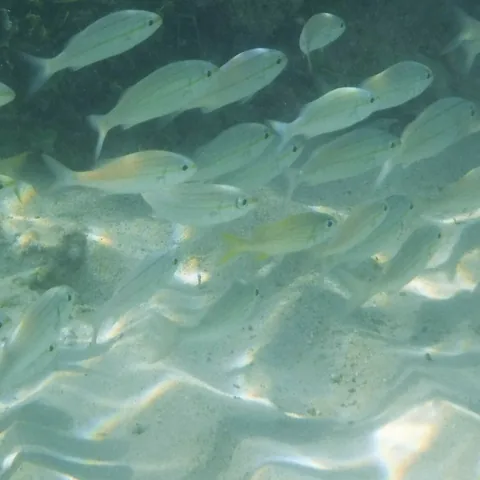
School of tomtate gruntsHaemulon aurolineatumFoto: Louis Imbeau / iNaturalist · CC BY 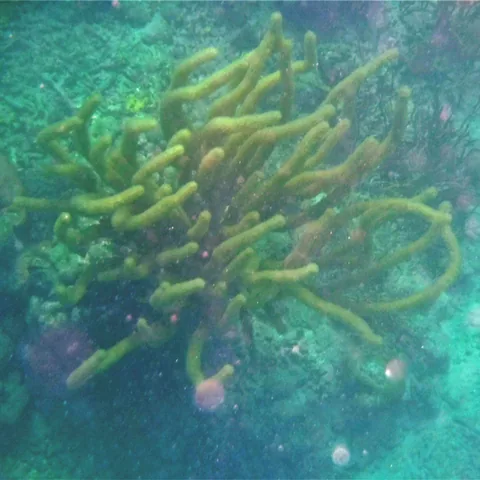
Knobby sea rodEuniceaFoto: Louis Imbeau / iNaturalist · CC BY
Hours, prices and conditions can change: confirm with the organizer or the venue before you go.
Sources
- Castro Triana y Pereira Chaves: impacto de la actividad turística sobre los arrecifes coralinos del PNN Corales del Rosario y San Bernardo (Cuadernos de Investigación UNED, 2016) ↗
- Parques Nacionales Naturales: Resolución 0273 de 2007, canales de navegación y sitios permitidos para buceo y amarre en el PNN Corales del Rosario y de San Bernardo ↗
- Parques Nacionales Naturales: Resolución 0160 de 2020, Plan de Manejo del PNN Los Corales del Rosario y de San Bernardo ↗
- Parques Nacionales Naturales: proyecto de resolución que adopta la capacidad de carga de sitios del PNN Corales del Rosario y de San Bernardo (2023) ↗
- El Espectador: Parque Corales del Rosario y de San Bernardo 2026, lo que necesita saber antes de ir (mayo de 2026) ↗
- Colombia Travel (ProColombia): buceo en Cartagena ↗
- Colombia Travel (ProColombia): guía para bucear en Colombia, buenas prácticas ↗
- Ministerio de Ambiente: entre el 70 % y el 80 % de los arrecifes coralinos del país han presentado blanqueamiento (noviembre de 2023) ↗
Diving in Cartagena: reefs, shipwrecks and the story of the sea →