
Diving / Wrecks to dive · About 45 minutes by boat from Cartagena to Barú
Playa Vásquez wrecks: Atlas, Tolú and the Paper Boat
A tugboat, a Navy ship, five boats and a steel paper boat on a sandy plain off Barú.
- Depth
- 6 to 21 metres across the site as a whole, according to PADI
- Level
- From Open Water; Colombia Travel names it as a place for first lessons, always with an instructor. PADI recommends Advanced Open Water and Wreck Diver to make the most of the wrecks.
- Where
- Playa Vásquez and the Ciénaga de los Vásquez, on the north of Barú island (Cartagena)
- Getting there
- By boat with a dive centre. It is the same theme park where the ARC Quindío lies; centres usually combine the sites according to each diver's level.
- When to go
- Diving runs all year; the water is around 28 °C, according to Colombia Travel. From December to January the trade winds can raise the swell and restrict navigation: the dive centre decides each day.
- Before you go
- Go with a certified centre and stay within your level. The hulls and sculptures are reefs in the making: do not touch them, do not lean on them and do not kick up sand near the corals. Do not enter any structure without wreck training. Take nothing.
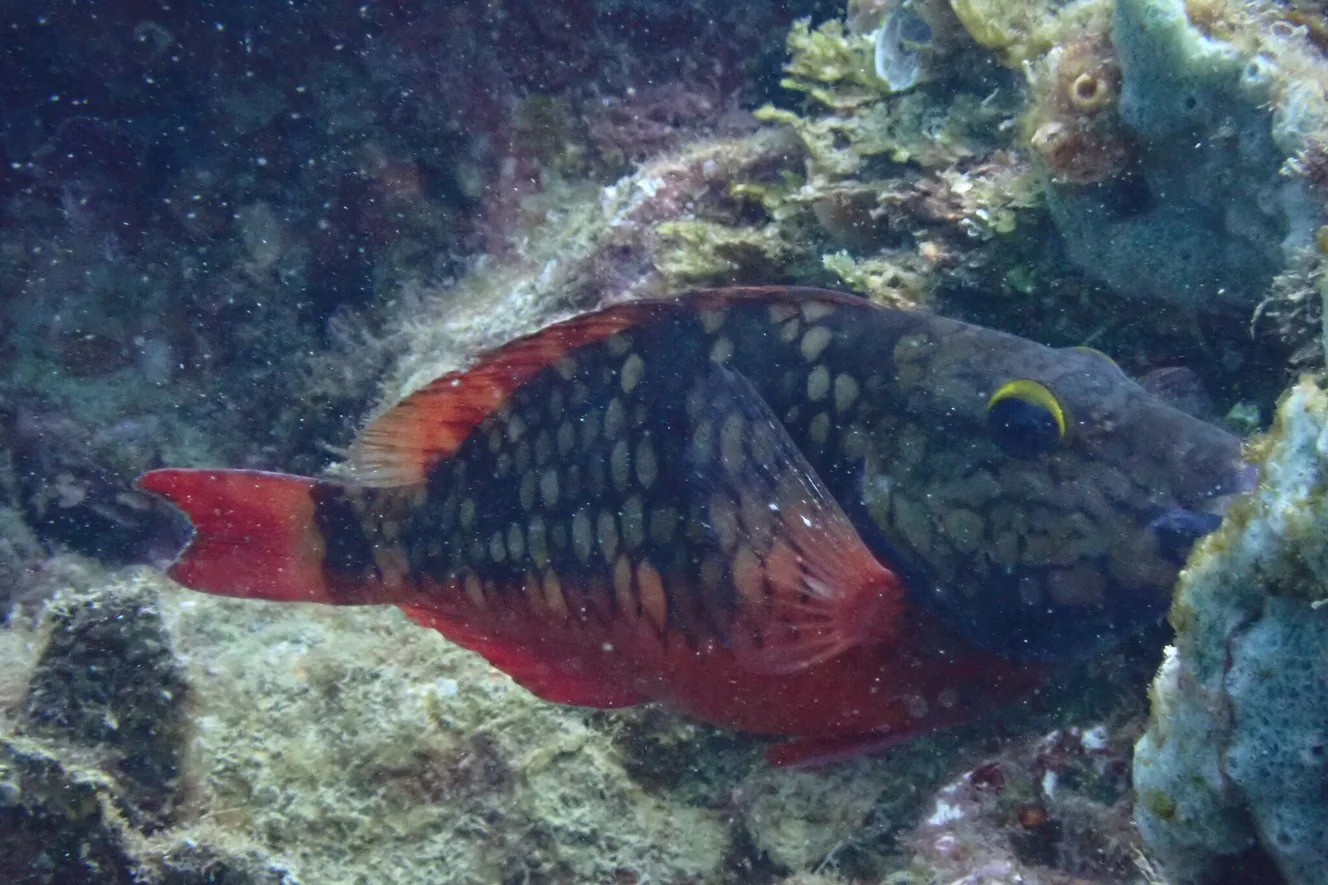
Playa Vásquez is not a beach you go to for the sun. It is, above all, a seabed: a sandy plain next to a reef, on the north of Barú, where two ships sunk on purpose lie, the Atlas and the Tolú. Colombia Travel describes it as the ideal place for first diving lessons in Cartagena. Underwater, the same site mentions snappers, jacks, goatfish, rays and conger eels. Close by, in the same Ciénaga de los Vásquez, the Navy sank the ARC Quindío in 2015; it has its own entry.
The park's first ships
Colombia's maritime authority (Dimar) says the dive theme park, the first of its kind in Colombia, brings together several hulls. Besides the Quindío there are the former ARC Tolú and the former tug Atlas, sunk years earlier, and five boats sunk by the Fundación Eduardoño with support from the Navy's Diving and Salvage Corps. El Heraldo specifies that the Tolú and the Atlas were sunk by expert divers from the Cartagena Naval Base, and that by November 2015 there were already three finished artificial reefs in the area.
Little is known about the earlier lives of those two ships. The official sources we could consult name them but do not say when they were built or what they did before going to the bottom. What is clear is why they were sunk: the project, led by the Vice Presidency with the Navy, Dimar, the Cartagena mayor's office and National Parks, sought to create habitat at Barú and give divers an alternative that would take pressure off the reefs of the Rosario Islands national park.
A six-metre paper boat
The most curious piece in the group was never a boat. On 13 November 2015, some twenty minutes before the Quindío, a steel structure about six metres long, shaped like a little boat folded from a notebook page, was lowered into the water, according to El Colombiano. It was contributed by Eduardoño and its foundation. El Heraldo reports that Cotecmar built it from naval plate, that it was sanded to a very rough finish so marine life would attach faster, and that a crane lowered it from a barge. It sank slowly under its own weight to the centre of the other vessels, which are arranged in a star, and was tied to the bottom with anchors driven three metres into the sand.
The same lagoon is also home to the Museo de Arte y Medio Ambiente, MUMAR, in a concession area called Zona M. There you find the Jardín de Medusas, a series of wooden sculptures by Germán Botero designed to break down and let corals transform them, and since March 2025 El Caracol, a steel piece more than three metres tall by Cartagena artist José Olano, according to El Universal and La República.
What you see and who can go
PADI's site page describes coral patches on a limestone terrace facing the islands, with sandy areas where the submerged structures sit. It records Orbicella annularis, remains of staghorn coral (Acropora cervicornis), Agaricia tenuifolia, large Montastrea colonies and soft corals, plus a good variety of reef fish. It gives depths of 6 to 21 metres for the whole site; we found no official figure for each wreck separately.
That range is what makes the place a good school. An Open Water diver, certified to 18 metres, can cover much of the site with a centre; anyone taking a course or a try dive does so with an instructor and at the depth the instructor decides. PADI recommends the Wreck Diver specialty for those who want to go beyond looking at the hulls from outside. Barú is about 45 minutes by boat from Cartagena, according to Colombia Travel.
Lo que se ve alrededor de los pecios (6)
Bluehead wrasseThalassoma bifasciatumFoto: Eric Crandall / iNaturalist · CC BY 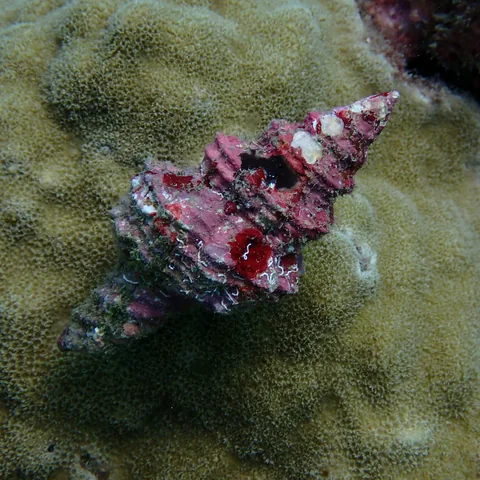
Triton snail on coralCymatiidaeFoto: Eric Crandall / iNaturalist · CC BY 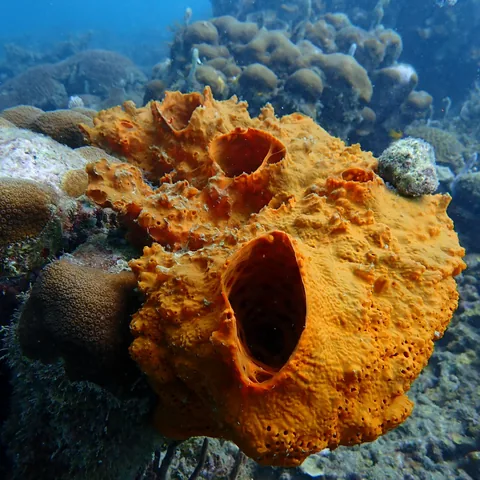
Orange Colombian spongeLissodendoryx colombiensisFoto: Eric Crandall / iNaturalist · CC BY 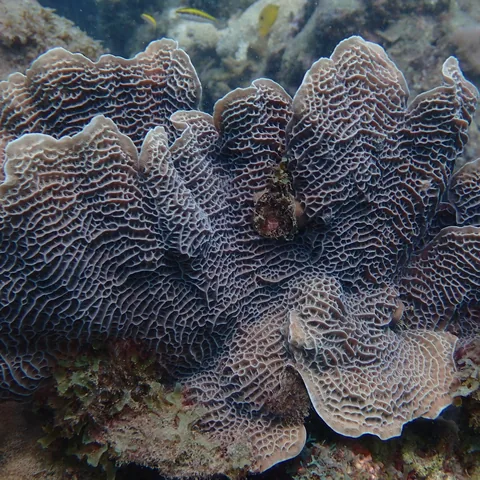
Lettuce coralAgariciaFoto: Eric Crandall / iNaturalist · CC BY 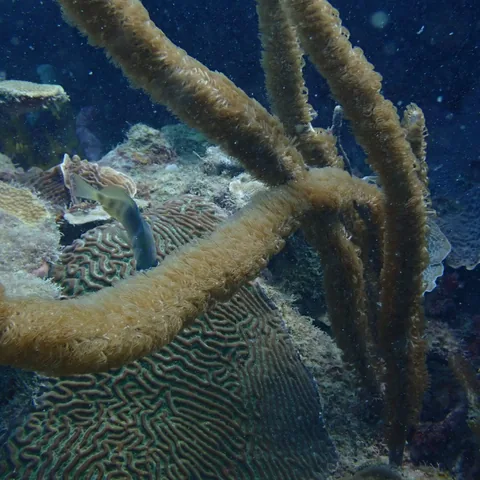
Corky sea fingerBriareum asbestinumFoto: Eric Crandall / iNaturalist · CC BY 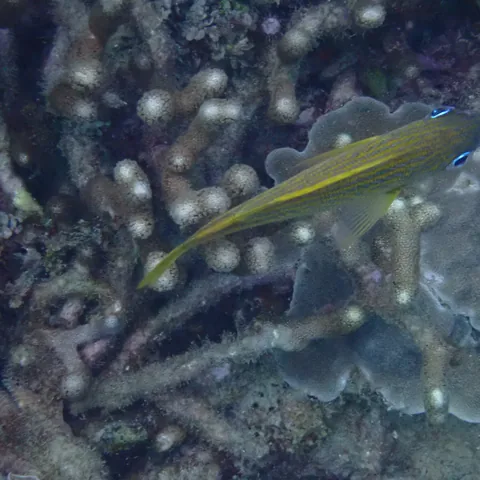
French gruntHaemulon flavolineatumFoto: Eric Crandall / iNaturalist · CC BY
Hours, prices and conditions can change: confirm with the organizer or the venue before you go.
Sources
- Colombia Travel: buceo en Cartagena ↗
- Dimar: ARC Quindío, la muerte digna de un marino (noviembre 2015) ↗
- Dimar: ARC Quindío, nuevo parque temático de buceo en Cartagena (noviembre 2015) ↗
- El Heraldo: así hundieron un buque para transformarlo en un arrecife (noviembre 2015) ↗
- El Heraldo: dos barcos al fondo del mar para resucitar como arrecifes (noviembre 2015) ↗
- El Colombiano: barcos hundidos que se convertirán en corales (noviembre 2015) ↗
- PADI: Ciénaga de los Vásquez, parque temático de buceo (ficha del sitio) ↗
- El Universal: el MUMAR sumerge su segunda escultura submarina (marzo 2025) ↗
- La República: museo MUMAR, inmersión de nueva obra de arte en Cartagena (marzo 2025) ↗
- Dimar: comunicado sobre la temporada de vientos alisios en Cartagena (enero 2021) ↗
Diving in Cartagena: reefs, shipwrecks and the story of the sea →