
Diving / Wrecks to dive
Pedro de Heredia wreck
A Second World War tug that ended up in the Colombian Navy and now rests on the sand near Tierra Bomba.
- Depth
- According to PADI, from 12 metres (mast) to 27 (bottom); ProColombia's guide (2024) gives 10 to 24 metres and puts the mast tips at 1.5–3 metres; a diving magazine speaks of about 40. The figures do not match: check with the centre.
- Level
- Advanced, according to ProColombia; PADI recommends Advanced Open Water, Deep Diver and Wreck Diver. Entering the hull, even with guide lines in place, requires wreck training.
- Where
- Southwest of Cartagena, in the Tierra Bomba island area, on a sandy bottom
- Getting there
- By boat with a dive centre. According to PADI there is no mooring buoy for boats: the centre knows the spot and the mooring system, which is on the ship's bow.
- When to go
- Diving runs all year; Cartagena's water is around 28 °C, according to Colombia Travel. From December to January the trade winds raise the swell and Dimar may restrict navigation: check sea conditions with the centre.
- Before you go
- Go only with a certified centre and with the certification it requires for this depth. Do not touch the hull: fire coral stings and the rest of the life is fragile. Do not go inside without wreck training. Watch your air and no-decompression time. Take nothing.
Cartagena was founded in 1533 under the command of Pedro de Heredia, and the Navy gave his name to a ship. That ship is now on the bottom, in the Tierra Bomba area, southwest of the city. Colombia Travel lists it among the sites for those who want to dive near shipwrecks: it says the vessel served in the Second World War, was later acquired by the Colombian Navy and sank onto a sandy bottom where fire coral now lives. Currents, according to the same site, range from gentle to moderate.
A fleet tug
Naval records make it possible to trace its origin, with one caveat. In 1978 Colombia received two Second World War fleet tugs from the United States, USS Choctaw and USS Carib, both built at the Charleston yard in South Carolina between 1942 and 1943. Wikipedia gives the name ARC Pedro de Heredia to both, depending on the page, and the Carib entry itself admits that another list calls it Sebastián de Belalcázar. Open sources do not settle which of the two hulls lies off Tierra Bomba.
The history of the Carib, which Wikipedia links to the sinking, helps to understand what kind of ship this is. It was launched on 7 February 1943. In the war it did escort, towing and salvage work off Brazil, crossed the Atlantic towing a damaged destroyer escort and then moved to the Pacific, with trips to Okinawa, Japan and Shanghai. It went into reserve in 1947. Colombia bought it in February 1978, reactivated it at a California shipyard and commissioned it into its Navy on 7 August 1979. The same entry records its final fate as being sunk by the Colombian Navy in June 2007.
Navypedia, which links the name to the former Choctaw, describes these ships as ocean tugs used by Colombia for patrol and rescue, 62.5 metres long with a crew of 75. It gives a good idea of the size waiting underwater.
Down below
PADI's site page places the wreck on soft sandy bottoms. The mast rises to about 12 metres from the surface and the deepest part reaches 27. The mooring system is on the bow and there is no buoy for boats, so the dive centre is the one that knows where to anchor. In its marine life list PADI notes barracudas, Goliath groupers, sponges, corals and green, brown and encrusting pink algae. Colombia Travel highlights the fire coral that has colonised the hull.
The specialised diving guide ProColombia presented in 2024 gives the Barco Pedro de Heredia its own entry and tells it differently. It says the ship is large and intact, that it rests on a mound of sand and that coral, above all fire coral, has been covering it. It gives a depth of 10 to 24 metres, visibility of 15 to 20 metres, variable currents and an advanced difficulty rating. And it adds a detail no other source repeats: the tips of the masts would sit just 1.5 to 3 metres below the surface.
The figures do not match. PADI puts the mast at 12 metres and the bottom at 27; a 2025 diving industry magazine speaks of about 40 metres; ProColombia, of 10 to 24 with the masts almost at the surface. The guide even contradicts itself: if the highest point of the ship were at 1.5 metres, the dive would not start at 10. The same page has other visible slips, such as a water temperature of "29 °F", and none of the three sources explains how it measured. Nor did we find a survey of the wreck published by Dimar or the Navy. The sources do not tell whether the difference comes from an editing error, from measurements taken in different years or from different parts of the ship. The sensible thing is not to trust any single figure: ask the centre how deep its dive goes, plan for the greater depth and let your computer rule. Beyond 30 metres you are in deep diving territory.
Who it is for
This is a dive for advanced divers. The Open Water course certifies you to 18 metres, above the bottom of the wreck, and PADI recommends Advanced Open Water, Deep Diver and Wreck Diver for this site, among other courses. The fire coral Colombia Travel mentions stings on contact: one more reason to keep your buoyancy and not lean on the hull. Entering the ship requires specific wreck training and a guide who knows it.
ProColombia also says the wreck has guide lines so that wreck-trained divers can enter the hull safely; according to the guide, they usually go in at the deepest part and work their way up. Having lines does not make penetration something for everyone. Inside a ship there is no direct way up to the surface, one kick can lift the silt and visibility can vanish: you need wreck training, a torch, fine buoyancy control and a guide who knows the route.
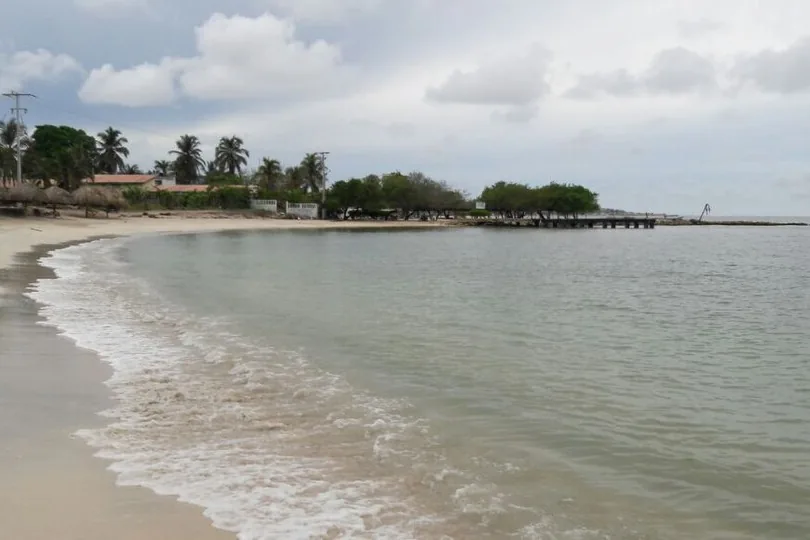
Tierra Bomba, arriba y abajo del agua (3)
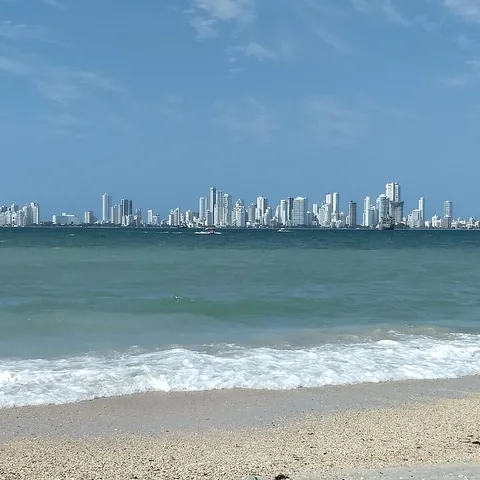
Tierra Bomba beachFoto: LauFlorez / Wikimedia Commons · CC BY-SA 4.0 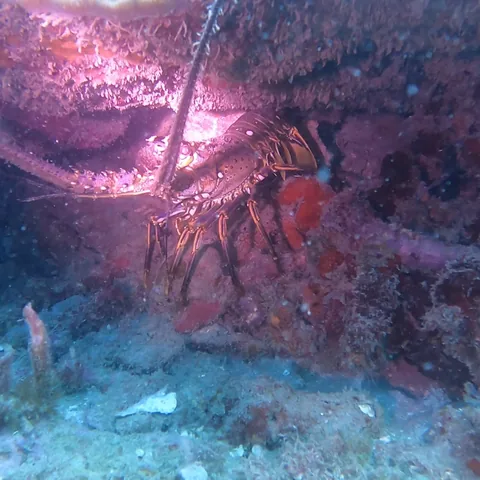
Caribbean spiny lobsterPanulirus argusFoto: Bria Morgan / iNaturalist · CC0 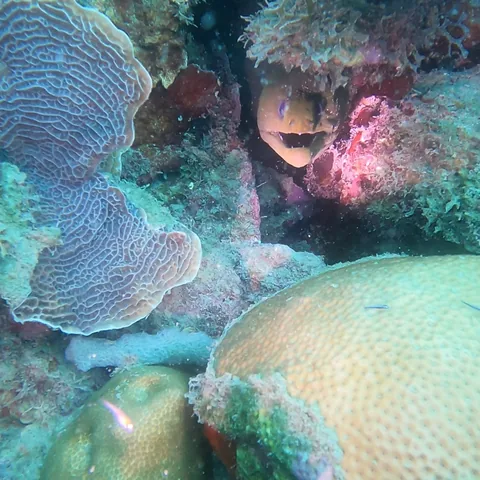
Green morayGymnothorax funebrisFoto: Bria Morgan / iNaturalist · CC0
Hours, prices and conditions can change: confirm with the organizer or the venue before you go.
Sources
- Colombia Travel: buceo en Cartagena (Barco Pedro de Heredia) ↗
- ProColombia: Guía especializada de buceo en Colombia (2024), ficha Barco Pedro de Heredia ↗
- PADI: Barco Pedro de Heredia (ficha del sitio de buceo) ↗
- Wikipedia: USS Carib (AT-82), luego ARC Pedro de Heredia ↗
- Wikipedia: USS Choctaw (AT-70), luego ARC Pedro de Heredia (RM-72) ↗
- Navypedia: Pedro de Heredia (ex Choctaw), remolcadores oceánicos ↗
- Scuba Diving Industry Magazine, abril 2025, p. 24 (Cartagena) ↗
- Dimar: comunicado sobre la temporada de vientos alisios en Cartagena (enero 2021) ↗
- El Espectador: ProColombia estrena guía especializada de buceo (enero 2024) ↗
Diving in Cartagena: reefs, shipwrecks and the story of the sea →