
Diving / Dive sites · About an hour by boat from Cartagena
Bajo Luis Guerra and San Quintín: two Rosario shoals named in the rules
Two coral shoals that Parques Nacionales authorizes for snorkelling and divers use with tanks: one deep with a buoy, one shallow without.
- Depth
- Average depth along the trail: 15 metres at Luis Guerra and 9.5 metres at San Quintín (Castro Triana and Pereira, 2016)
- Level
- Resolution 273 of 2007 authorizes them for snorkelling. With a tank, Open Water or higher, and only if the center confirms the site is authorized.
- Where
- Nuestra Señora del Rosario archipelago, Corales del Rosario y de San Bernardo National Natural Park. Official coordinates: Bajo Luis Guerra 1, 10° 10' 15.31" N, 75° 45' 44.00" W; Bajo Luis Guerra 2, 10° 10' 12.96" N, 75° 45' 14.04" W; San Quintín, 10° 10' 55.68" N, 75° 45' 53.34" W
- Getting there
- By sea only, with a licensed operator or a certified dive center. The park entry fee applies.
- When to go
- Year-round, with water at about 28 °C (Colombia Travel). The 2016 study saw more divers on the southern trails of the archipelago in the dry season (December to April) and on the northern ones in the rainy season (May to November).
- Before you go
- Go with a licensed operator or a certified center, with a guide. If you dive with a tank, confirm the site is authorized. Ask for the boat to tie up to a buoy or anchor only on sand, never on coral or seagrass. Do not touch the bottom and pay the park entry fee.
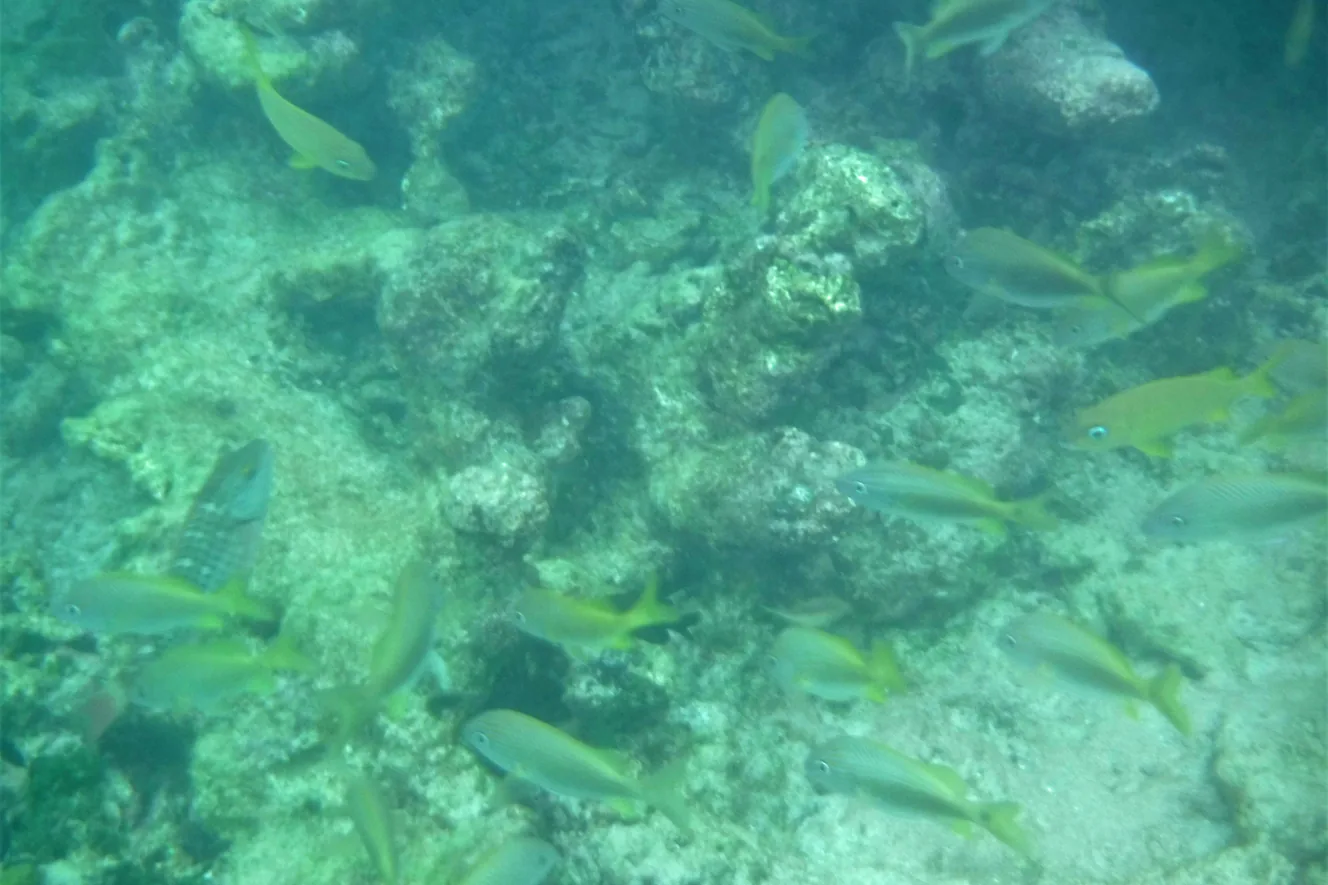
In Caribbean sea talk, a bajo is a place where the bottom rises close to the surface: a shoal. In the Rosario archipelago these shoals are usually coral formations, and some are named in the regulations. Parques Nacionales' Resolution 273 of 2007, which governs navigation channels and dive sites in the park, lists only four snorkelling sites in the Rosario sector: Bajo Luis Guerra 1, Bajo Luis Guerra 2, Punta Brava and San Quintín. Each has coordinates.
Luis Guerra also appears in recent press. In May 2026 a guide in El Espectador named it, with Isla Grande and Punta Brava, among the park sectors with surface and underwater trails. The park's chief told the paper that the aim is for every activity to be led by local guides.
Luis Guerra, the deeper one
The study by Luz Ayda Castro Triana and José Miguel Pereira Chaves, published in 2016 in Cuadernos de Investigación UNED, measured the busiest trails in the Rosario Islands. There Luis Guerra is listed as a scuba trail, about 416 metres long, with an average depth of 15 metres, one of the greatest among the sites assessed. For an Open Water diver that is a comfortable depth; for a snorkeller, the bottom is far away.
Luis Guerra had a buoy, of the kind the study calls a pencil buoy, in fair condition, with a mooring chain and an anchor block at about 6.7 metres. In 2023, Parques Nacionales' draft carrying-capacity resolution set a cap of 23 scuba divers a day there, one of the highest on the list.
San Quintín and the anchors
San Quintín is the opposite. According to the same study, its route is among the longest of the trails measured, about 671 metres, and the shallowest, with an average depth of 9.5 metres. It had no buoy or mooring system, only an anchor block at about 5 metres.
That gap showed. At sites without buoys the researchers saw boats dropping anchor, and they recorded it specifically at Bajo Perdido and San Quintín. The anchors fell on mixed sand and coral, on sand and on seagrass. Resolution 273 itself bans anchoring on coral areas and seagrass, and only allows anchoring on sand when there is no buoy or pier. In 2023 Parques Nacionales gave San Quintín the lowest cap of all the scuba trails: 11 divers a day.
What to know before you go
There is a gap between the rules and practice that visitors should know about. Resolution 273 authorizes these two sites for snorkelling, not scuba; the 2016 study and the carrying-capacity draft treat them as scuba trails. The 2020 management plan says recreational diving is allowed at the sites set by that resolution or by any that amends it. If someone offers to take you diving here with a tank, ask the center what authorization it has.
Either way, the rule in the water is the same. The study found that 74% of scuba divers touched the bottom at least once. Watch your buoyancy, do not lean on the coral and ask for the boat to tie up to a buoy or anchor on sand. This park is among those that reported bleaching in 2023, according to the Ministry of Environment.
Peces de los bajos (1)
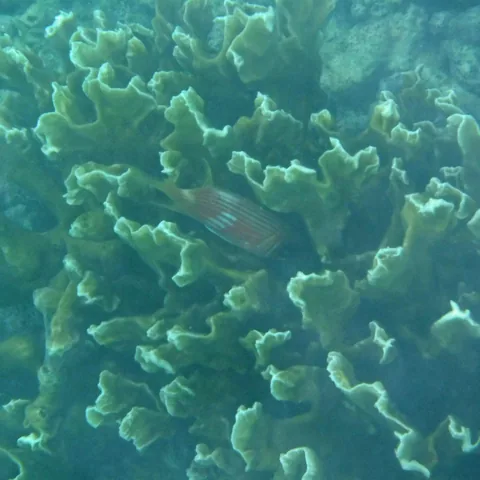
Longspine squirrelfishHolocentrus rufusFoto: Louis Imbeau / iNaturalist · CC BY
Hours, prices and conditions can change: confirm with the organizer or the venue before you go.
Sources
- Parques Nacionales Naturales: Resolución 0273 de 2007, canales de navegación y sitios permitidos para buceo y amarre en el PNN Corales del Rosario y de San Bernardo ↗
- Castro Triana y Pereira Chaves: impacto de la actividad turística sobre los arrecifes coralinos del PNN Corales del Rosario y San Bernardo (Cuadernos de Investigación UNED, 2016) ↗
- Parques Nacionales Naturales: Resolución 0160 de 2020, Plan de Manejo del PNN Los Corales del Rosario y de San Bernardo ↗
- Parques Nacionales Naturales: proyecto de resolución que adopta la capacidad de carga de sitios del PNN Corales del Rosario y de San Bernardo (2023) ↗
- El Espectador: Parque Corales del Rosario y de San Bernardo 2026, lo que necesita saber antes de ir (mayo de 2026) ↗
- Colombia Travel (ProColombia): buceo en Cartagena ↗
- Ministerio de Ambiente: entre el 70 % y el 80 % de los arrecifes coralinos del país han presentado blanqueamiento (noviembre de 2023) ↗
Diving in Cartagena: reefs, shipwrecks and the story of the sea →