
Diving / Dive sites
La Montañita
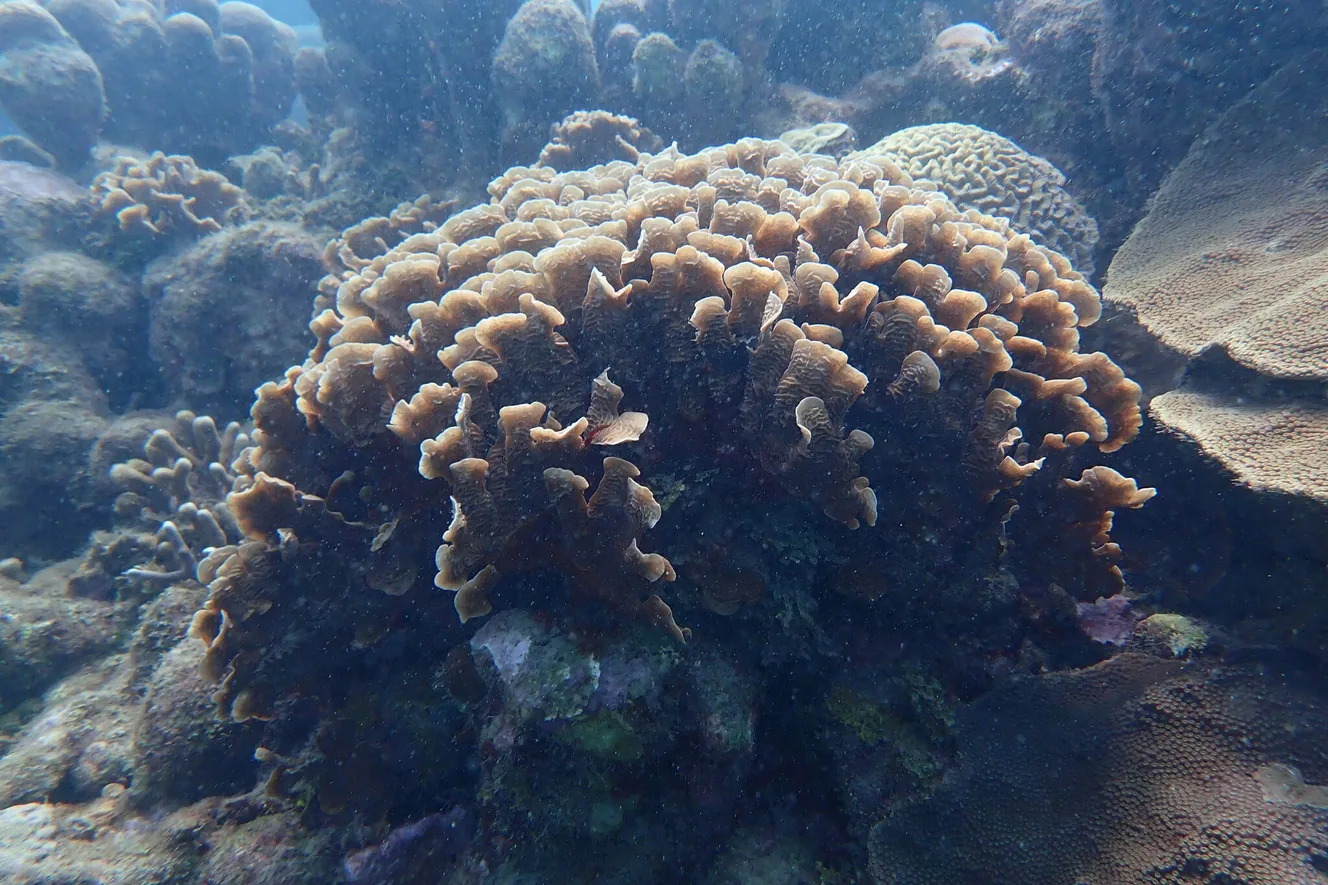
A small plateau off Barú, with barrel sponges, soft corals and schools of creole wrasse, dropping to more than forty metres.
- Depth
- From 14 to 41 metres, according to ProColombia's diving guide (2024)
- Level
- ProColombia rates it 'beginners and up'. With Open Water (18 metres) you can explore the top of the plateau; the deep slopes call for advanced and deep diving training.
- Where
- Barú island, south of Cartagena; ProColombia's guide places it on its map in the Playa Vásquez area
- Getting there
- By boat with a dive centre that includes it in its Barú dive plan.
- When to go
- Diving runs all year. ProColombia's guide gives July to October as the best season, with the calmest sea, though with less visibility because of sediment from the Canal del Dique; from December to March the trade winds bring current.
- Before you go
- Go with a certified centre. Agree the maximum depth before jumping in and do not exceed it while following the slope. Do not lean on the barrel sponges or the corals. Do not touch lobsters or crabs. Take nothing.
Not every site on Barú is a wreck or a sculpture. Among the dives Colombia Travel highlights on the island is La Montañita, which ProColombia's portal describes as an underwater plateau with soft corals, reef fish and schools of creole wrasse. The specialised diving guide the same agency presented in 2024 gives it its own entry and places it, on its map of the area, in the Playa Vásquez sector, in the north of Barú.
A small mountain
The name fits. ProColombia describes it as a small plateau topped with large barrel sponges and plenty of soft coral. On the sides of the reef hard corals appear, such as grooved brain coral, along with crabs, lobsters and reef fish. The guide adds a useful detail for orientation: groups of creole wrasse are abundant in the northern part.
The guide's technical data are these: depth of 14 to 41 metres, visibility of 5 to 20 metres, light currents and a 'beginners and up' difficulty rating. It is not a snorkelling site: the top is already at 14 metres.
The guide also gives context on the area. On the plateaus of the underwater hills off Cartagena, it explains, sea fans, sea plumes and other soft corals are common, alongside hard corals such as boulder star coral (Orbicella annularis) and barrel sponges of the species Xestospongia muta. That is, in miniature, the landscape it describes for La Montañita.
How to read those figures
That combination deserves a pause. A site being suitable for beginners does not mean all of its depth is. The Open Water course certifies you to 18 metres, so a newly certified diver can explore the top of the plateau and the start of its slopes, with a small margin. The advanced course takes you to 30 metres. The 41 the guide gives are beyond the limit of any basic recreational certification and enter deep diving territory, with its own specific training.
The practical thing is to agree the group's maximum depth with the centre and the guide before jumping in, and to stick to it even if the sponges carry on down the slope. The computer rules. On a plateau like this it is easy to keep sinking without noticing while you follow the wall.
When to go
ProColombia's guide explains that in the Cartagena, Barú and Rosario area diving runs all year, with changes in swell and visibility. From December to March the trade winds blow and currents tend to be strong in open water. In the rainy season, from July to October, currents ease but visibility can drop to about 10 metres because of the sediment the Magdalena river brings through the Canal del Dique. For the area as a whole, the guide gives July to October as the best season, when the sea is calmest.
Barú is about 45 minutes by boat from Cartagena, according to Colombia Travel. La Montañita has no published official coordinates and does not appear on the list of authorised sites of the Corales del Rosario y de San Bernardo National Natural Park, which covers the archipelagos. Ask the dive centre exactly where it is, how the boat moors and whether it is part of the day's trip.
Corales de la meseta (1)
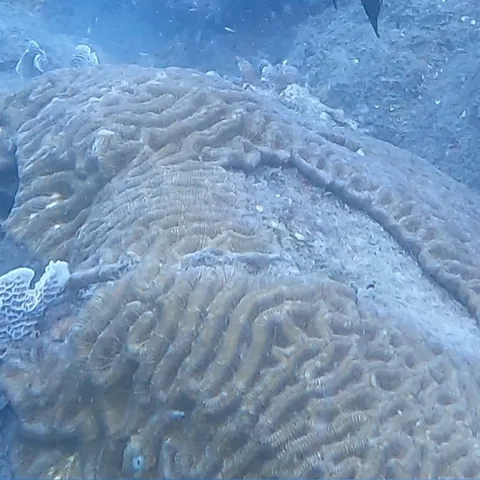
Boulder brain coralColpophyllia natansFoto: Bria Morgan / iNaturalist · CC0
Hours, prices and conditions can change: confirm with the organizer or the venue before you go.
Sources
Diving in Cartagena: reefs, shipwrecks and the story of the sea →