
Diving / Dive sites · About an hour by boat from Cartagena
Isla Fiesta, Isla Gloria and Ministerio: the most-dived trails in the Rosario Islands
Three underwater trails with mooring buoys, at about thirteen metres, where many of the divers leaving Cartagena end up.
- Depth
- Average depth along the trail of 12.5 to 13.5 metres (Castro Triana and Pereira, 2016)
- Level
- Open Water or higher for scuba; the park's management plan refers to recreational Open and Advanced diving. Ministerio and Isla Fiesta are also used for snorkelling.
- Where
- Nuestra Señora del Rosario archipelago, inside the Corales del Rosario y de San Bernardo National Natural Park
- Getting there
- By sea only, with a certified dive center that brings the gear and ties the boat to the site's mooring buoy. The park entry fee applies.
- When to go
- Year-round, with water at about 28 °C (Colombia Travel). In the dry season (December to April) divers went more to the southern trails of the archipelago, and in the rainy season (May to November) to the northern ones (Castro Triana and Pereira, 2016).
- Before you go
- Dive with a certified center and ask for the briefing. Watch your buoyancy, do not touch or lean on the coral and do not feed the fish. Insist that the boat ties up to the buoy. Pay the park entry fee. If you see bleached coral, the Ministry of Environment asks you to report it to Invemar with photos or videos.
Anyone heading out with a tank from Cartagena to the Rosario Islands has a good chance of ending up at one of these three sites. A study by Luz Ayda Castro Triana and José Miguel Pereira Chaves, published in 2016 in Cuadernos de Investigación UNED with data gathered between 2011 and 2013, followed divers along the archipelago's underwater trails. The busiest was Ministerio, which operators also call Acuario Mío, with about a quarter of all visits. Isla Gloria came third. Isla Fiesta appears in the study as both a scuba and a snorkelling trail.
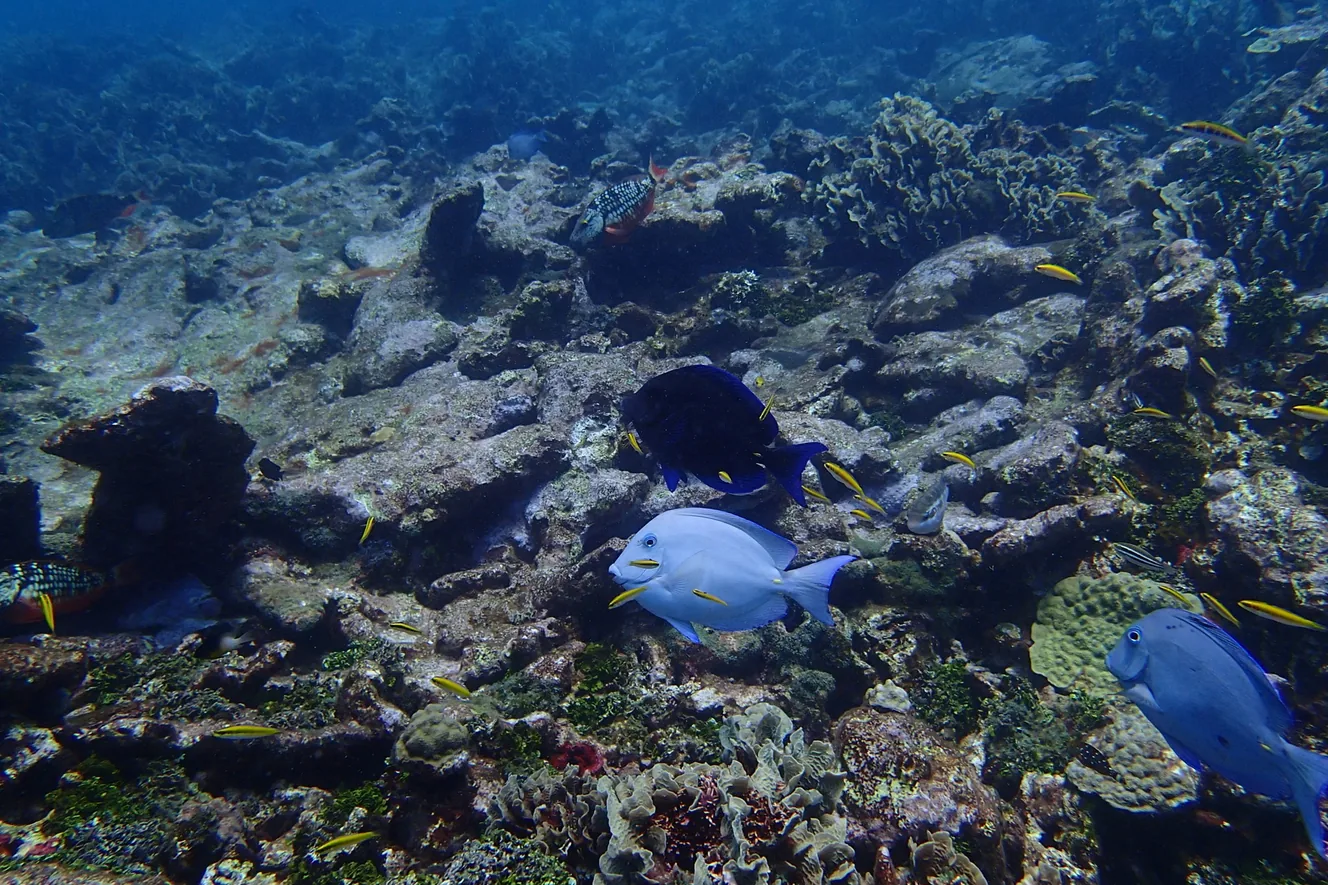
Colombia Travel, ProColombia's portal, lists Isla Gloria among the Rosario dive sites, alongside the sunken ship at San Martín de Pajarales and the Isla Pavitos drop-off. For the archipelago it describes hard corals, sponges, crabs, lobsters, surgeonfish, parrotfish, angelfish and creole fish. That is the general fauna of the area; none of the sources we consulted keeps a separate inventory for each trail.
Three trails with buoys
The study measured each trail. Isla Gloria runs about 427 metres with an average depth of 13.5 metres; at the time it was used only for scuba. Ministerio is about 580 metres long and averages 12.5 metres. Isla Fiesta runs about 511 metres and averages 13.5 metres. The last two were used both with tanks and with basic gear, meaning mask, snorkel and fins.
All three had a buoy and a mooring system, which not every site in the park has. Their condition was not the best: Isla Gloria's buoy was in poor shape, though its chain was fine; at Ministerio the buoy was fair and the chain poor; at Isla Fiesta the buoy was homemade and the rope worn. The buoy matters because it keeps boats from dropping anchor on the coral.
Isla Fiesta also has direct regulatory backing. Parques Nacionales' Resolution 273 of 2007 lists it among the four sites in the Rosario sector where scuba diving is allowed, at 10° 11' 8.82" N and 75° 43' 41.34" W. Isla Gloria and Ministerio do not appear under those names on that list. The park's management plan, adopted in 2020, allows recreational diving at the sites in that resolution or in any rule that amends it. Ask your dive center which authorized site you will be diving.
How many divers fit
In 2023, Parques Nacionales published a draft resolution setting the carrying capacity of several Rosario trails. For scuba it calculated 24 divers a day at Ministerio, 22 at Isla Fiesta and 15 at Isla Gloria. For snorkelling, 31 people a day at Acuario Mío and 28 at Isla Fiesta. The same document warns that the calculation should be updated with new factors.
The season also shifts where people go. According to the 2016 study, in the dry season, from December to April, divers went more often to the trails in the south of the archipelago, and in the rainy season, from May to November, to those in the north. Colombia Travel gives an average water temperature of about 28 degrees Celsius.
How to dive them without harm
The study left an uncomfortable figure: 74% of scuba divers touched the bottom at least once, with an average of 5.39 contacts per person. Those with the lowest certification touched most, with Open Water divers in the lead. Of the scuba trips, 88% included a full pre-dive briefing. Colombia Travel recommends controlling your buoyancy, not touching or feeding animals, leaving no trash and using products that do not harm the reef.
The coral here has taken a beating. In November 2023, the Ministry of Environment named this park among the areas with reports of bleaching caused by a marine heatwave. In 2026, the Community Council of the Rosario Islands told Mongabay it estimates that 60% of its reef down to 10 metres has died since 2023. Diving here means seeing an ecosystem fighting to recover.
Lo que se ve en los senderos del Rosario (3)
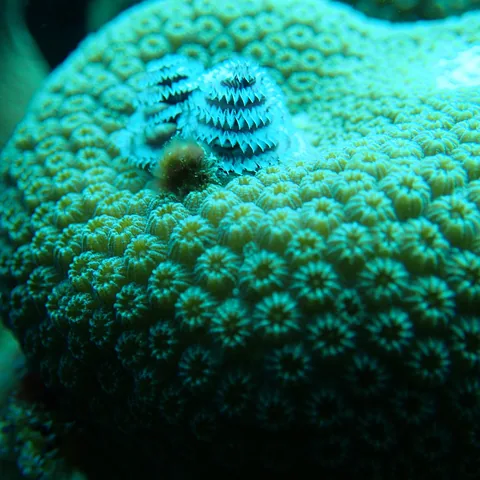
Christmas tree wormSpirobranchus giganteusFoto: Eric Crandall / iNaturalist · CC BY 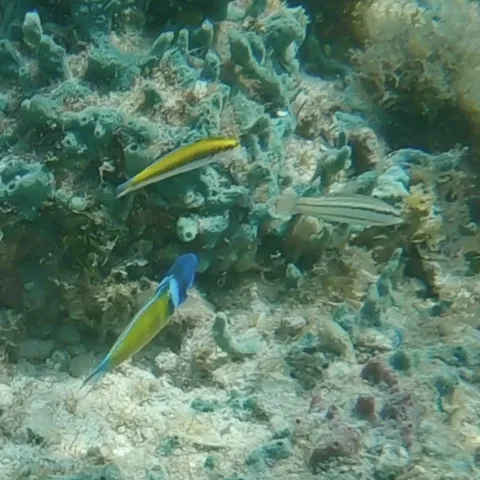
Bluehead wrasseThalassoma bifasciatumFoto: Kristiina Hurme / iNaturalist · CC BY 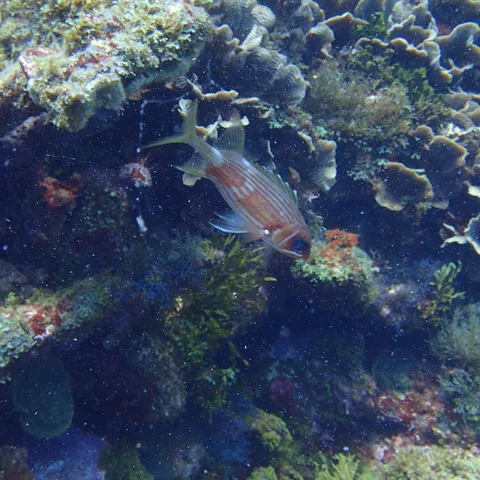
Longspine squirrelfishHolocentrus rufusFoto: Eric Crandall / iNaturalist · CC BY
Hours, prices and conditions can change: confirm with the organizer or the venue before you go.
Sources
- Castro Triana y Pereira Chaves: impacto de la actividad turística sobre los arrecifes coralinos del PNN Corales del Rosario y San Bernardo (Cuadernos de Investigación UNED, 2016) ↗
- Parques Nacionales Naturales: Resolución 0273 de 2007, canales de navegación y sitios permitidos para buceo y amarre en el PNN Corales del Rosario y de San Bernardo ↗
- Parques Nacionales Naturales: Resolución 0160 de 2020, Plan de Manejo del PNN Los Corales del Rosario y de San Bernardo ↗
- Parques Nacionales Naturales: proyecto de resolución que adopta la capacidad de carga de sitios del PNN Corales del Rosario y de San Bernardo (2023) ↗
- Colombia Travel (ProColombia): buceo en Cartagena ↗
- Colombia Travel (ProColombia): guía para bucear en Colombia, buenas prácticas ↗
- Ministerio de Ambiente: entre el 70 % y el 80 % de los arrecifes coralinos del país han presentado blanqueamiento (noviembre de 2023) ↗
- Mongabay Latam: acróporas, la primera línea de corales que está desapareciendo en el Caribe colombiano (junio de 2026) ↗
Diving in Cartagena: reefs, shipwrecks and the story of the sea →