
Diving / Cartagena and the sea
Breath-hold divers: the fishermen of Cartagena's sea
Long before tanks and dive centres, the island fishermen dived on a single breath for lobster, conch and fish.
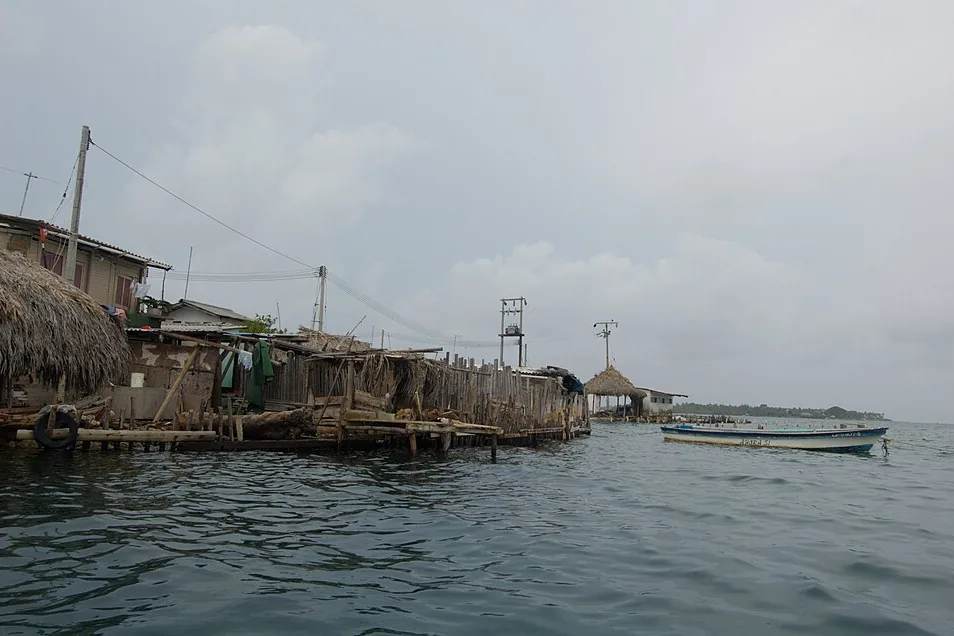
- Where
- Barú, Islas del Rosario, San Bernardo, Tierra Bomba (Bocachica) and La Boquilla
- Before you go
- Spearfishing is not an activity for visitors: inside the park no fishing is allowed and no organism may be removed. If you want to learn about the trade, look for outings organised with the communities and dive only with certified centres.
Long before the tanks arrived, Cartagena's reef already had divers. They were fishermen who went out in dugout canoes, put on a mask and dived on a single breath for lobster, conch, octopus and fish. The trade is still alive, although the sea, the rules and the island economy have changed a great deal around it.
A trade of canoe and mask
A study by the Institute of Marine and Coastal Research (Invemar), summarised in the national conch plan published by the Ministry of Environment in 2018, describes fishing in the San Bernardo archipelago: artisanal, multi-species and low-tech, mostly breath-hold diving and simple gear. Most of it is done by divers who work five or six hours a day from canoes about three metres long and reach depths of 18 metres.
By weight, the catch was 39% fish such as jack, bonito, grunt, snapper, barracuda and grouper; 26.6% conch; 19% spiny lobster; 8.4% king crab and 7.1% octopus. In money the order changed: lobster, because of its price, brought in almost half of the fishermen's income, 49.3%.
The conch that ran out
For decades the queen conch was one of the big catches in this sea. According to the same plan, it began to matter in the fishing economy of the Colombian Caribbean in the 1940s, and San Bernardo was the main fishing ground. In the early seventies a commercial fishery began there and in Rosario. Between 1974 and 1975 competition and excessive effort sank the catches and a closed season was imposed. A 1976 study distinguished between the lowest-effort fishing units, child fishers, and the highest-effort ones, experienced divers.
In 1977 commercial fishing was closed in both areas because of overexploitation, the same year the area was declared a national park, and the fishery moved to the banks of the San Andrés archipelago. Recovery never came. An Invemar survey at 184 stations in the Rosario archipelago found about 4 conch per hectare, a low density compared with the rest of the Caribbean and below the level that ensures reproduction. In San Bernardo, 80% of the conch were juveniles. The species has been on CITES Appendix II since 1992.
Fishing inside a park
Barú shows what came next. An article in the journal Ecología Política by two researchers from the Universidad Javeriana estimates some 200 years of traditional fishing in the district and cites the park's 2006 management plan: more than half of the catch is sold in Cartagena. The fishermen are organised in the Pezbarú association and mark their grounds with fixed devices called payaos.
The tensions show in their testimony. One fisherman complains that their nets are cut or their fish confiscated. Another explains that a fish under half a kilo may not be taken, nor trammel or cast nets used in certain areas, that dynamite, once used, is no longer allowed, and that officials usually tolerate the liga, fishing for the day's meal. A third blames the scarcity on the islands' hotels and restaurants, which have their own boats and fishermen.
The current management plan, adopted by National Parks through Resolution 0160 of 2020, came out of a prior consultation with the community councils of Islas del Rosario, Barú, Santa Cruz del Islote, Ararca, Santa Ana and Playa Blanca, formalised in December 2018. It recognises fishing as part of their way of life, creates a special management zone with the communities where fishing grounds for traditional practices will be defined, and commits the park and the councils to ask the National Aquaculture and Fisheries Authority for fisheries planning around the protected area.
From speargun to tourism
Some trades changed prey. A report by the EFE agency published by La FM described how, in the Rosario islands, fishermen who used to hunt lobster and grouper, now threatened, switched to hunting lionfish with hand spearguns, an invasive species that some Cartagena chefs began to serve. National Parks has organised capture tournaments in the park, according to Mongabay.
On the coast, fishing is still the backbone of many communities. On Tierra Bomba, home to some 15,000 people across Punta Arena, Bocachica and Caño de Loro, it is the main activity, followed by tourism, according to El Universal. In La Boquilla, Afro-Colombian families fish the Juan Polo and La Virgen lagoons with lines, nets and traps, and Colombia Travel promotes outings with them. For visitors the lesson is simple: breath-hold fishing is a trade with its own rules, not a tourist activity, and inside the park nothing is taken from the sea. You go diving with a certified centre, and to look.
Pescar en las islas (1)
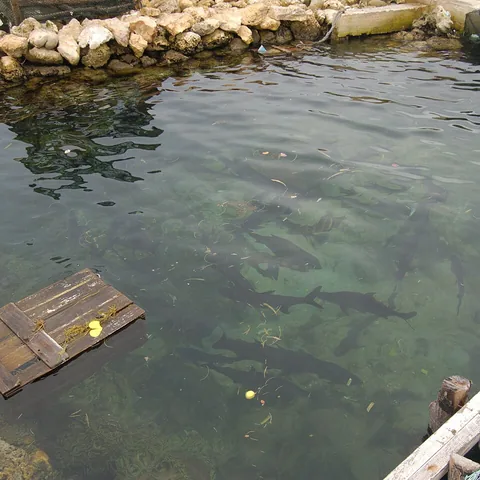
Fish pen on Santa Cruz del IsloteFoto: Juan Sebastián Echeverry / Wikimedia Commons · CC BY 2.0
Hours, prices and conditions can change: confirm with the organizer or the venue before you go.
Sources
- Ministerio de Ambiente: Plan de Acción Nacional para la conservación y manejo del caracol pala en el Caribe colombiano (2018), con los estudios del Invemar en Rosario y San Bernardo ↗
- Ecología Política: Gobernanza de la pesca en el sistema socio-ecológico de Barú (García Romero y Hernández Crespo, Universidad Javeriana) ↗
- Parques Nacionales Naturales: Resolución 0160 de 2020, Plan de Manejo del PNN Los Corales del Rosario y de San Bernardo ↗
- La FM (EFE): Colombia convierte su lucha contra el voraz pez león en un manjar ↗
- Mongabay Latam: torneos de captura de pez león en Colombia (noviembre 2018) ↗
- El Universal: «De aquí no nos saca nadie», habitantes de Tierrabomba (febrero 2021) ↗
- Colombia Travel (ProColombia): pesca con locales en La Boquilla ↗
Diving in Cartagena: reefs, shipwrecks and the story of the sea →