
Diving / Wrecks where diving is not allowed
San José galleon
The most famous shipwreck in the Colombian Caribbean lies more than 600 metres down, at a secret spot only the State may touch.
- Depth
- More than 600 metres, according to Prensa Latina, Forbes and El Tiempo.
- Level
- Not applicable: the site is inaccessible to the human body and can only be studied with remotely operated vehicles.
- Where
- Colombian Caribbean Sea, near the Barú peninsula and the Rosario Islands. The exact location is classified by law.
- Getting there
- It cannot be dived or visited. The wreck lies more than 600 metres deep, beyond the reach of any diver; its coordinates are classified under Law 1675 of 2013; it has been a Site of Cultural Interest since 2020 and a Protected Archaeological Area since 2024. Only the State, with authorisation, may intervene, and it does so with robots operated from Navy ships.
- Before you go
- To get closer to its history, follow the official exhibitions and publications of the Ministry of Culture, ICANH and Dimar. Be wary of any offer of an excursion or dive to the galleon: it does not exist, and the law punishes exploring or intervening in submerged heritage without authorisation with prison.
The San José galleon cannot be visited. It lies more than 600 metres deep in the Colombian Caribbean, near the Barú peninsula and the Rosario Islands, at a point the law keeps classified. No diver gets down there: the Ministry of Culture describes it as a site inaccessible to the human body, studied only with robots controlled from a ship. Even so, it is the wreck that weighs most in the history of Cartagena's sea, and it is worth understanding why it is off limits.
What sank in 1708
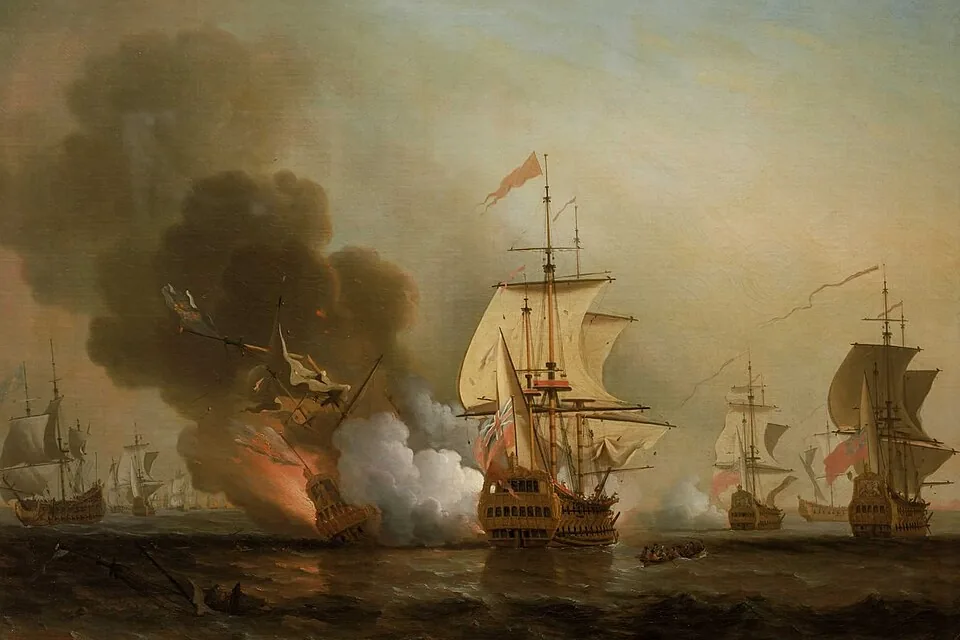
The San José was a galleon of the Spanish Crown. It sank on 8 June 1708 (28 May in the Julian calendar the English used) in the battle of Barú, facing an English squadron commanded by Charles Wager. Its captain was José Fernández de Santillán, Count of Casa Alegre. It carried some 600 people and only 11 survived, according to Wikipedia's entry. Its holds held gold and silver ingots and coins which, according to Forbes, came from the Portobelo fair in Panama.
The most repeated version says an explosion destroyed it. When the Government announced the discovery, El Espectador reported that the visual evidence suggested there had been no such explosion, while warning it was too early for conclusions. The question remains open.
The discovery and the secrecy
President Juan Manuel Santos announced the discovery on 4 December 2015 and gave the details the next day in Cartagena. The operation was led by the Ministry of Culture, with ICANH in charge of the science and support from Dimar. Sonar, special cameras and an autonomous underwater vehicle were used. On the seabed they could see bronze cannons, chests, ceramic and porcelain vessels and personal weapons. According to the experts, the specifications of the cannons left no doubt about the ship's identity.
Since then the exact spot has been secret. Law 1675 of 2013 classifies the coordinates of submerged heritage, and Dimar must guard that information for reasons of sovereignty and defence. In January 2020, Resolution 0085 of the Ministry of Culture declared the whole wreck a Site of Cultural Interest of national scope, to be conserved for scientific and non-commercial purposes. The vice president at the time, Marta Lucía Ramírez, said the recovery would not be paid for with pieces from the wreck.
From protected area to the first pieces
On 22 May 2024 ICANH declared the site a Protected Archaeological Area, with a prior favourable opinion from the National Cultural Heritage Council. It was the first of its kind in Colombian waters. That same month the project Towards the heart of the San José galleon began, bringing together the ministries of Culture and Defence, the Navy, Dimar and ICANH. The first phase was characterisation, without touching anything: remote-sensing images, an inventory, a conservation diagnosis and video and photogrammetry records made with a remotely operated vehicle.
The second phase came in November 2025. From Navy ships and with underwater robotics, a cannon, a porcelain cup, three macuquinas (coins), porcelain fragments and sediment were collected and presented in Cartagena on 19 November. The cannon and the porcelain are in Cartagena, where Dimar has its submerged heritage laboratory, and the coins are at the National Museum, according to El Tiempo. From February 2026 the Colombian Geological Survey spent six months analysing the pieces: it found traces of organic matter and microorganisms on the coins, dated a fragment of rope attached to the cannon and studied the cannon's chemistry and the origin of the porcelain. In July 2026, Resolution 1159 ordered that this evidence be entered in the national register of submerged heritage.
Lawsuits and open questions
The galleon also lives in the courts. The US company Sea Search Armada sued Colombia in 2023 before the Permanent Court of Arbitration in The Hague, seeking 10 billion dollars; the State answers that the company never found the ship. Maritime Archaeology Consultants, which says it discovered the wreck in 2015, filed a claim in 2025 before ICSID for 50 million dollars. Spain maintains it was a State vessel. A citizens' oversight group keeps a criminal complaint open over alleged intrusions at the site, which ICANH rejects. And in 2022 the Government announced two more vessels in the area, one colonial and one from the republican era.
For anyone visiting Cartagena, the practical point is simple: the San José is known through exhibitions, laboratories and publications, not in the water. Any offer of a tour or dive to the galleon is false, and exploring or intervening in submerged heritage without authorisation is a crime in Colombia.
Hours, prices and conditions can change: confirm with the organizer or the venue before you go.
Sources
- Dimar: El Estado colombiano recolectó cinco objetos y fragmentos arqueológicos del Galeón San José (nov. 2025) ↗
- Dimar: Fase inicial del proyecto de investigación del galeón San José será exploratoria (2024) ↗
- Dimar: Servicio Geológico Colombiano presentará los resultados de sus investigaciones sobre los objetos (2026) ↗
- El Tiempo: Bajo estudio, con piezas recolectadas y en medio de demandas, así entrega el galeón San José el gobierno Petro (ago. 2026) ↗
- Forbes Colombia: Colombia declara como Área Arqueológica Protegida la zona donde está el galeón San José (2024) ↗
- Prensa Latina: área arqueológica protegida del galeón San José (2024) ↗
- Colombia.com: Galeón San José declarado bien de interés cultural (Resolución 0085 de 2020) ↗
- El Espectador: Así fue el histórico hallazgo del galeón San José (2015) ↗
- El Universal: Presidente Santos anunció el hallazgo del galeón San José (2015) ↗
- El Comercio: Colombia anuncia hallazgo de dos embarcaciones cerca del galeón San José (2022) ↗
- Ministerio de Cultura: ABC Galeón San José ↗
- Ley 1675 de 2013 (normograma JEP) ↗
- Wikipedia: Galeón San José ↗
Diving in Cartagena: reefs, shipwrecks and the story of the sea →