
Diving / Wrecks to dive
El Planchón wreck and the shallow reefs of Isla Fuerte
A cargo ship sunk at nine metres on the reef, an elkhorn shoal for night dives and a sand channel between corals.
- Depth
- El Planchón, about 9 metres (ProColombia) or 10 (an island dive centre's SSI listing). Bajo Alicia, 4.5 to 9 metres; Canal del Inglés, 4.5 to 21; Fondo Loco, 12 (ProColombia)
- Level
- ProColombia rates El Planchón, Bajo Alicia and the Canal del Inglés for beginners and advanced divers, and Fondo Loco intermediate to advanced. With a tank, always certified and with a dive centre.
- Where
- Isla Fuerte, a rural district of Cartagena off the coast of Córdoba, south of the Gulf of Morrosquillo, within the Marine Protected Area of the Rosario and San Bernardo Archipelagos
- Getting there
- According to ProColombia, by air or road to Montería or Tolú, by road to Lorica and Paso Nuevo, then by boat to the island. The wreck and the reefs are reached with a dive centre on the island.
- When to go
- Best from June to December, according to ProColombia; the heaviest rain falls from September to November. Conditions change fast, even within a single day.
- Before you go
- Dive with a certified centre on the island. Do not enter the hull without wreck training. Do not touch the elkhorn coral or lean on the wreck. At night, carry two torches and stay with the guide. Take nothing.
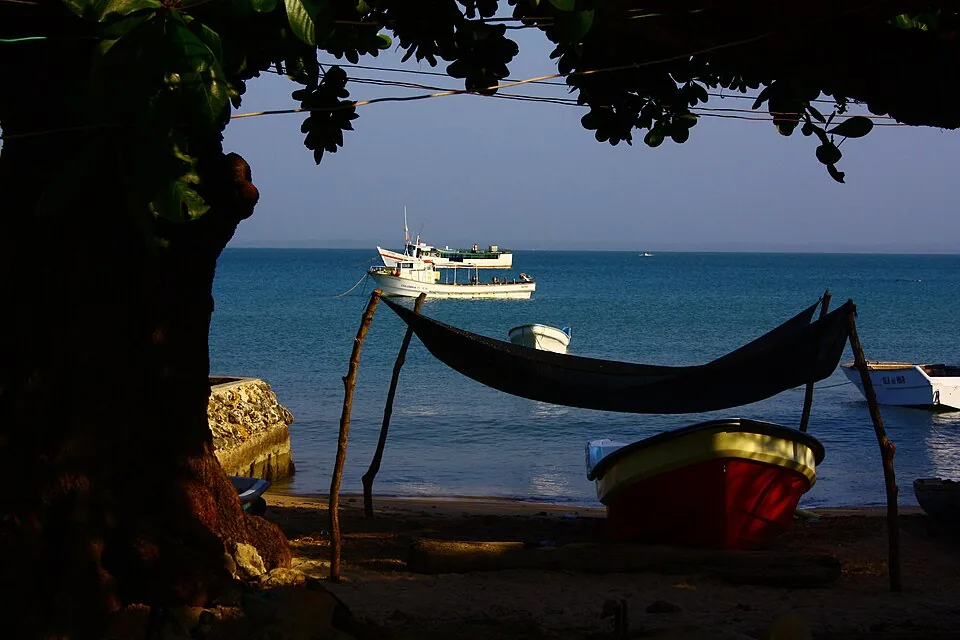
Isla Fuerte belongs to Cartagena, even though it lies off the coast of Córdoba, south of the Gulf of Morrosquillo. It is a rural district of the city and sits about 150 kilometres from it, according to Wikipedia. The specialised diving guide ProColombia presented in 2024 describes an island of 2.9 square kilometres, 11 from the mainland, with shallow coral formations to the north, crevices and small caves that deepen until they end in a steep platform. It counts 37 dive points in the region, including a wreck: El Planchón.
A cargo ship on the reef
According to the guide, El Planchón was a cargo ship 50 metres long and 12 wide that sank onto a reef at about 9 metres. Its hull is now home to hard and soft corals, large groups of reef fish and sponges surround it, and nurse sharks and barracudas sometimes hide underneath. The guide notes visibility of 10 to 20 metres and occasional surface currents and rates it for beginners and advanced divers.
Not everything matches. An island dive centre's listing on the SSI platform places it at 10 metres and describes a ship 30 metres long that rises about 2 metres off the bottom, also with nurse sharks. The difference in length, 50 versus 30 metres, may come from how much of the hull is still intact, but no source explains it. Nor did we find its history published: not its original name, nor when or why it sank.
The reefs around it
El Planchón is usually combined with the island's shallow reefs. Bajo Alicia, according to ProColombia, is a small reef ridge at 4.5 to 9 metres dominated by elkhorn coral, which the guide highlights for its preservation and growth. It considers it ideal for certification dives, though it warns of strong surface currents. The centre's SSI listing gives it 5 to 18 metres, calm most of the year, and says the annual coral spawning can be seen there.
The Canal del Inglés lies to the north, 1.19 kilometres from the island. The dive starts at 4.5 metres along a channel of calcareous sand lined with corals that drop to 15 metres and open onto a 21-metre drop-off. ProColombia names turtles, snappers, octopus and sharks there. Fondo Loco, at 12 metres, is for intermediate to advanced divers: a drift dive over a flat bottom with large cavities formed by corals and sponges.
Diving at night
Of Isla Fuerte's sites, Bajo Alicia is the one ProColombia's guide singles out as great for night diving. It is shallow and close to the island, two things that help at night. The guide does not say how those trips are organised: ask the centre whether it offers them, what experience it requires and whether it recommends the night diver specialty. At night you dive with a primary and a backup torch, in a small group, following the guide.
Before you go
ProColombia's guide says the island is part of the Corales del Rosario y de San Bernardo National Natural Park. The regulation we found says something else: Isla Fuerte lies within the Marine Protected Area of the Rosario and San Bernardo Archipelagos, declared by the Environment Ministry in 2005, and it is not on the park's list of dive sites. The basic rules are the same: no anchoring on coral, no touching, take nothing. ProColombia puts the best diving season between June and December, with the heaviest rain from September to November, and warns that current, waves and visibility can change within a single day.
Isla Fuerte (1)
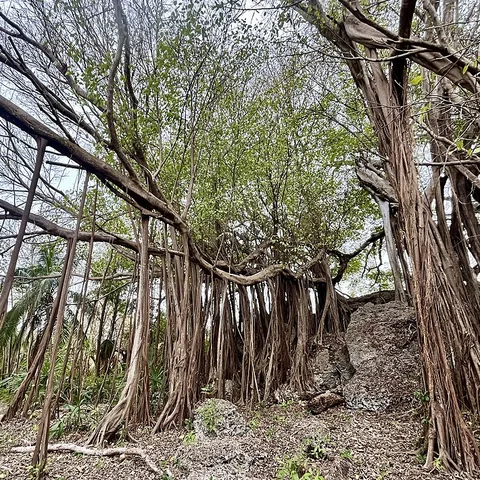
The walking tree, Isla FuerteFoto: Anfecaro / Wikimedia Commons · CC0
Hours, prices and conditions can change: confirm with the organizer or the venue before you go.
Sources
- ProColombia: Guía especializada de buceo en Colombia (2024), apartado Isla Fuerte (El Planchón, Bajo Alicia, Canal del Inglés, Fondo Loco) ↗
- SSI: ficha del centro Isla Fuerte Ecolodge & Diving Center Narval, con sus sitios de buceo ↗
- PADI: sitios de buceo de Isla Fuerte (tres de arrecife y un naufragio publicados) ↗
- Wikipedia: Isla Fuerte ↗
- Ministerio de Ambiente: Resolución 0679 de 2005, Área Marina Protegida de los Archipiélagos del Rosario y de San Bernardo ↗
- Parques Nacionales: Resolución 273 de 2007, sitios autorizados para careteo y buceo con tanque ↗
Diving in Cartagena: reefs, shipwrecks and the story of the sea →