
Diving / Dive sites · About an hour by boat from Cartagena
Bajo Terver, Kurira, Martincito and Bajo Perdido: the lesser-known Rosario trails
Dive trails named after shoals that hardly anyone mentions, between 11 and 15 metres, several without a mooring buoy.
- Depth
- Average depth along the trail between 11 and 15 metres depending on the trail (Castro Triana and Pereira, 2016)
- Level
- Open Water or higher; the study records them as scuba trails, and Alex Place also as a snorkelling trail.
- Where
- Nuestra Señora del Rosario archipelago, Corales del Rosario y de San Bernardo National Natural Park
- Getting there
- By sea only, with a certified dive center that knows the site. The park entry fee applies.
- When to go
- Year-round, with water at about 28 °C (Colombia Travel). In the dry season (December to April) divers went more to the southern trails of the archipelago and in the rainy season (May to November) to the northern ones (Castro Triana and Pereira, 2016).
- Before you go
- Go with a certified center that knows the trail and confirms the site is authorized. If there is no buoy, insist on anchoring only on sand. Do not touch the bottom or the coral and do not feed the fish. Pay the park entry fee.
When a Cartagena dive center says it is taking you to the Rosario Islands, the exact site is usually decided on the day, depending on the sea. Among the options are trails that hardly ever appear in guidebooks or the press, but that do show up in the park's technical documents. Here is a look at five of them, with the little that is known.
The main source is a study by Luz Ayda Castro Triana and José Miguel Pereira Chaves, published in 2016 in Cuadernos de Investigación UNED. The authors interviewed users of the archipelago's 16 main underwater trails and measured the busiest ones. They explain that the location and depth of the trails follow the distribution of the reefs, and that at depths of less than 15 metres light conditions are right for corals.
Five trails, one by one
Bajo Terver is the longest of the trails measured: about 955 metres, with an average depth of 15 metres. It had a metal buoy in fair condition, a chain in poor condition and an anchor block at about 6.5 metres. The carrying-capacity draft that Parques Nacionales published in 2023 sets it at 18 scuba divers a day.
Kurira is about 568 metres long and averages 13.5 metres. Martincito, about 497 metres and 15 metres on average. Neither had a buoy, a mooring system or an anchor block. Even so, Parques Nacionales calculated a cap for both: 21 divers a day at Kurira and 17 at Martincito.
Bajo Perdido runs about 678 metres with an average depth of 13.5 metres. It had no buoy or mooring either, and it was one of the two sites, along with San Quintín, where researchers saw boats dropping anchor. It does not appear in the 2023 carrying-capacity table.
Alex Place is the shortest, about 400 metres, and the shallowest of this group, averaging 11 metres. It was used with tanks and with basic gear. It had a metal buoy and chain, both in poor condition, and a block at about 6 metres. In the 2023 table it appears only for snorkelling, with the lowest cap of all: 5 people a day.
What remains unknown
None of these five names appears on the lists of snorkelling and scuba sites in Resolution 273 of 2007, the Parques Nacionales rule that sets where diving is allowed in the park. The 2020 management plan says recreational diving takes place at the sites in that resolution or in any that amends it. Later studies treat them as trails in use. Before you go, ask your dive center what authorization it has for the site.
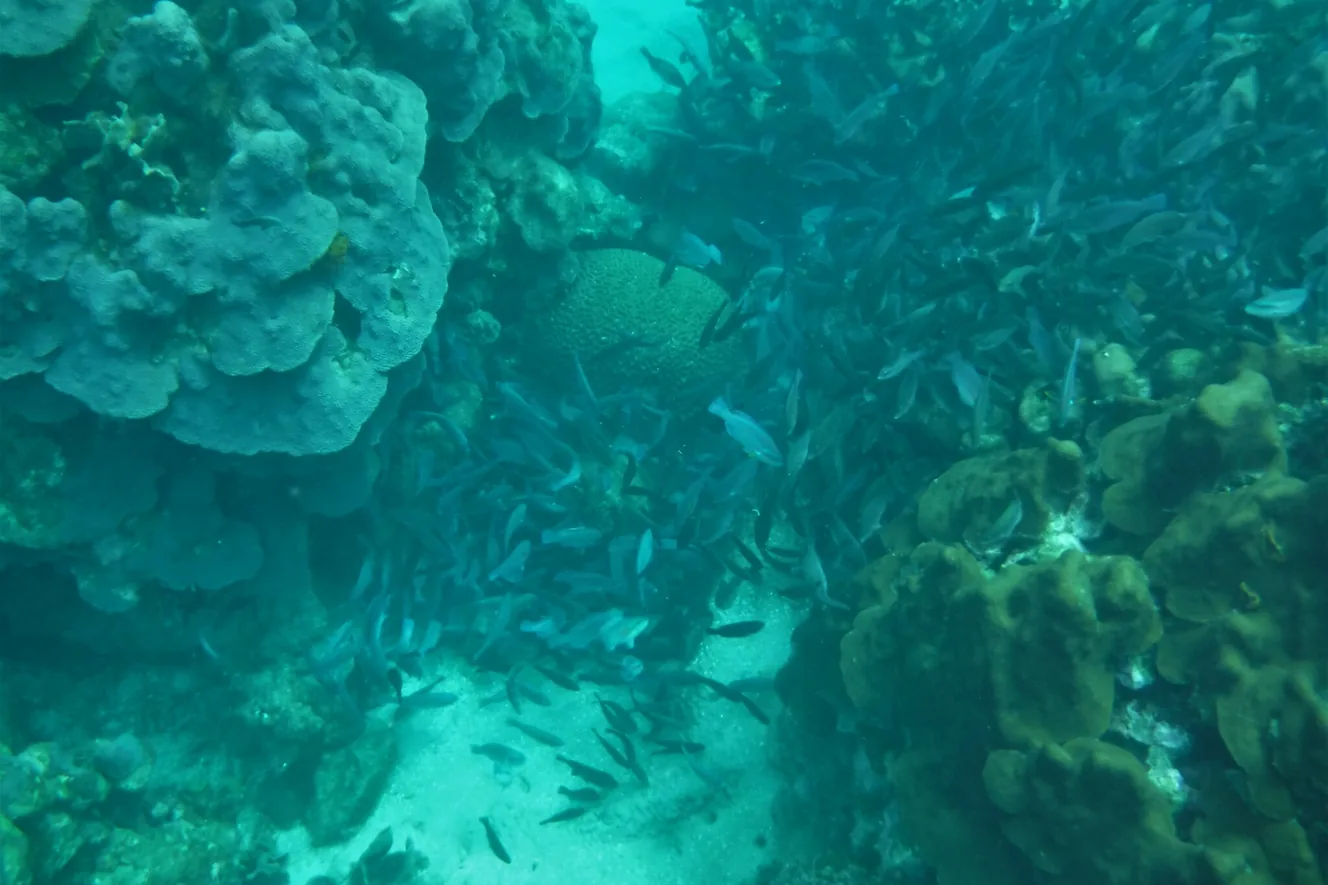
Nor did we find sources describing what you see at each one. What is documented applies to the archipelago as a whole: Colombia Travel mentions hard corals, sponges, lobsters and reef fish, and water at about 28 degrees all year. The 2016 study noted that in the dry season, from December to April, divers went more to the southern trails, and in the rainy season, from May to November, to the northern ones.
No buoy, more care
A trail without a buoy means anchoring. Resolution 273 allows that only on sand, never on coral or seagrass, and requires dive boats to fly the divers-down flag. The study found that 74% of scuba divers touched the bottom at least once. At little-visited, unsupervised sites, that contact weighs more. Dive with a guide, control your buoyancy and leave everything as you found it.
Fauna de los bajos del Rosario (2)
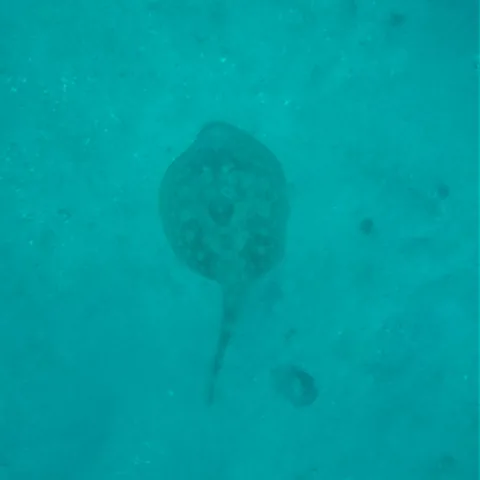
Yellow stingrayUrobatis jamaicensisFoto: Louis Imbeau / iNaturalist · CC BY 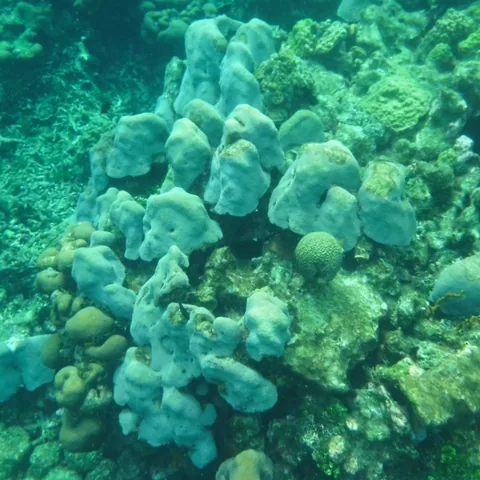
Boulder star coralOrbicellaFoto: Louis Imbeau / iNaturalist · CC BY
Hours, prices and conditions can change: confirm with the organizer or the venue before you go.
Sources
- Castro Triana y Pereira Chaves: impacto de la actividad turística sobre los arrecifes coralinos del PNN Corales del Rosario y San Bernardo (Cuadernos de Investigación UNED, 2016) ↗
- Parques Nacionales Naturales: proyecto de resolución que adopta la capacidad de carga de sitios del PNN Corales del Rosario y de San Bernardo (2023) ↗
- Parques Nacionales Naturales: Resolución 0273 de 2007, canales de navegación y sitios permitidos para buceo y amarre en el PNN Corales del Rosario y de San Bernardo ↗
- Parques Nacionales Naturales: Resolución 0160 de 2020, Plan de Manejo del PNN Los Corales del Rosario y de San Bernardo ↗
- Colombia Travel (ProColombia): buceo en Cartagena ↗
Diving in Cartagena: reefs, shipwrecks and the story of the sea →