
Diving / Dive sites
Bajo Burbujas
A shoal off Tierra Bomba where gas bubbles rise between the corals and the dive starts at the deepest point.
- Depth
- From 9 to 40 metres, according to Colombia Travel and ProColombia's diving guide (2024)
- Level
- Advanced, according to both sources. Below 30 metres you need deep diving training; with Open Water the limit is 18 metres.
- Where
- Near Tierra Bomba island, southwest of Cartagena, in waters it shares with Barú and the Salmedina shoal
- Getting there
- Only by boat with a dive centre. It is open sea: the centre decides whether sea conditions allow the dive.
- When to go
- Best from July to November, with calm seas, according to ProColombia. From December to March the trade winds bring current and swell in open water; in the rainy season visibility drops because of sediment from the Canal del Dique.
- Before you go
- Go only with a certified centre and with the certification that matches the depth you will dive. Agree the maximum depth before jumping in. Carry a surface marker buoy if asked. Do not touch black coral or sea fans. Take nothing.
Some sites are named for what you see, and Bajo Burbujas is one of them. The specialised diving guide ProColombia presented in 2024 says the name, Bubble Shoal in English, comes from something divers often see: gas bubbles coming out from among the corals and rising to the surface. None of the sources we consulted explains where that gas comes from. What they do describe is an open-sea reef with walls of soft coral, near Tierra Bomba island.
Where it is
Colombia Travel, ProColombia's tourism portal, places it near Tierra Bomba, the island that closes the bay to the southwest, about ten minutes by boat from the city's piers. It is the same stretch of water it shares with Barú and the Salmedina shoal, where the portal counts seven sunken ships. No official coordinates for the shoal have been published: the dive centre knows the spot.
It should not be confused with another site of the same name. The Environment Ministry resolution that in 2005 declared the Marine Protected Area of the Rosario and San Bernardo Archipelagos mentions a bajo Burbujas at the southern end of the area, next to Isla Fuerte and the Bushnell shoal, more than a hundred kilometres from here. Isla Fuerte's dive centres also have their own Burbujas. They are two different places.
The dive
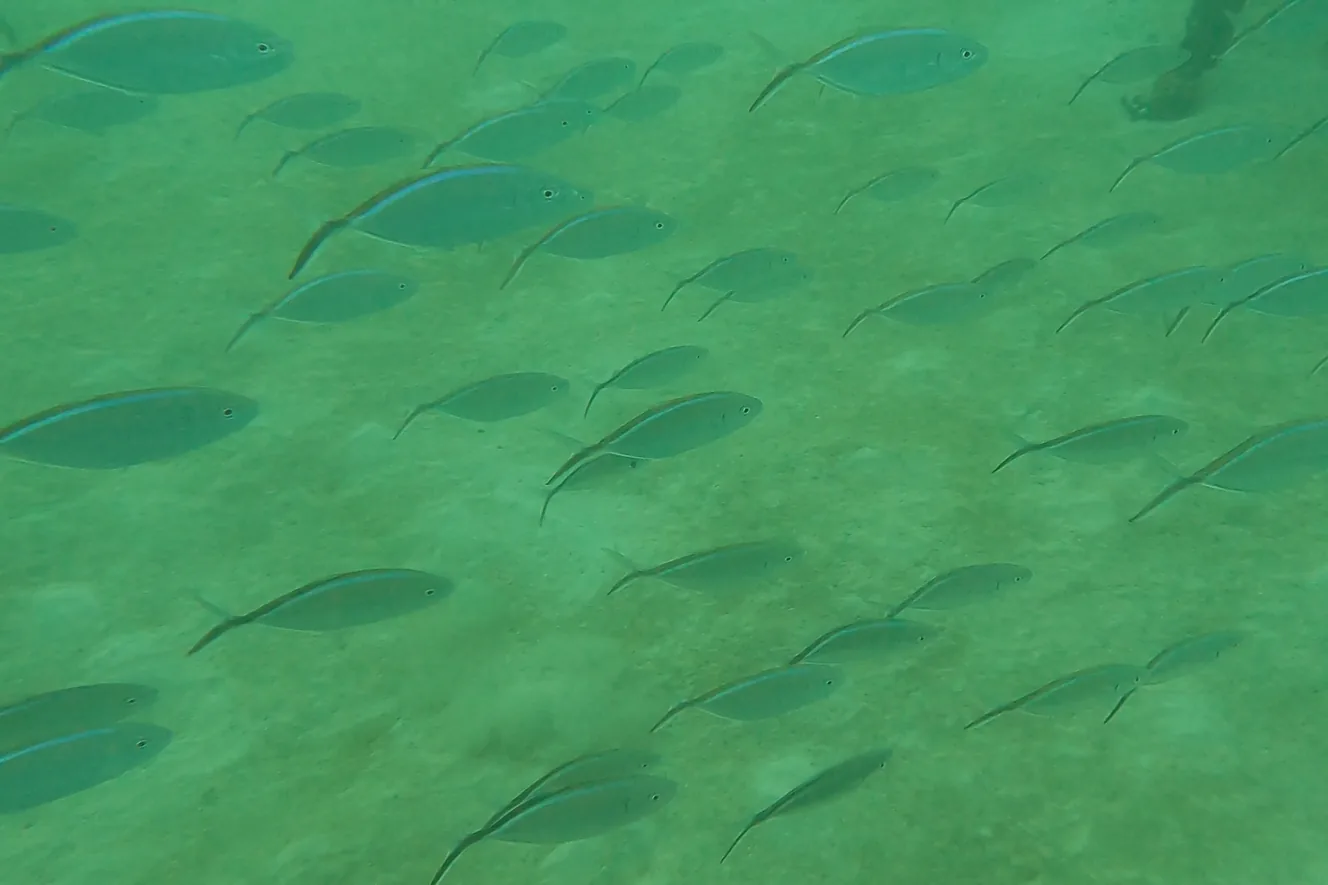
According to ProColombia, the dive starts in the deepest zone and ends in the shallowest, and the site's depth ranges from 9 to 40 metres. From the bottom up to 25 metres soft corals dominate: sea fans, sea rods, sea plumes and black coral of the genus Antipathes. On the deeper platforms you may see schools of mackerel and jacks, and the guide says you are very likely to come across reef sharks. Colombia Travel agrees on the soft corals and adds kingfish among the fish you can see.
The guide notes visibility of 10 to 20 metres and currents that are occasionally strong. Colombia Travel calls them variable. Both sources rate the site as advanced.
Who it is for
Starting at the deepest point makes sense: you use air and no-decompression time where they run out fastest and finish by rising slowly along the reef. But it also demands knowing where your limit is. The Open Water course certifies you to 18 metres and the advanced one to 30; to approach the 40 the guide gives, you need deep diving training and experience. Do not go deeper than your certification allows, even if the rest of the group does, and agree the maximum depth with the guide before jumping in.
Currents and open sea complete the picture. This is a site to dive with a certified centre that knows the shoal, with a surface marker buoy if the centre asks, and with the idea that the plan may change if the sea does not cooperate. If you are just starting out, Playa Vásquez, on Barú, is the option Colombia Travel recommends for first lessons.
When to go
ProColombia puts Bajo Burbujas' high season between July and November, when the sea is calmest. For the Cartagena area in general, the same guide explains that from December to March the trade winds blow and currents tend to be strong in open water, and that in the rainy season currents ease but visibility drops because of the sediment the Magdalena river brings through the Canal del Dique.
Hours, prices and conditions can change: confirm with the organizer or the venue before you go.
Sources
- ProColombia: Guía especializada de buceo en Colombia (2024), ficha Bajo Burbujas y apartado Cartagena, Barú e Islas del Rosario ↗
- Colombia Travel: buceo en Cartagena (Bajo Burbujas, Tierra Bomba) ↗
- Ministerio de Ambiente: Resolución 0679 de 2005, Área Marina Protegida de los Archipiélagos del Rosario y de San Bernardo ↗
- El Espectador: ProColombia estrena guía especializada de buceo (enero 2024) ↗
Diving in Cartagena: reefs, shipwrecks and the story of the sea →