
Diving / Wrecks to dive · About 45 minutes by boat from Cartagena to Barú
ARC Quindío wreck
The ship that surveyed Colombia's first nautical chart lies 27 metres down off Barú, turned into a reef.
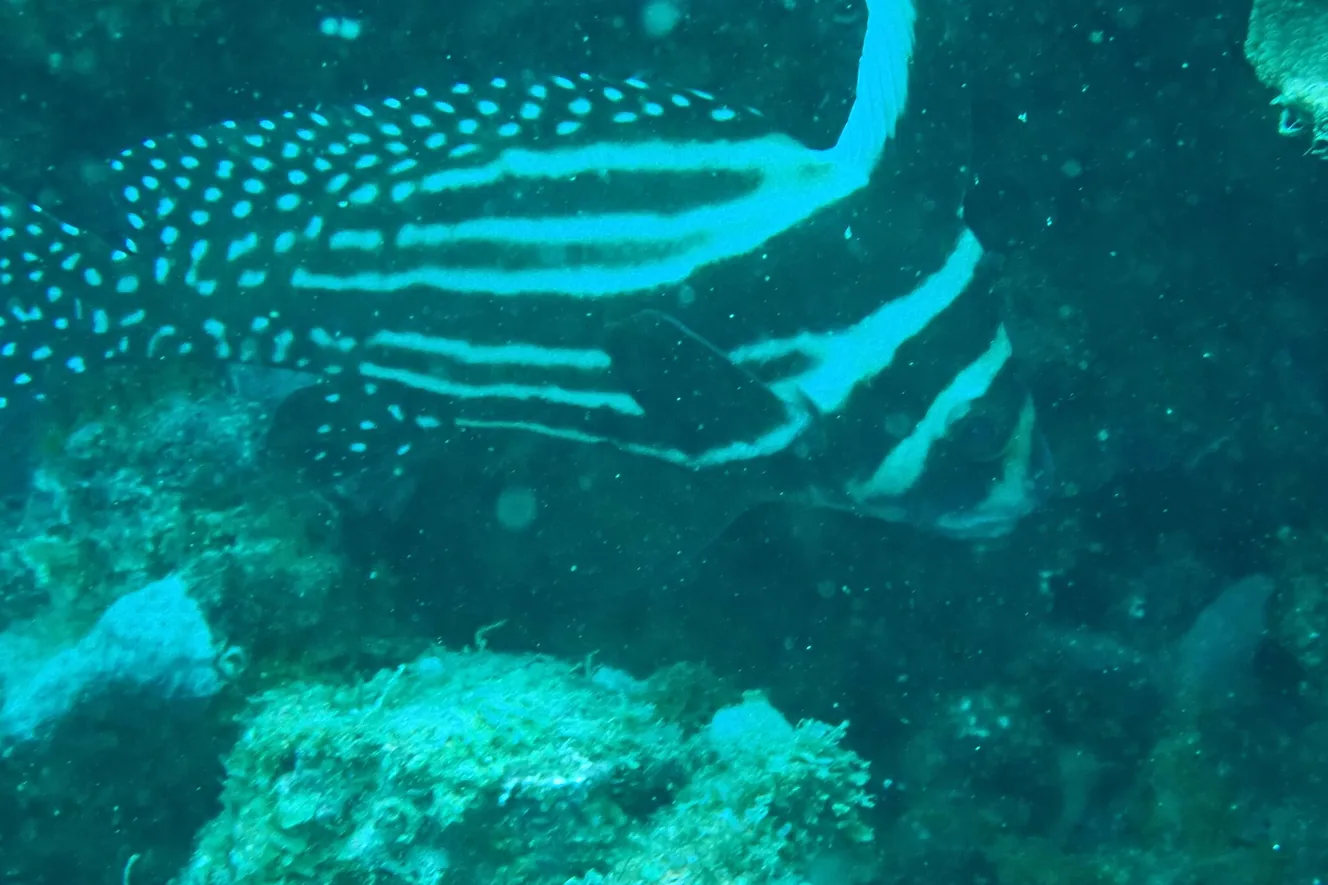
- Depth
- 27 metres (Dimar)
- Level
- Advanced: Advanced Open Water or equivalent. Going inside the hull requires specific wreck training (PADI recommends the Wreck Diver specialty for the site).
- Where
- Off Punta Iguana, at the mouth of the Ciénaga de los Vásquez, Barú island (Cartagena)
- Getting there
- Only by boat, with a dive centre that includes the Ciénaga de los Vásquez dive theme park in its dive plan. The hull rests at 27 metres: this is a scuba dive for certified divers.
- When to go
- Diving runs all year; Cartagena's water is around 28 °C, according to Colombia Travel. From December to January the trade winds raise the swell and Dimar may restrict navigation: check sea conditions and the day's visibility with the dive centre.
- Before you go
- Dive only with a certified centre and within your level; at 27 metres watch your air and your no-decompression time. Do not go inside the hull without wreck training. Do not touch the metal or what grows on it: colonisation began in 2015 and is fragile. Take nothing.
Some ships sink by accident and some are given one last job. The ARC Quindío belongs to the second group. On Friday 13 November 2015, shortly after one in the afternoon, the Navy opened its valves off Punta Iguana, at the mouth of the Ciénaga de los Vásquez, on Barú. The plan was for it to flood in 17 minutes. According to El Heraldo, it went down in 58 seconds. It settled at 27 metres, according to Colombia's maritime authority (Dimar), and since then it has been the largest piece of the lagoon's dive theme park.
A ship with two lives
Dimar says the vessel spent about twenty years in the US Navy. In the Second World War it served as a logistics platform for the Marine Corps infantry, and later it ran support between Grand Cayman, the Guantánamo base and Florida. On 12 September 1963 it joined the Colombian Navy. It was 42.4 metres long, 7.2 wide and drew 2.5 metres, a size that let it enter almost every port on the country's Caribbean and Pacific coasts.
For 51 years it worked for the maritime authority. It was Colombia's first marine science research platform: nautical charts, geomorphological studies, maritime signalling. Its bathymetric data produced the country's first nautical chart, of Tumaco bay, in 1968, and it was Dimar's first ship with a multibeam echo sounder, the equipment that maps the relief of the seabed. It also carried aid to remote coastal communities. In the Navy they called it Zapatico, little shoe. El Heraldo counted 39 commanders and a single registration number, 156, for half a century. It was retired from active service in May 2014.
How to sink a ship on purpose
Sinking a ship to make a reef means leaving it clean. Dimar removed the hull paint, the oils, the oily water, the waste and the entire electrical system, to meet the environmental requirements of the International Maritime Organization. El Heraldo adds that foams, plastics, fuel residues, lead batteries and acids were removed, that the hull was sanded, and that it went from white to a dark yellow before the manoeuvre.
The site was not chosen at random either. According to the same paper, it is a sandy plateau, away from natural reefs, because an artificial reef should not sit on top of a living one. Vice President Germán Vargas Lleras presided over the ceremony; former crew members and commanders watched from the oceanographic ships ARC Providencia and ARC Malpelo. The idea, Dimar explained, was twofold: to create habitat at Barú and to give divers a new site that would take pressure off the reefs of the Rosario Islands national park.
What grew on the hull
Dimar, through its Caribbean Oceanographic and Hydrographic Research Centre, launched a project to measure how life covers the hull and to draw up recommendations for future sinkings. In March 2016, four months later, researchers found biofilms, the layer of microorganisms that prepares the metal for others to settle, as well as bivalves, barnacles and some macroalgae. At the one-year mark they reported mussels, sponges and algae on the hull, and reef fish of the species Thalassoma bifasciatum and Acanthurus blochii. Water quality was within legal limits, and preliminary results suggested corals could form on the ship. It was expected to take about five years to work as a reef. We found no later monitoring reports.
Before you book
Barú is about 45 minutes by boat from Cartagena, according to Colombia Travel. You reach the wreck with a dive centre, which knows the spot and manages the dive. At 27 metres the dive calls for an advanced certification and good buoyancy control: the Open Water course certifies you to 18. Going inside the hull is another matter and requires wreck training and a guide who knows the ship. If you are just starting out, Colombia Travel points to Playa Vásquez, with the Atlas and Tolú wrecks, as the place for first lessons.
Vida marina en el norte de Barú (4)
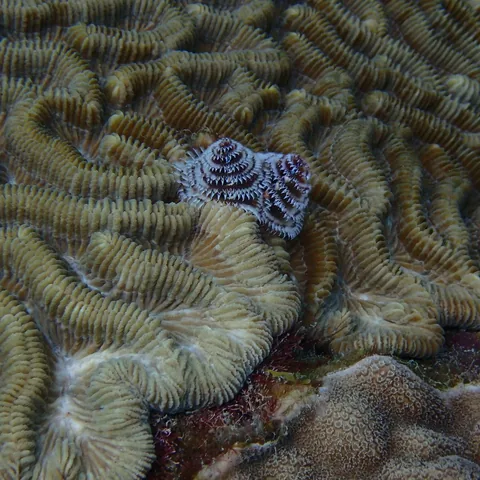
Christmas tree wormSpirobranchus giganteusFoto: Eric Crandall / iNaturalist · CC BY 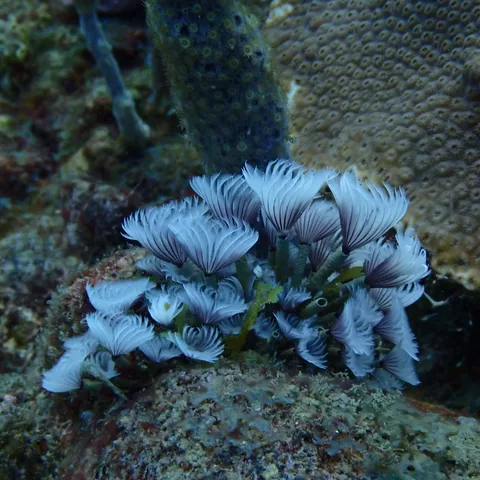
Social feather duster wormBispira brunneaFoto: Eric Crandall / iNaturalist · CC BY 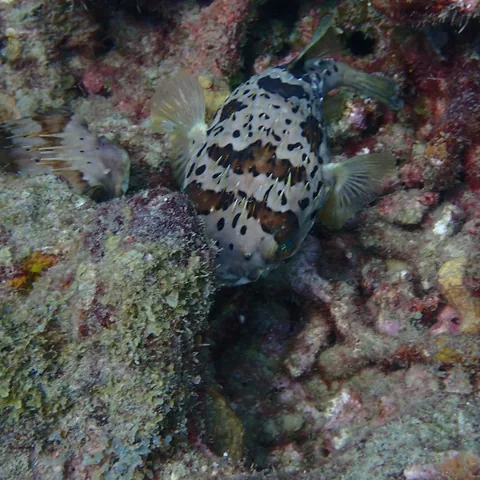
Longspined porcupinefishDiodon holocanthusFoto: Eric Crandall / iNaturalist · CC BY 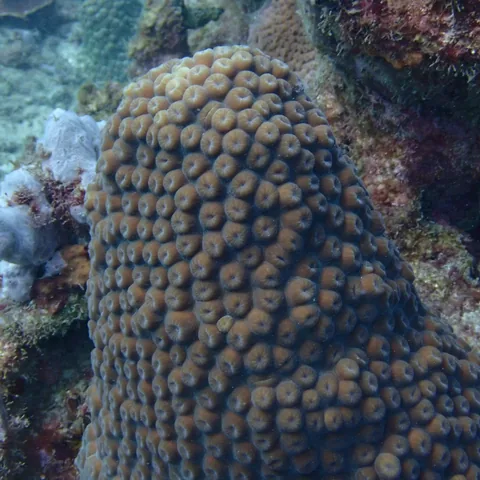
Great star coralMontastraea cavernosaFoto: Eric Crandall / iNaturalist · CC BY
Hours, prices and conditions can change: confirm with the organizer or the venue before you go.
Sources
- Dimar: ARC Quindío, nuevo parque temático de buceo en Cartagena (noviembre 2015) ↗
- Dimar: ARC Quindío, la muerte digna de un marino (noviembre 2015) ↗
- Dimar: verifica generación de arrecife artificial sobre el ex ARC Quindío (marzo 2016) ↗
- Dimar: primer año del hundimiento del ARC Quindío (noviembre 2016) ↗
- Dimar: comunicado sobre la temporada de vientos alisios en Cartagena (enero 2021) ↗
- El Heraldo: dos barcos al fondo del mar para resucitar como arrecifes (noviembre 2015) ↗
- El Heraldo: así hundieron un buque para transformarlo en un arrecife (noviembre 2015) ↗
- PADI: Ciénaga de los Vásquez, parque temático de buceo (ficha del sitio) ↗
- Colombia Travel: buceo en Cartagena ↗
Diving in Cartagena: reefs, shipwrecks and the story of the sea →